Category Archives: Quotes
Pearls from artists* # 296
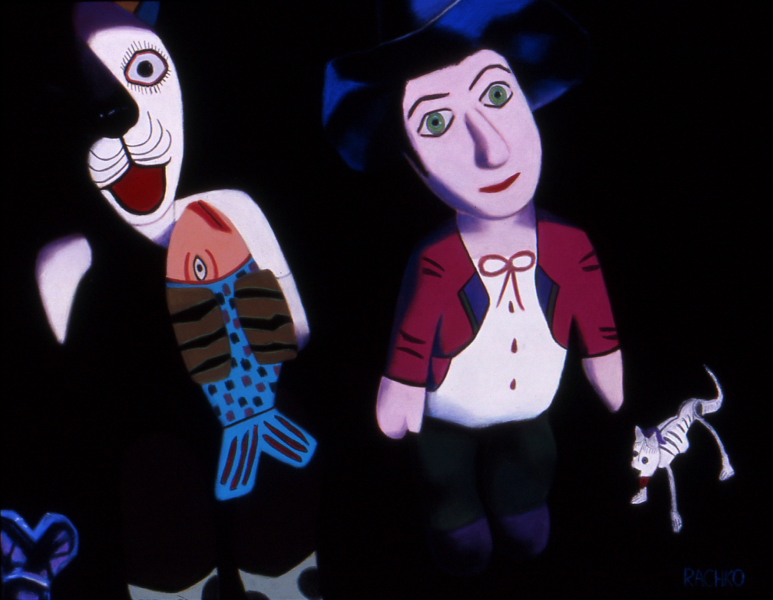
“Offering,” soft pastel on sandpaper, 20″ x 26″
* an ongoing series of quotations – mostly from artists, to artists – that offers wisdom, inspiration, and advice for the sometimes lonely road we are on.
Meaning in art isn’t the same as meaning in science. The meaning of the second law of thermodynamics, so long as the words are understood, isn’t changed by who reads it,or when, or where. The meaning of Huckleberry Finn is.
Writing is a risky business. No guarantees. You have to take the chance. I’m happy to take it. I love taking it. So my stuff gets misread, misunderstood, misinterpreted – so what? If it’s the real stuff, it will survive almost any abuse other than being ignored, disappeared, not read.
Ursula K. Le Guin in No Time to Spare: Thinking About What Matters
Comments are welcome!
Pearls from artists* #295

Barbara at work, Photo: Marianne Barcellona
* an ongoing series of quotations – mostly from artists, to artists – that offers wisdom, inspiration, and advice for the sometimes lonely road we are on.
Interviewer: Are there devices one can learn in improving one’s style?
Capote: Work is the only device I know of. Writing has laws of perspective, of light and shade, just as painting does, or music. If you are born knowing them, fine. If not, learn them. Then rearrange the rules to suit yourself.
Truman Capote in Writers at Work: The Paris Review Interviews First Series, edited, and with an introduction by Malcolm Crowley
Comments are welcome!
Pearls from artists* # 294

Barbara at work
*an ongoing series of quotations – mostly from artists, to artists – that offers wisdom, inspiration, and advice for the sometimes lonely road we are on.
Interviewer: Well, to begin – do you feel that you were born in a place and a time, and to a family all of which combined favorably to shape you for what you were to do?
Wilder: Comparisons of one’s lot with others’ teaches us nothing and enfeebles the will. Many born in an environment of poverty, disease, and stupidity, in an age of chaos, have put us in their debt. By the standards of many people, and by my own, these dispositions were favorable – but what are our judgments in such matters? Everyone is born with an array of handicaps – even Mozart, even Sophocles – and acquires new ones. In a famous passage, Shakespeare ruefully complains that he was not endowed with another’s “scope”! We are all equally distant from the sun, but we all have a share in it. The most valuable thing I inherited was a temperament that does not revolt against Necessity and that is constantly renewed in Hope. (I am alluding to Goethe’s great poem about the problem of each man’s “lot” – the Orphische Worte).
Thornton Wilder in Writers at Work: The Paris Review Interviews First Series, edited, and with an introduction by Malcolm Crowley
Comments are welcome!
Pearls from artists* # 293
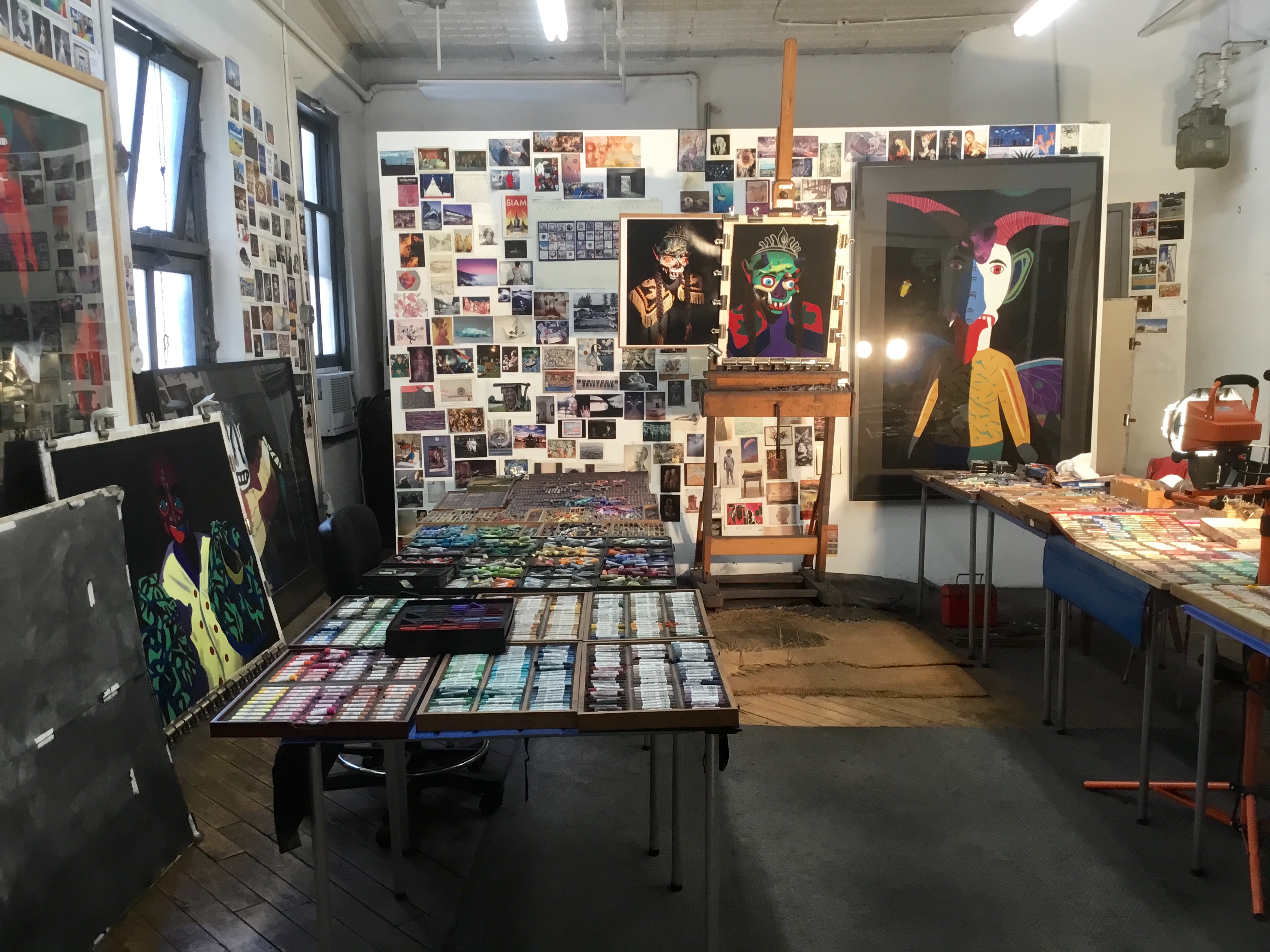
Studio with works in progress
*an ongoing series of quotations – mostly from artists, to artists – that offers wisdom, inspiration, and advice for the sometimes lonely road we are on.
Works of art specify no immediate action or limited use. They are like gateways, where the visitor can enter the space of the painter, or the time of the poet, to experience whatever rich domain the artist has fashioned. But the visitor must come prepared: if he brings a vacant mind or deficient sensibility, he will see nothing. Adherent meaning is therefore largely a matter of conventional shared experience, which it is the artist’s privilege to rearrange and enrich under certain limitations.
George Kubler in The Shape of Time: Remarks on the History of Things
Comments are welcome!
Q: As a full-time artist what are you thankful for?

The list
A: Recently I came across one of my Facebook posts from approximately five years ago. Everything on the list above still rings true, perhaps now even moreso.
Comments are welcome!
Pearls from artists* # 292
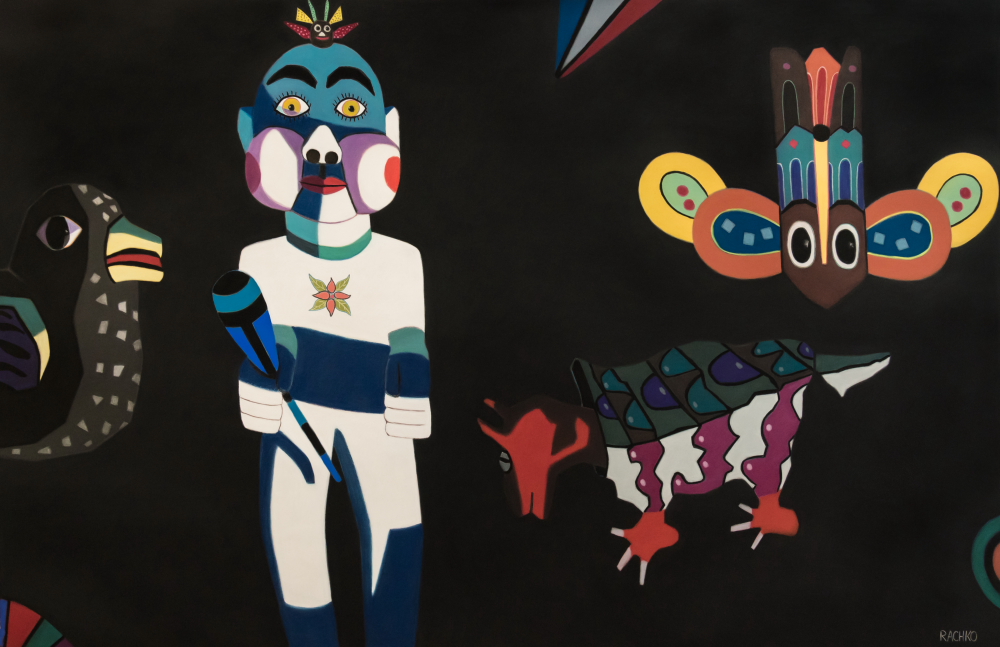
“White Star,” soft pastel on sandpaper, 38″ x 58″
*an ongoing series of quotations – mostly from artists, to artists – that offers wisdom, inspiration, and advice for the sometimes lonely road we are on.
… many tools may share qualities of fine design with works of art. We are in the presence of a work of art only when it has no preponderant instrumental use, and when its technical and rational foundations are not pre-eminent. When the technical organization or the rational order of a thing overwhelms our attention, it is an object of use. On this point Lodoli anticipated the doctrine of functionalists of our century when he declared in the eighteenth century that only the necessary is beautiful. Kant, however, more correctly said on the same point that the necessary cannot be judged beautiful, but only right or consistent. In short, a work of art is as useless as a tool is useful. Works of art are as unique and irreplaceable as tools are common and expendable.
George Kubler in The Shape of Time: Remarks on the History of Things
Comments are welcome!
Pearls from artists* # 291

“The Sovereign,” soft pastel on sandpaper, 58″ x 38″ image, 70″ x 50″ framed
*an ongoing series of quotations – mostly from artists, to artists – that offers wisdom, inspiration, and advice for the sometimes lonely road we are on.
Intuitively, we must be truthful to our vision, our conception. Intellectually, we must concentrate on importance. In other words, let us be no all-eater, no all-reader, no all-believer, let us be selective instead of being curious.
… Quality in art is more permanent than any propaganda associated with it.
Joseph Albers in Truthfulness in Art in Joseph Albers in Mexico, edited by Lauren Hinkson
Comments are welcome!
Pearls from artists* # 290

“Dichotomy,” soft pastel on sandpaper, 38″ x 58″
*an ongoing series of quotations – mostly from artists, to artists – that offers wisdom, inspiration, and advice for the sometimes lonely road we are on.
Rational functionalism is technique,
Irrational functionalism is art.
Art is creation
It can be based on but is independent of knowledge.
We can study art through nature,
but art is more than nature.
Art is spirit,
and has a life of its own.
Art in its nature is anti-historical
because creative work is looking forward.
It can be connected with tradition
but grows, consciously or unconsciously, out of an artist’s mentality.
Art is neither imitation nor repetition
but art is revelation.
Joseph Albers in Truthfulness in Art in Joseph Albers in Mexico, edited by Lauren Hinkson
Comments are welcome!
Pearls from artists* # 289
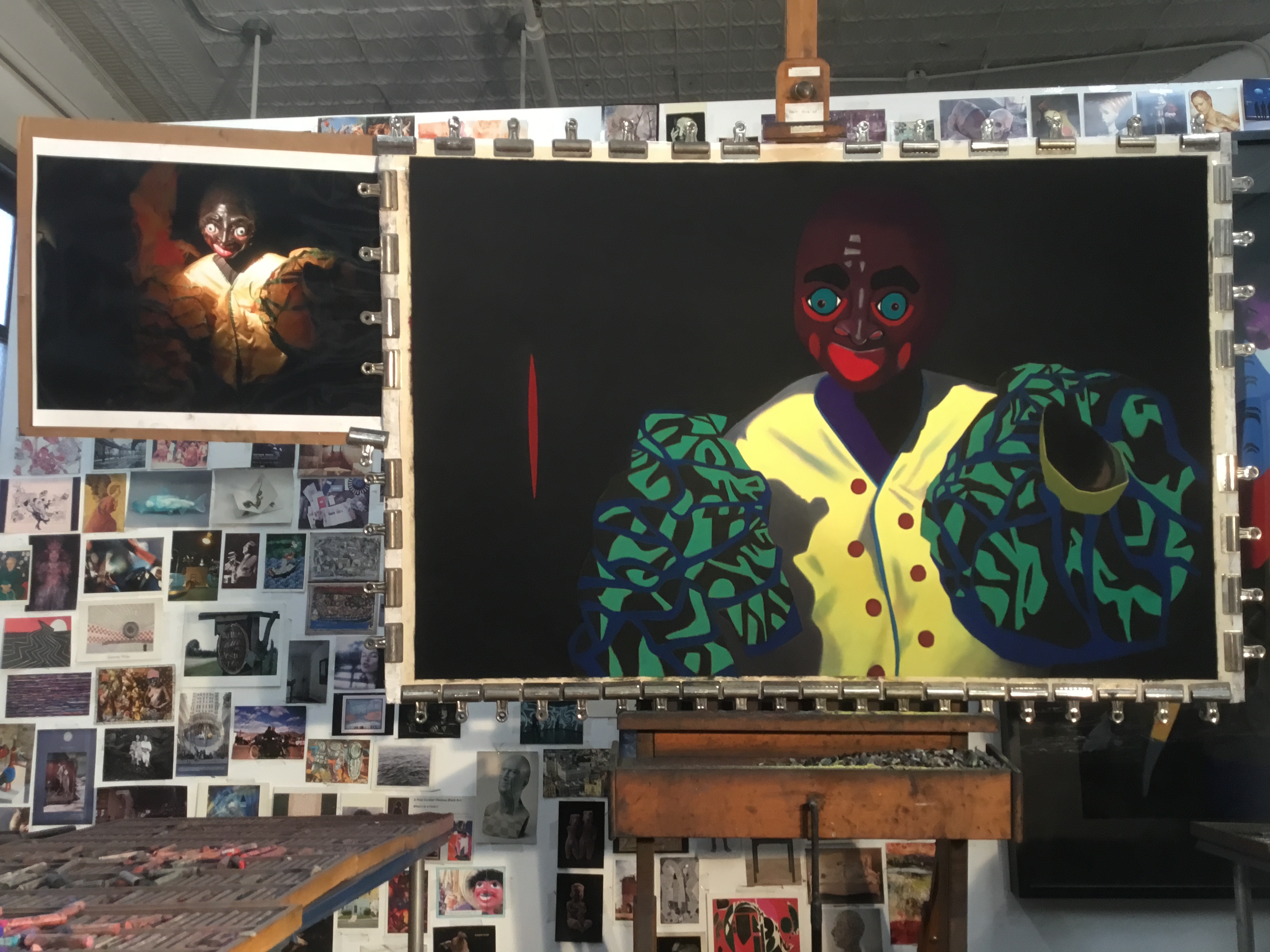
“Danzante,” soft pastel on sandpaper, 38” x 58”, in progress
*an ongoing series of quotations – mostly from artists, to artists – that offers wisdom, inspiration, and advice for the sometimes lonely road we are on.
I do not think it the business of a poet to become a guru. It is his business to write poetry, and to do that he must remain open and vulnerable. We grow through relationships of every kind, but most of all through a relationship that takes the whole person. And it would be pompous and artificial to make an arbitrary decision to shut the door.
The problem is to keep a balance, not to fall to pieces. In keeping her balance in her last years Louise Bogan stopped writing poems, or nearly. It was partly, I feel sure, that the detachment demanded of the critic (and especially his absorption in analyzing the work of others) is diametrically opposed to the kind of detachment demanded of the poet in relationship to his own work. We are permitted to become detached only after the shock of an experience has been taken in, allowed to “happen” in the deepest sense. Detachment comes with examining the experience by means of writing the poem.
May Sarton in Journal of a Solitude: The intimate diary of a year in the life of a creative woman
Comments are welcome!
Pearls from artists* # 288
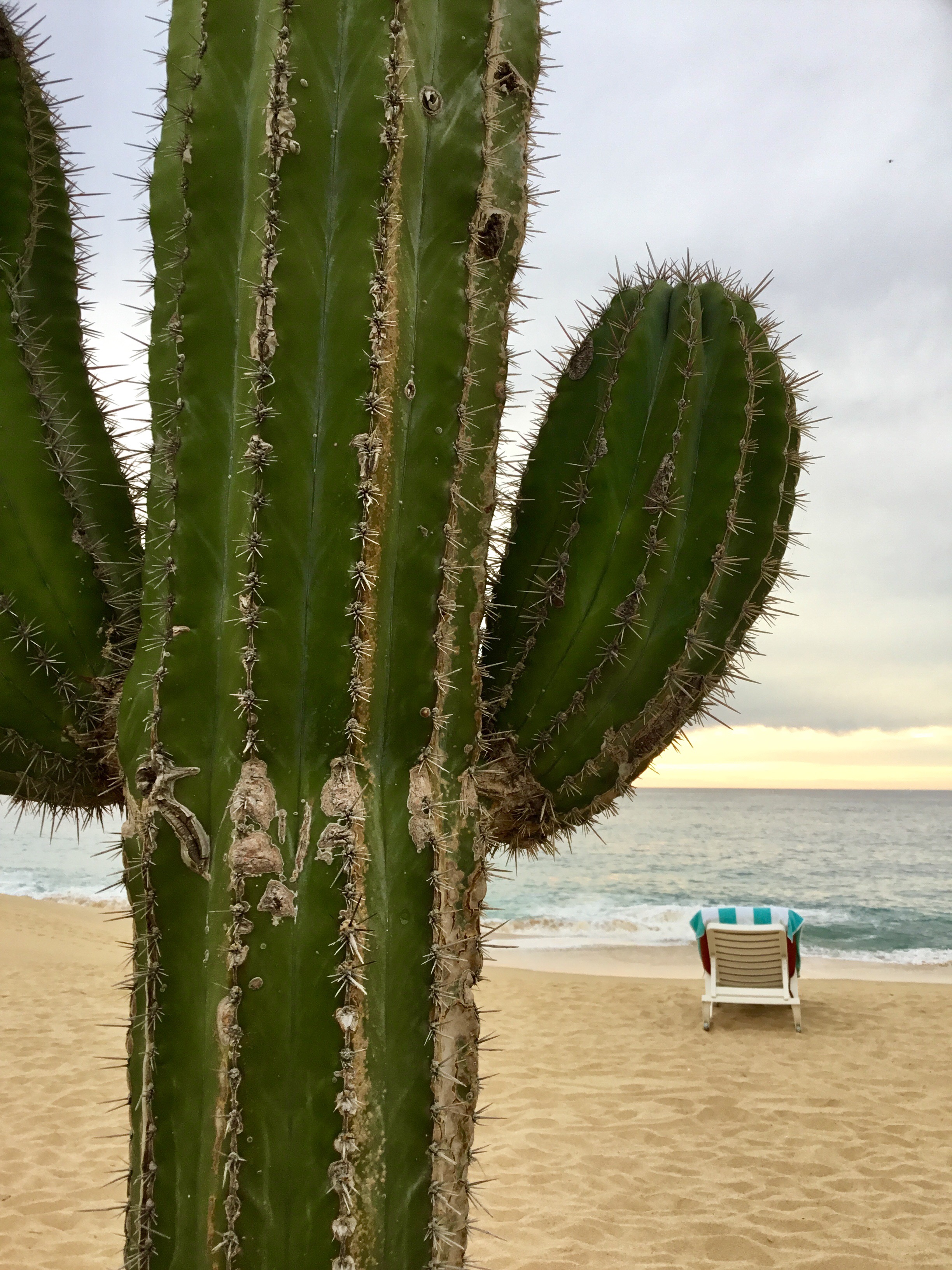
Los Cabos, Mexico
*an ongoing series of quotations – mostly from artists, to artists – that offers wisdom, inspiration, and advice for the sometimes lonely road we are on.
I always forget how important the empty days are, how important it may be sometimes not to expect to produce anything, even a few lines in a journal. I am still pursued by a neurosis about work inherited from my father. A day where one has not pushed oneself to the limit seems a damaged damaging day, a sinful day. Not so! The most valuable thing we can do for the psyche, occasionally, is to let it rest, wander, live in the changing light of a room, not try to be or do anything whatever.
May Sarton in Journal of a Solitude: The intimate diary of a year in the life of a creative woman
Comments are welcome!


 barbararachkoscoloreddust.com