Category Archives: Quotes
Pearls from artists* # 306

New York, NY
* an ongoing series of quotations – mostly from artists, to artists – that offers wisdom, inspiration, and advice for the sometimes lonely road we are on.
It is the responsibility of artists to pay attention to the world, pleasant or otherwise, and to help us live respectfully in it.
Artists do this by keeping their curiosity and moral sense alive, and by sharing with us their gift for metaphor. Often this means finding similarities between observable fact and inner experience – between birds in a vacant lot, say, and an intuition worthy of Genesis.
More than anything else, beauty is what distinguishes art. Beauty is never less than mystery, but it has within it a promise.
In this way, art encourages us to gratitude and engagement, and is of both personal and civic consequence.
Robert Adams in Art Can Help
Comments are welcome!
Pearls from artists* # 305
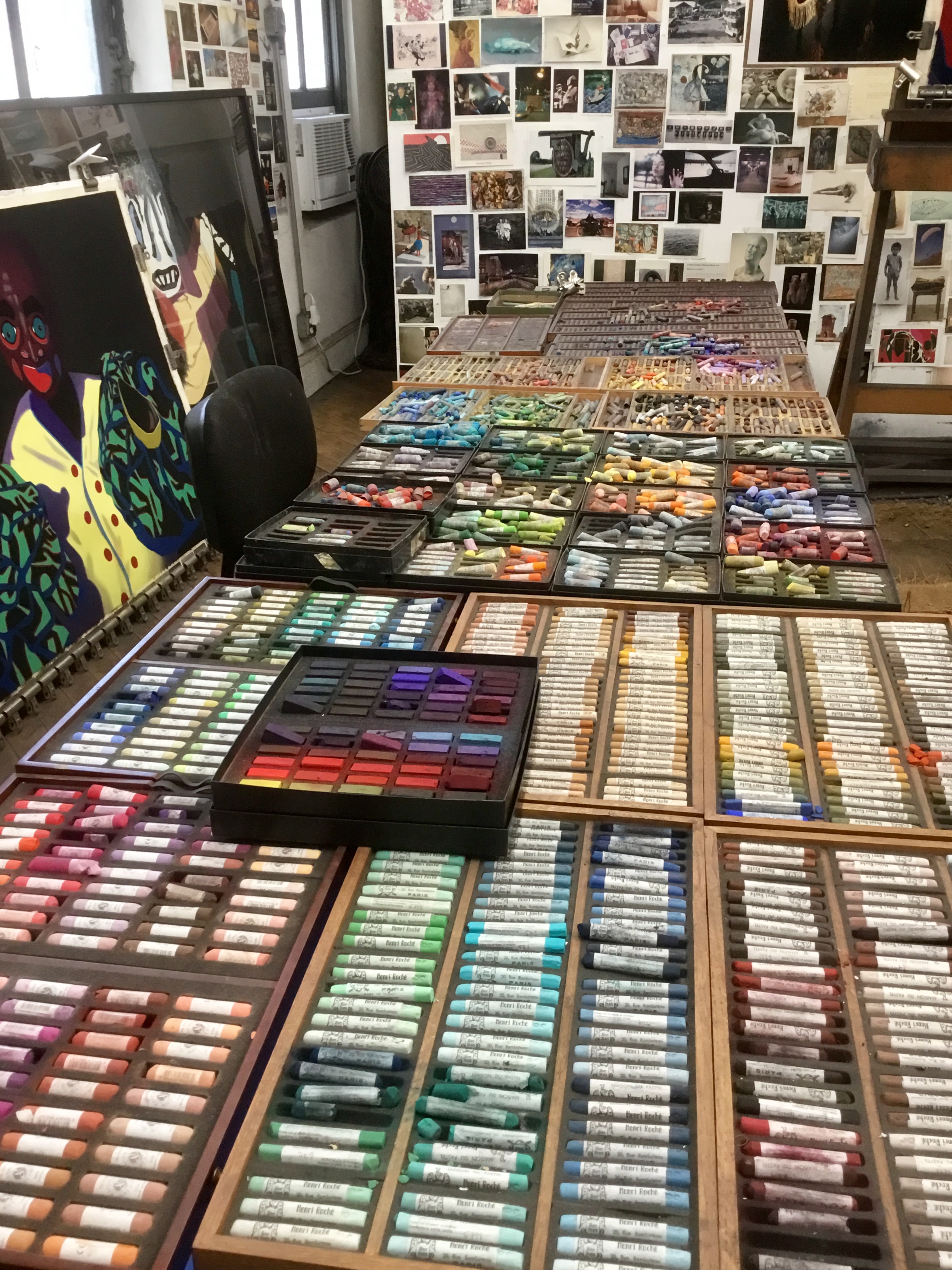
About half of Barbara’s pastels
* an ongoing series of quotations – mostly from artists, to artists – that offers wisdom, inspiration, and advice for the sometimes lonely road we are on.
When asked to talk about what I do, I’ve often compared writing with handicrafts – weaving, pot-making, woodworking. I see my fascination with the word as very like, say, the fascination with wood common to carvers, cabinetmakers – people who find a fine piece of old chestnut with delight, and study it, and learn the grain of it, and handle it with sensuous pleasure, and consider what’s been done with chestnut and what you can do with it, loving the wood itself, the mere material, the stuff of their craft.
Ursula K. Le Guin in No Time to Spare: Thinking About What Matters
Comments are welcome!
Pearls from artists* # 304

“Palaver,” soft pastel on sandpaper, 26″ x 20″
* an ongoing series of quotations – mostly from artists, to artists – that offers wisdom, inspiration, and advice for the sometimes lonely road we are on.
… my job as a fiction writer is to write fiction, not to review it. Art isn’t explanation. Art is what an artist does, not what an artist explains. (Or so it seems to me, which is why I have a problem with the kind of modern museum art that involves reading what the artist says about a work in order to find out why one should look at it or “how to experience” it).
Ursula K. Le Guin in No Time to Spare: Thinking About What Matters
Comments are welcome!
Pearls from artists* # 303
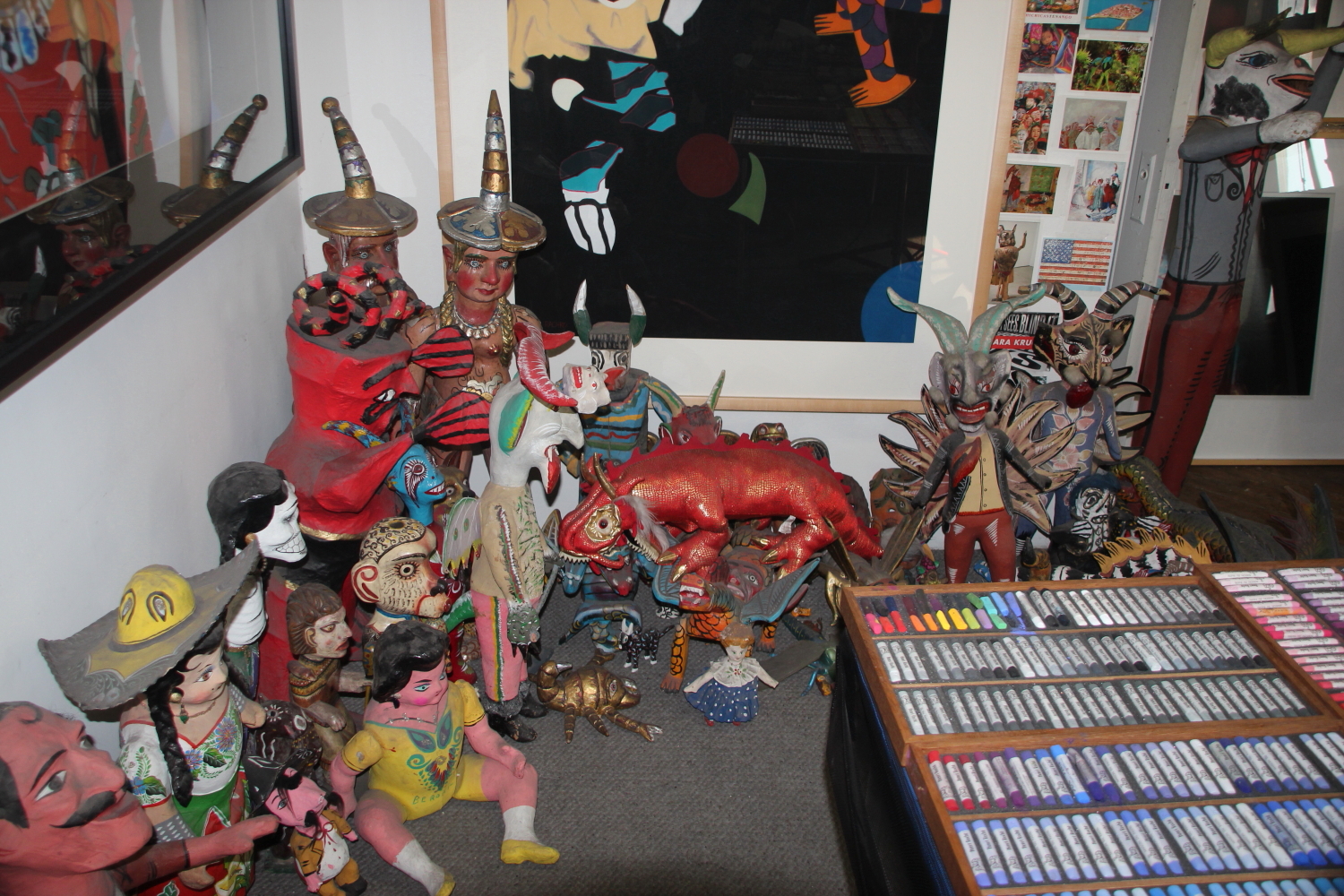
Barbara’s Studio
*an ongoing series of quotations – mostly from artists, to artists – that offers wisdom, inspiration, and advice for the sometimes lonely road we are on.
If the majority of aesthetic works fail to astonish us, then. it may have something to do with the ingrained insensitivity that is part and parcel of contemporary life. It may also have something to do with the fact that art, as Solzhenitsyn said so eloquently, is constantly being put to uses that are at odds with its essence. Indeed, the moment a work of art appears, all kinds of other factors come into play. Cultural institutions, social pressures, laws, customs, fashions, and trends pull it in every direction. Fame, money, conformism, attention-seeking, and knee-jerk rebellion can lure artists to abandon their own vision in order to emulate those of others, to adhere to formulas and paint by numbers, or to value external convention over vision. The inevitable result is a lot of bad art that couldn’t astonish anyone. It should come as no surprise, when looking over the glut of aesthetic objects that proliferate around us, if we feel the need to distinguish between authentic and inauthentic art – which is to say, art that astonishes us by attuning us to the radical mystery of being, and art that attempts to reinforce our shared illusions, comforting or intimidating us with the notion that there is nothing to wonder at since everything has been figured out.
J.F. Martel in Reclaiming Art in the Age of Artifice: A Treatise, Critique, and Call to Action
Comments are welcome!
Pearls from artists* # 302

“Epiphany,” soft pastel on sandpaper, 38″ x 58″
*an ongoing series of quotations – mostly from artists, to artists – that offers wisdom, inspiration, and advice for the sometimes lonely road we are on.
Regardless of personal convictions or professional concerns, an artist’s power comes down to two things: her sensitivity to the radical mystery of existence, and the artistry and craft with which she can channel that mystery into an object or performance. Neither existential awe nor a given metaphysical outlook need to serve as an explicit motivation. Simply, the emergence of artistic vision – and the need to express the vision without distorting or conceptualizing it – is contingent upon the underlying wonderment at being itself, a wonderment without which there would be no art.
J.F. Martel in Reclaiming Art in the Age of Artifice: A Treatise, Critique, and Call to Action
Comments are welcome!
Pearls from artists* # 301

Untitled reference photo for a pastel painting in the “Bolivianos” series
*an ongoing series of quotations – mostly from artists, to artists – that offers wisdom, inspiration, and advice for the sometimes lonely road we are on.
In 1917 the ballet impresario Sergei Diaghilev commissioned a new libretto from Jean Cocteau. When the young poet asked for advice on how to proceed, Diaghilev replied with a simple directive: “Astonish me.” The phrase would serve Cocteau as a mantra throughout his career, resurfacing, for instance, at the beginning of his classic film Orpheus. Not surprising, as few statements could better encapsulate the impetus that has driven artistic creation since the beginning. Astonishment is the litmus test of art, the sign by which we know we have been magicked out of practical and utilitarian enterprises to confront the bottomless dream of life in sensible form. Art astonishes and is born of astonishment. There is only one thing that it can be said to “communicate” more effectively than other mediums can, and that is “the weirdness of the Real.”
J.F. Martel in Reclaiming Art in the Age of Artifice: A Treatise, Critique, and Call to Action
Comments are welcome!
Pearls from artists* # 300
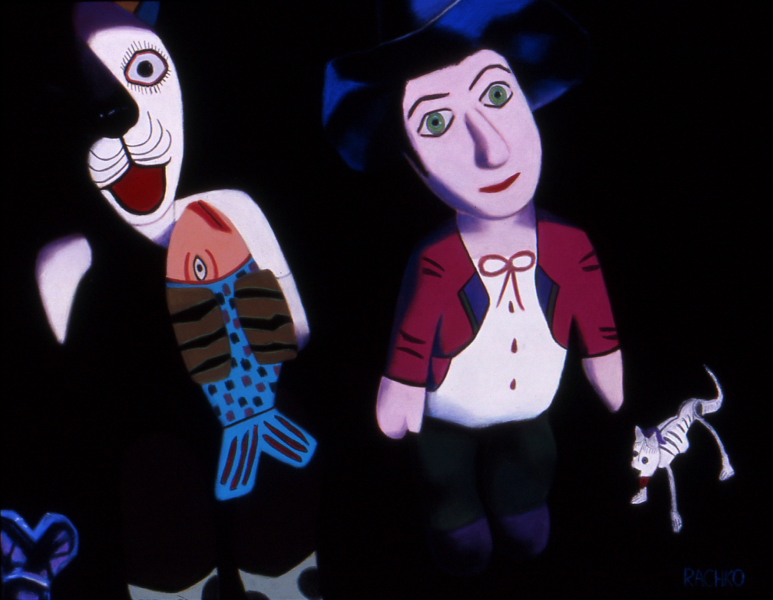
“Offering,” soft pastel on sandpaper, 20″ x 26″
*an ongoing series of quotations – mostly from artists, to artists – that offers wisdom, inspiration, and advice for the sometimes lonely road we are on.
Art breaks down the barriers that normally stand between the physical and the psychic, between your soul and the souls of others. “Through art alone are we able to emerge from ourselves, to know what another person sees of a universe which is not the same as our own and of which, without art, the landscapes would remain as unknown to us as those that may exist on the moon.” For the French novelist Marcel Proust, who wrote those words, art is a meeting place in which human beings commune at a level that ordinary language and sign systems do not allow. Without art, connection at this deeper level is impossible.
J.F. Martel in Reclaiming Art in the Age of Artifice: A Treatise, Critique, and Call to Action
Comments are welcome!
Pearls from artists* # 299

“The Storyteller,” soft pastel on sandpaper, 20″ x 26″
*an ongoing series of quotations – mostly from artists, to artists – that offers wisdom, inspiration, and advice for the sometimes lonely road we are on.
The artist is always and for all time a seer, and artistic creation is always and for all time an act of prophecy.
The artist does not choose the prophecy. Rather, the prophetic shines through her work. It comes from elsewhere.
The artist therefore needs enough courage to stay true to the work at hand. Even greater courage is required of those to whom the finshed work is given, for their interests will always recommend dismissing the vision for fear of its implications.
J.F. Martel in Reclaiming Art in the Age of Artifice: A Treatise, Critique, and Call to Action
Comments are welcome!
Pearls from artists* # 298

Untitled c-print, 24″ x 24″ edition of 5
*an ongoing series of quotations – mostly from artists, to artists – that offers wisdom, inspiration, and advice for the sometimes lonely road we are on.
Interviewer: What do you think about the artist being supported by the state?
Parker: Naturally, when penniless, I think it’s superb. I think that the art of the country so immeasurably adds to its prestige that if you want to have writers and artists – persons who live precariously in our country – the state must help. I do not think that any kind of artist thrives under charity, by which I mean one person or organization giving him money, here and there, this and that – that’s no good. The difference between the state giving and the individual patron is that one is charity and one isn’t. Charity is murder and you know it. But I do think that if the government supports its artists, they need have no feeling of gratitude – the meanest and most sniveling attribute in the world – or baskets being brought to them, or apple polishing. Working for the state, for Christ’s sake, are you grateful to your employers? Let the state see what its artists are trying to do – like France and the Academie Francaise. The artists are a part of their country and their country should recognize this, so both it and the artists can take pride in their efforts. Now I mean that, my dear.
Dorothy Parker in Women at Work: Interviews From the Paris Review
Comments are welcome!
Pearls from artists* # 297
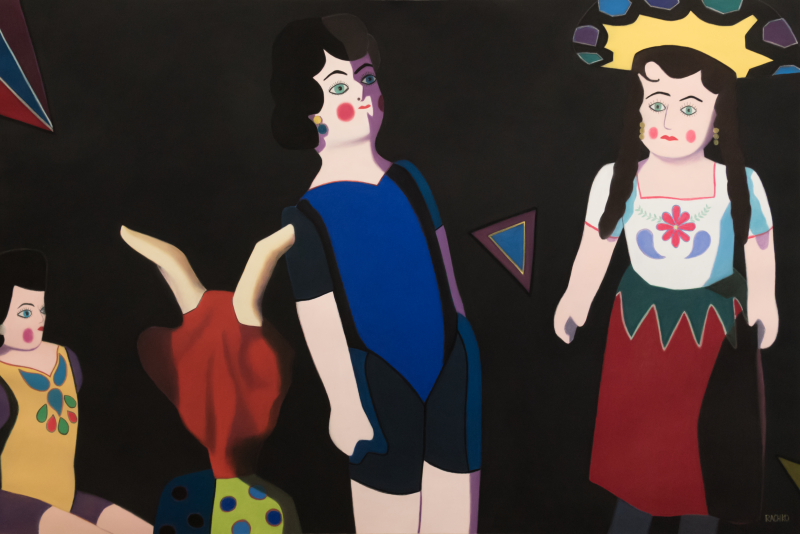
“Conundrum,” soft pastel on sandpaper, 38″ x 58″
*an ongoing series of quotations – mostly from artists, to artists – that offers wisdom, inspiration, and advice for the sometimes lonely road we are on.
The most valuable critic of contemporary work is another artist engaged in the same game. Yet few misunderstandings exceed those between two painters engaged upon different kinds of things. Only long after can an observer resolve the differences between such painters, when their games are all out, and fully available for comparison.
George Kubler in The Shape of Time: Remarks on the History of Things
Comments are welcome!


 barbararachkoscoloreddust.com