Category Archives: Photography
Pearls from artists* # 288
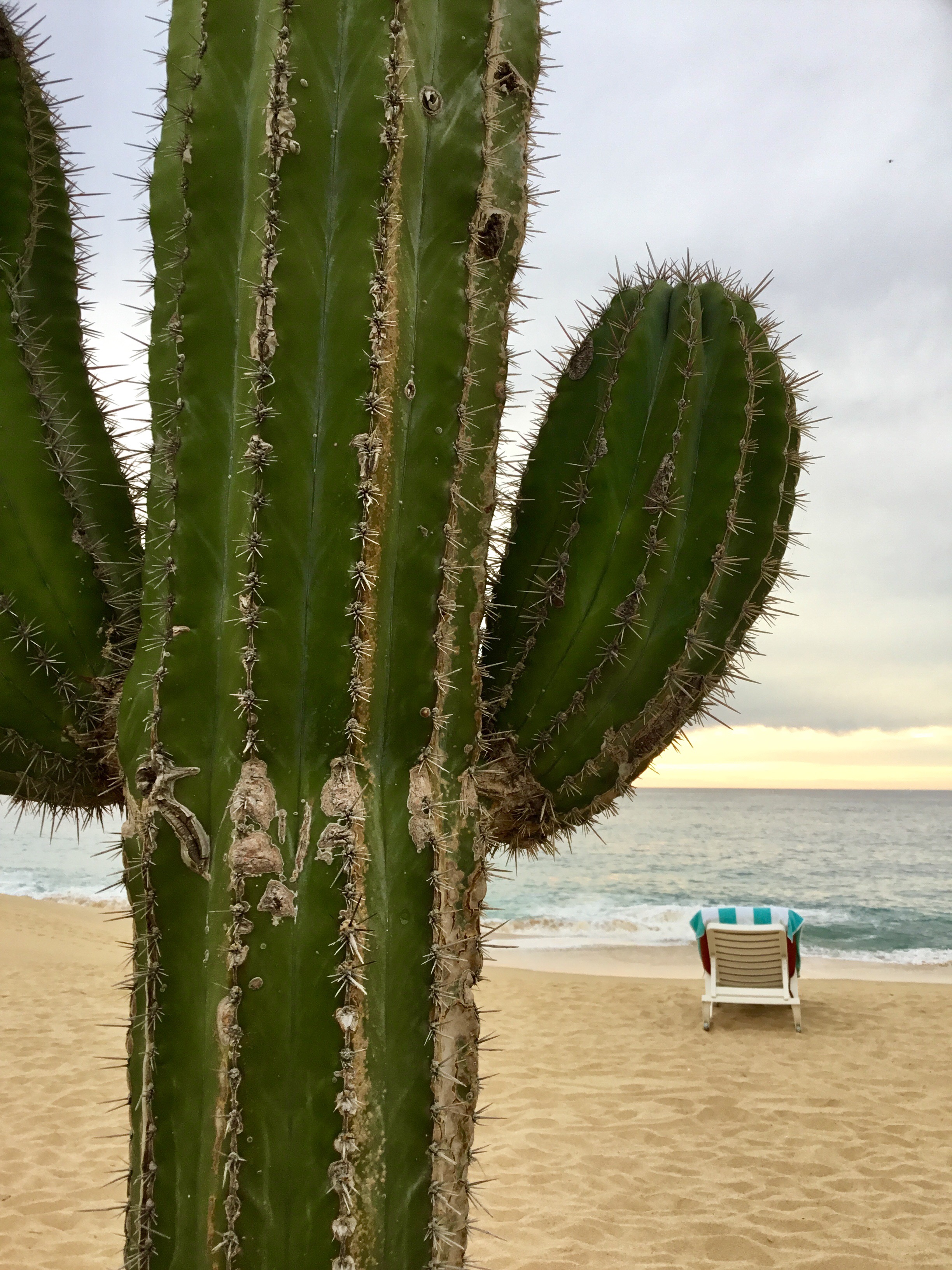
Los Cabos, Mexico
*an ongoing series of quotations – mostly from artists, to artists – that offers wisdom, inspiration, and advice for the sometimes lonely road we are on.
I always forget how important the empty days are, how important it may be sometimes not to expect to produce anything, even a few lines in a journal. I am still pursued by a neurosis about work inherited from my father. A day where one has not pushed oneself to the limit seems a damaged damaging day, a sinful day. Not so! The most valuable thing we can do for the psyche, occasionally, is to let it rest, wander, live in the changing light of a room, not try to be or do anything whatever.
May Sarton in Journal of a Solitude: The intimate diary of a year in the life of a creative woman
Comments are welcome!
Travel photo of the month*
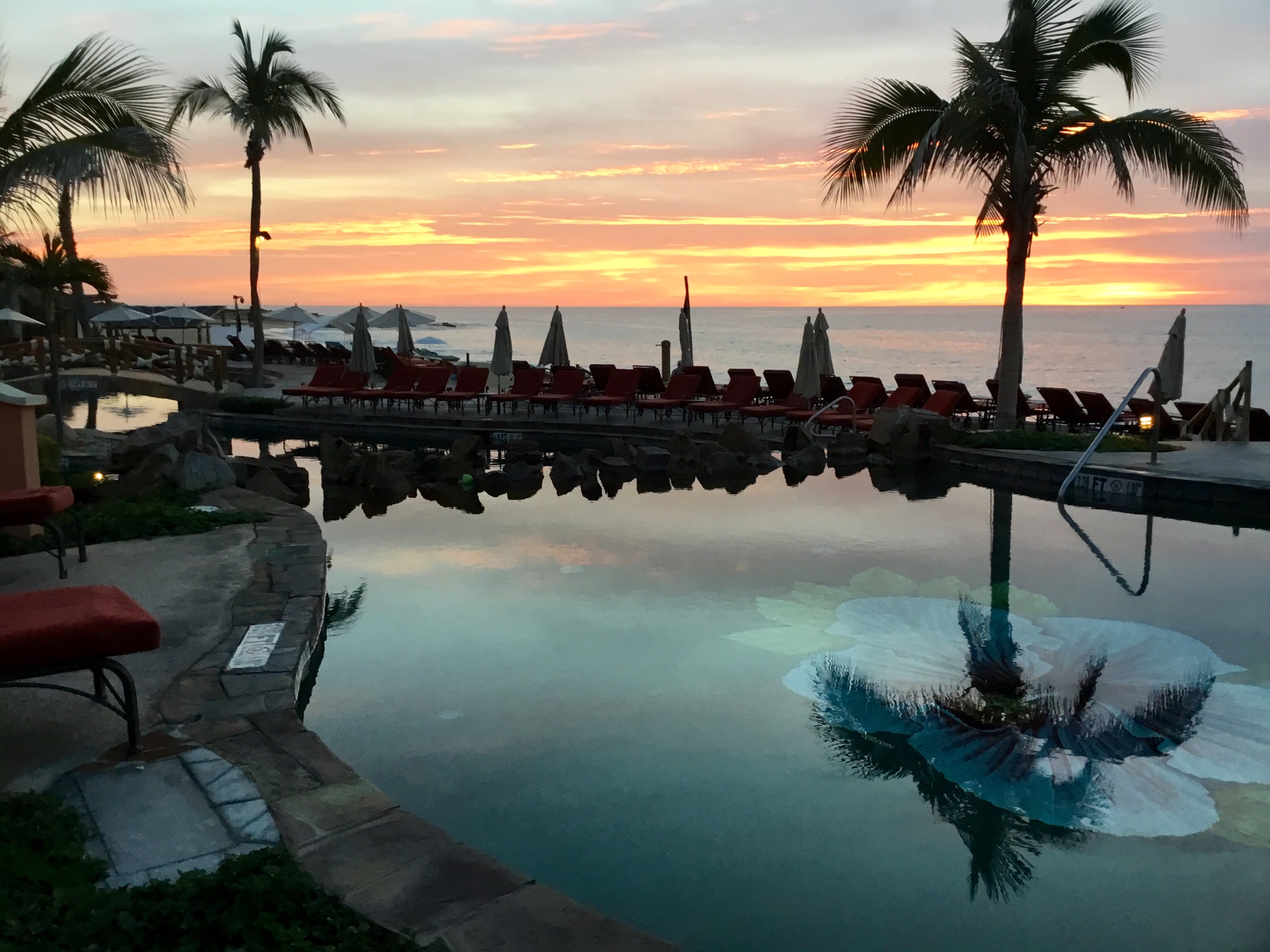
Morning in Los Cabos, Mexico
*Favorite travel photographs that have not yet appeared in this blog.
Comments are welcome!
Q: Would you share your current elevator pitch?

Barbara’s studio
A: Here it is:
I live in New York and have been a working artist for more than thirty years. I create original pastel paintings that use my large collection of Mexican and Guatemalan folk art – masks, carved wooden animals, papier mache figures, and toys – as subject matter.
Blending with my fingers, I spend months painstakingly applying dozens of layers of soft pastel onto acid-free sandpaper. My self-invented technique achieves extraordinarily rich, vibrant color and results in paintings that uniquely combine reality, fantasy, and autobiography.
My background is extremely unusual for an artist. I am a pilot, a retired Navy Commander, and a 9/11 widow. Besides making art, I am a published author and blogger best known for my eBook, “From Pilot to Painter,” on Amazon and iTunes, and my popular blog, “Barbara Rachko’s Colored Dust.”
Please see images and more at http://barbararachko.art/en/
Comments are welcome!
Travel photo of the month*
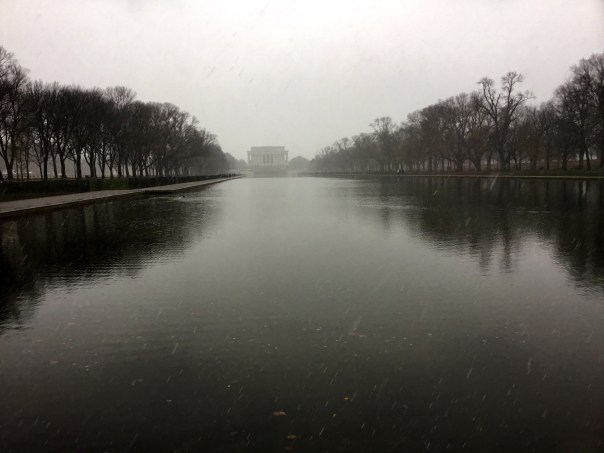
First snow of the season, Washington, DC
*Favorite travel photographs that have not yet appeared in this blog.
Comments are welcome!
Pearls from artists* # 273

The Lightning Field
* an ongoing series of quotations – mostly from artists, to artists – that offers wisdom, inspiration, and advice for the sometimes lonely road we are on.
The night sky was clear, too many stars.
Satellites described distinctive arcs, moving too fast for
nature across our broad field of vision.
The desert floor was drenched with rainwater, and our boots
suctioned the mud.
The moon’s shy face revealed only a sliver, but the starlight
was strong enough for the poles to pick up its silver.
We watched time, light, and distance compress over The
Lightning Field.
The dome of the sky was palpable,
papered in stars.
How long ago did the light that reflected in the poles leave
its source?
Laura Raicovich in At The Lightning Field
Comments are welcome!
Pearls from artists* # 268

The Lightning Field, Quemado, NM
* an ongoing series of quotations – mostly from artists, to artists – that offers wisdom, inspiration, and advice for the sometimes lonely road we are on.
Visit 1: October 18 and 19, 2003, continued
The long drive through the New Mexico landscape from Albuquerque to Quemado to The Lightning Field is a gradual slide towards emptiness, a prelude. Or a subtle preparation for the eyes and mind. The practicalities of the cabin provide simple accommodations that address basic needs to maximize focus and minimize distraction.
At The Lightning Field, my experience of space began with the rational structure of the grid, which was eventually exposed by less rational behavior.
The artwork locates the physical environment in space, and my perception of the work began with the regularity of the grid. The repeated unit of the pole was not significant, only its holistic engagement between human scale and the landscape of the sky. Then the effects of light, the anticipation of cycles of change through the course of the day and night, the possibility of the unpredictable.
Laura Raicovich in At The Lightning Field
Comments are welcome!
Pearls from artists* # 267

The Lightning Field, Quemado, NM
* an ongoing series of quotations – mostly from artists, to artists – that offers wisdom, inspiration, and advice for the sometimes lonely road we are on.
In 1968, art critic David Bourdon wrote (before The Lightning Field was built): “De Maria is after a deeper commitment on the part of the spectator, who is asked to become an agent or catalyst in the fulfillment of the work… the burden of response is placed not on the sculpture but on the spectator.
Laura Raicovich in At The Lightning Field
Comments are welcome!
Pearls from artists* # 266
Washington, DC
* an ongoing series of quotations – mostly from artists, to artists – that offers wisdom, inspiration, and advice for the sometimes lonely road we are on.
… it is easy to describe the natural objects that we can hold in our hands, or move into view, as we would describe works of art: and this conditions the kind of pleasure we take in them. They are objets trouves, jewels, treasures, whose perfection seems to radiate from themselves, as from an inner light. Landscapes by contrast are very far from works of art – they owe their appeal not to symmetry, unity and form, but to an openness, grandeur and world-like expansiveness, in which it is we and not they that are contained.
Roger Scruton in Beauty: A Very Short Introduction
Comments are welcome!
Q: Would you speak about how important it was to get back to work after losing your husband on 9/11?

“She Embraced It and Grew Stronger,” 2003, the first pastel painting I completed after Bryan was killed
A: On September 11, 2001, my husband Bryan, a high-ranking federal government employee, a brilliant economist (with an IQ of 180 he is still the smartest man I’ve ever met) and a budget analyst at the Pentagon, was en route to Monterrey, CA to give his monthly guest lecture for an economics class at the Naval Postgraduate College. He had the horrible misfortune of flying out of Dulles airport and boarding the plane that was high-jacked and crashed into the Pentagon, killing 189 people. Losing Bryan was the biggest shock of my life and devastating in every possible way.
The following summer I was ready to – I HAD to – get back to work. Learning about photography and pastel painting became avenues to my well-being. I use reference photos for my paintings, so my first challenge was to learn how to use Bryan’s 4 x 5 view camera (Bryan always took these reference photos for me).
In July 2002 I enrolled in a one-week view camera workshop at the International Center of Photography in New York. Much to my surprise, I had already acquired substantial technical knowledge from watching Bryan. Still, after the initial workshop, I threw myself into this new medium and continued studying photography at ICP for several years. I began with Photography I and enrolled in many more classes until I gradually learned how to use Bryan’s extensive camera collection, to properly light my setups, and to print large chromogenic photographs in a darkroom.
In October 2009 it was very gratifying to have my first solo photography exhibition with HP Garcia in New York. (Please see http://barbararachko.art/images/PDFS/BarbaraRachko-HPGargia.pdf). I vividly remember tearing up at the opening as I imagined Bryan looking down at me with his beautiful smile, beaming as he surely would have, so proud of me for having become a respected photographer.
Continuing to make art had seemed an impossibility after Bryan’s death. However, the first large pastel painting that I created using a self-made reference photograph proved my life’s work could continue. The title of that painting, “She Embraced It and Grew Stronger,” is certainly autobiographical. “She” is me, and “it” means continuing on without Bryan and living life for both of us.
Comments are welcome!
Q: Would you elaborate as to how your recent trip to Bolivia is influencing your work just now?
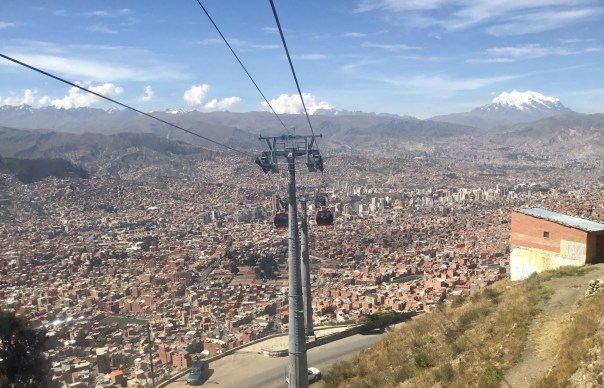
La Paz, Bolivia
A: I consider myself extremely fortunate to have seen a mask exhibition at the National Museum of Ethnography and Folklore when I visited La Paz in May. Presented as they were against black walls with dramatic spot-lighting, the masks looked exactly like 3D versions of my paintings! These old Bolivian masks were stunning.
I spent a long time there composing photographs on my iPad. Immediately I knew this exhibition was a gift because I now had material to keep me busy in the studio for several years.
I have completed the first pastel painting in my new series, “Bolivianos,” and am far along into the second. I’m looking forward to many more to come!
Comments are welcome!



