Category Archives: Pastel Painting

Q: Do your materials have properties that allow you to maximize what you depict in your work?
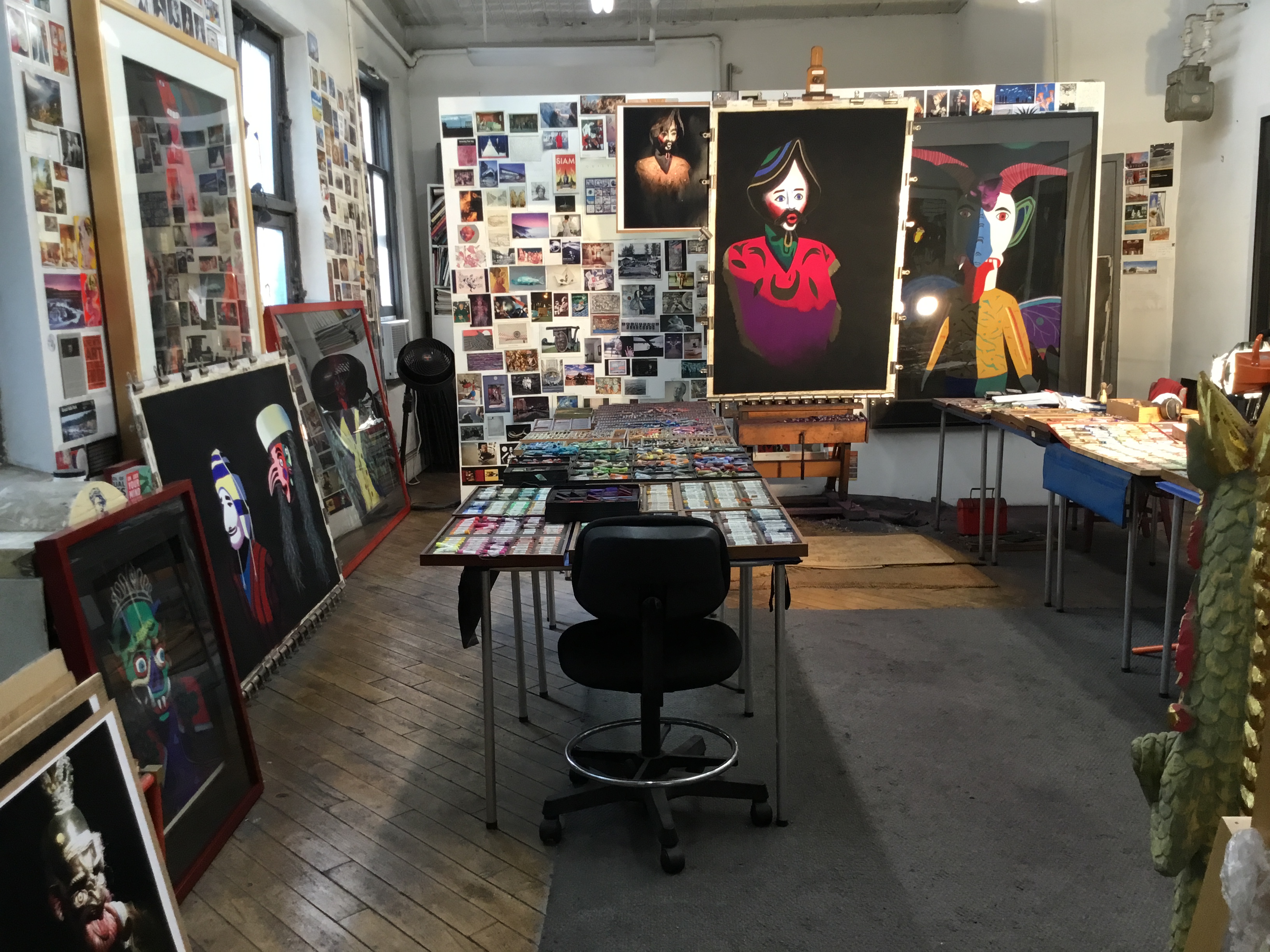
Barbara’s studio
A: I work exclusively in soft pastel on sandpaper. Pastel, which is pigment and a binder to hold it together, is as close to unadulterated pigment as an artist can get. It allows for very saturated color, especially as I utilize the self-invented techniques developed and mastered over more than thirty years as an artist. I believe my “science of color” to be unique, completely unlike how any other artist works. I spend three or four months on each painting, applying pastel and blending the layers together to mix new colors directly on the paper.
The sandpaper support allows the build up of 25 to 30 layers of pastel as I slowly and meticulously work for hundreds of hours to complete a painting. The paper is extremely forgiving. I can change my mind, correct, refine, etc. as much as I want until a painting is the best I can create at that moment in time.
Comments are welcome!
Q: What’s on the easel today?
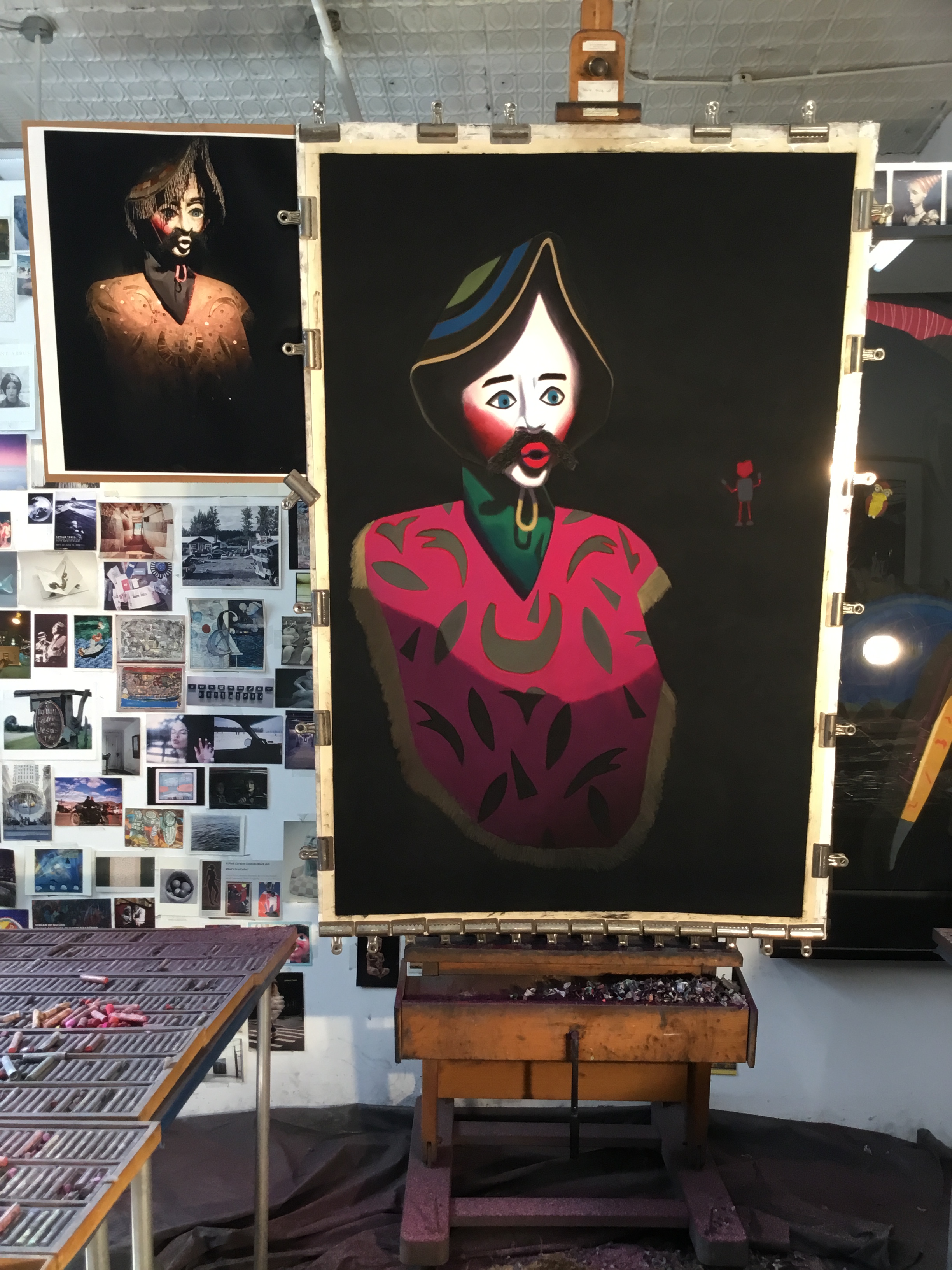
Work in progress
A: I continue slowly working on a 58” x 38” pastel painting. For now I’ve added a small figure on the right. I’m not sure yet whether I’ll keep it.
Comments are welcome!
Q: What’s on the easel today?
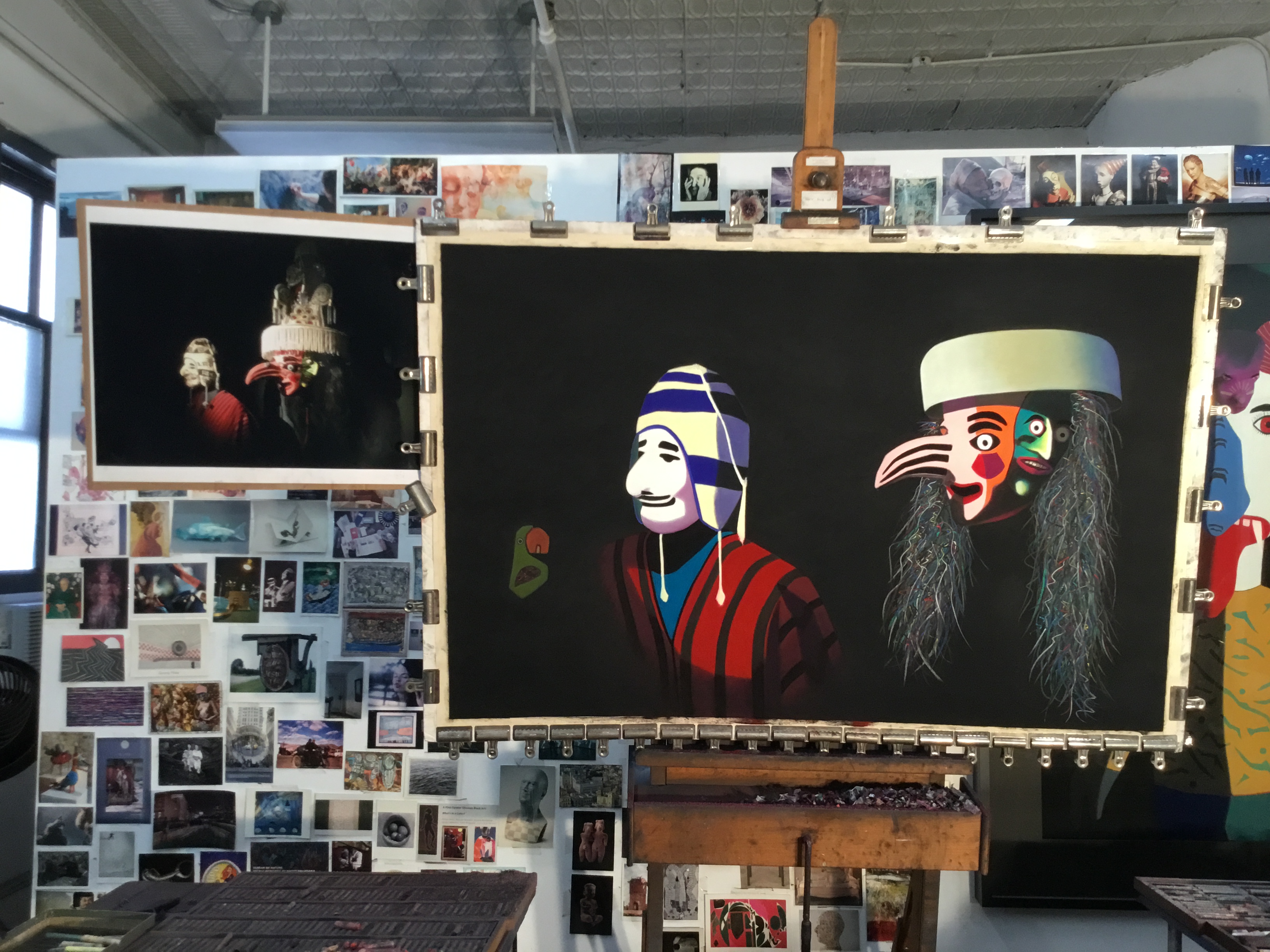
Work in progress
A: I continue working on “Acolytes,” soft pastel on sandpaper, 38” x 58.” It’s slow going at this stage as I refine my drawing and bring everything to a high state of finish. My work is all about details.
Comments are welcome!
Q: How much of your work is autobiographical?

“The Champ,” soft pastel on sandpaper, 26″ x 20″
A: I suppose all of it is, in the sense that often I can look at a particular pastel painting and remember what was happening in my life when I made it. As I get older, however, it’s becoming more difficult to remember the circumstances surrounding my earliest work. Certainly, the cultures of an ever-expanding number of countries – Bolivia last year – are influencing my imagery for the better.
Comments are welcome!
Q: What’s on the easel today?
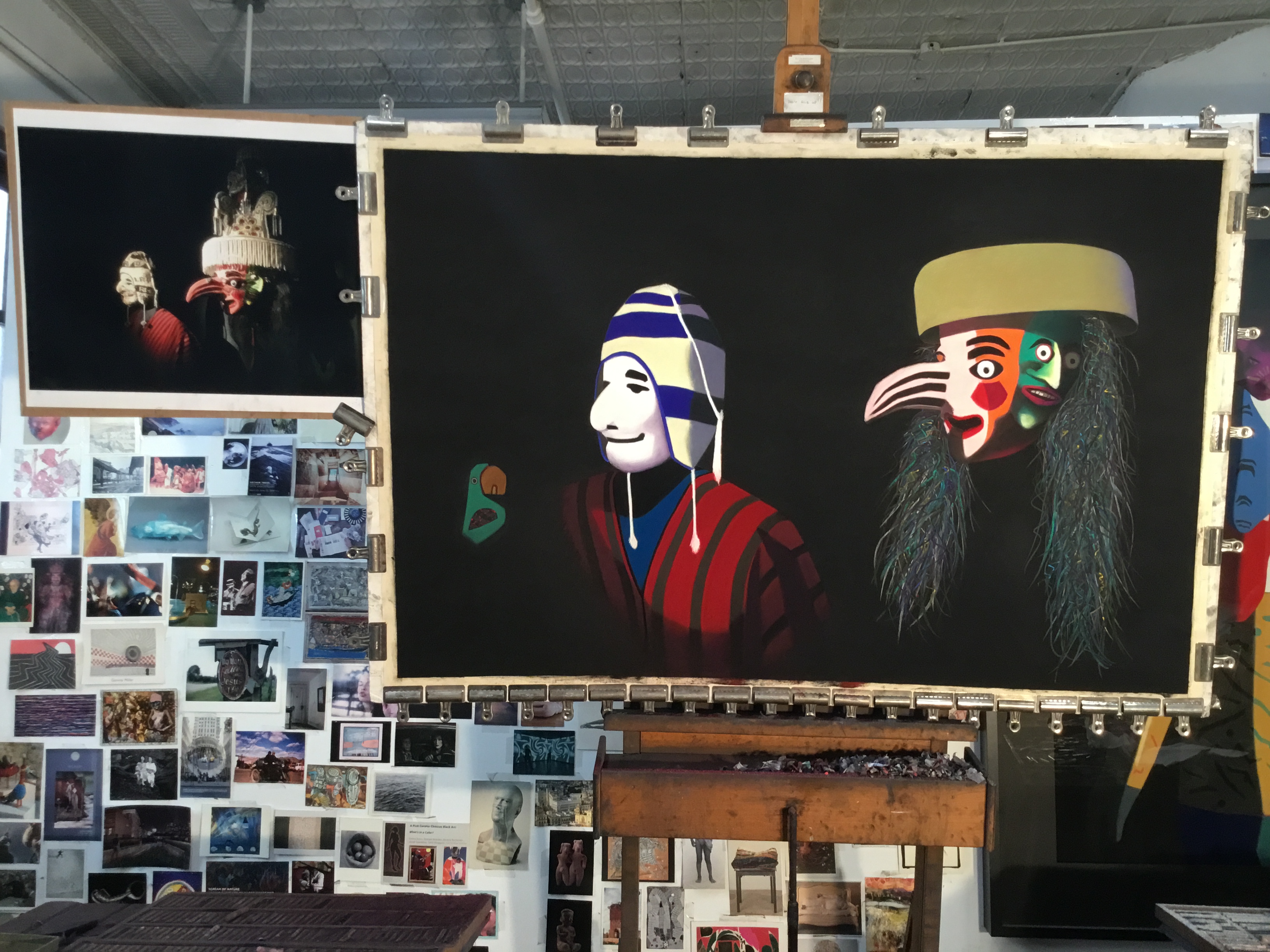
Work in progress
A: I continue working on “Acolytes,” soft pastel on sandpaper, 38” x 58.”
Comments are welcome!
Q: Do you have a favorite painting among all the work you have created?
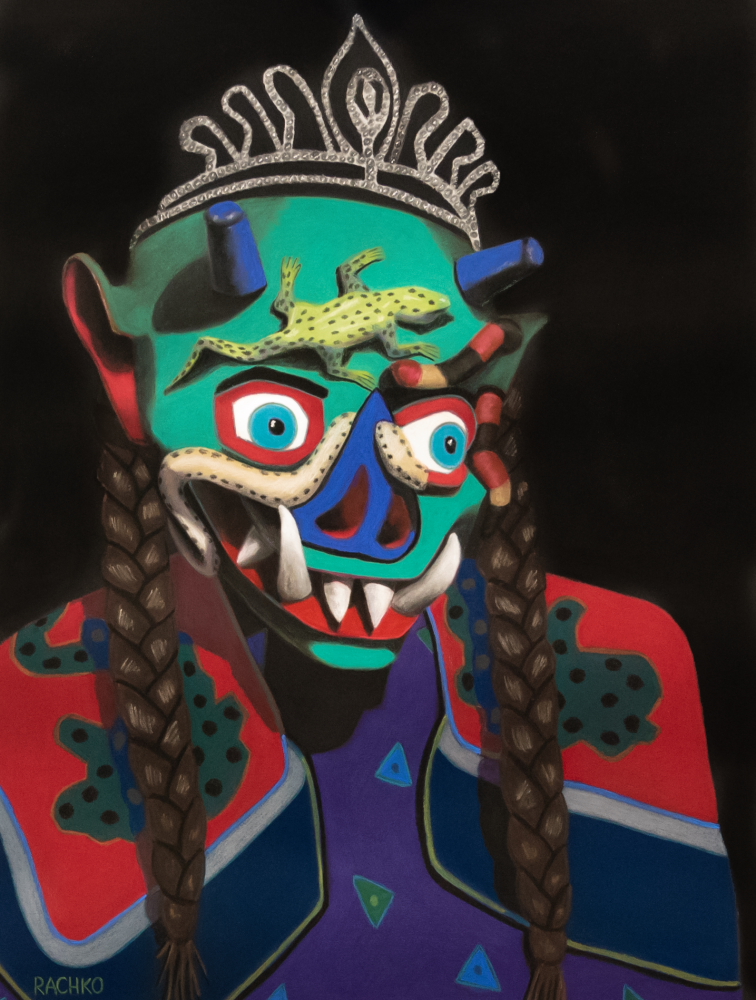
”Shamanic,” soft pastel on sandpaper, 26” x 20”
A: Generally, it’s the last one I completed, perhaps because it encapsulates everything I’m currently thinking about. At the moment my favorite is “Shamanic.”
I believe all of my prior experience in and out of the studio has contributed to making me a better artist and also a better person. So whichever work I finished last, seems the best somehow, and it’s also my favorite.
I wonder, do other artists feel this way, too?
Comments are welcome!
Q: What’s on the easel today?
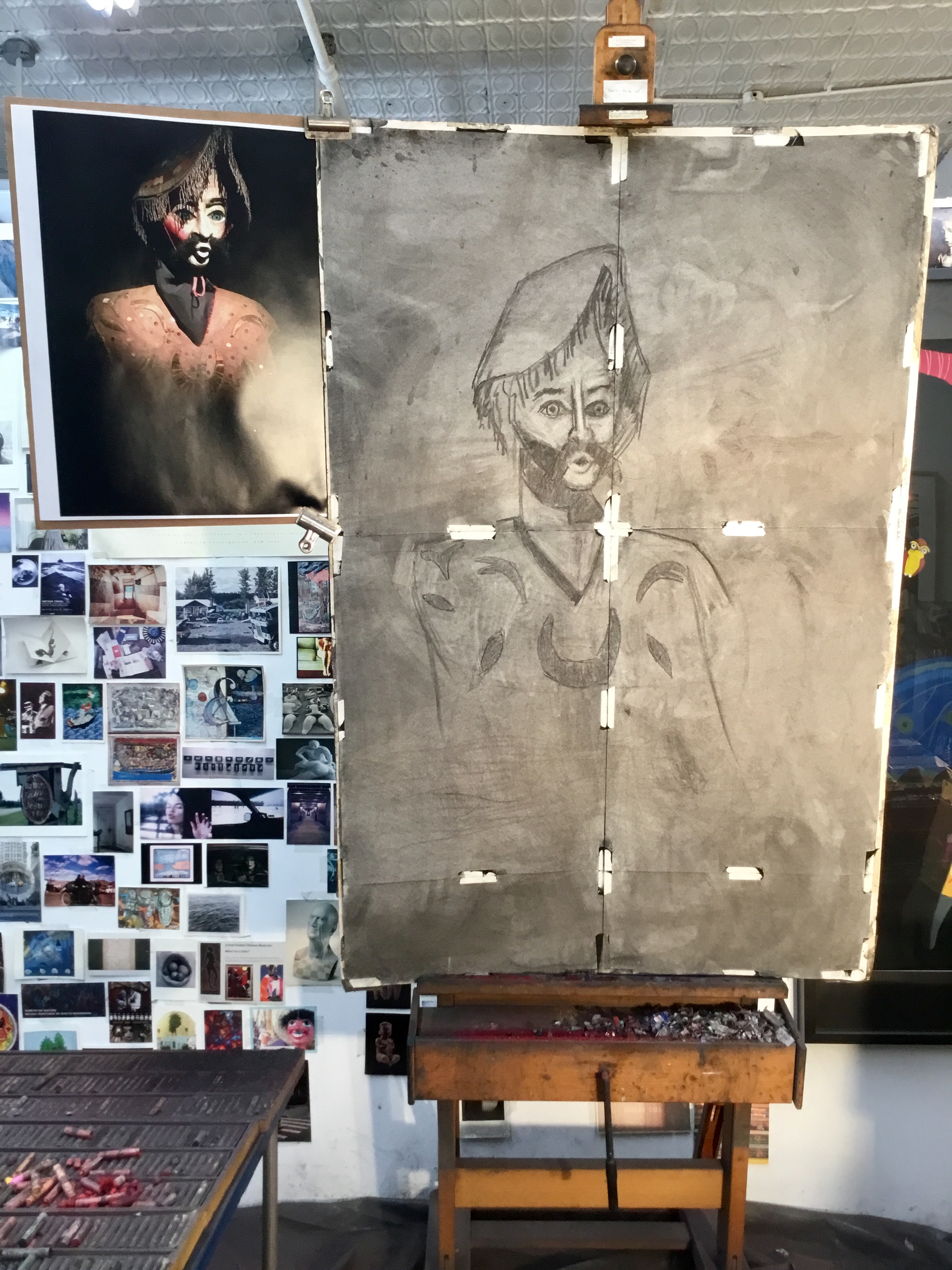
Preliminary sketch
A: I’m working on a preliminary charcoal drawing for my next large pastel painting. It will be number seven in the “Bolivianos” series.
Comments are welcome!
Q: What is more important to you, the subject of the painting or the way it is executed?

“Sam and Bobo,”soft pastel on sandpaper, 36″ x 31”, 1989
A: In a sense my subject matter – folk art, masks, carved wooden animals, papier mâché figures, toys – chose me. With it I have complete freedom to experiment with color, pattern, design, and other formal properties. In other words, although I am a representational artist, I can do whatever I want since the depicted objects need not look like real things. Execution is everything now.
This was not always the case. I started out in the 1980s as a traditional photorealist, except I worked in pastel on sandpaper. (For example, see the detail in Sam’s sweater above). As I slowly learned and mastered my craft, depicting three-dimensional people and objects hyper-realistically in two dimensions on a piece of sandpaper was thrilling… until one day it wasn’t.
My personal brand of photorealism became too easy, too limiting, too repetitive, and SO boring to execute! In 1989 I had at last extricated myself from a dull career as a Naval officer working in Virginia at the Pentagon. Then after much planning, in 1997 I was a full-time professional artist working in New York.
Certainly I was not going to throw away this opportunity by making boring photorealist art. I wanted to do so much more as an artist: to experiment with techniques, with composition, to see what I could make pastel do, to let my imagination play a larger role in the paintings I made. I was ready to devote the time and do whatever it took to push my art further.
After spending the early creative years perfecting my technical skills, I built on what I had learned. I began breaking rules – slowly at first – in order to push myself onward. And I continue to do so, never knowing what’s next. Hopefully, in 2018 my art is richer for it.
Comments are welcome!
Q: Having worked as an artist for more than three decades, you and your work finally are becoming well known. Do you ever receive fan letters?
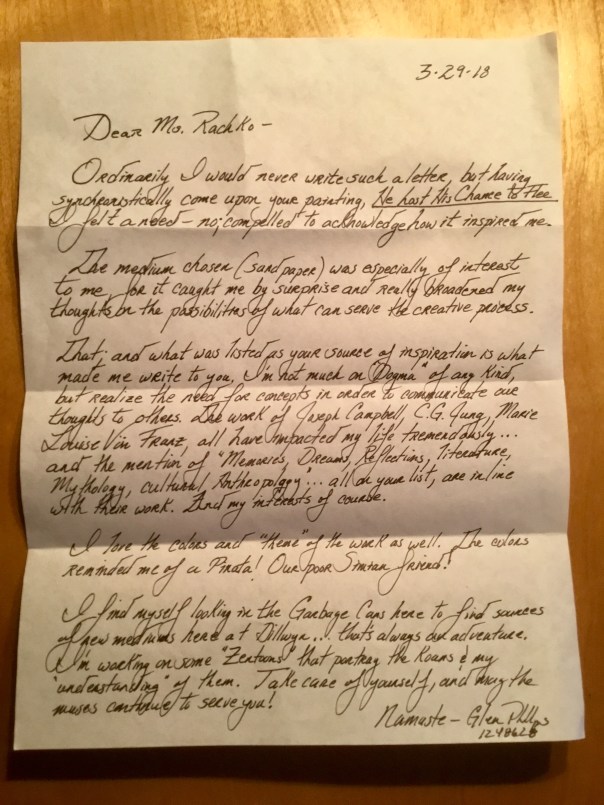
Letter from a fan
A: Yes, I do hear from fans. Recently I received the hand-written letter pictured above. It’s from a well-read inmate in a Virginia prison. I chuckled when I read it because Glen was taken with an old pastel painting of mine called, “He Lost His Chance to Flee”!
It’s a lovely letter. I’m touched to know that my work is inspiring people to think about and make art!
Comments are welcome!
Start/Finish of “Shamanic,” soft pastel on sandpaper, 26″ x 20”
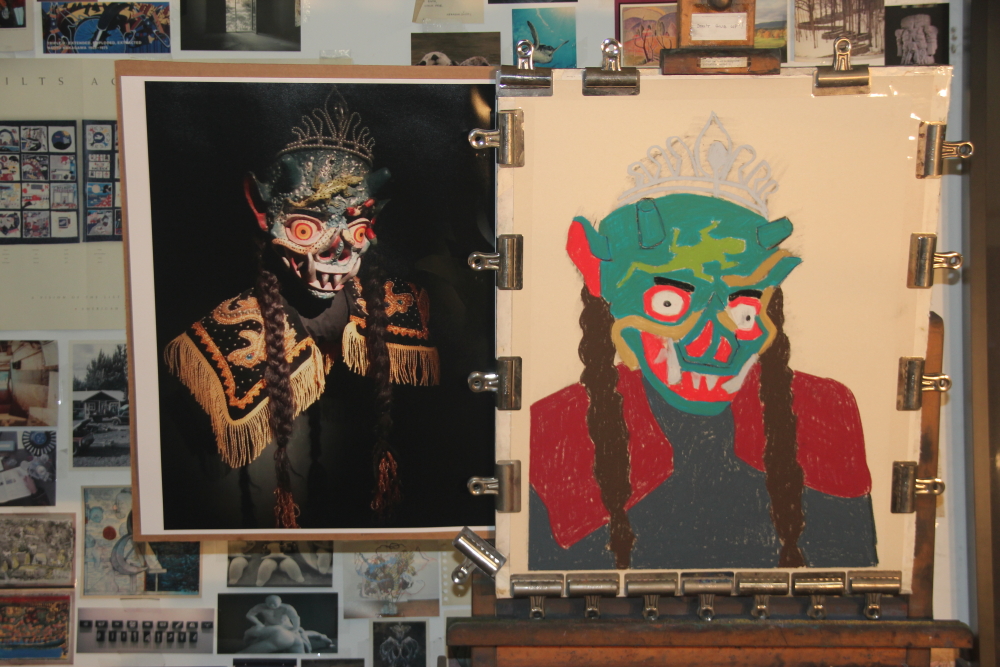
Start
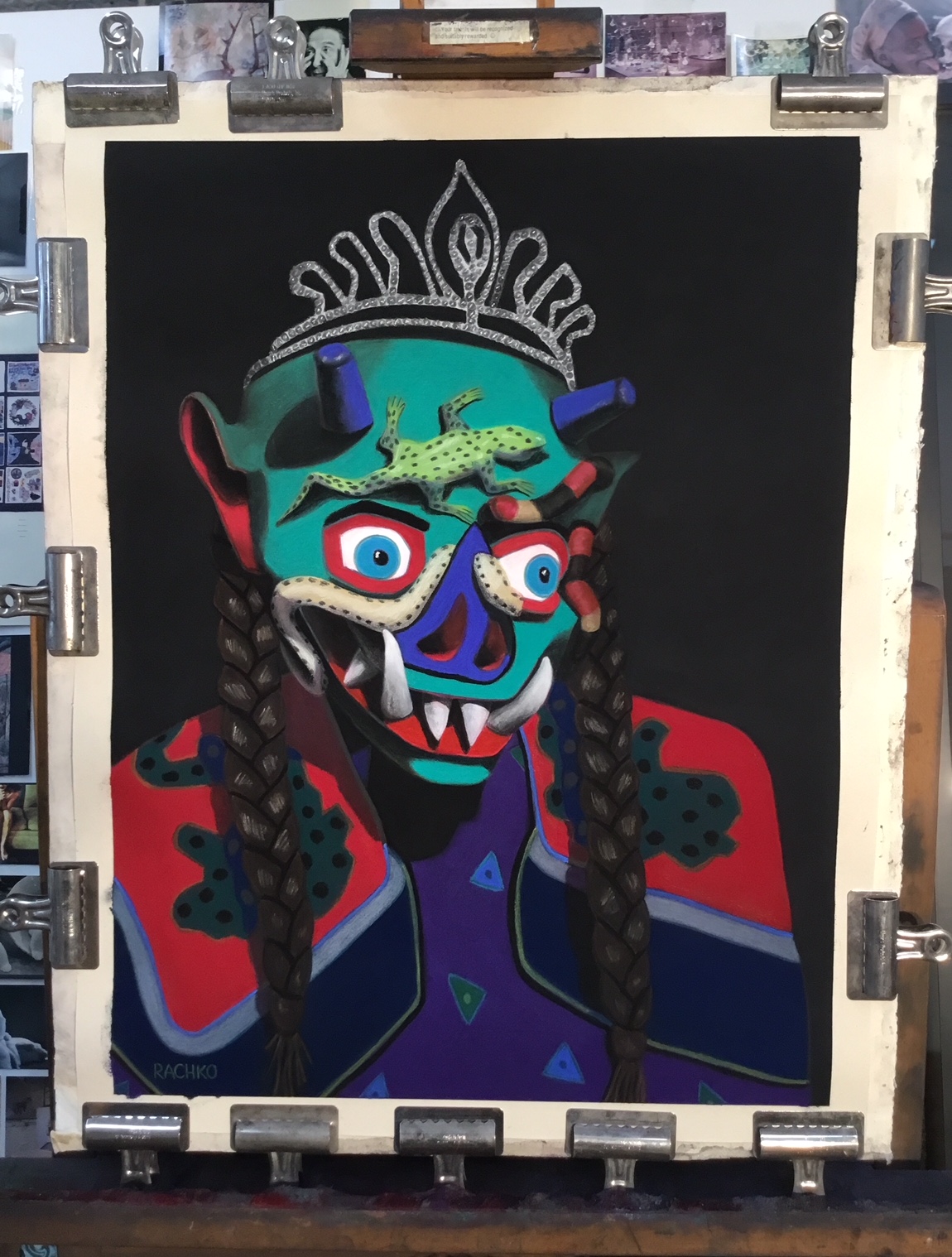
Finish
This one was tough going, but finally it’s ready for the framer!
Comments are welcome!


 barbararachkoscoloreddust.com