Category Archives: Creative Process
Pearls from artists* # 283

Wintry day in DC
*an ongoing series of quotations – mostly from artists, to artists – that offers wisdom, inspiration, and advice for the sometimes lonely road we are on.
I live alone, perhaps for no good reason, for the reason that I am an impossible creature, set apart by a temperament I have never learned to use as it could be used, thrown off by a word, a glance, a rainy day, or one drink too many. My need to be alone is balanced against my fear of what will happen when suddenly I enter the huge empty silence if I cannot find support there. I go up to Heaven and down to Hell in an hour, and keep alive only by imposing upon myself inexorable routines. I write too many letters and too few poems. It may be outwardly silent here but in the back of my mind is a clamor of human voices, too many needs, hopes, fears. I hardly ever sit still without being haunted by the “undone” and the “unsent.” I often feel exhausted, but it is not my work that tires (work is a rest); it is the effort of pushing away the lives and needs of others before I can come to work with any freshness and zest.
May Sarton in Journal of a Solitude: The intimate diary of a year in the life of a creative woman
Comments are welcome!
Q: What’s on the easel today?

Finished and signed
A: I have finally finished “Oracle,” soft pastel on sandpaper, 26” x 20.” It’s the third piece in my “Bolivianos” series.
Comments are welcome!
Q: What’s on the easel today?
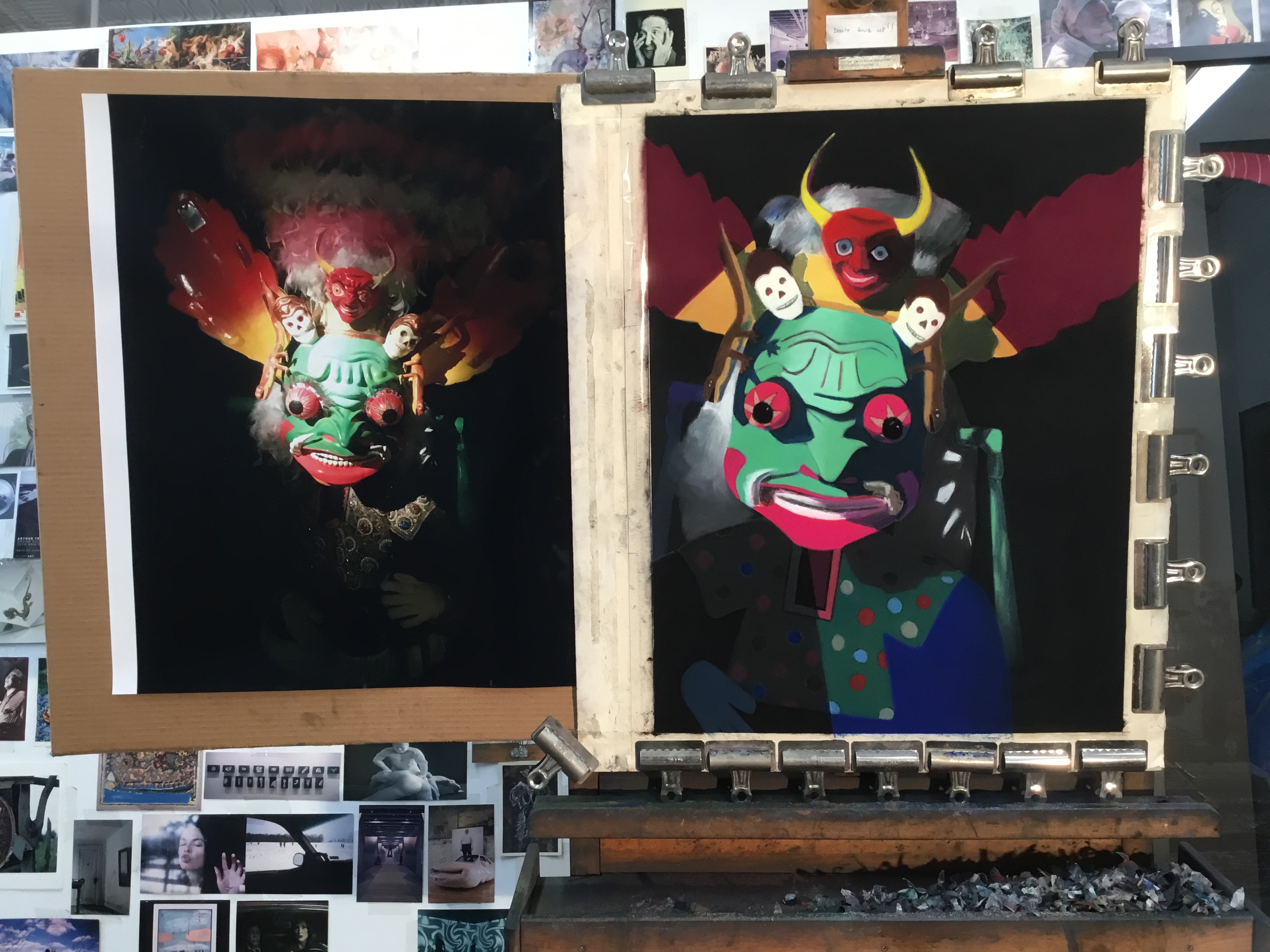
Work in progress
A: I’m trying to finish “Oracle,” but every time I think I’m getting close, I see there are plenty of unresolved areas and/or things I can still improve.
Comments are welcome!
Pearls from artists* #278

National Museum of Ethnography and Folklore, La Paz, Bolivia
* an ongoing series of quotations – mostly from artists, to artists – that offers wisdom, inspiration, and advice for the sometimes lonely road we are on.
Inspiration is an unforeseen quantity, the muse that assails at the hidden hour. The arrows fly and one is unaware of being struck, and that a host of unrelated catalysts have joined clandestinely to form a system of its own, rendering one with the vibrations of an incurable disease – a burning imagination – at once unholy and divine.
Patti Smith in Devotion
Comments are welcome!
Q: Would you describe how you are taking soft pastel in new directions as a fine art medium?

Barbara at work, Photo: Marianne Barcellona
A: I have been devoted to soft pastel for more than thirty years. In this blog and in countless interviews online and elsewhere, I continue to expound on its merits. For me no other fine art medium comes close.
I have developed my own original methods for working with soft pastel, pushing this venerable 500-year-old medium to its limits and using it in ways that no one has done before. I have created a unique science of color in which I layer and blend pigments. When viewers (including fellow artists) see my work in person for the first time, they often ask, “What medium is this?”
My self-invented techniques for using soft pastel achieve rich velvety textures and exceptionally vibrant color. Blending with my fingers, I painstakingly apply dozens of layers of pastel onto acid-free sandpaper. In addition to the thousands of pastels that I have to choose from, I blend new colors directly on the paper. Each pastel painting takes about three months and hundreds of hours to complete.
My subject matter is singular. I am drawn to Mexican, Guatemalan, and Bolivian cultural objects—masks, carved wooden animals, papier mâché figures, and toys. On trips to these places and elsewhere I frequent local mask shops, markets, and bazaars searching for the figures that will populate my pastel paintings. How, why, when, and where these objects come into my life is an important part of the creative process. Each pastel painting is a highly personal blend of reality, fantasy, and autobiography.
Comments are welcome!
Start/Finish of “Stalemate,” soft pastel on sandpaper, 38″ x 58″
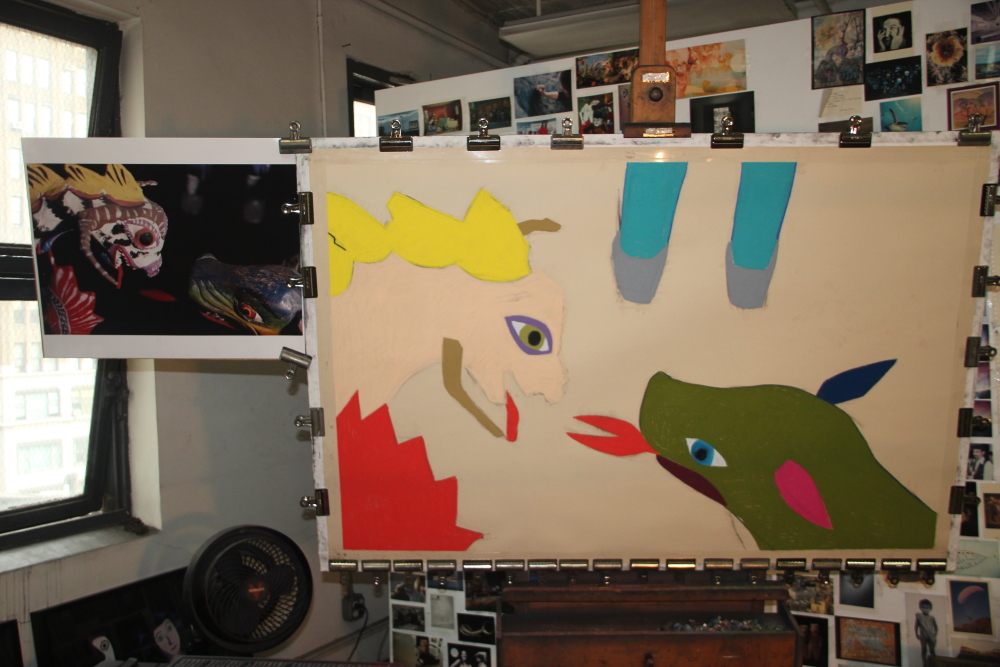
Start
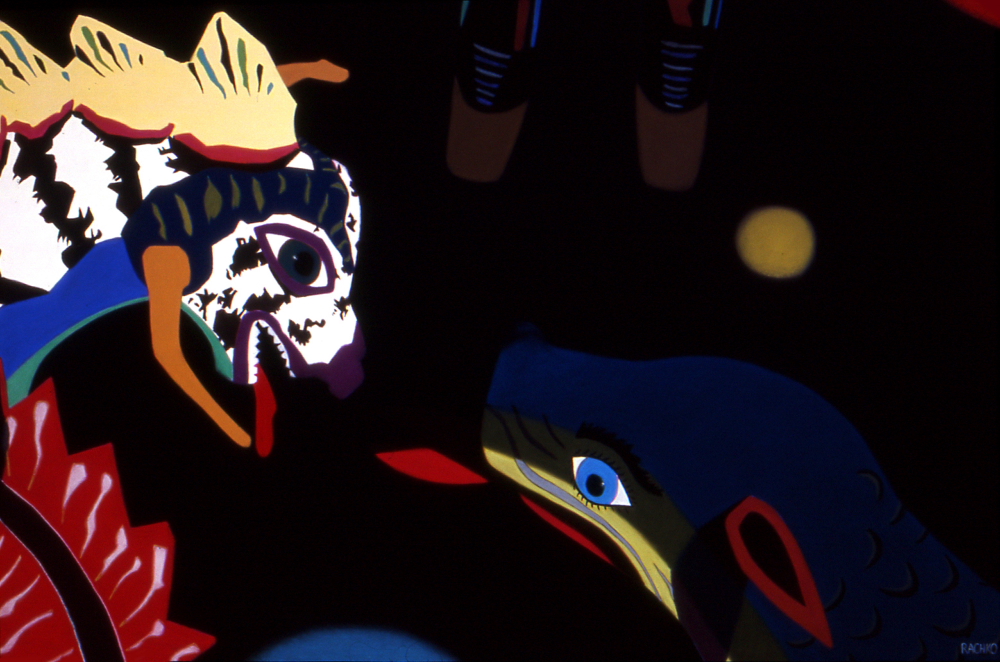
Finished and signed, lower right
Comments are welcome!
Q: What’s on the easel today?
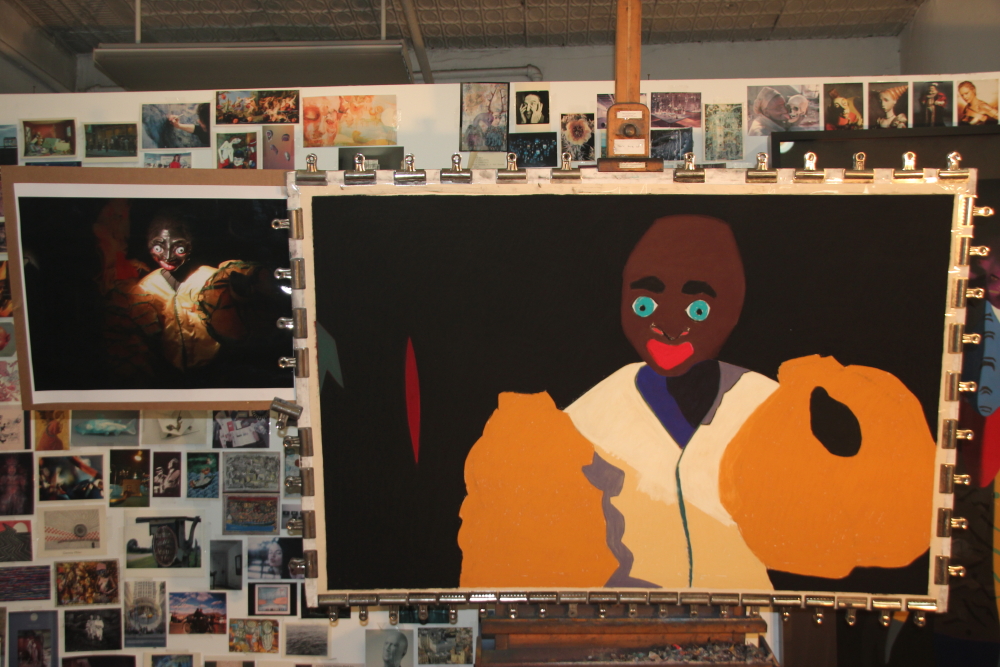
Work in progress
A: This is the first day – with only one layer of soft pastel in most places – of a 38″ x 58″ pastel painting. It’s based on a photo I composed at the National Museum of Ethnography and Folklore in La Paz, Bolivia. This is the fourth work in my “Bolivianos” series.
Comments are welcome!
Q: Do you lose yourself in your work?

Barbara at work
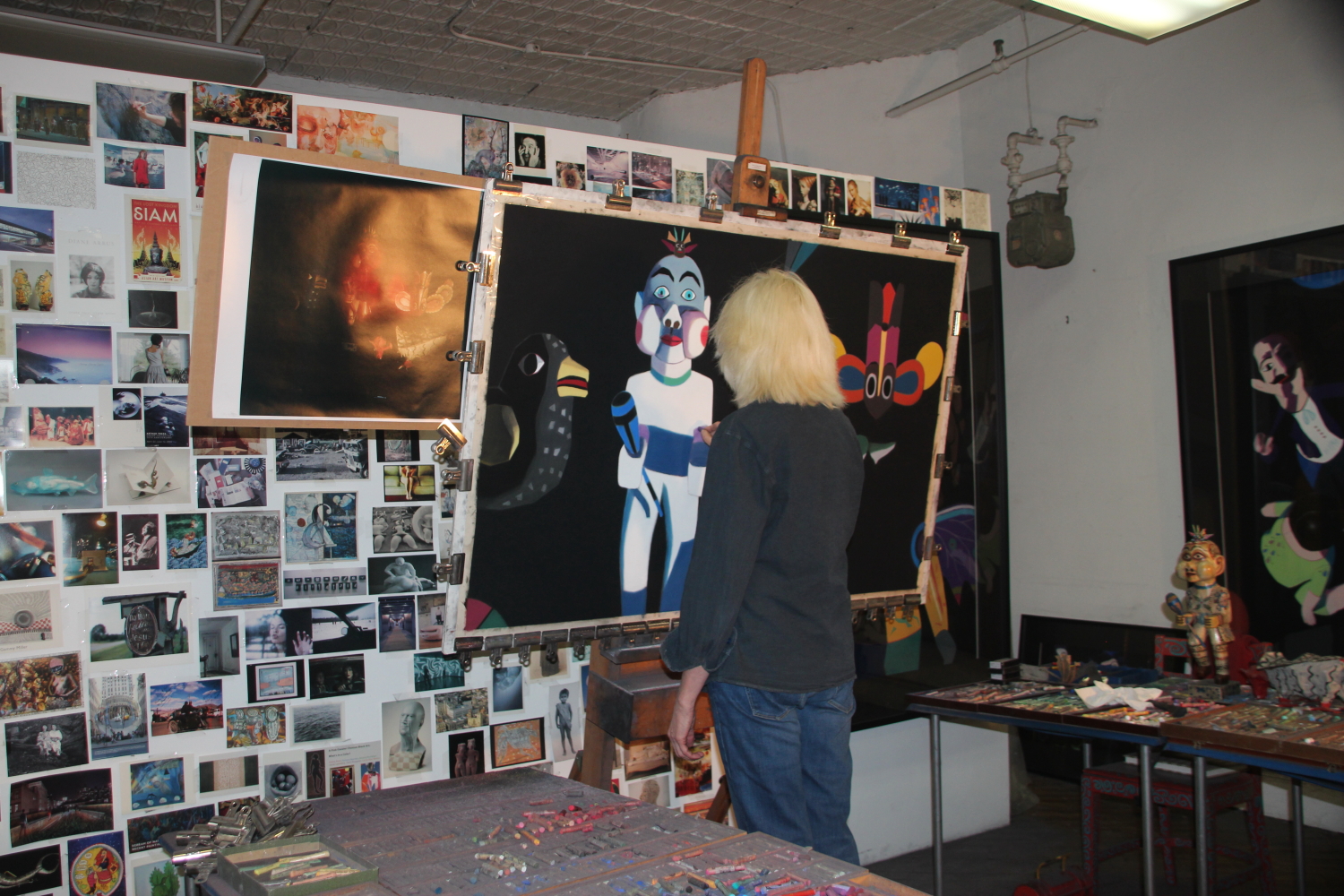
A: Of course! When I am having a productive day in the studio, I am completely present and focused, fully immersed in solving technical problems and trying to improve the painting on my easel. I barely notice the time and have to remind myself to take a break or stop for lunch. Nothing else exists except the painting and my relationship with it. The rest of life completely falls away from my consciousness.
I believe most artists regularly experience this feeling of ‘flow.’ It is a state of being that is inherent and necessary to creative work of all kinds.
Comments are welcome!
Q: On an average day in the studio, how much of your time is spent in the physical act of making art?
Working
A: My typical studio day is from 10:00 to 5:00. When I arrive, I often read for half an hour. Reading helps me relax and focus and get into the mindset I need to do my work. While I read, I look at the painting on my easel, assess it’s current state, and decide where to begin working.
Then I work until lunch time, generally around 1:00. After lunch I work for another five hours or so, taking a break whenever I want.
This has been more or less my schedule for five days a week for years. At an earlier point as I was developing my craft, I would work 9- or 10-hour days and six days a week.
My creative process is relatively slow. In a typical year I create five new pastel paintings. This year I am right on schedule. I have completed four and am working on a fifth.
Comments are welcome!
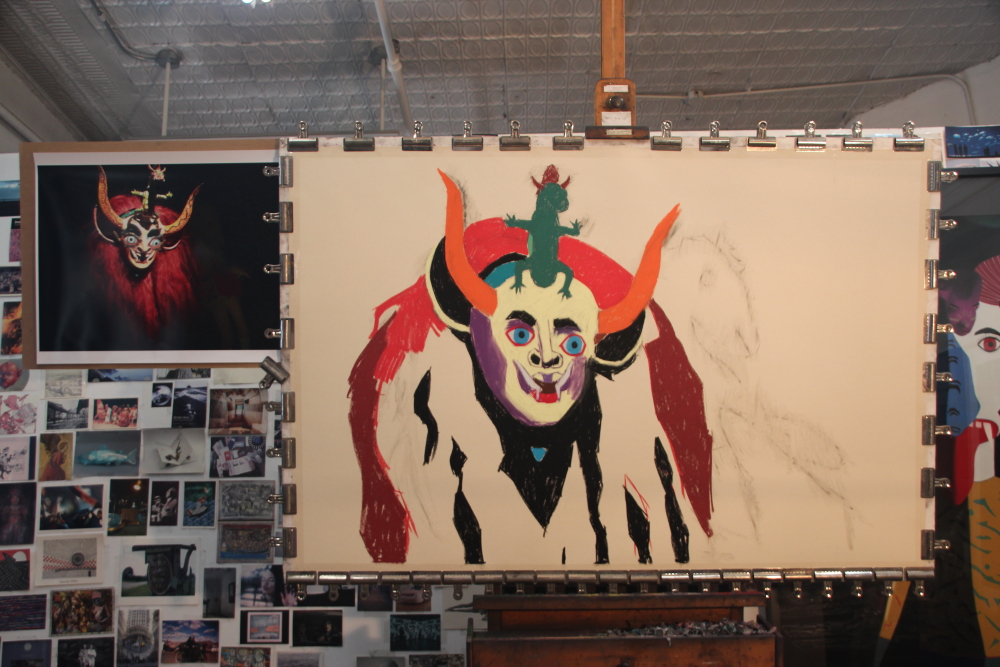
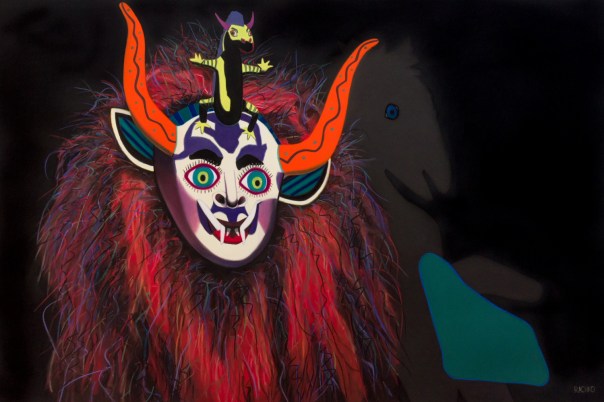
Start/finish of “The Orator,” soft pastel on sandpaper, 38″ x 58″
Start
Finish
Comments are welcome!



