Category Archives: Creative Process
Q: On an average day in the studio, how much of your time is spent in the physical act of making art?
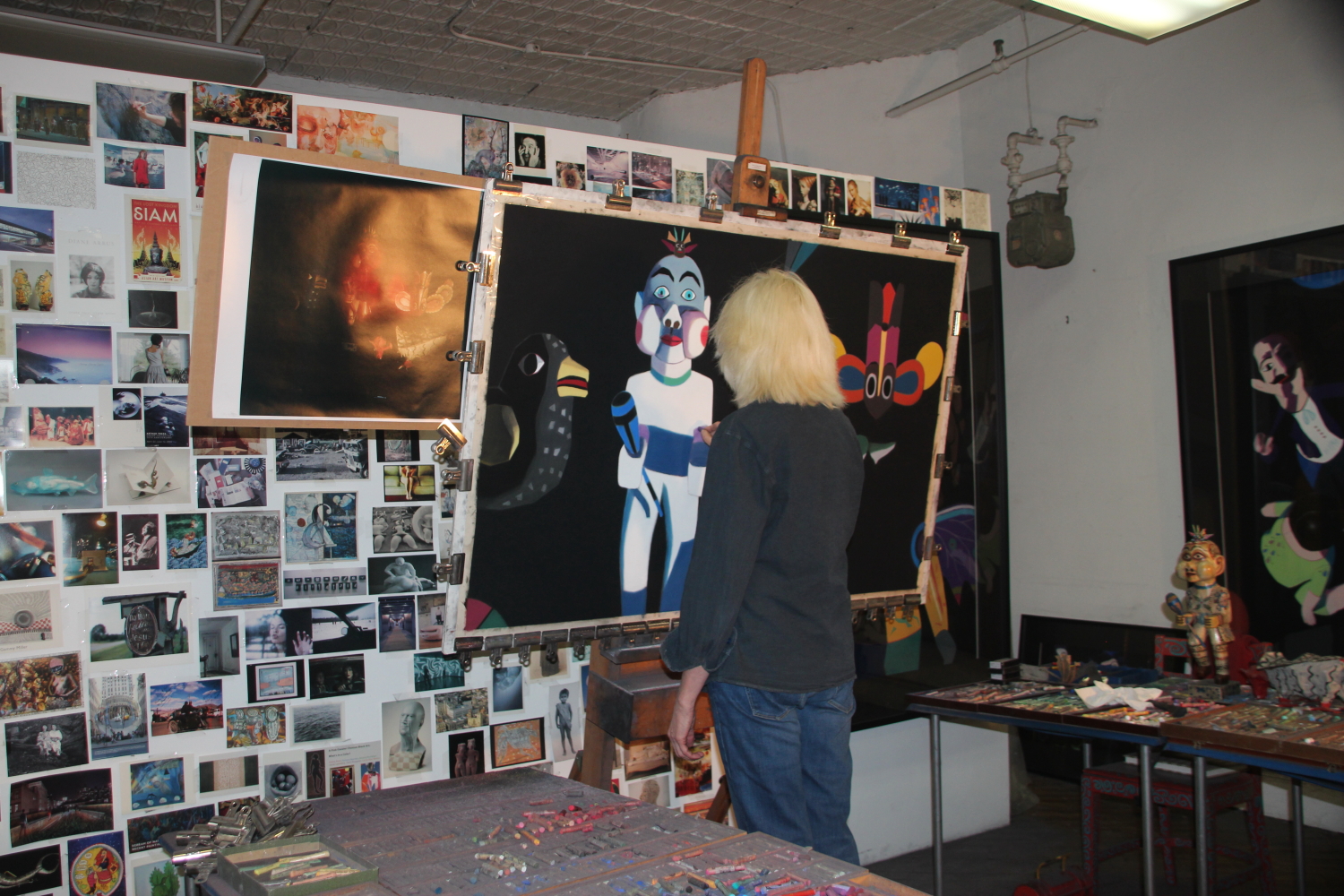
Working
A: My typical studio day is from 10:00 to 5:00. When I arrive, I often read for half an hour. Reading helps me relax and focus and get into the mindset I need to do my work. While I read, I look at the painting on my easel, assess it’s current state, and decide where to begin working.
Then I work until lunch time, generally around 1:00. After lunch I work for another five hours or so, taking a break whenever I want.
This has been more or less my schedule for five days a week for years. At an earlier point as I was developing my craft, I would work 9- or 10-hour days and six days a week.
My creative process is relatively slow. In a typical year I create five new pastel paintings. This year I am right on schedule. I have completed four and am working on a fifth.
Comments are welcome!
Start/finish of “The Orator,” soft pastel on sandpaper, 38″ x 58″
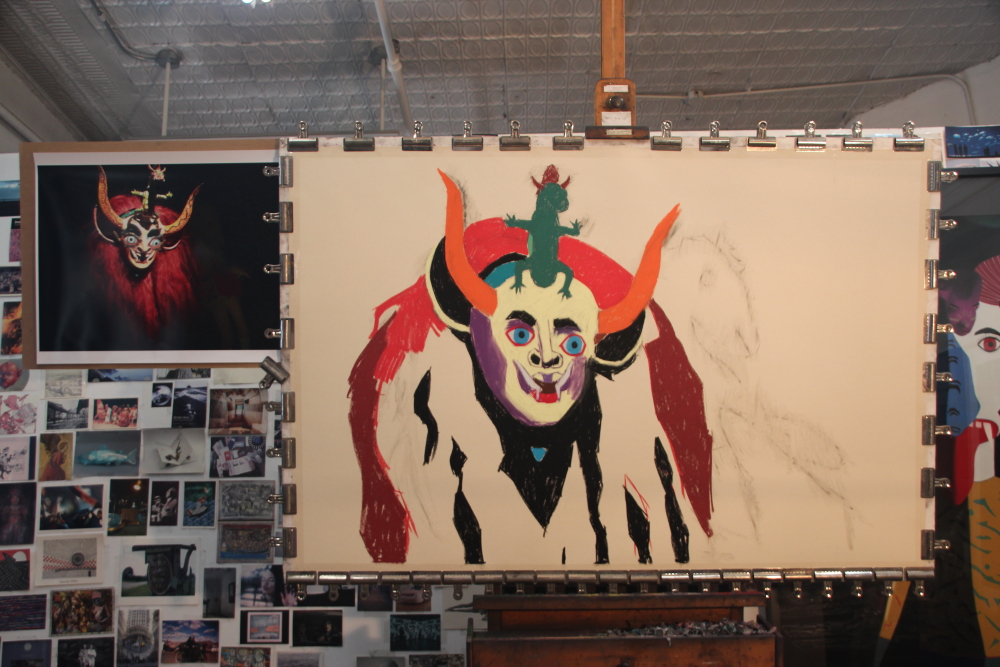
Start
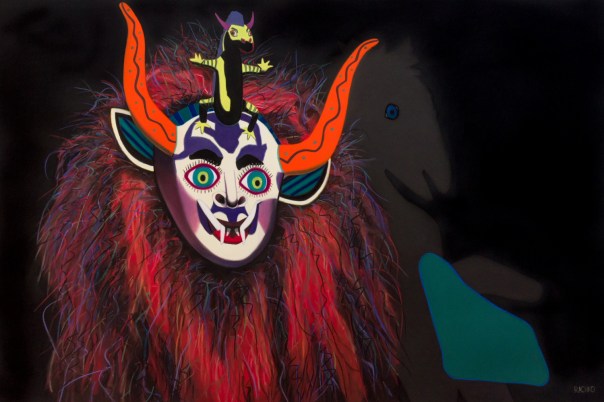
Finish
Comments are welcome!
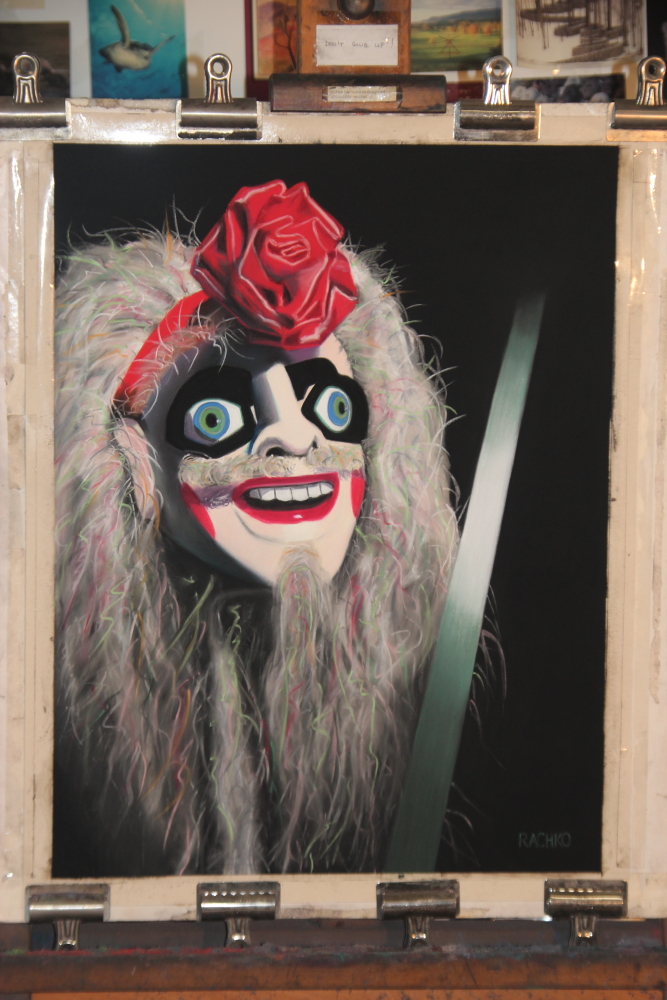
Q: What’s on the easel today?
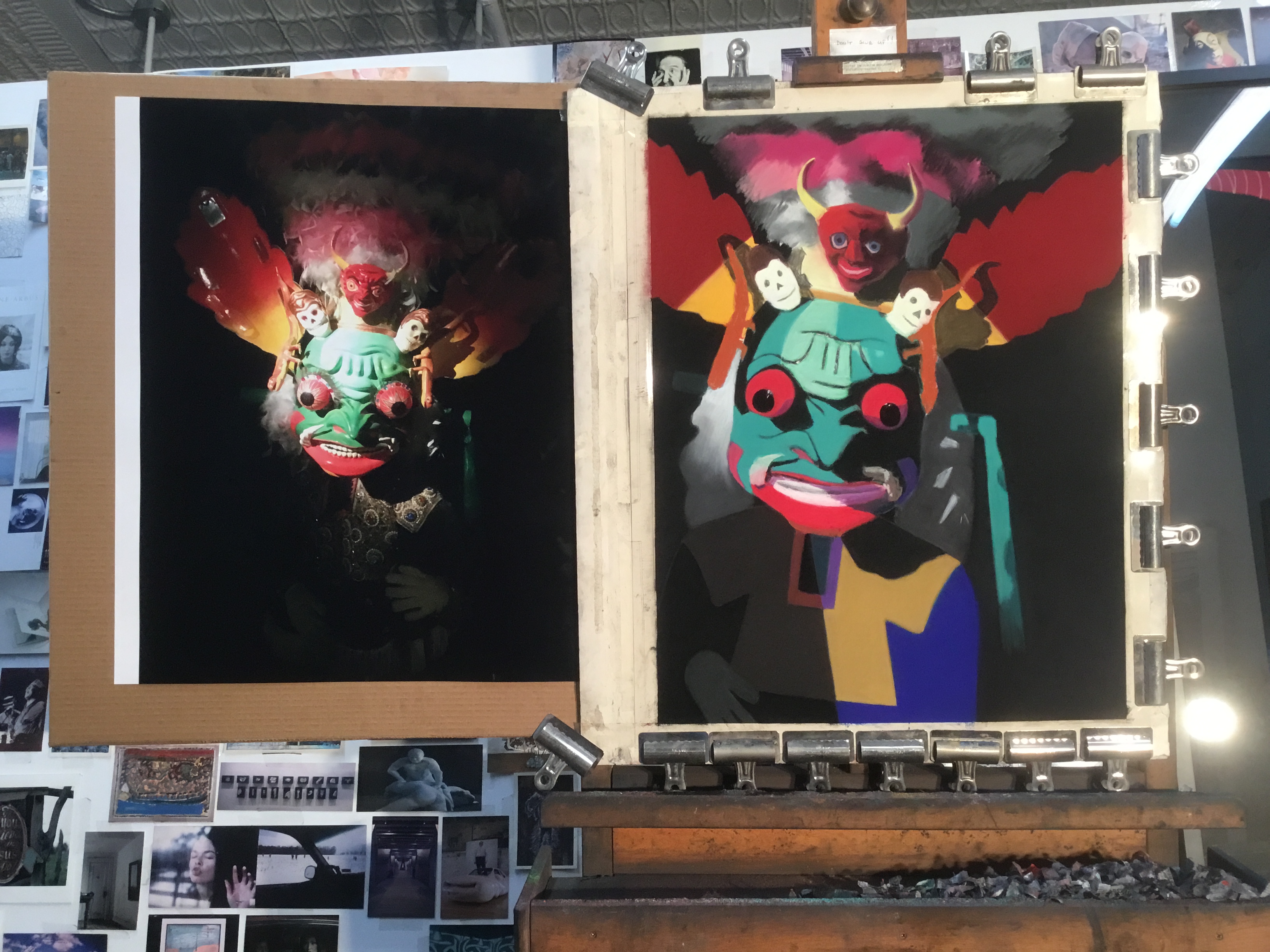
Work in progress
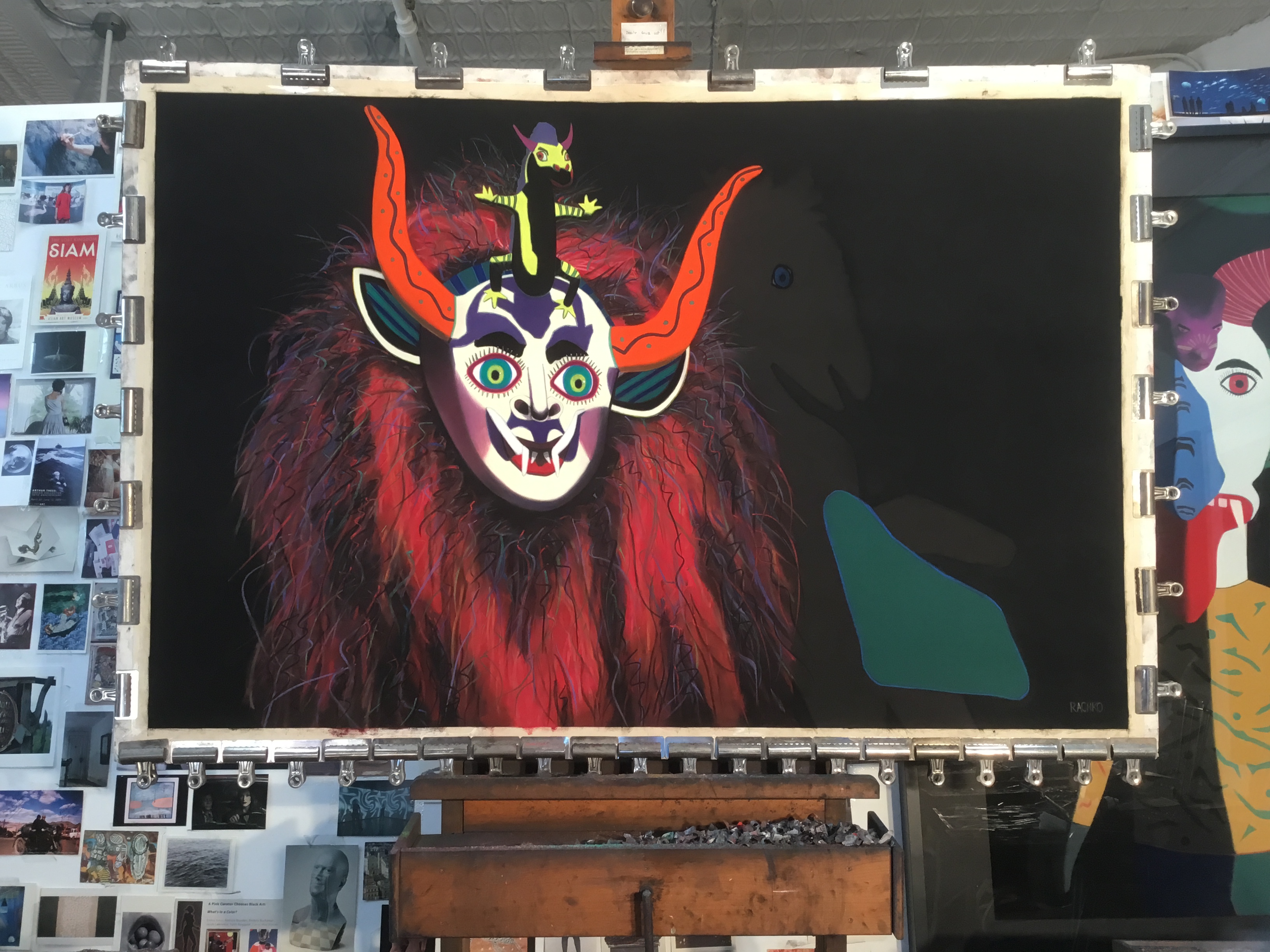
“The Orator,” soft pastel on sandpaper, 38” x 58”
A: Having finally finished “The Orator” (bottom), I continue working on a small pastel painting that does not have a title yet (top). The latter is the third piece in my “Bolivianos” series.
Comments are welcome!
Pearls from artists* # 270
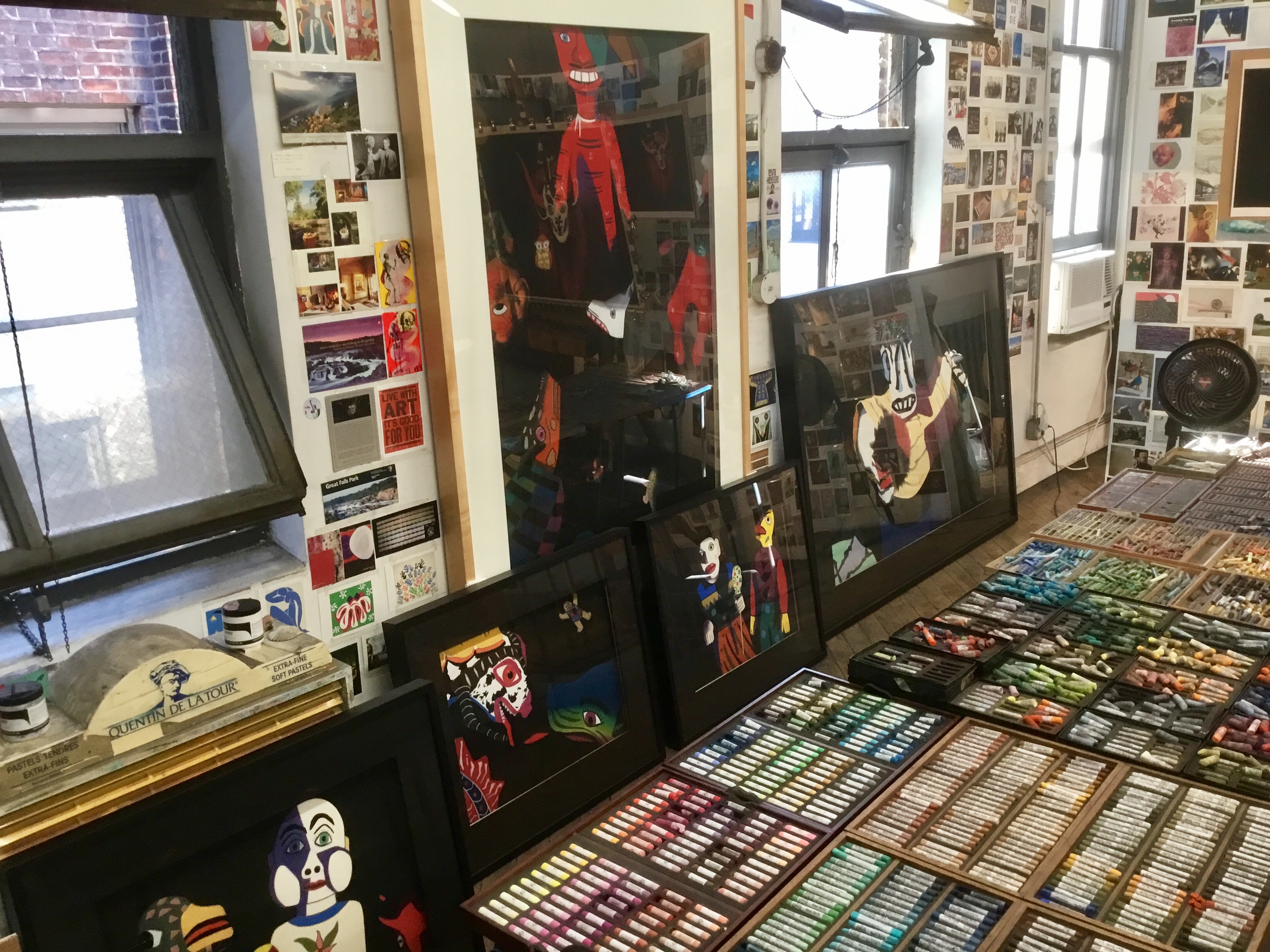
Barbara’s studio
* an ongoing series of quotations – mostly from artists, to artists – that offers wisdom, inspiration, and advice for the sometimes lonely road we are on.
As Charlie Parker quipped, “If you don’t live it, it won’t come out of your horn.” And it won’t register in your bearing: this is the earned credit for trying to walk the daily tightrope and tell your story when you get to the other side.
Joel Dinerstein in The Origins of Cool in Postwar America
Comments are welcome
Q: When you are in your studio working on a pastel painting and pause to consider what you have done, do you ask yourself, “Is it good?”
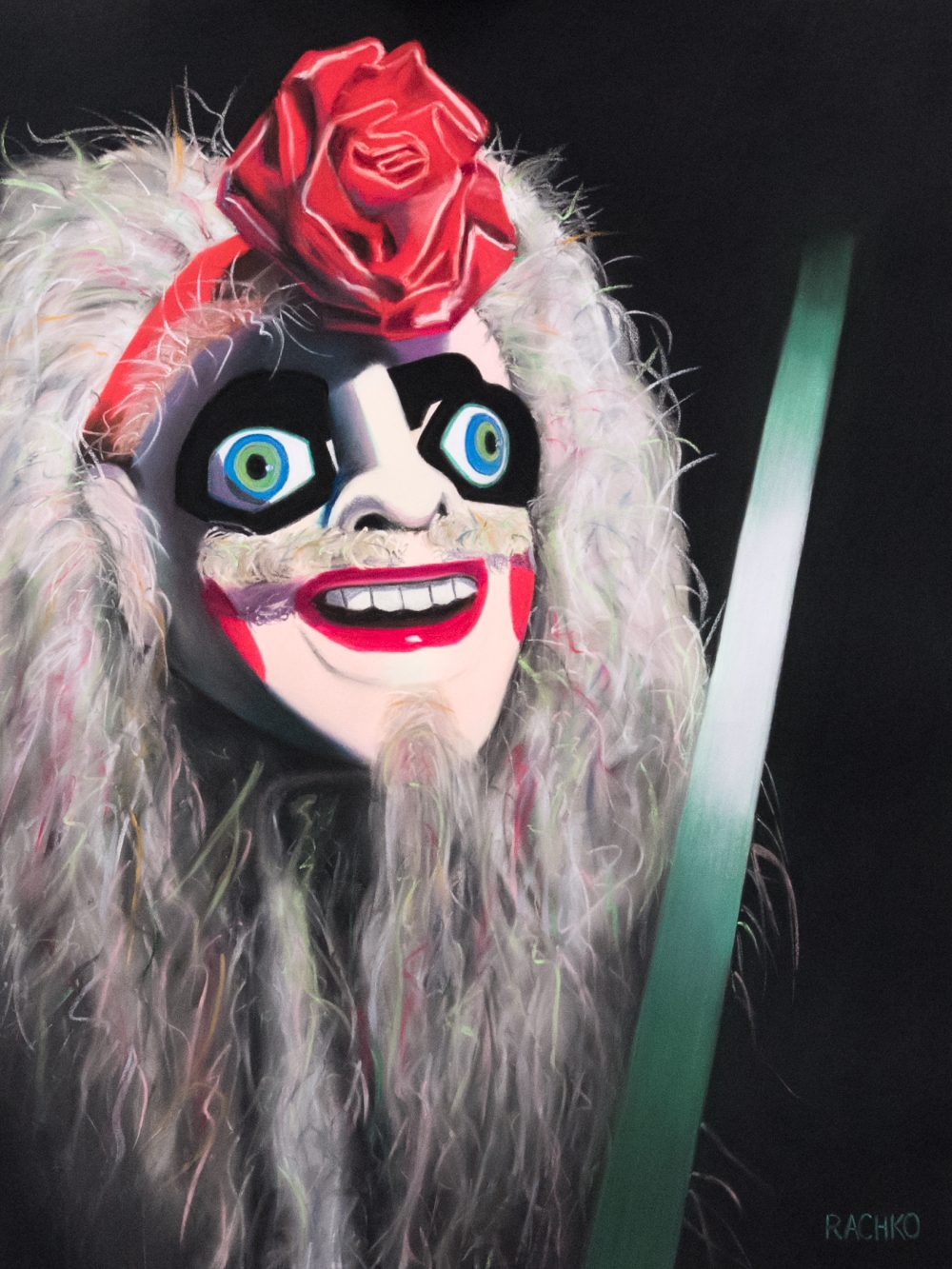
“The Champ,” soft pastel on sandpaper, 26″ x 20″ image, 35″ x 28 1/2″ framed
A: Certainly, I do. In addition, I ask myself some other important questions:
Is it the best I can do?
Is it exciting?
Is it surprising?
Is it idiosyncratic and unique to me?
Is there anything I can do to improve it?
Does it meet (or hopefully exceed) the exacting technical and formal standards I have set for my work?
Will I be proud to finally see my signature on it?
Comments are welcome!
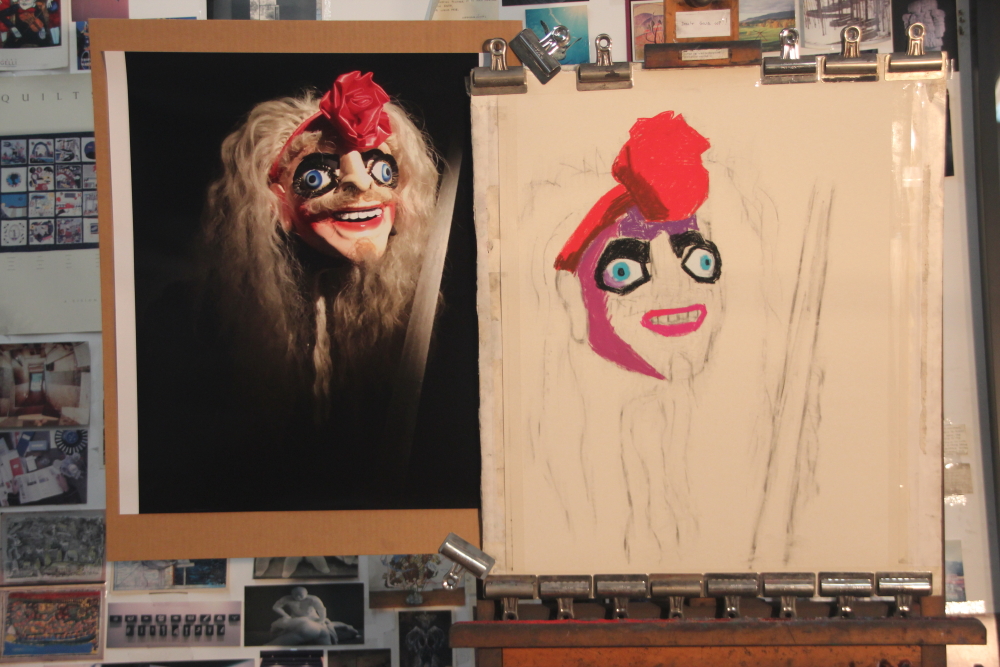
Q: Is your work fast or is it slow?
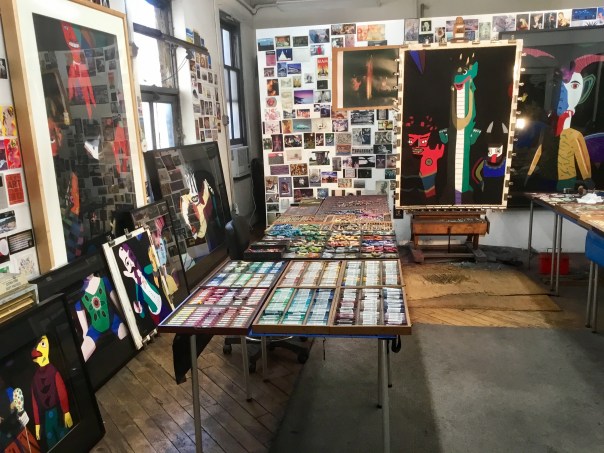
Barbara’s studio
A: I work extremely slowly. I’m a full-time artist and I spend three or four months on each pastel painting, sometimes longer if it’s an especially difficult piece.
I generally have two pastel paintings in progress and switch off when one is causing problems. The paintings tend to interact and influence each other. Having two in progress helps me resolve difficult areas quicker, plus when one is finished, I still have something to work on. So there’s rarely any dead time in my studio.
Comments are welcome!
Q: Would you speak about how important it was to get back to work after losing your husband on 9/11?

“She Embraced It and Grew Stronger,” 2003, the first pastel painting I completed after Bryan was killed
A: On September 11, 2001, my husband Bryan, a high-ranking federal government employee, a brilliant economist (with an IQ of 180 he is still the smartest man I’ve ever met) and a budget analyst at the Pentagon, was en route to Monterrey, CA to give his monthly guest lecture for an economics class at the Naval Postgraduate College. He had the horrible misfortune of flying out of Dulles airport and boarding the plane that was high-jacked and crashed into the Pentagon, killing 189 people. Losing Bryan was the biggest shock of my life and devastating in every possible way.
The following summer I was ready to – I HAD to – get back to work. Learning about photography and pastel painting became avenues to my well-being. I use reference photos for my paintings, so my first challenge was to learn how to use Bryan’s 4 x 5 view camera (Bryan always took these reference photos for me).
In July 2002 I enrolled in a one-week view camera workshop at the International Center of Photography in New York. Much to my surprise, I had already acquired substantial technical knowledge from watching Bryan. Still, after the initial workshop, I threw myself into this new medium and continued studying photography at ICP for several years. I began with Photography I and enrolled in many more classes until I gradually learned how to use Bryan’s extensive camera collection, to properly light my setups, and to print large chromogenic photographs in a darkroom.
In October 2009 it was very gratifying to have my first solo photography exhibition with HP Garcia in New York. (Please see http://barbararachko.art/images/PDFS/BarbaraRachko-HPGargia.pdf). I vividly remember tearing up at the opening as I imagined Bryan looking down at me with his beautiful smile, beaming as he surely would have, so proud of me for having become a respected photographer.
Continuing to make art had seemed an impossibility after Bryan’s death. However, the first large pastel painting that I created using a self-made reference photograph proved my life’s work could continue. The title of that painting, “She Embraced It and Grew Stronger,” is certainly autobiographical. “She” is me, and “it” means continuing on without Bryan and living life for both of us.
Comments are welcome!
Q: Would you elaborate as to how your recent trip to Bolivia is influencing your work just now?
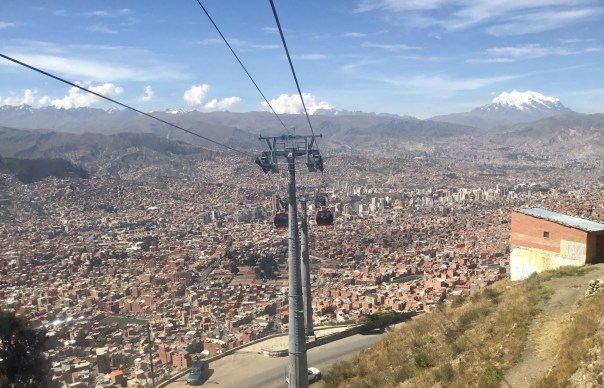
La Paz, Bolivia
A: I consider myself extremely fortunate to have seen a mask exhibition at the National Museum of Ethnography and Folklore when I visited La Paz in May. Presented as they were against black walls with dramatic spot-lighting, the masks looked exactly like 3D versions of my paintings! These old Bolivian masks were stunning.
I spent a long time there composing photographs on my iPad. Immediately I knew this exhibition was a gift because I now had material to keep me busy in the studio for several years.
I have completed the first pastel painting in my new series, “Bolivianos,” and am far along into the second. I’m looking forward to many more to come!
Comments are welcome!
Pearls from artists* # 261
Suffolk County
* an ongoing series of quotations – mostly from artists, to artists – that offers wisdom, inspiration, and advice for the sometimes lonely road we are on.
I think that the sensation and process are almost identical in all creative activities. The pattern seems universal. The study and hard work, The prepared mind. The being stuck. The sudden shift. The letting go of control. The letting go of self.
Alan Lightman in A Sense of the Mysterious: Science and the Human Spirit
Comments are welcome!



