Category Archives: Creative Process
Start/Finish of “Conundrum,” soft pastel on sandpaper, 38″ x 58″ image, 50″ x 70″ framed
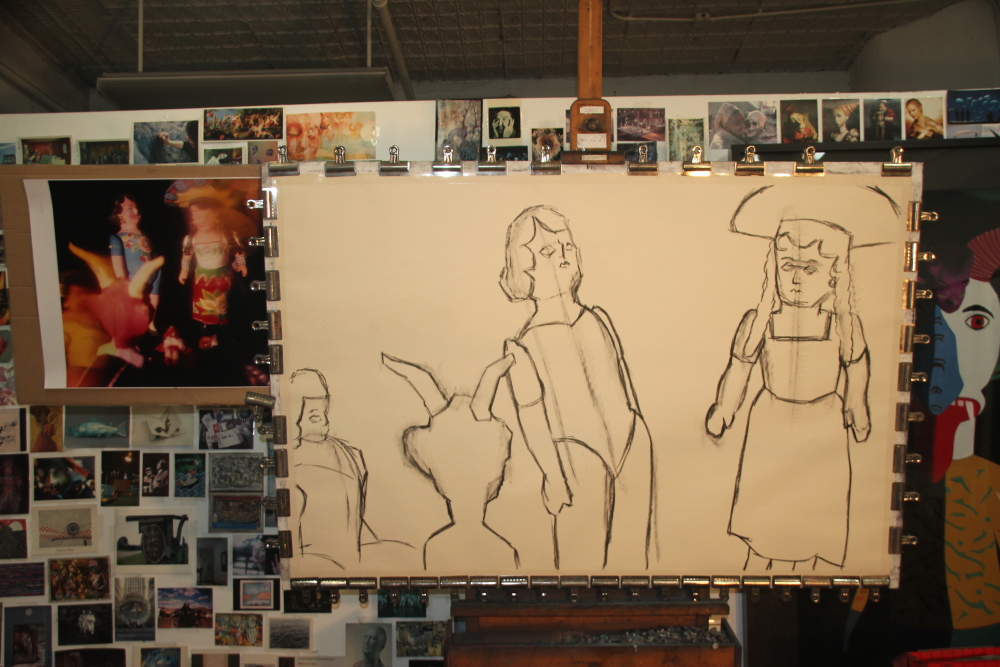
Rough charcoal drawing on sandpaper
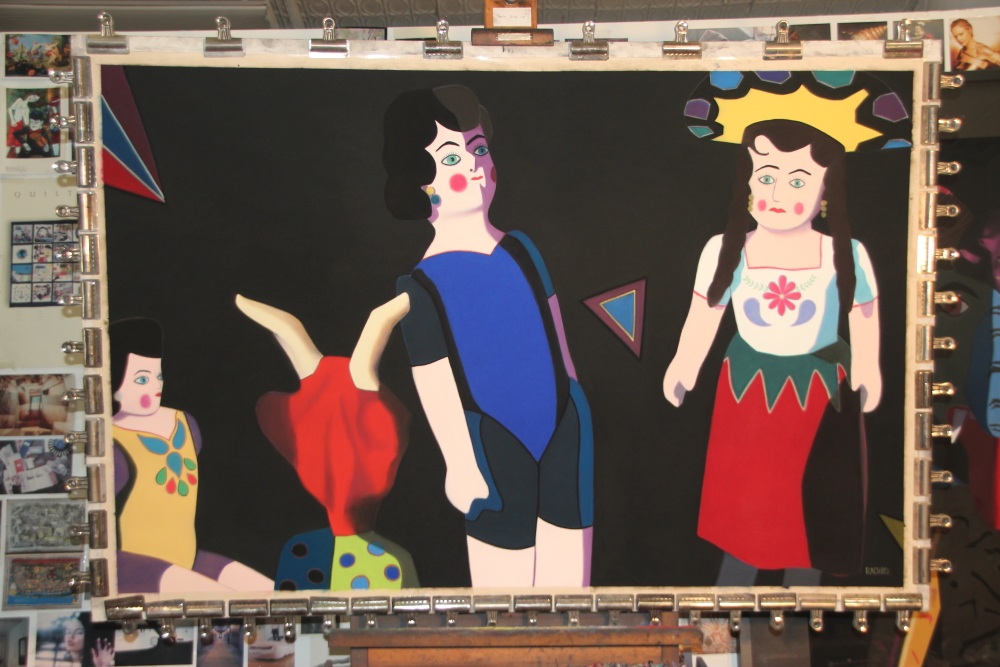
Finished
Comments are welcome!
Pearls from artists* # 259
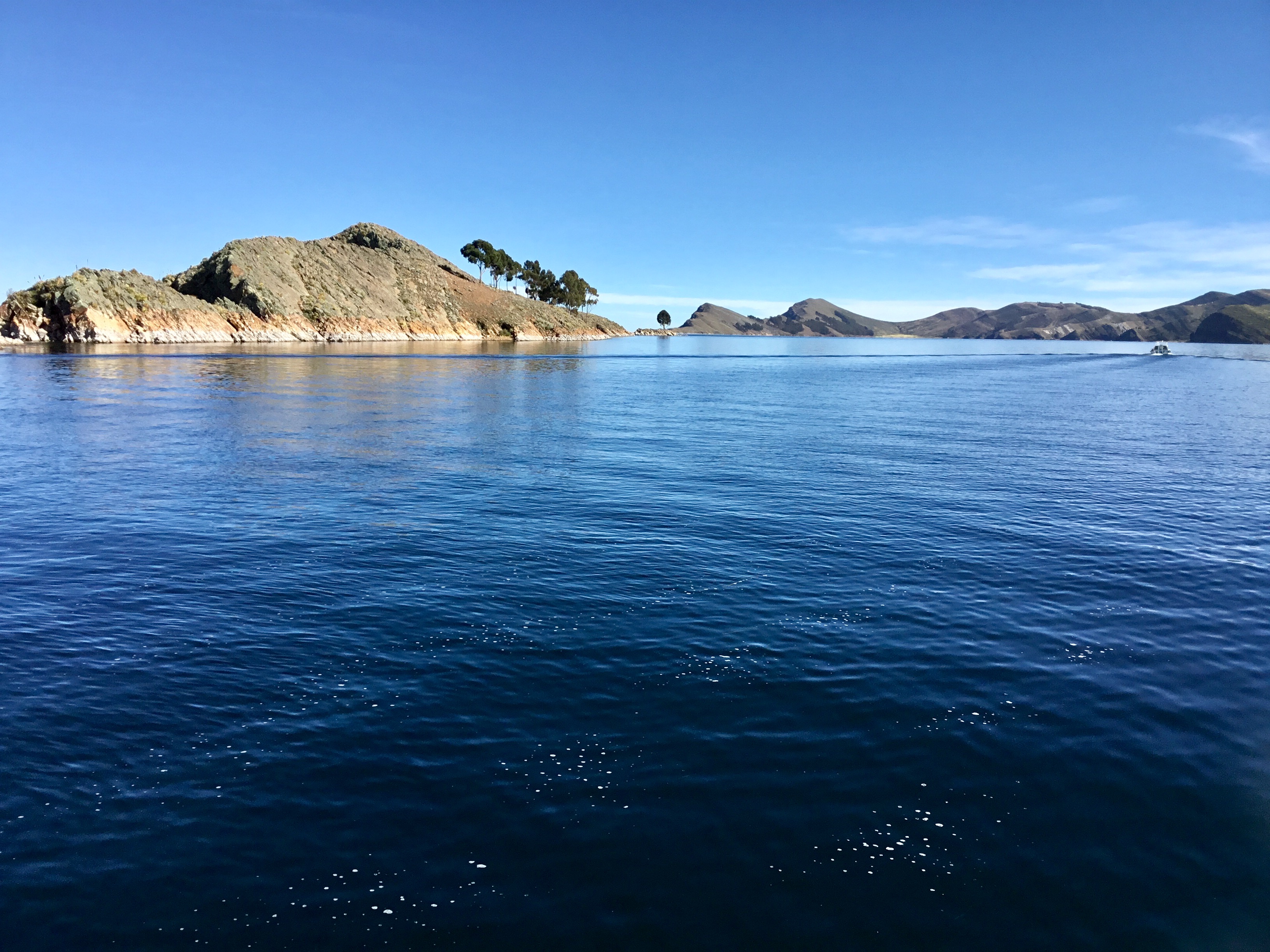
In Bolivia on Lake Titicaca
* an ongoing series of quotations – mostly from artists, to artists – that offers wisdom, inspiration, and advice for the sometimes lonely road we are on.
In college, I made two important decisions about my career.
First, I would put my writing on the back burner until I became well established in science. I know of a few scientists who later became writers, like C.P. Snow, Rachel Carson, but no writers who later became scientists. For some reason, science – at least the creative, research side of science – is a young person’s game. In my own field, physics, I found that the average age at which Nobel Prize winners did their prize-winning work was only thirty-six. Perhaps it has something to do with the focus on and isolation of the subject. A handiness for visualizing in six dimensions or for abstracting the motion of a pendulum favors an agility of mind but apparently requires little knowledge of the human world. By contrast, the arts and humanities require experience with life and the awkward contradictions of people, experience that accumulates and deepens with age.
Alan Lightman in A Sense of the Mysterious: Science and the Human Spirit
Comments are welcome!
Q: What’s on the easel today?
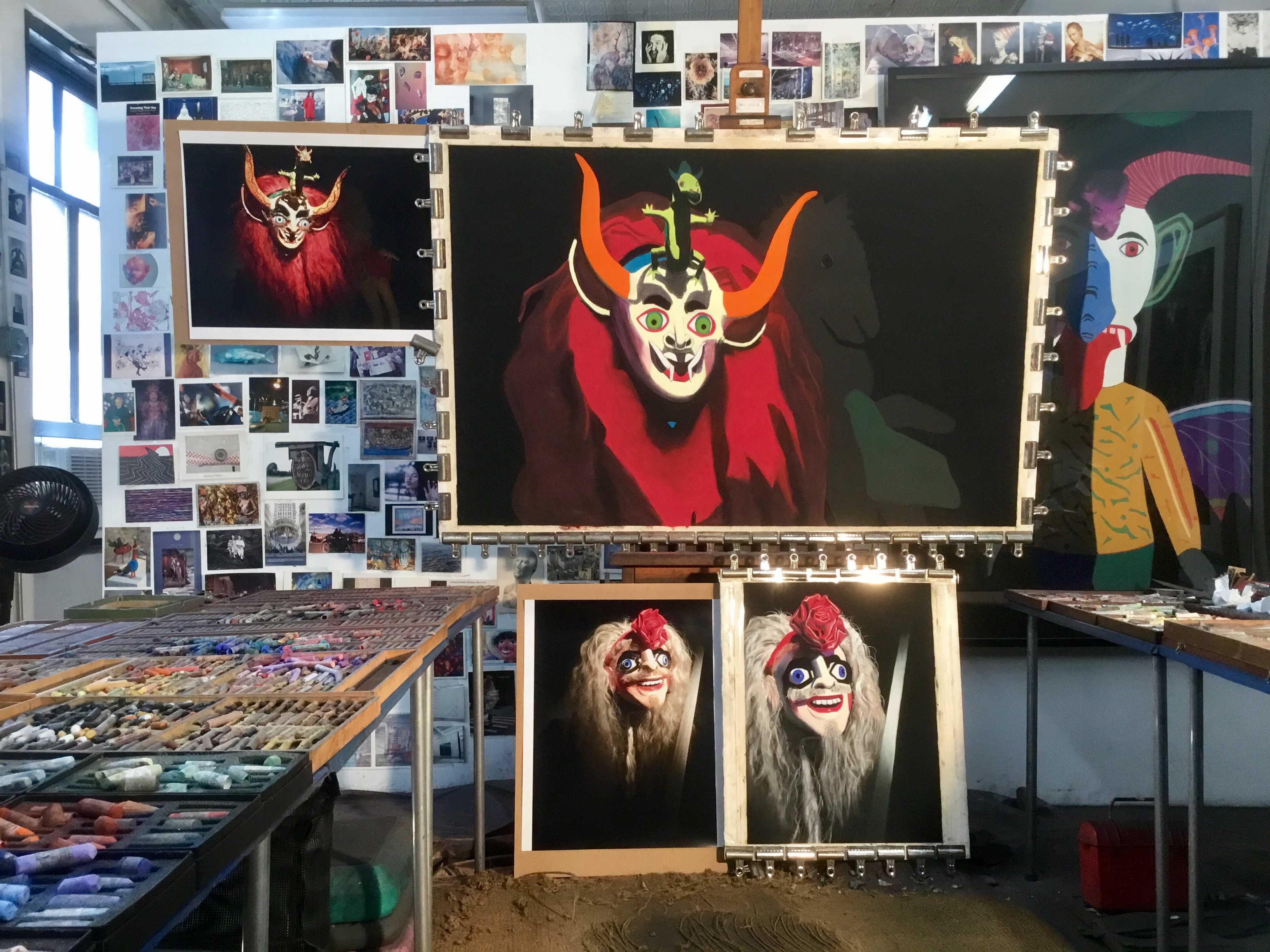
Work in progress
A: I have two works in progress. Both are based on photographs I shot at a stunning mask exhibition in La Paz, Bolivia in May. At present I am tying to ‘ramp up’ my imagery and believe these two pastel paintings to be particularly striking. However, both still have a long way to go so I hope I’m not speaking too soon.
Comments are welcome!
Q: Would you comment on the origin of the title for your photographic series, “Gods and Monsters”?

Untitled c-print, 24″ x 24″ edition of 5
A: My title is borrowed directly from a 2001 catalogue essay by the late art critic, Gerritt Henry. The essay was about my first pastel painting series (“Domestic Threats”) and it’s called, “Barbara Rachko: Gods and Monsters.”
Among other shared interests, Gerritt and I both loved old Frankenstein movies from the 1940s. Around 1998 interest in James Whale, who had directed the original films, was riding high thanks to an Oscar-winning biopic about his last days in Hollywood. The film was called, “Gods and Monsters.” The title was taken from a line in “Bride of Frankenstein,” in which Dr. Pretorius toasts Dr. Frankenstein saying, “To a new world of gods and monsters.”
My photographic series came after “Domestic Threats” and some years after Gerritt’s essay was published. When I was searching for a title for the photos, “Gods and Monsters” seemed a perfect fit!
Comments are welcome!
Pearls from artists* # 256
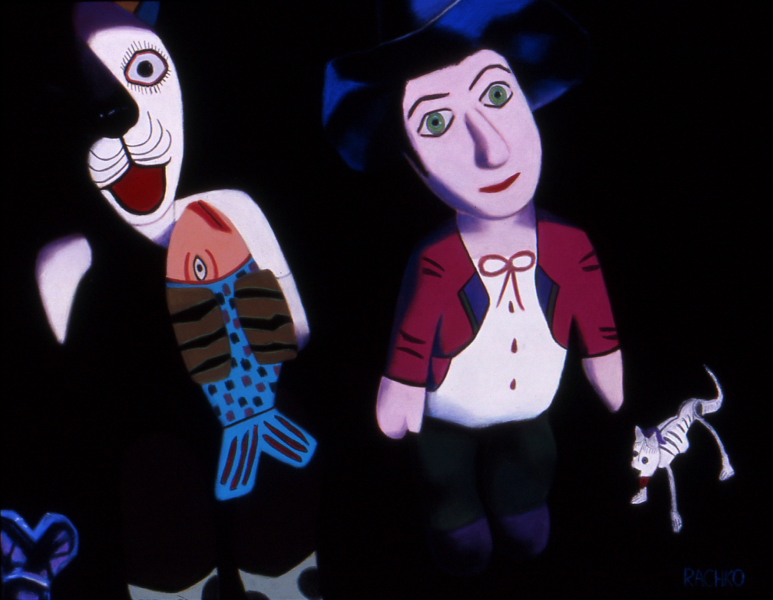
“Offering,” soft pastel on sandpaper, 20″ x 26″
* an ongoing series of quotations – mostly from artists, to artists – that offers wisdom, inspiration, and advice for the sometimes lonely road we are on.
I saw what skill was needed, and persistence – how one must bend one’s spine, like a hoop, over the page – the long labor. I saw the difference between doing nothing, or doing a little, and the redemptive act of true effort. Reading, then writing, then desiring to write well, shaped in me the most joyful of circumstances – a passion for work.
Mary Oliver in Upstream: Selected Essays
Comments are welcome!
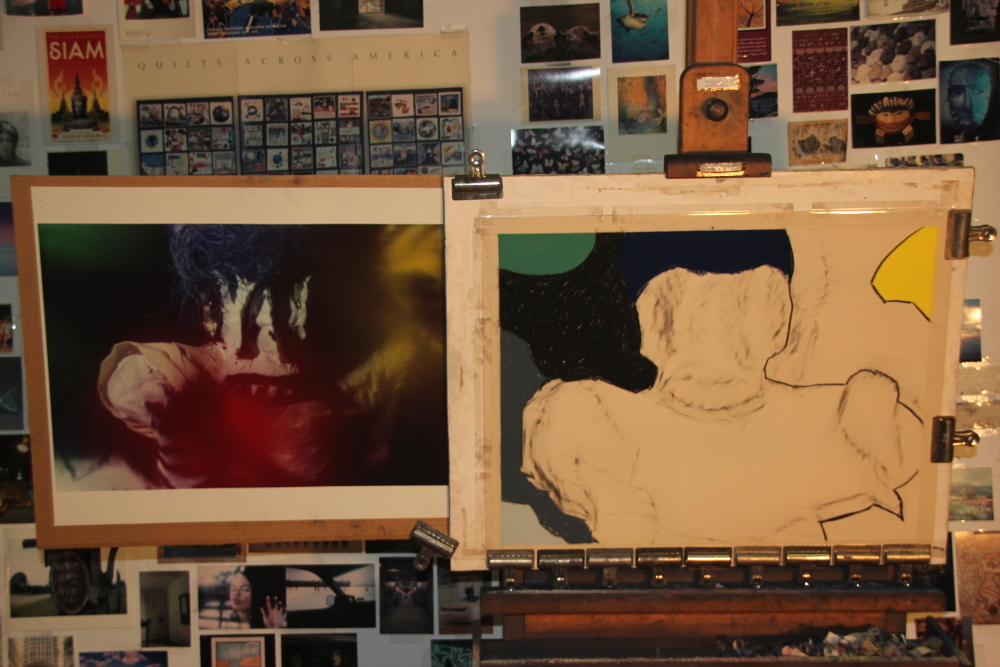
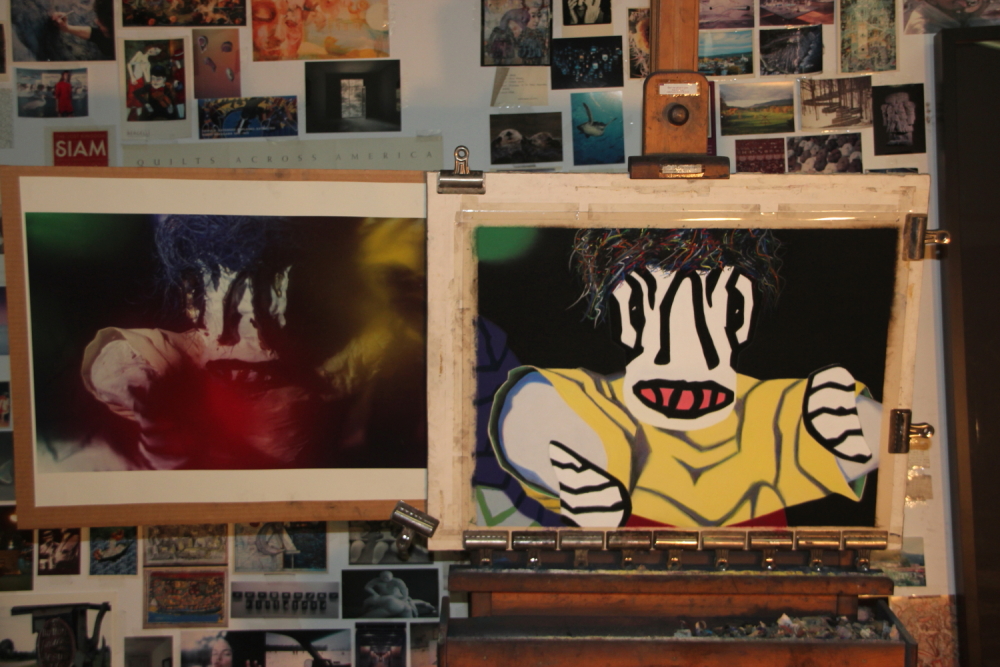
Q: What’s on the easel today?
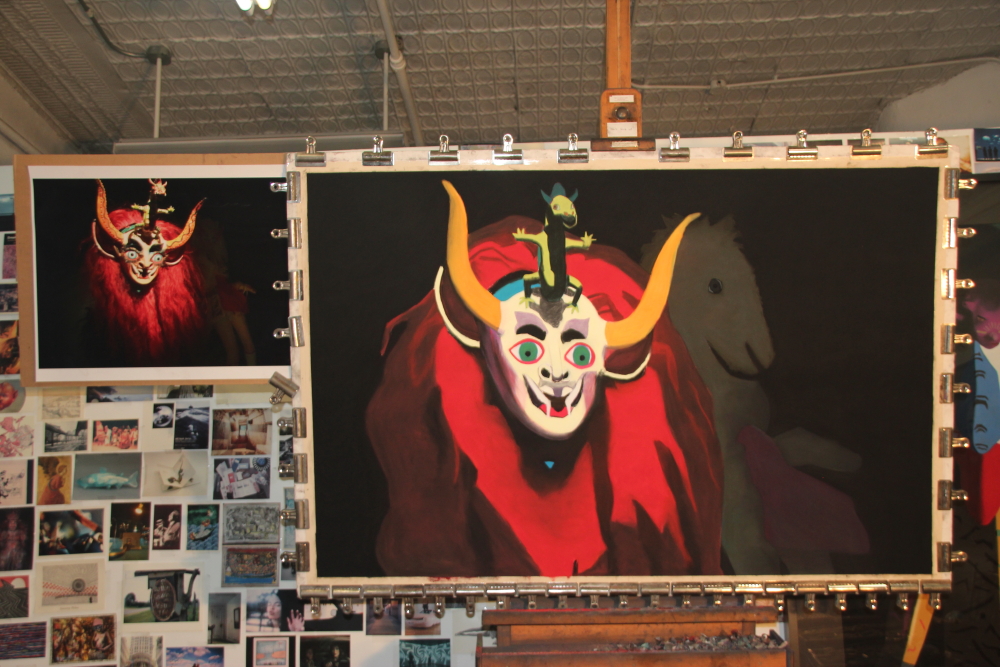
Work in progress
A: I’m working on a large pastel painting based on a photograph shot when I was vacationing recently in La Paz, Bolivia. How fortuitous to stumble upon a mask exhibition at The National Museum of Ethnography and Folklore! It felt as though the exhibition somehow was staged for me, just waiting for me to come along and photograph it.
Incredibly, I returned to New York, after a spectacular trip to Bolivia, and found myself with photographs that are inspiring a new series. Certainly this has never happened before! The series is tentatively called, “Bolivianos.”
Comments are welcome!
Q: How can you tell with certainty when a pastel painting is finished?
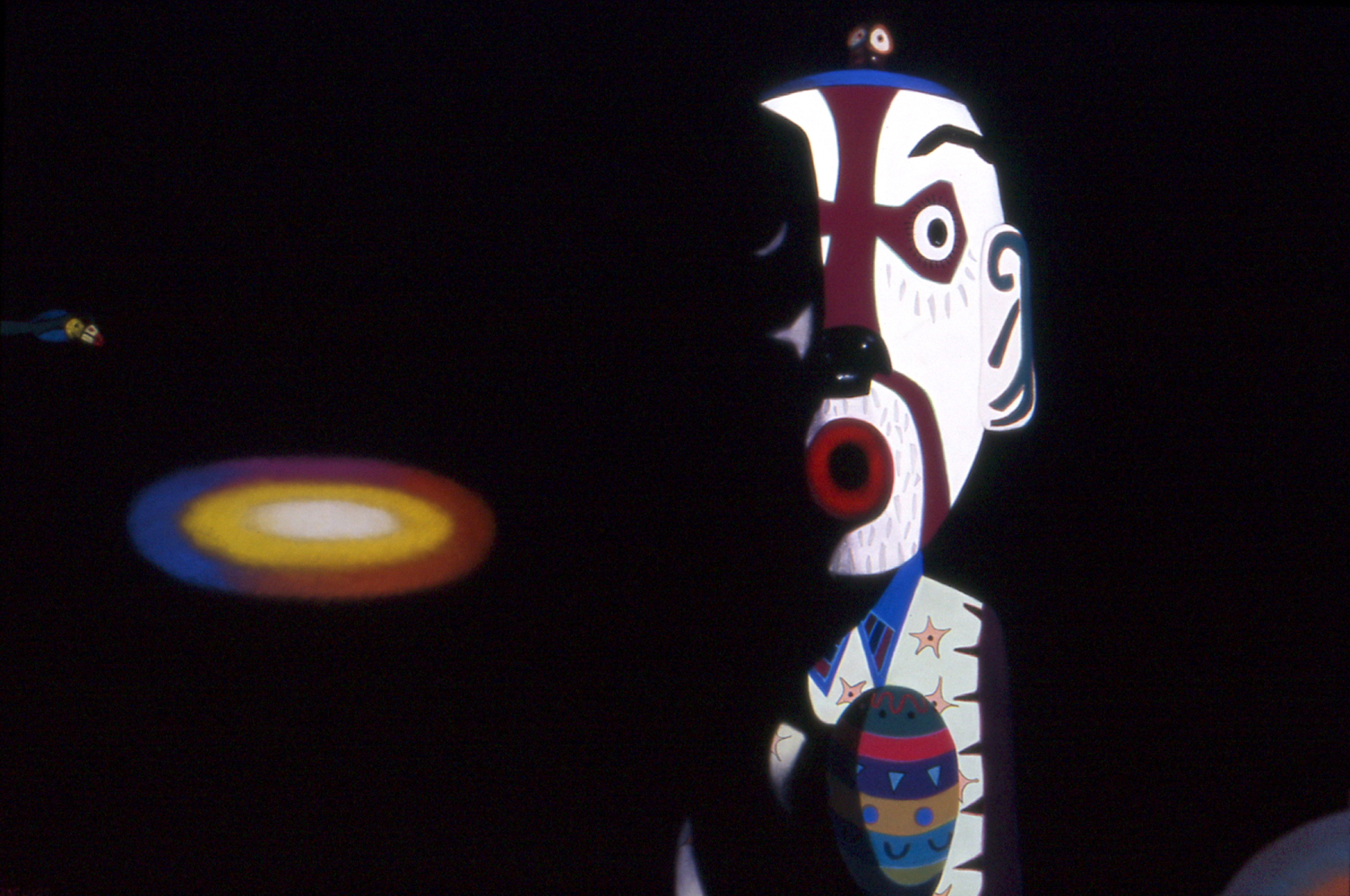
“Poker Face,” soft pastel on sandpaper, 38″ x 58″
A: For me a work is finished when to add or subtract some element causes the composition to diminish or somehow weaken. It’s mostly a matter of where I want viewers to look and how I decide to lead their eyes around a painting.
I work on each piece for several months so that by the time it’s nearly done, I can no longer see flaws. I put it aside for a week or two. Then I pull it out again, turn it upside down, and any details that need improving become obvious. Once I fix them, I know the painting is finally finished and ready to be signed, photographed, and delivered to my framer.
Comments are welcome!
Start/Finish of “The Ancestors,” soft pastel on sandpaper, 58″ x 38″ image, 70″ x 50″ framed
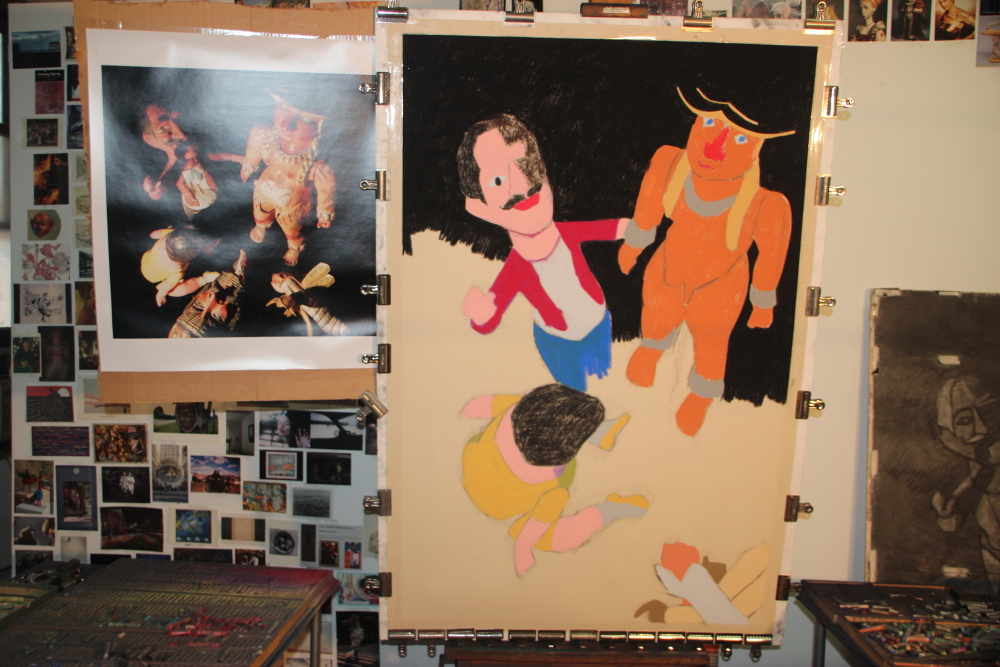
Beginning
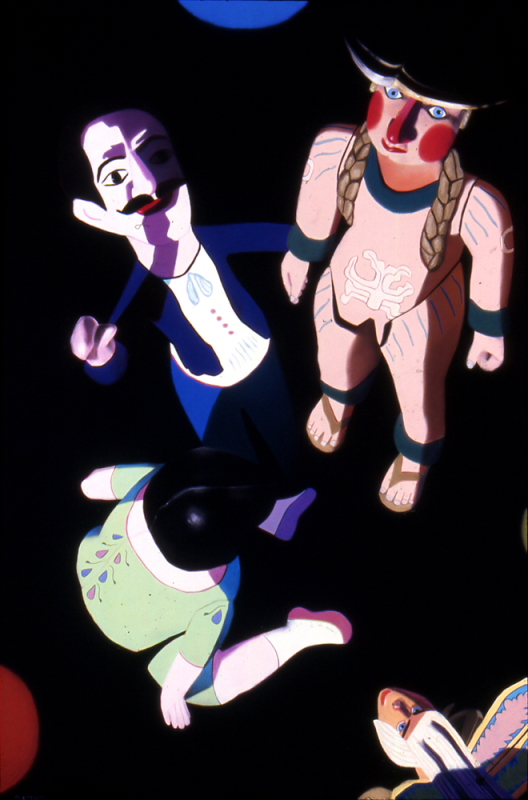
Finished
Comments are welcome!
Q: What’s on the easel today?
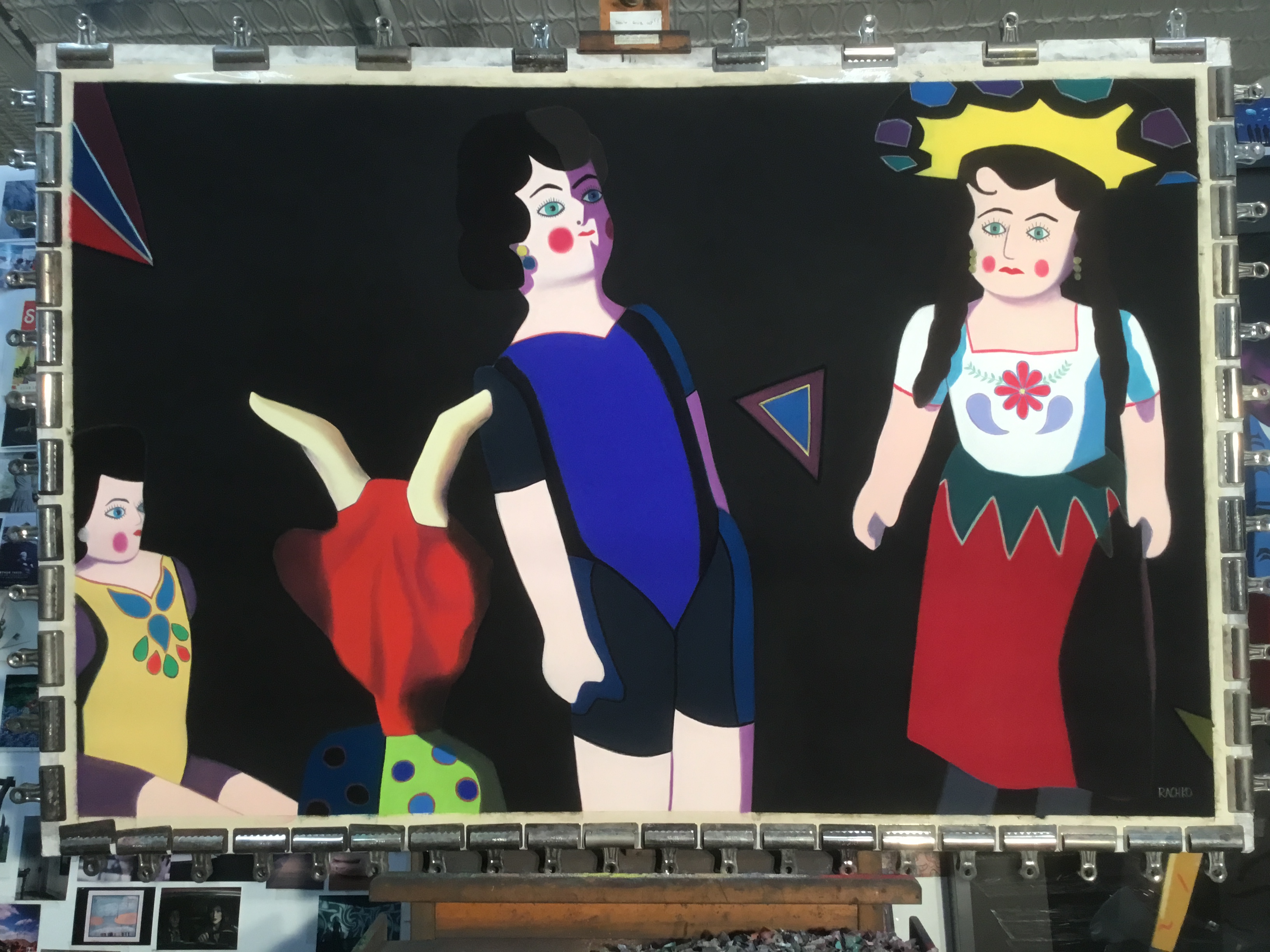
Work in progress
A: I am putting a few finishing touches on “Conundrum,” soft pastel on sandpaper, 38″ x 58″.
Comments are welcome!



