Blog Archives
Pearls from artists* # 665

*an ongoing series of quotations – mostly from artists, to artists – that offers wisdom, inspiration, and advice for the sometimes lonely road we are on.
We are wordlessly persuaded and taught outright to hide so much of what we have unearthed in our lives. But artists throughout the centuries have described the power of using anguish as a catalyst to fuel their creativity. In Greek epic poetry, ‘Kleos’ refers to immortal renown. Unlike present-day fame, this term referred exclusively to heroes who had surmounted a great obstacle or persevered through tremendous difficulties. There is a certain authority that comes from those who have endured hardship. They have earned the depth of their work.
Darkness contains a great deal of energy. We can use it for destruction or creativity. Only those who tolerate it are able to illuminate the shadowy corners, revealing the nefariousness that hopes to stay hidden. We cannot change our past, or any hell that we have been through. But art provides the means to exorcise the pain that has taken up residence in our body and fashion it into a form outside ourselves, in an infinitely affirmative gesture. The darkness we have passed through was not endured in vain if we mold it into a vision that lights the way out… for us, and for all the other souls who undoubtedly need it.
Kate Kretz in Art From Your Core: A Holistic Guide to Visual Voice
Comments are welcome!
Pearls from artists* # 213
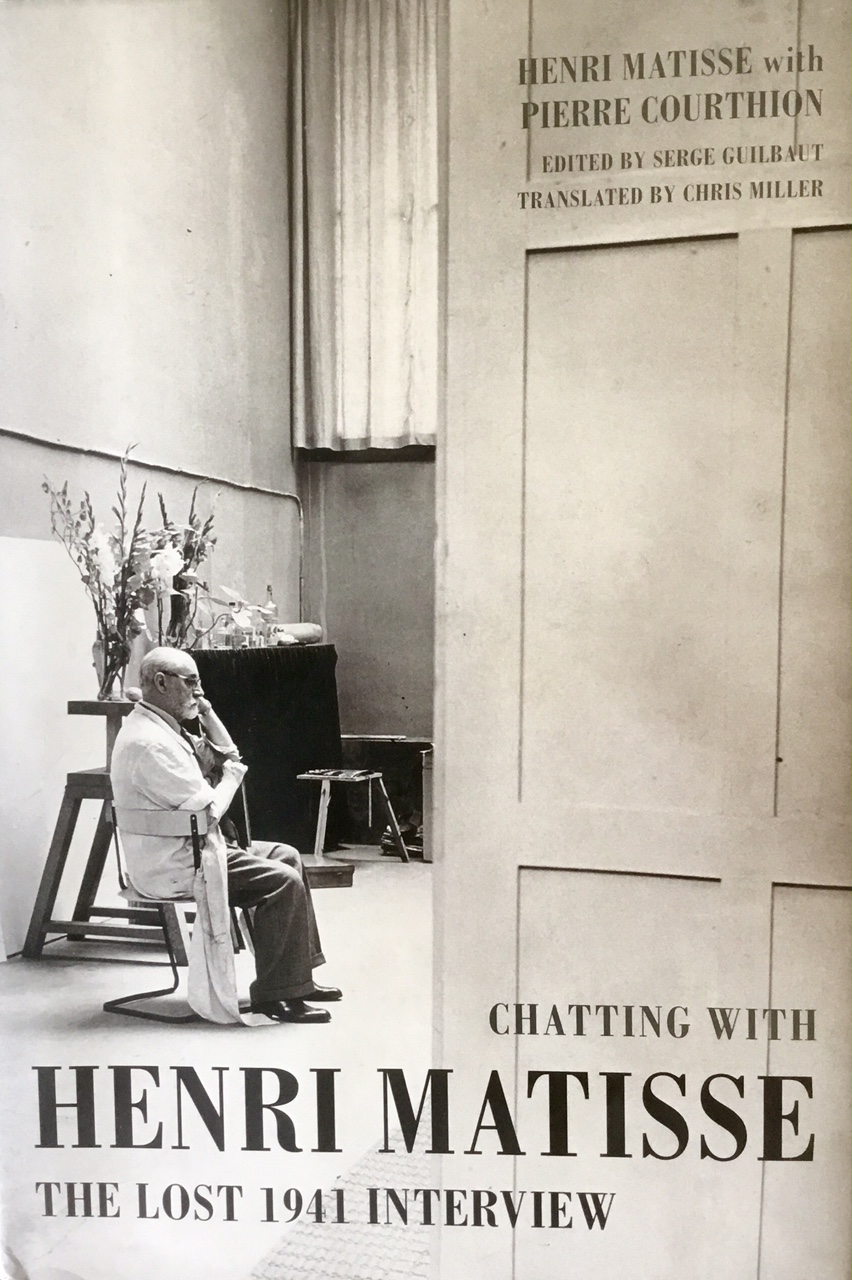
Matisse Book Cover
* an ongoing series of quotations – mostly from artists, to artists – that offers wisdom, inspiration, and advice for the sometimes lonely road we are on.
I am astonished by the accuracy with which Matisse remembers the most trifling facts; he describes a room that he went into forty years ago and gives you the measurements, where every piece of furniture stood, how the light fell. He is a man of astounding precision and has little time for anything that he has not confirmed for himself. In art matters, he is not the sort to go looking for a profile fortuitously created by cracks in the wall. Elie Faure writes that Matisse is perhaps the only one of his contemporaries (in particular Marquet and Bonnard) to know exactly where he comes from and the only one who never allows it to show “because his inveterate, invincible, vigilant willpower is always focused on being himself and nothing but.”
Matisse neglects nothing. He seems to know as much about the art market as about painting.
So many stratagems to sell a painting, from intimidating the purchaser to seeming to avoid him: Vollard used them all and used them successfully. Not least the lies that he told to reassure the client. “It works like this,” says Matisse: “To make a sale, you invent lies that have somehow disappeared into thin air by the time the deal is done.”
We talk of the difficulties faced by dealers hoping to gain access to Renoir in his Cagnes residence. Renoir didn’t like having people talk to him about selling his work,” says Matisse: “It bored him. About the only one who got a foot in the door was Paul Guillaume; he dressed up as a young worker with a floppy necktie: “You see, I’m a local. I’ve always loved your painting. I’ve just inherited a little money; I’d like to buy something.”
Chatting with Henri Matisse: The Lost 1941 Interview, Henri Matisse with Pierre Courthion, edited by Serge Guilbaut, translated by Chris Miller
Comments are welcome!


 barbararachkoscoloreddust.com