Blog Archives
Pearls from artists* # 623

*an ongoing series of quotations – mostly from artists, to artists – that offers wisdom, inspiration, and advice for the sometimes lonely road we are on.
At the time [the Renaissance], Bologna was unique in championing the professions of women. The home of Europe’s oldest university, which had supported female students since the thirteenth century, the city considered women artists as integral to its development. Praised by scholars, written about by biographers and adored by the locals, they were also supported by patrons of all social classes (from bankers to barbers), creating a varied culture of artistic patronage. (By contrast, in Florence and Naples, commissioning was reserved for select noble families.). Women were also encouraged to sign their work, as well as to paint self-portraits for the purpose of being known and, most importantly, remembered. No wonder scholars have recorded a staggering sixty-eight women artists working in the city between the fifteenth and sixteenth centuries.
These notable exceptions remind us that women have always been perfectly capable of being artists. But while there could have been an abundance of women working at this time, in reality female artists were an absolute rarity, seen as ‘tokens’ rather than pioneers. (After de Rossi’s death [in 1530], no female sculptor is mentioned in the city’s records for 200 years.). And little knowledge remains of those working during the Renaissance period. Most of what we know has been passed down by male scholars and through legal documents, rarely from the women themselves.
Katy Hessel in The Story of Art Without Men
Comments are welcome!
Pearls from artists* # 554
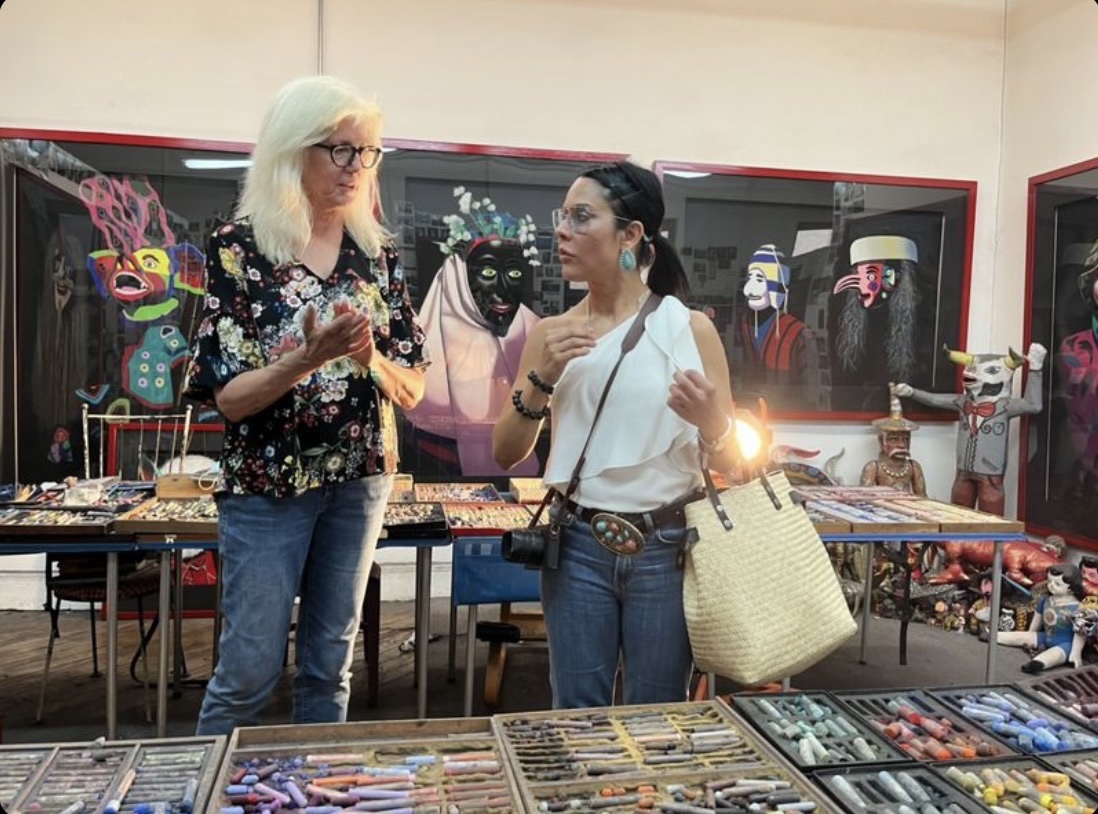
Explaining my work. Photo: David De Hannay
*an ongoing series of quotations – mostly from artists, to artists – that offers wisdom, inspiration, and advice for the sometimes lonely road we are on.
We’ve all taken advantage of the unlimited instant access that the wired world claims to provide. So it’s not surprising that many artists are reluctant to contemplate, much less accept, any self-imposed limitations. Painters and sculptors who remain in their studios grapple with the fundamentals and fine points of representation or abstraction – worrying about Renaissance theories of perspective or Klee’s or Kandinsky’s ideas about plane geometry – can be accused of having their heads in the sand. But there comes a time when certain questions must be asked. What are the artistic traditions that mean the most to you? What is your artistic heritage? Where do you stand?
Between Abstraction and Representation by Jed Perl in The New York Review of Books, November 24, 2022
Comments are welcome!
Pearls from artists* # 337
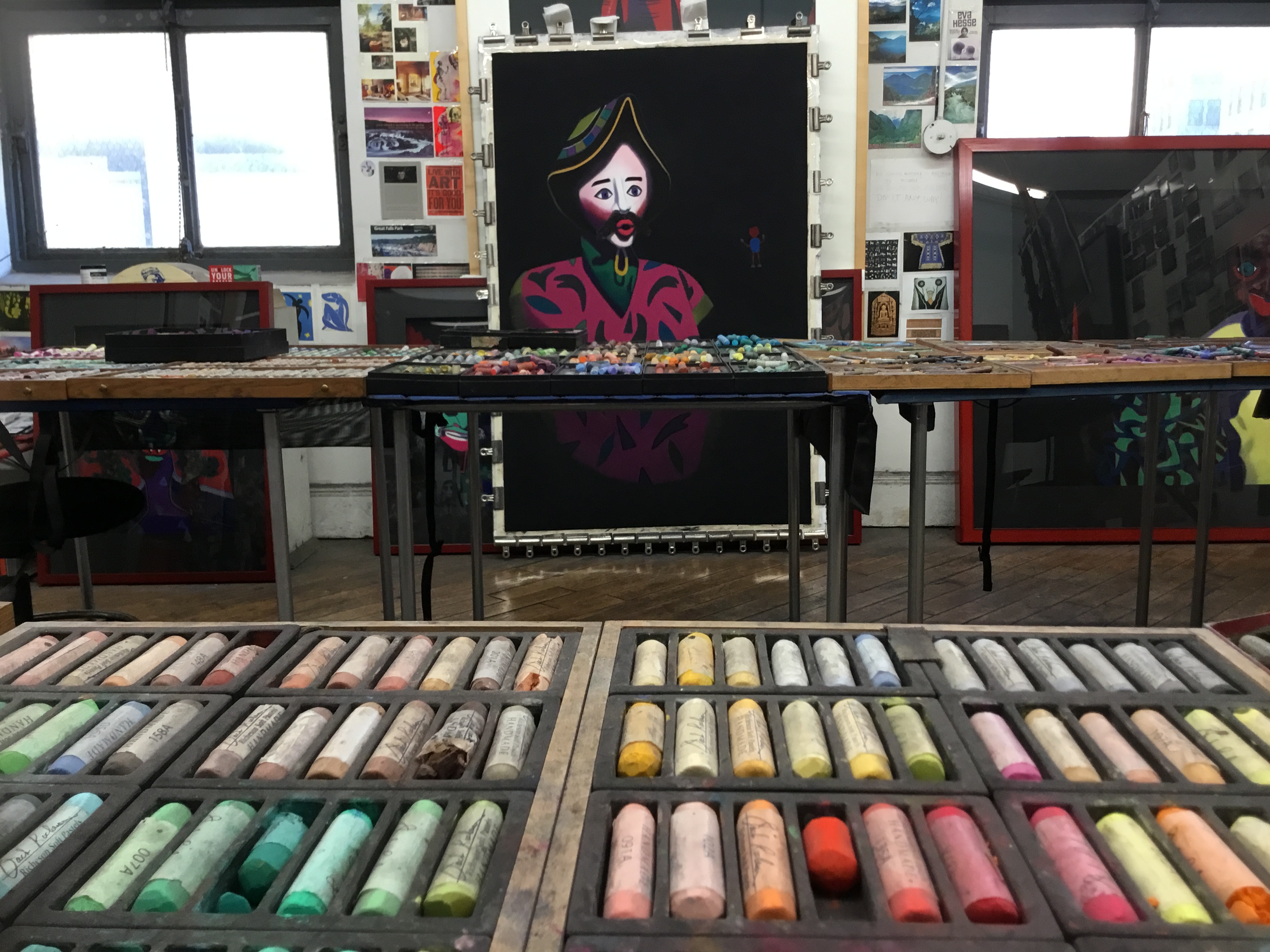
Barbara’s studio
*an ongoing series of quotations – mostly from artists, to artists – that offers wisdom, inspiration, and advice for the sometimes lonely road we are on.
I think society did a great disservice to artists when we started saying they were geniuses, instead of saying they had geniuses. That happened around the Renaissance, with the rise of a more rational and human-centered view of life. The gods and the mysteries fell away, and suddenly we put all credit and blame for creativity on the artists themselves – making the all-too-fragile humans completely responsible for the vagaries of inspiration.
In the process, we also venerated art and artists beyond their appropriate stations. The distinction of “being a genius” (and the rewards and status often associated with it) elevated creators into something like a priestly cast – and perhaps even into minor deities – which I think is a bit too much pressure for mere mortals, no matter how talented. That’s when artists start to really crack, driven mad and broken in half by the weight and weirdness of their gifts.
Elizabeth Gilbert in Big Magic: Creative Living Beyond Fear
Comments are welcome!
Pearls from artists* # 44

Studio view
* an ongoing series of quotations – mostly from artists, to artists – that offers wisdom, inspiration, and advice for the sometimes lonely road we are on.
I cannot even imagine the individual arts sufficiently distinct from one another. This admittedly exaggerated attitude might have its most acute origin in the fact that in my youth, I, quite inclined toward painting, had to decide in favor of another art so as not to be distracted. And thus I made this decision with a certain passionate exclusivity. Based on my experience, incidentally, every artist needs to consider for the sake of intensity his means of expression to be basically the only one possible while he is producing. For otherwise he could not easily suspect that this or that piece of world would not be expressible by his means at all and he would finally fall into that most interior gap between the individual arts, which is surely wide enough and could be genuinely bridged only by the vital tension of the great Renaissance masters. We are faced with the task of deciding purely, each one alone, on his one mode of expression, and for each creation that is meant to be achieved in this one area all support from the other arts is a weakening and a threat.
Ulrich Baer, editor, The Wisdom of Rilke
Comments are welcome!


 barbararachkoscoloreddust.com