Blog Archives
Q: How do you select a photograph to use as reference material to make a pastel painting?
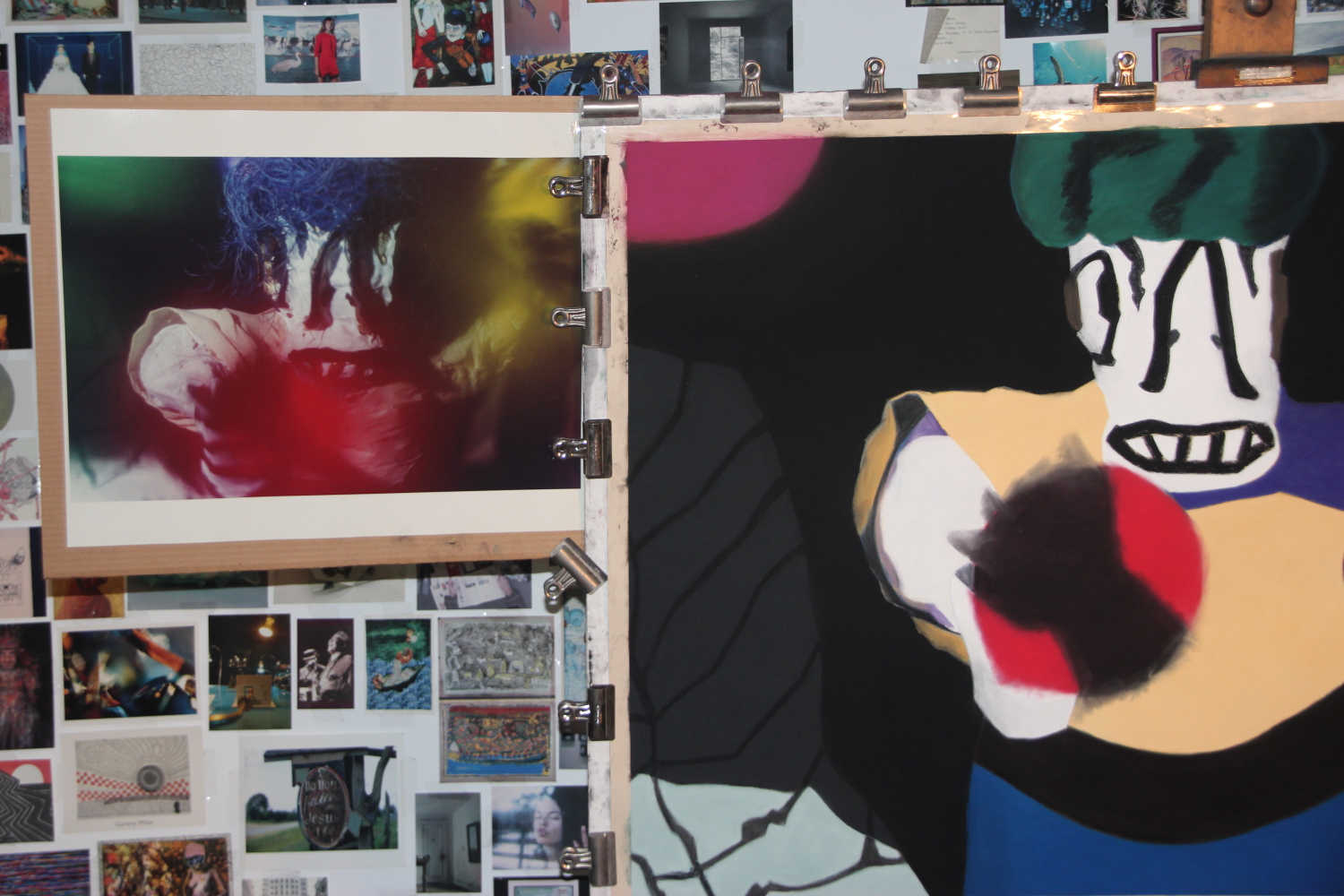
Photograph, left, and work in progress
A: Like everything else associated with my studio practice, my use of photographs from which to work has changed considerably. Beginning in the early 1990s all of the paintings in my first series, “Domestic Threats,” started out as elaborately staged, well-lit scenes that either my husband, Bryan, or I photographed with Bryan’s Toyo Omega 4 x 5 view camera using a wide-angle lens. Depending on where I was living at the time, I set up the scenes in one of three places: our house in Alexandria, VA, a six-floor walkup apartment on West 13th Street in New York, or my current Bank Street condominium. Then one of us shot two pieces of 4 x 5 film at different exposures and I’d usually select the more detailed one to be made into a 20″ x 24″ photo to use as a reference.
Just as the imagery in my paintings has simplified and emptied out over the years, my creative process has simplified, too. I often wonder if this is a natural progression that happens as an artist gets older. More recently I have been shooting photos independently of how exactly I will use them in my work. Only later do I decide which ones to make into paintings; sometimes it’s YEARS later. For example, the pastel painting that is on my easel now is based on a relatively old (2002) photograph that I have always liked, but only now felt ready to tackle in pastel.
Comments are welcome!
Q: What’s on the easel today?
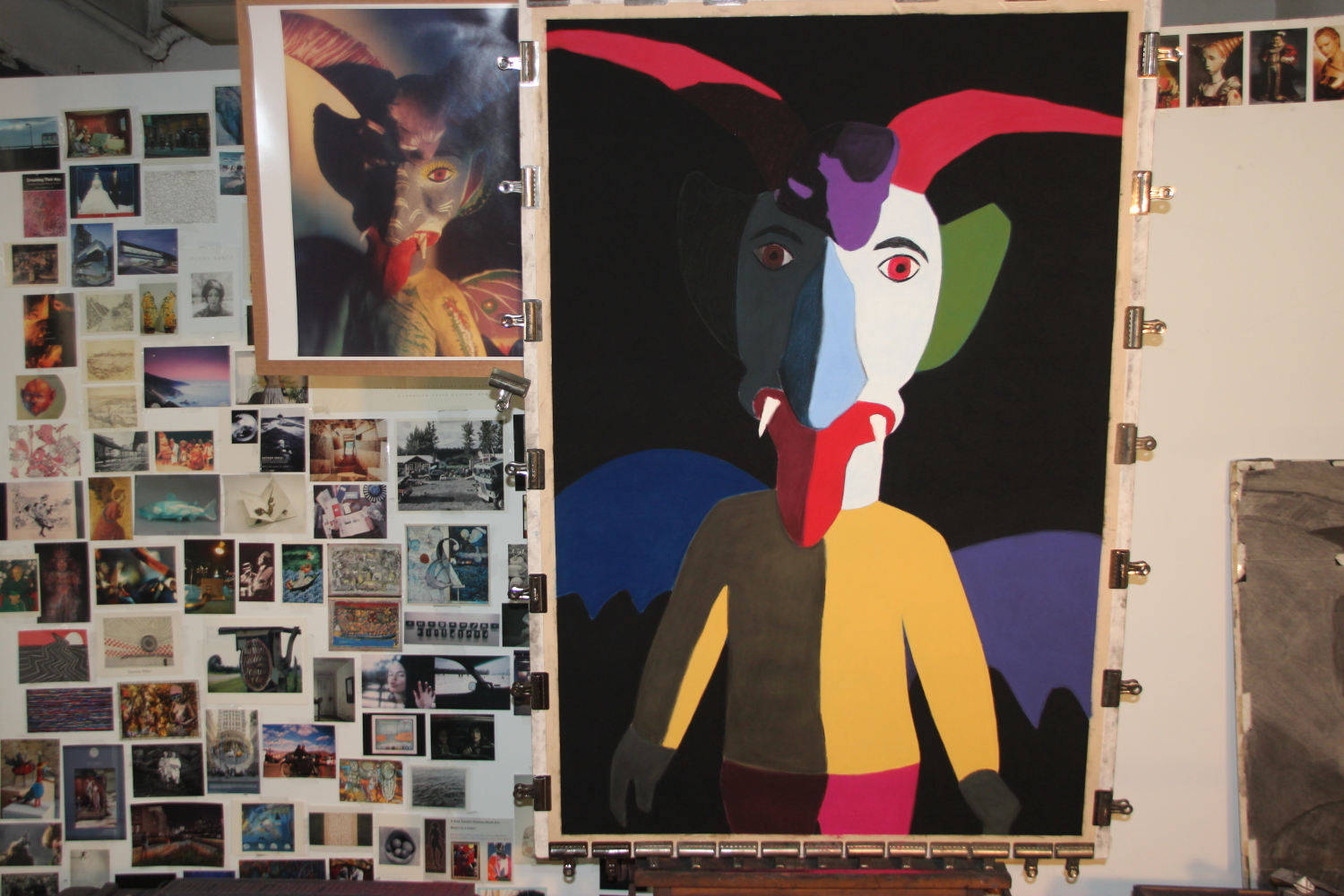
Work in progress, 58″ x 38″
A: Today is a day off to let my fingers heal. When I start a new painting, I need to rub my fingers against raw sandpaper in order to blend the pastel. With each layer the tooth of the paper gets filled up and becomes smooth, but until then my fingers suffer. Here is what I’ve been working on.
This pastel-on-sandpaper painting is an experiment, an attempt to push myself to work with bigger and bolder imagery. The photograph clipped to the easel is one of my favorites. It depicts a Judas that Bryan and I found in a dusty shop in Oaxaca. Among the Mexican and Guatemalan folk art pieces that I’ve collected are five papier mâché Judases. This particular one is unusual because it has a cat’s head attached at the forehead (the purple shape in the painting). They are not made to last. In some Mexican towns large Judases are hung from church steeples, loaded with fireworks, and burned in effigy. This takes place at 10:00 a.m. on the Saturday morning before Easter. Mexico is primarily a Catholic nation, of course, so effigy burning is done as symbolic revenge against Judas for his betrayal of Christ. The Judas in the photo is small and meant for private burning by a family (rather than in public at a church) so by bringing it back to New York I rescued it from a fire-y death! In sympathy with Mexican tradition, I began this painting last Saturday (the day before Easter) at 10 a.m.
Comments are welcome!


 barbararachkoscoloreddust.com