Pearls from artists* # 310
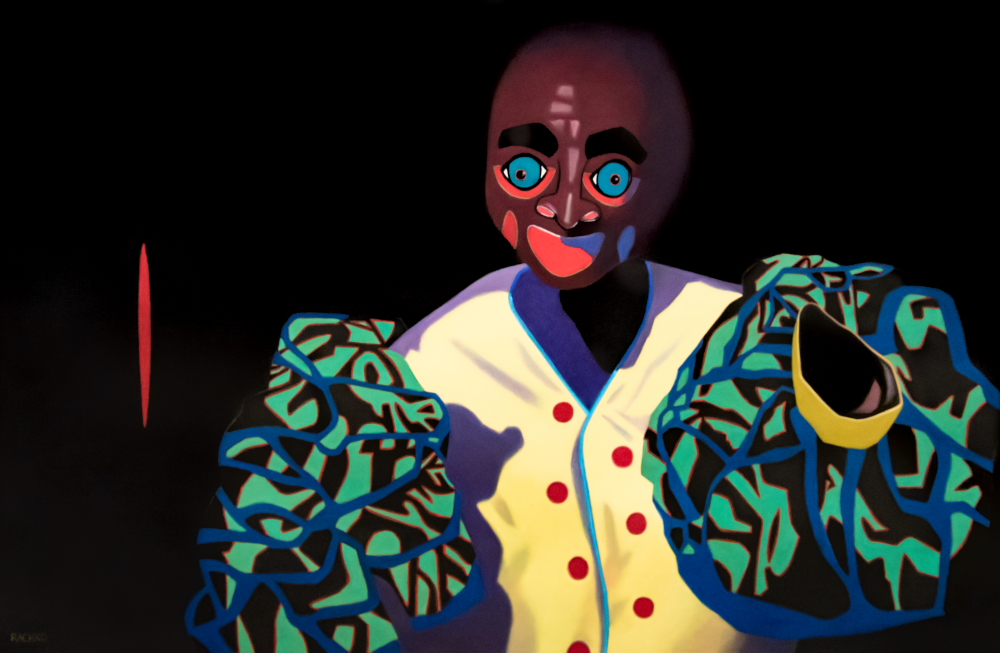
“Danzante,” soft pastel on sandpaper, 38″ x 58″ image, 50″ x 70″ framed
*an ongoing series of quotations – mostly from artists, to artists – that offers wisdom, inspiration, and advice for the sometimes lonely road we are on.
As Immanuel Kant explained, aesthetic rapture is a peculiar kind of subjective phenomenon, since it presents itself as anything but subjective. It asks to be shared with others in hopes that they too might experience this thing that has had such a profound effect upon us. Naturally, the desire to share our astonishment is bound to be frustrated as we meet people who respond to our beloved work with indifference or even revulsion. We then remember that the affective power of works of art varies from person to person, and even from moment to moment within the same person’s life, a fact we usually put down to personal taste, though little consideration is given to what that term might mean. People have their own inclinations, and given that the aesthetic is held, not just by Kant but also by common wisdom, to be a private affair, its variability across the broad spectrum of human personalities can only seem inevitable.
J.F. Martel in Reclaiming Art in the Age of Artifice: A Treatise, Critique, and Call to Action
Comments are welcome!
Travel photo of the month*
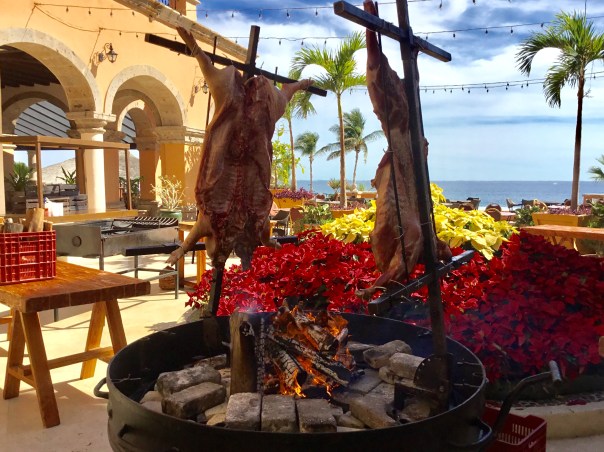
New Year’s Eve in Los Cabos, Mexico
*Favorite travel photographs that have not yet appeared in this blog.
Comments are welcome!
Pearls from artists* #309
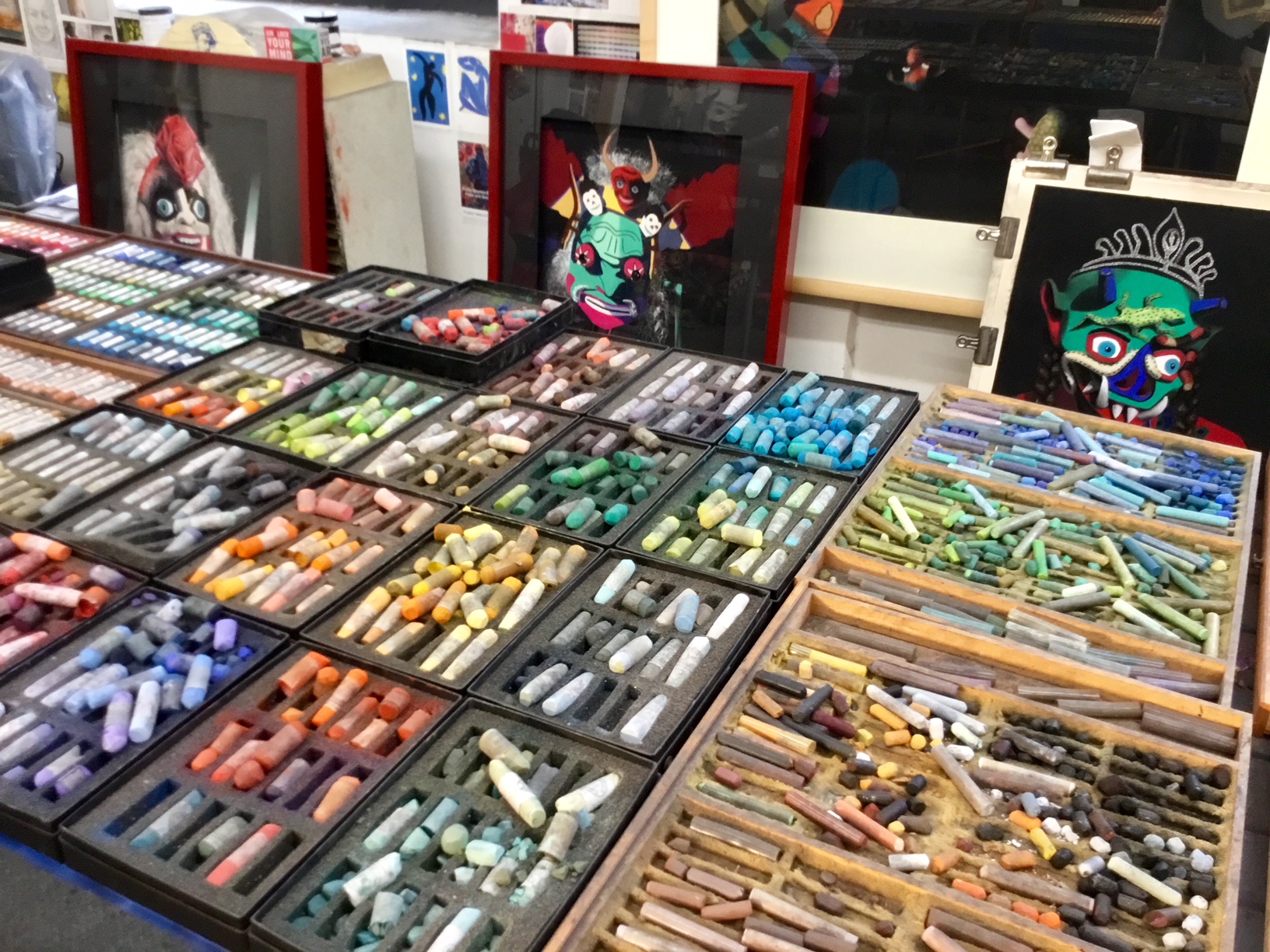
Barbara’s studio
*an ongoing series of quotations – mostly from artists, to artists – that offers wisdom, inspiration, and advice for the sometimes lonely road we are on.
It is a strange thing to catalog the conflicting theories as to what the first artists thought they were doing down there in the caves, because the truth is that, to this day, we do not know why we make art. In the end, art may not have been our invention at all. It may well have appeared in history as it does in the life of many individual artists: as an outside call, a sudden flash of inspiration, an inner wanderlust exerting such a powerful pull that ultimately we would have to say that Picasso got it wrong: the early humans did not invent art. Art invented humanity.
J.F. Martel in Reclaiming Art in the Age of Artifice: A Treatise, Critique, and Call to Action
Comments are welcome!
Pearls from artists* # 308
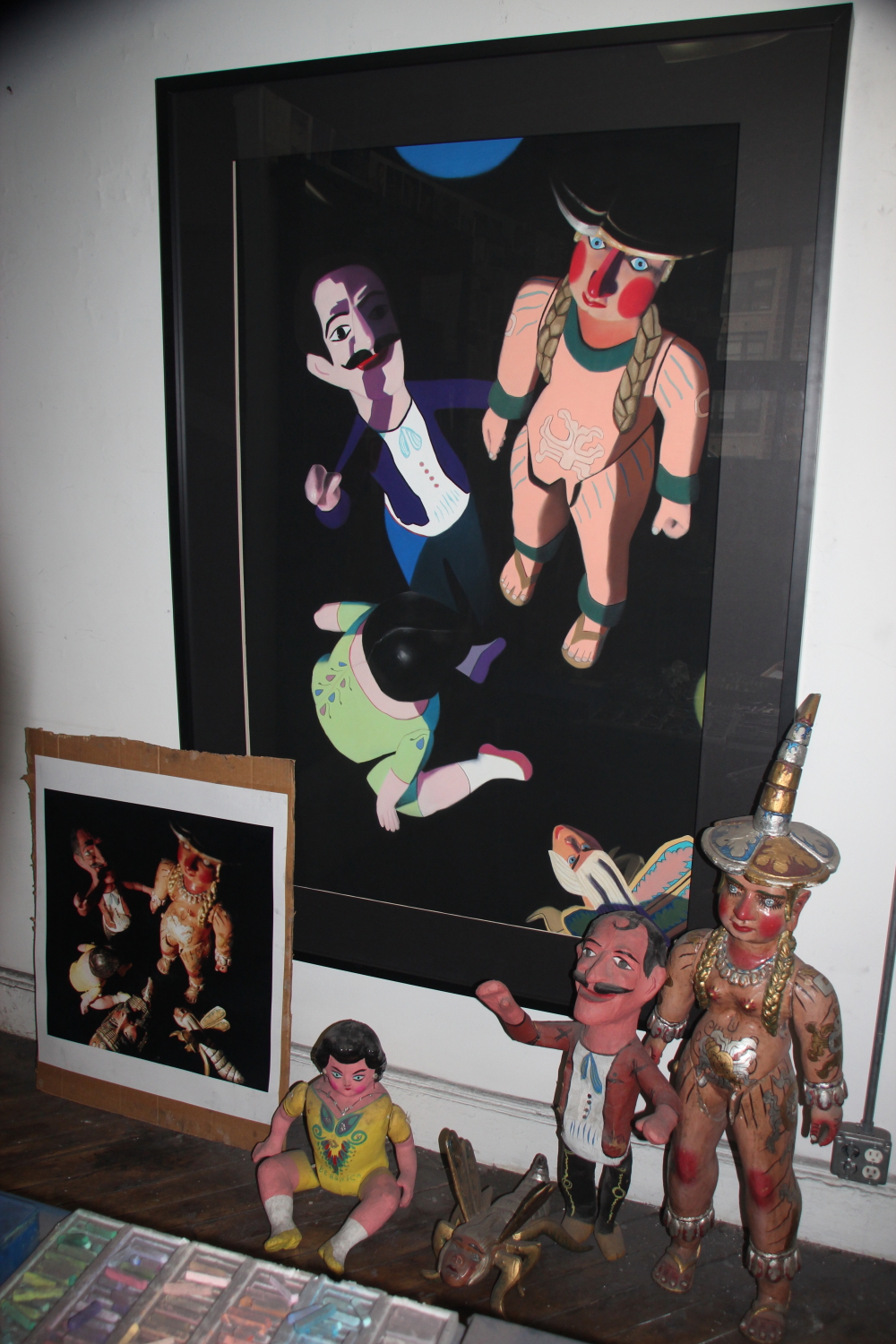
“The Ancestors,” 70” x 50” framed, in Barbara’s studio
*an ongoing series of quotations – mostly from artists, to artists – that offers wisdom, inspiration, and advice for the sometimes lonely road we are on.
Art is mysterious because its purpose is unknown and its effect always exceeds the ends we put it to. If it is true, for instance, that nearly all human societies see the possession of artistic objects as a sign of prestige and power, it may simply be because art’s primary quality makes it a suitable sign for those who want to legitimize their authority. And while it may be the case that art ennobles us by bringing beauty into our lives, or that it conveys complex cultural ideas simply and effectively, or that it preserves the beliefs of one age for the next – again, these functions could very well follow from art’s original, mysterious, irreducible shining. Just as it is the gleam of gold that makes it precious in our eye and not its preciousness that makes it gleam, so the primary quality of art could precede all of its uses and appropriations. In other words art may be something before it becomes all the things we claim it to be.
J.F. Martel in Reclaiming Art in the Age of Artifice: A Treatise, Critique, and Call to Action
Comments are welcome!
Q: What’s on the easel today?
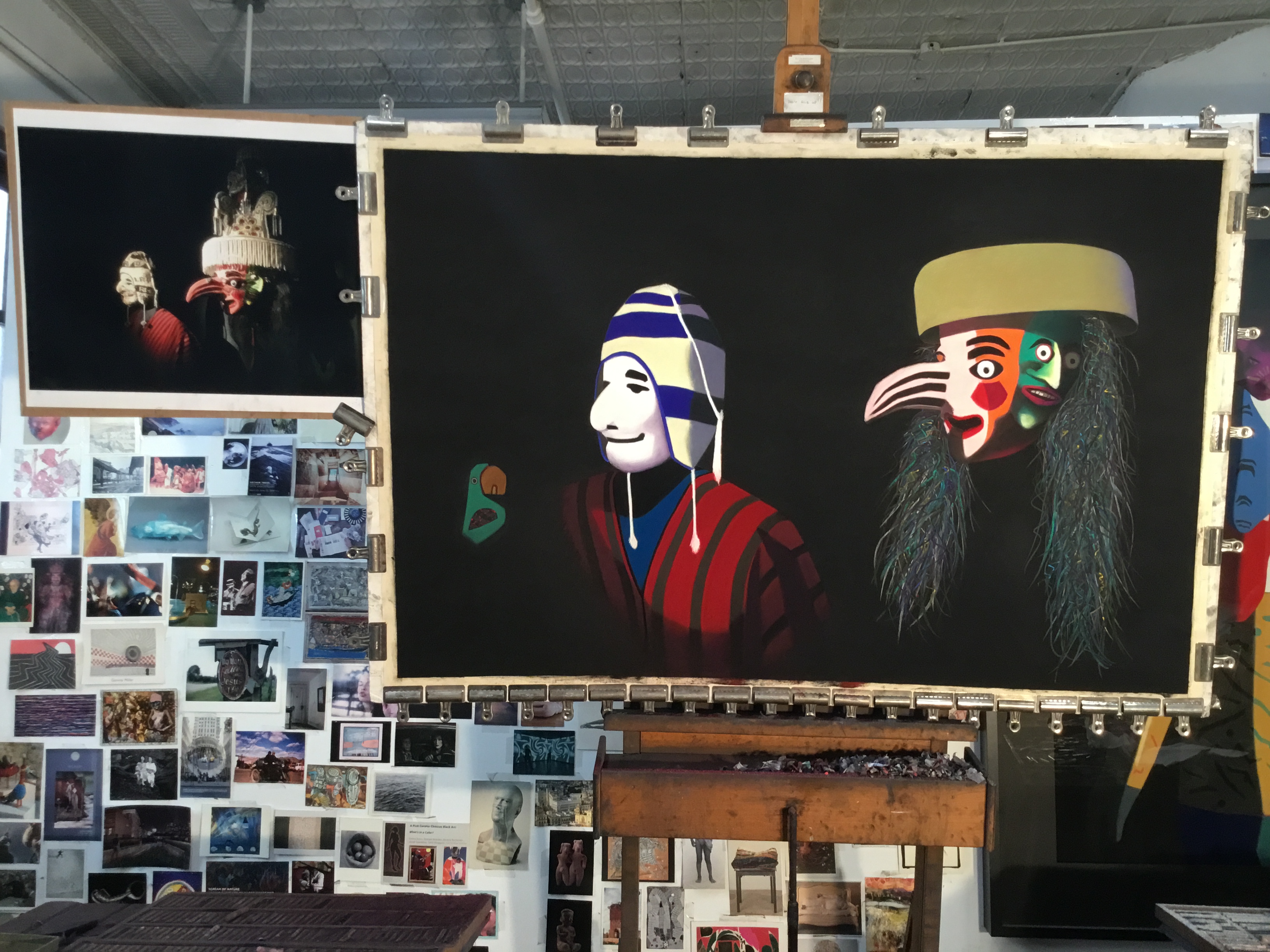
Work in progress
A: I continue working on “Acolytes,” soft pastel on sandpaper, 38” x 58.”
Comments are welcome!
Pearls from artists* # 307
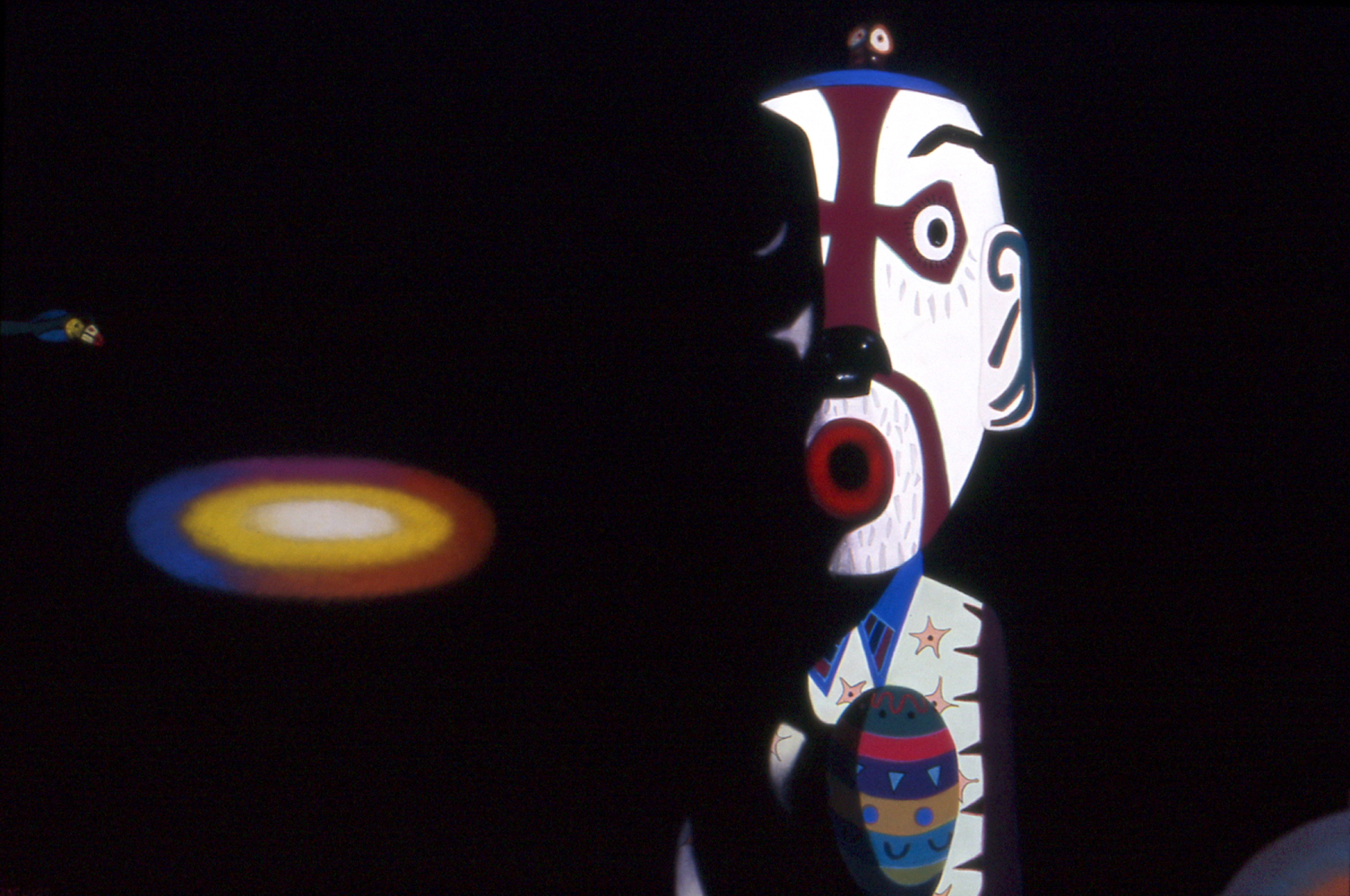
“Poker Face,” soft pastel on sandpaper, 38″ x 58″
* an ongoing series of quotations – mostly from artists, to artists – that offers wisdom, inspiration, and advice for the sometimes lonely road we are on.
Until fairly recently the word art as applied to pictures usually referred not just to representations of the world but to representations that suggested an importance greater than we might otherwise have assumed. Such pictures were said to instruct and delight, which they did by their wholeness and richness. The effect was to reinforce a sense of meaning in life, though not necessarily a belief in a particular ideology or religion, and in this they were a binding cultural achievement.
Unfortunately art of this quality is now little attempted, partly because of disillusionment from a century of war, partly because of sometimes misplaced faith in the communicative and staying powers of total abstraction, and partly because of the ease with which lesser work can be made and sold. This atrophying away of the genuine article is a misfortune because, in an age of nuclear weapons and over-population and global warming, we need more than ever what art used to provide. Somehow we have to recommit to picture making that is serious. It is impermissible any longer to endorse imitations that distract us or, openly or by implication, ridicule hope. The emptiness of material by Jeff Koons and Damien Hirst, for example, is born of cynicism and predictive of nihilism.
Robert Adams in Art Can Help
Comments are welcome!
Q: Do you have a favorite painting among all the work you have created?
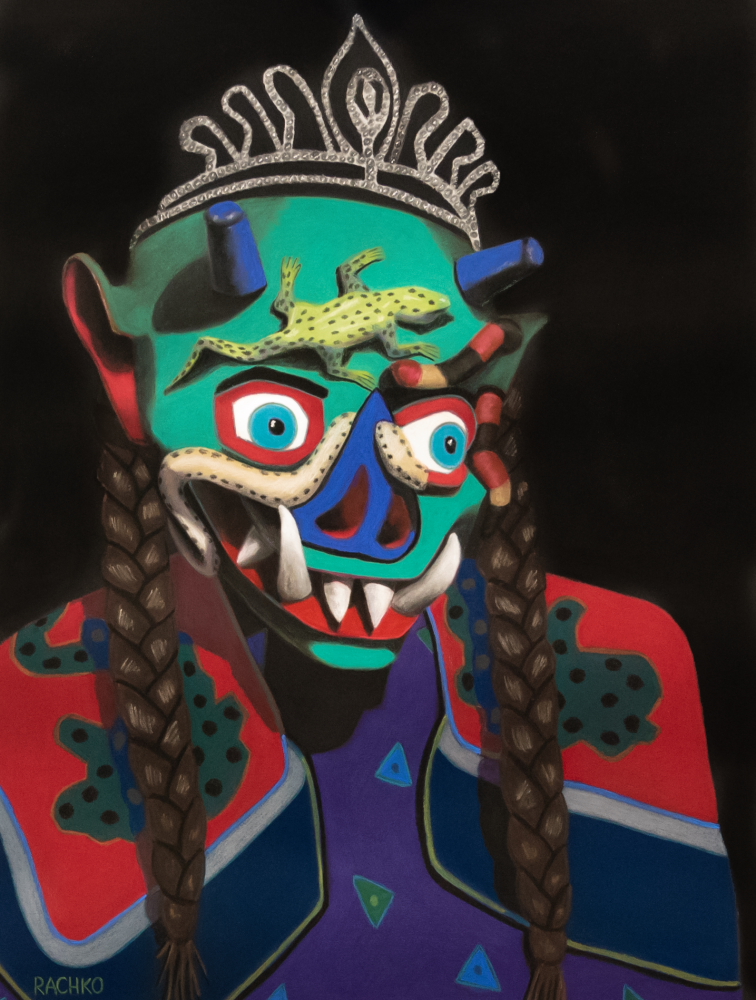
”Shamanic,” soft pastel on sandpaper, 26” x 20”
A: Generally, it’s the last one I completed, perhaps because it encapsulates everything I’m currently thinking about. At the moment my favorite is “Shamanic.”
I believe all of my prior experience in and out of the studio has contributed to making me a better artist and also a better person. So whichever work I finished last, seems the best somehow, and it’s also my favorite.
I wonder, do other artists feel this way, too?
Comments are welcome!
Pearls from artists* # 306

New York, NY
* an ongoing series of quotations – mostly from artists, to artists – that offers wisdom, inspiration, and advice for the sometimes lonely road we are on.
It is the responsibility of artists to pay attention to the world, pleasant or otherwise, and to help us live respectfully in it.
Artists do this by keeping their curiosity and moral sense alive, and by sharing with us their gift for metaphor. Often this means finding similarities between observable fact and inner experience – between birds in a vacant lot, say, and an intuition worthy of Genesis.
More than anything else, beauty is what distinguishes art. Beauty is never less than mystery, but it has within it a promise.
In this way, art encourages us to gratitude and engagement, and is of both personal and civic consequence.
Robert Adams in Art Can Help
Comments are welcome!
A: Would you agree that there are more opportunities for women artists these days?
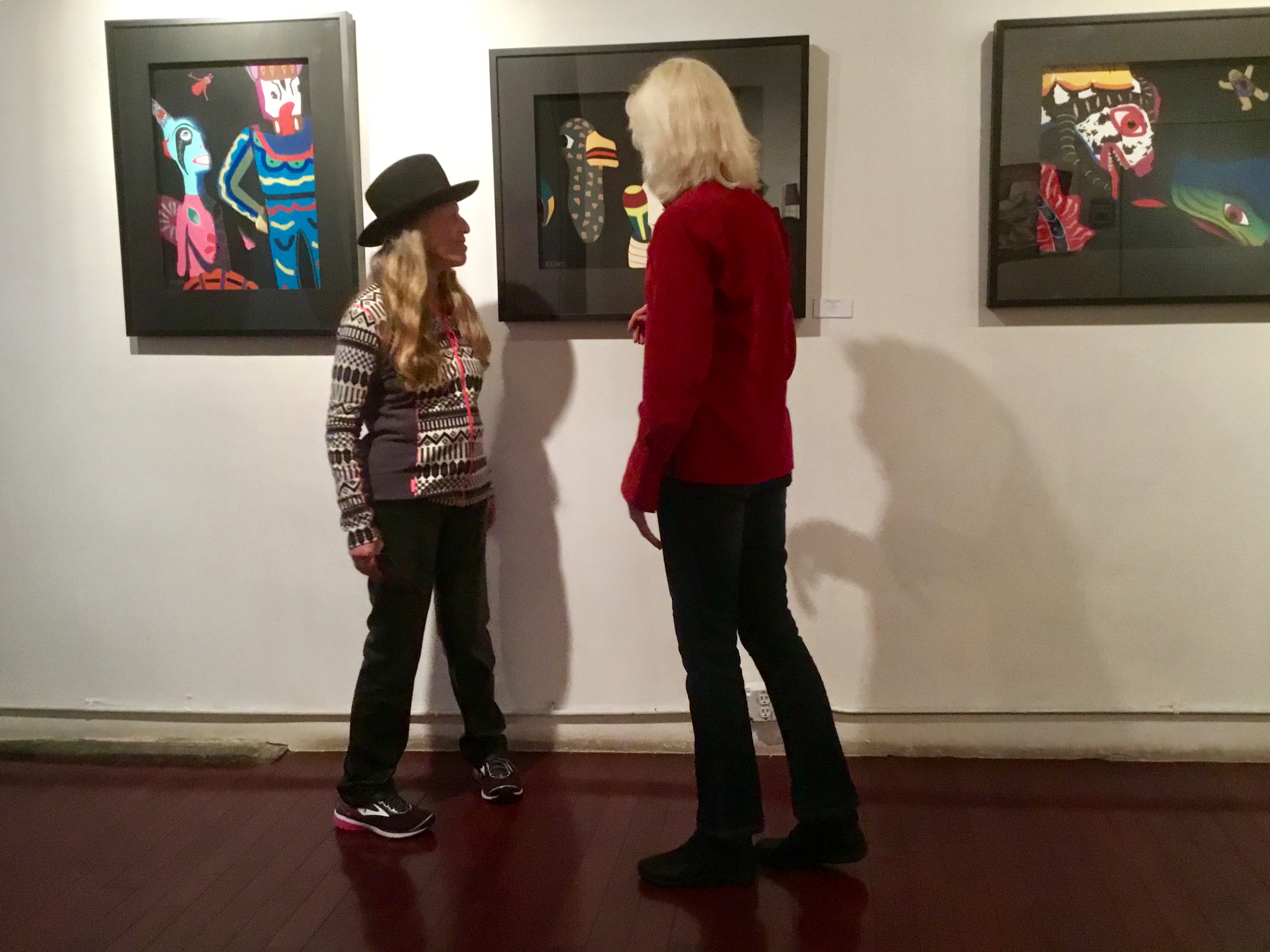
At Salomon Arts in Tribeca
A: It’s true that there are more opportunities now for women artists. Indeed, there are more opportunities for ALL artists. Social media has helped immensely in that it allows artists to take charge of our own careers, making us less dependent on the approval, largesse, and/or validation of art world gatekeepers.
However, at the highest levels of our profession, there are many inequities. As more women become art museum directors, collectors of contemporary art, and leaders whose taste matters, the status of all female artists is bound to improve to become more aligned with that of males.
Comments are welcome!
Pearls from artists* # 305
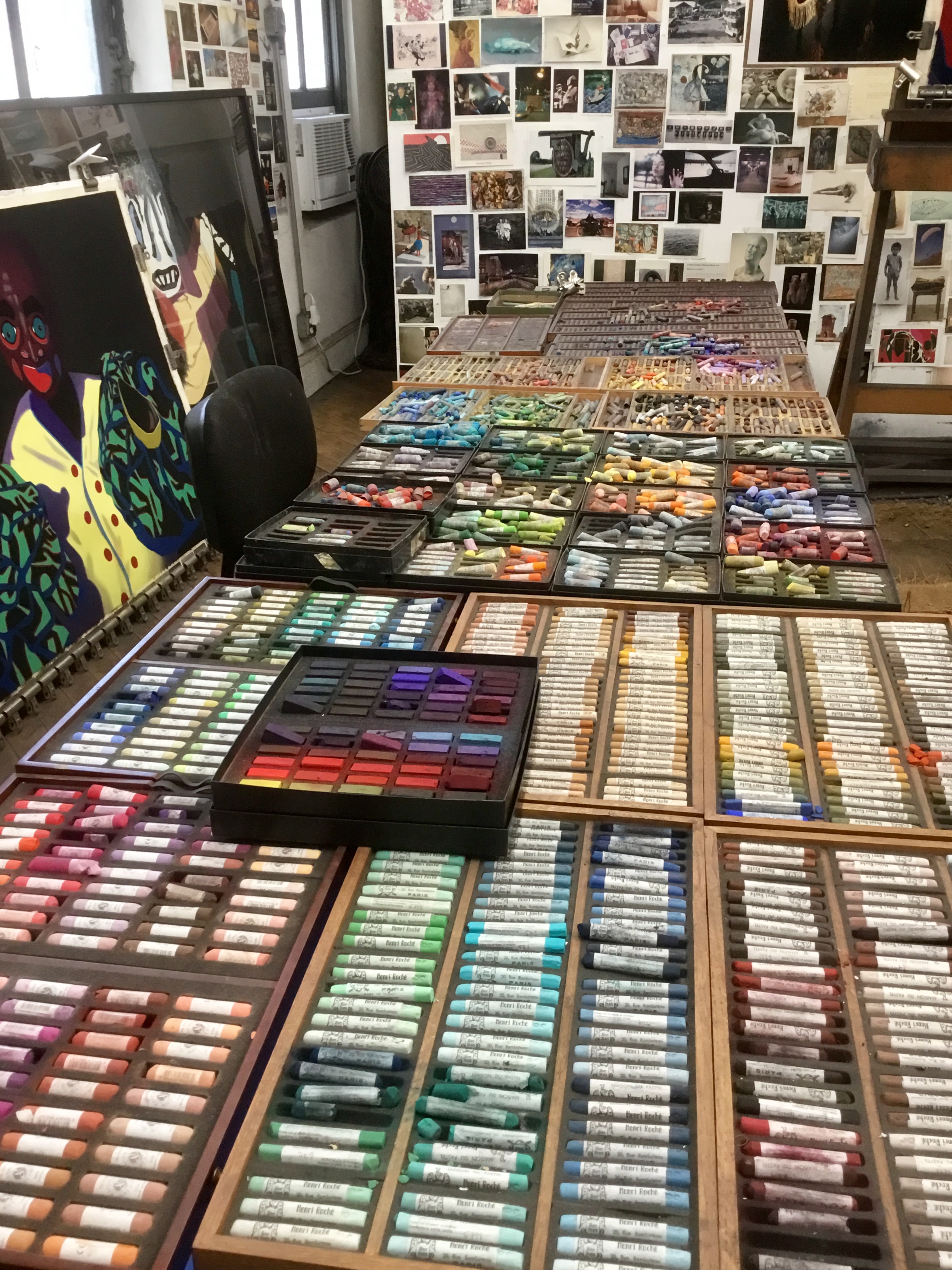
About half of Barbara’s pastels
* an ongoing series of quotations – mostly from artists, to artists – that offers wisdom, inspiration, and advice for the sometimes lonely road we are on.
When asked to talk about what I do, I’ve often compared writing with handicrafts – weaving, pot-making, woodworking. I see my fascination with the word as very like, say, the fascination with wood common to carvers, cabinetmakers – people who find a fine piece of old chestnut with delight, and study it, and learn the grain of it, and handle it with sensuous pleasure, and consider what’s been done with chestnut and what you can do with it, loving the wood itself, the mere material, the stuff of their craft.
Ursula K. Le Guin in No Time to Spare: Thinking About What Matters
Comments are welcome!


 barbararachkoscoloreddust.com