Q: When did you begin seriously studying photography?

A: After I lost my husband, Bryan, on 9/11 – as I’ve discussed elsewhere, Bryan photographed most of the setups for my “Domestic Threats” series – I needed to find a way to continue making art. In June 2002 I began studying photography at the International Center of Photography (ICP) in New York. I took a one week 4 x 5 view camera workshop because Bryan had photographed the setups with a Toyo-Omega view camera. I was surprised to discover that I had absorbed quite a bit of technical information just by watching him. Once I completed the workshop, I decided to start over from the beginning and to learn as much as I could about photography. So I enrolled in Photography I. Over the next several years I completed about a dozen courses at ICP, eventually learning to make my own large-scale chromogenic prints.
Around 2007 I began working seriously as a photographer, creating my photographic series, “Gods and Monsters,” with Bryan’s Mamiya 6 camera. In October 2009 HP Garcia Gallery in New York gave me my first solo photography exhibition.
Comments are welcome!
Pearls from artists* # 603

With friends in Alexandria, VA
*an ongoing series of quotations – mostly from artists, to artists – that offers wisdom, inspiration, and advice for the sometimes lonely road we are on.
The annals of art and science are full of studies of men and women who, desperately stuck on an enigma, have worked until they reached their wit’s end, and then suddenly made their longed-for creative leap of synthesis while doing errands or dreaming. The ripening takes place when their attention is directed elsewhere.
Insights and breakthroughs often come during periods of pause or refreshment after great labors. There is a prepatory period of accumulating data, followed by some essential but unforeseeable transformation. William James remarked in the same vein that we learn to swim in winter and skate in summer. We learn that which we do not concentrate on, the part that has been exercised and trained in the past but that is now lying fallow. Not doing can sometimes be more productive than doing.
Stephen Nachmanovitch in Free Play: Improvisation in Life and Art
Comments are welcome!
Q: What would you say collectors of your work have in common?
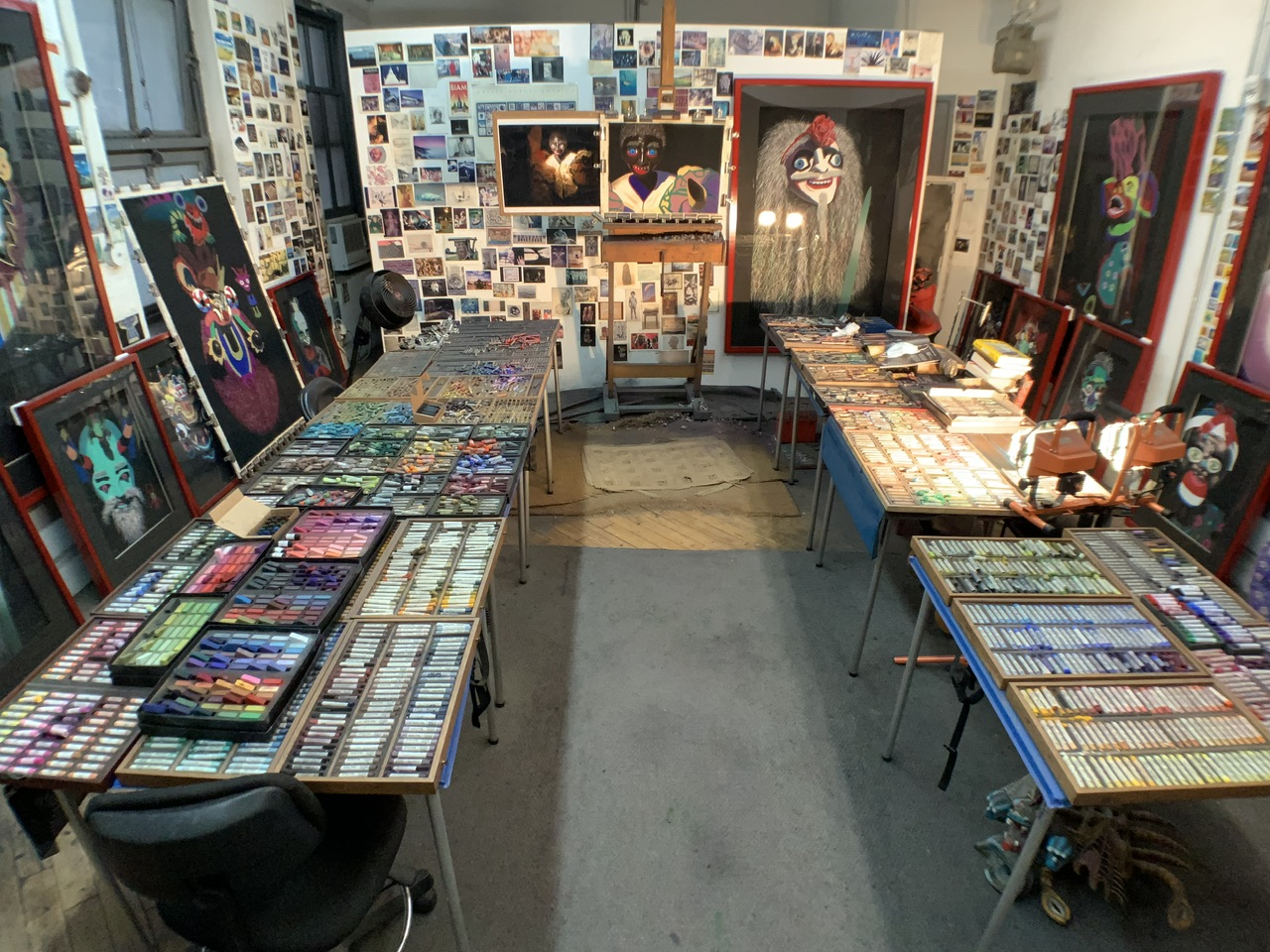
Barbara’s Studio
A: That’s a great question! I’d say that collectors of my work typically range in age from about 40 to their late 70s, they are college graduates with advanced degrees, they often don’t have kids, which is why they have disposable income and time to pursue their interests in art and culture. When I meet them (presuming my work was sold through a gallery or other third party), we usually have much to talk about – art, art history, photography, cinema, film history, dance, drama, music, travel, archaeology, Mexico, Central and South America, India, Asia – the list goes on and on.
Comments are welcome!
Pearls from artists* # 602
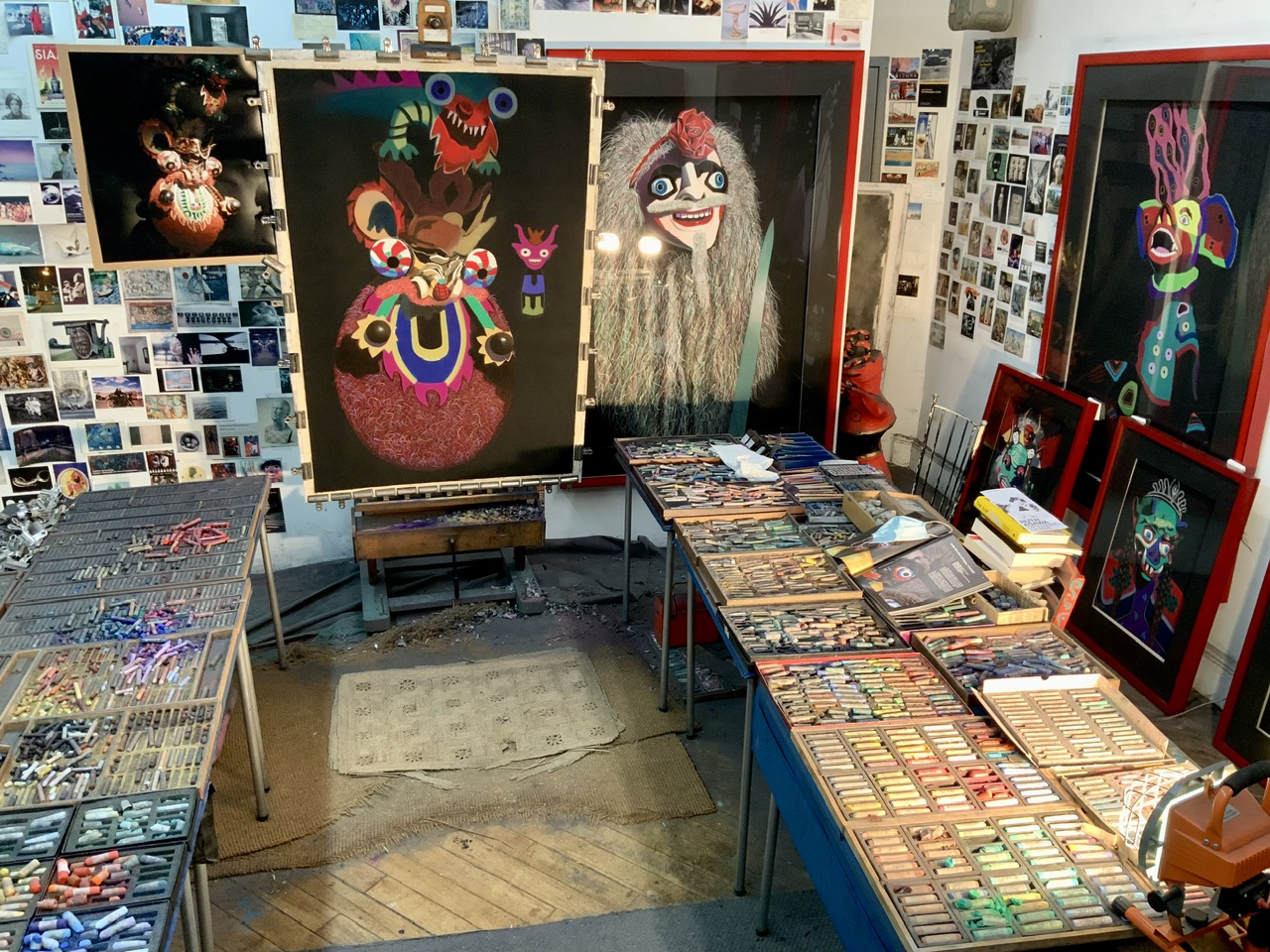
Barbara’s Studio
*an ongoing series of quotations – mostly from artists, to artists – that offers wisdom, inspiration, and advice for the sometimes lonely road we are on.
Anyone who studies an instrument, sport, or other art form must deal with practice, experiment, and training. We learn only by doing. There is a gigantic difference between the projects we imagine doing or plan to do and the ones we actually do. It is like the difference between a fantasied romance and one in which we really encounter another human being with all his or her complexities. Everyone knows this, yet we are inevitably taken aback by the effort and patience needed in the realization. A person may have great creative proclivities, glorious inspirations, and exalted feelings, but there is no creativity unless creations actually come into existence.
Stephen Nachmanovitch in Free Play: Improvisation in Art and Life
Comments are welcome!
Travel photo of the month*
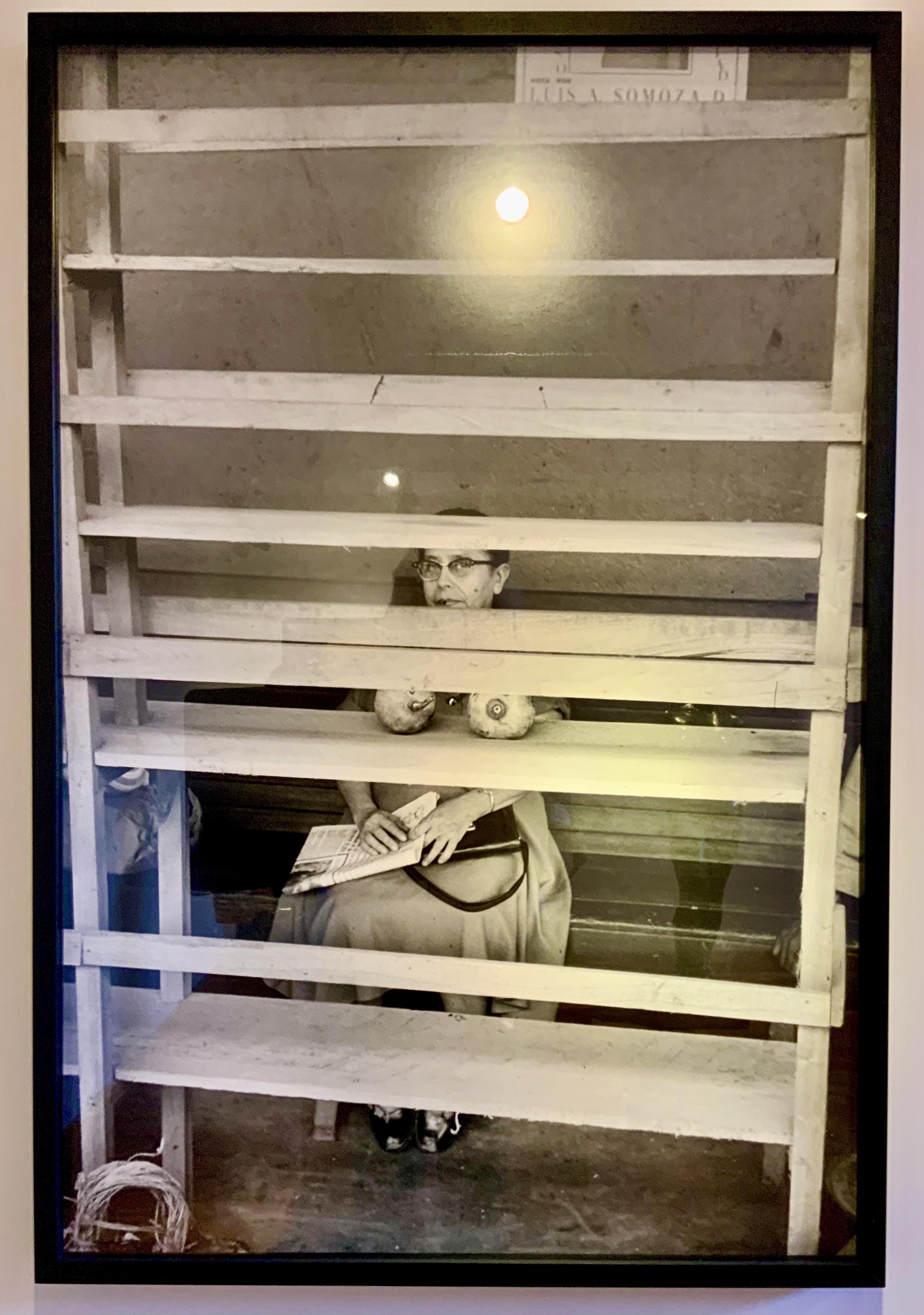
*favorite travel photos that have not yet appeared in this blog
Managua, Nicaragua, 1957; Elliott Erwitt Retrospective, le Musée Maillol, June 2023, Paris, France
Comments are welcome!
Pearls from artists* 601

Along the Seine, Paris
*an ongoing series of quotations – mostly from artists, to artists – that offers wisdom, inspiration, and advice for the sometimes lonely road we are on.
The central construct of café life in Paris introduced [Jack] Youngerman to contemporary political and cultural debates. He would take with him to New York this particular way of being alone but with people. It would infuse Coenties Slip with its unique template of influence by osmosis; the collective solitude model unique to the geographic makeup of that corner of New York. In Paris, “at any time, you can go out and be part of the city, you can see passersby, you can get out of your personal loneliness, without having to make conversation with another person. That’s something I want to do almost every day.” For Youngerman , it felt vital for art making.
Prudence Peiffer in The Slip: The New York Street that Changed American Art Forever
Comments are welcome!
Q: What’s on the easel today?
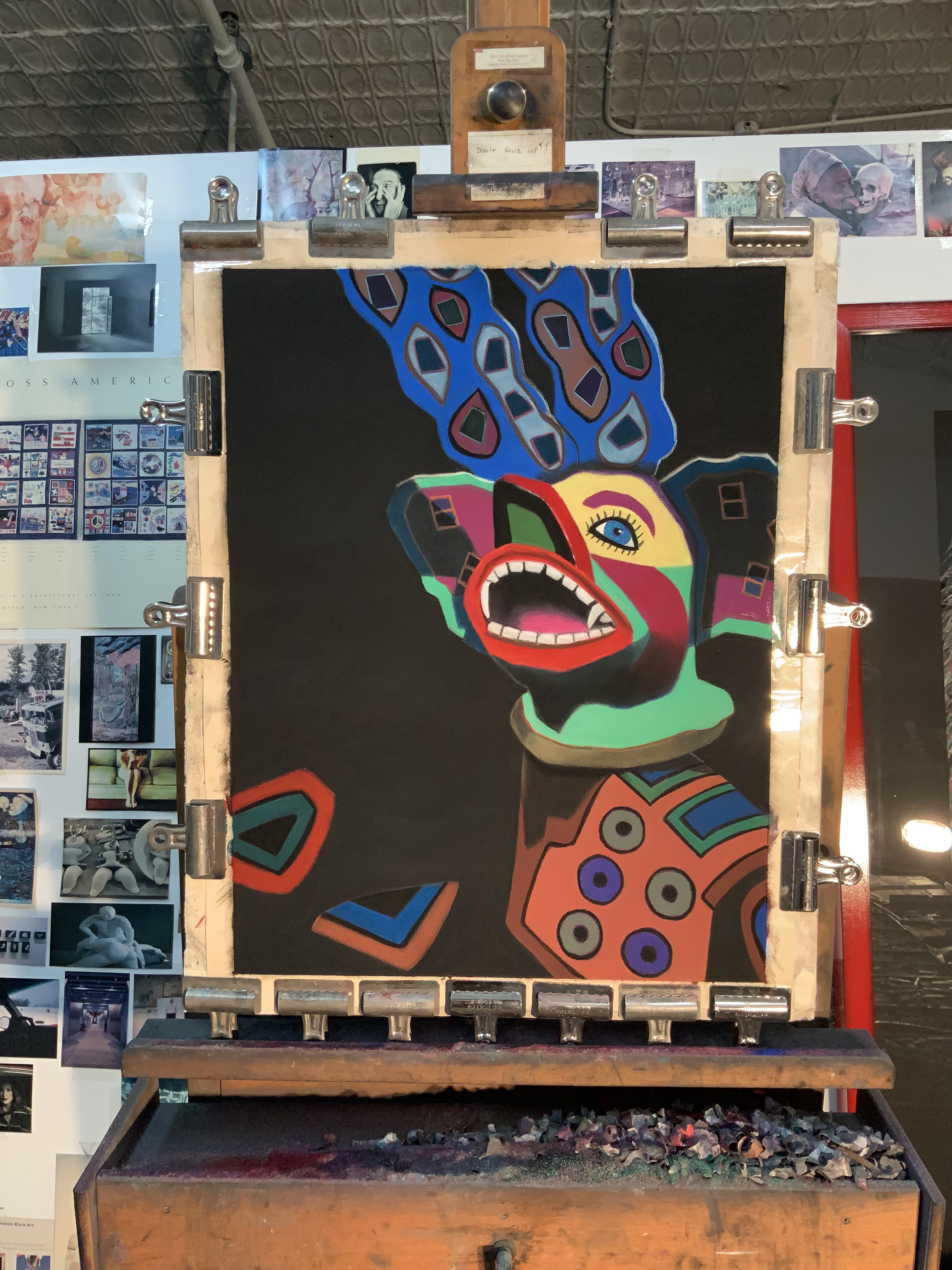
Nearly finished!
A: I’m finishing up “Maestro,” soft pastel on sandpaper, 26” x 20”.
Comments are welcome!
Pearls from artists* # 600
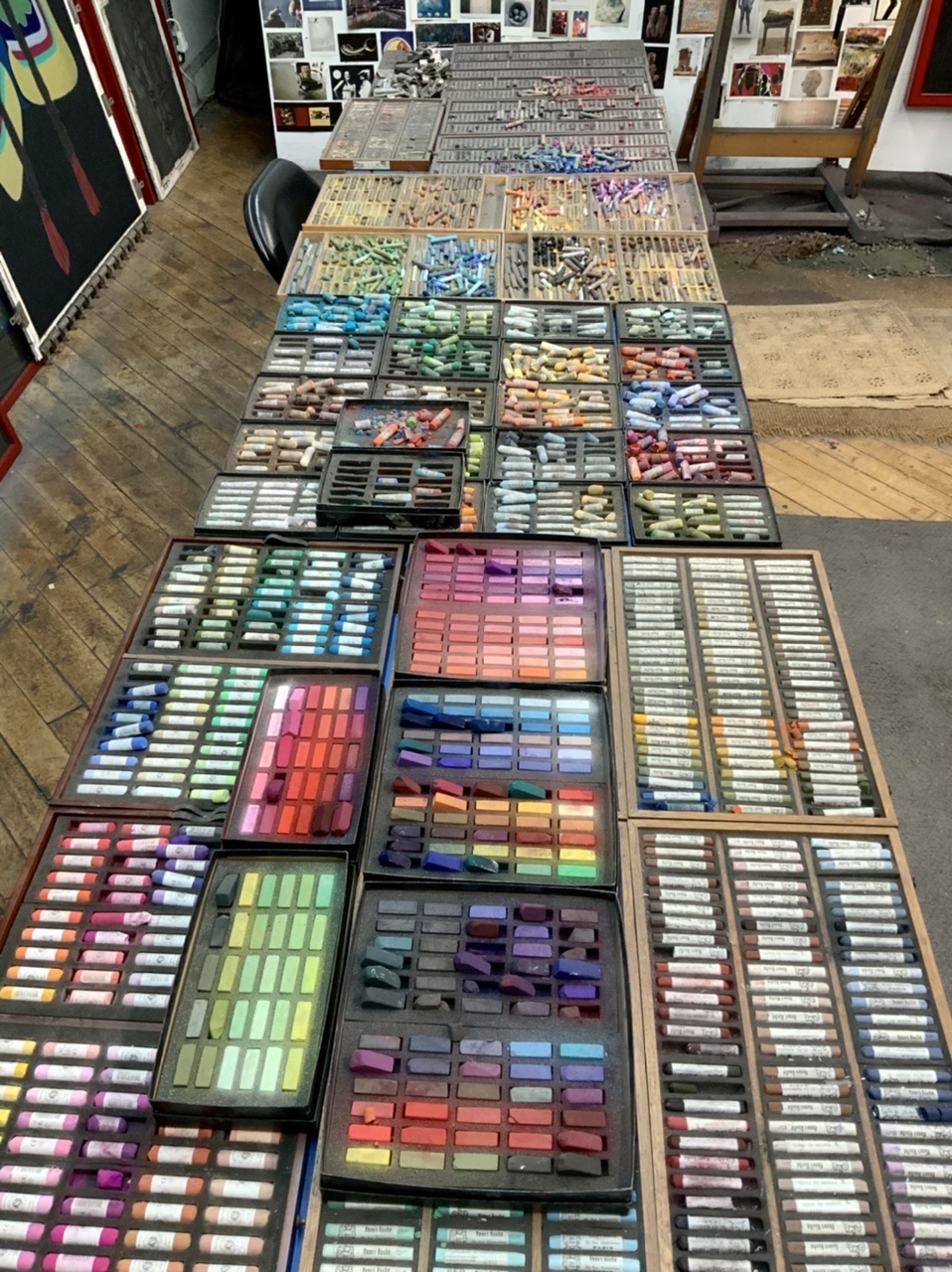
*an ongoing series of quotations – mostly from artists, to artists – that offers wisdom, inspiration, and advice for the sometimes lonely road we are on.
I am always between two currents of thought: first the material difficulties, turning round and round and round to make a living; and second, the study of color. I am always hoping to make a discovery here, to express the feelings of two lovers by a marriage of two complementary colors, their mingling and their opposition, the mysterious vibrations of kindred tones. To express the thought behind a brow by radiance of a bright tone against a somber background. To express hope by some star, the eagerness of a soul by a sunset glow.
Vincent van Gogh quoted by Stephen Nachmanovitch in “Free Play: Improvisation in Life and Art
Comments are welcome!
Q: What do your collectors have in common?

Screenshot from “Barbara Rachko: True Grit,” Photo: Jennifer Cox
A: Generally speaking, the people who collect my work typically range in age from about 40 to the late 70s, they are college graduates with advanced degrees, and they often don’t have kids, which is why they have disposable income and time to pursue their interests in art and culture. When I meet them (presuming my work was sold through a gallery or other third party), we usually have much to talk about – art, art history, photography, cinema, film history, dance, drama, music, travel, archaeology, Mexico, Central and South America, Bali, India – the list goes on and on.
Comments are welcome!



 barbararachkoscoloreddust.com