Category Archives: Uncategorized
Travel photo of the month*
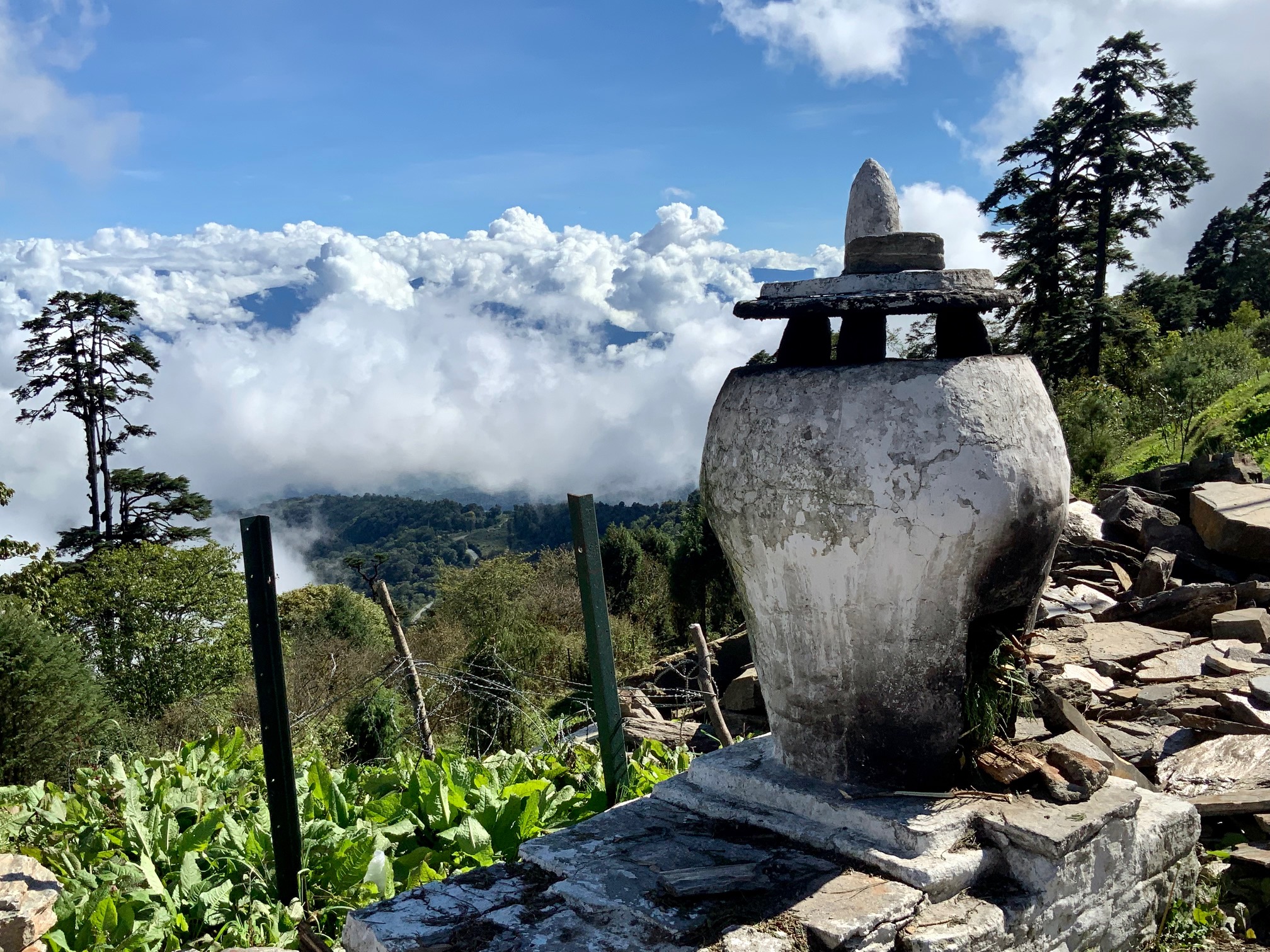
*favorite travel photos that have not yet appeared in this blog
Thimphu, Bhutan
Comments are welcome!

Q: Does your work look different to you on days when you are sad, happy, etc.?

Barbara’s Studio
A: I am much more critical on days when I am sad so that the faults, imperfections, and things I wish I had done better stand out. Fortunately, all of my work is framed behind plexiglas so I can’t easily go back in to touch up perceived faults. I am reminded of the expression, “Always strive to improve, whenever possible. It is ALWAYS possible!” However, I’ve learned that re-working a painting is a bad idea. You are no longer deeply involved in making it and the zeitgeist has changed. The things you were concerned with are gone: some are forgotten, others are less urgent.
For most artists our work is autobiography. Art is personal. When I look at a completed pastel painting, I usually remember exactly what was happening in my life as I created it. Each piece is a snapshot – maybe a time capsule, if anyone could decode it – that reflects and records a particular moment. When I finally pronounce a piece finished and sign it, that’s it, THE END. It’s as good as I can make it at that point in time. I’ve incorporated everything I was thinking about, what I was reading, how I was feeling, what I valued, art exhibitions I visited, programs that I heard on the radio or watched on television, music that I listened to, what was going on in New York, in the country, and in the world.
It is still a mystery how this heady mix finds its way into the work. During the time that I spend on it, each particular painting teaches me everything it has to teach. A painting requires months of looking, reacting, correcting, searching, thinking, re-thinking, revising. Each choice is made for a reason and together these decisions dictate what the final piece looks like. On days when I’m sad I tend to forget that. On happier days I remember that the framed pastel paintings that you see have an inevitability to them. If all art is the result of one’s having gone through an experience to the end, as I believe it is, then the paintings could not, and should not, look any differently.
Comments are welcome.
Pearls from artists* # 625

*an ongoing series of quotations – mostly from artists, to artists – that offers wisdom, inspiration, and advice for the sometimes lonely road we are on.
The artist not equipped with the necessary arrogance will be repeatedly sidetracked or subverted by the agendas of others. He will lack a sufficient sense of purpose, will frequently stall and block, and will bring a nagging passivity to his art career. His resolve to do great art may remain a potent idea only, a kind of unexplained force in his body. He is likely to accomplish much less than he otherwise might, support others rather than find support for himself, attempt the small rather than the large, and rebound less well from rejection.
The self-centered artist, on the other hand, is challenged to remember that he is neither god nor Superman, but a human being with human limitations. He hasn’t the time to turn every idea into a book, the ability to top each work with a greater one, the energy to toil ceaselessly at his art, nor the right to trample others as he pursues his goals. If he mistakes or oversteps these limits he will put himself in harm’s way and may find himself struck down by his own obsessional energy, by burnout, by depression, by self-abuse, or by the angry complaints of those whose rights he has cavalierly trampled.
Eric Maisel in A Life in the Arts: Practical Guidance and Inspiration for Creative and Performing Artists
Comments are welcome!
Pearls from artists* # 627

In Hanga Roa, Rapa Nui (Easter Island), one of the most remote places on Earth!
*an ongoing series of quotations – mostly from artists, to artists – that offers wisdom, inspiration, and advice for the sometimes lonely road we are on.
We cannot afford to walk sightless among miracles. Nor can we protect ourselves from suffering. We do work that thrusts us into the pulsing heart of this world, whether or not we’re on the mood, whether or not it’s difficult or painful or we’d prefer to divert our eyes. When I think of the wisest people I know, they share one defining trait: curiosity. They turn away from the minutiae of their lives – and focus on the world around them. They are motivated by a desire to explore the unfamiliar. They are drawn toward what they don’t understand. They enjoy surprise. Some of these people are seventy, eighty, close to ninety years old, but they remind me of my son and his friend on the day I sprung them from camp. Courting astonishment. Seeking breathless wonder.
Dani Shapiro in Still Writing: The Perils and Pleasures of a Creative Life
Comments are welcome!
Pearls from artists* # 614

*an ongoing series of quotations – mostly from artists, to artists – that offers wisdom, inspiration, and advice for the sometimes lonely road we are on.
The artist has accepted his fate with open eyes, and I do not believe that he wishes any charity in relation to his self-assumed sacrifice. He wants nothing but the understanding and love of what he does. There can be no other rewards. The foregoing therefore is not in the spirit of asking for a charitable contribution, but rather the clearing of the way for what is really the motivating factor for this strange phenomenon: the creation of art.
Mark Rothko in The Artist’s Reality: Philosophies of Art
Comments are welcome!
Our 2024 Winter Newsletter!

Laurels for our new documentary, “Barbara Rachko: True Grit”!
For today I have decided to forego my usual post and instead share our 2024 Winter Newsletter! Lots of exciting things have been (and are) happening! Please check out the link.
https://mailchi.mp/d71e7ada17b3/2024winternewsletter
Comments are welcome!

Pearls from artists* # 587

With friends of fifty years!
*an ongoing series of quotations – mostly from artists, to artists – that offers wisdom, inspiration, and advice for the sometimes lonely road we are on.
My general preparations include everything I do to be healthy and ready for surprises, with a full palette of resources available. I need energy to acquire skill, energy to practice, energy to keep going through the inevitable setbacks, energy to keep going when things look good and I am tempted to sit back and relax. I need physical energy, intellectual energy, libidinal energy, spiritual energy. The means to tapping these energies are well known: exercise the body, eat well, sleep well, keep track of dreams, meditate, enjoy the pleasures of life, read and experience widely. When blocked, tap into the block-busters: humor, friends, and nature.
Stephen Nachmanovitch in Free Play: Improvisation in Life and Art
Comments are welcome!

Q: I saw your book of photos. Very nice. How do you keep track of inventory? I have struggled with that. (Question from Laura Fischer Saxon via Facebook).
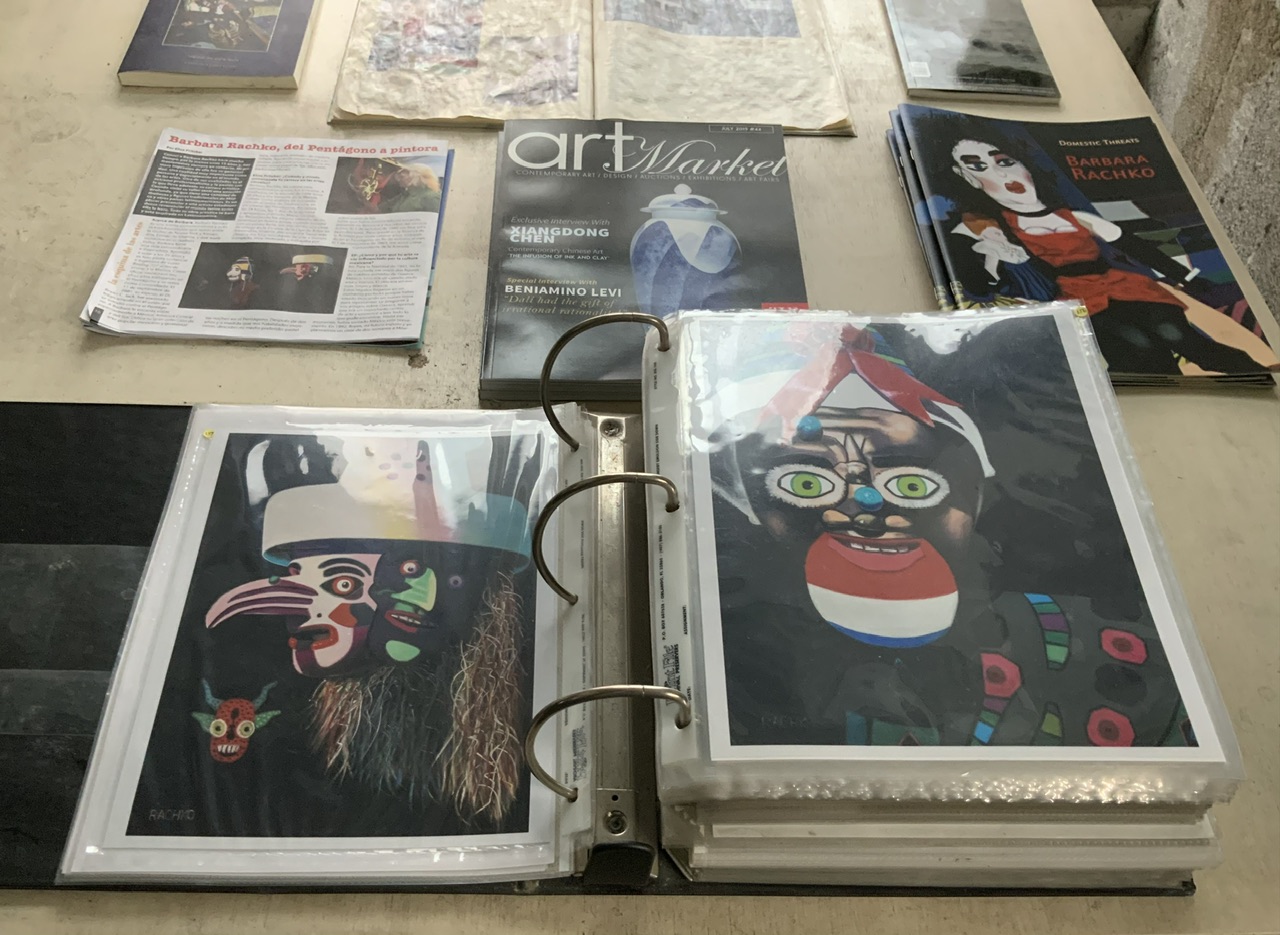
Barbara’s portfolio book
A: Every time I finish a pastel painting I order an 8” x 10” c-print at Duggal Visual Solutions. I started doing this in the 1980s when I was a portrait artist and the company that represented me needed photos of my work to show to potential clients. I’ve just continued making 8” x 10”photos all these years in order to document my work!
Pastel is an extremely slow medium so even though I have been working more than 37 years, the two pastel paintings in progress now are numbers 160 and 161. The portfolio book also has early press clippings, reviews from before the internet (when everything was on paper), and a few photos of early solo exhibitions in the 1990s.
BTW what a great question! No one has ever asked me this before!
Comments are welcome!
Q: What’s on the easel today?
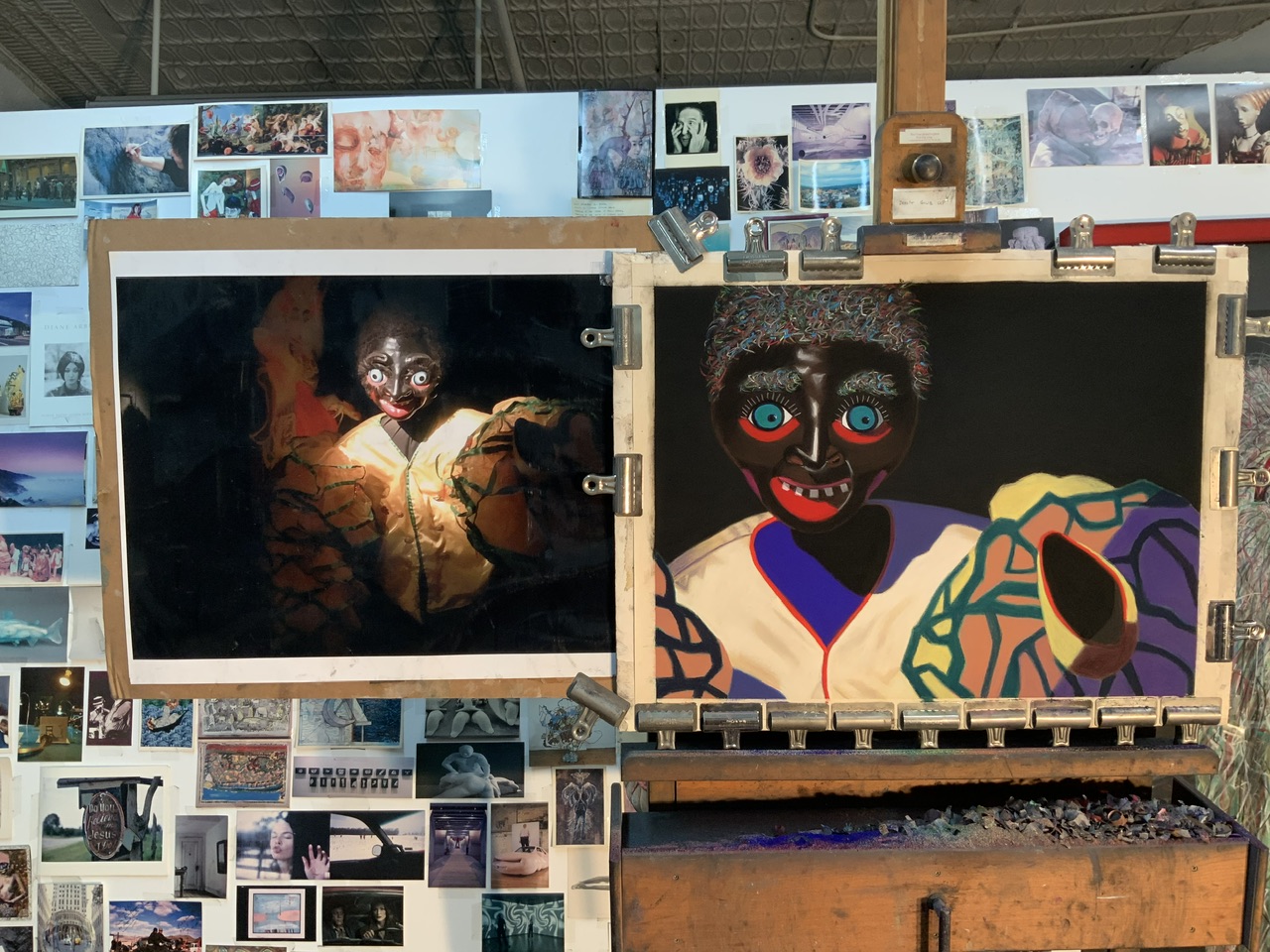
Work in progress
A: I continue slowly working on “Narcissist,” soft pastel on sandpaper, 20” x 26”.
Comments are welcome!


 barbararachkoscoloreddust.com