Category Archives: Pastel Painting
Q: What’s on the easel today?

Work in progress
A: I am working on a small 20″ x 26″ pastel painting that doesn’t have a title yet.
Comments are welcome!
Q: One can’t help but make connections between the devastating effects of 9/11 and your series, “Domestic Threats.” Would they be right?

“No Cure for Insomnia,” soft pastel on sandpaper, 58″ x 38″
A: Well, not exactly, since I began this work in 1991.
All of the paintings in this series are set in places where I reside or used to live, either a Virginia house or two New York apartments, i.e., my personal domestic environments. Each painting typically contains a conflict of some sort, at least one figure that is being menaced or threatened by a group of figures. For example, in “No Cure for Insomnia (above) the threatened figure is me. So it was an easy decision to name the series “Domestic Threats.” My idea was that these paintings were psychological dramas: surrealistic, metaphoric depictions of human fears, anxieties, inner conflicts, demons, etc.
But depending on what is/was going on in the country at a particular moment, people make other associations. Since my husband was killed on 9/11, people think the title, “Domestic Threats,” was prescient and ascribed all kinds of domestic terrorism associations to the work. For a time viewers thought I was hinting at scenes of domestic violence, but that also is not what I intended. The title “Domestic Threats” has proven to be fraught with associations that I never considered.
However, I am fine with any interpretations that are elicited because it means my paintings are getting a response. That’s important. I have been working, studying, and thinking about art for thirty years and hopefully, that’s reflected in the work I create. It’s natural that it takes time for people to ponder all the complexities in a work of art.
Maybe this comment by the late Gerrit Henry, a New York critic, is more true now than when he wrote it sixteen years ago: “What we bring to a Rachko, in other words, we get back, bountifully.”
Comments are welcome!
Q: What do you dislike most about being an artist?

Barbara’s studio
A: I am not the only artist who would say this, certainly, but the low pay is a continual frustration.
The expenses of doing business continually increase and most other professionals get to pass these on to their clients. But for artists it’s different: it’s just tough to pass along costs to collectors. One of the reasons I spend so much time educating people about the process involved in making my pastel paintings, is to provide some understanding of the serious amounts of time, effort, travel, thought, education, money, etc. that are essential to creating them.
It always surprises me when non-artists don’t appreciate the unswerving devotion and plain hard work that are required of professional artists. It makes me wonder what people imagine artists do all day.
Comments are welcome!
What’s on the easel today?

Work in progress
A: I am in the very early stages of a large pastel painting.
Comments are welcome!
Q: Do you consider your finished pastel works to be drawings or paintings?

“The Sovereign,” soft pastel on sandpaper, 58″ x 38″ image, 70″ x 50″ framed
A: Among artists who work in pastel, these two words, ‘drawings’ and ‘paintings,’ have very specific meanings, somewhat unrelated to the usual distinctions made by art historians and others. For a pastel artist, a ‘drawing’ refers to a work in which the paper or other substrate is allowed to show through. In a pastel ‘painting’ you do not see the substrate at all, i.e. pastel is used much more heavily in a painting than in a drawing. Since I have always spent months creating each piece, covering the entire sandpaper ground with up to 30 layers of pigment, I have considered my work to be pastel painting.
Comments are welcome!
Pearls from artists* # 224
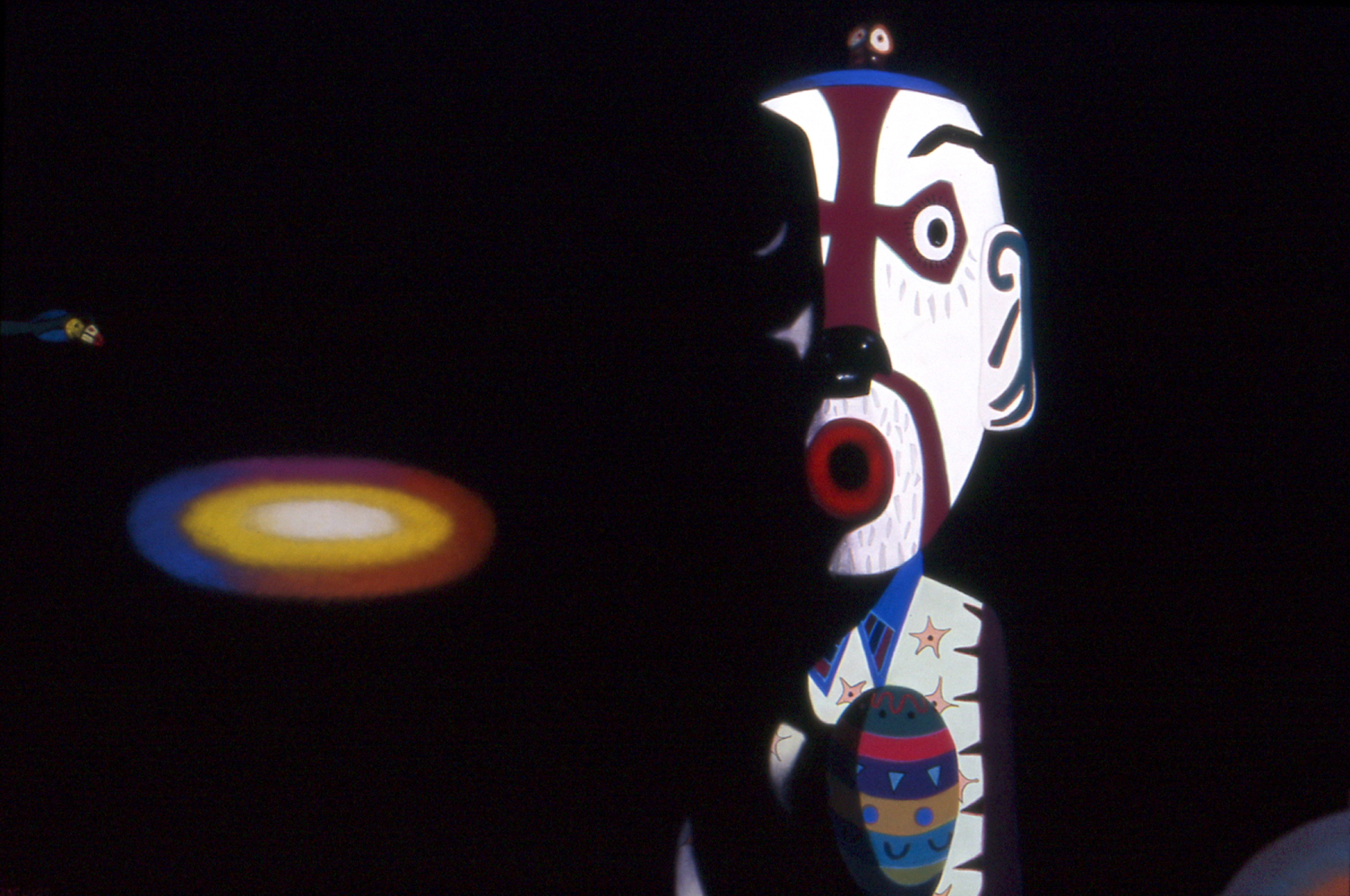
“Poker Face,” soft pastel on sandpaper, 38″ x 58″ image, 50″ x 70″ framed
* an ongoing series of quotations – mostly from artists, to artists – that offers wisdom, inspiration, and advice for the sometimes lonely road we are on.
… wise writers decline to engage in debates over the right way to read their words. T.S. Eliot was once approached with a question about a cryptic line from his poem “Ash-Wednesday”: “Lady, three white leopards sat under a juniper-tree.” What did the line mean? The poet replied: “I mean, ‘Lady, three white leopards sat under a juniper-tree .” Creating a text, Eliot seems to be saying, like having a child, only means bringing something into the world. It doesn’t include the power to control it’s destiny.
Adam Kirsch in “Can You Read a Book the Wrong Way?”, The New York Times Book Review, Sept. 27, 2016.
Comments are welcome!
Start/Finish of “Incognito,” soft pastel on sandpaper, 38″ x 58″ image, 50″ x 70″ framed
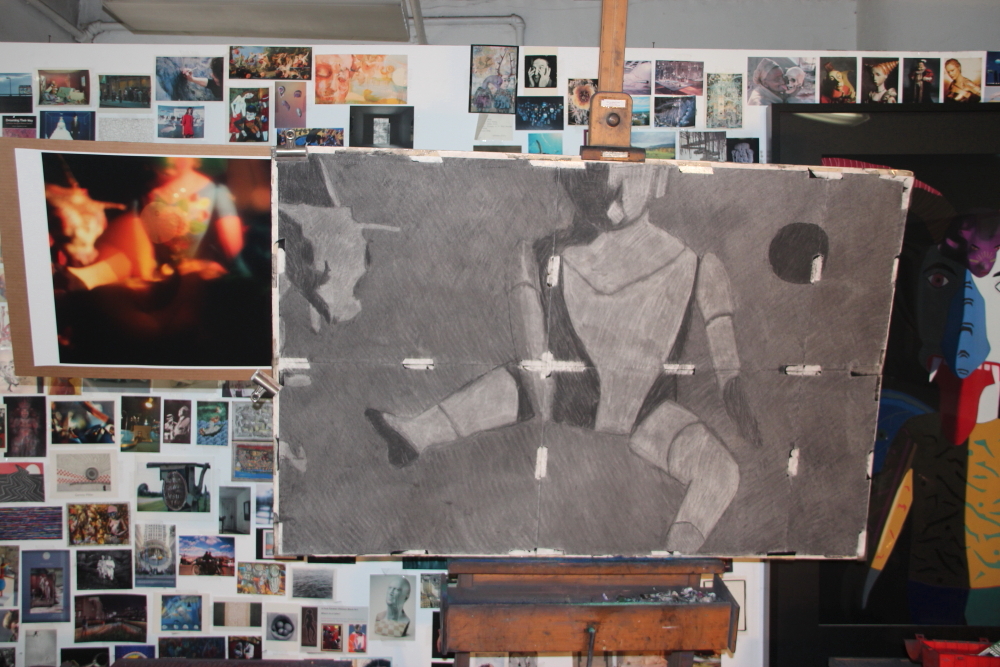
C-print and preliminary charcoal sketch
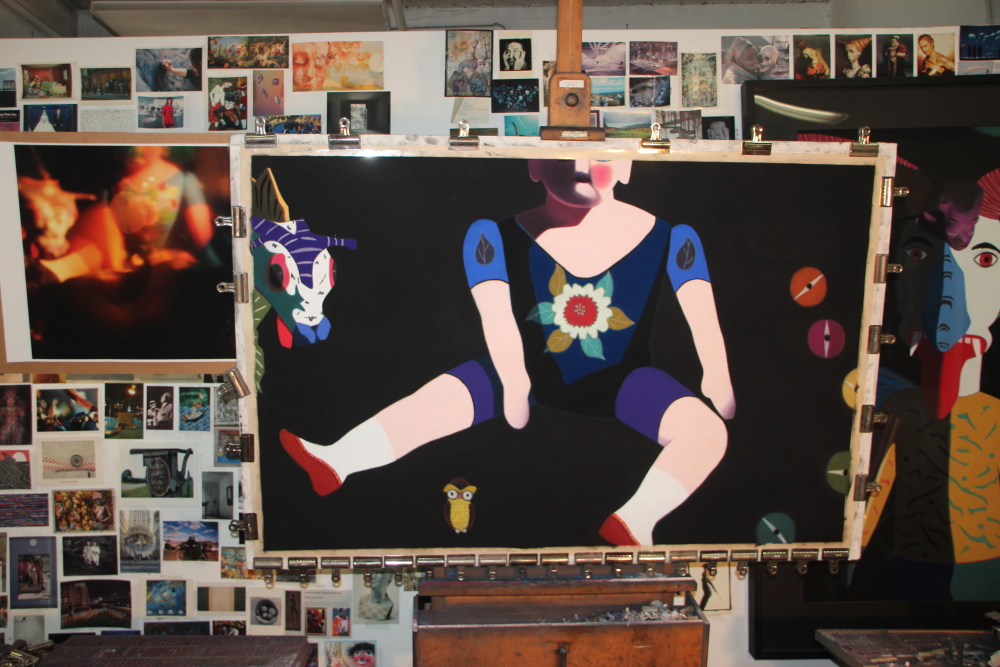
Finished
Comments are welcome!
Start/Finish of “Blind Faith,” soft pastel on sandpaper, 38″ x 58″ image, 50″ x 70″ framed

Beginnings

Finished and signed (lower left)
Comments are welcome!
Pearls from artists* # 209

“So What?”, soft pastel on sandpaper, 20″ x 26″
* an ongoing series of quotations – mostly from artists, to artists – that offers wisdom, inspiration, and advice for the sometimes lonely road we are on.
For a young painter, life is difficult. If he’s sincere, if he’s entirely taken up with what he’s researching, he can’t do painting that flatters art lovers. If he’s concerned with success, he works with just the one idea: pleasing people and selling. He loses the support of his own conscience and is dependent on how others are feeling. He neglects his gifts and eventually loses them.
For us, the problem was simple: the buyer simply didn’t exist. We were working for ourselves. We were in a trade that offered no hope at all. So we had fun with any little thing. I suppose people shipwrecked on a desert island must find it very jolly – all their problems have ceased to exist. Nothing left to do but have a laugh, tell jokes, and play jokes. Painters? How could they ever expect to sell anything?
Chatting with Henri Matisse: The Lost 1941 Interview, Henri Matisse with Pierre Courthion, edited by Serge Guilbaut, translated by Chris Miller
Comments are welcome!
Q: What significance do the folk art figures that you collect during your travels have for you?

Barbara’s studio
A: I am drawn to each figure because it possesses a powerful presence that resonates with me. I am not sure exactly how or why, but I know each piece I collect has lessons to teach.
Who made this thing? How? Why? Where? When? I feel connected to each object’s creator and curiosity leads me to become a detective and an archaeologist to find out more about them and to figure out how to best use them in my work.
The best way I can describe it: after nearly three decades of seeking out, collecting, and using these folk art figures as symbols in my work, the entire process has become a rich personal journey towards gaining greater knowledge and wisdom.
Comments are welcome!


 barbararachkoscoloreddust.com