Blog Archives
Q: Does your work look different to you on days when you are sad, happy, etc.?

Barbara’s Studio
A: I am much more critical on days when I am sad so that the faults, imperfections, and things I wish I had done better stand out. Fortunately, all of my work is framed behind plexiglas so I can’t easily go back in to touch up perceived faults. I am reminded of the expression, “Always strive to improve, whenever possible. It is ALWAYS possible!” However, I’ve learned that re-working a painting is a bad idea. You are no longer deeply involved in making it and the zeitgeist has changed. The things you were concerned with are gone: some are forgotten, others are less urgent.
For most artists our work is autobiography. Art is personal. When I look at a completed pastel painting, I usually remember exactly what was happening in my life as I created it. Each piece is a snapshot – maybe a time capsule, if anyone could decode it – that reflects and records a particular moment. When I finally pronounce a piece finished and sign it, that’s it, THE END. It’s as good as I can make it at that point in time. I’ve incorporated everything I was thinking about, what I was reading, how I was feeling, what I valued, art exhibitions I visited, programs that I heard on the radio or watched on television, music that I listened to, what was going on in New York, in the country, and in the world.
It is still a mystery how this heady mix finds its way into the work. During the time that I spend on it, each particular painting teaches me everything it has to teach. A painting requires months of looking, reacting, correcting, searching, thinking, re-thinking, revising. Each choice is made for a reason and together these decisions dictate what the final piece looks like. On days when I’m sad I tend to forget that. On happier days I remember that the framed pastel paintings that you see have an inevitability to them. If all art is the result of one’s having gone through an experience to the end, as I believe it is, then the paintings could not, and should not, look any differently.
Comments are welcome.
Pearls from artists* 564
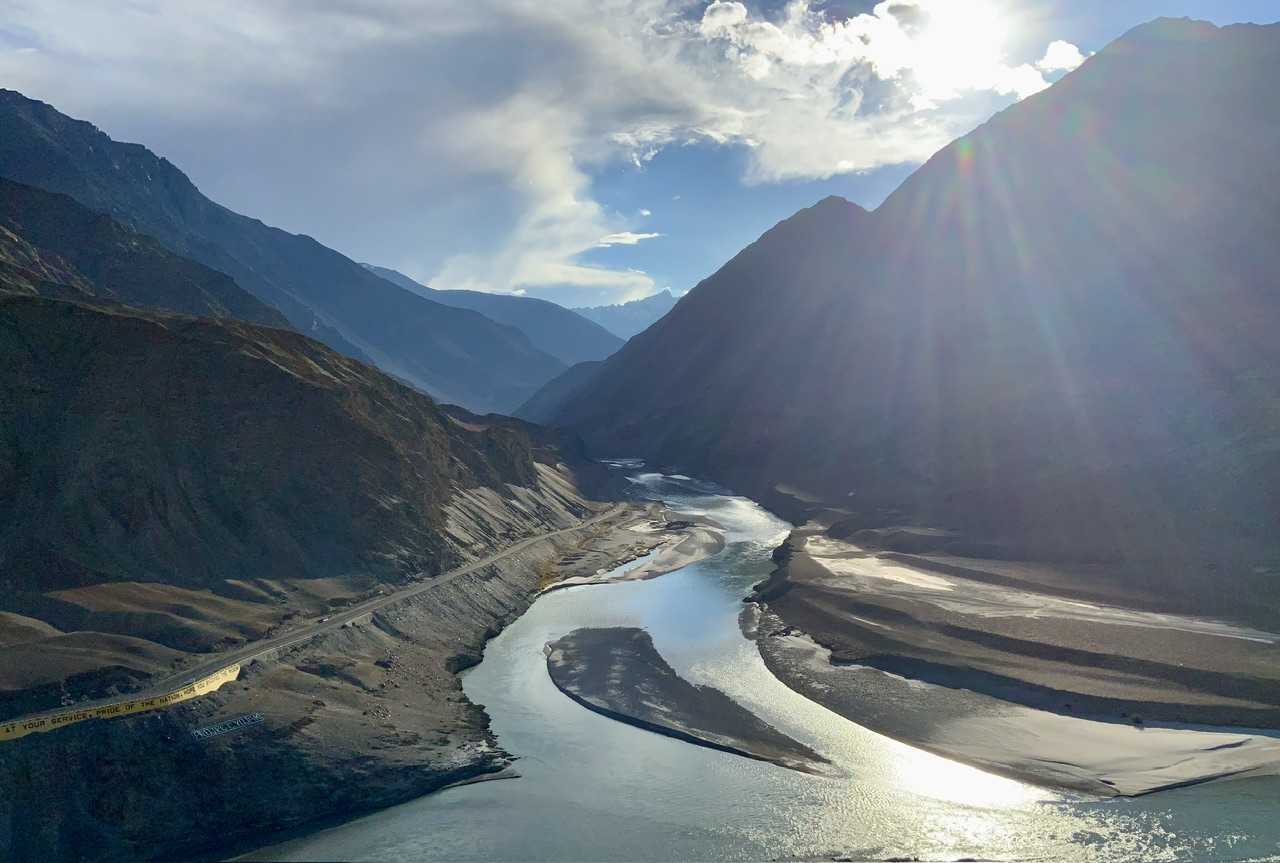
Indus River, Ladakh, India
*an ongoing series of quotations – mostly from artists, to artists – that offers wisdom, inspiration, and advice for the sometimes lonely road we are on.
To travel through the peaks and valleys of Himalayan Buddhism is to become a collector of fragmented images and a teasing array of sense impressions, many of them bound to counter the stereotypes of simplicity and serenity that we expect to define a Buddhist universe. At the end of the journey, the traveler assembles these sense fragments into an individualistic understanding of what has been seen and experienced. Maybe that’s the way it should be, since Buddhism itself teaches us that each person must seek his own way to knowledge and enlightenment in this life or some other.
Barbara Crossette in So Close to Heaven: The Vanishing Buddhist Kingdoms of the Himalayas
Comments are welcome!
Pearls from artists* # 294

Barbara at work
*an ongoing series of quotations – mostly from artists, to artists – that offers wisdom, inspiration, and advice for the sometimes lonely road we are on.
Interviewer: Well, to begin – do you feel that you were born in a place and a time, and to a family all of which combined favorably to shape you for what you were to do?
Wilder: Comparisons of one’s lot with others’ teaches us nothing and enfeebles the will. Many born in an environment of poverty, disease, and stupidity, in an age of chaos, have put us in their debt. By the standards of many people, and by my own, these dispositions were favorable – but what are our judgments in such matters? Everyone is born with an array of handicaps – even Mozart, even Sophocles – and acquires new ones. In a famous passage, Shakespeare ruefully complains that he was not endowed with another’s “scope”! We are all equally distant from the sun, but we all have a share in it. The most valuable thing I inherited was a temperament that does not revolt against Necessity and that is constantly renewed in Hope. (I am alluding to Goethe’s great poem about the problem of each man’s “lot” – the Orphische Worte).
Thornton Wilder in Writers at Work: The Paris Review Interviews First Series, edited, and with an introduction by Malcolm Crowley
Comments are welcome!
Pearls from artists* # 80
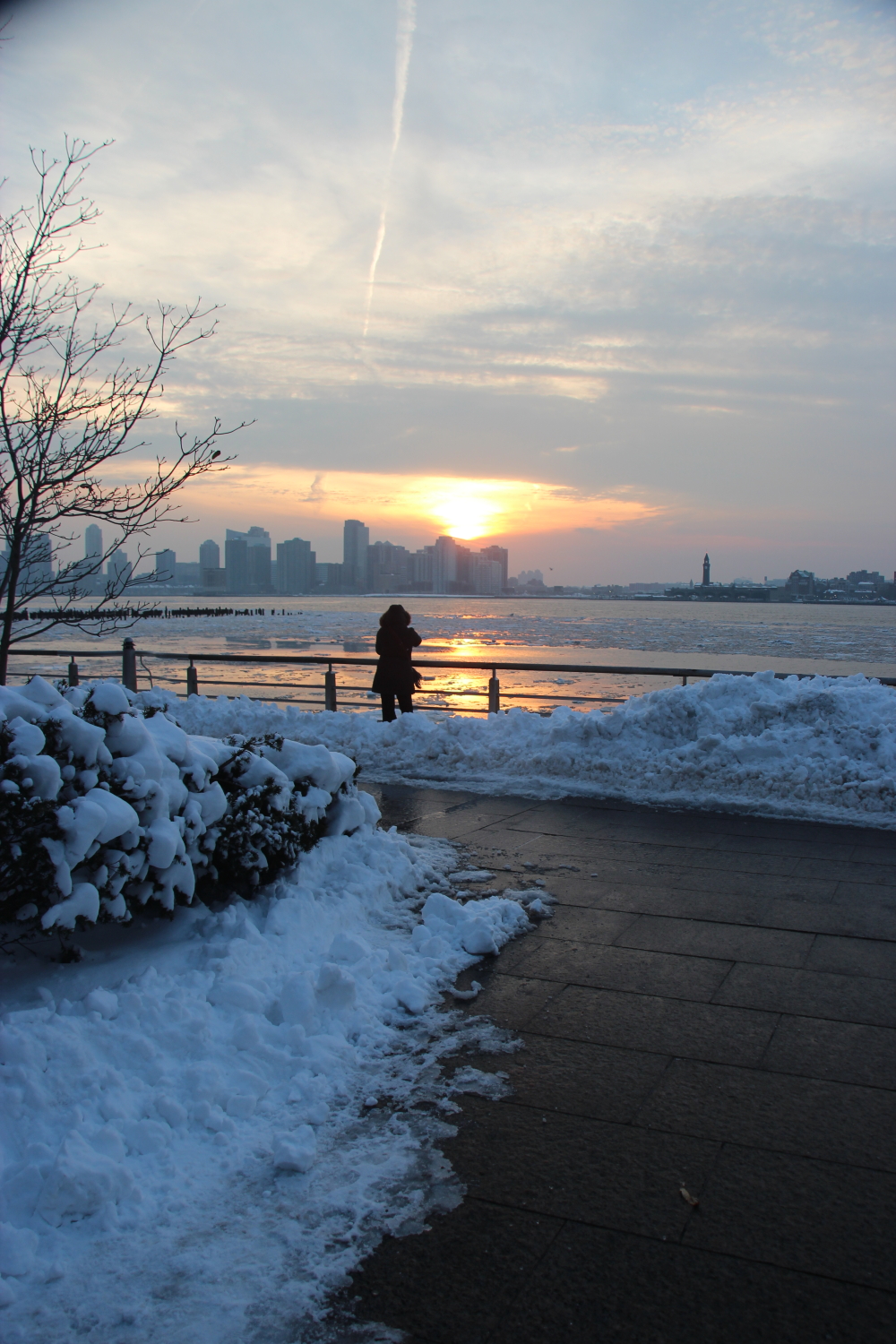
New York, NY
* an ongoing series of quotations – mostly from artists, to artists – that offers wisdom, inspiration, and advice for the sometimes lonely road we are on.
Whatever teaches us to talk to ourselves is important: whatever teaches us to sing ourselves out of despair. But the painting [“The Goldfinch,” 1654, by C. Fabritius] has also taught me that we can speak to each other across time. And I feel I have something very serious and urgent to say to you, my non-existent reader, and I feel I should say it as urgently as if I were standing in the room with you. That life – whatever else it is – is short. That fate is cruel but maybe not random. That Nature (meaning Death) always wins but that doesn’t mean we have to bow and grovel to it. That maybe if we’re not always so glad to be here, it’s our task to immerse ourselves anyway: wade straight through it, right through the cesspool, while keeping eyes and hearts open. And in the midst of our dying, as we rise from the organic and sink back ignominiously into the organic, it is a glory and a privilege to love what Death doesn’t touch. For if disaster and oblivion have followed this painting down through time – so too has love. Insofar as it is immortal (and it is) I have a small, bright, immutable part in that immortality. It exists; and it keeps on existing. And I add my own love to the history of people who have loved beautiful things, and looked out for them, and pulled them from the fire, and sought them when they were lost, and tried to preserve them and save them while passing them along literally from hand to hand, singing out brilliantly from the wreck of time to the next generation of lovers, and the next.
Donna Tartt in The Goldfinch
Comments are welcome!


 barbararachkoscoloreddust.com