Blog Archives
Q: Over your 40-year career as an artist, you have managed to keep presentation, technical, subject matter, conceptual consistencies in your art practice and work. How do you manage to filter out inspirations that might be luring at that moment but do not support your art practice? For example, you master pastel works. There must have been moments when you might have been inspired to make oil works. How do you keep such inspirations aside. (Question from Vedica Art Studios and Gallery)

A: About thirty-five years ago, when my pastel paintings were becoming larger—around 60” x 40”—I had to choose between transitioning to oil on canvas or continuing with pastel. Framing was the main concern. I wasn’t certain large pastels could be framed, and even if they could, the cost might be prohibitive. However, I had already fallen in love with pastel and knew no other medium could offer such vibrant colors or velvety textures. Determined, I resolved the framing issue (art-making is fundamentally problem-solving), committed myself fully to soft pastel, and have continued inventing and refining techniques ever since.
My goal from the beginning has always been improvement as an artist. If an activity doesn’t contribute to my growth—as a person or as an artist—I typically don’t pursue it. Time and energy are finite resources, so I try to use them wisely.
Comments are welcome!
Q: What do collectors say about your work?
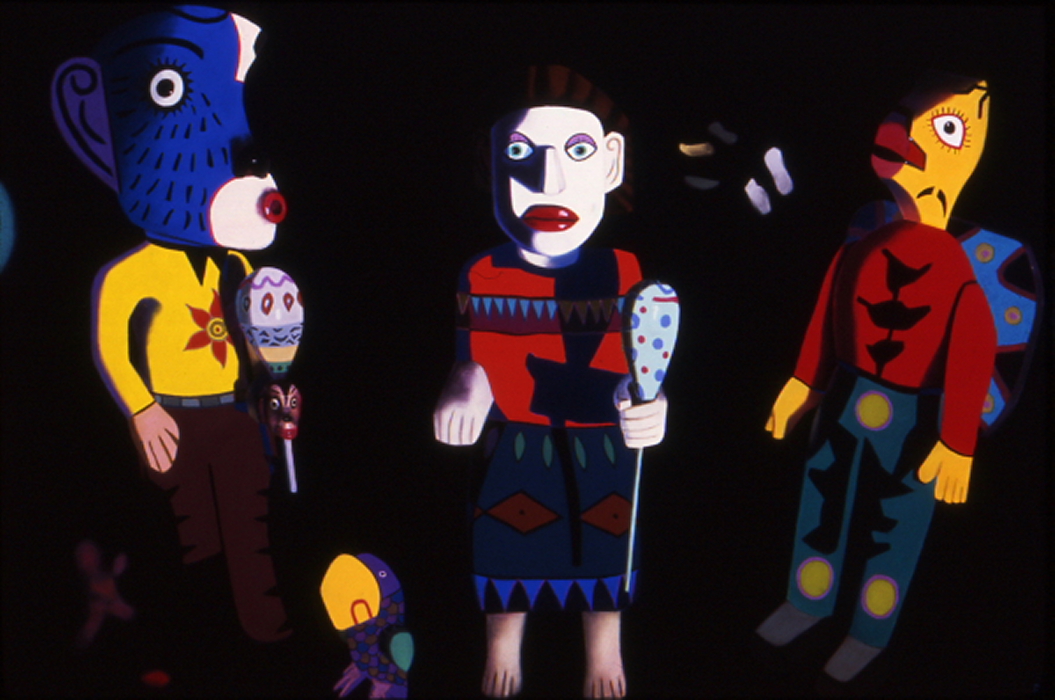
A: Here’s a quote from Cheryll Chew and John Frye, who own four of my pastel paintings.
We walked into her studio in 1994 and saw “In Reality the Frogs Were Men.” That instant on that day, my consuming passion with Barbara Rachko’s work began. We had absolutely no resources to buy “In Reality . . .” I did, however, know without a doubt that one day we would have her work, no matter what it took to get it.
We, years later, have “Scene Eleven: Bedroom,” “Scene Nine: Living Room,” “Scene Five: Kitchen,” and “False Friends.”
We have unorthodox appreciations and every single day, those pieces of art quicken the pulse and bring us pure pleasure.
Her pieces make us want to dance wildly around the room and wave our arms in the air. We are deeply grateful that her work is in our home. Her art balances the everyday domestic with the unthinkably rare, lovely, and maniacal. That is an edgy state of being that we thrive in.
Not long ago, we read an article about Nan Goldin. In the article was a phrase that says precisely what Barbara Rachko’s work does for us . . .
all of the pleasure circuits are deeply fulfilled by looking. . .
Nan Goldin The Look of Love: Matchmaking at the Louvre
NY Times,10.27.2011
Comments are welcome!

Pearls from artists* # 587

With friends of fifty years!
*an ongoing series of quotations – mostly from artists, to artists – that offers wisdom, inspiration, and advice for the sometimes lonely road we are on.
My general preparations include everything I do to be healthy and ready for surprises, with a full palette of resources available. I need energy to acquire skill, energy to practice, energy to keep going through the inevitable setbacks, energy to keep going when things look good and I am tempted to sit back and relax. I need physical energy, intellectual energy, libidinal energy, spiritual energy. The means to tapping these energies are well known: exercise the body, eat well, sleep well, keep track of dreams, meditate, enjoy the pleasures of life, read and experience widely. When blocked, tap into the block-busters: humor, friends, and nature.
Stephen Nachmanovitch in Free Play: Improvisation in Life and Art
Comments are welcome!
Pearls from artists* 178
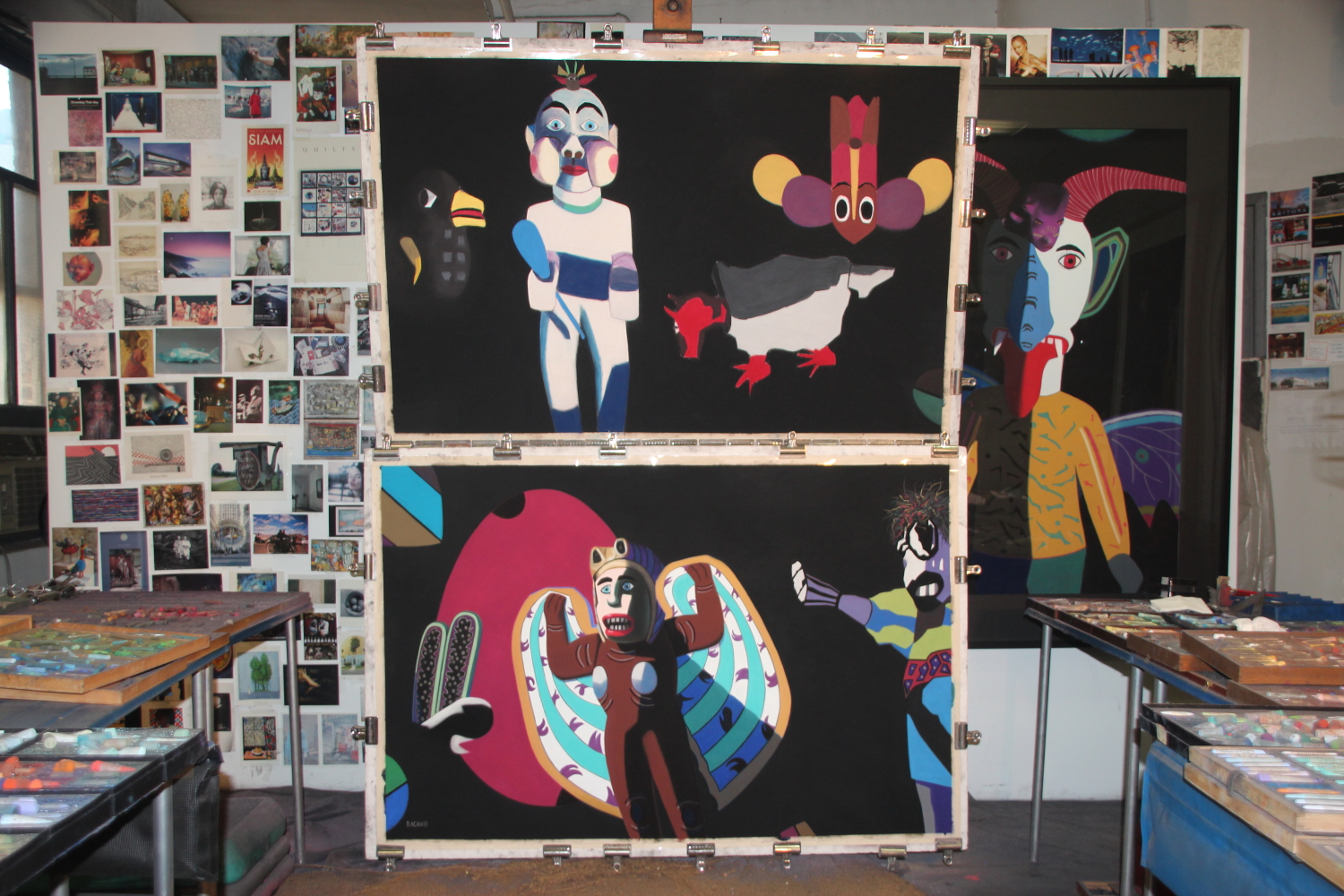
Barbara’s studio with recent works in progress
* an ongoing series of quotations – mostly from artists, to artists – that offers wisdom, inspiration, and advice for the sometimes lonely road we are on.
Most individuals have never had enough time, and they’ve never had enough resources, and they’ve never had enough support or patronage or reward… and yet they still persist in creating. They persist because they care. They persist because they are called to be makers, by any means necessary.
…The essential ingredients for creativity remain exactly the same for everybody: courage, enchantment, permission, persistence, trust – and those elements are universally accessible. Which does not mean that creative living is always easy; it merely means that creative living is always possible.
Elizabeth Gilbert in Big Magic: Creative Living Beyond Fear
Comments are welcome!
Pearls from artists* # 173
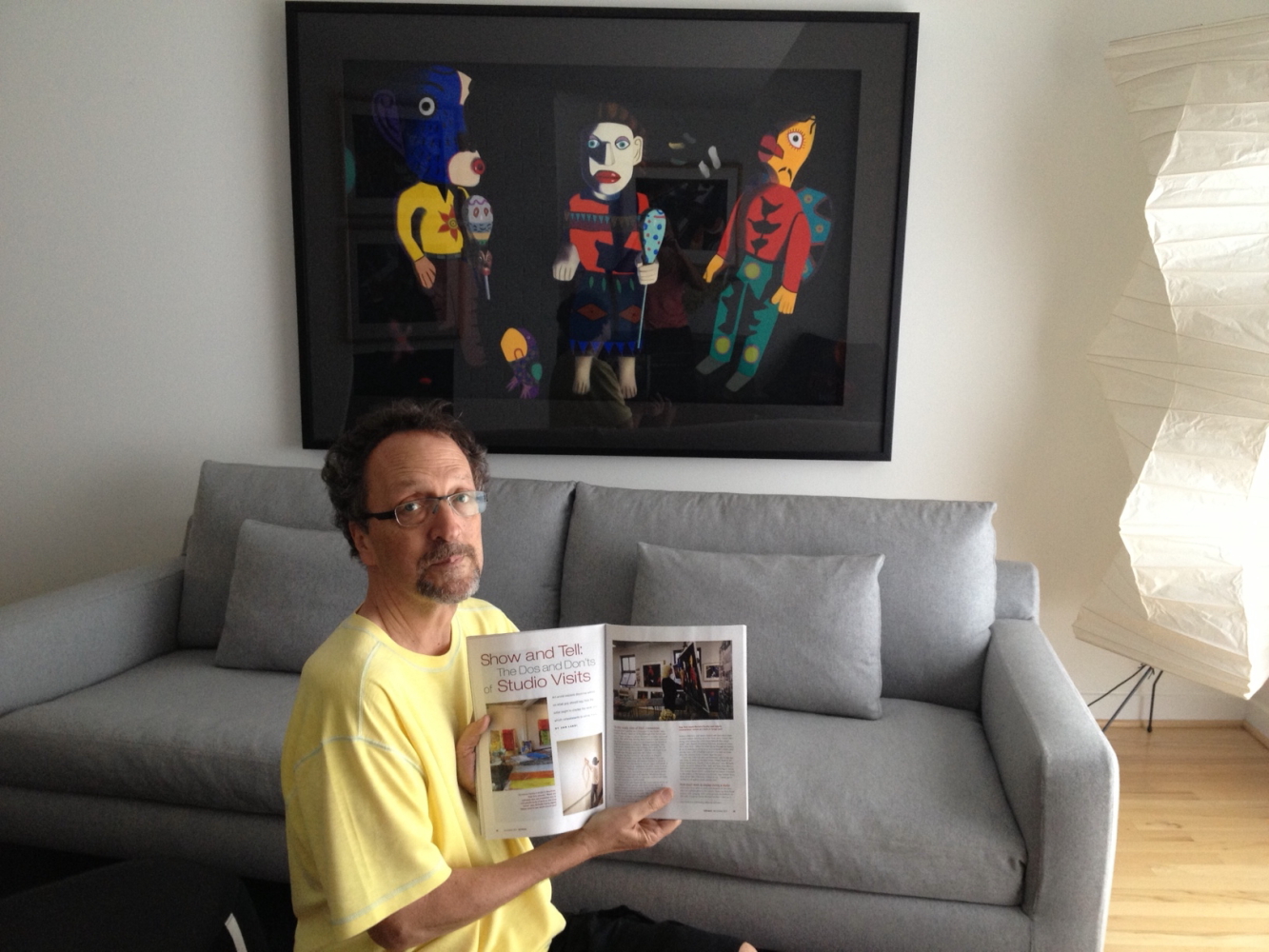
Collector, “False Friends,” and ARTNews article that shows the painting in progress
* an ongoing series of quotations – mostly from artists, to artists – that offers wisdom, inspiration, and advice for the sometimes lonely road we are on.
Artists, by nature, are gamblers. Gambling is a dangerous habit. But whenever you make art, you’re always gambling. You’re rolling the dice on the slim odds that your investment of time, energy, and resources now might pay off later in a big way – that somebody might buy your work, and that you might become successful.
Elizabeth Gilbert in Big Magic: Creative Living Beyond Fear
Comments are welcome!


 barbararachkoscoloreddust.com