Category Archives: Quotes
Pearls from artists* # 318
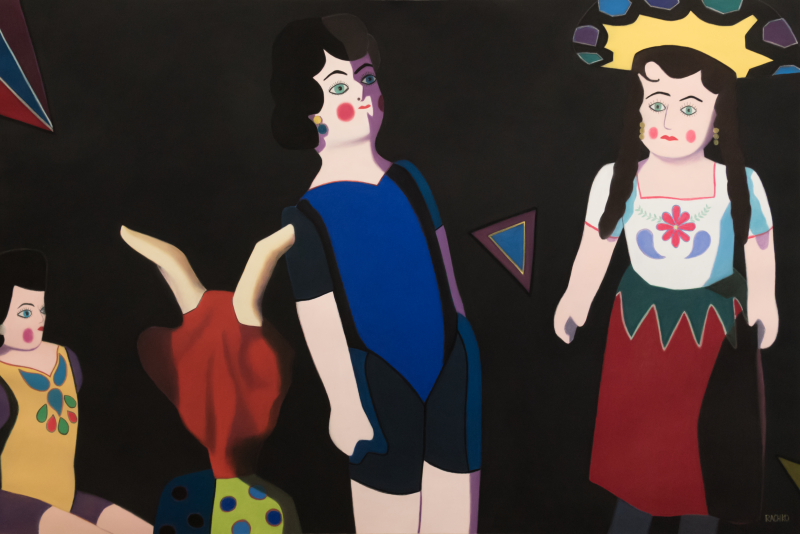
“Conundrum,” soft pastel on sandpaper, 38″ x 58″
*an ongoing series of quotations – mostly from artists, to artists – that offers wisdom, inspiration, and advice for the sometimes lonely road we are on.
We tend to see our “personal tastes” as positive personality traits, whereas they could just as well indicate limitations that we might overcome given the right opportunity, the appropriate context, and a little courage. Each person’s unique take on reality will no doubt favor certain aesthetic experiences over others, but it may be that the world is filled with potential aesthetic experiences that our “tastes” prevent us from having for no good reason.
J.F. Martel in Reclaiming Art in the Age of Artifice: A Treatise, Critique, and Call to Action
Comments are welcome!
Pearls from artists* # 317
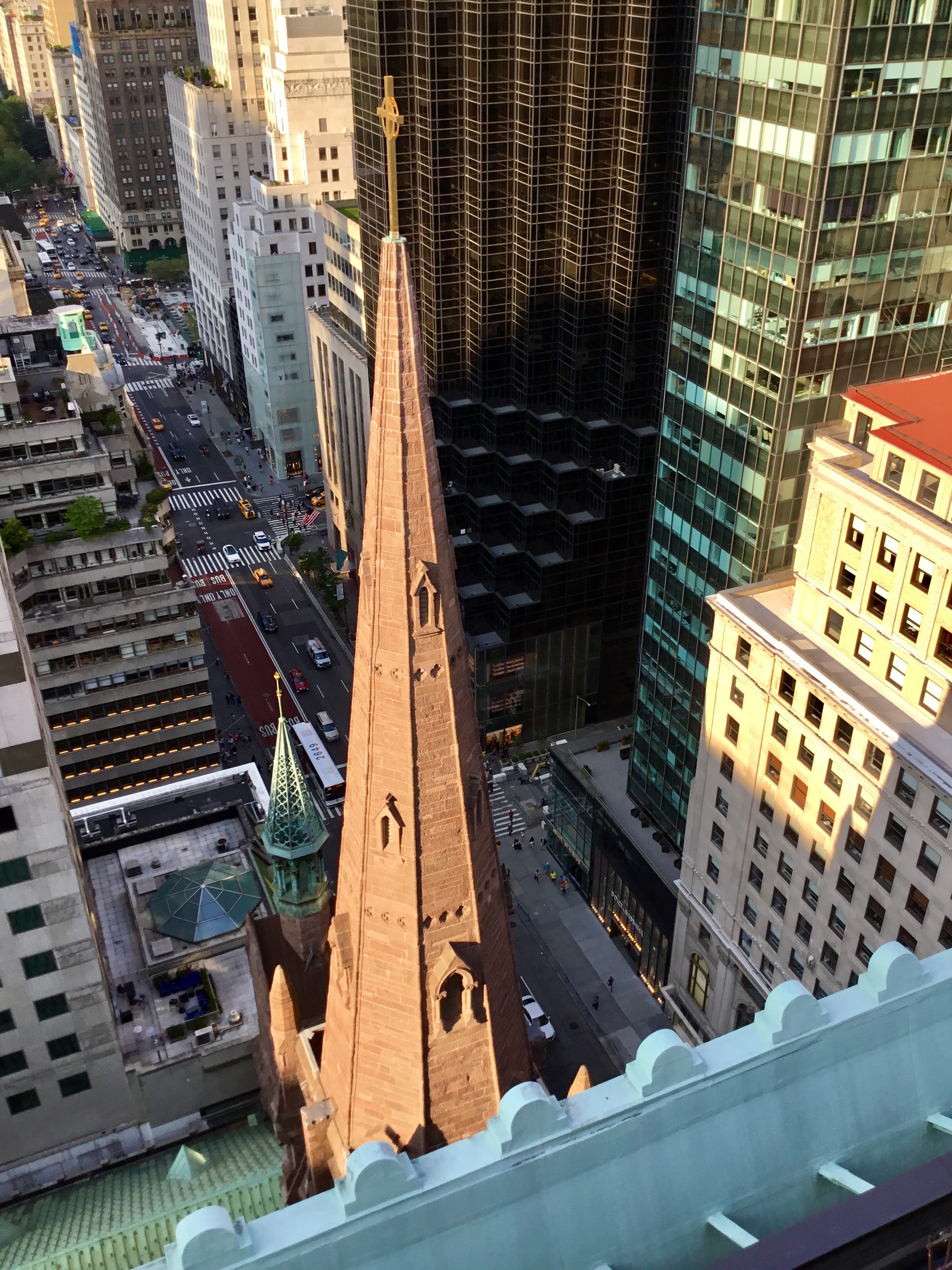
Fifth Avenue
*an ongoing series of quotations – mostly from artists, to artists – that offers wisdom, inspiration, and advice for the sometimes lonely road we are on.
But everything that may some day be possible to many the solitary man can now prepare and build with his hands, that err less. Therefore, dear sir, love your solitude and bear with sweet-sounding lamentation the suffering it causes you. For those who are near you are far, you say, and that shows it is beginning to grow wide about you. And when what is near you is far, then your distance is already among the stars and very large; rejoice in your growth, in which you naturally can take no one with you, and be kind to those who remain behind, and be sure and calm before them and do not torment them with your doubts and do not frighten them with your confidence or joy, which they could not understand. Seek yourself some sort of simple and loyal community with them, which need not necessarily change as you yourself become different and again different; love in them life in an unfamiliar form and be considerate of aging people, who fear that being-alone in which you trust. Avoid contributing material to the drama that is always stretched taut between parents and children; it uses up much of the children’ energy and consumes the love of their elders, which is effective and warming even if it does not comprehend. Ask no advice from them and count upon no understanding; but believe in a love that is being stored up for you like an inheritance and trust that in this love there is a strength and a blessing, out beyond which you do not have to step in order to go very far!
Rainer Maria Rilke, Letters to a Young Poet, Translation by M.D. Herter Norton
Comments are welcome!
Pearls from artists* # 316
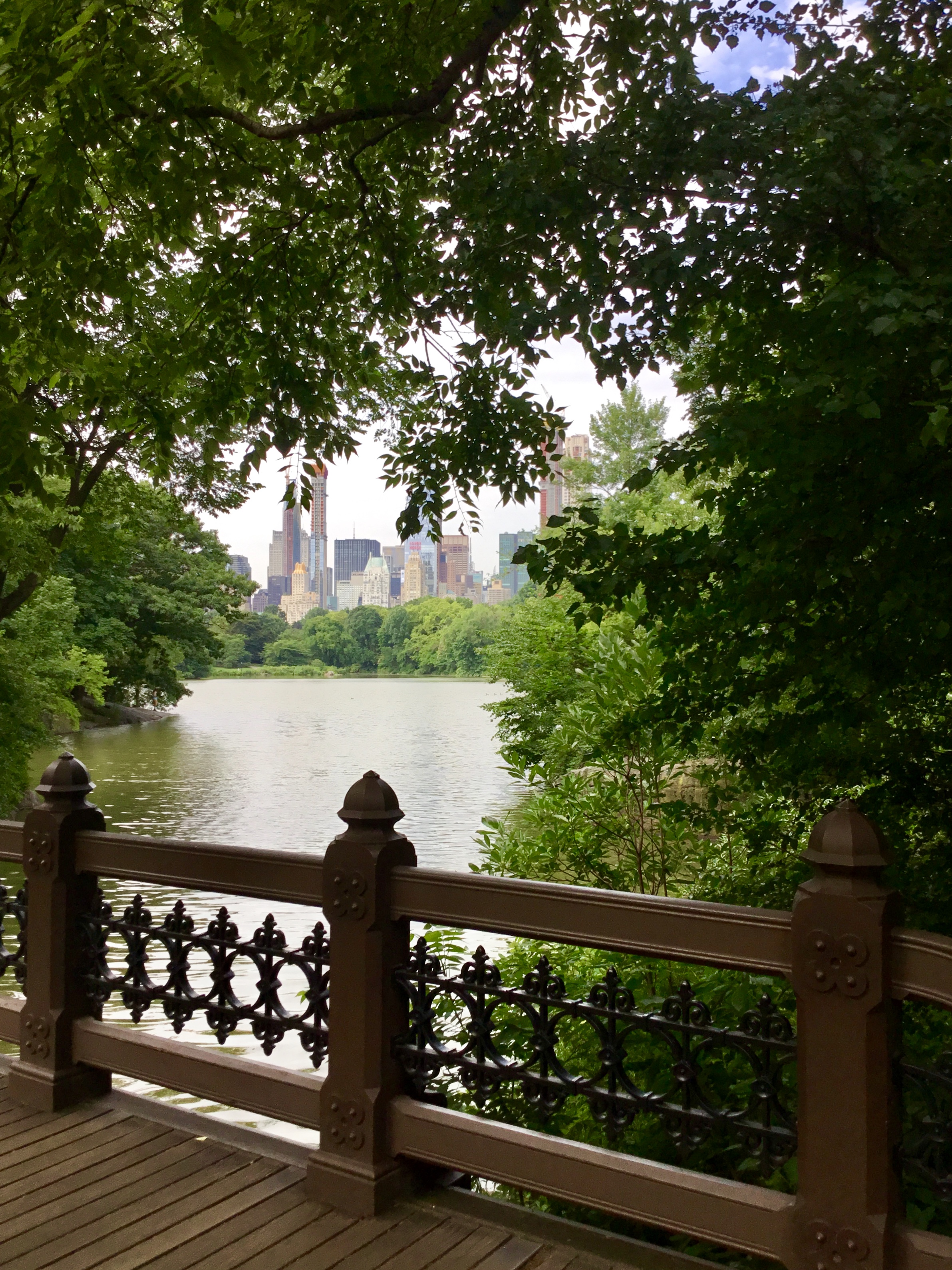
Central Park, NYC
*an ongoing series of quotations – mostly from artists, to artists – that offers wisdom, inspiration, and advice for the sometimes lonely road we are on.
Works of art are of an infinite loneliness and with nothing so little to be reached as with criticism. Only love can grasp and hold and be just toward them. Consider yourself and your feeling right every time with regard to every such argumentation, discussion, or introduction; if you are wrong after all, the natural growth of your inner life will lead you slowly and with time to other insights. Leave to your opinions their own quiet undisturbed development, which, like all progress, must come from deep within and cannot be pressed or hurried into anything. Everything is gestation and then bringing forth. To let each impression and each germ of a feeling come to completion wholly in itself, in the dark, in the inexpressible, the unconscious, beyond the reach of one’s own intelligence, and await with deep humility and patience the birth-hour of a new clarity: that alone is living the artist’s life: in understanding as in creating.
There is also no measuring with time, no year matters, and ten years are nothing. Being an artist means not reckoning and counting, but ripening like the tree which does not force its sap and stands confident in the storms of spring without the fear that after them may come no summer. It does come. But it comes only to the patient, who are there as though eternity lay before them, so unconcernedly still and wide. I learn it daily, learn it with pain to which I am grateful: patience is everything!
Rainer Maria Rilke, Letters to a Young Poet, Translation by M.D. Herter Norton
Comments are welcome!
Pearls from artists* # 315

“The Champ,” soft pastel on sandpaper, 26″ x 20″
*an ongoing series of quotations – mostly from artists, to artists – that offers wisdom, inspiration, and advice for the sometimes lonely road we are on.
A work of art is good if it has sprung from necessity. In this nature of its origin lies the judgment of it: there is no other. Therefore, my dear sir, I know of no advice for you save this: to go into yourself and test the deeps in which your life takes rise; at its source you will find the answer to the question whether you must create. Accept it, just as it sounds, without inquiring into it. Perhaps it will turn out that you are called to be an artist. Then take that destiny upon yourself and bear it, its burden and its greatness, without ever asking what recompense might come from outside. For the creator must be a world unto himself and find everything in himself and in Nature to whom he has attached himself.
Rainer Maria Rilke, Letters to a Young Poet, Translated by M.D. Herter Norton
Comments are welcome!
Pearls from artists* # 314
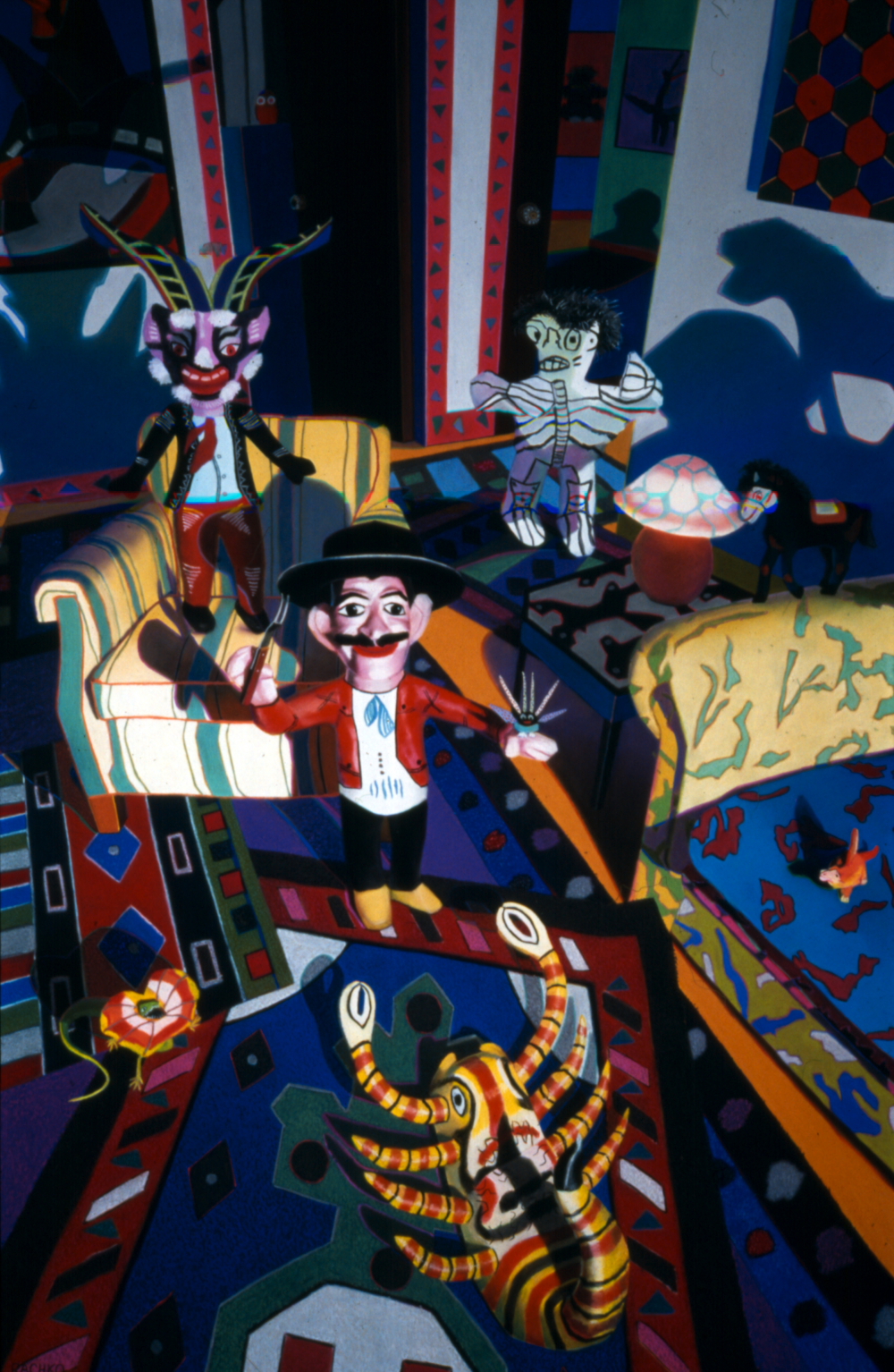
“He Just Stood There Grinning,” soft pastel on sandpaper, 58″ x 38″
*an ongoing series of quotations – mostly from artists, to artists – that offers wisdom, inspiration, and advice for the sometimes lonely road we are on.
For Leonora Carrington and many of her ‘sister’ surrealists, surrealism provided the intellectual, political and artistic milieu that enabled them to come into their own as artists and writers, and to gain recognition for their work in the wider world. Although some of these women had accepted their roles as muses in the lives of male artists, none believed that life as a muse trumped life as an artist. Asked in 1983 how she felt about the male surrealists’ view of women as muses, Leonora offered her testy, if retrospective rejoinder: ‘I thought it was bullshit… I didn’t have time to be anyone’s muse… I was too busy rebelling against my family and learning to be an artist.’ It is as artists and friends that we remember the women of surrealism today.
Whitney Chadwick in The Militant Muse: Love, War, and the Women of Surrealism
Comments are welcome!
Pearls from Artists* # 313

Barbara and Tomas in Panajachel, Guatemala
*an ongoing series of quotations – mostly from artists, to artists – that offers wisdom, inspiration, and advice for the sometimes lonely road we are on.
Proclaiming that the object in Surrealism was fundamental, [Andre] Breton suggests a radical transition in surrealist creation, one that liberated the poet-artist from all constraints in the making of the artistic object. Breton’s text calls for a “revolution of the object,” suggesting that in the placing of an object into a new context, and thus attributing it with a new meaning – also called a “detournement” – which takes precedence. Drawing in his interpretation of Hegelian subject-object relations, Breton describes the “object” as a work of art that relies on a philosophical procedure, affirming the surrealist process as one that is realized in the experience of apprehending the object through a dialectical method. Citing the work of Marcel Duchamp and Max Ernst, Breton explains that an object may become a product of surrealist creation through the simple “manipulation” of it. Here ”manipulation“ is defined as a procedure which reveals the object in its original and new state at the same time. If taking an object out of its original context and placing it in a new space creates the potential for a creative act, then this text seems to validate the surrealist practice of collecting. As the collector acquired objects and unites them in a gallery or a home, they assume new significance contingent upon their physical juxtaposition to other objects.
Moon Dancers: Yup’ik Masks and the Surrealists, edited by Jennifer Field, Introduction by Christina Rudofsky
Comments are welcome!

Pearls from artists* # 311
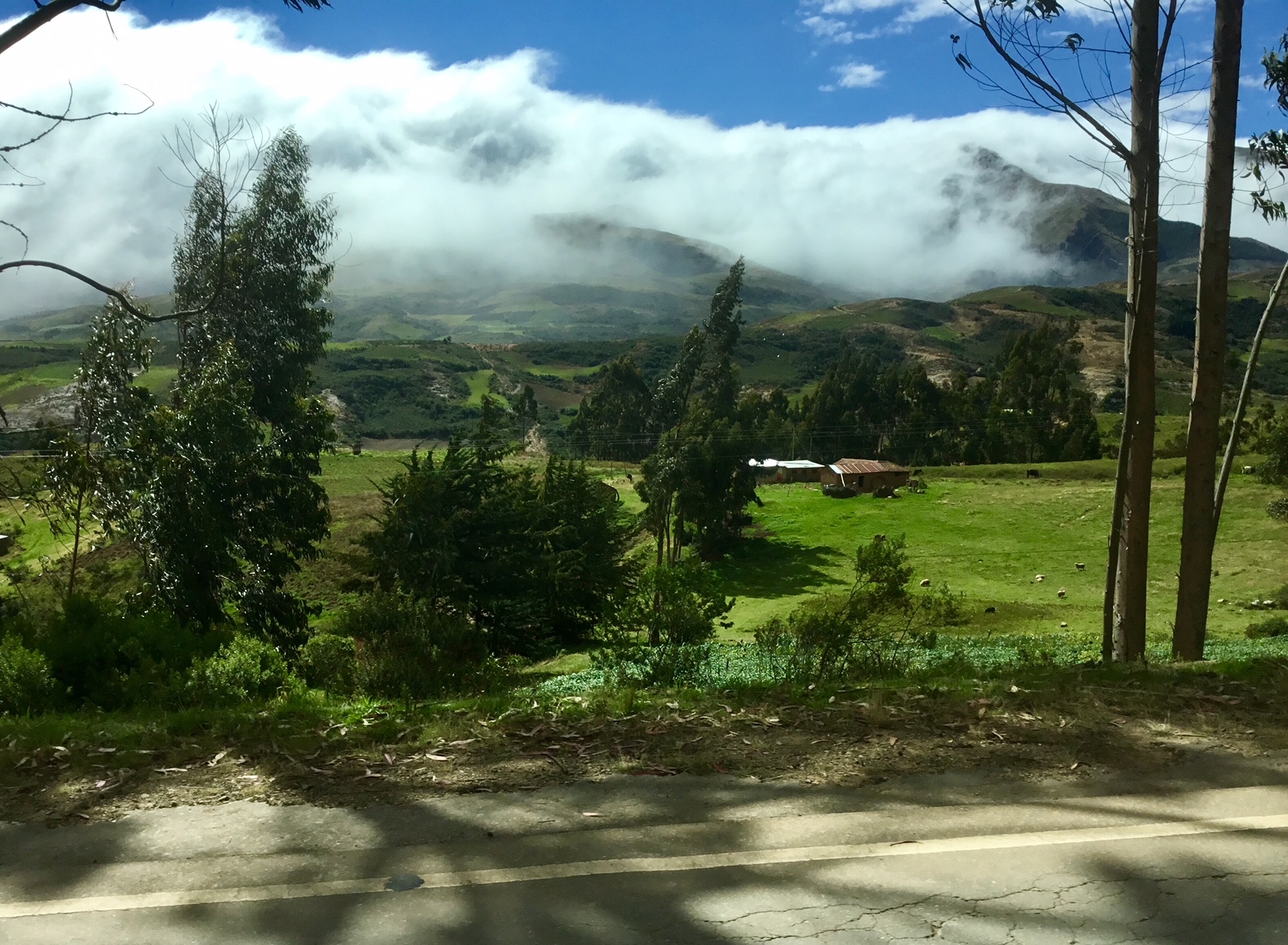
On the road in Bolivia
*an ongoing series of quotations – mostly from artists, to artists – that offers wisdom, inspiration, and advice for the sometimes lonely road we are on.
In nature, light and shadow create ephemeral moments of beauty. To experience the transition from sunset to night we must await and cherish each fleeting moment and not just the finale. We must be attentive to beauty revealing all its moods.
Amy Tan in In Character: Opera Portraiture, John F. Martin, Foreword by Amy Tan, Preface by David Gockley.
Comments are welcome!
Pearls from artists* # 310
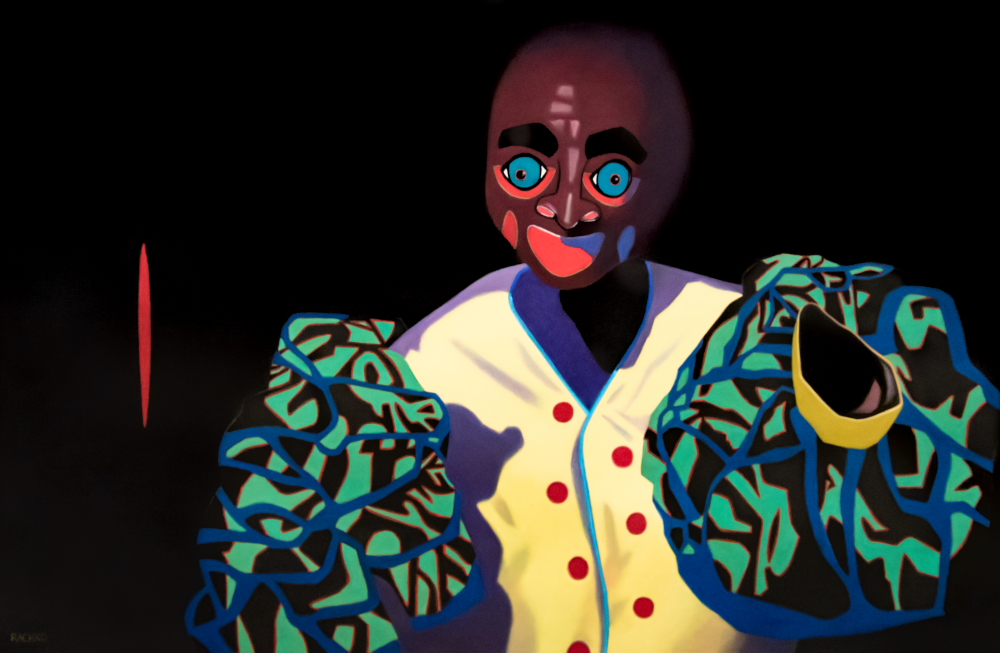
“Danzante,” soft pastel on sandpaper, 38″ x 58″ image, 50″ x 70″ framed
*an ongoing series of quotations – mostly from artists, to artists – that offers wisdom, inspiration, and advice for the sometimes lonely road we are on.
As Immanuel Kant explained, aesthetic rapture is a peculiar kind of subjective phenomenon, since it presents itself as anything but subjective. It asks to be shared with others in hopes that they too might experience this thing that has had such a profound effect upon us. Naturally, the desire to share our astonishment is bound to be frustrated as we meet people who respond to our beloved work with indifference or even revulsion. We then remember that the affective power of works of art varies from person to person, and even from moment to moment within the same person’s life, a fact we usually put down to personal taste, though little consideration is given to what that term might mean. People have their own inclinations, and given that the aesthetic is held, not just by Kant but also by common wisdom, to be a private affair, its variability across the broad spectrum of human personalities can only seem inevitable.
J.F. Martel in Reclaiming Art in the Age of Artifice: A Treatise, Critique, and Call to Action
Comments are welcome!
Pearls from artists* #309
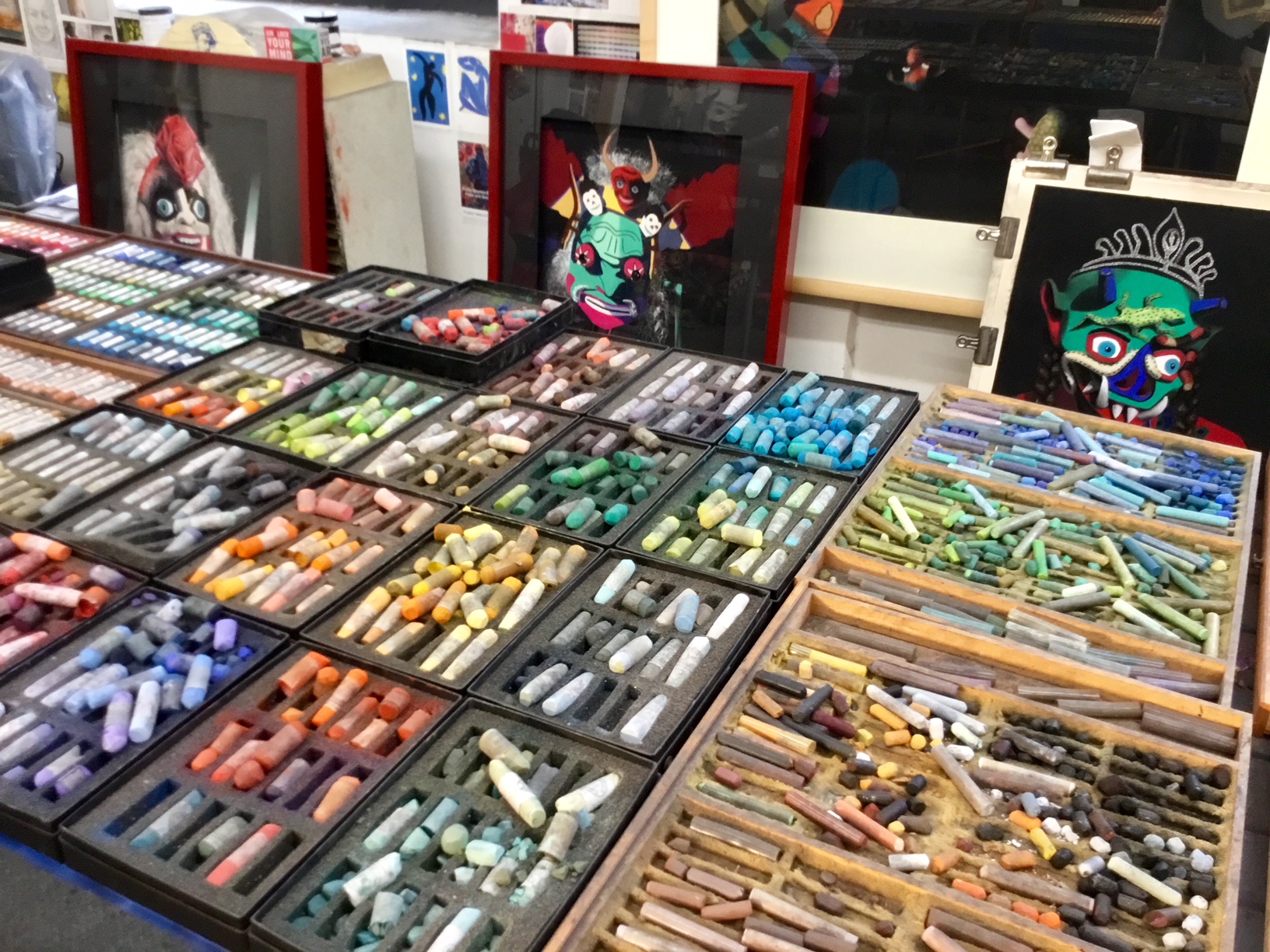
Barbara’s studio
*an ongoing series of quotations – mostly from artists, to artists – that offers wisdom, inspiration, and advice for the sometimes lonely road we are on.
It is a strange thing to catalog the conflicting theories as to what the first artists thought they were doing down there in the caves, because the truth is that, to this day, we do not know why we make art. In the end, art may not have been our invention at all. It may well have appeared in history as it does in the life of many individual artists: as an outside call, a sudden flash of inspiration, an inner wanderlust exerting such a powerful pull that ultimately we would have to say that Picasso got it wrong: the early humans did not invent art. Art invented humanity.
J.F. Martel in Reclaiming Art in the Age of Artifice: A Treatise, Critique, and Call to Action
Comments are welcome!


 barbararachkoscoloreddust.com