Category Archives: Quotes
Pearls from artists* # 327
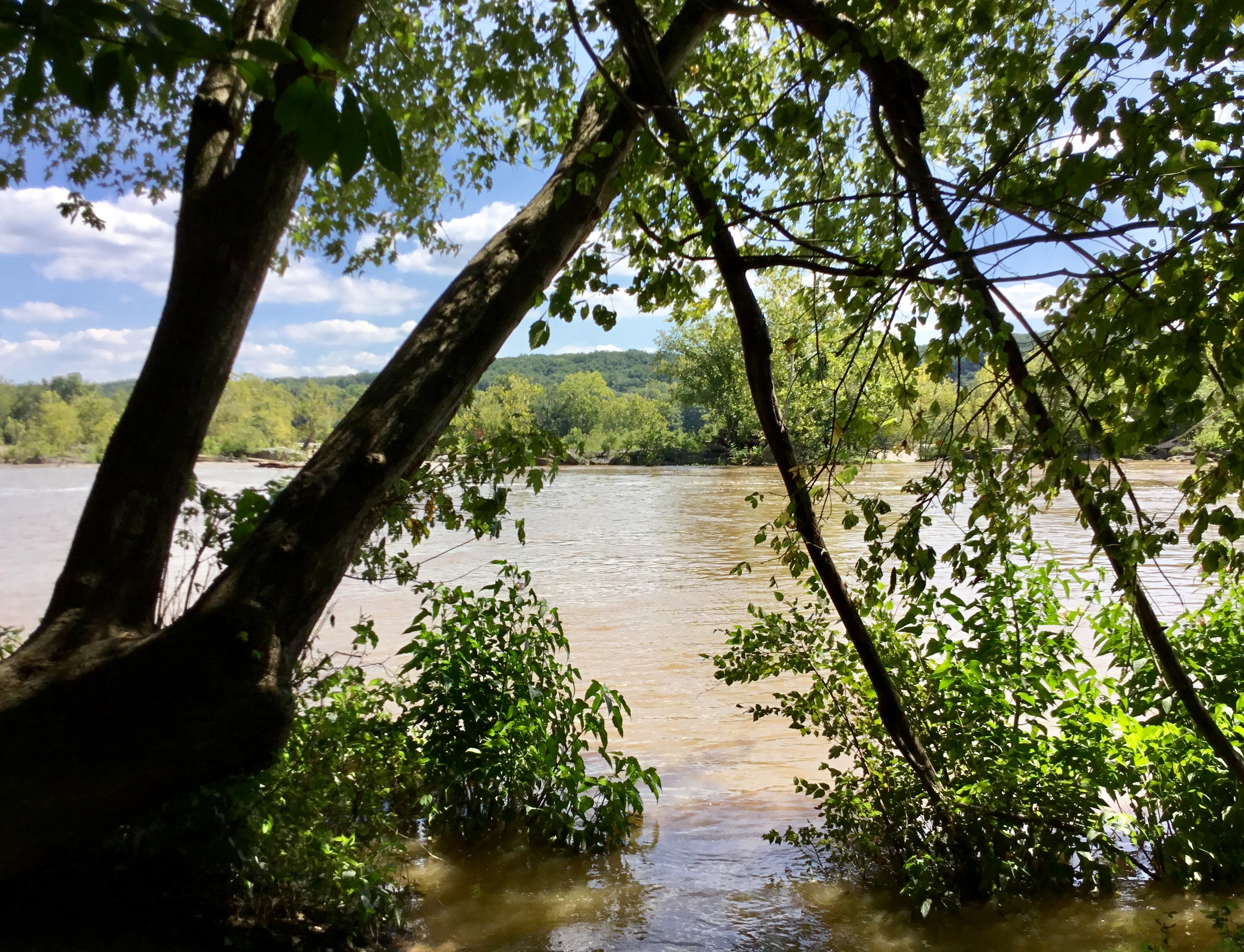
Great Falls, VA
*an ongoing series of quotations – mostly from artists, to artists – that offers wisdom, inspiration, and advice for the sometimes lonely road we are on.
Do you have the courage to bring forth the treasures that are hidden within you?
… surely something wonderful is sheltered inside you. I say this with all confidence, because I happen to believe we are all walking repositories of buried treasure. I believe this is one of the oldest and most generous tricks the universe plays on us human beings, both for its own amusement and ours. The universe buried strange jewels deep within us all, and then stands back to see if we can find them.
The hunt to uncover those jewels – that’s creative living.
The courage to go on that hunt in the first place – that’s what separates a mundane existence from a more enchanted one.
Elizabeth Gilbert in Big Magic: Creative Living Beyond Fear
Comments are welcome!
Q: Do you believe in “the big break” for artists?
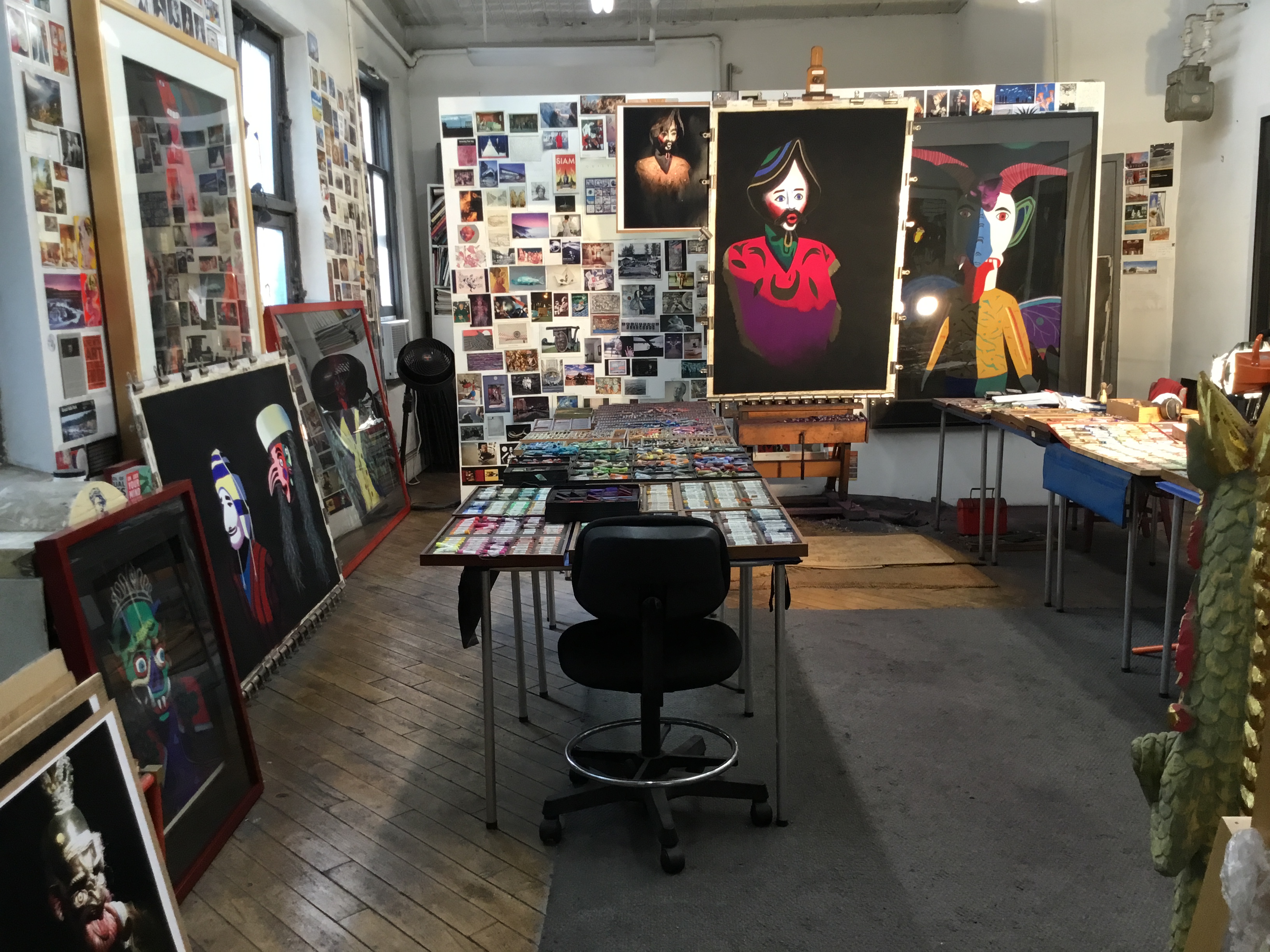
Barbara’s studio
A: Big breaks sometimes happen, but in my experience an artist’s life is made up of single-minded dedication, persistence, hard work, and lots of small breaks. I recently finished reading “Failing Up: How to Take Risks, Aim Higher, and Never stop Learning” by Leslie Odom, Jr. I like what he has to say to artists here:
“The biggest break is the one you give yourself by choosing to believe in your wisdom, in what you love, and in the gifts you have to offer the waiting world.”
Comments are welcome!
Pearls from artists* # 326

“Acolytes,” soft pastel on sandpaper, 38″ x 58″
*an ongoing series of quotations – mostly from artists, to artists – that offers wisdom, inspiration, and advice for the sometimes lonely road we are on.
Art is… a longest road through life, and when I think how slight and beginnerish what I have done till now is, I am not surprised that this production (which resembles a strip or half-tilled field a foot wide) does not sustain me. For plans bear no fruit, and seed prematurely sown does not sprout. But patience and work are real and can at any moment be transformed into bread. ‘Il faut toujours travailler,’ Rodin said whenever I attempted to complain to him about the schism in daily life; he knew no other solution, and this of course had been his… To stick to my work and have every confidence in it, this I am learning from his great and greatly given example, as I learn patience from him: it is true, my experience tells me over and over that I haven’t much strength to reckon with, for which reason I shall, so long as it is in any way possible, not do two things, not separate livelihood and work, rather try to find both in the one concentrated effort: only thus can my life become something good and necessary and heal together out of the tattered state for which heredity and immaturity have been responsible, into one bearing trunk.
Therefore I shall determine my next place of abode, all else aside, from the point of view of my work and that only. I want this the more, since I feel myself in the midst of developments and transitions (changes that affect observation and creation equally), which may slowly lead to that toujours travailler with which all outer and inner difficulties, dangers and confusions would really be in a certain sense overcome.. for whoever can always work, can live too, must be able to.
Rainer Maria Rilke, Letters to a Young Poet, Translation by M.D. Herter Norton
Comments are welcome!
Pearls from artists* # 325
“Myth Meets Dream,” soft pastel on sandpaper, 47″ x 38″
*an ongoing series of quotations – mostly from artists, to artists – that offers wisdom, inspiration, and advice for the sometimes lonely road we are on.
Homo sapiens is the animal that means something, or that desperately wants to mean something. Undoubtedly our thirst for meaning has a lot to do with our petrifying awareness of death, itself a side effect of the imagination, and one that makes our unique position as much of a curse as it is a gift.
As the prime fruit of the imagination, art is the incontrovertible sign of humanity’s presence on earth. But what constitutes the human itself? The prehistoric paintings at Chauvet confront us with a dimension of ourselves that, though familiar in ways, remains in many respects unknown and may ultimately be unknowable. Human consciousness has access to a powerful otherworld, the place of dreams and myth, poetry and lunacy. [This is]… the “imaginal,” the name Henry Corbin gave to the intermediate realm, central to the inscrutable mind of God. As a concrete manifestation of this imaginal realm in the public sphere, art calls us back to the source as a matter of course.
J.F. Martel in Reclaiming Art in the Age of Artifice: A Treatise, Critique, and Call to Action
Comments are welcome!
Pearls from artists* # 324

Untitled c-print, 24″ x 24,” edition of 5
*an ongoing series of quotations – mostly from artists, to artists – that offers wisdom, inspiration, and advice for the sometimes lonely road we are on.
“The artist is the creator of beautiful things.” From [Immanuel] Kant’s perspective on conventional beauty, [Oscar] Wilde’s definition would seem to demote artists to a cosmetic role, turning them, as William Irwin Thompson said, into “the interior decorators of Plato’s cave.” On the other hand, under the terms of a radical beauty that brings forth the Real instead of pacifying us with delusions of “realism,” Wilde’s line can help restore art to its shamanic source in our minds. Perhaps it would have been better if Wilde had defined the artist as the creator of numinous things – of enchanted objects, omens, or talismans. Because if there is one thing that all beautiful things share, it is that they are all symbols. They are all transmissions from another plane of existence.
It is one thing to acknowledge the Beautiful as an objective property of the phenomenal world. It is another to stop and listen to what it has to say.
J.F. Martel in Reclaiming Art in the Age of Artifice: A Treatise, Critique, and Call to Action
Comments are welcome!
Pearls from artists* # 323
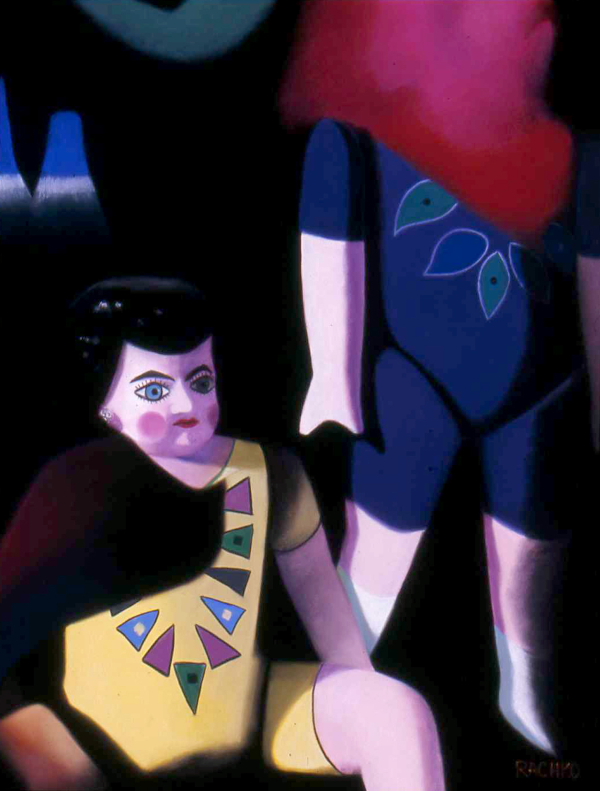
“The Absence,” soft pastel on sandpaper, 26″ x 20″
*an ongoing series of quotations – mostly from artists, to artists – that offers wisdom, inspiration, and advice for the sometimes lonely road we are on.
Art cannot play to the demand because it inheres precisely in bringing forth the unexpected, the New. It unearths what normality buries away. No wonder so many people are afraid of it.
All authentic art, then, is “challenging,” not just the avant-garde. We cannot omit the fact that some great art has an outer layer that makes it more agreeable to popular taste at a particular moment. For example, the work of Vincent van Gogh, one of modernisms prime instigators in the visual arts, seems to be everywhere today even though no one saw much to like in it while he was alive. But while it may be true that on the surface van Gogh’s work is all pretty colors and neat swirls, its immediate appeal is a siren’s song luring us to the depths. There is a chaos lurking in every print of Starry Night (1889) that livens up a suburban bathroom. This chaos isn’t something that van Gogh injected into his painting of an otherwise benign night sky. It is the essence of the starry sky when seen for what it is, that is, when captured outside all comforting clichés that might shield us from its compelling monstrosity.
J.F. Martel in Reclaiming Art in the Age of Artifice: A Treatise, Critique, and Call to Action
Comments are welcome!
Pearls from artists* # 320
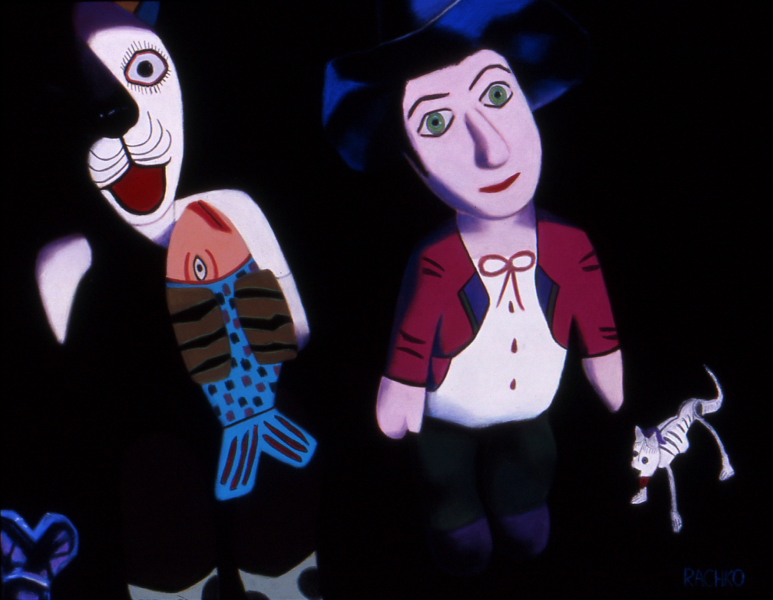
“Offering,” soft pastel on sandpaper, 20″ x 26″
*an ongoing series of quotations – mostly from artists, to artists – that offers wisdom, inspiration, and advice for the sometimes lonely road we are on.
As soon as I use words and actions to convey an emotion, I engage with the world, pitting my feelings against fate in hopes of a desired outcome. If I am angry, my anger is directed at someone or something. If I am in love, my love is for another. Feelings are purposive in ordinary reality, our emotional states tangled in the processes of life. This is what we mean when we refer to ourselves as subjects. But if, instead of acting on a feeling, I make it the basis of a song or a film or a dance, something strange happens. My purposive feeling leaves the closed circle of my personal existence, almost as though I had taken it out of historical time altogether. Transposed into the work of art, it becomes nonpurposive, undirected. It disassociates from its original focus, and from my self as subject, acquires a kind of autonomy. Artistic creation allows for the subjective aspect of our lives normally locked inside our skulls to exist outside us, which is to say that in art, the subjective becomes objective.
J.F. Martel in Reclaiming Art in the Age of Artifice: A Treatise, Critique, and Call to Action
Comments are welcome!
Pearls from artists* # 319

“She Embraced It and Grew Stronger,” soft pastel on sandpaper, 38″ x 58″
*an ongoing series of quotations – mostly from artists, to artists – that offers wisdom, inspiration, and advice for the sometimes lonely road we are on.
Ultimately, whether we judge an artistic work to be enjoyable or not may be immaterial when we consider the effect it has on us. A film might affect us in profound ways even though we found it difficult to watch or failed to grasp the point, if any, that the filmmakers were trying to get across. Most people have experienced artistic works that, although their own egos may have found them lacking in certain respects, continued to work on them long afterward, subtly altering them whether they wished it or not. The crucial factor isn’t whether we have been amused or delighted by a work but whether we have let the forces within it penetrate the closed perimeter of our lives and expand our horizons. True sensibility, real good taste, involves the ability to recognize when such forces are present, and to distinguish between superficial reactions and the deeper affects these forces elicit.
J.F. Martel in Reclaiming Art in the Age of Artifice: A Treatise, Critique, and Call to Action
Comments are welcome!
Pearls from artists* # 318
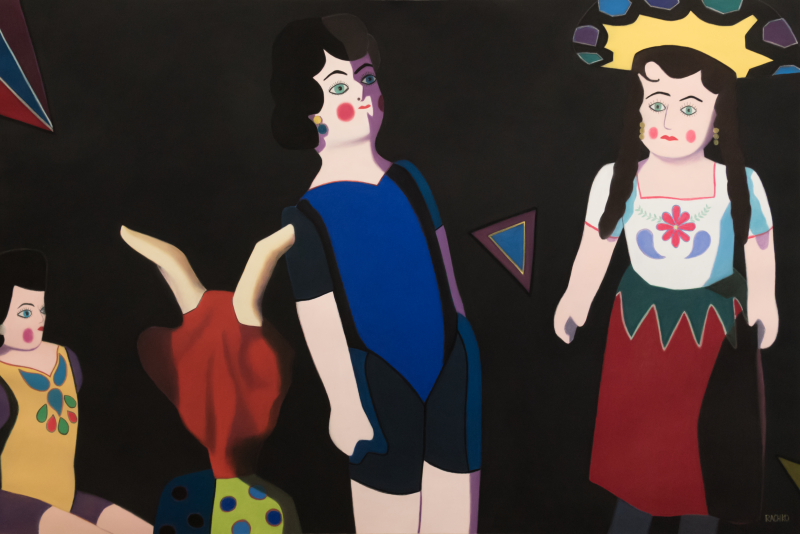
“Conundrum,” soft pastel on sandpaper, 38″ x 58″
*an ongoing series of quotations – mostly from artists, to artists – that offers wisdom, inspiration, and advice for the sometimes lonely road we are on.
We tend to see our “personal tastes” as positive personality traits, whereas they could just as well indicate limitations that we might overcome given the right opportunity, the appropriate context, and a little courage. Each person’s unique take on reality will no doubt favor certain aesthetic experiences over others, but it may be that the world is filled with potential aesthetic experiences that our “tastes” prevent us from having for no good reason.
J.F. Martel in Reclaiming Art in the Age of Artifice: A Treatise, Critique, and Call to Action
Comments are welcome!
Pearls from artists* # 317
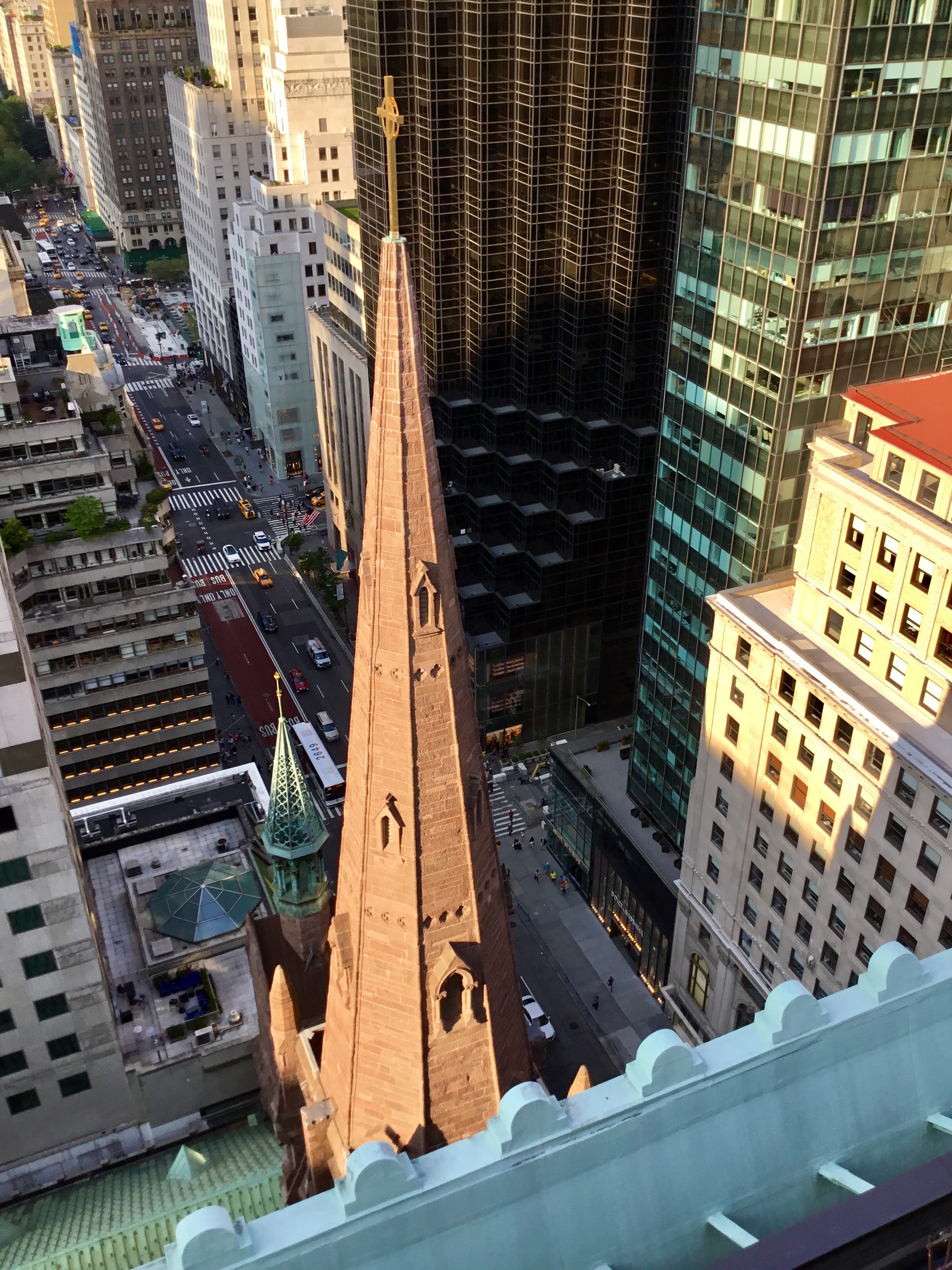
Fifth Avenue
*an ongoing series of quotations – mostly from artists, to artists – that offers wisdom, inspiration, and advice for the sometimes lonely road we are on.
But everything that may some day be possible to many the solitary man can now prepare and build with his hands, that err less. Therefore, dear sir, love your solitude and bear with sweet-sounding lamentation the suffering it causes you. For those who are near you are far, you say, and that shows it is beginning to grow wide about you. And when what is near you is far, then your distance is already among the stars and very large; rejoice in your growth, in which you naturally can take no one with you, and be kind to those who remain behind, and be sure and calm before them and do not torment them with your doubts and do not frighten them with your confidence or joy, which they could not understand. Seek yourself some sort of simple and loyal community with them, which need not necessarily change as you yourself become different and again different; love in them life in an unfamiliar form and be considerate of aging people, who fear that being-alone in which you trust. Avoid contributing material to the drama that is always stretched taut between parents and children; it uses up much of the children’ energy and consumes the love of their elders, which is effective and warming even if it does not comprehend. Ask no advice from them and count upon no understanding; but believe in a love that is being stored up for you like an inheritance and trust that in this love there is a strength and a blessing, out beyond which you do not have to step in order to go very far!
Rainer Maria Rilke, Letters to a Young Poet, Translation by M.D. Herter Norton
Comments are welcome!


 barbararachkoscoloreddust.com