Category Archives: Bolivianos
Q: What’s on the easel today?
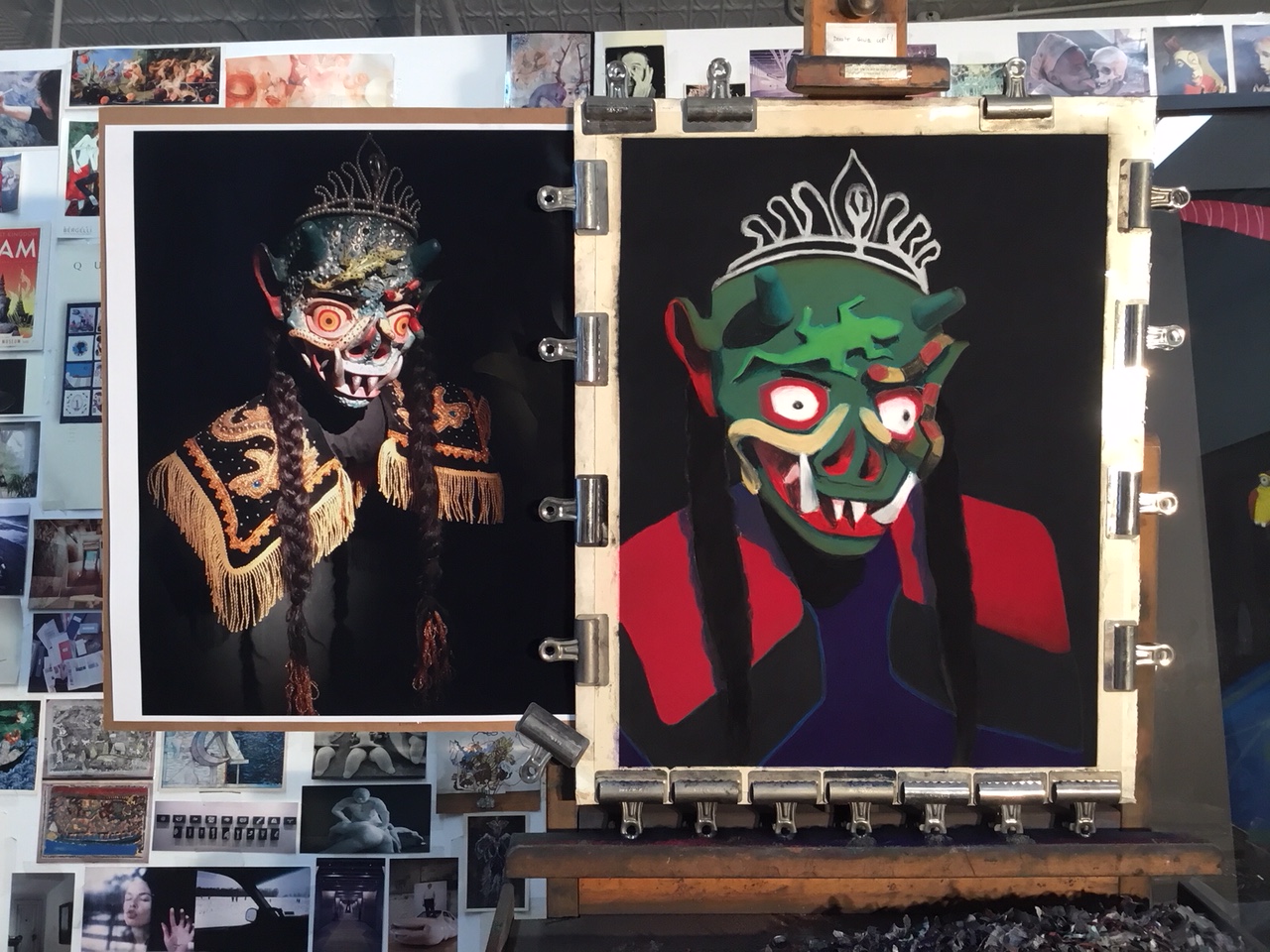
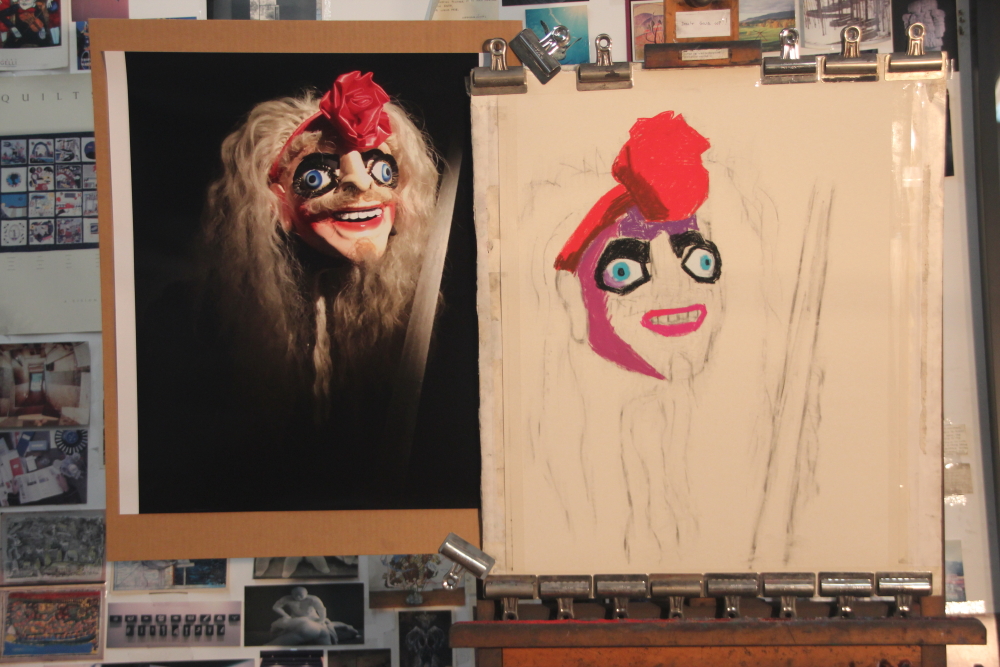
Work in progress
A. I have just started working on a small pastel painting. Although the mask looks Tibetan, surprisingly, it is from Bolivia. It’s one I encountered at a mask exhibition at the Museum of Ethnography and Folklore in La Paz. This is another in my “Bolivianos” series.
Comments are welcome!
Q: Would you share your artist’s statement for the “Bolivianos” series?

Museum of Ethnography and Folklore, La Paz, Bolivia
A: Here it is.
My long-standing fascination with traditional masks took a leap forward in the spring of 2017 when I visited the National Museum of Ethnography and Folklore in La Paz, Bolivia. One particular exhibition on view, with more than fifty festival masks, was completely spell-binding.
The masks were old and had been crafted in Oruro, a former tin-mining center about 140 miles south of La Paz on the cold Altiplano (elevation 12,000’). Depicting important figures from Bolivian folklore traditions, the masks were created for use in Carnival celebrations that happen each year in late February or early March.
Carnival in Oruro revolves around three great dances. The dance of “The Incas” records the conquest and death of Atahualpa, the Inca emperor when the Spanish arrived in 1532. “The Morenada” dance was once assumed to represent black slaves who worked in the mines, but the truth is more complicated (and uncertain) since only mitayo Indians were permitted to do this work. The dance of “The Diablada” depicts Saint Michael fighting against Lucifer and the seven deadly sins. The latter were originally disguised in seven different masks derived from medieval Christian symbols and mostly devoid of pre-Columbian elements (except for totemic animals that became attached to Christianity after the Conquest). Typically, in these dances the cock represents Pride, the dog Envy, the pig Greed, the female devil Lust, etc.
The exhibition in La Paz was stunning and dramatic. Each mask was meticulously installed against a dark black wall and strategically spotlighted so that it became alive. The whole effect was uncanny. The masks looked like 3D versions of my “Black Paintings,” a pastel paintings series I have been creating for ten years. This experience was a gift… I could hardly believe my good fortune!
Knowing I was looking at the birth of a new painting series – I said as much to my companions as I remained behind while they explored other parts of the museum – I spent considerable time composing photographs. Consequently, I have enough reference material to create new pastel paintings in the studio for several years. The series, entitled “Bolivianos,” is arguably my strongest and most striking work to date.
Comments are welcome!
Q: What’s on the easel today?

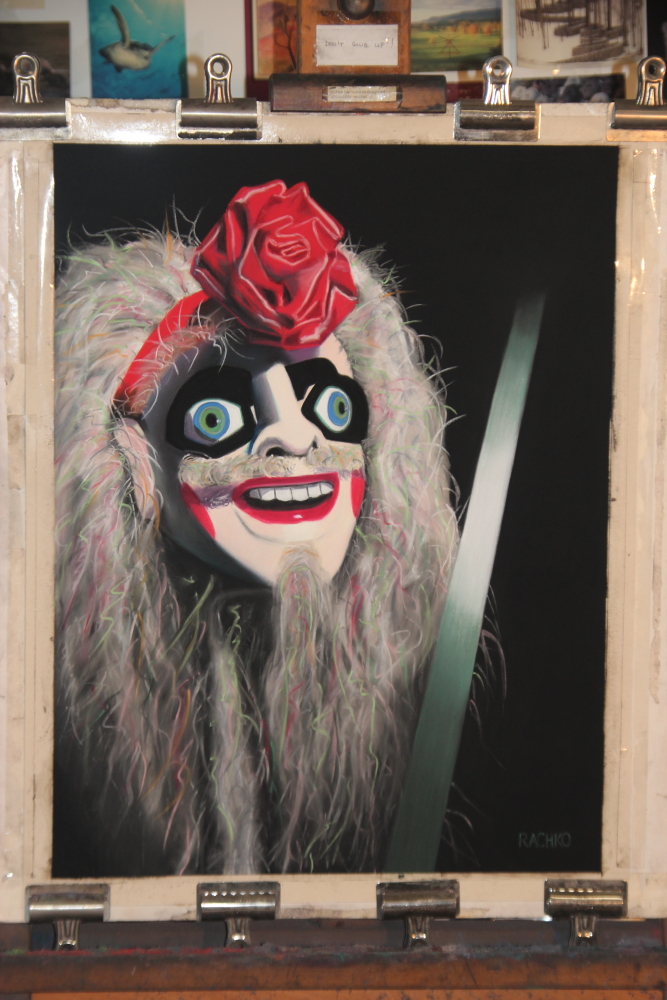
Finished and signed
A: I have finally finished “Oracle,” soft pastel on sandpaper, 26” x 20.” It’s the third piece in my “Bolivianos” series.
Comments are welcome!
Q: What’s on the easel today?
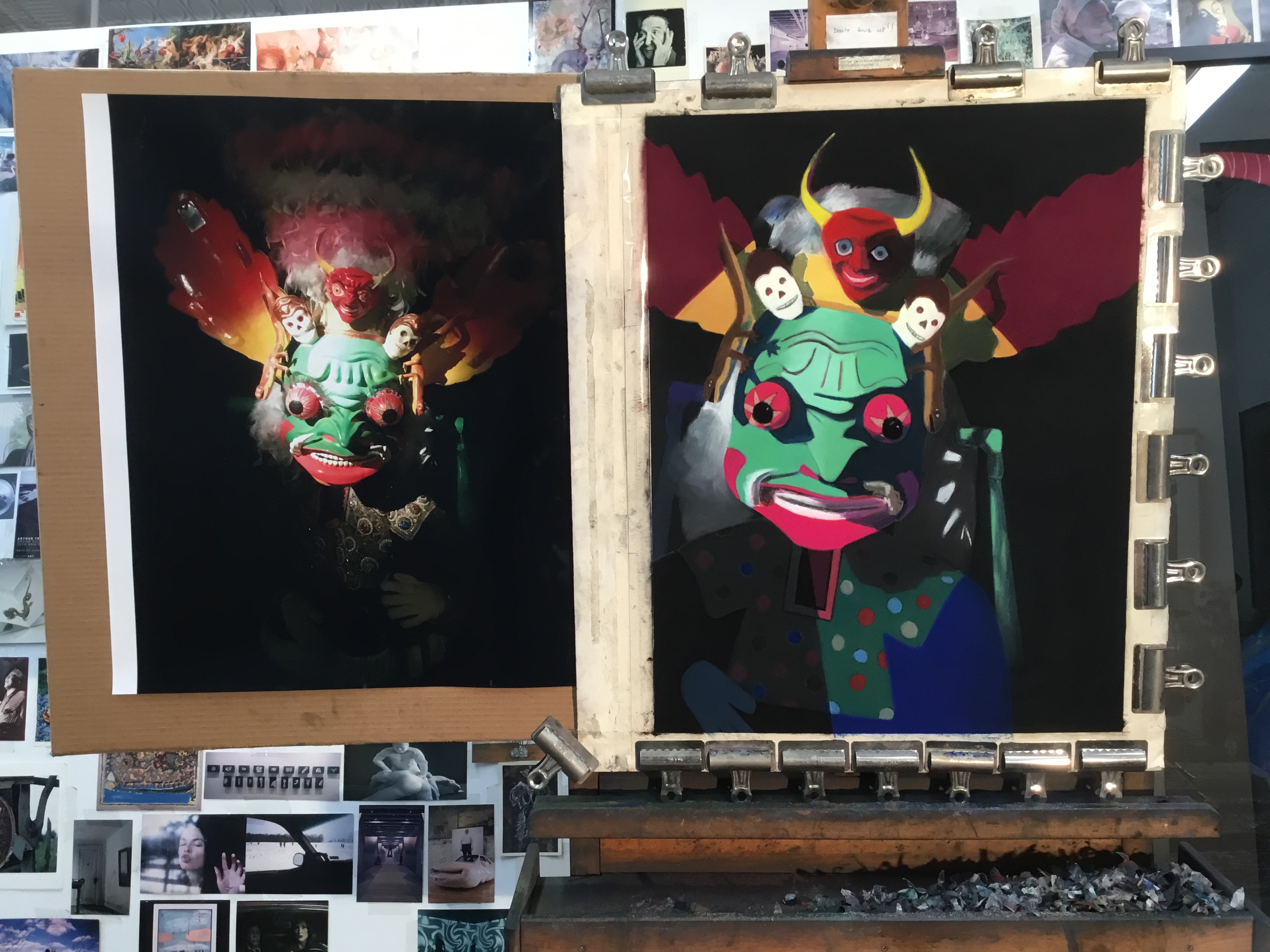
Work in progress
A: I’m trying to finish “Oracle,” but every time I think I’m getting close, I see there are plenty of unresolved areas and/or things I can still improve.
Comments are welcome!
Q: What’s on the easel today?
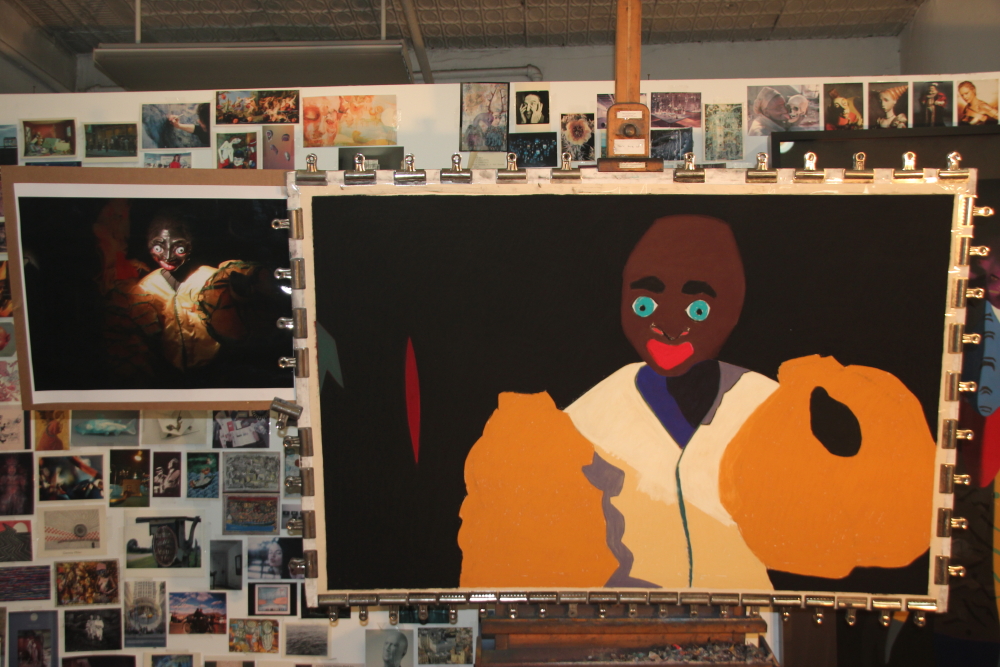
Work in progress
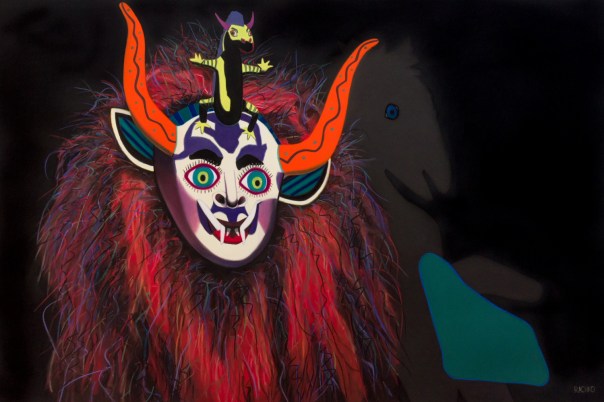
A: This is the first day – with only one layer of soft pastel in most places – of a 38″ x 58″ pastel painting. It’s based on a photo I composed at the National Museum of Ethnography and Folklore in La Paz, Bolivia. This is the fourth work in my “Bolivianos” series.
Comments are welcome!
Start/finish of “The Orator,” soft pastel on sandpaper, 38″ x 58″
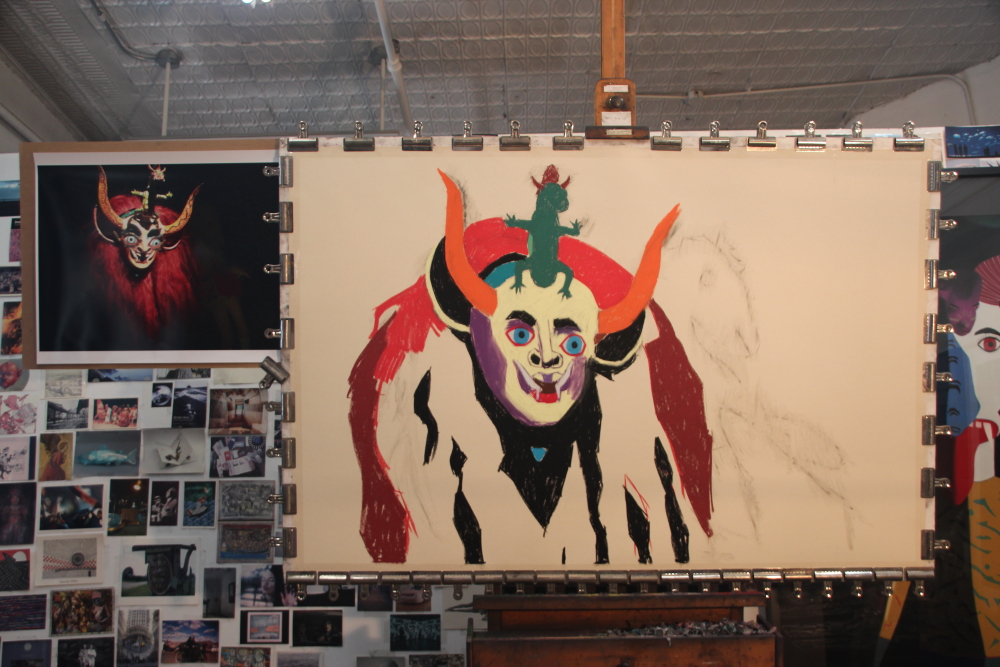
Start
Finish
Comments are welcome!
Q: What’s on the easel today?
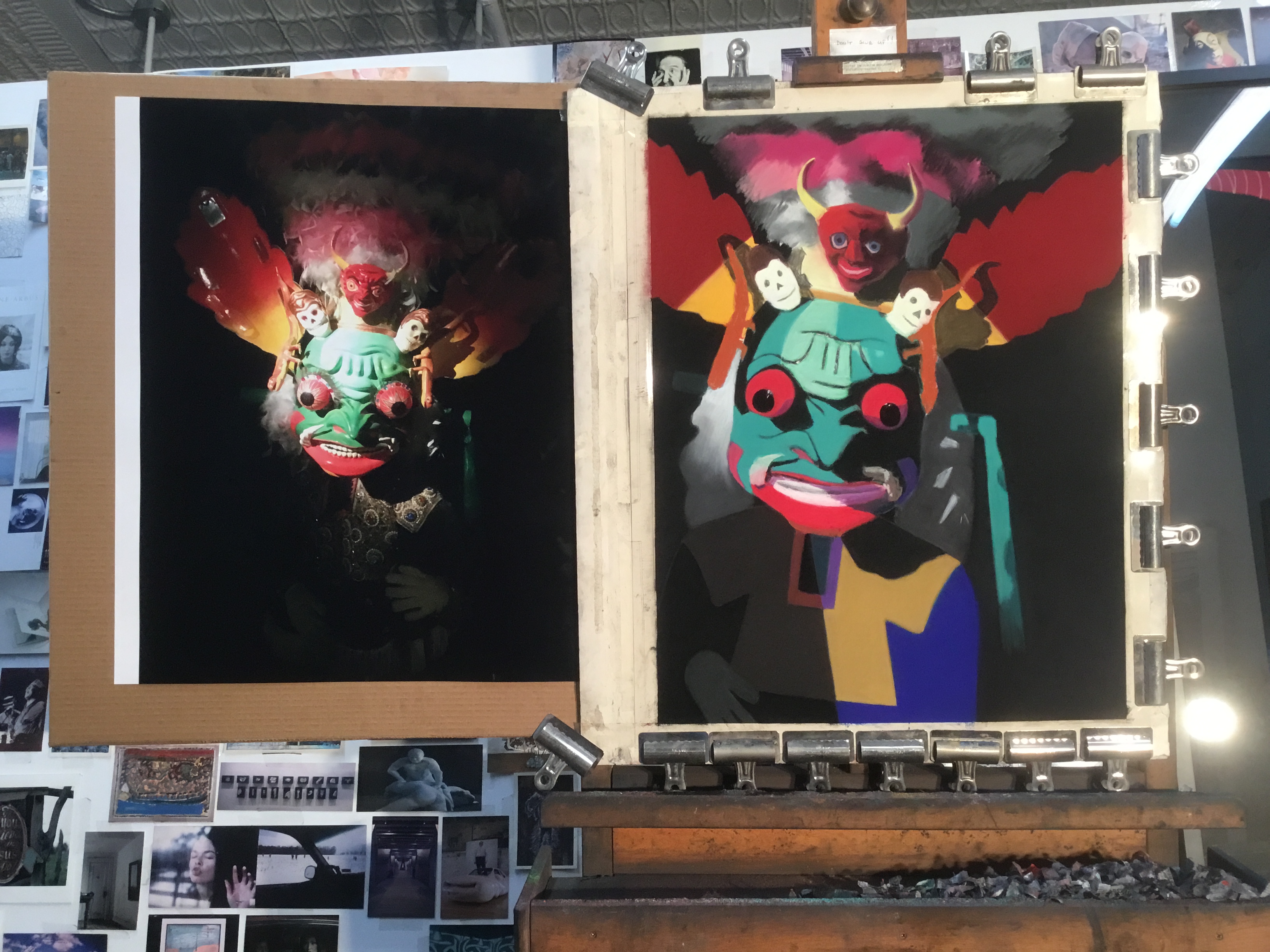
Work in progress
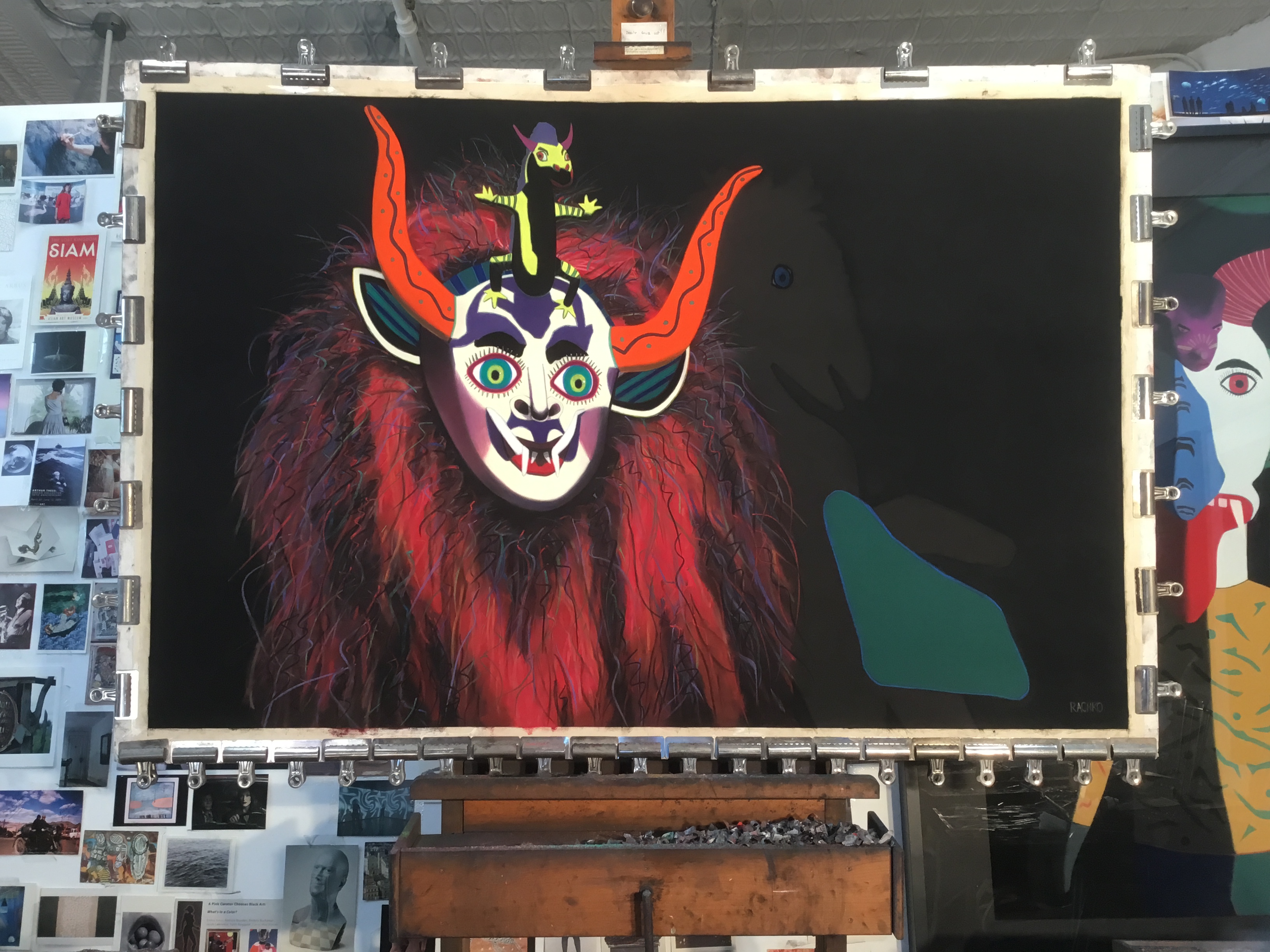
“The Orator,” soft pastel on sandpaper, 38” x 58”
A: Having finally finished “The Orator” (bottom), I continue working on a small pastel painting that does not have a title yet (top). The latter is the third piece in my “Bolivianos” series.
Comments are welcome!
Q: When you are in your studio working on a pastel painting and pause to consider what you have done, do you ask yourself, “Is it good?”
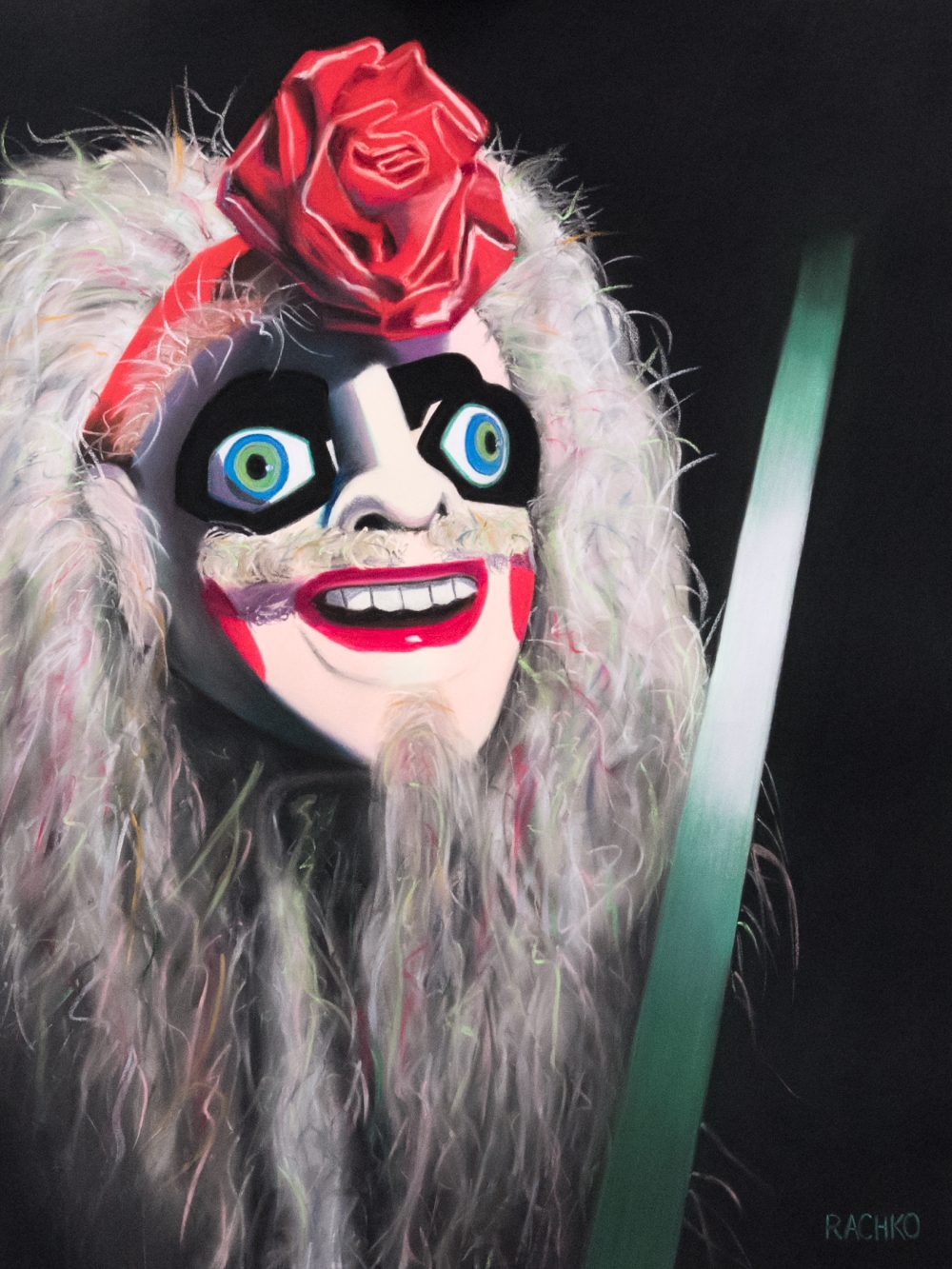
“The Champ,” soft pastel on sandpaper, 26″ x 20″ image, 35″ x 28 1/2″ framed
A: Certainly, I do. In addition, I ask myself some other important questions:
Is it the best I can do?
Is it exciting?
Is it surprising?
Is it idiosyncratic and unique to me?
Is there anything I can do to improve it?
Does it meet (or hopefully exceed) the exacting technical and formal standards I have set for my work?
Will I be proud to finally see my signature on it?
Comments are welcome!
Q: What’s on the easel today?
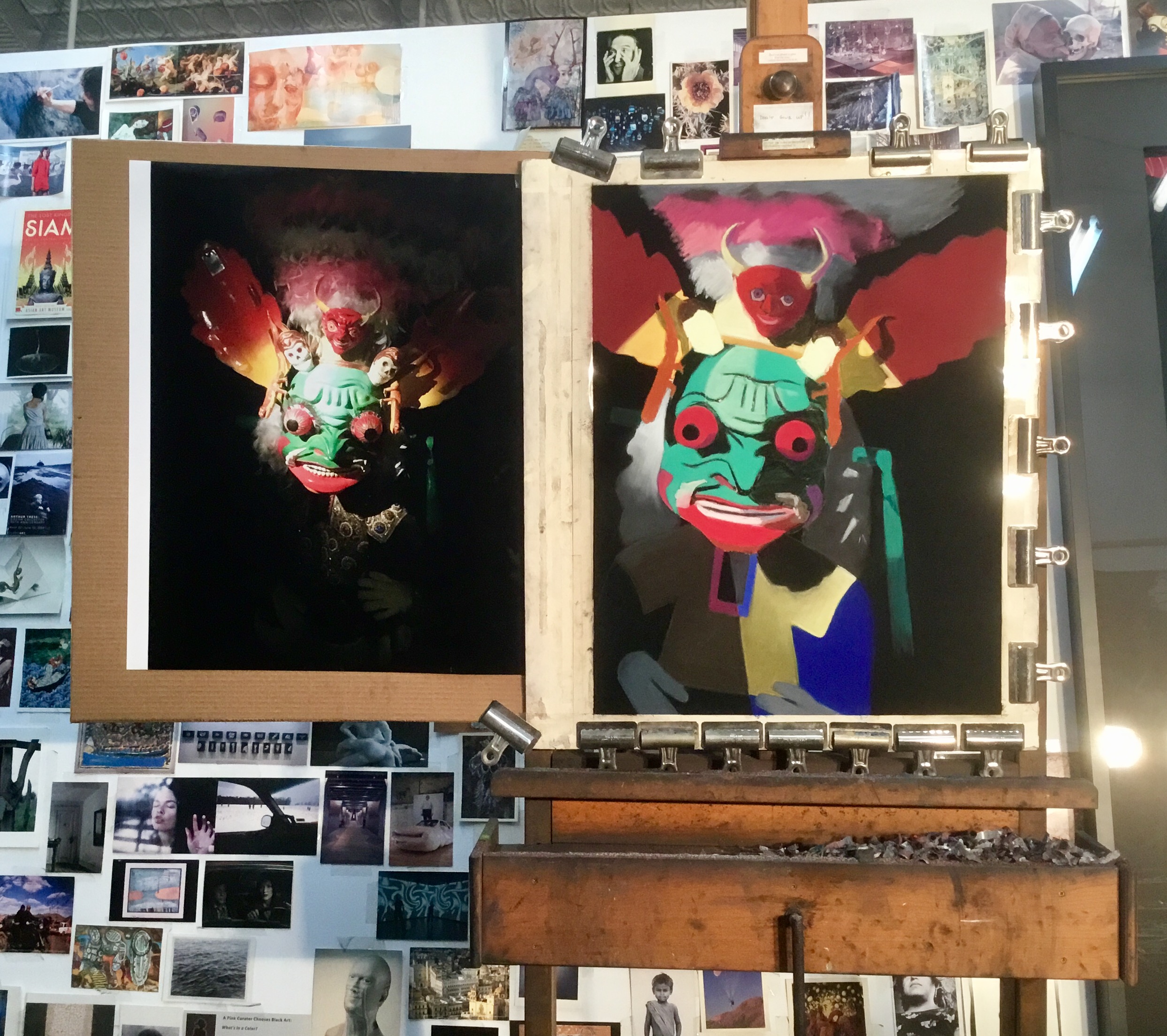
Work in progress
A: I’m working on the third pastel painting in my new “Bolivianos” series. This one is only a few days old and has no title yet.
Comments are welcome!


 barbararachkoscoloreddust.com