Blog Archives
Pearls from artists* # 689

*an ongoing series of quotations – mostly from artists, to artists – that offers wisdom, inspiration, and advice for the sometimes lonely road we are on.
This is what I wish someone had told me years ago:
The art world is not a meritocracy. Like the world at large, it is a system based on hoarded capital and exploited labor. This system owes you nothing, even if you have extraordinary talent, work tremendously hard, never give up, and do all the right things. There are no ‘extra points’ for effort, earnestness, dedication, or sacrifice.
(We ALL think WE are going to be the exception.)
Unless you have fantastic connections or pedigree, after you build and maintain the basics of making strong work and getting the word out, a great deal depends on luck. Many of the artists you admire are likely living difficult lives you might not be willing to live, making sacrifices you might not be willing to make. Many who appear to support themselves with their work are in fact, partially or fully supported by spouses, family money, or jobs they do not discuss. They keep these jobs secret because some art world players refuse to validate your work if you are not ‘seriously committed’ enough to be a full-time artist. (Of course, artists who were not born wealthy need validation from these very players to be ABLE to create full-time.)
Kate Kretz in Art From Your Core: A Holistic Guide to Visual Voice
Comments are welcome!
Pearls from artists* # 630

*an ongoing series of quotations – mostly from artists, to artists – that offers wisdom, inspiration, and advice for the sometimes lonely road we are on.
During the Victorian age, women, with their ‘smaller,’ less ‘creative’ brains, were considered incapable of becoming professional artists and were often restricted to ‘craft’ or ‘design’ (genres not considered ‘fine art’ by the establishment). This perception made it very difficult not only for women to be taken seriously as artists, but for their (and their female predecessors’) work to be sold. In order to get around this, nineteenth-century art dealers were known to scratch out a female artist’s signature and replace it with that of a male contemporary, which explains why many works by women have only just come to light. (No wonder so many of them hid self-portraits among their still lifes).
Katy Hessel in The Story of Art Without Men
Comments are welcome!
Q: When did you begin seriously studying photography?

A: After I lost my husband, Bryan, on 9/11 – as I’ve discussed elsewhere, Bryan photographed most of the setups for my “Domestic Threats” series – I needed to find a way to continue making art. In June 2002 I began studying photography at the International Center of Photography (ICP) in New York. I took a one week 4 x 5 view camera workshop because Bryan had photographed the setups with a Toyo-Omega view camera. I was surprised to discover that I had absorbed quite a bit of technical information just by watching him. Once I completed the workshop, I decided to start over from the beginning and to learn as much as I could about photography. So I enrolled in Photography I. Over the next several years I completed about a dozen courses at ICP, eventually learning to make my own large-scale chromogenic prints.
Around 2007 I began working seriously as a photographer, creating my photographic series, “Gods and Monsters,” with Bryan’s Mamiya 6 camera. In October 2009 HP Garcia Gallery in New York gave me my first solo photography exhibition.
Comments are welcome!
Pearls from artists* # 349
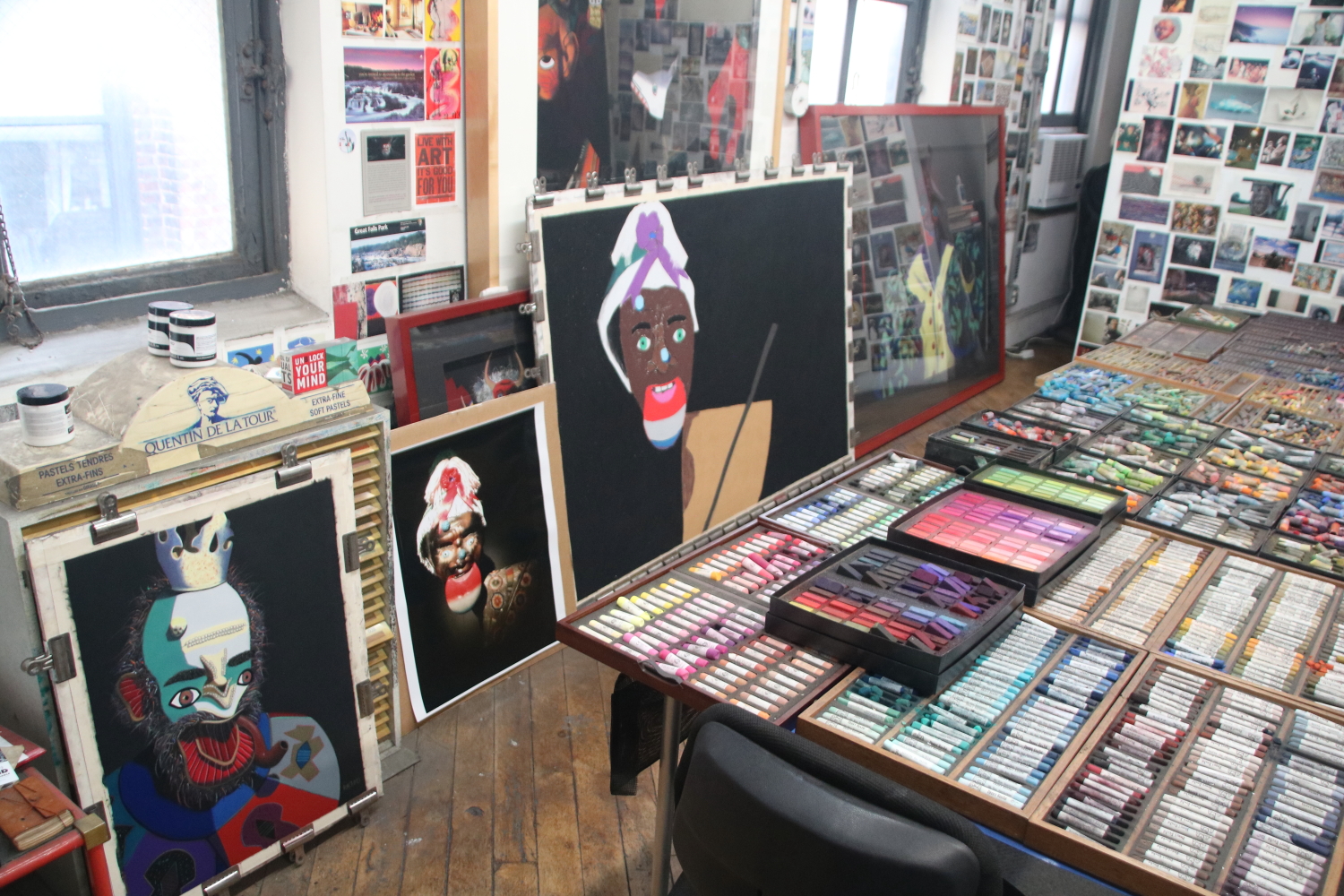
Barbara’s studio
*an ongoing series of quotations – mostly from artists, to artists – that offers wisdom, inspiration, and advice for the sometimes lonely road we are on.
If Dostoyevsky, Flaubert, and so many others were able to create great artistic works, it was because they were able to pull off something few adults can find it in themselves to do: they were able to suspend all final judgments about life and the universe in order to play…
The spirit of work is concerned with self-preservation. It evaluates concepts and ideas in terms of their practical value. Building roads, raising walls, running elections, debating policies, educating the young – all of these are purposive actions ultimately aimed at upholding social structures, changing those structures, or promoting one’s place within society. The spirit of work is the home of the ego, the part of us that has evolved to survive and thrive. One of the conditions of the artistic creation seems to be the ability to move frame this frame of mind into the spirit of play. As many artist have said in varying ways, the trick is to forget everything and create for the sake of creating. No worthwhile play, of course, is without effort. As the painstaking care Flaubert put into every line of his books makes clear, the spirit of play is sometimes the most exciting. Nevertheless, art remains in essence a game, an activity undertaken for its own sake, no matter how difficult. Like all games, it requires the establishment of a perimeter within which things that one might take very seriously in ordinary life are given only relative value. The perimeter suspends all the conventional rules, allowing the artist to turn the world on its head and let the imagination roam freely.
No sooner have we entered the spirit of play than we see things differently.
J.F. Martel in Reclaiming Art in the Age of Artifice: A Treatise, Critique, and Call to Action
Comments are welcome!
Pearls from artists* # 179
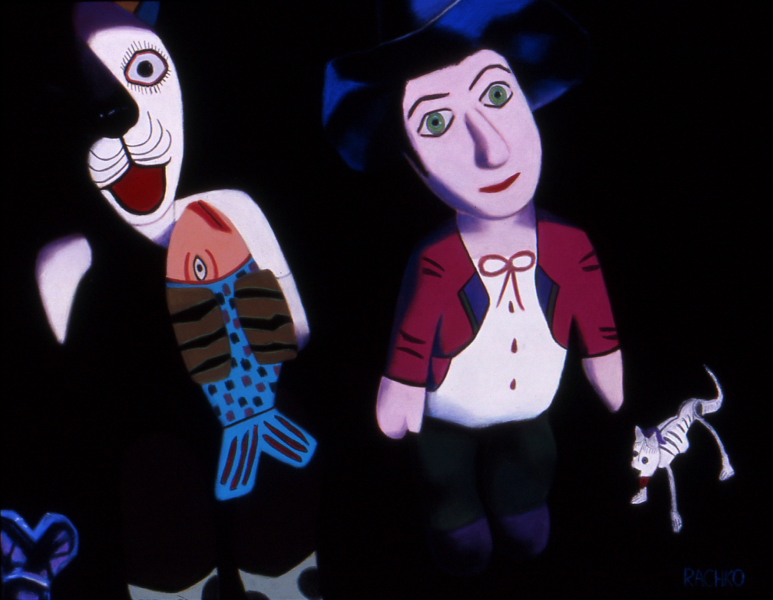
“Offering,” soft pastel on sandpaper, 20″ x 26″
* an ongoing series of quotations – mostly from artists, to artists – that offers wisdom, inspiration, and advice for the sometimes lonely road we are on.
Michael Kimmelman: You studied art in school. You started collecting early.
David Bowie: Yeah, I collected very early on. I have a couple of Tintorettos, which I’ve had for many, many years. I have a Rubens. Art was, seriously, the only thing I’ve ever wanted to own. It has always been for me a stable nourishment. I use it. It can change the way that I feel in the mornings. The same work can change me in different ways, depending on what I’m going through. For instance, somebody I like very much is Frank Auerbach. I think there are some mornings that if we hit each other a certain way – myself and a portrait by Auerbach – the work can magnify the kind of depression I’m going through. It will give spiritual weight to the angst. Some mornings I’ll look at it and go: “Oh, God, Yeah! I know!” But that same painting, on a different day, can produce in me the incredible feeling of the triumph of trying to express myself as an artist. I can look at it and say: “My God, Yeah! I want to sound like that looks.”
“At Heart an Artist with Many Muses,” by Michael Kimmelman, The New York Times, Friday, January 15, 2016
Comments are welcome!
Pearls from artists* # 159
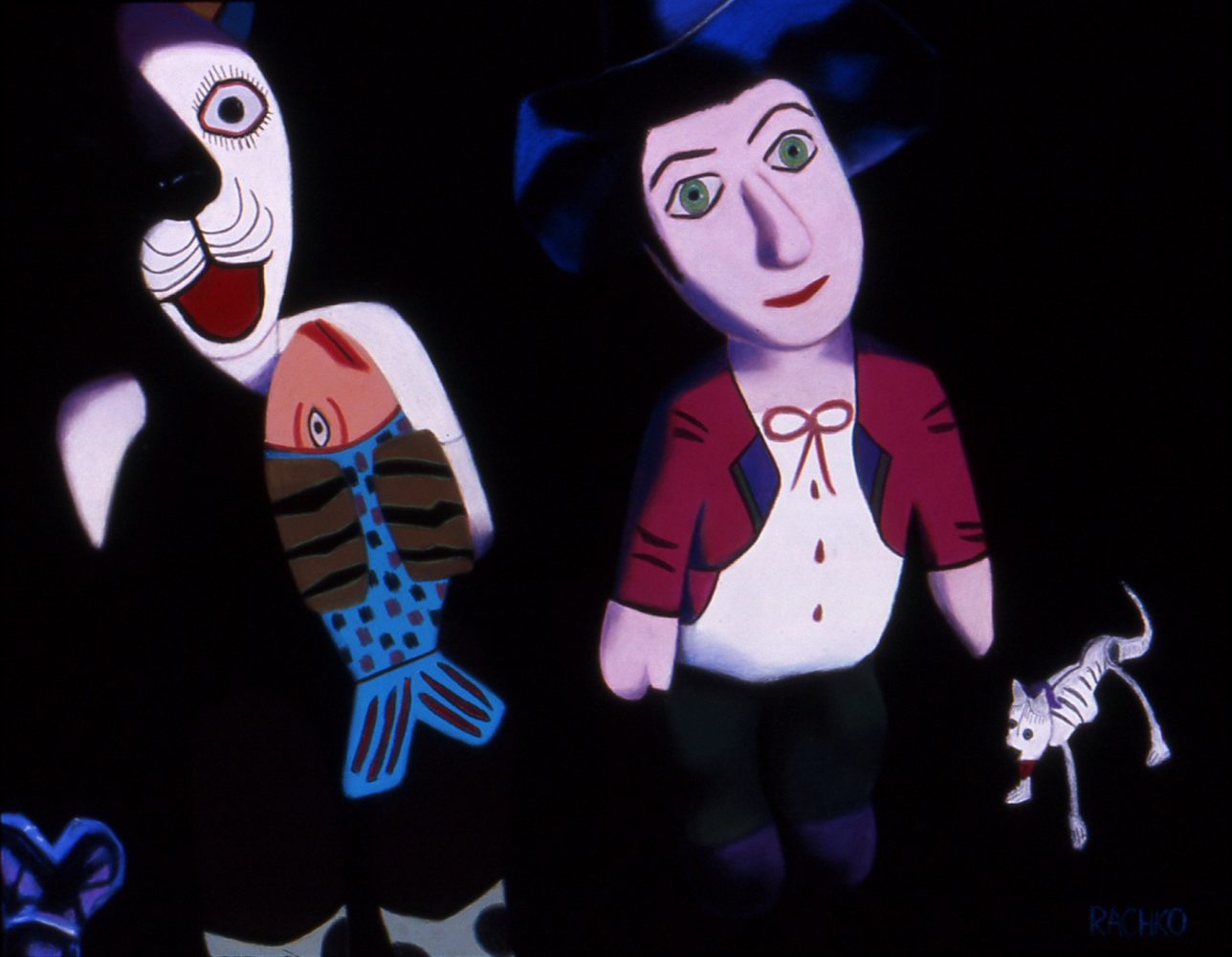
“Offering,” soft pastel on sandpaper, 20″ x 26″
* an ongoing series of quotations – mostly from artists, to artists – that offers wisdom, inspiration, and advice for the sometimes lonely road we are on.
We, the artists who are meant to provide art and teach the importance of beauty, have not yet been able to educate the public to know the difference between beauty and ugliness. .. It’s time to make sure artists with good intentions are ready to be taken seriously and to gain back their noble respectful place in culture. We should be ready with our own high standard of art for the new era, in which art patrons and a society that are more informed than ever will be thoughtfully critical and will expect everything from artists they support – talent, knowledge, skill and experience.
Samuel Adoquei in Origin of Inspiration: Seven Short Essays for Creative People
Comments are welcome!


 barbararachkoscoloreddust.com