Blog Archives
Pearls from artists* # 583

In the Studio Photo: Susan Erlichman
*an ongoing series of quotations – mostly from artists, to artists – that offers wisdom, inspiration, and advice for the sometimes lonely road we are on.
Let’s return to Michelangelo’s idea of removing apparent surfaces to reveal or liberate the statue that has been buried in the stone since the beginning of time. Michelangelo claimed that he was guided by a faculty he called intelleto. Intelleto is intelligence, not of the merely rational kind, but visionary intelligence, a deep seeing of the underlying pattern beneath appearances. Here the artist is, as it were, an archaeologist, uncovering deeper and deeper strata as he works, recovering not an ancient civilization but something as yet unborn, unseen, unheard except by the inner eye, the inner ear. He is not just removing apparent surfaces from some external object, he is removing apparent surfaces from the Self, revealing his original nature.
Stephen Nachmanovitch in Free Play: Improvisation in Life and Art
Comments are welcome!
Pearls from artists* #571
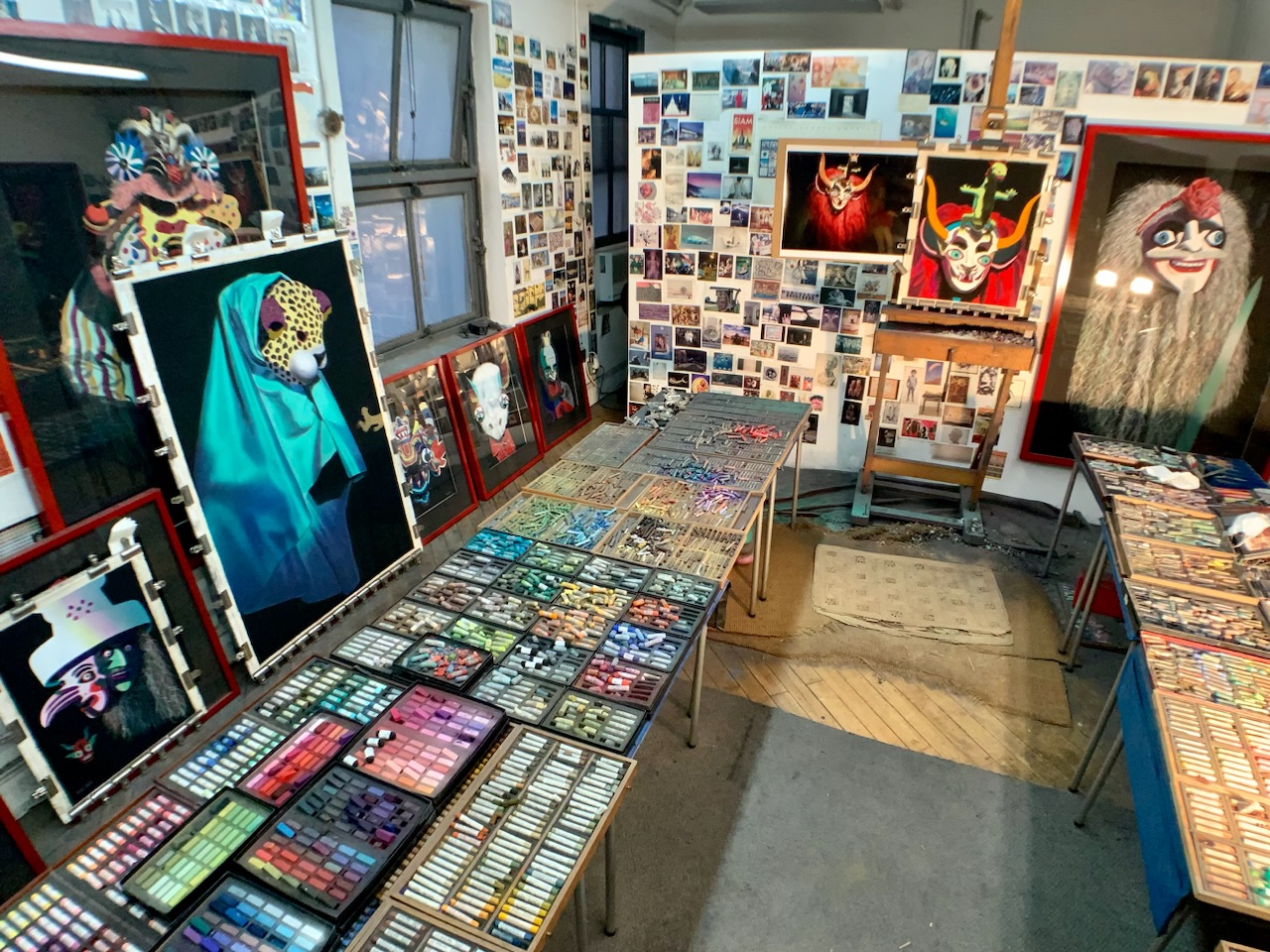
The Studio
*an ongoing series of quotations – mostly from artists, to artists – that offers wisdom, inspiration, and advice for the sometimes lonely road we are on.
To put it simply, but accurately, artists are often lost to the world because of their obsessions with their art. They may be just as lost as they prepare to work or incubate a new idea as in those feverish days when they make their final cuts on a film or race toward a publishing deadline. They may obsess about artistic questions and feel bursts of creative energy day or night, alone or in the company of others, in the middle of the work week or on vacation in the Bahamas.
Lost in time and space, the artist may feel more connected to Picasso, Emily Dickinson, Ingmar Bergman, Gertrude Stein, Handel, or Tennessee Williams than to the people in his immediate world. The living past holds extraordinary meaning for him. He travels elsewhere, removing his spirit and attention from the present. He may reside, as he works on his novel, in the childhood of a character, walking the garden paths and living the household dramas there. He may come upon a Rembrandt drawing and find himself wrenched, not to any particular place or time, but just elsewhere, as he experiences the greatness of his traditions, measures himself anew, and dreams again of his future.
Eric Maisel in A Life in the Arts: Practical Guidance and Inspiration for Creative and Performing Artists
Comments are welcome!


 barbararachkoscoloreddust.com