Blog Archives
Pearls from artists* # 576
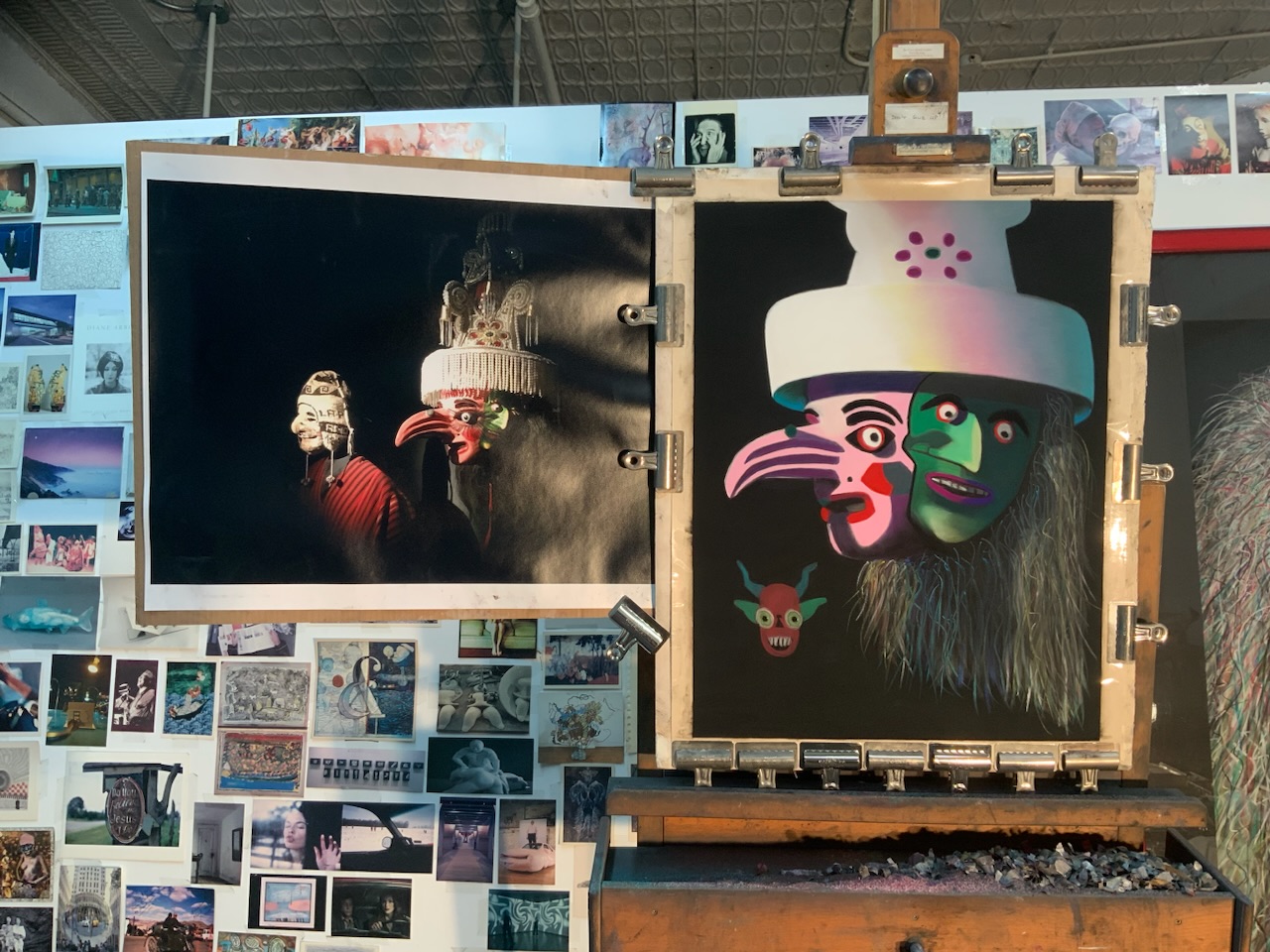
In progress: “Shadow,” soft pastel on sandpaper, 26” x 20”
*an ongoing series of quotations – mostly from artists, to artists – that offers wisdom, inspiration, and advice for the sometimes lonely road we are on.
A word derived from Latin, persona, originally referred to the masks worn by actors in ancient classical theatre. In Jungian psychology, this term refers to the inner character that we use to face the world. Drawn from societal expectations, cultural norms, and natural attributes, it is the person we want others to think we really are. Our persona is our brave face, our false front. It is the ongoing project of building our ideal self.
… the persona is our somewhat embellished view of ourselves, the shiny face that we want the world to see. It’s opposite, everything we reject about ourselves, is called the shadow.
… our shadow is the pain we’ve forgotten about. It is a complex within us, a split-off part our consciousness loaded with emotional weight. Our persona is what we want to be seen to be; shadow is what we least want to be.
Gary Bobroff in Carl Jung: Knowledge in a Nutshell
Comments are welcome!
Pearls from artists* # 438
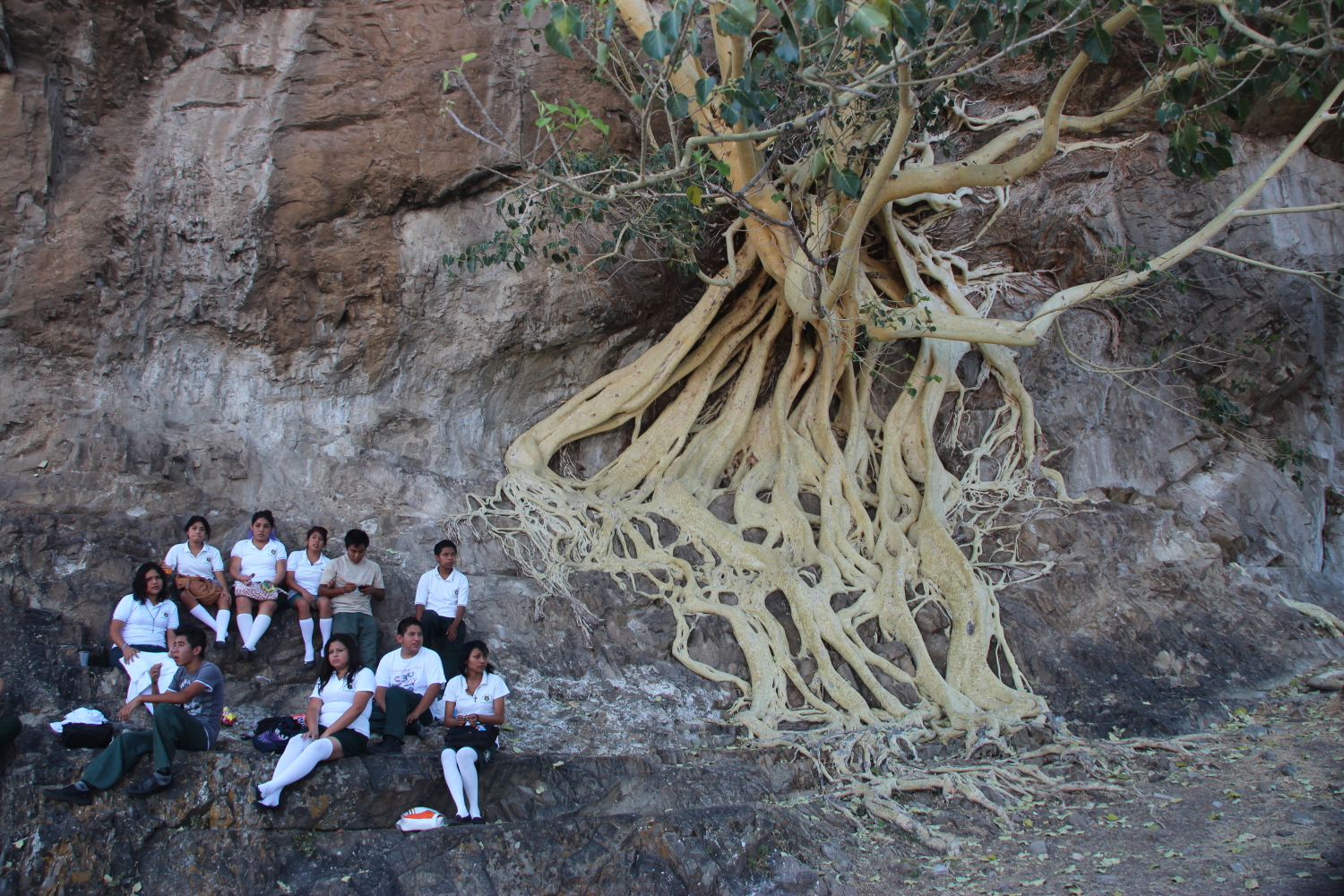
Chalcatzingo, Mexico
* an ongoing series of quotations – mostly from artists, to artists – that offers wisdom, inspiration, and advice for the sometimes lonely road we are on.
Although {Manuel} Alvarez Bravo and Cartier-Bresson were both important mentors for Iturbide, her photographs, as she confirms, are not connected to Surrealism in any way. Henri Cartier-Bresson’s publication Carnets du Mexique (Mexican Notebooks) was an important influence, as it presented a visual representation of Mexico that resonated with her. (Cartier-Bresson also worked mainly in Juchitan, where Iturbide has spent a great deal of time). However, Iturbide developed a way of working quite different from Cartier-Bresson’s. What distinguishes the two artists’ photographs lies in the notion of the fleeting instant, or, as Cartier-Bresson called it, “the decisive moment.” Iturbide refers to Cartier-Bresson’s interest in the “sharp eye” and capturing an instant in time, and describes her own intentions when photographing: “More than in time, I’m interested in the artistic form of the symbol.” Further, Iturbide’s photographs are taken with an understanding of the people, rituals, and symbols of the communities she captures, which makes them stand apart from Cartier-Bresson’s fleeting moments of Mexico. Her work is informed by her deep connection and empathy for her subjects.
Kristen Gresh in Graciela Iturbide’s Mexico
Comments are welcome!


 barbararachkoscoloreddust.com