Blog Archives
Pearls from artists* # 635

Bourges, France
*an ongoing series of quotations – mostly from artists, to artists – that offers wisdom, inspiration, and advice for the sometimes lonely road we are on.
When we focus on the future, we do one of three things. We fantasize, which involves big dreams that are mostly for fun and entertainment; we dwell, which involves focusing on all the bad stuff that might happen – this was the official pastime of my hometown – or we hope, which involves envisioning the future while recognizing the inevitability of challenges. Interestingly, more hopeful people anticipate setbacks along the way and work to remove them. And yet I always imagined that hopeful and optimistic people are just born that way…
The Book of Hope: A survival Guide for Trying Times, Jane Goodall and Douglas Abrams with Gail Hudson
Comments are welcome!
Q: What’s on the easel today?
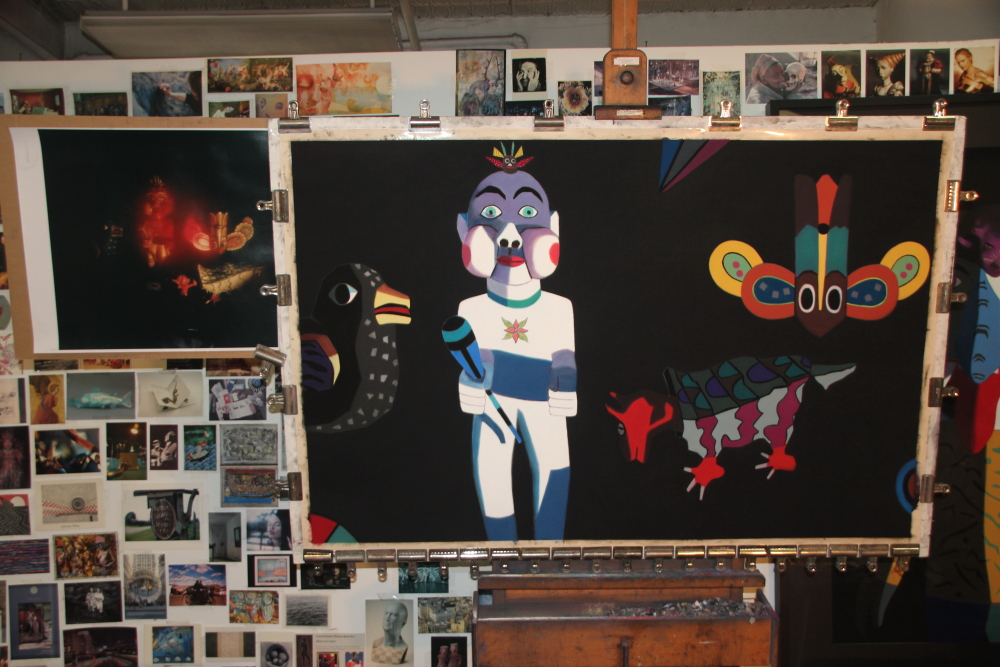
Work in progress
A: “White Star,” 38″ x 58″ is slowly progressing. The title of this painting alludes to David Bowie’s last album, “Dark Star” and is my somewhat more optimistic take on that phrase.
The white Guatemalan figure and the Sri Lankan mask on the top right still could use more details. Over time the “Black Paintings” series is becoming more about what is left out. So how much detail to add is an open question.
Comments are welcome!
Pearls from artists* # 6
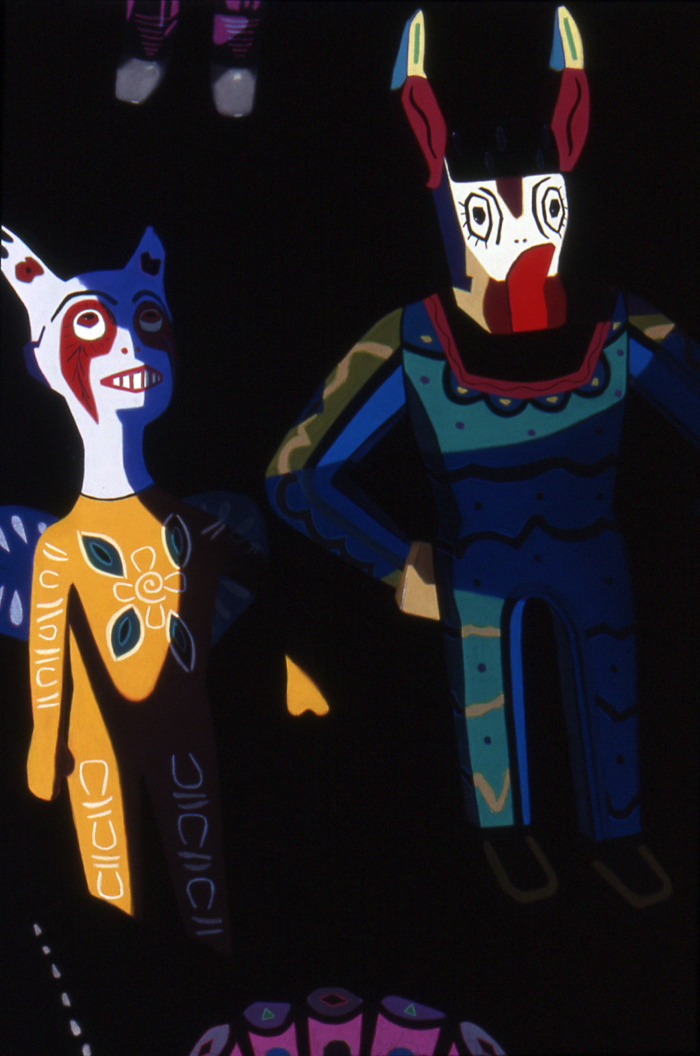
“Quartet,” soft pastel on sandpaper, 58″ x 38″ image, 70″ x 50″ framed
* an ongoing series of quotations – mostly from artists, to artists – that offers wisdom, inspiration, and advice for the sometimes lonely road we are on.
After we have responded to a work of art, we leave it, carrying in our consciousness something which we didn’t have before. This something amounts to more than our memory of the incident represented, and also more than our memory of the shapes and colours and spaces which the artist used and arranged. What we take away with us – on the most profound level – is the memory of the artist’s way of looking at the world. The representation of a recognizable incident (an incident here can simply mean a tree or a head) offers us the chance of relating the artist’s way of looking to our own. The forms he uses are the means by which he expresses his way of looking. The truth of this is confirmed by the fact that we can often recall the experience of a work, having forgotten both its precise subject and its precise formal arrangement.
Yet why should an artist’s way of looking at the world have any meaning for us? Because, I believe, it increases our awareness of our own potentiality. Not of course our awareness of our potentiality as artists ourselves. But a way of looking at the world implies a certain relationship with the world, and every relationship implies action. The kind of actions implied vary a great deal. A classical Greek sculpture increases our awareness of our own potential physical dignity; a Rembrandt of our potential moral courage; a Matisse of our potential sensual awareness. Yet each of these examples is too personal and too narrow to contain the whole truth of the matter. A work can, to some extent, increase an awareness of different potentialities in different people. The important point is that a valid work of art promises in some way or another the possibility of an increase, an improvement. Nor need the work be optimistic to achieve this; indeed, its subject may be tragic. For it is not the subject matter that makes the promise, it is the artist’s way of viewing his subject. Goya’s way of looking at a massacre amounts to the contention that we ought to be able to do without massacres.
John Berger, Selected Essays
Comments are welcome.


 barbararachkoscoloreddust.com