Q: What’s on the easel today?
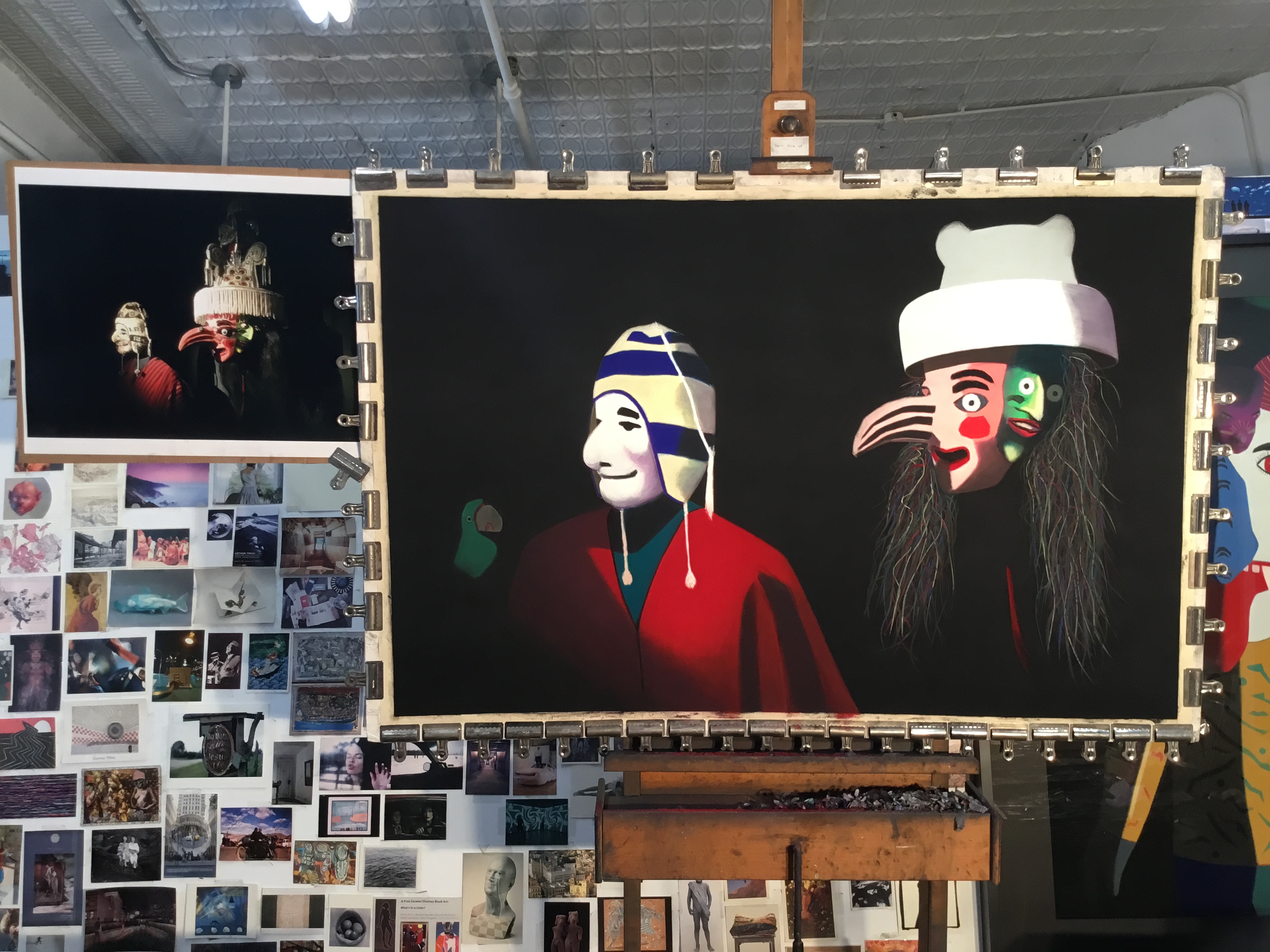
Work in progress
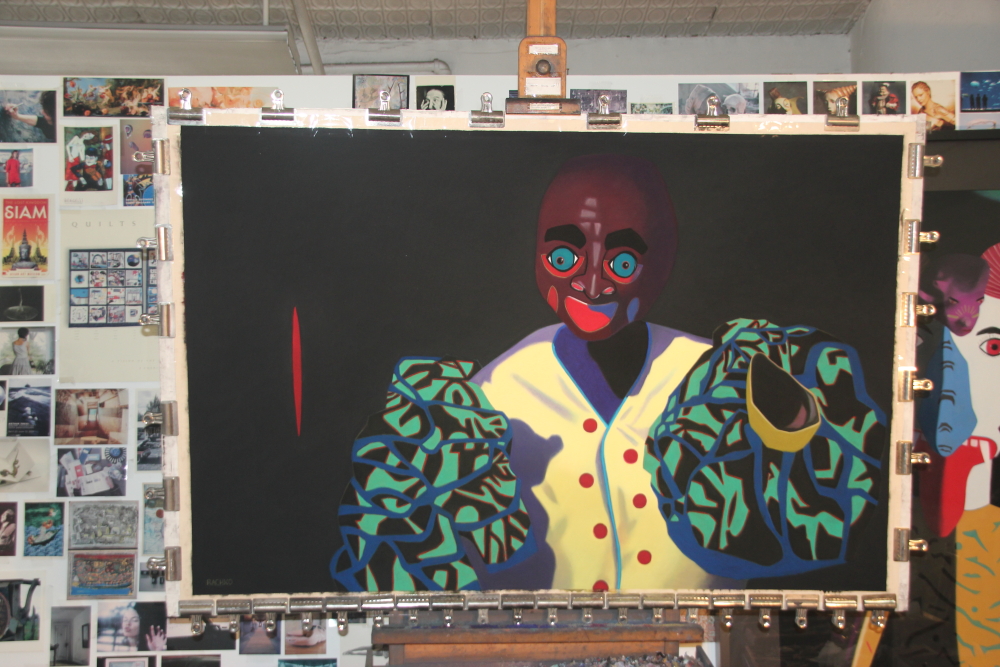
A: I continue working on a large pastel painting based on another of my photographs from La Paz, Bolivia.
Comments are welcome!
Pearls from artists* # 299

“The Storyteller,” soft pastel on sandpaper, 20″ x 26″
*an ongoing series of quotations – mostly from artists, to artists – that offers wisdom, inspiration, and advice for the sometimes lonely road we are on.
The artist is always and for all time a seer, and artistic creation is always and for all time an act of prophecy.
The artist does not choose the prophecy. Rather, the prophetic shines through her work. It comes from elsewhere.
The artist therefore needs enough courage to stay true to the work at hand. Even greater courage is required of those to whom the finshed work is given, for their interests will always recommend dismissing the vision for fear of its implications.
J.F. Martel in Reclaiming Art in the Age of Artifice: A Treatise, Critique, and Call to Action
Comments are welcome!
Q: You have spoken about your pastel technique, which involves layering pigments on top of each other, up to 25 to 30 layers. When you do this are you putting the same colors on top of each other?

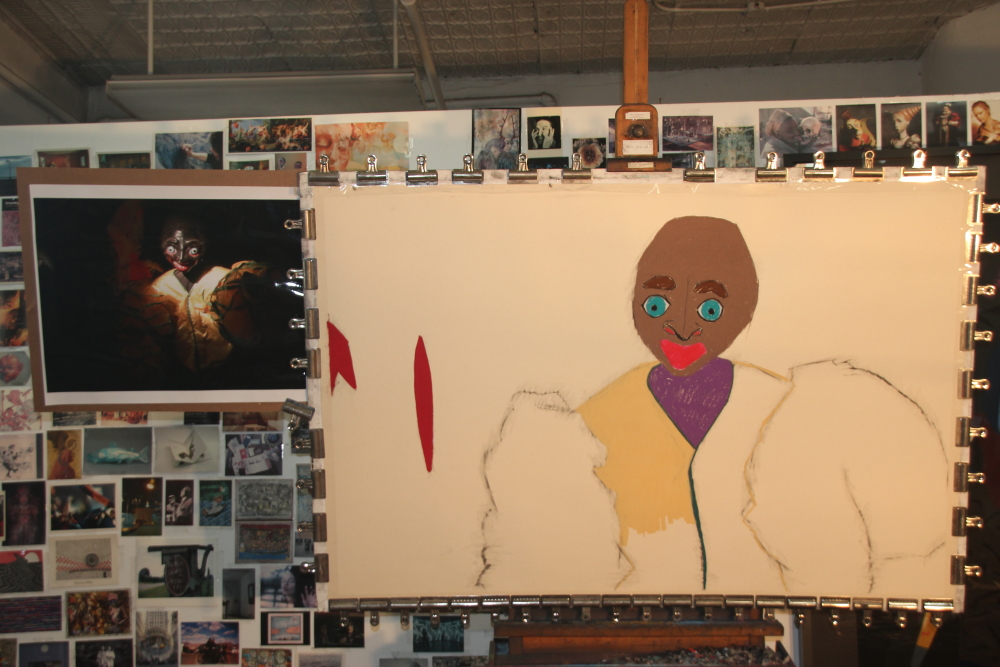
An early version of “Oracle,” soft pastel on sandpaper, 26″ x 20″

Finished
A: I do layer Rembrandt black soft pastels on top of each other to achieve the dark backgrounds in my “Black Paintings” and “Bolivianos” series. Black Rembrandts are the pastels I use most so I order them several dozen at a time. The 400 or 500 grit sandpaper requires at least four layers of pastel just to achieve even coverage. Over the next few months I add many more layers of black pastel to achieve the final rich look.
The figures and shapes in each pastel painting are a different story. Were you to x-ray them, you’d see many different colors underneath the final one. Sometimes subsequent colors are closely related to earlier ones. With each additional layer, I correct, refine, and strengthen my drawing so the objects depicted become more solid and/or three-dimensional.
In addition to the thousands of pastels I have to choose from, I mix and blend new colors directly on the sandpaper. As I proceed, I am searching for the ‘best’ colors, those that make the overall painting more resonant, more alive, and more exciting to look at. Of course, this is wholly subjective.
Comments are welcome!
Pearls from artists* # 298

Untitled c-print, 24″ x 24″ edition of 5
*an ongoing series of quotations – mostly from artists, to artists – that offers wisdom, inspiration, and advice for the sometimes lonely road we are on.
Interviewer: What do you think about the artist being supported by the state?
Parker: Naturally, when penniless, I think it’s superb. I think that the art of the country so immeasurably adds to its prestige that if you want to have writers and artists – persons who live precariously in our country – the state must help. I do not think that any kind of artist thrives under charity, by which I mean one person or organization giving him money, here and there, this and that – that’s no good. The difference between the state giving and the individual patron is that one is charity and one isn’t. Charity is murder and you know it. But I do think that if the government supports its artists, they need have no feeling of gratitude – the meanest and most sniveling attribute in the world – or baskets being brought to them, or apple polishing. Working for the state, for Christ’s sake, are you grateful to your employers? Let the state see what its artists are trying to do – like France and the Academie Francaise. The artists are a part of their country and their country should recognize this, so both it and the artists can take pride in their efforts. Now I mean that, my dear.
Dorothy Parker in Women at Work: Interviews From the Paris Review
Comments are welcome!
Q: For many artists the hardest thing is getting to work in the morning. Do you have any rituals that get you started?
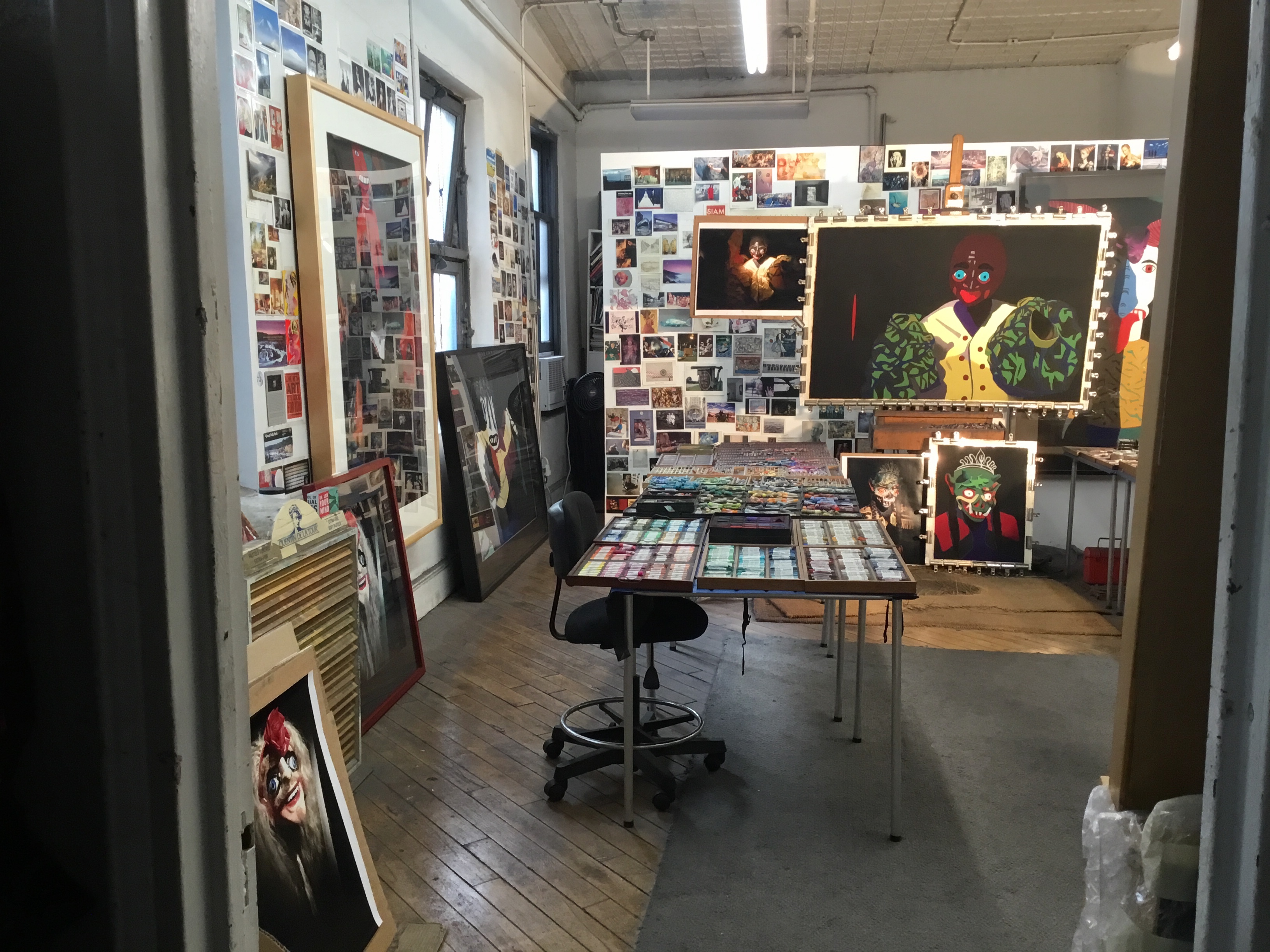
Entering Barbara’s studio
A: That has rarely been a problem because I love to work. The highlight of my day is time spent in the studio. After arriving, I begin working immediately or I read about art for a short time. When I pick up a pastel, it’s to begin working on something left unfinished from the day before.
Generally, I keep regular hours and strive to use studio time well. As a professional artist, one absolutely must be a self-starter! No one else cares about our work the way we do. Really why would they, when only the maker has invested so much love, knowledge, craftsmanship, experience, devotion, insight, money, etc. in the effort to evolve and improve.
Comments are welcome!
Pearls from artists* # 297
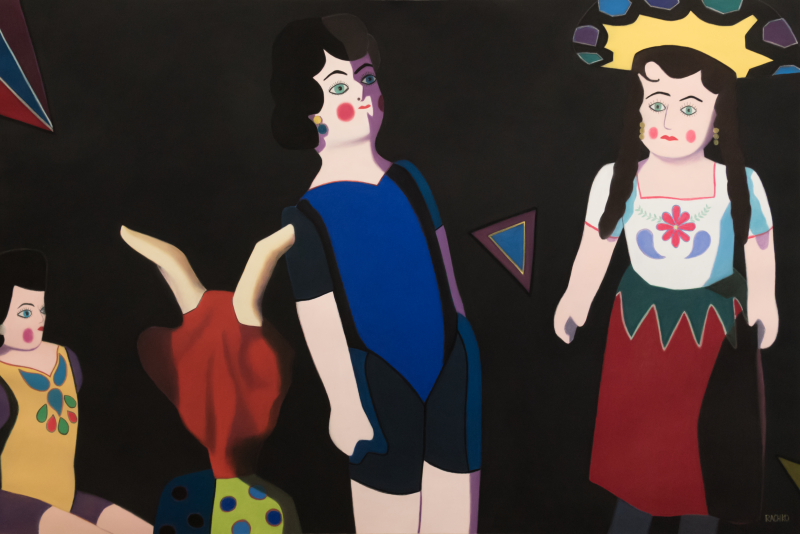
“Conundrum,” soft pastel on sandpaper, 38″ x 58″
*an ongoing series of quotations – mostly from artists, to artists – that offers wisdom, inspiration, and advice for the sometimes lonely road we are on.
The most valuable critic of contemporary work is another artist engaged in the same game. Yet few misunderstandings exceed those between two painters engaged upon different kinds of things. Only long after can an observer resolve the differences between such painters, when their games are all out, and fully available for comparison.
George Kubler in The Shape of Time: Remarks on the History of Things
Comments are welcome!
Pearls from artists* # 296

“Offering,” soft pastel on sandpaper, 20″ x 26″
* an ongoing series of quotations – mostly from artists, to artists – that offers wisdom, inspiration, and advice for the sometimes lonely road we are on.
Meaning in art isn’t the same as meaning in science. The meaning of the second law of thermodynamics, so long as the words are understood, isn’t changed by who reads it,or when, or where. The meaning of Huckleberry Finn is.
Writing is a risky business. No guarantees. You have to take the chance. I’m happy to take it. I love taking it. So my stuff gets misread, misunderstood, misinterpreted – so what? If it’s the real stuff, it will survive almost any abuse other than being ignored, disappeared, not read.
Ursula K. Le Guin in No Time to Spare: Thinking About What Matters
Comments are welcome!
Q: What’s on the easel today?

Ready to begin
A: I’m ready to begin a large – 38” x 58” – pastel-on-sandpaper painting, the sixth in my “Bolivianos” series. I love beginnings because I am looking at something new on my easel and there are so many possibilities!
Comments are welcome!
Pearls from artists* #295

Barbara at work, Photo: Marianne Barcellona
* an ongoing series of quotations – mostly from artists, to artists – that offers wisdom, inspiration, and advice for the sometimes lonely road we are on.
Interviewer: Are there devices one can learn in improving one’s style?
Capote: Work is the only device I know of. Writing has laws of perspective, of light and shade, just as painting does, or music. If you are born knowing them, fine. If not, learn them. Then rearrange the rules to suit yourself.
Truman Capote in Writers at Work: The Paris Review Interviews First Series, edited, and with an introduction by Malcolm Crowley
Comments are welcome!


 barbararachkoscoloreddust.com