Category Archives: Art in general
Pearls from artists* 178
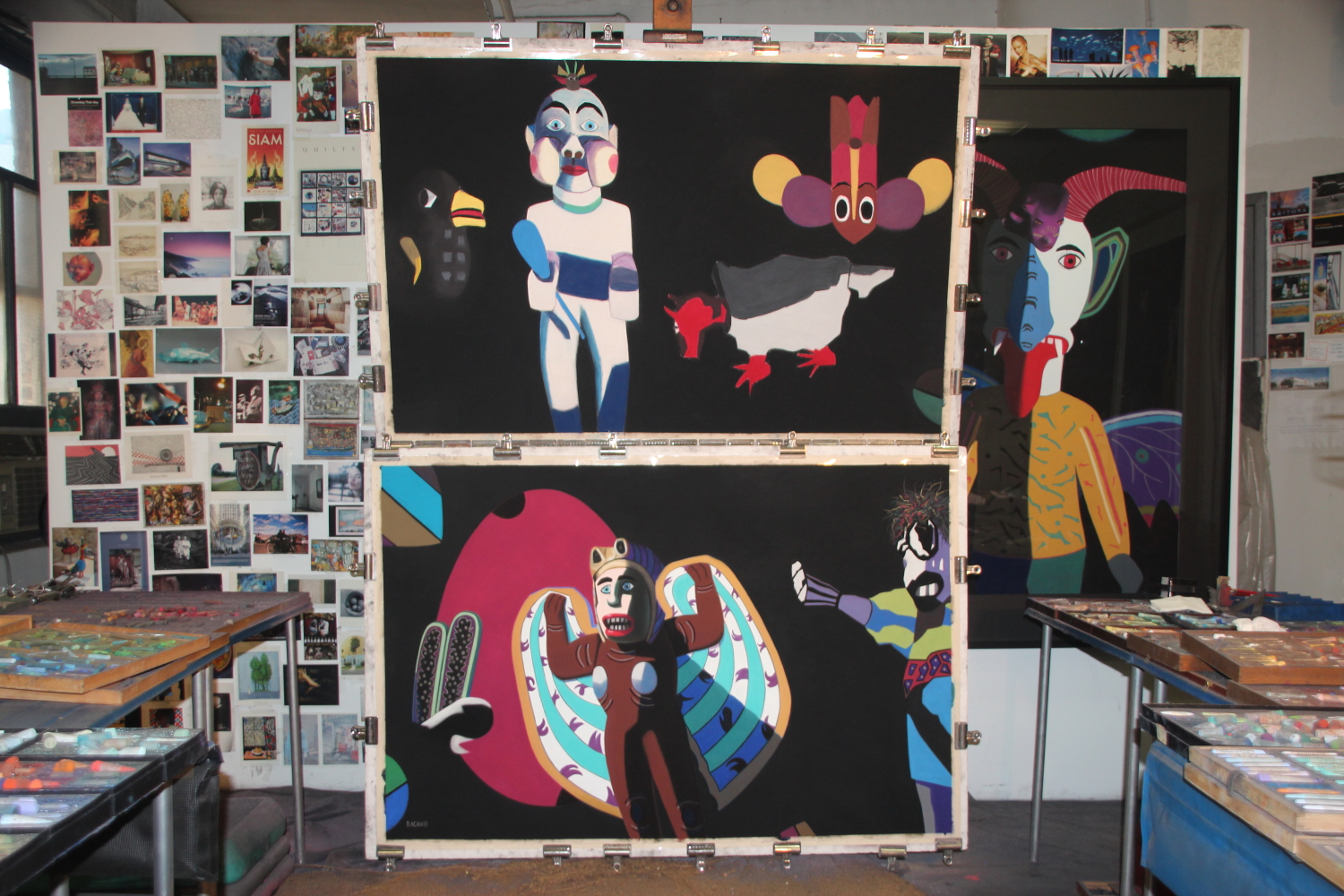
Barbara’s studio with recent works in progress
* an ongoing series of quotations – mostly from artists, to artists – that offers wisdom, inspiration, and advice for the sometimes lonely road we are on.
Most individuals have never had enough time, and they’ve never had enough resources, and they’ve never had enough support or patronage or reward… and yet they still persist in creating. They persist because they care. They persist because they are called to be makers, by any means necessary.
…The essential ingredients for creativity remain exactly the same for everybody: courage, enchantment, permission, persistence, trust – and those elements are universally accessible. Which does not mean that creative living is always easy; it merely means that creative living is always possible.
Elizabeth Gilbert in Big Magic: Creative Living Beyond Fear
Comments are welcome!
Pearls from artists* # 176
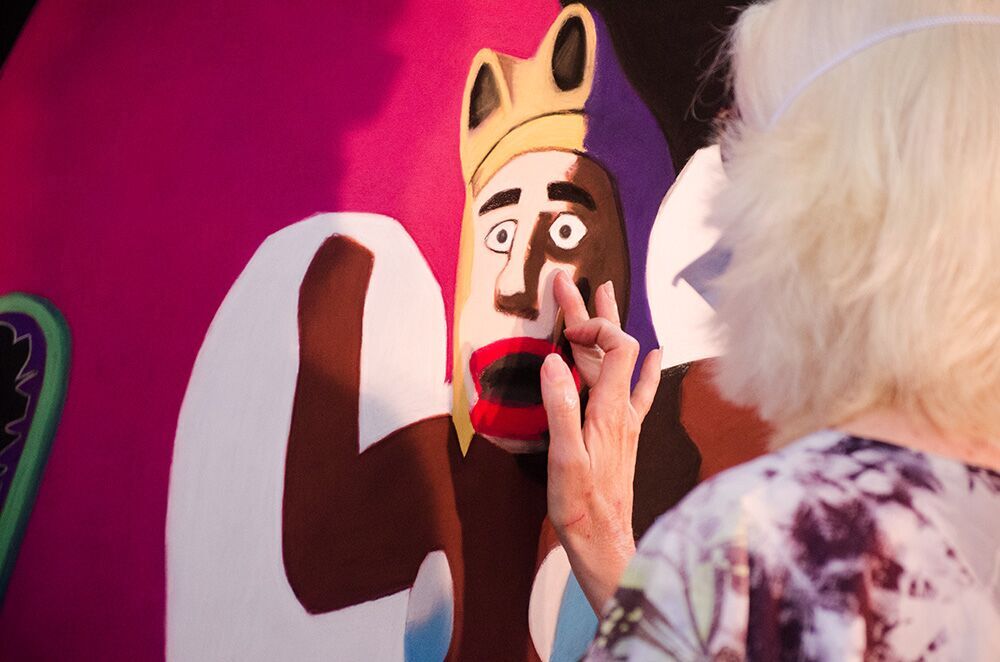
Working on “Charade,” Photo: Marianne Barcellona
* an ongoing series of quotations – mostly from artists, to artists – that offers wisdom, inspiration, and advice for the sometimes lonely road we are on.
I don’t demand a translation of the unknown. I don’t need to understand what it all means, or where ideas are originally conceived, or why creativity plays out as unpredictably as it does. I don’t need to know why we are sometimes able to converse freely with inspiration, when at other times we labor hard in solitude and come up with nothing. I don’t need to know why an idea visited you today and not me. Or why it visited us both. Or why it abandoned us both.
None of us can know such things, for these are among the great enigmas.
All I know for certain is that this is how I want to spend my life – collaborating to the best of my ability with forces of inspiration that I can neither see, nor prove, nor command, nor understand.
It’s a strange line of work, admittedly.
I cannot think of a better way to pass my days.
Elizabeth Gilbert in Big Magic: Creative Living Beyond Fear
Comments are welcome!
Pearls from artists* # 175
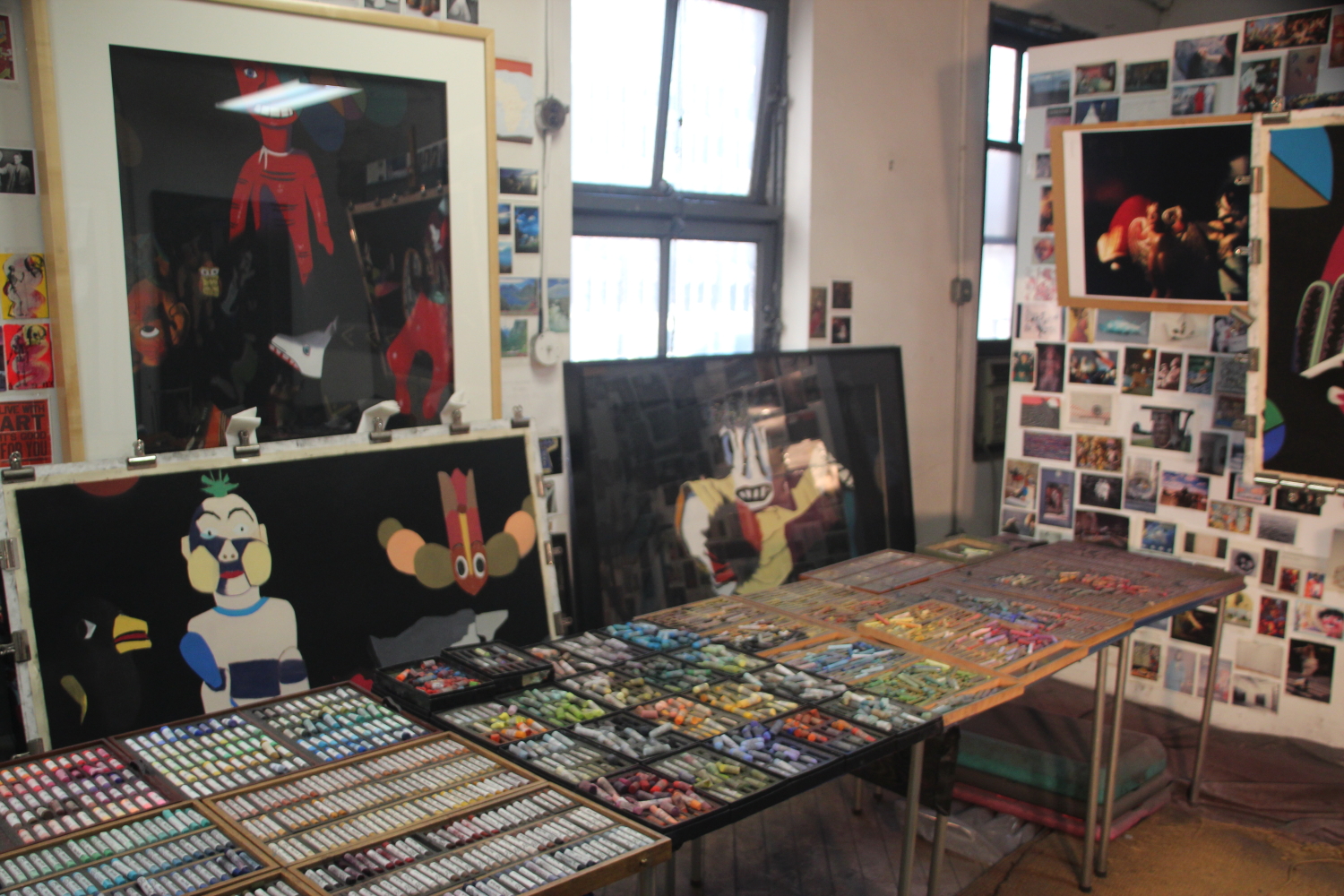
Barbara’s studio
* an ongoing series of quotations – mostly from artists, to artists – that offers wisdom, inspiration, and advice for the sometimes lonely road we are on.
I know this is a sentimental cliché, but I do feel toward my books very much as a parent must toward his children. As soon as someone says, “I did like your short stories, but I don’t like your novels,” or, “Of course, you only really came into your own with Anglo-Saxon Attitudes” – then immediately I want to defend all my other books. I feel this especially about Hemlock and Anglo-Saxon Attitudes – one child a bit odd but exciting, the other competent but not really so interesting. If people say they like one book and not the other, then I feel they can’t have understood the one they don’t like.
Angus Wilson in The Paris Review Interviews: Writers at Work 1st Series, edited and with an introduction by Malcolm Cowley
Comments are welcome!
Q: Do you use a sketchbook?

Hudson Yards, NYC
A: I used to use a sketchbook early on, when I was just beginning to find my way as an artist. Sketching on location helped to crystalize my ideas about art, about technique, and about what I hoped to accomplish in the near term. These days I spend so many hours in the studio – it’s my day job – that I often need a mental and physical break from using my eyes and from looking at and composing images.
What I do instead is to walk around New York (and elsewhere) with a camera. Photography for me sometimes serves as an alternative to sketching. It’s a way to continue to think about art, to experiment, and to contemplate what makes an arresting image without actually having to be working in the studio.
Comments are welcome!
Pearls from artists* # 174
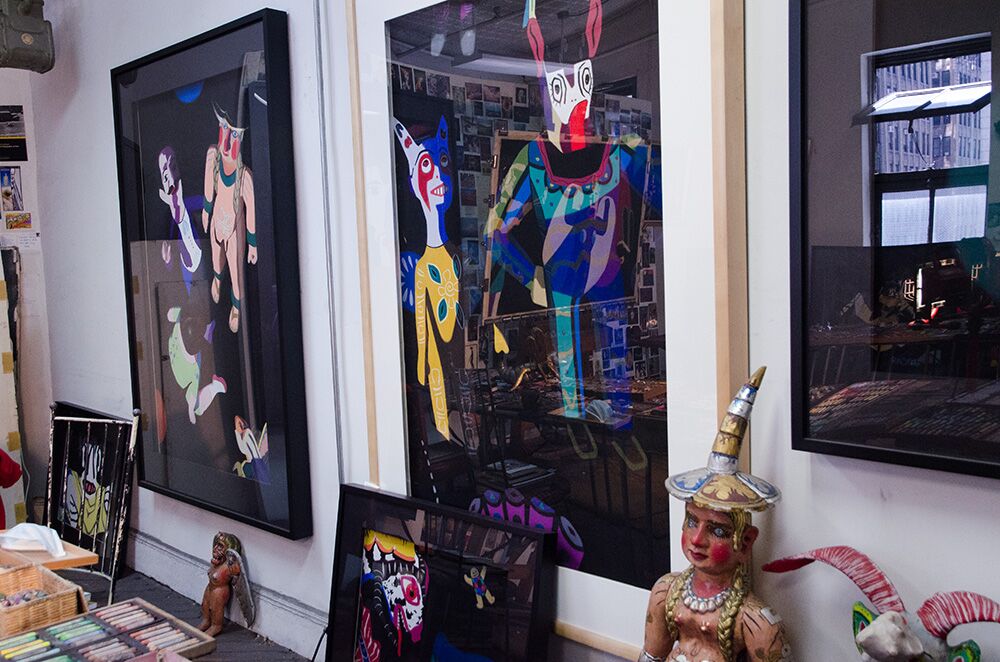
Barbara’s studio, Photo: Marianne Barcellona
* an ongoing series of quotations – mostly from artists, to artists – that offers wisdom, inspiration, and advice for the sometimes lonely road we are on.
If you are older, trust that the world has been educating you all along. You already know so much more than you think you know. You are not finished; you are merely ready. After a certain age, no matter how you’ve been spending your time, you have very likely earned a doctorate in living. If you’re still here – if you have survived this long – it is because you know things. We need you to reveal to us what you know, what you have learned, what you have seen and felt. If you are older, chances are strong that you may already possess absolutely everything you need to possess in order to live a more creative life – except the confidence to actually do your work. But we need you to do your work.
Whether you are young or old, we need your work in order to enrich and inform our own lives.
Elizabeth Gilbert in Big Magic: Creative Living Beyond Fear
Comments are welcome!
Q: Have any artists influenced you technically?

Barbara at work, Photo: Marianne Barcellona
A: I’d have to say no one, because my technique of using soft pastel on sandpaper is largely self-invented and it continues to slowly evolve. I apply up to thirty layers of pigment, blending it with my fingers, and creating new colors directly on the sandpaper. It is a rather meticulous process that suits my personality.
My unique way of applying and mixing pastel is a richly complex science of color. This intricate technique is one of the reasons that my pastel paintings cannot be forged by anyone.
Every great artist throughout history has invented their own techniques and created a world that is uniquely theirs, with its own iconography, its own laws, and its own specific concerns. Artists who are most worthy of the name create their own tasks and make and break their own rules.
Comments are welcome!
Pearls from artists* # 173
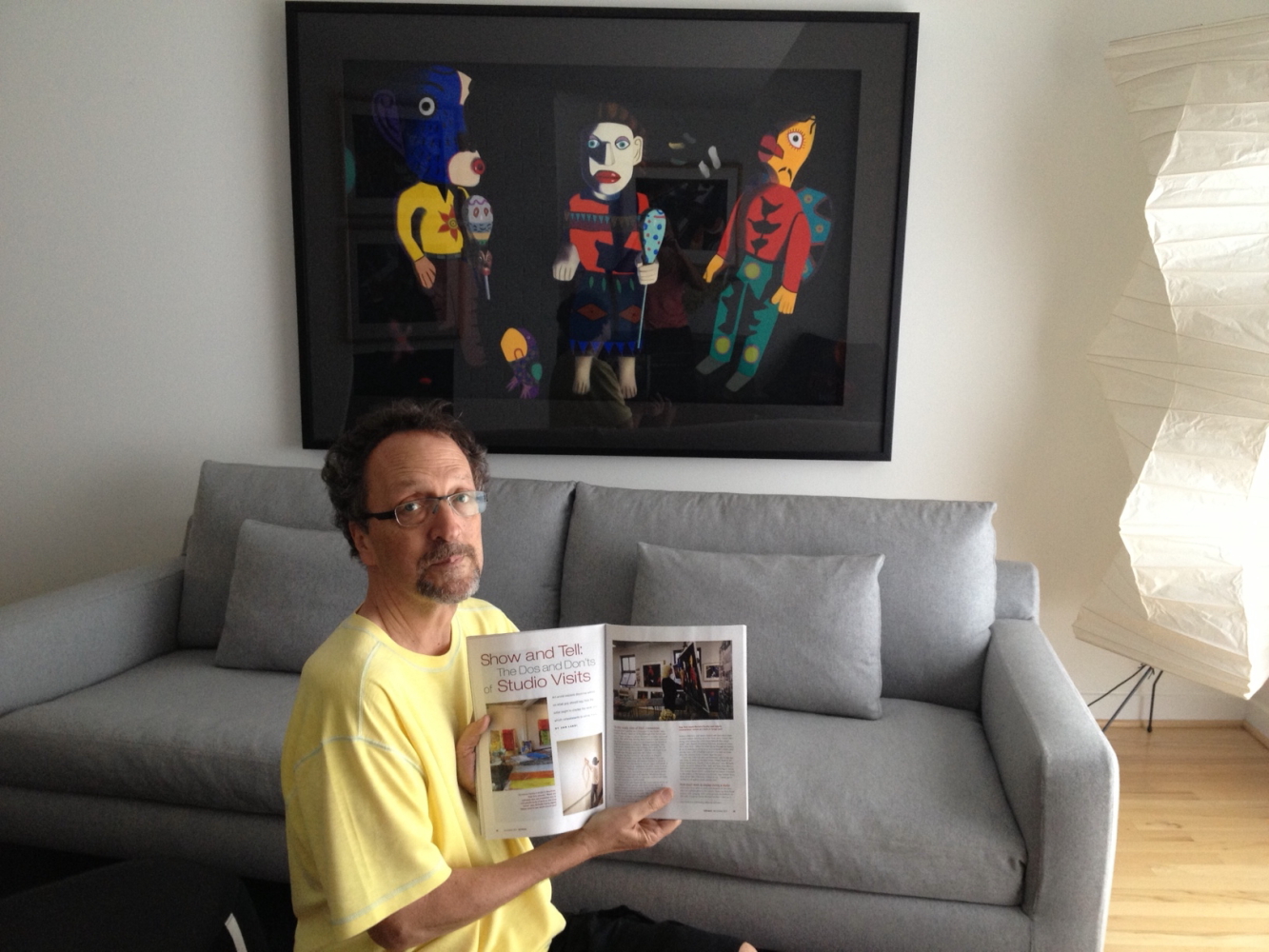
Collector, “False Friends,” and ARTNews article that shows the painting in progress
* an ongoing series of quotations – mostly from artists, to artists – that offers wisdom, inspiration, and advice for the sometimes lonely road we are on.
Artists, by nature, are gamblers. Gambling is a dangerous habit. But whenever you make art, you’re always gambling. You’re rolling the dice on the slim odds that your investment of time, energy, and resources now might pay off later in a big way – that somebody might buy your work, and that you might become successful.
Elizabeth Gilbert in Big Magic: Creative Living Beyond Fear
Comments are welcome!
Pearls from artists* #172
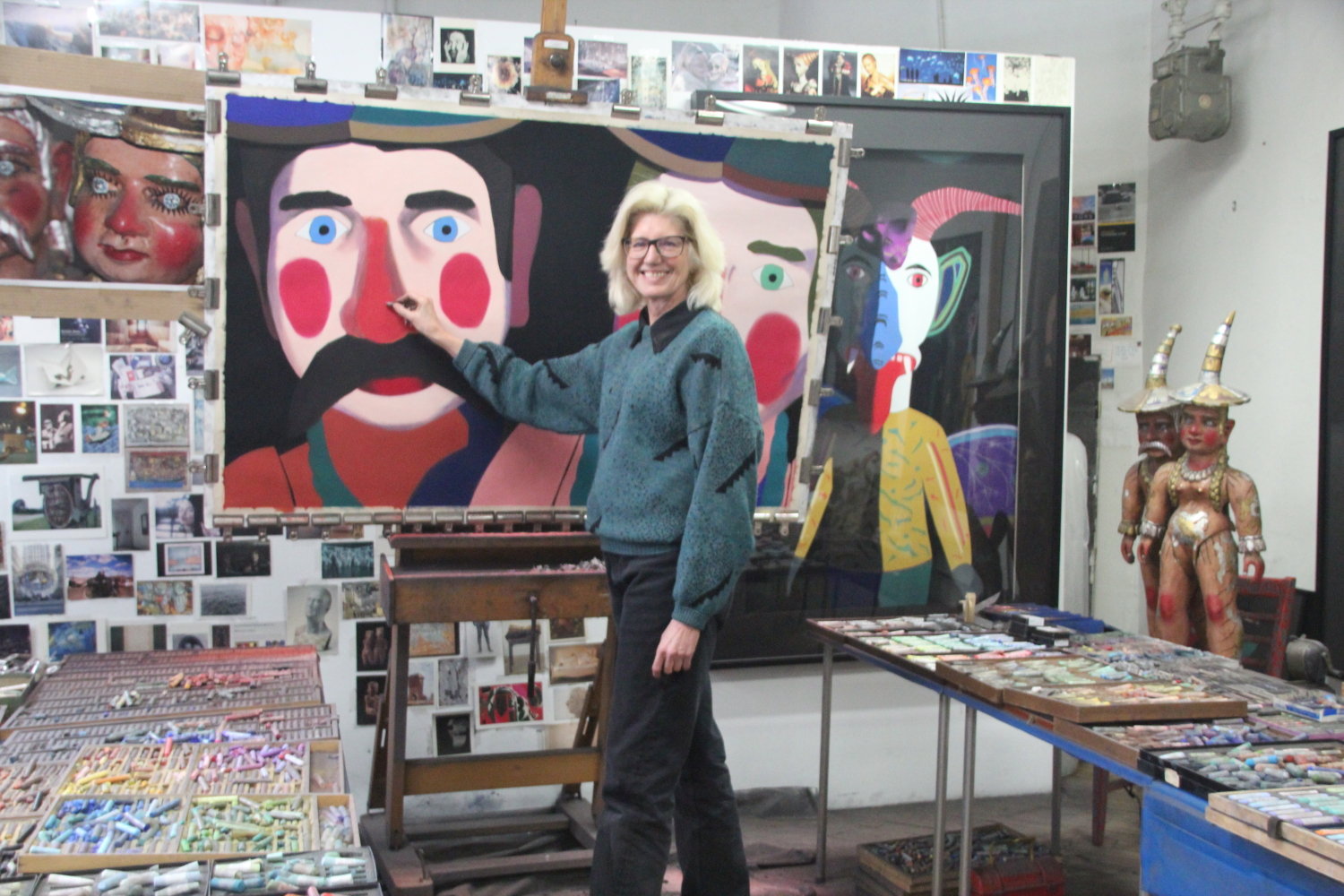
Barbara in her studio
* an ongoing series of quotations – mostly from artists, to artists – that offers wisdom, inspiration, and advice for the sometimes lonely road we are on.
I don’t need to understand what it all means, or where ideas are originally conceived, or why creativity plays out as unpredictably as it does. I don’t need to know why we are sometimes able to converse freely with inspiration, when at other times we labor hard in solitude and come up with nothing. I don’t need to know why an idea visited you today and not me. Or why it visited us bot. Or why it abandoned us both.
None of us can know such things, for these are among the great enigmas.
All I know for certain is that this is how I want to spend my life – collaborating to the best of my ability with forces of inspiration that I can neither see, nor prove, nor command, nor understand.
It’s a strange line of work, admittedly.
I cannot think of a better way to pass my days.
Elizabeth Gilbert in Big Magic: Creative Living Beyond Fear
Comments are welcome!
Pearls from artists* # 171
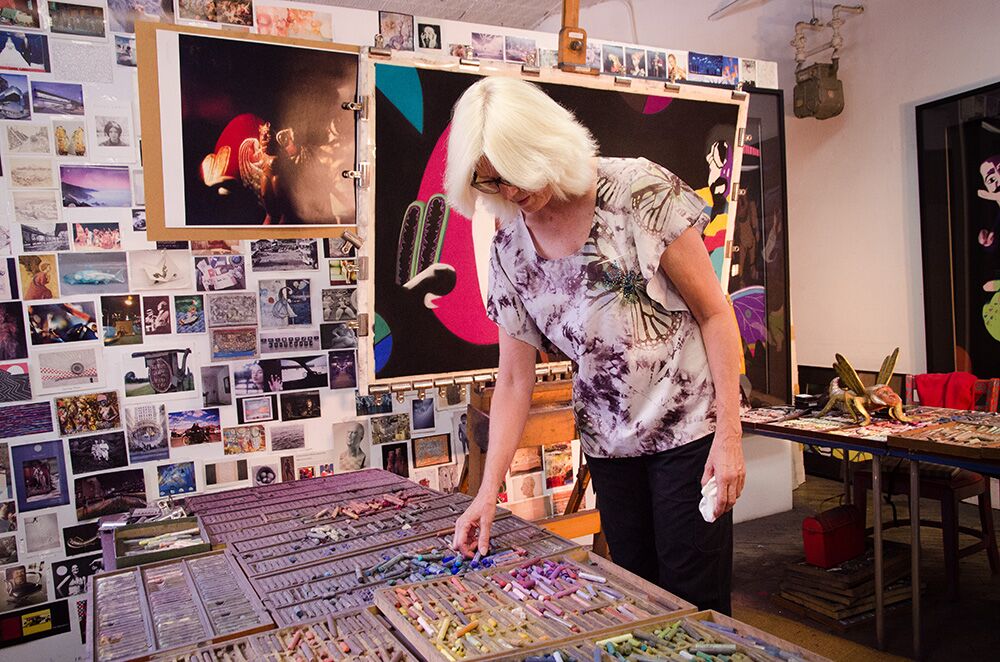
Barbara at work, Photo: Marianne Barcellona
* an ongoing series of quotations – mostly from artists, to artists – that offers wisdom, inspiration, and advice for the sometimes lonely road we are on.
We should do everything calmly and only react emotionally to great works of art or noble deeds. Work quietly and without hurrying. As soon as you begin to sweat and get excited, be careful. Slack painting is the painting of a slacker.
The Journal of Eugene Delacroix, edited by Hubert Wellington
Comments are welcome!
Q: Your pastel paintings are immediately recognizable as yours alone. Did you consciously try to develop a signature style in your work?
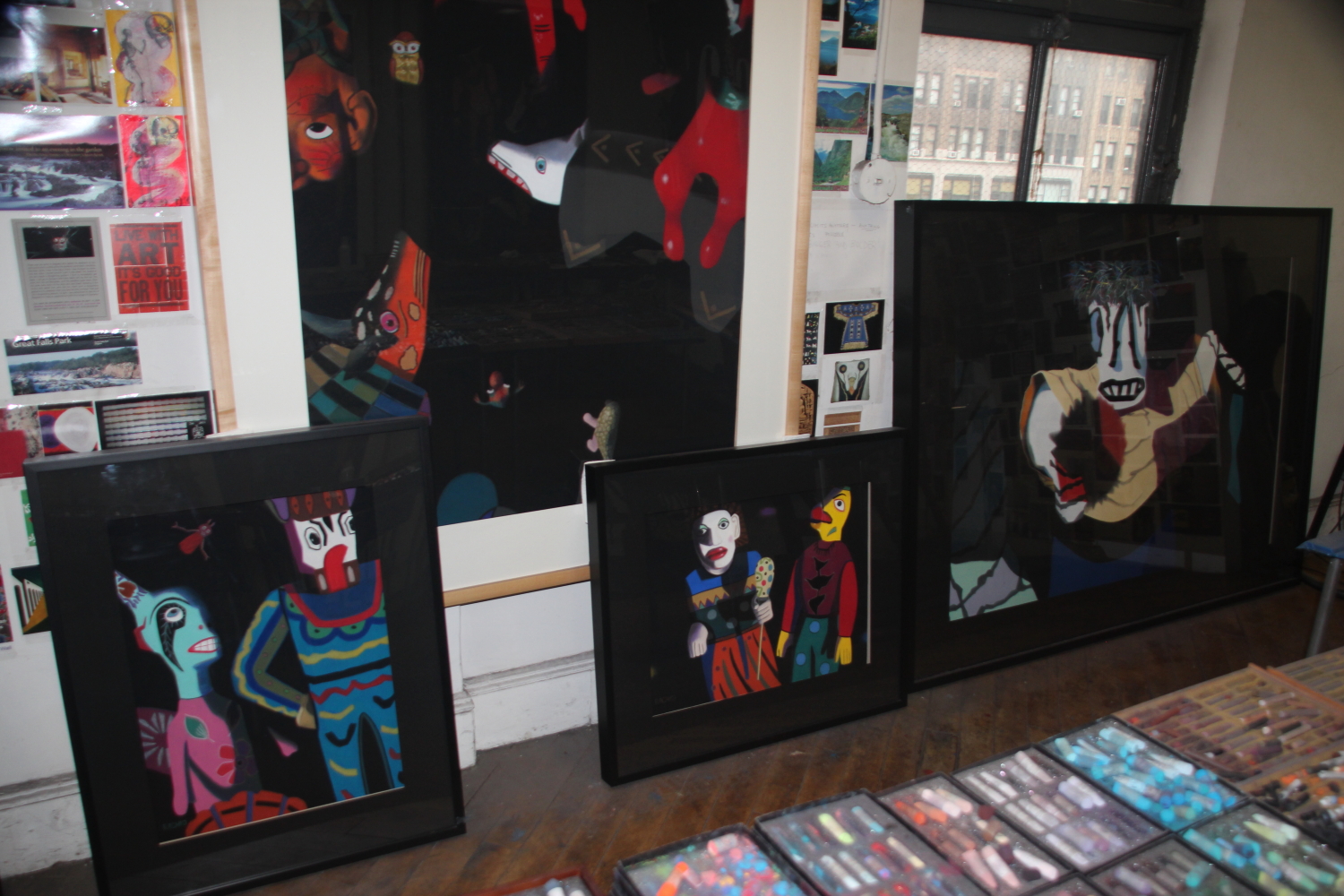
Barbara’s studio
A: I don’t believe that is even possible. An artist’s style is something that evolves with plain hard work and experience, over many years of trial and error, as one finds what techniques work best and discards those that don’t. It is a process of continually experimenting, refining, and clarifying. In other words, style is something that emerges naturally as you gradually strive to improve your art-making.
Style develops in close connection to what an artist is saying as she undergoes a very personal and idiosyncratic journey. Again, it would seem improbable for an artist to strive for any particular style, since style is not something over which an artist can exert much conscious control.
I would even say that each artist’s unique style is inevitable. It would be nearly impossible now to make a pastel painting or photograph that does NOT look like a Rachko.
Comments are welcome!



