Category Archives: An Artist’s Life
Q: Do you believe in “the big break” for artists?
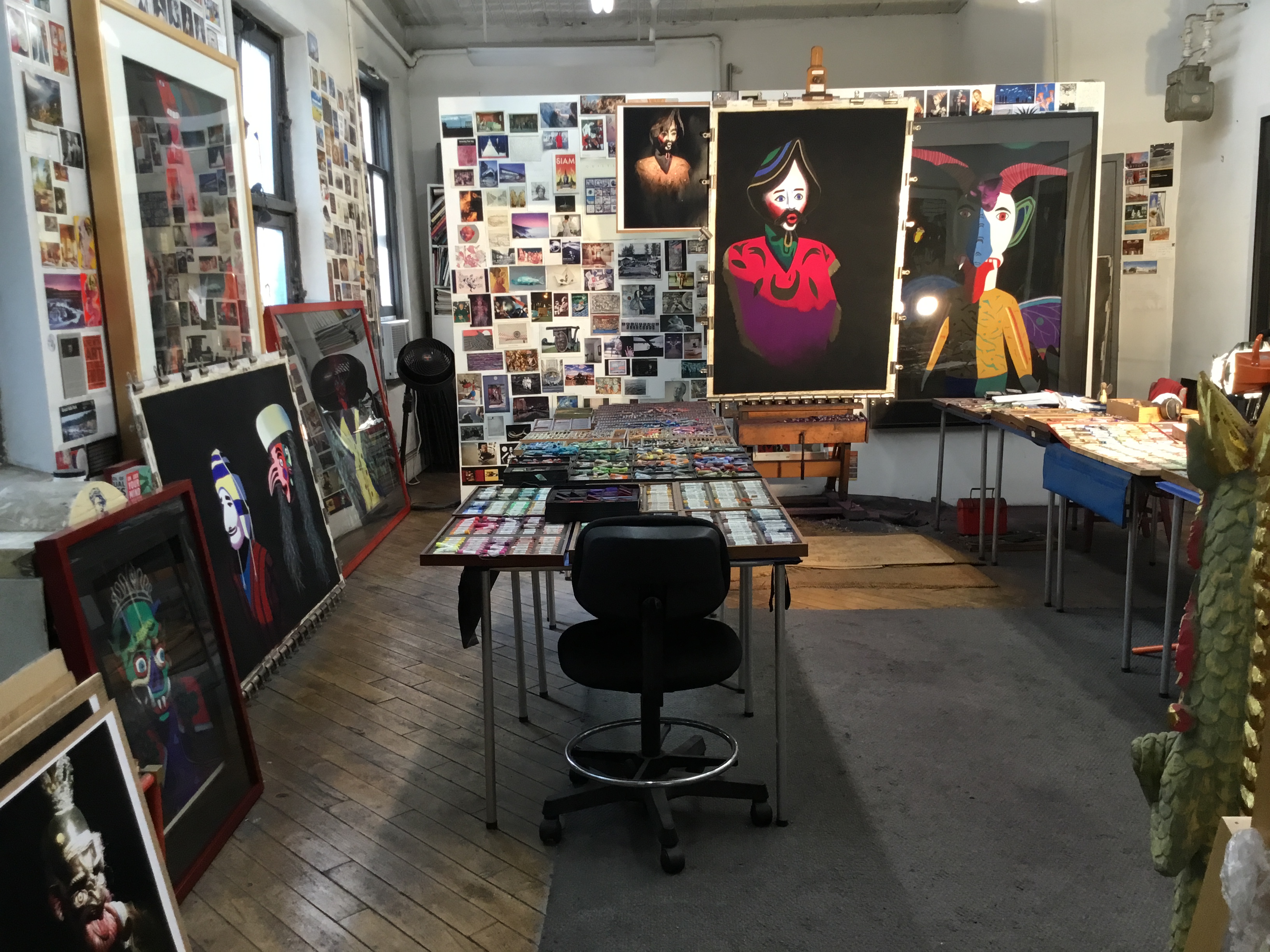
Barbara’s studio
A: Big breaks sometimes happen, but in my experience an artist’s life is made up of single-minded dedication, persistence, hard work, and lots of small breaks. I recently finished reading “Failing Up: How to Take Risks, Aim Higher, and Never stop Learning” by Leslie Odom, Jr. I like what he has to say to artists here:
“The biggest break is the one you give yourself by choosing to believe in your wisdom, in what you love, and in the gifts you have to offer the waiting world.”
Comments are welcome!
Pearls from artists* # 326

“Acolytes,” soft pastel on sandpaper, 38″ x 58″
*an ongoing series of quotations – mostly from artists, to artists – that offers wisdom, inspiration, and advice for the sometimes lonely road we are on.
Art is… a longest road through life, and when I think how slight and beginnerish what I have done till now is, I am not surprised that this production (which resembles a strip or half-tilled field a foot wide) does not sustain me. For plans bear no fruit, and seed prematurely sown does not sprout. But patience and work are real and can at any moment be transformed into bread. ‘Il faut toujours travailler,’ Rodin said whenever I attempted to complain to him about the schism in daily life; he knew no other solution, and this of course had been his… To stick to my work and have every confidence in it, this I am learning from his great and greatly given example, as I learn patience from him: it is true, my experience tells me over and over that I haven’t much strength to reckon with, for which reason I shall, so long as it is in any way possible, not do two things, not separate livelihood and work, rather try to find both in the one concentrated effort: only thus can my life become something good and necessary and heal together out of the tattered state for which heredity and immaturity have been responsible, into one bearing trunk.
Therefore I shall determine my next place of abode, all else aside, from the point of view of my work and that only. I want this the more, since I feel myself in the midst of developments and transitions (changes that affect observation and creation equally), which may slowly lead to that toujours travailler with which all outer and inner difficulties, dangers and confusions would really be in a certain sense overcome.. for whoever can always work, can live too, must be able to.
Rainer Maria Rilke, Letters to a Young Poet, Translation by M.D. Herter Norton
Comments are welcome!
Travel photo of the month*
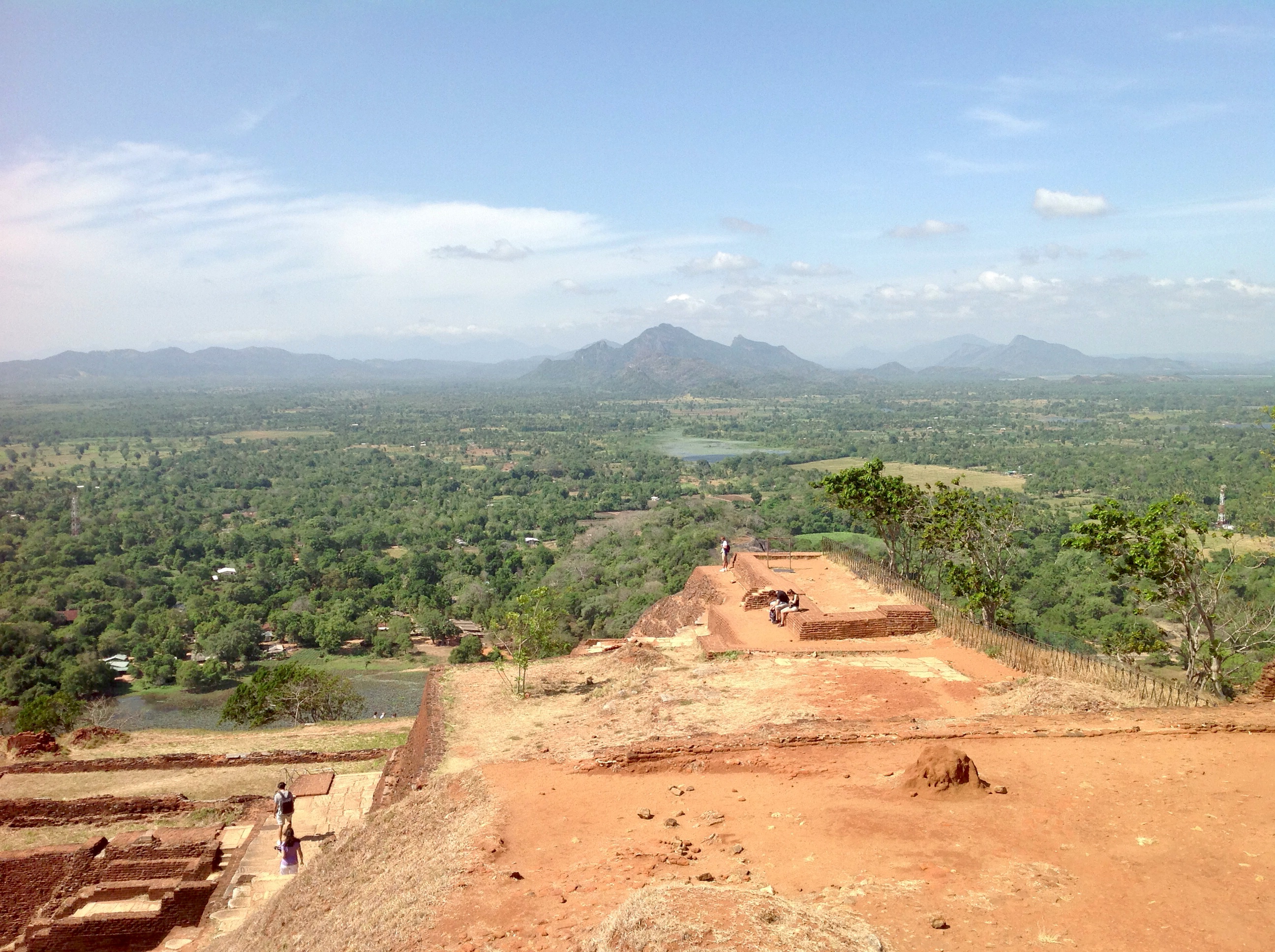
View from the top of Sigiriya, Sri Lanka
* Favorite travel photographs that have not yet appeared in this blog
Comments are welcome!
Q: What more would you wish to bring to your work?
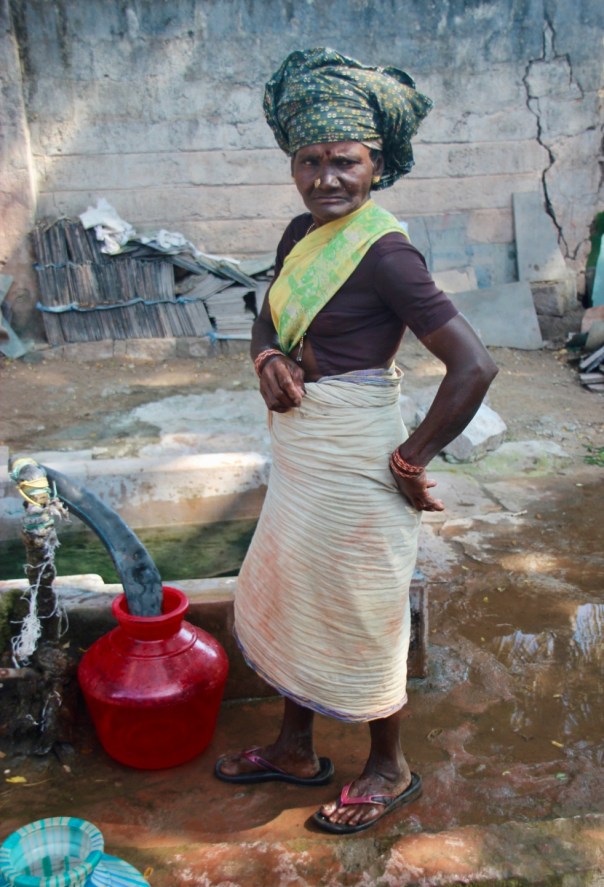
Tile worker in South India
A: I tend to follow wherever the work leads, rather than directing it. I have never been able to predict where it will lead or what more might be added.
Travel is essential for inspiration. Besides many Mexican sojourns, I have been to Bali, Sri Lanka, South India, Guatemala, Honduras, Brazil, Peru, Argentina, Paraguay, and other places. A second trip to India is upcoming, to Gujarat and Rajistan this time.
Last year I had the opportunity to go to Bolivia. In La Paz I visited the Museum of Ethnography and Folklore, where a stunning mask exhibition was taking place. As soon as I saw it, I knew this would be the inspiration for my next series, “Bolivianos.” So far I have completed six “Bolivianos” pastel paintings with two more in progress now. This work is getting a lot of press and several critics have declared it to be my strongest series yet.
Comments are welcome!
Pearls from artists* # 322
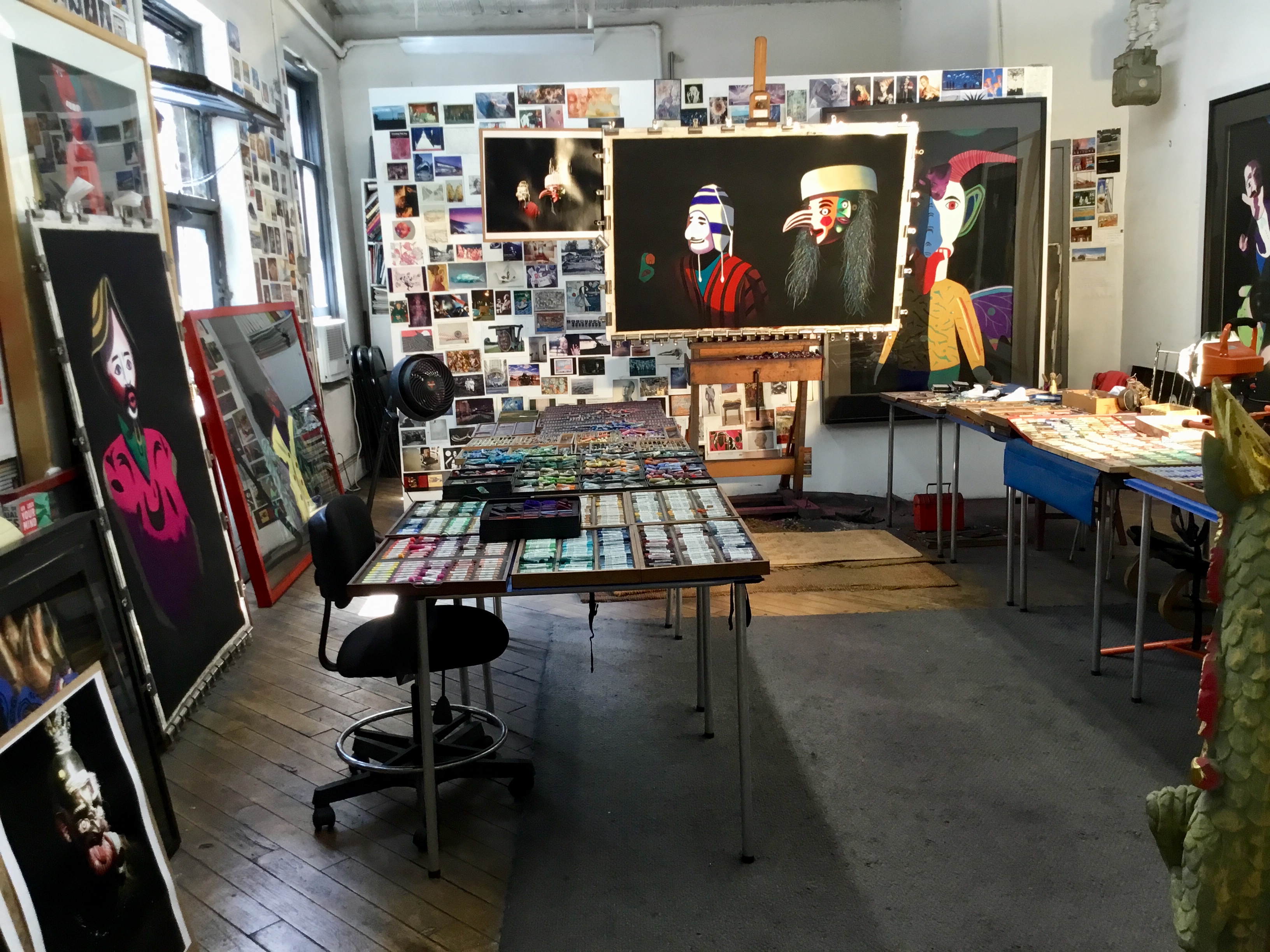
Barbara’s studio
*an ongoing series of quotations – mostly from artists, to artists – that offers wisdom, inspiration, and advice for the sometimes lonely road we are on.
Think, dear sir, of the world you carry within you, and call this thinking what you will: whether it be remembering your own childhood or yearning toward your own future – only be attentive to that which rises up in you and set it above everything that you observe about you. What goes on in your innermost being is worthy of your whole love; you must somehow keep working at it and not lose too much time and too much courage in clarifying your attitude toward people.
Rainer Maria Rilke, Letters to a Young Poet, Translation by M.D. Herter Norton
Comments are welcome!
Travel photo of the month*
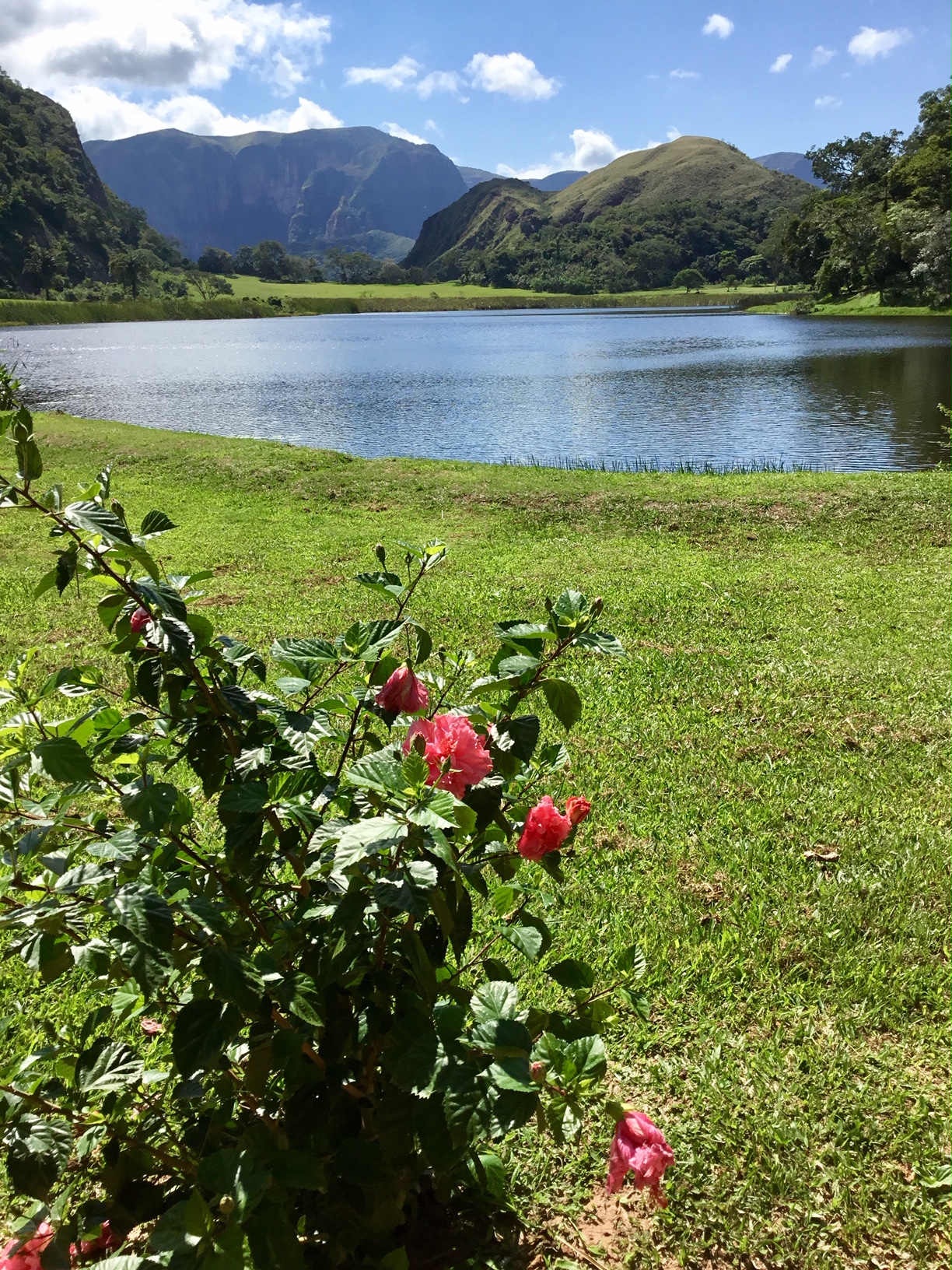
Near Santa Cruz, Bolivia
*Favorite travel photographs that have not yet appeared in this blog
Travel in Peru and Bolivia is life-altering. One takeaway: I adore clear, cool, crisp Andean light!
Comments are welcome!
Pearls from artists* # 320
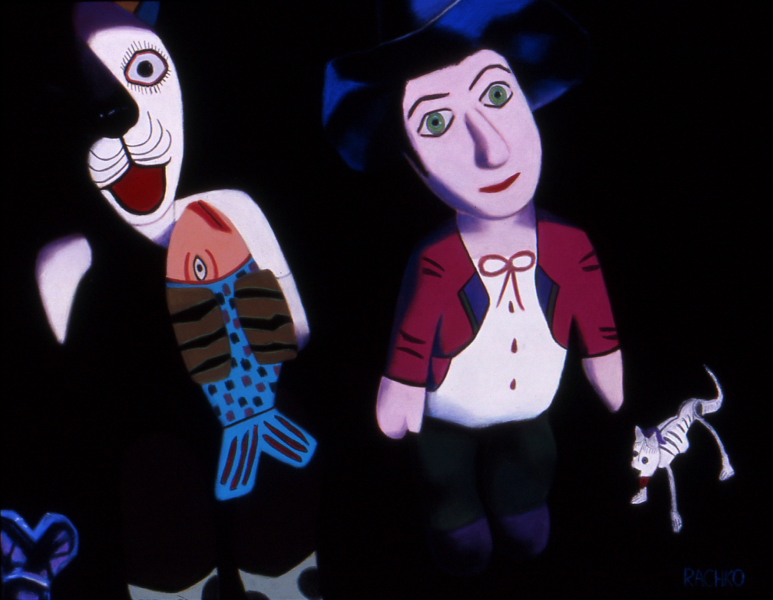
“Offering,” soft pastel on sandpaper, 20″ x 26″
*an ongoing series of quotations – mostly from artists, to artists – that offers wisdom, inspiration, and advice for the sometimes lonely road we are on.
As soon as I use words and actions to convey an emotion, I engage with the world, pitting my feelings against fate in hopes of a desired outcome. If I am angry, my anger is directed at someone or something. If I am in love, my love is for another. Feelings are purposive in ordinary reality, our emotional states tangled in the processes of life. This is what we mean when we refer to ourselves as subjects. But if, instead of acting on a feeling, I make it the basis of a song or a film or a dance, something strange happens. My purposive feeling leaves the closed circle of my personal existence, almost as though I had taken it out of historical time altogether. Transposed into the work of art, it becomes nonpurposive, undirected. It disassociates from its original focus, and from my self as subject, acquires a kind of autonomy. Artistic creation allows for the subjective aspect of our lives normally locked inside our skulls to exist outside us, which is to say that in art, the subjective becomes objective.
J.F. Martel in Reclaiming Art in the Age of Artifice: A Treatise, Critique, and Call to Action
Comments are welcome!
Q: What was the first folk art figure you brought back from Mexico?
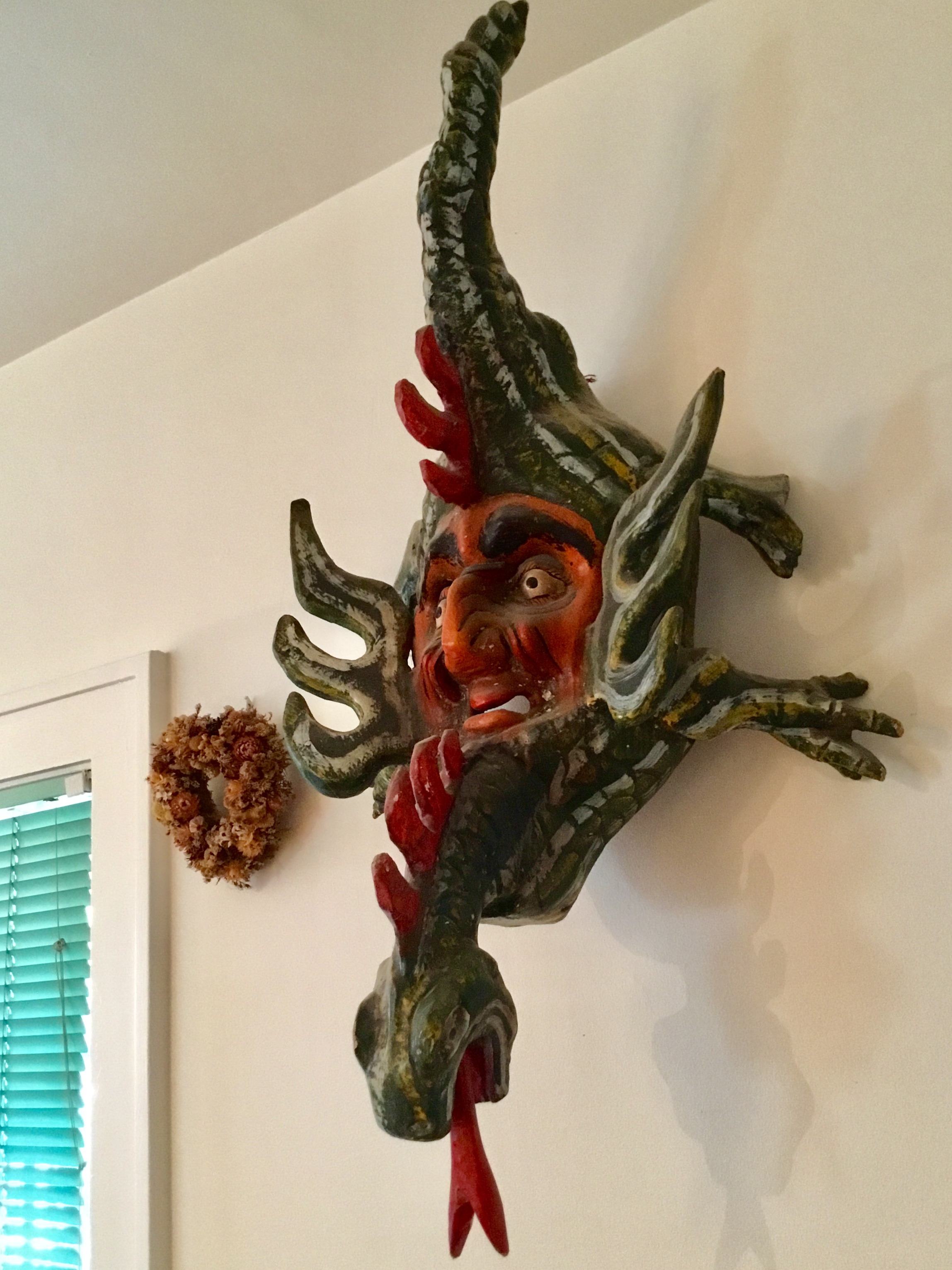
Mask from Oaxaca
A: In Oaxaca I bought a large carved wooden dragon mask with a Conquistador’s face carved and painted on its back. My intent was to depict the dragon in a subsequent “Domestic Threats” painting (the series I was working on at the time). The dragon still hangs in my living room in Alexandria, VA.
This first trip in 1992 was a revelation and marked the start of my on-going love of Mexico: its people, landscapes, ancient cultures, archaeology, history, art, cuisine, etc. There would be many subsequent trips to Mexico to learn as much as I can about this endlessly interesting cradle of civilization.
Comments are welcome!
Pearls from artists* # 316
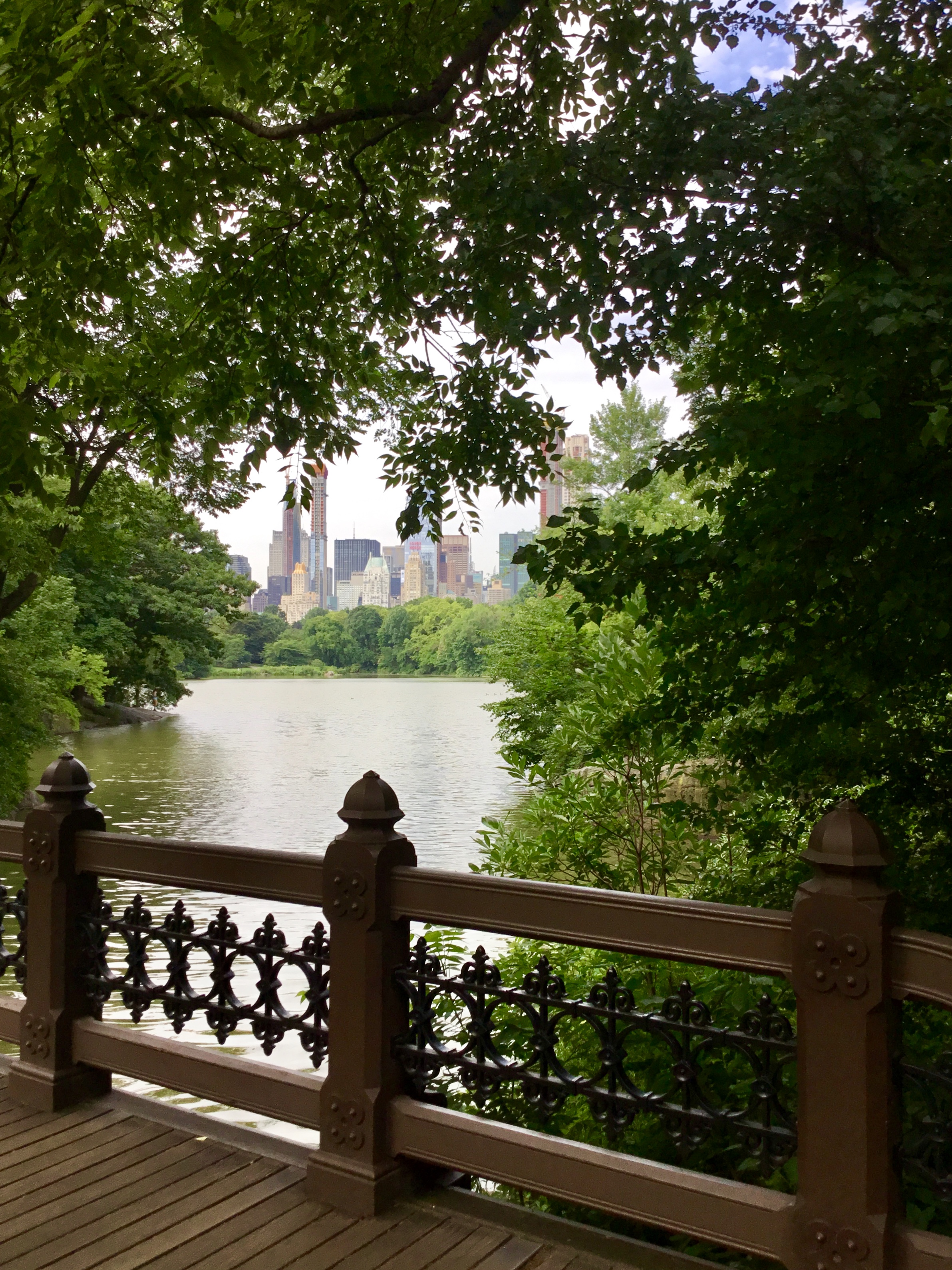
Central Park, NYC
*an ongoing series of quotations – mostly from artists, to artists – that offers wisdom, inspiration, and advice for the sometimes lonely road we are on.
Works of art are of an infinite loneliness and with nothing so little to be reached as with criticism. Only love can grasp and hold and be just toward them. Consider yourself and your feeling right every time with regard to every such argumentation, discussion, or introduction; if you are wrong after all, the natural growth of your inner life will lead you slowly and with time to other insights. Leave to your opinions their own quiet undisturbed development, which, like all progress, must come from deep within and cannot be pressed or hurried into anything. Everything is gestation and then bringing forth. To let each impression and each germ of a feeling come to completion wholly in itself, in the dark, in the inexpressible, the unconscious, beyond the reach of one’s own intelligence, and await with deep humility and patience the birth-hour of a new clarity: that alone is living the artist’s life: in understanding as in creating.
There is also no measuring with time, no year matters, and ten years are nothing. Being an artist means not reckoning and counting, but ripening like the tree which does not force its sap and stands confident in the storms of spring without the fear that after them may come no summer. It does come. But it comes only to the patient, who are there as though eternity lay before them, so unconcernedly still and wide. I learn it daily, learn it with pain to which I am grateful: patience is everything!
Rainer Maria Rilke, Letters to a Young Poet, Translation by M.D. Herter Norton
Comments are welcome!
Pearls from artists* # 315

“The Champ,” soft pastel on sandpaper, 26″ x 20″
*an ongoing series of quotations – mostly from artists, to artists – that offers wisdom, inspiration, and advice for the sometimes lonely road we are on.
A work of art is good if it has sprung from necessity. In this nature of its origin lies the judgment of it: there is no other. Therefore, my dear sir, I know of no advice for you save this: to go into yourself and test the deeps in which your life takes rise; at its source you will find the answer to the question whether you must create. Accept it, just as it sounds, without inquiring into it. Perhaps it will turn out that you are called to be an artist. Then take that destiny upon yourself and bear it, its burden and its greatness, without ever asking what recompense might come from outside. For the creator must be a world unto himself and find everything in himself and in Nature to whom he has attached himself.
Rainer Maria Rilke, Letters to a Young Poet, Translated by M.D. Herter Norton
Comments are welcome!



