Blog Archives
Q: What’s on the easel today?
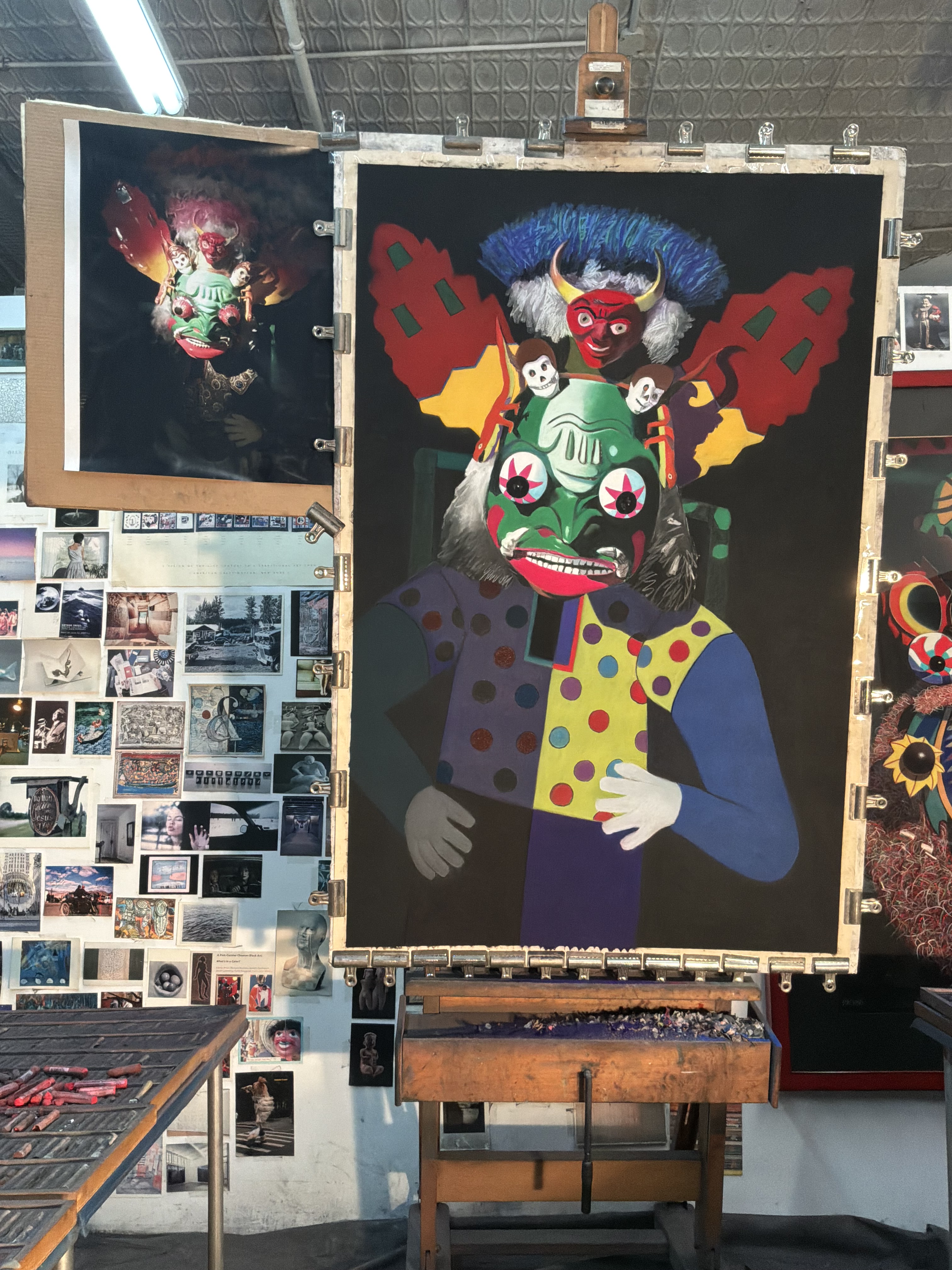
Work in progress
A: I continue working on “Gatecrasher,” soft pastel on sandpaper, 58” x 38.” In February I was privileged to visit this mask on exhibit at MUSEF La Paz in Bolivia. It was my second visit to the museum; the first was in 2017. Even more so this time, I was bowled over with how spectacular this particular mask is in person. Plus, I had forgotten its huge size. So I am absolutely determined to bump up my game and even more inspired to make this painting as strong and powerful as I possibly can!
Comments are welcome!
Q: Many artists can’t bear to face “a blank canvas.” How do you feel about starting a new piece?

A: That’s an interesting question because I happen to be reading The War of Art by Steven Pressfield and this morning I saw this:
You know, Hitler wanted to be an artist. At eighteen he took his inheritance, seven hundred kronen, and moved to Vienna to live and study. He applied to the Academy of Fine Arts and later to the school of architecture. Ever see one of his paintings? Neither have I. Resistance beat him. Call it overstatement but I’ll say it anyway: it was easier for Hitler to start World War II than it was for him to face a blank square of canvas.
I’ve never understood this fear of “the blank canvas” because I am always excited about beginning a new painting. When you think about it, every professional artist can say, “In the history of the planet no one has ever made what I am about to make!” Once again I am looking at something new on my easel, even if it is only a blank 40” x 60” piece of sandpaper clipped to a slightly larger piece of foam core. Unlike artists who are paralyzed before “a blank canvas,” I am energized by the imagined possibilities of all that empty space! I spend up to three months on a painting so this experience of looking at a blank piece of paper on my easel happens four or five times a year at most. Excluding travel to remote places, which is essential to my work and endlessly fascinating, the first day I get to spend blocking in a new painting is the most exhilarating part of my whole creative process. This is art-making at its freest! I select the pastel colors quickly, without thinking about them, first imagining them, then feeling, looking, and reacting intuitively to what I’ve done, always correcting and trying to make the painting look better.
Comments are welcome.
Pearls from artists* # 683
*an ongoing series of quotations – mostly from artists, to artists – that offers wisdom, inspiration, and advice for the sometimes lonely road we are on.
Clichéd subject matter can be a symptom of shallow understanding. Experiencing our subject matter firsthand helps us absorb complexities and discover surprising insights, leading to enriched outcomes. Envision a painting of a tree copied from a found internet photograph. Then, imagine the possibilities of a work executed by a person who loves to climb, sit under, caress, plant, and nurture trees, one who has observed their qualities through downpours, windstorms, and the Fall twilight filtered through leaf layers. They don’t just see, but feel these living, breathing giants straining to grow toward the sun, cooperatively respecting their neighbor’s space high in their crowns, and communicating with their community underground. Inspiration is not just gleaned through the eyes but through our entire bodies, intellect, and feelings.
Kate Kretz in Art From Your Core: A Holistic Guide to Visual Voice
Comments are welcome!
Q: What’s on the easel today?
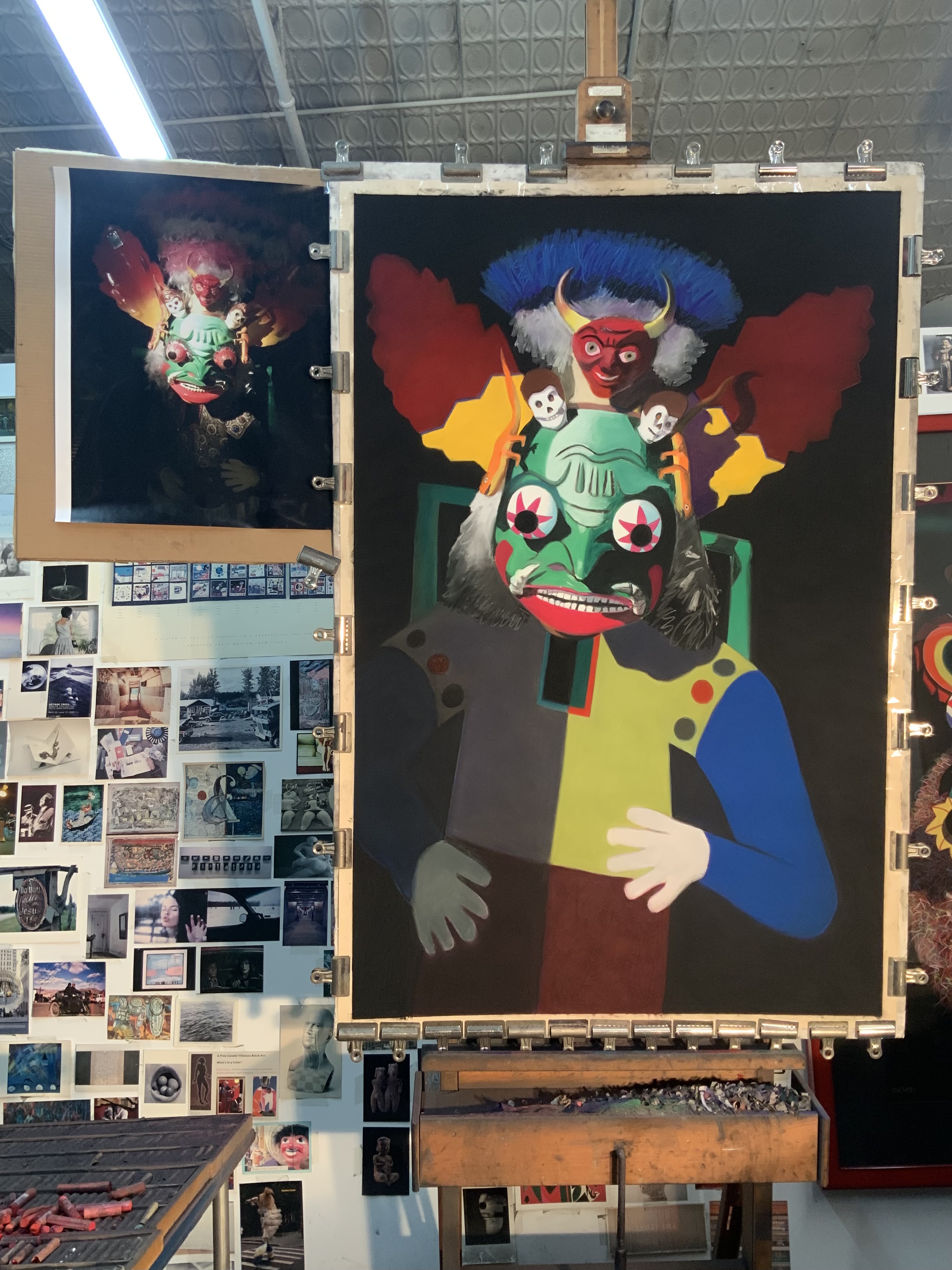
A: I continue working on “Gatecrasher,” 58” x 38,” soft pastel on sandpaper.
Comments are welcome!
Q: What’s on the easel today?

Work in progress
A: I’m in the early stages of a new 58” x 38” “Bolivianos” pastel-on-sandpaper painting.
Comments are welcome!
Q: What’s on the easel today?

My next project!
A. I am starting another “Bolivianos” pastel painting. It’s hard to believe, but this is number 34 in the series! This body of work began in 2017 and the paintings continue to keep improving, I believe.
Comments are welcome!
Q: What’s on the easel today?

Work in progress
A. I’m working on “Herald,” 26” x 20,” soft pastel on sandpaper.
Comments are welcome!
Q: What’s on the easel today?

Work in progress!
A: I recently started a new small “Bolivianos” pastel painting.
Comments are welcome!
Q: What’s on the easel today?

“Showman,” almost finished!
A: I’m putting finishing touches on “Showman,” soft pastel on sandpaper, 26” x 20”.
Comments are welcome!
Q: What’s on the easel today?

Planning my next painting
A: In preparation for my next large “Bolivianos” painting, I made this preliminary charcoal drawing.
Comments are welcome!


 barbararachkoscoloreddust.com