Pearls from artists* # 225
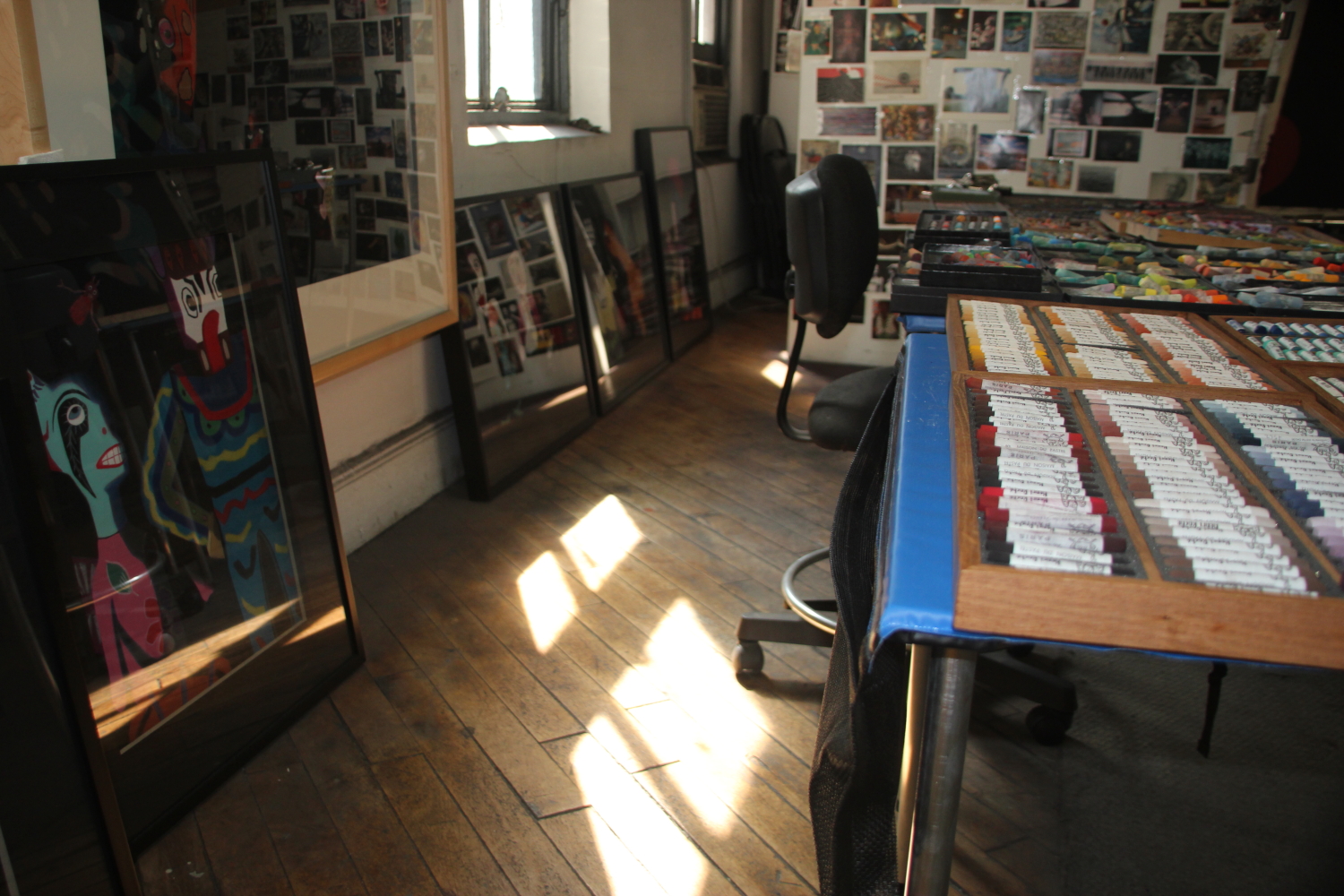
Morning sun at the studio
* an ongoing series of quotations – mostly from artists, to artists – that offers wisdom, inspiration, and advice for the sometimes lonely road we are on.
It’s so easy to forget what matters. When I begin the day centered, with equanimity, I find that I am quite unshakeable. But if I start off in that slippery, discomfiting way, I am easily thrown off course – and once off course, there I stay. And so I know that my job is to cultivate a mind that catches itself. A mind that watches its own desire to scamper off into the bramble, but instead, guides its own desire gently back to what needs to be done.
Dani Shapiro in Still Writing: The Perils and Pleasures of a Creative Life
Comments are welcome!
Q: Do you consider your finished pastel works to be drawings or paintings?

“The Sovereign,” soft pastel on sandpaper, 58″ x 38″ image, 70″ x 50″ framed
A: Among artists who work in pastel, these two words, ‘drawings’ and ‘paintings,’ have very specific meanings, somewhat unrelated to the usual distinctions made by art historians and others. For a pastel artist, a ‘drawing’ refers to a work in which the paper or other substrate is allowed to show through. In a pastel ‘painting’ you do not see the substrate at all, i.e. pastel is used much more heavily in a painting than in a drawing. Since I have always spent months creating each piece, covering the entire sandpaper ground with up to 30 layers of pigment, I have considered my work to be pastel painting.
Comments are welcome!
Pearls from artists* # 224

“Poker Face,” soft pastel on sandpaper, 38″ x 58″ image, 50″ x 70″ framed
* an ongoing series of quotations – mostly from artists, to artists – that offers wisdom, inspiration, and advice for the sometimes lonely road we are on.
… wise writers decline to engage in debates over the right way to read their words. T.S. Eliot was once approached with a question about a cryptic line from his poem “Ash-Wednesday”: “Lady, three white leopards sat under a juniper-tree.” What did the line mean? The poet replied: “I mean, ‘Lady, three white leopards sat under a juniper-tree .” Creating a text, Eliot seems to be saying, like having a child, only means bringing something into the world. It doesn’t include the power to control it’s destiny.
Adam Kirsch in “Can You Read a Book the Wrong Way?”, The New York Times Book Review, Sept. 27, 2016.
Comments are welcome!
Q: Do you have an essential philosophy that guides you in your creative expression?
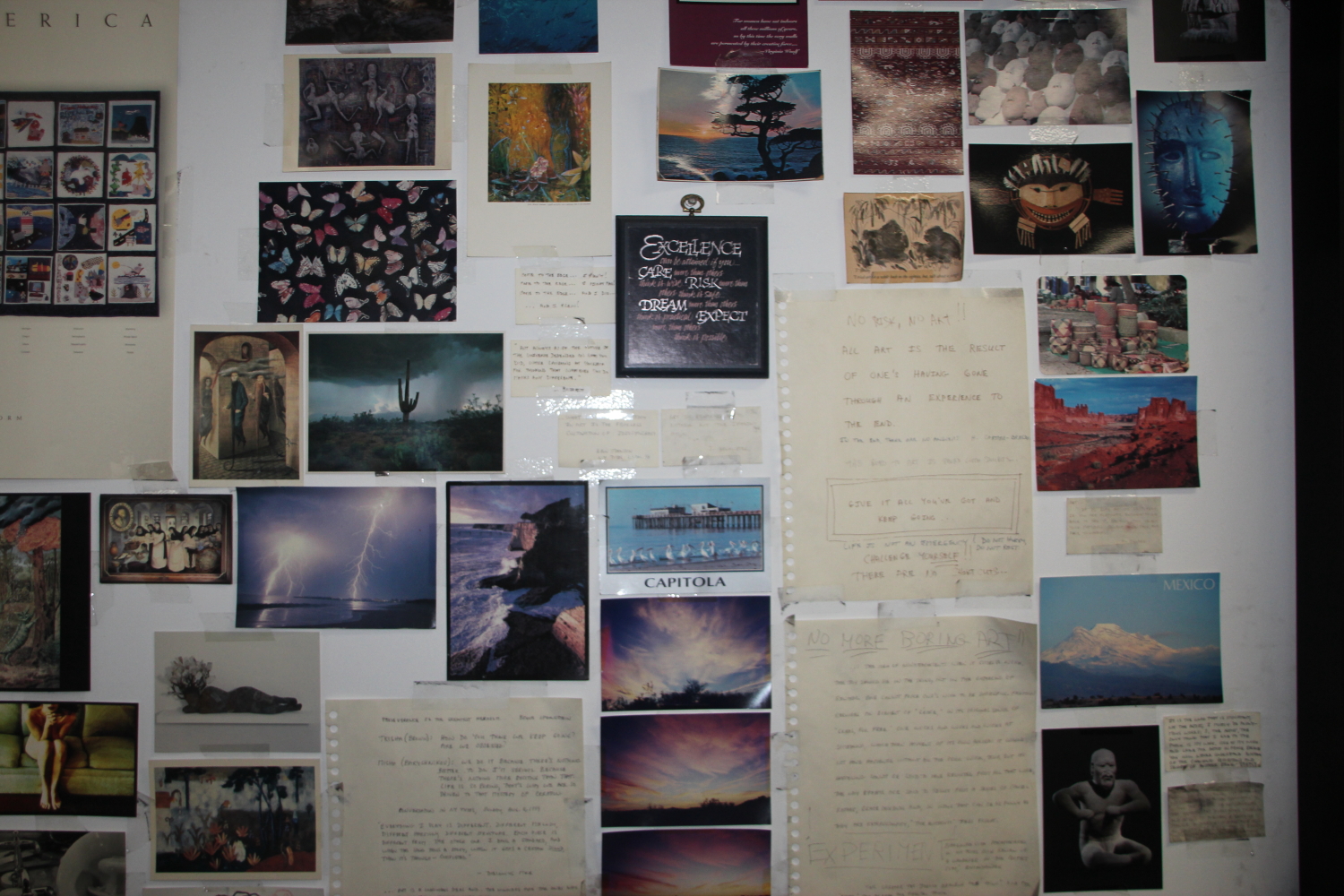
A wall in Barbara’s studio
A: Here are my two essential philosophies:
“Give it all you’ve got and keep going.” I wrote this years ago on a piece of paper and tacked it onto the wall behind my easel so I can always see it.
“Excellence can be attained if you… care more than others think is wise… risk more than others think is safe… dream more than others think is practical… expect more than others think is possible.” These words are on a small plaque, also tacked on the wall behind my easel. A co-worker gave this to me when I resigned my Naval commission to pursue an art career.
Comments are welcome!
Pearls from artists* # 223

“Epiphany,” soft pastel on sandpaper, 38″ x 58″
* an ongoing series of quotations – mostly from artists, to artists – that offers wisdom, inspiration, and advice for the sometimes lonely road we are on.
This is precisely the time when artists get to work. There is no time for despair, no place for self-pity, no need for silence, no room for fear. We speak, we write, we do language. That is how civilizations heal.
I know the world is bruised and bleeding, and though it is important not to ignore its pain, it is also critical to refuse to succumb to its malevolence. Like failure, chaos contains information that can lead to knowledge – even wisdom. Like art.
Toni Morrison quoted in Brainpickings, Nov. 20, 2016
Comments are welcome!
Q: What art marketing activities do you put into practice regularly that work most successfully for you?

“White Star,” 38″ x58″, ready to go to the framer
A: This blog continues to be a crucial part of my overall art practice. Blogging twice a week forces me to think deeply about my work and to explain it clearly to others. The process has helped develop a better understanding about why I make art and has encouraged me to become a better writer.
As far as art marketing, one crucial activity is to take my blog posts and repurpose them for posting on social media sites. Several years ago I realized it’s necessary to put as much time and energy into getting my work seen online as it is to create it.
With the help of my assistant I stay active on Facebook, LinkedIn, Twitter, Instagram, and Pinterest. I have sold paintings, in the 5-figure price range, through Facebook connections. Recently an art critic reconnected with me via LinkedIn and went on to write a scholarly essay about my “Black Paintings.” In December she’s presenting a paper at Oxford University and will speak about my work.
I find online marketing to be a constant challenge, but it does yield rewards. You never know what might happen.
Comments are welcome!
Pearls from artists* # 222
Washington, DC
* an ongoing series of quotations – mostly from artists, to artists – that offers wisdom, inspiration, and advice for the sometimes lonely road we are on.
I always had a sense of being in this for keeps. If your health lasts you. And you’re fortunate enough to have the days at your disposal so you can keep doing this. I never had the sense that there was an end. That there was a retirement or that there was a jackpot.
Leinard Cohen in Brain Pickings Weekly, Nov. 13, 2016
Comments are welcome!
Start/Finish of “Poker Face,” soft pastel on sandpaper, 38″ x 58″image, 50″ x 70″ framed
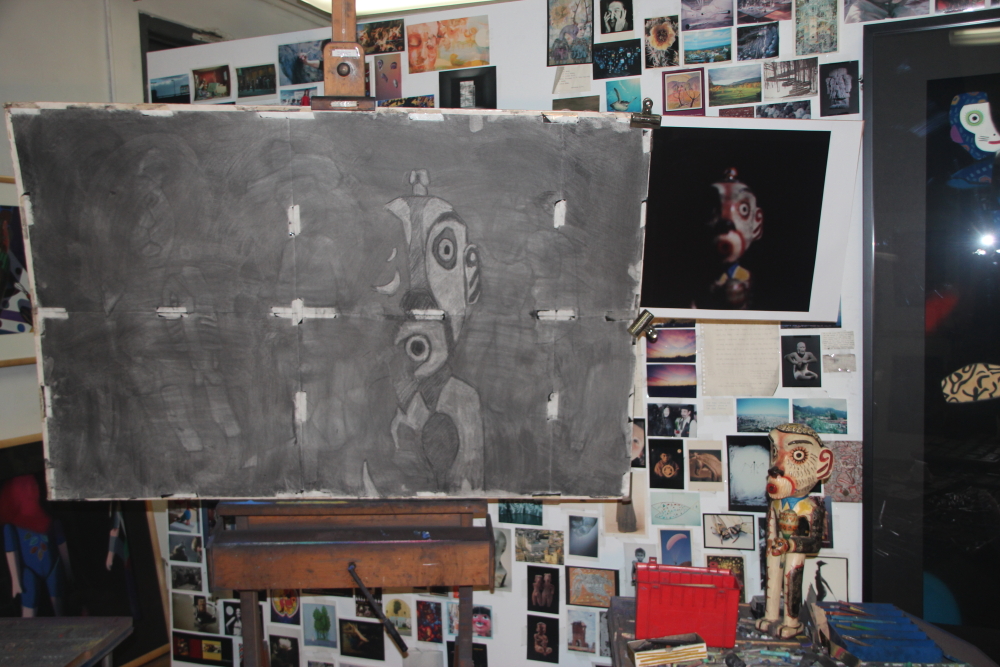
Preliminary charcoal sketch
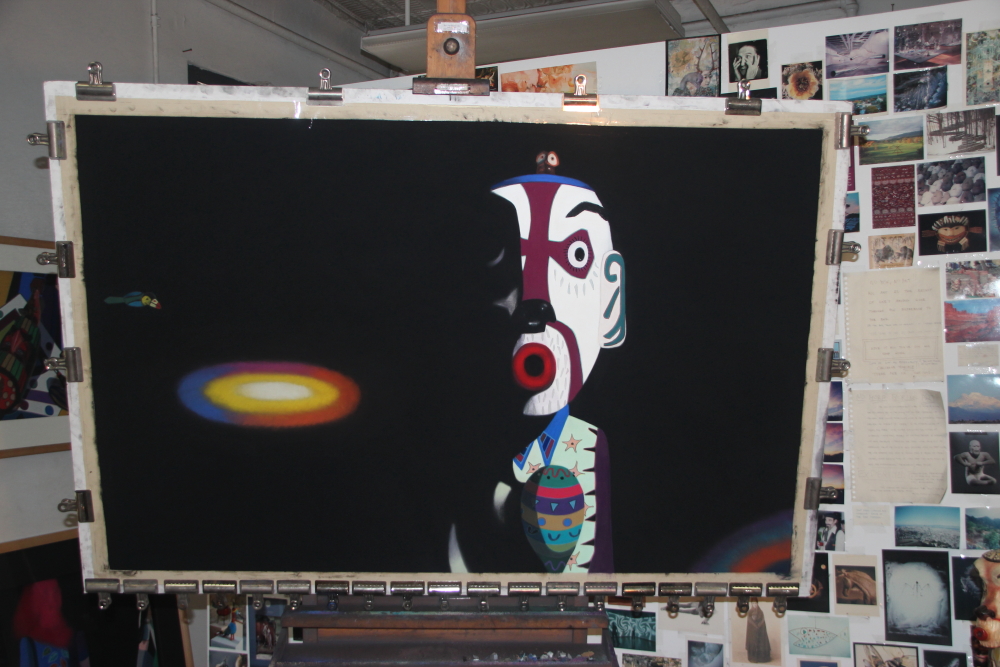
Finished
Pearls from artists* # 221
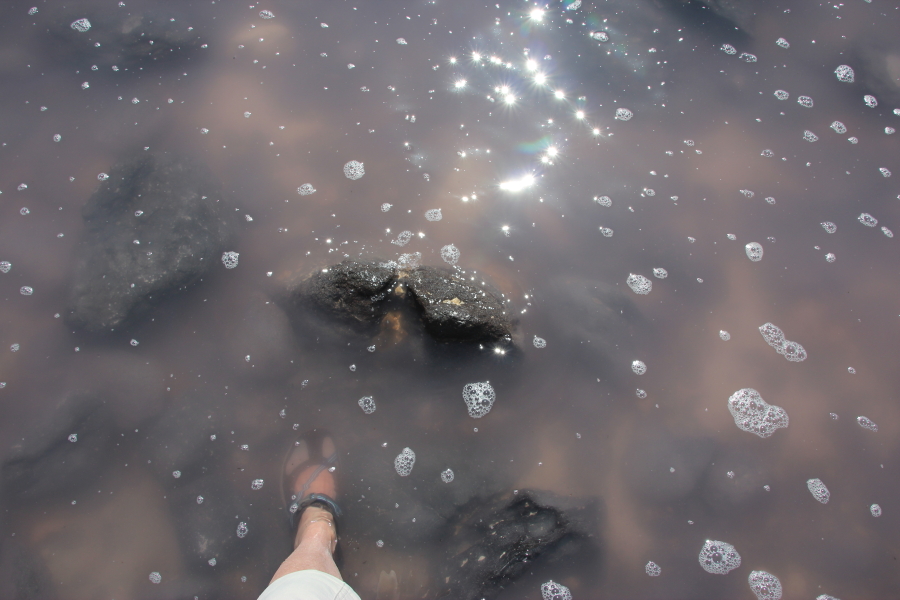
Walking on Spiral Jetty in September 2011
* an ongoing series of quotations – mostly from artists, to artists – that offers wisdom, inspiration, and advice for the sometimes lonely road we are on.
Andre Malraux famously cherished the idea of a museum without walls. In a way, places like Spiral Jetty are jails without walls. They are always about time, about how long they can detain or hold you. I remember the governor of a US prison saying, of a particularly violent inmate, that he already had way more time than he would ever be able to do. That’s exactly how the Jetty looked – like it had more time than it could ever do – even though, relatively speaking, it had hardly begun to put in any serious time.
Geoff Dyer in White Sands: Experiences from the Outside World
Comments are welcome!
Q: What’s on the easel today?
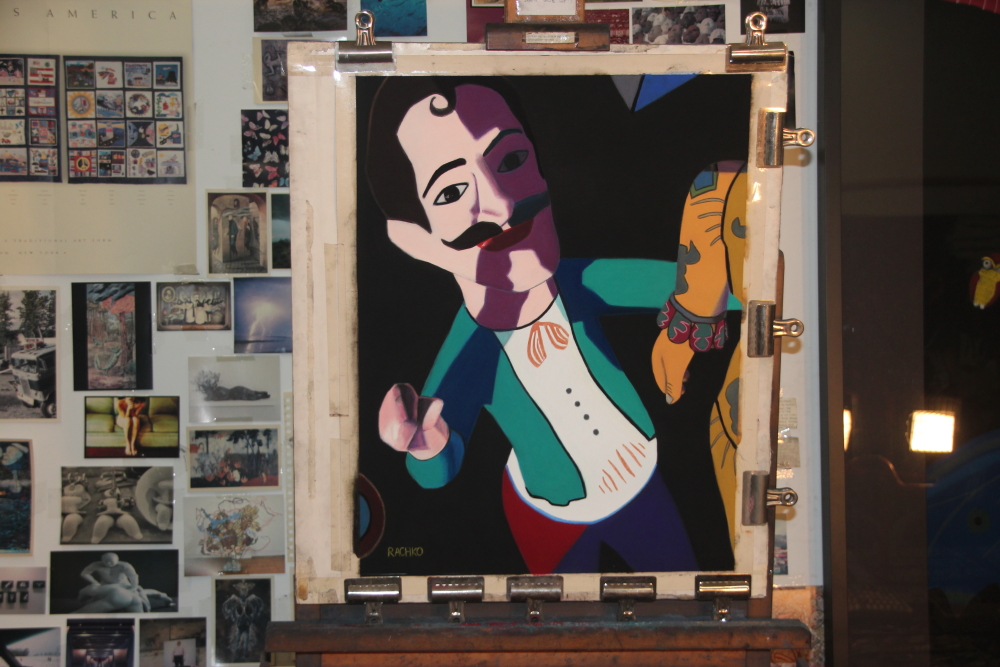
“A Long Goodbye,” soft pastel on sandpaper, 26″ x 20″
A: I am putting finishing touches on a small pastel painting called, “A Long Goodbye.” It’s a smaller, cropped version of a larger piece completed in 2013 called, “The Ancestors” (below).
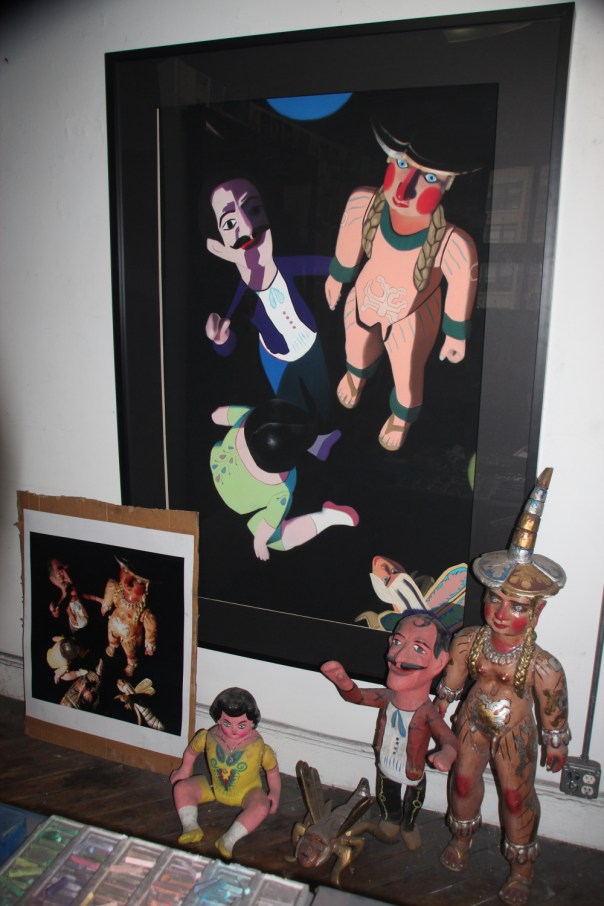
“The Ancestors” in Barbara’s studio
Comments are welcome!


 barbararachkoscoloreddust.com