Category Archives: Studio
Pearls from artists* # 303
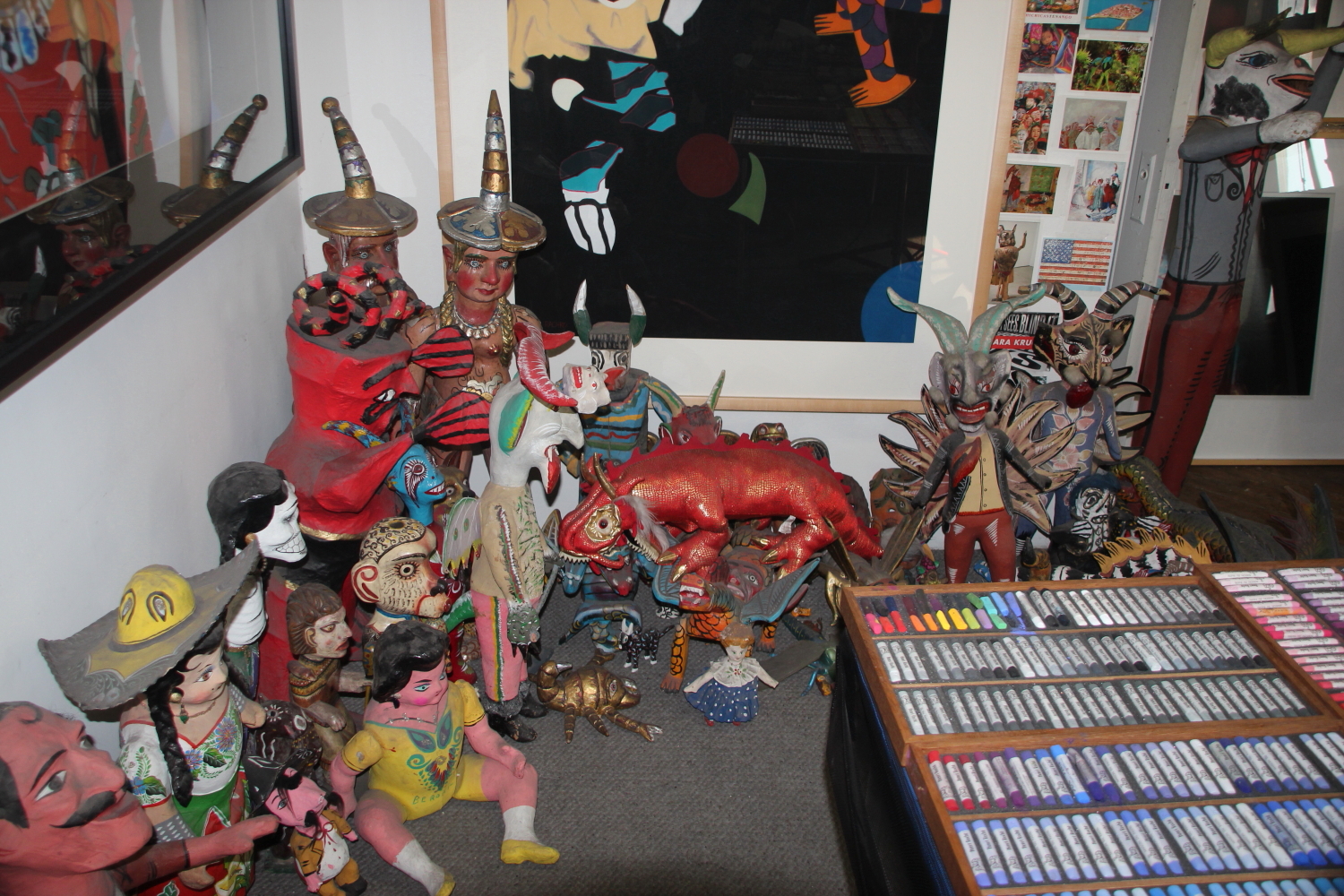
Barbara’s Studio
*an ongoing series of quotations – mostly from artists, to artists – that offers wisdom, inspiration, and advice for the sometimes lonely road we are on.
If the majority of aesthetic works fail to astonish us, then. it may have something to do with the ingrained insensitivity that is part and parcel of contemporary life. It may also have something to do with the fact that art, as Solzhenitsyn said so eloquently, is constantly being put to uses that are at odds with its essence. Indeed, the moment a work of art appears, all kinds of other factors come into play. Cultural institutions, social pressures, laws, customs, fashions, and trends pull it in every direction. Fame, money, conformism, attention-seeking, and knee-jerk rebellion can lure artists to abandon their own vision in order to emulate those of others, to adhere to formulas and paint by numbers, or to value external convention over vision. The inevitable result is a lot of bad art that couldn’t astonish anyone. It should come as no surprise, when looking over the glut of aesthetic objects that proliferate around us, if we feel the need to distinguish between authentic and inauthentic art – which is to say, art that astonishes us by attuning us to the radical mystery of being, and art that attempts to reinforce our shared illusions, comforting or intimidating us with the notion that there is nothing to wonder at since everything has been figured out.
J.F. Martel in Reclaiming Art in the Age of Artifice: A Treatise, Critique, and Call to Action
Comments are welcome!
Start/Finish of “Shamanic,” soft pastel on sandpaper, 26″ x 20”
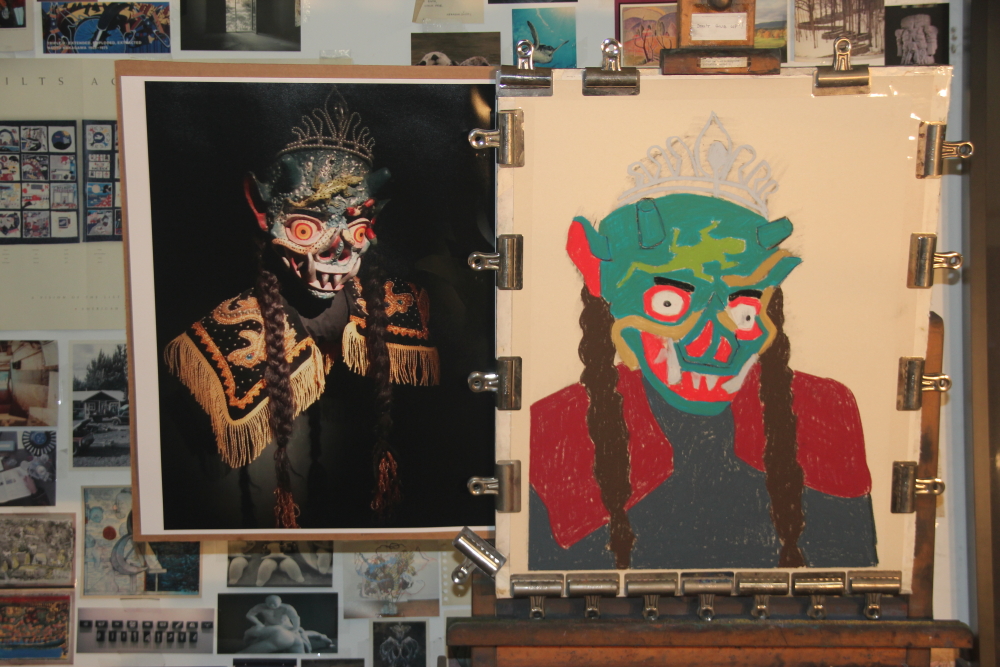
Start
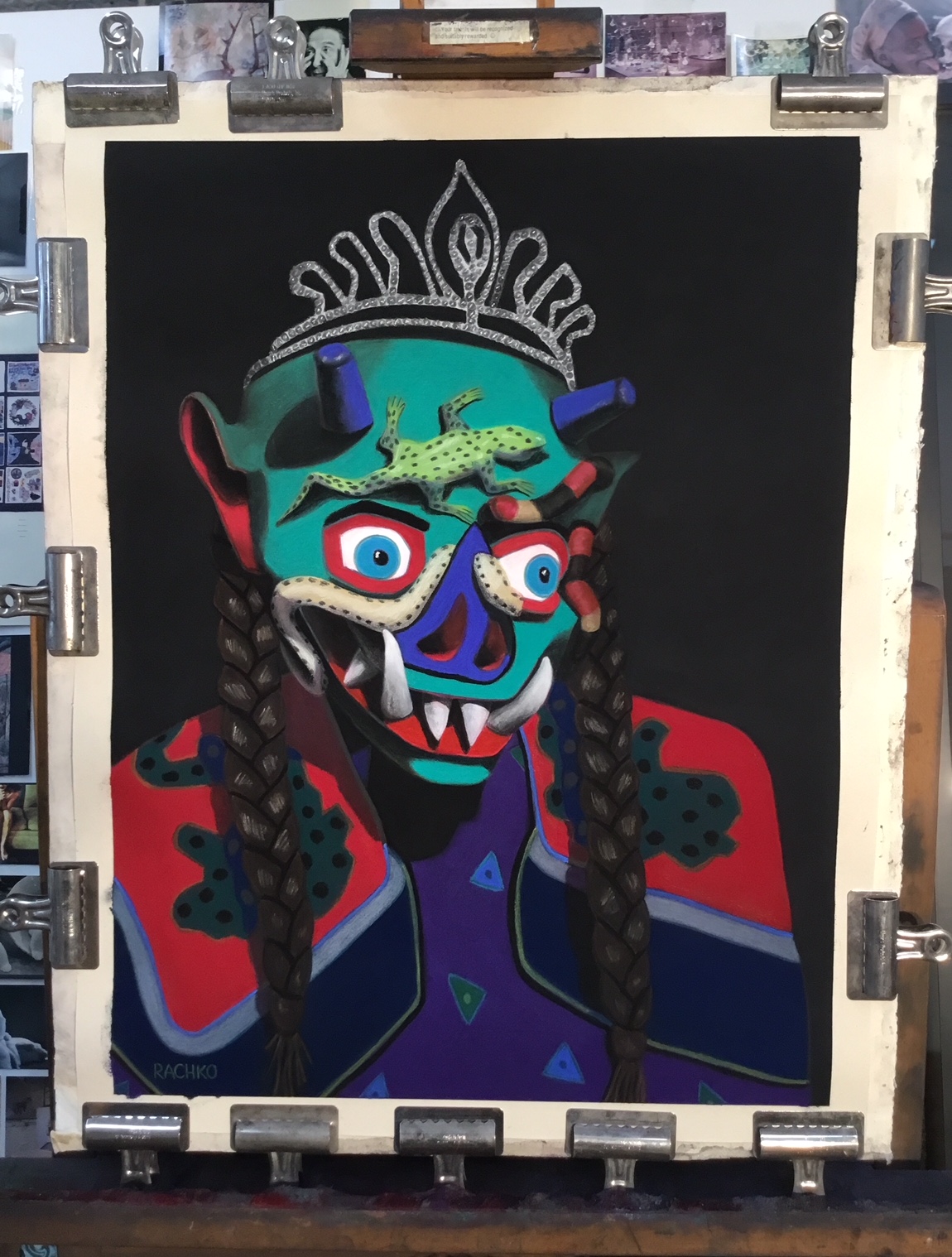
Finish
This one was tough going, but finally it’s ready for the framer!
Comments are welcome!
Q: What’s on the easel today?
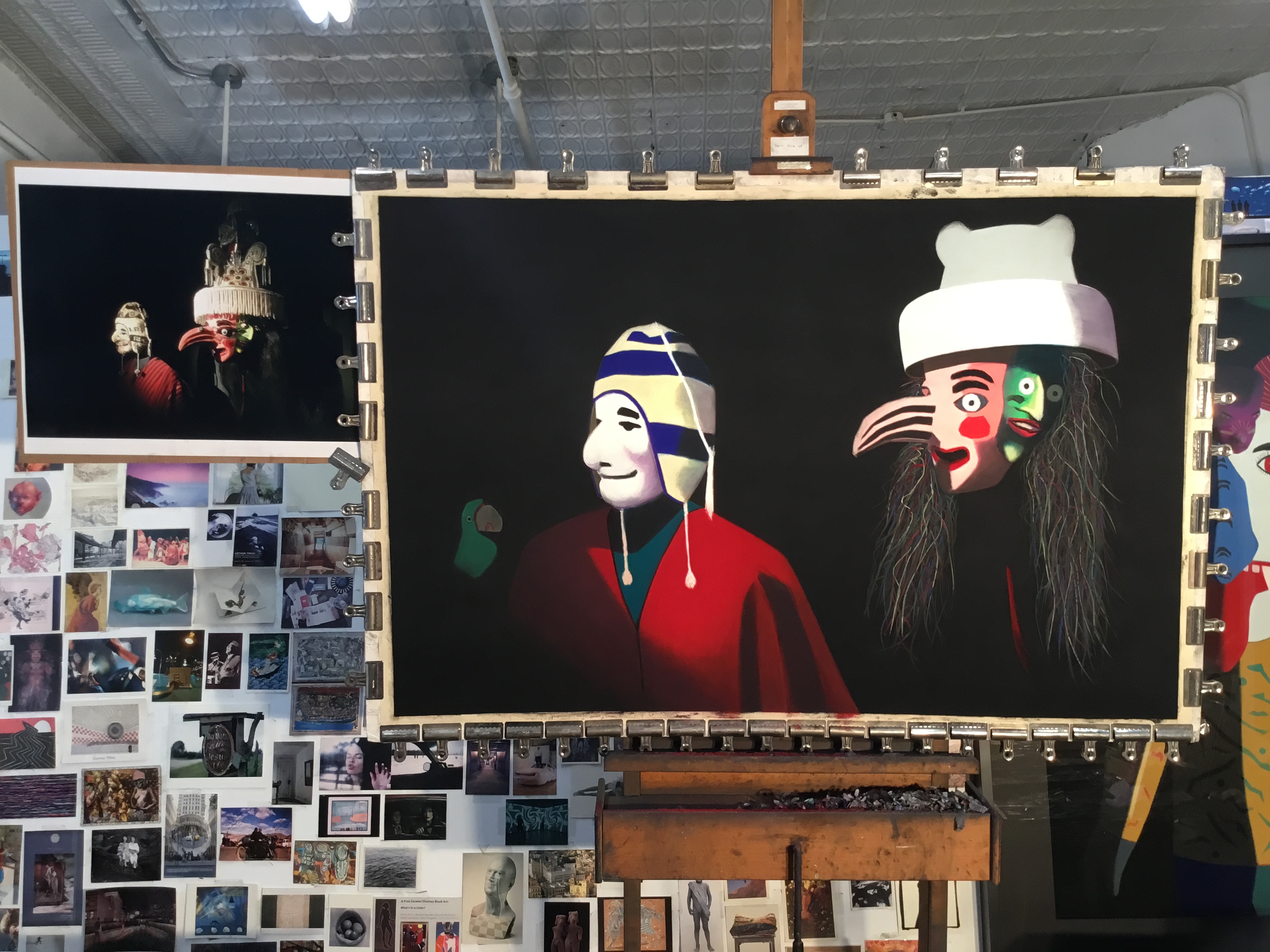
Work in progress
A: I continue working on a large pastel painting based on another of my photographs from La Paz, Bolivia.
Comments are welcome!
Q: You have spoken about your pastel technique, which involves layering pigments on top of each other, up to 25 to 30 layers. When you do this are you putting the same colors on top of each other?

An early version of “Oracle,” soft pastel on sandpaper, 26″ x 20″

Finished
A: I do layer Rembrandt black soft pastels on top of each other to achieve the dark backgrounds in my “Black Paintings” and “Bolivianos” series. Black Rembrandts are the pastels I use most so I order them several dozen at a time. The 400 or 500 grit sandpaper requires at least four layers of pastel just to achieve even coverage. Over the next few months I add many more layers of black pastel to achieve the final rich look.
The figures and shapes in each pastel painting are a different story. Were you to x-ray them, you’d see many different colors underneath the final one. Sometimes subsequent colors are closely related to earlier ones. With each additional layer, I correct, refine, and strengthen my drawing so the objects depicted become more solid and/or three-dimensional.
In addition to the thousands of pastels I have to choose from, I mix and blend new colors directly on the sandpaper. As I proceed, I am searching for the ‘best’ colors, those that make the overall painting more resonant, more alive, and more exciting to look at. Of course, this is wholly subjective.
Comments are welcome!
Q: For many artists the hardest thing is getting to work in the morning. Do you have any rituals that get you started?
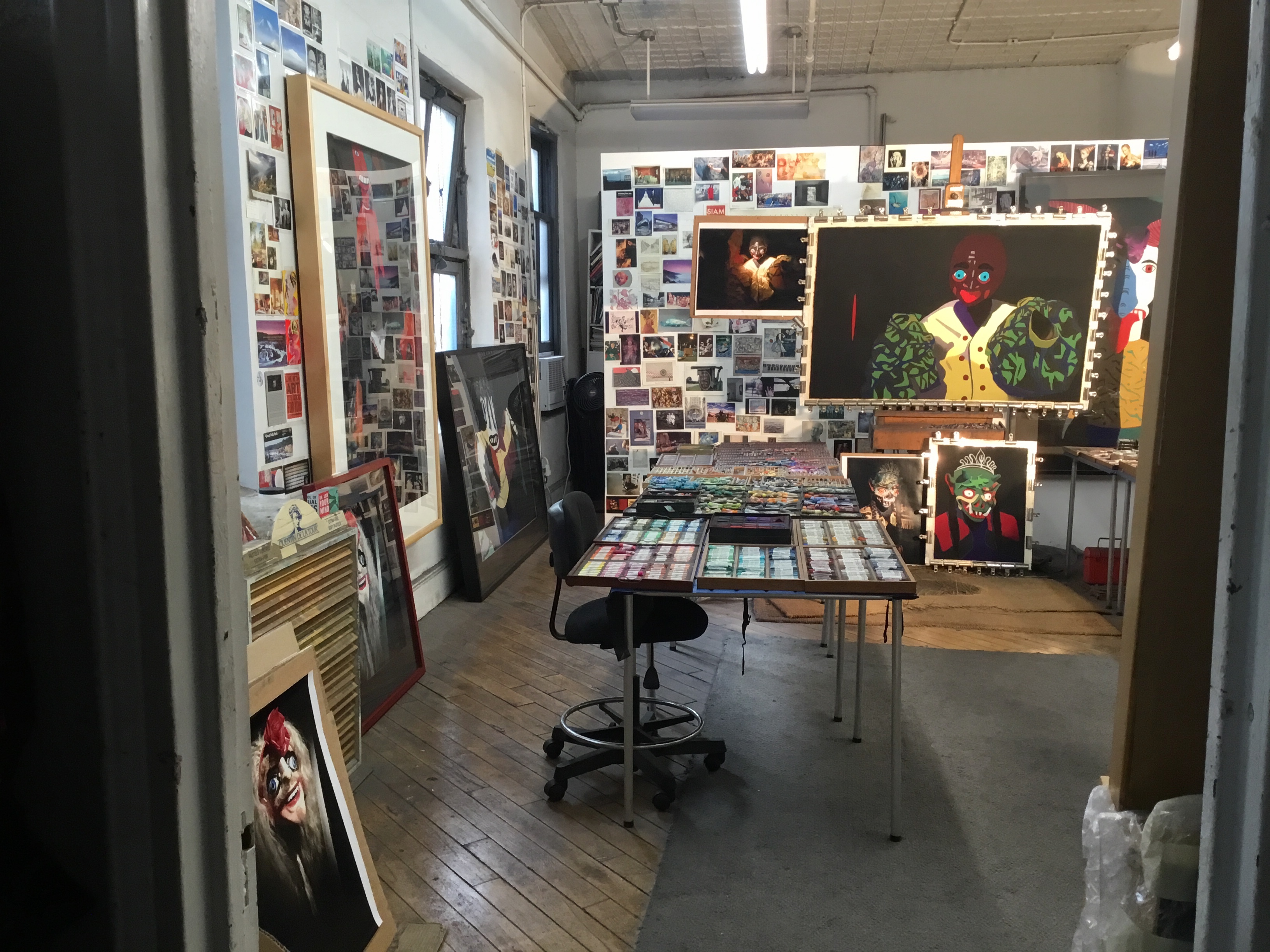
Entering Barbara’s studio
A: That has rarely been a problem because I love to work. The highlight of my day is time spent in the studio. After arriving, I begin working immediately or I read about art for a short time. When I pick up a pastel, it’s to begin working on something left unfinished from the day before.
Generally, I keep regular hours and strive to use studio time well. As a professional artist, one absolutely must be a self-starter! No one else cares about our work the way we do. Really why would they, when only the maker has invested so much love, knowledge, craftsmanship, experience, devotion, insight, money, etc. in the effort to evolve and improve.
Comments are welcome!
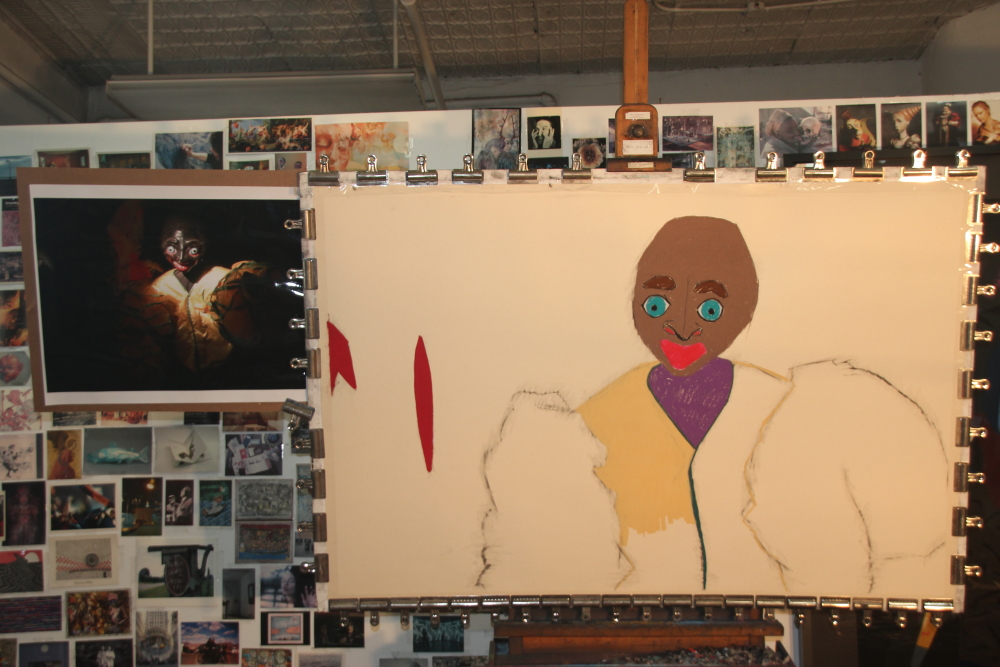
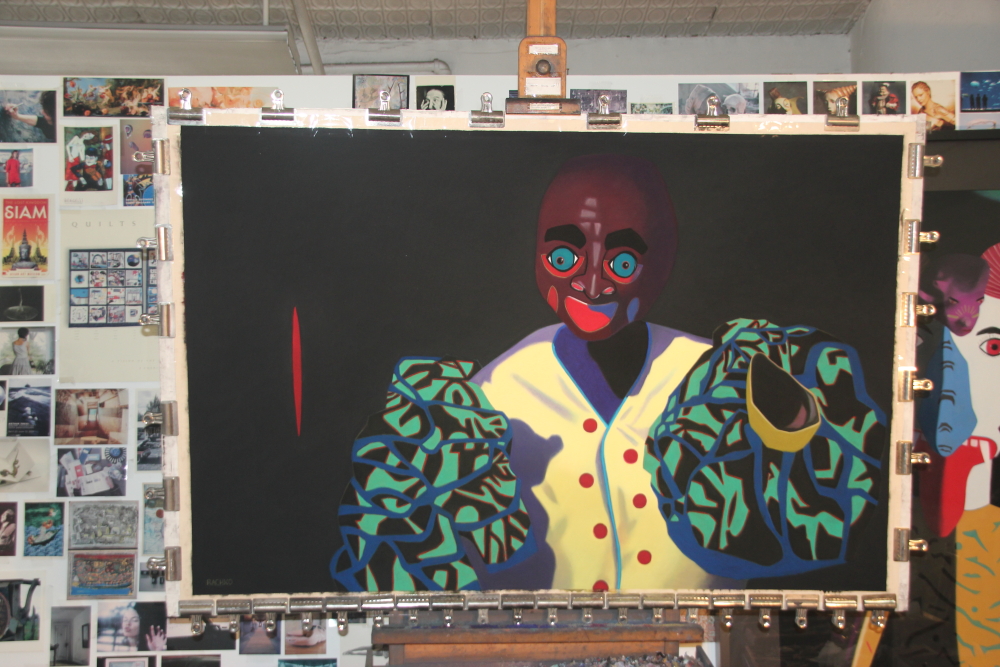
Q: What’s on the easel today?

Ready to begin
A: I’m ready to begin a large – 38” x 58” – pastel-on-sandpaper painting, the sixth in my “Bolivianos” series. I love beginnings because I am looking at something new on my easel and there are so many possibilities!
Comments are welcome!
Pearls from artists* #295

Barbara at work, Photo: Marianne Barcellona
* an ongoing series of quotations – mostly from artists, to artists – that offers wisdom, inspiration, and advice for the sometimes lonely road we are on.
Interviewer: Are there devices one can learn in improving one’s style?
Capote: Work is the only device I know of. Writing has laws of perspective, of light and shade, just as painting does, or music. If you are born knowing them, fine. If not, learn them. Then rearrange the rules to suit yourself.
Truman Capote in Writers at Work: The Paris Review Interviews First Series, edited, and with an introduction by Malcolm Crowley
Comments are welcome!
Pearls from artists* # 294

Barbara at work
*an ongoing series of quotations – mostly from artists, to artists – that offers wisdom, inspiration, and advice for the sometimes lonely road we are on.
Interviewer: Well, to begin – do you feel that you were born in a place and a time, and to a family all of which combined favorably to shape you for what you were to do?
Wilder: Comparisons of one’s lot with others’ teaches us nothing and enfeebles the will. Many born in an environment of poverty, disease, and stupidity, in an age of chaos, have put us in their debt. By the standards of many people, and by my own, these dispositions were favorable – but what are our judgments in such matters? Everyone is born with an array of handicaps – even Mozart, even Sophocles – and acquires new ones. In a famous passage, Shakespeare ruefully complains that he was not endowed with another’s “scope”! We are all equally distant from the sun, but we all have a share in it. The most valuable thing I inherited was a temperament that does not revolt against Necessity and that is constantly renewed in Hope. (I am alluding to Goethe’s great poem about the problem of each man’s “lot” – the Orphische Worte).
Thornton Wilder in Writers at Work: The Paris Review Interviews First Series, edited, and with an introduction by Malcolm Crowley
Comments are welcome!
Pearls from artists* # 293
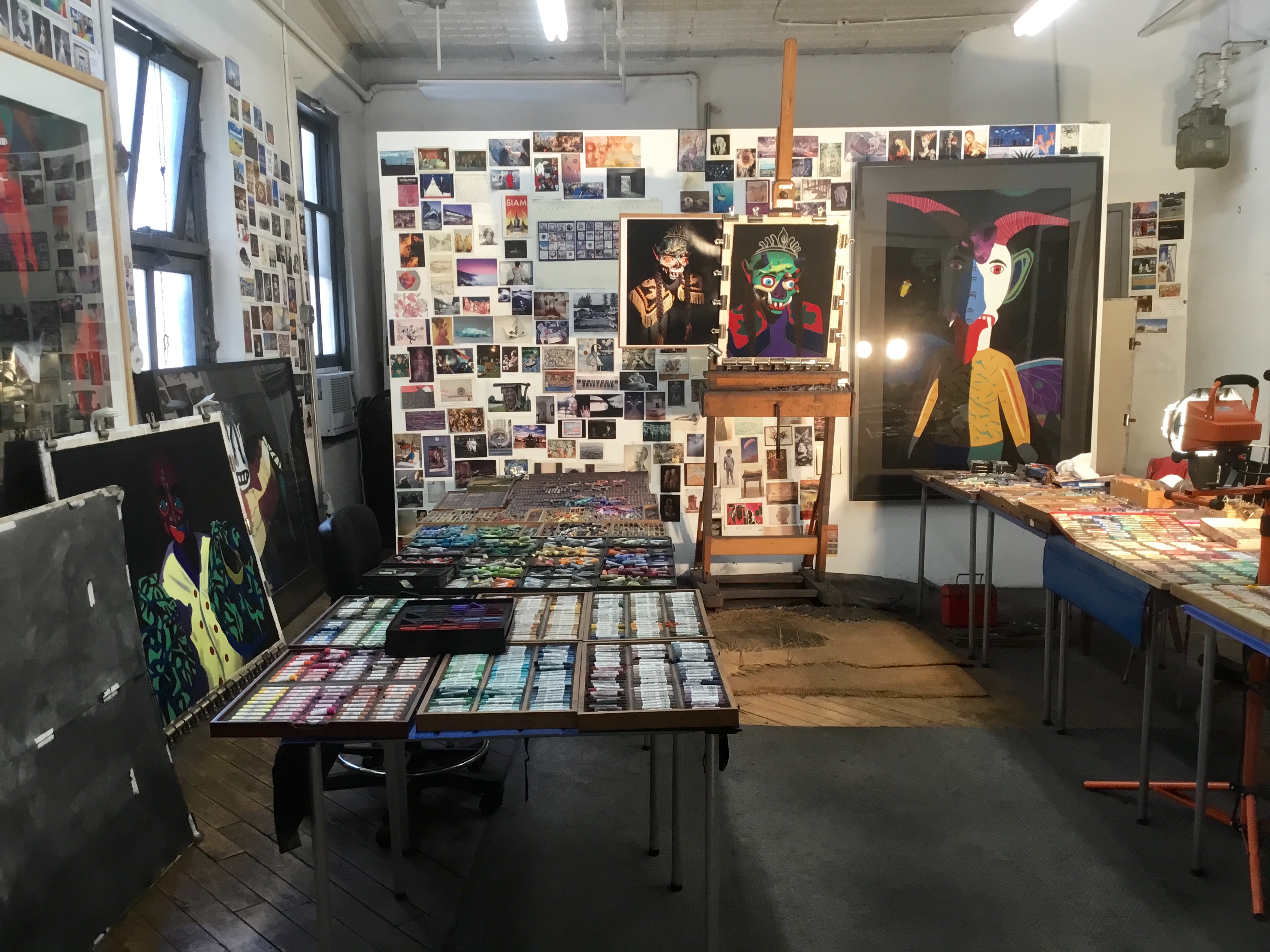
Studio with works in progress
*an ongoing series of quotations – mostly from artists, to artists – that offers wisdom, inspiration, and advice for the sometimes lonely road we are on.
Works of art specify no immediate action or limited use. They are like gateways, where the visitor can enter the space of the painter, or the time of the poet, to experience whatever rich domain the artist has fashioned. But the visitor must come prepared: if he brings a vacant mind or deficient sensibility, he will see nothing. Adherent meaning is therefore largely a matter of conventional shared experience, which it is the artist’s privilege to rearrange and enrich under certain limitations.
George Kubler in The Shape of Time: Remarks on the History of Things
Comments are welcome!



