Blog Archives
Q: Would you speak more about being represented by Brewster Gallery in the late 1990s?

A: In 1996 I landed my first major New York gallery, Brewster Gallery. I was still living in Virginia and Mia Kim, the director, had accepted my work on the basis of unsolicited slides mailed to the gallery in July. The first time she saw my pastel paintings in person was when I delivered them for a solo exhibition in October.
Brewster represented Latin American masters such as Frida Kahlo, Francisco Zuniga, Diego Rivera, Francisco Toledo, and Rufino Tamayo. Mia Kim, the director, said that she sometimes had to defend her decision to represent me. Mia’s fabulous response was, “Barbara has the SOUL of a Latina!” My work at that time was heavily influenced by Mexican culture. Mia immediately understood what I was doing in my work. How thrilled and honored I was to be represented by a gallery where my fellow sole non-Latina was Leonora Carrington! Leonora came to my opening.
Those were wonderful days!
Comments are welcome!
Q: What is your best advice for new artists?

Recent pastel paintings in progress
A: I would say to remember that artists work from our hearts. Well-meaning people will give you unsolicited, contradictory, and confusing advice about what to paint, how to paint, etc. Artists must learn to ignore most of it and listen to our hearts. Continue working from a place deep inside you and you will always stay on the right track.
Comments are welcome!
Pearls from artists* # 534

*an ongoing series of quotations – mostly from artists, to artists – that offers wisdom, inspiration, and advice for the sometimes lonely road we are on.
Today I am quoting myself:
I strive to always do what is best for my art practice. It’s difficult sometimes, but it’s important to ignore most of what other people say. They mean well, but advice to artists is often misguided, especially when it is unsolicited. Fortunately, our hearts are never wrong.
B. Rachko on a Facebook post
Comments are welcome!
Pearls from artists* # 108
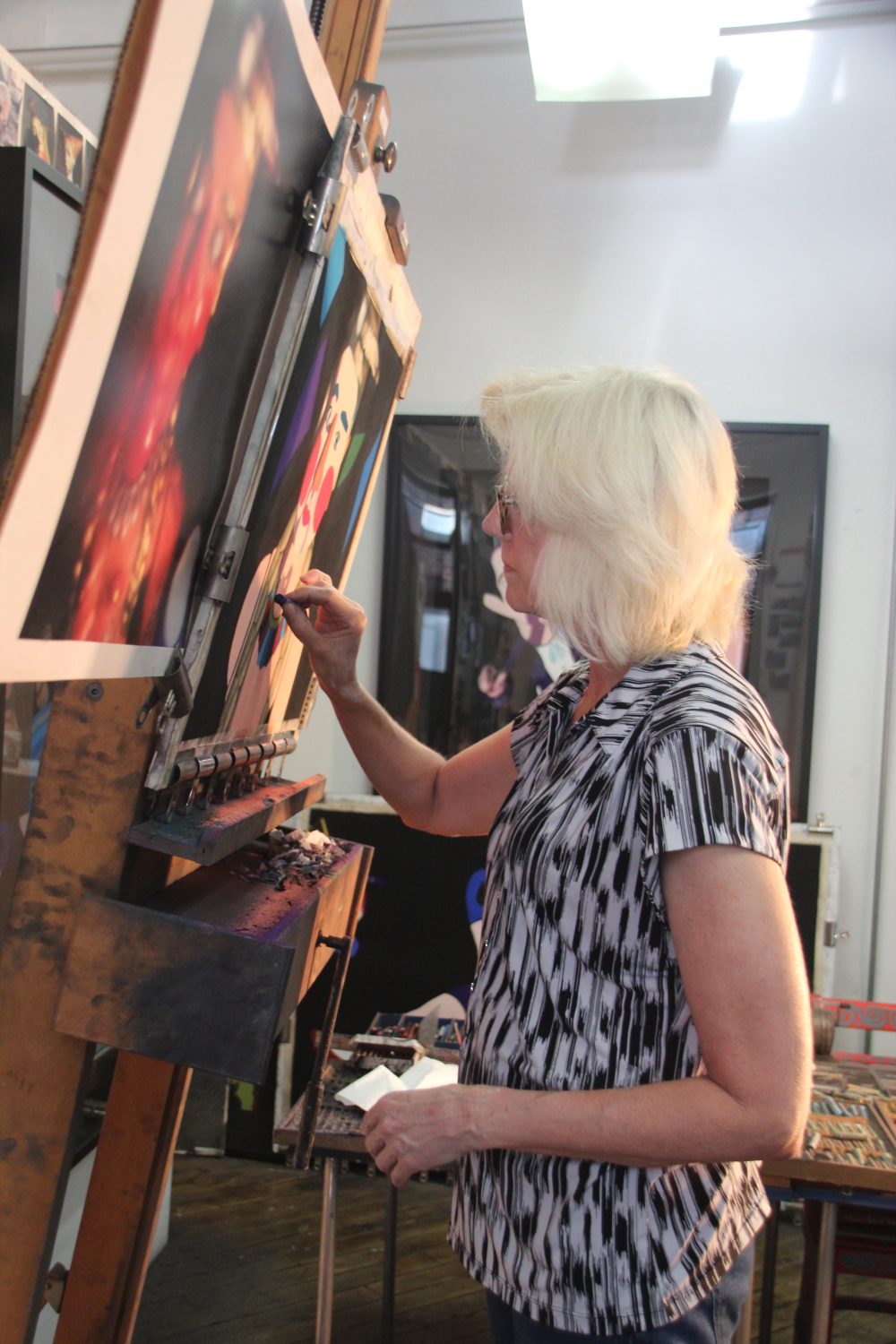
At work on a pastel painting
* an ongoing series of quotations – mostly from artists, to artists – that offers wisdom, inspiration, and advice for the sometimes lonely road we are on.
Artists generally need privacy in order to create, and as I’ve noted, what constitutes adequate privacy varies by person and time. Solitude quickly becomes isolation when it oversteps one’s desires. But most artists need to feel that they and their work won’t be examined prematurely and, certainly, won’t be ambushed unfinished by ridiculing eyes. You might go out and invite various people to critique a piece in progress, even knowing they’re unlikely to view it with sympathy, exactly because you feel there’s necessary information in their opinion. But, if you’ve invited them, however unpleasant the response, your experience is likely preferable to what you would feel if they impulsively offered up the same critiques unsolicited.
Someone making art needs privacy in part because the process of creation makes many people feel vulnerable, sometimes exquisitely so, particularly since the work frequently emerges in a jumble of mixed-up small parts that you can only assemble gradually, or in a wet lumpy mound that requires patient sculpting. When people feel prematurely revealed or exposed, they often experience great discomfort and find themselves babbling apologetically, seeking to reassure by laying out the distance they have yet to travel. It is in part this babble-as-smoke-screen to cover exposure resulting, distracting, unhappy self-consciousness that privacy seeks to shelter.
But even more significantly, privacy grants us permission to turn our attention inward without interruption. As I described earlier, in order to concentrate, think, and fantasize, we need to feel we’re in a safe enough space that we can lower our vigilance, stop monitoring our environment, and allow ourselves to refocus on the happenings within our own minds. There are times interruptions feel merciful, but many more when they disrupt our effort to flesh out an inchoate notion.
Janna Malamud Smith in an absorbing errand: How Artists and Craftsmen Make Their Way to Mastery
Comments are welcome!


 barbararachkoscoloreddust.com