Blog Archives
Pearls from artists* # 636

*an ongoing series of quotations – mostly from artists, to artists – that offers wisdom, inspiration, and advice for the sometimes lonely road we are on.
Some artists will rework a piece for half a lifetime before they know it is finished. An improviser may have to practice for years before being able to play a totally spontaneous minute of music in which every detail is right for its own fleeting moment. The great scientists and scholars are not those who publish or perish at any cost, but rather those who are willing to wait until the pieces of the puzzle come together in nature’s own design. The fruits of improvising, composing, writing, inventing, and discovering may flower spontaneously, but they arise from soil that we have prepared, fertilized, and tended in the faith that they will ripen in nature’s own time.
Stephen Nachmanovitch in Free Play: Improvisation in Life and Art
Comments are welcome!
Pearls from artists* # 632

*an ongoing series of quotations – mostly from artists, to artists – that offers wisdom, inspiration, and advice for the sometimes lonely road we are on.
”The mind once stretched by a new idea, never returns to its original dimensions.” – Ralph Waldo Emerson ((1803 – 1882)
Ralph Waldo Emerson was more prescient than he can ever have realized. It was not until the 1960s that neuroscientist Marian Diamond discovered that exposure to enriched environments increased brain matter, specifically in the brain’s outer cortex. Prior to her landmark research, scientists believed that the brain remained static until it started to decline in older age. Diamond was the first to observe the brain’s neuroplasticity, yet her findings were disputed and rejected for many years. Today she is considered one of the founders of modern neuroscience.
Museums are the ultimate enriched environments, or super-enriched spaces, that are good for body, mind, and soul. Museums are dedicated to arousing our curiosity; engaging us in discovery and learning; and evoking our reflection, wonder, and awe. Artists (and Emerson) have known intuitively what scientists are now proving with rigorous research: aesthetic experiences affect us in extraordinary ways. In short, our brains are wired for art.
The Museum and the Mind by Susan Magsamen in Museum, May/June 2024
Comments are welcome!
Pearls from artists* # 629
Basquiat X Warhol Exhibition at Fondation Louis Vuitton, Paris. Photo: Christine Marchal
*an ongoing series of quotations – mostly from artists, to artists – that offers wisdom, inspiration, and advice for the sometimes lonely road we are on.
… scientists are right there with artists in insisting art is fundamental to being human. Art is one of our oldest creations (humans invented paint long before the wheel), one of our earliest means of communication (we drew long, long, long before we could write), and one of our most universal urges (we all engage with art, whether preschoolers, Parisians, or Paleolithic cave dwellers). I began to notice that art – or what scientists dispassionately call “human-made two- or three-dimensional structures that remain unchanged: – was everywhere: hung over the register at the hardware store, spray-painted on a bakery window, cock-eyed in a dive-bar bathroom. As humans, we’ve filled our lives with art since practically forever. The earliest known painting keeps getting older, but the last time I checked, archaeologists had traced the oldest portrait to a cave in Indonesia, where around 45,000 years ago, artists put their finishing touches on a fat figure with purple testifies for a chin. In other words, before Neanderthals went extinct, before mammoths died out, before we figured out how to harvest food or heal bloody wounds, humans applied themselves to painting a portrait of a warty pig. “It is clear that the creation of beautiful and symbolic objects is a characteristic feature of the human way of life,” wrote the biologist J.Z. Young. “They are as necessary as food or sex.”
Bianca Booker in Get the Picture: A Mind-Bending Journey Among the Inspired Artists and Obsessive Art Fiends Who Taught Me How to See
Comments are welcome!
Pearls from artists* # 271
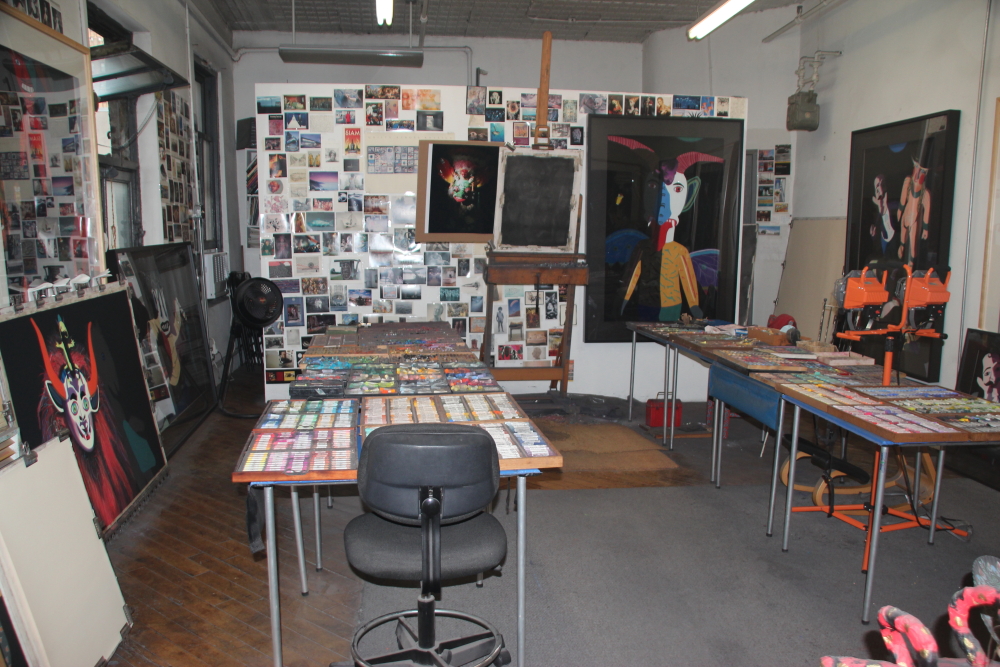
Barbara’s studio
* an ongoing series of quotations – mostly from artists, to artists – that offers wisdom, inspiration, and advice for the sometimes lonely road we are on.
The following quote is so true for artists also!
Without a powerful emotional commitment, scientists could not summon up the enormous energy needed for pursuing an idea for years, working day and night in the lab or at their desks doing calculations, often sacrificing the rest of their lives. It is little wonder that such a personal commitment sometimes causes the scientist to defend his or her beliefs regardless of facts.
Alan Lightman in A Sense of the Mysterious: Science and the Human Spirit
Comments are welcome!
Pearls from artists* # 259
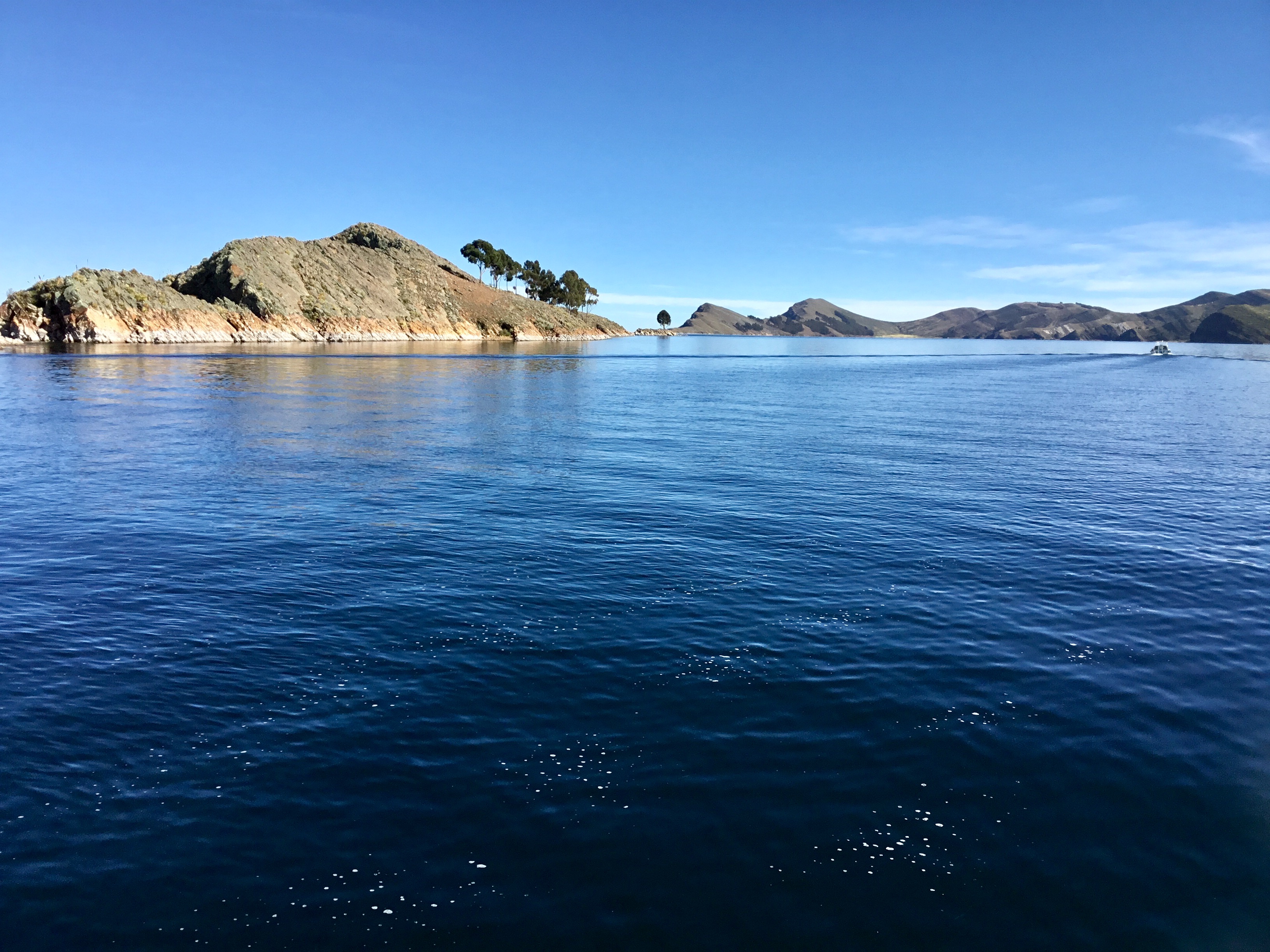
In Bolivia on Lake Titicaca
* an ongoing series of quotations – mostly from artists, to artists – that offers wisdom, inspiration, and advice for the sometimes lonely road we are on.
In college, I made two important decisions about my career.
First, I would put my writing on the back burner until I became well established in science. I know of a few scientists who later became writers, like C.P. Snow, Rachel Carson, but no writers who later became scientists. For some reason, science – at least the creative, research side of science – is a young person’s game. In my own field, physics, I found that the average age at which Nobel Prize winners did their prize-winning work was only thirty-six. Perhaps it has something to do with the focus on and isolation of the subject. A handiness for visualizing in six dimensions or for abstracting the motion of a pendulum favors an agility of mind but apparently requires little knowledge of the human world. By contrast, the arts and humanities require experience with life and the awkward contradictions of people, experience that accumulates and deepens with age.
Alan Lightman in A Sense of the Mysterious: Science and the Human Spirit
Comments are welcome!
Pearls from artists* # 88

Teotihuacan
* an ongoing series of quotations – mostly from artists, to artists – that offers wisdom, inspiration, and advice for the sometimes lonely road we are on.
To men like Ayers, it occurs to me, this temple is civilization. The masses, slaves, peasants, and foot soldiers exist in the cracks of its flagstones, ignorant even of their ignorance. Not so the great statesmen, scientists, artists, and most of all, the composers of the age, any age, who are civilization’s architects, masons, and priests. Ayers sees our role is to make civilization ever more resplendent. My employer’s profoundest, or only, wish is to create a minaret that inheritors of Progress a thousand years from now will point to and say, “Look, there is Vyvyan Ayers!”
How vulgar, this hankering after immortality, how vain, how false. Composers are merely scribblers of cave paintings. One writes music because winter is eternal and because, if one didn’t, the wolves and blizzards would be at one’s throat all the sooner.
David Mitchell in Cloud Atlas
Comments are welcome!


 barbararachkoscoloreddust.com