Blog Archives
Q: Would you talk about a few of the technical properties that made pastel your medium of choice?
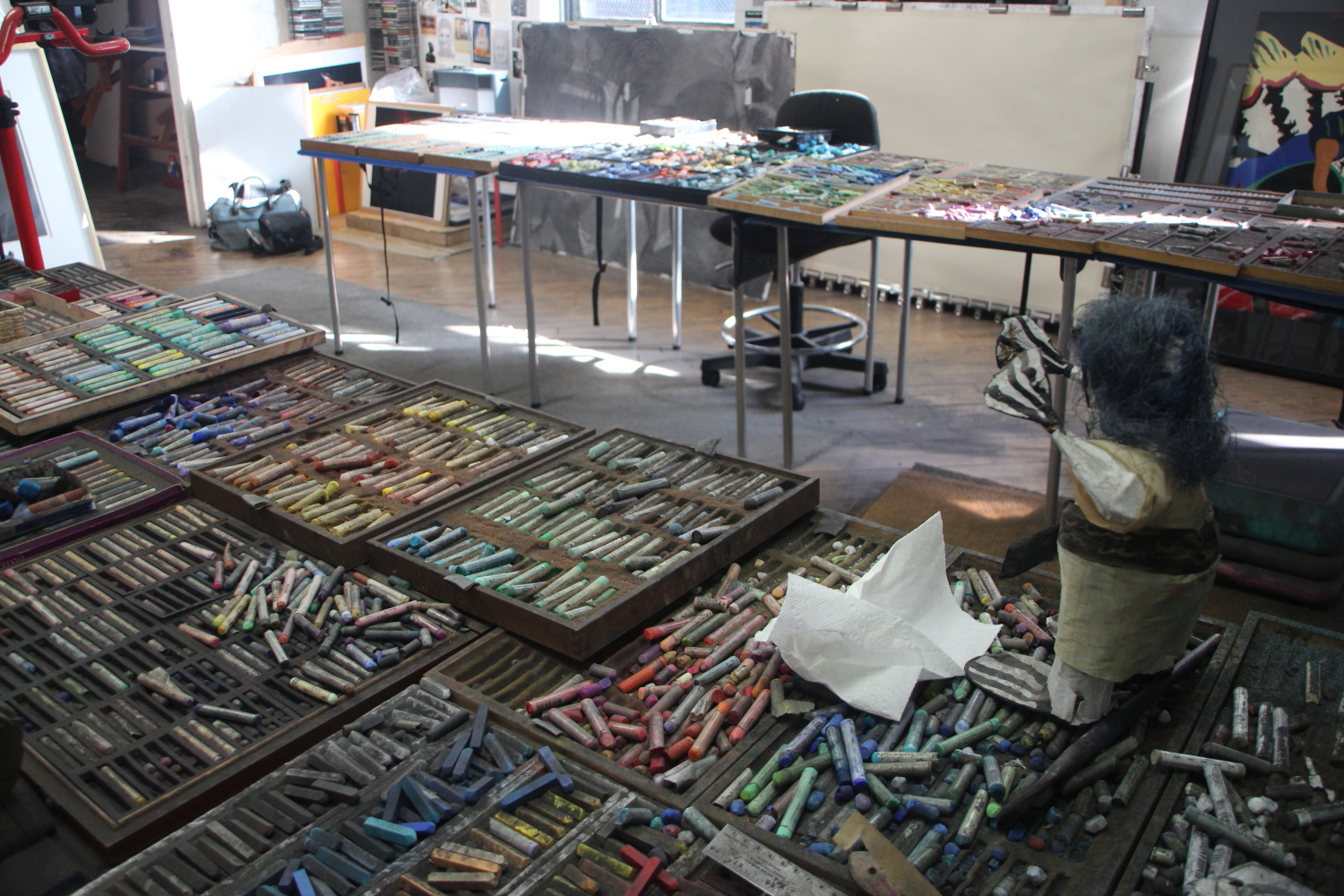
Barbara’a pastels
A: Pastel is a time-tested medium that has been in use for five hundred years. I fell in love with it nearly thirty years ago and it has been my primary medium ever since.
Pastel is known to be the most permanent of all media. It has no liquid binder that might cause oxidizing with the passage of time as often happens with other painting media. Pastel colors are intense because they are the closest artists get to working with pure pigment. Artists throughout history have generally favored pastel because it allows a spontaneous approach with no drying time and no change of color.
Comments are welcome!
Pearls from artists* # 242
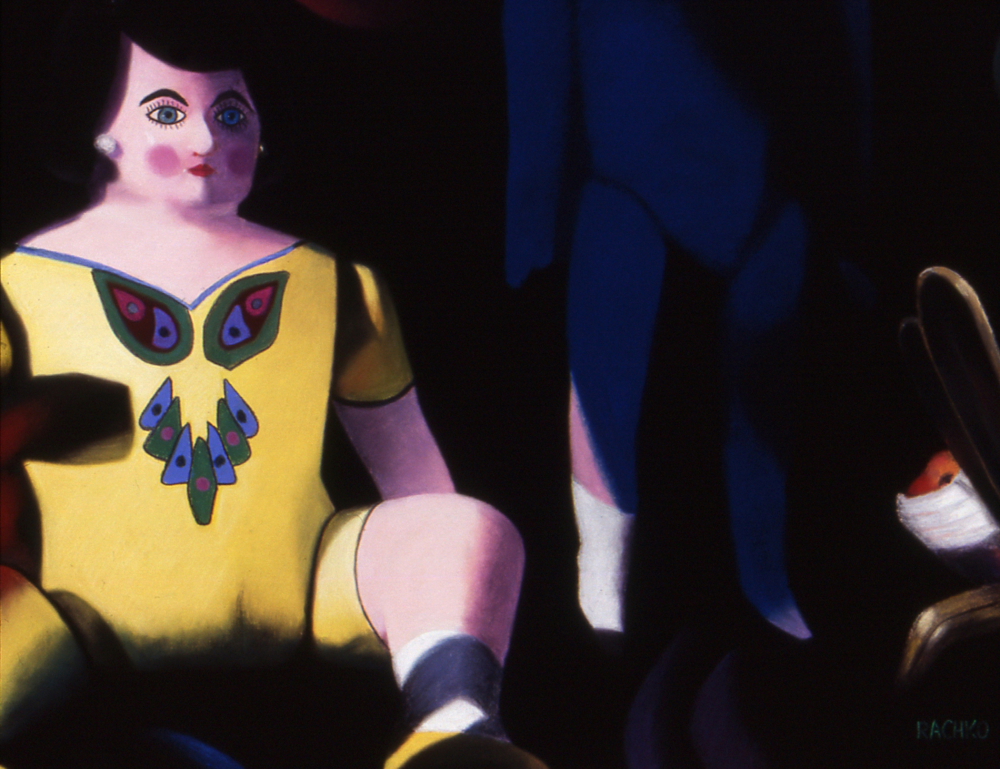
“Figment,” soft pastel on sandpaper, 20″ x 26″
* an ongoing series of quotations – mostly from artists, to artists – that offers wisdom, inspiration, and advice for the sometimes lonely road we are on.
Of this there can be no question – creative work requires the loyalty of water to the force of gravity. A person trudging through the wilderness of creation who does not know this – who does not swallow this – is lost. He who does not crave that roofless place eternity should stay home. Such a person is perfectly worthy, and useful, and even beautiful, but is not an artist. Such a person had better live with timely ambitions and finished work formed for the sparkle of the moment only. Such a person had better go off and fly an airplane.
Mary Oliver in Upstream: Selected Essays
Comments are welcome!
Pearls from artists* # 236
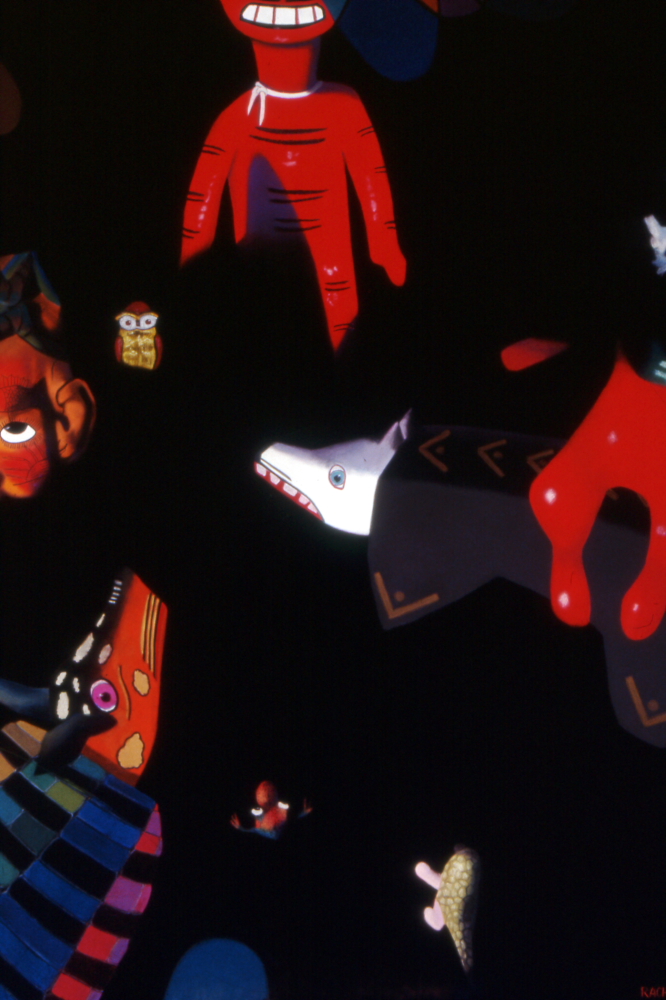
“Some Things We Regret,” soft pastel on sandpaper, 58″ x 38″
* an ongoing series of quotations – mostly from artists, to artists – that offers wisdom, inspiration, and advice for the sometimes lonely road we are on.
There are so many things that art can’t do. It can’t bring the dead back to life, it can’t mend arguments between friends, or cure AIDS, or halt the pace of climate change. All the same, it does have some extraordinary functions, some odd negotiating ability between people, including people who never meet and yet who infiltrate and enrich each other’s lives, it does have a capacity to create intimacy; it does have a way of healing wounds, and better yet of making it apparent that not all wounds need healng and not all scars are ugly.
Olivia Laing in The Lonely City: Adventures in the Art of Being Alone
Comments are welcome!
Q: One can’t help but make connections between the devastating effects of 9/11 and your series, “Domestic Threats.” Would they be right?

“No Cure for Insomnia,” soft pastel on sandpaper, 58″ x 38″
A: Well, not exactly, since I began this work in 1991.
All of the paintings in this series are set in places where I reside or used to live, either a Virginia house or two New York apartments, i.e., my personal domestic environments. Each painting typically contains a conflict of some sort, at least one figure that is being menaced or threatened by a group of figures. For example, in “No Cure for Insomnia (above) the threatened figure is me. So it was an easy decision to name the series “Domestic Threats.” My idea was that these paintings were psychological dramas: surrealistic, metaphoric depictions of human fears, anxieties, inner conflicts, demons, etc.
But depending on what is/was going on in the country at a particular moment, people make other associations. Since my husband was killed on 9/11, people think the title, “Domestic Threats,” was prescient and ascribed all kinds of domestic terrorism associations to the work. For a time viewers thought I was hinting at scenes of domestic violence, but that also is not what I intended. The title “Domestic Threats” has proven to be fraught with associations that I never considered.
However, I am fine with any interpretations that are elicited because it means my paintings are getting a response. That’s important. I have been working, studying, and thinking about art for thirty years and hopefully, that’s reflected in the work I create. It’s natural that it takes time for people to ponder all the complexities in a work of art.
Maybe this comment by the late Gerrit Henry, a New York critic, is more true now than when he wrote it sixteen years ago: “What we bring to a Rachko, in other words, we get back, bountifully.”
Comments are welcome!
Pearls from artists* # 235
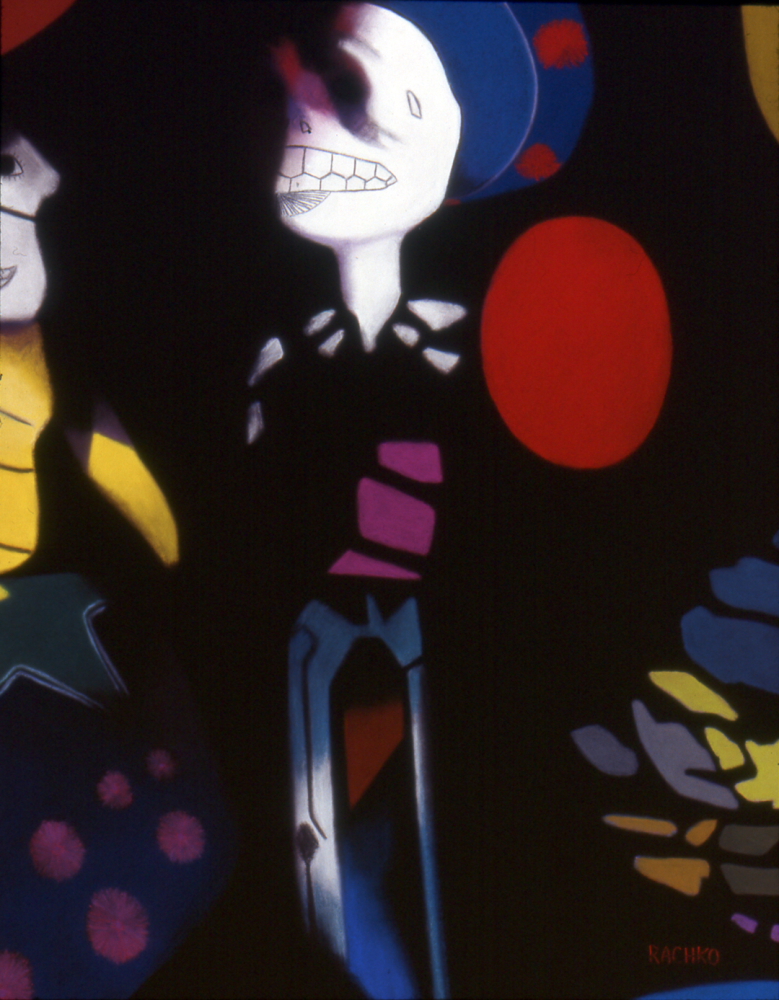
“Effigy,” soft pastel on sandpaper, 26″ x 20″
* an ongoing series of quotations – mostly from artists, to artists – that offers wisdom, inspiration, and advice for the sometimes lonely road we are on.
People make things – make art or things that are akin to art – as a way of expressing their need for contact, or their fear of it; people make objects as a way of coming to terms with shame, with grief. People make objects to strip themselves down, to survey their scars, and people make objects to resist oppression, to create a space in which they can move freely. Art doesn’t have to have a reparative function, any more than it has a duty to be beautiful or moral.
Olivia Laing in The Lonely City: Adventures in the Art of Being Alone
Comments are welcome!
Pearls from artists* # 229

“Epiphany,” soft pastel on sandpaper, 38″ x 58″
* an ongoing series of quotations – mostly from artists, to artists – that offers wisdom, inspiration, and advice for the sometimes lonely road we are on.
After his own cancer diagnosis, [Donald] Hall writes: “If work is no antidote to death, nor a denial of it, death is a powerful stimulus to work. Get done what you can.” There is this – only this. It would be good to keep these words in mind when we wake up each morning. Get done what you can. And then the rest is gravy.
Dani Shapiro in Still Writing: The Perils and Pleasures of a Creative Life
Comments are welcome!
Q: Do you consider your finished pastel works to be drawings or paintings?

“The Sovereign,” soft pastel on sandpaper, 58″ x 38″ image, 70″ x 50″ framed
A: Among artists who work in pastel, these two words, ‘drawings’ and ‘paintings,’ have very specific meanings, somewhat unrelated to the usual distinctions made by art historians and others. For a pastel artist, a ‘drawing’ refers to a work in which the paper or other substrate is allowed to show through. In a pastel ‘painting’ you do not see the substrate at all, i.e. pastel is used much more heavily in a painting than in a drawing. Since I have always spent months creating each piece, covering the entire sandpaper ground with up to 30 layers of pigment, I have considered my work to be pastel painting.
Comments are welcome!
Pearls from artists* # 224
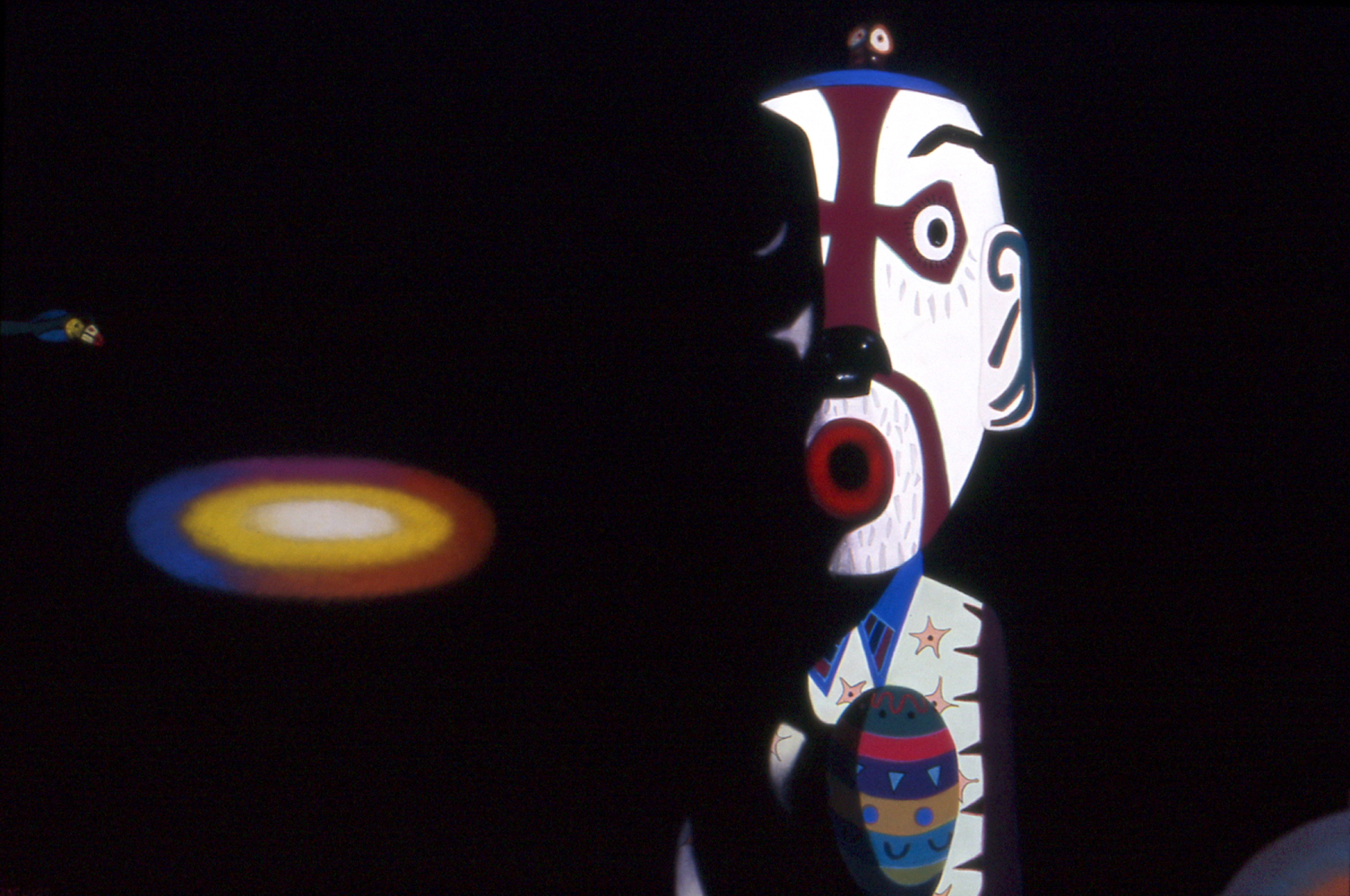
“Poker Face,” soft pastel on sandpaper, 38″ x 58″ image, 50″ x 70″ framed
* an ongoing series of quotations – mostly from artists, to artists – that offers wisdom, inspiration, and advice for the sometimes lonely road we are on.
… wise writers decline to engage in debates over the right way to read their words. T.S. Eliot was once approached with a question about a cryptic line from his poem “Ash-Wednesday”: “Lady, three white leopards sat under a juniper-tree.” What did the line mean? The poet replied: “I mean, ‘Lady, three white leopards sat under a juniper-tree .” Creating a text, Eliot seems to be saying, like having a child, only means bringing something into the world. It doesn’t include the power to control it’s destiny.
Adam Kirsch in “Can You Read a Book the Wrong Way?”, The New York Times Book Review, Sept. 27, 2016.
Comments are welcome!
Q: What’s on the easel today?
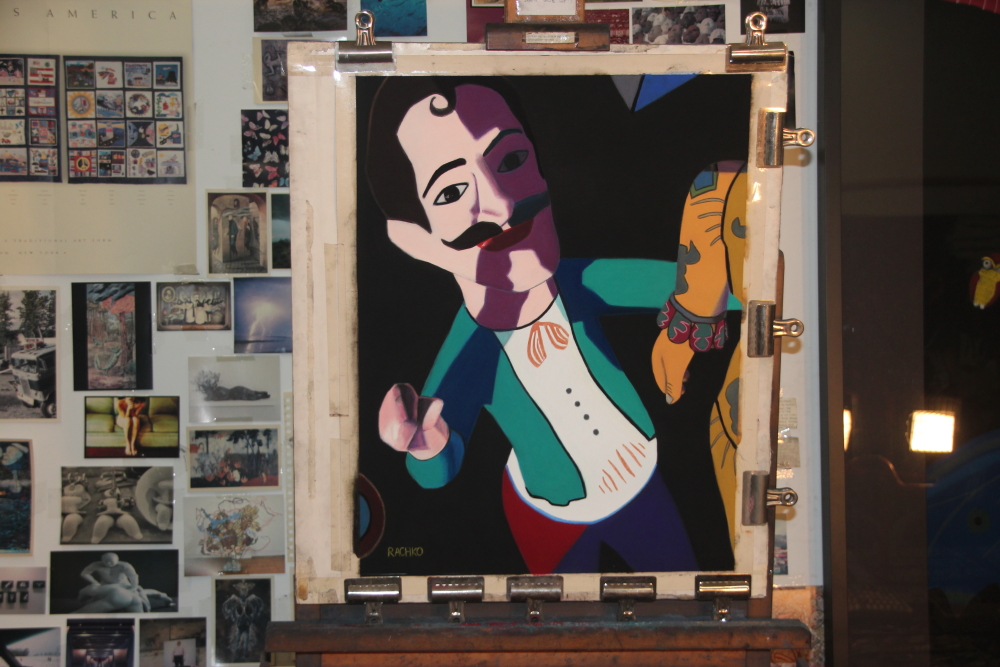
“A Long Goodbye,” soft pastel on sandpaper, 26″ x 20″
A: I am putting finishing touches on a small pastel painting called, “A Long Goodbye.” It’s a smaller, cropped version of a larger piece completed in 2013 called, “The Ancestors” (below).
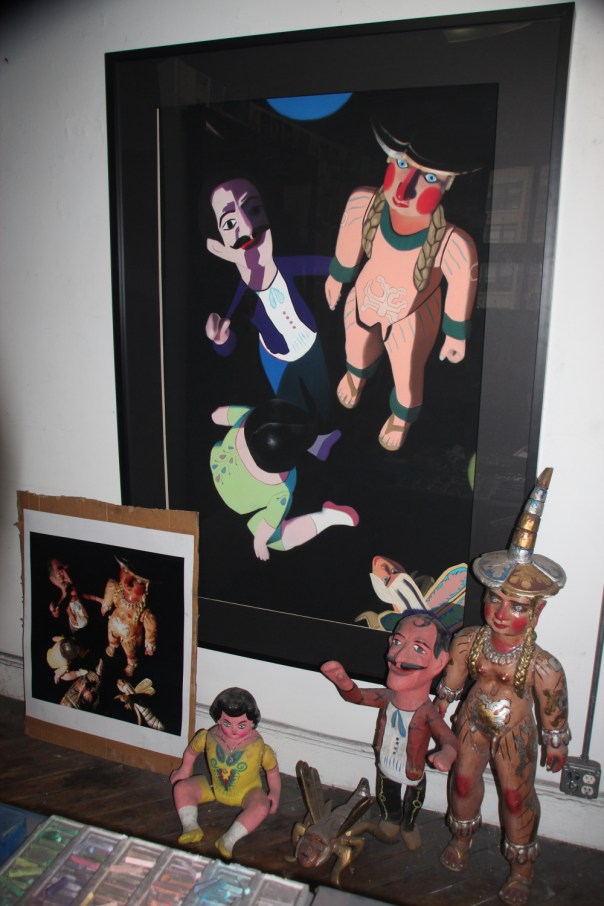
“The Ancestors” in Barbara’s studio
Comments are welcome!
Q: What’s on the easel today?
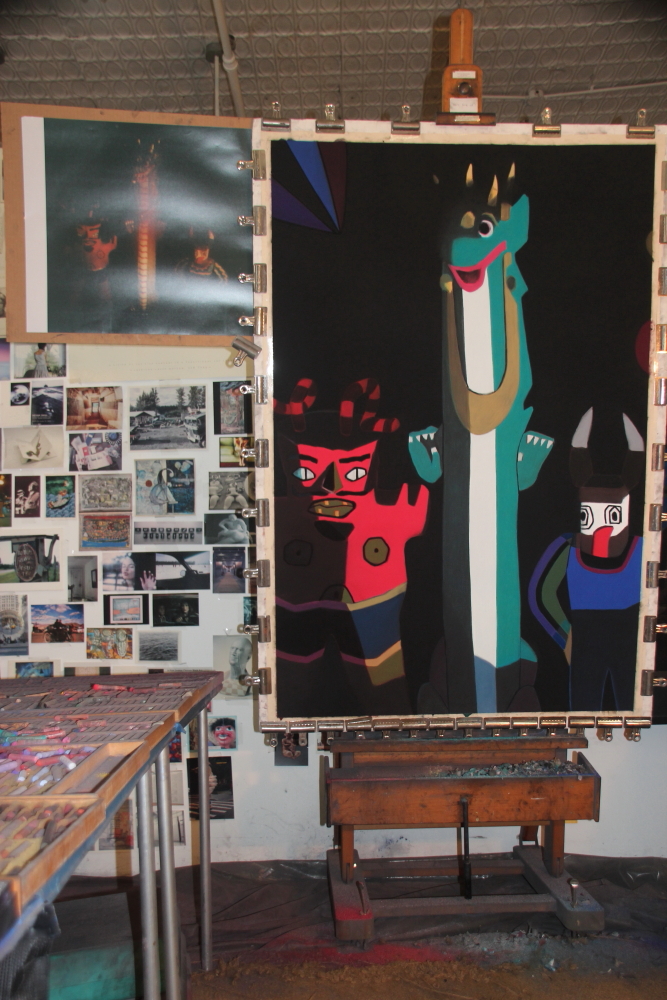
Work in progress
A: I am continuing work on a large (58″ x 38″) pastel painting tentatively titled, “Blocked.”
Comments are welcome!



