Blog Archives
Pearls from artists* # 181

“Epiphany,” soft pastel on sandpaper, 38″ x 58″
* an ongoing series of quotations – mostly from artists, to artists – that offers wisdom, inspiration, and advice for the sometimes lonely road we are on.
It takes courage to face the unfamiliar, to espouse the different; courage to fight one’s own prejudices only less than those of others. Was it not a little child who first dared call the emperor naked? It took great fortitude for Kepler to adhere to his new notion of infinity (as the second focus of a parabola), for, as he said, “The idea seems absurd, but I can find no flaw in it”; just as it did for Galileo to murmur among his inquisitors, “Yet the world does move.” Most of us will never achieve great imaginative insights; we might at least attempt to be tolerant of those offered by others.
The Biological Basis of Imagination by R.W. Gerard in The Creative Process edited by Brewster Ghiselin
Comments are welcome!
Q: Why do you prefer not to explain your titles and imagery?
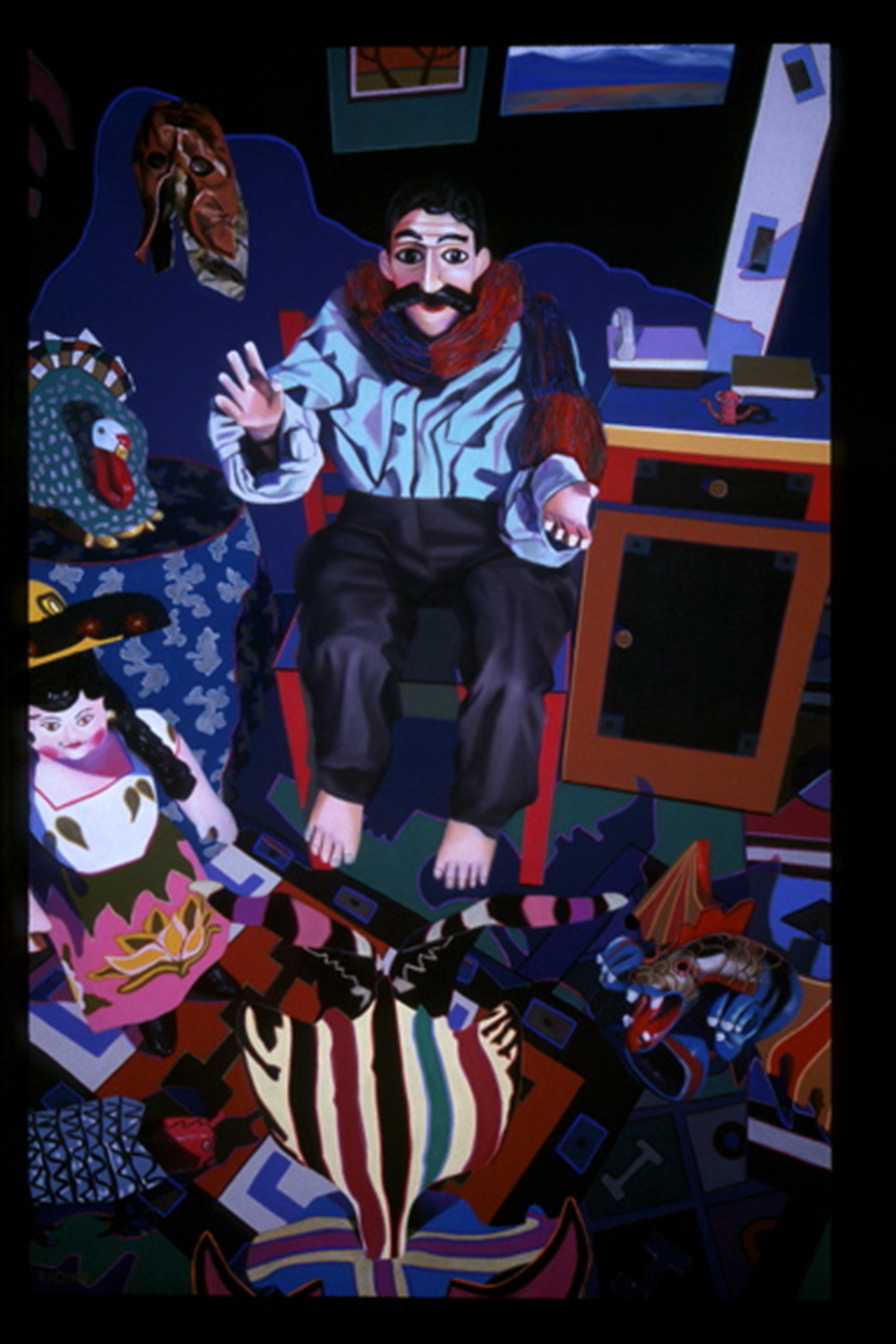
“Truth Betrayed by Innocence,” soft pastel on sandpaper, 58″ x 38″
A: It’s mainly because answers close down imagination and creativity. I enjoy hearing alternative interpretations of my pastel paintings. People are wildly imaginative and each person brings unique insights to their art viewing. By leaving meanings open, conversation is generated. Most artists want viewers to talk about their work.
Once at a public artist’s talk that I attended, I was told by an artist that my interpretation of her title was completely wrong. First of all, how can an interpretation honestly expressed by your audience be “wrong?” Art is as open to interpretation as a Rorschach test (art IS a kind of Rorshach test). Then she explained the thinking behind her title and succeeded in cutting off all further conversation. I felt belittled. Later several people told me that my interpretation was much more compelling. Still, the experience was mortifying and I hope to never do that to anyone.
Comments are welcome!
Pearls from artists* # 37
Self portrait, White Sands, NM
* an ongoing series of quotations – mostly from artists, to artists – that offers wisdom, inspiration, and advice for the sometimes lonely road we are on.
Certainly the most compelling thing in both personal life and art is to be yourself. When we engage attentively and honestly, pay attention to the insights that come to us, see our denial and faulty thinking, and engage in uncovering the obstacles and blocks to our expression, we realize that art is a wonderful medium for personal growth.
If we realize all this, we do ourselves justice when we claim to be an artist. We really mean it, and we own it. Today, as we start working on whatever it is we’re doing, let’s claim our role as artists, being attentive to process as much as finished results.
Ian Roberts in Creative Authenticity: 16 Principles to Clarify and Deepen Your Artistic Vision.
Comments are welcome!


 barbararachkoscoloreddust.com