Pearls from artists* # 244
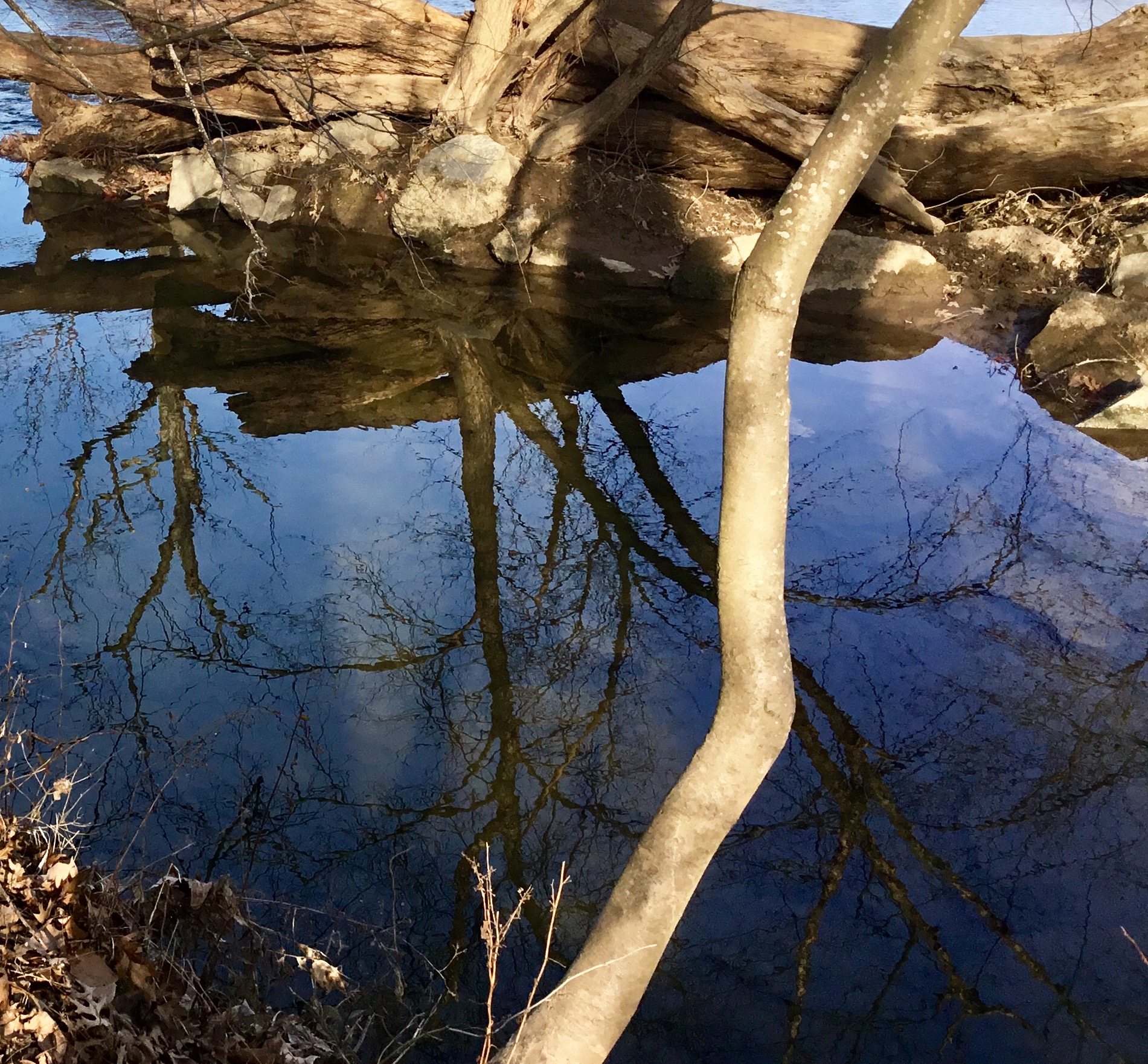
Great Falls, VA
* an ongoing series of quotations – mostly from artists, to artists – that offers wisdom, inspiration, and advice for the sometimes lonely road we are on.
Poet or painter, musician or architect, all solitary individuals at bottom turn to nature because they prefer the eternal to the transient, the profound rhythms of eternal laws to that which finds justification in passing. Since they cannot persuade nature to share in their experience they consider their task to grasp nature in order to place themselves somewhere in its vast contexts. And with these single solitary individuals all of humanity approaches nature. It is not the ultimate and possibly most peculiar value of art that it constitutes the medium in which man and landscape, figure and world encounter and find each other. But in the painting, the building, the symphony – in a word, in art itself, they seem to join together as if in a higher, prophetic truth, to rely on one another, and it is as if they completed each other to become that perfect unity that characterizes the work of art.
The Poet’s Guide to Life: The Wisdom of Rilke, edited and translated by Ulrich Baer
Comments are welcome!
Q: The imagery used throughout your work evoked glimmers of childhood memories, specifically “Punch and Judy” puppet shows. Would you talk about your use of this kind of slightly sinister iconography?

Barbara and Tomas in Panajachel
A: I don’t really see my iconography as sinister, although I know some people do.
I search the markets and bazaars of Mexico, Guatemala, and elsewhere for folk art objects – masks, carved wooden animals, papier mache figures, children’s toys – to bring back to New York to photograph and paint.
Color is very important – the brighter and the more eye-catching the patterns are on these objects the better – plus they must be unique and have lots of personality. I try not to buy anything mass-produced or obviously made for the tourist trade. The objects must have been used or otherwise look like they’ve had a life (i.e., been part of religious festivities) to draw my attention. How and where each one comes into my possession is an important part of the creative process. Making this work is a long, complex undertaking with many facets. Finished paintings are always an idiosyncratic blend of reality, fantasy, and autobiography.
Finding, buying, and getting the objects back to the U.S. is sometimes circuitous, but that, too, is part of the process, an adventure, and often a good story. Here’s an example.
In 2009 I was in a small town on the shores of Lake Atitlan in Guatemala, called Panajachel. After returning from a boat ride across the lake, my friends and I were walking back to our hotel when we discovered a wonderful mask store. How fortuitous! I spent some time looking around, made my selections, and was ready to buy five exquisitely-made standing wooden figures, when I learned that Tomas, the store owner, did not accept credit cards. I was heart-broken and thought, “Oh, no, I’ll have to leave these Panajachelitos behind.”
However, thanks to my good friend, Donna, whose Spanish was much more fluent than mine, the three of us brain-stormed until finally, Tomas had an idea. I could pay for the figures at a nearby hotel and in a few days when the hotel was paid by the credit card company, the hotel would pay Tomas. Fabulous! Tomas, Donna, and I walked to the hotel, where the transaction was made and the first hurdle was overcome.
Working out the packing and shipping arrangements took another hour or two. This was a small village off the beaten track so boxes and packing materials were scarce. As we figured out the details, Tomas and I realized we liked and trusted each other, became friends, and exchanged telephone numbers. The store did not even have a telephone so he gave me the phone number of the post office next door, saying that when I called, he could easily run next door!
Most wonderfully, the package was waiting for me in New York when I returned home from Guatemala. All of the objects were unbroken and in excellent condition.
As I travel I am drawn to each of these figures because it possesses a powerful presence that resonates with me. It’s a mystery really. I am not sure exactly how or why, but I know each object has lessons to teach as it assumes various roles in yet-to-be-created paintings.
Coming upon a new find I wonder, who made this thing? How? Why? Where? When? I feel connected to each object’s creator and curiosity leads me to become a detective and an archaeologist to find out more about it and to figure out how to most effectively use it in my work.
The best way I can describe it: after three decades of seeking out, collecting, and using these folk art figures as personal symbols in my work, the process has become an enriching personal journey towards greater knowledge and wisdom. They are a vehicle for learning more about the world and and about myself. And what artist doesn’t love to learn?
Comments are welcome!
Pearls from artists* # 243
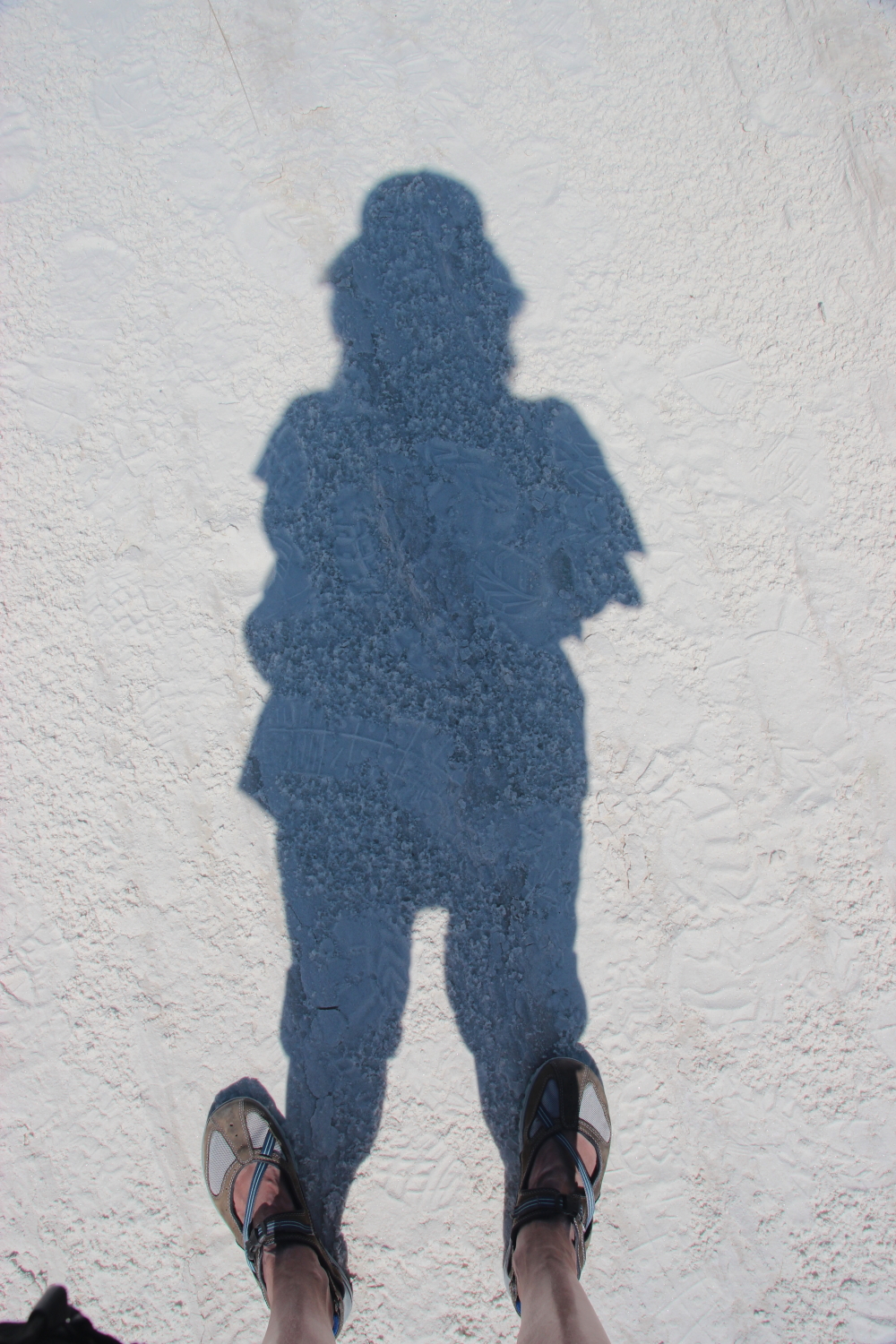
Self portrait, White Sands, NM
* an ongoing series of quotations – mostly from artists, to artists – that offers wisdom, inspiration, and advice for the sometimes lonely road we are on.
Art is not a making-oneself-understood but an urgent understanding-of-oneself. The closer you get in your most intimate and solitary contemplation or imagination (vision), the more has been achieved, even if no one else were to understand it.
The Poet’s Guide to Life: The Wisdom of Rilke, edited and translated by Ulrich Baer
Comments are welcome!
Start/Finish of “Motley,” 38″ x 58″ image, 50″ x 70″ framed

Beginning

Completed
Comments are welcome!
Pearls from artists* # 242
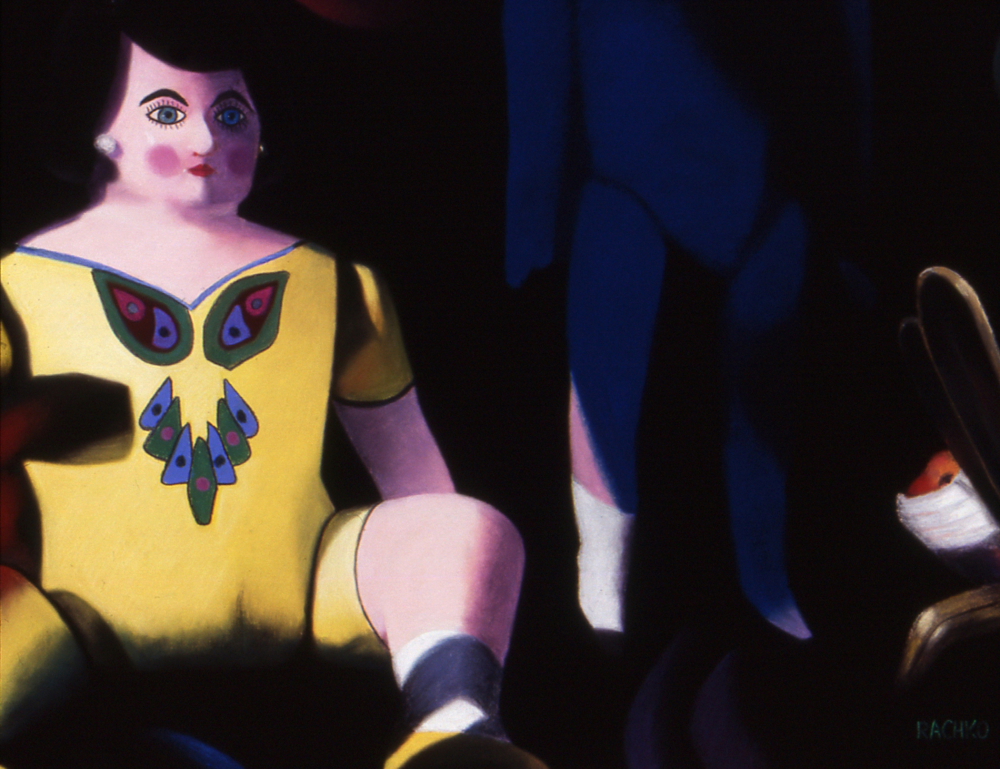
“Figment,” soft pastel on sandpaper, 20″ x 26″
* an ongoing series of quotations – mostly from artists, to artists – that offers wisdom, inspiration, and advice for the sometimes lonely road we are on.
Of this there can be no question – creative work requires the loyalty of water to the force of gravity. A person trudging through the wilderness of creation who does not know this – who does not swallow this – is lost. He who does not crave that roofless place eternity should stay home. Such a person is perfectly worthy, and useful, and even beautiful, but is not an artist. Such a person had better live with timely ambitions and finished work formed for the sparkle of the moment only. Such a person had better go off and fly an airplane.
Mary Oliver in Upstream: Selected Essays
Comments are welcome!
Q: What’s on the easel today?
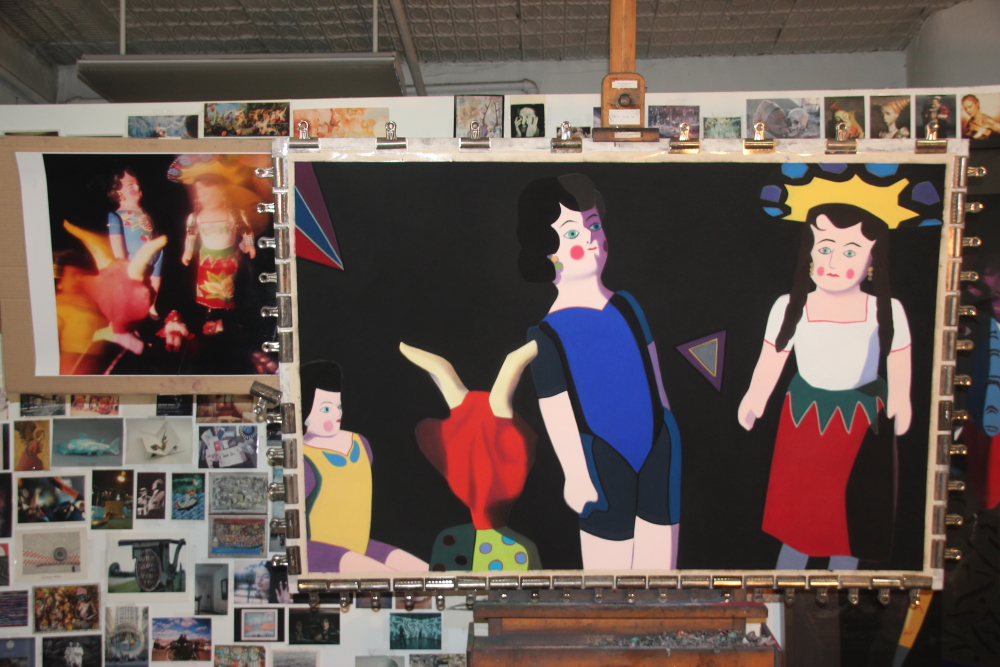
Work in progress
A: I continue working on a large, 38″ x 58″, pastel painting called, “Conundrum” and am happy with how it’s progressing. A few days ago I added the small triangle to the right of the central figure. I felt some compositional element was needed there and believe this is an improvement.
Comments are welcome!
Pearls from artists* # 241

“The Ancestors,” soft pastel on sandpaper, 58″ x 38″
* an ongoing series of quotations – mostly from artists, to artists – that offers wisdom, inspiration, and advice for the sometimes lonely road we are on.
A few years ago I heard a lecture about the Whitney family, especially about Gertrude Vanderbilt Whitney, whose patronage established the museum of that name in New York City. The talk was given by Mrs. Whitney’s granddaughter, and she used a fine phrase when speaking of her family – of their sense of “inherited responsibility” – to do, of course, with received wealth and a sense of using it for public good. Ah! Quickly I slipped this phrase from the air and put it into my own pocket!
For it is precisely how I feel, who has inherited not measurable wealth but, as we all do who care for it, that immeasurable fund of thoughts and ideas, from writers and thinkers long gone into the ground – and, inseparable from those wisdoms because demanded by them, the responsibility to live thoughtfully and intelligently. To enjoy, to question – never to assume, or trample. Thus the great ones (my great ones, who may not be the same as your great ones) have taught me – to observe with passion, to think with patience, to live always caringly.
Mary Oliver in Upstream: Selected Essays
Comments are welcome!
Q: How has your use of photography changed over the years?
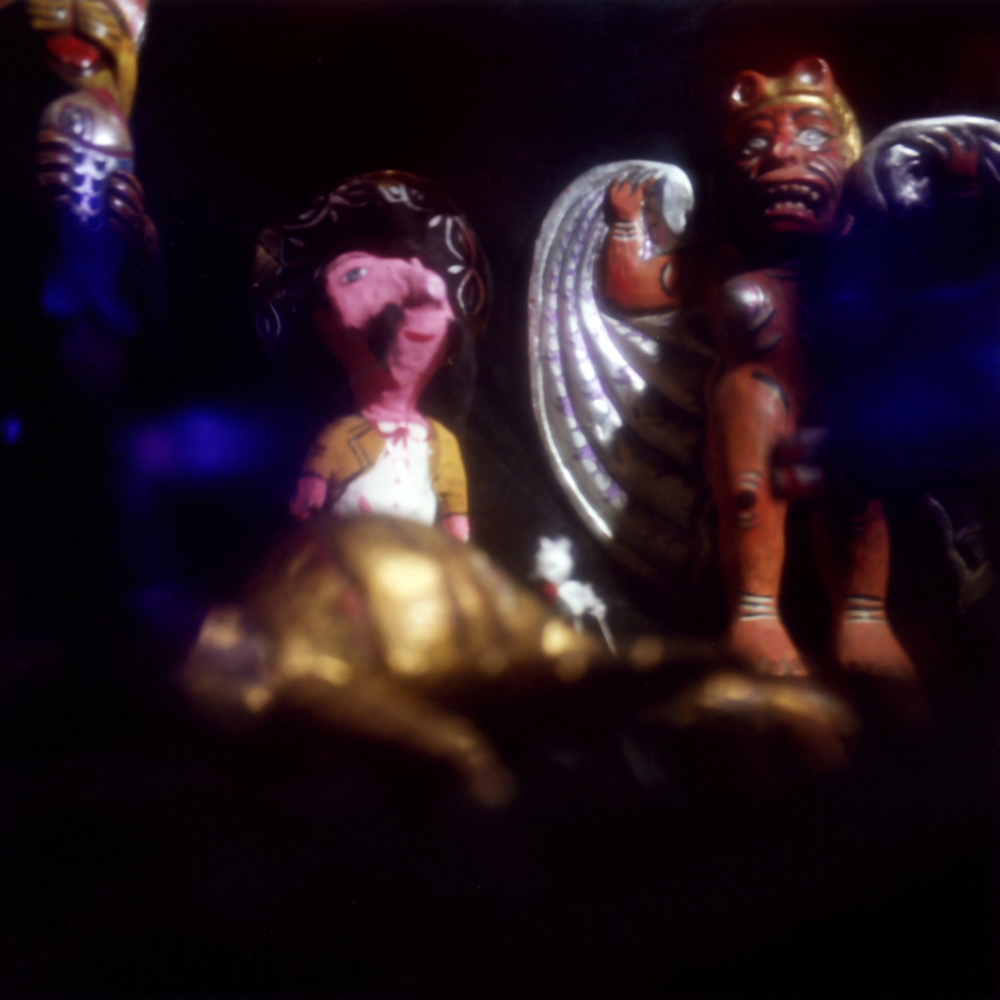
Untitled, 24″ x 24″ c-print
A: When my husband, Bryan, was alive I barely picked up a camera, except to photograph sights encountered during our travels.
Throughout the 1990s and ending in 2007, I worked on my series of pastel-on-sandpaper paintings called, “Domestic Threats.” These were realistic depictions of elaborate scenes that I staged first in our 1932 Sears house in Alexandria, Virginia, next in a New York sixth floor walk-up apartment, and finally in my current New York apartment.
I use Mexican masks, carved wooden animals, and other folk art figures that I discovered on trips to Mexico. I staged and lit these setups, while Bryan photographed them using his Toyo-Omega 4 x 5 view camera. We had been collaborating this way almost from the beginning (circa 1991). Having been introduced to photography by his father at the age of 6, Bryan was a terrific amateur photographer.
Bryan would shoot two pieces of 4 x 5 film at different exposures and I would select one, generally the one that showed the most detail in the shadows, to make into a 20 x 24 photograph. The photograph would be my starting point for making the pastel painting. Although I work from life, too, I could not make a painting without mostly looking at a reference photo.
After Bryan was killed on 9/11, I had no choice but to study photography. I completed a series of photography classes at the International Center of Photography in New York, turned myself into a skilled photographer, and presented my first solo photography exhibition at HP Garcia in New York in 2009.
Comments are welcome!
Pearls from artists* # 240

Great Salt Lake, Utah
* an ongoing series of quotations – mostly from artists, to artists – that offers wisdom, inspiration, and advice for the sometimes lonely road we are on.
In creative work – creative work of all kinds – those who are the world’s working artists are not trying to help the world go around, but forward. Which is something altogether different from the ordinary. Such work does not refute the ordinary. It is, simply, something else. Its labor requires a different outlook – a different set of priorities. Certainly there is within each of us a self that is neither a child, nor a servant of the hours. It is a third self, occasional in some of us, tyrant in others. This self is out of love with the ordinary. It has a hunger for eternity.
Mary Oliver in Upstream: Selected Essays
Comments are welcome!
Q: Pastel painting is the cornerstone of your practice. What attracted you to this medium?
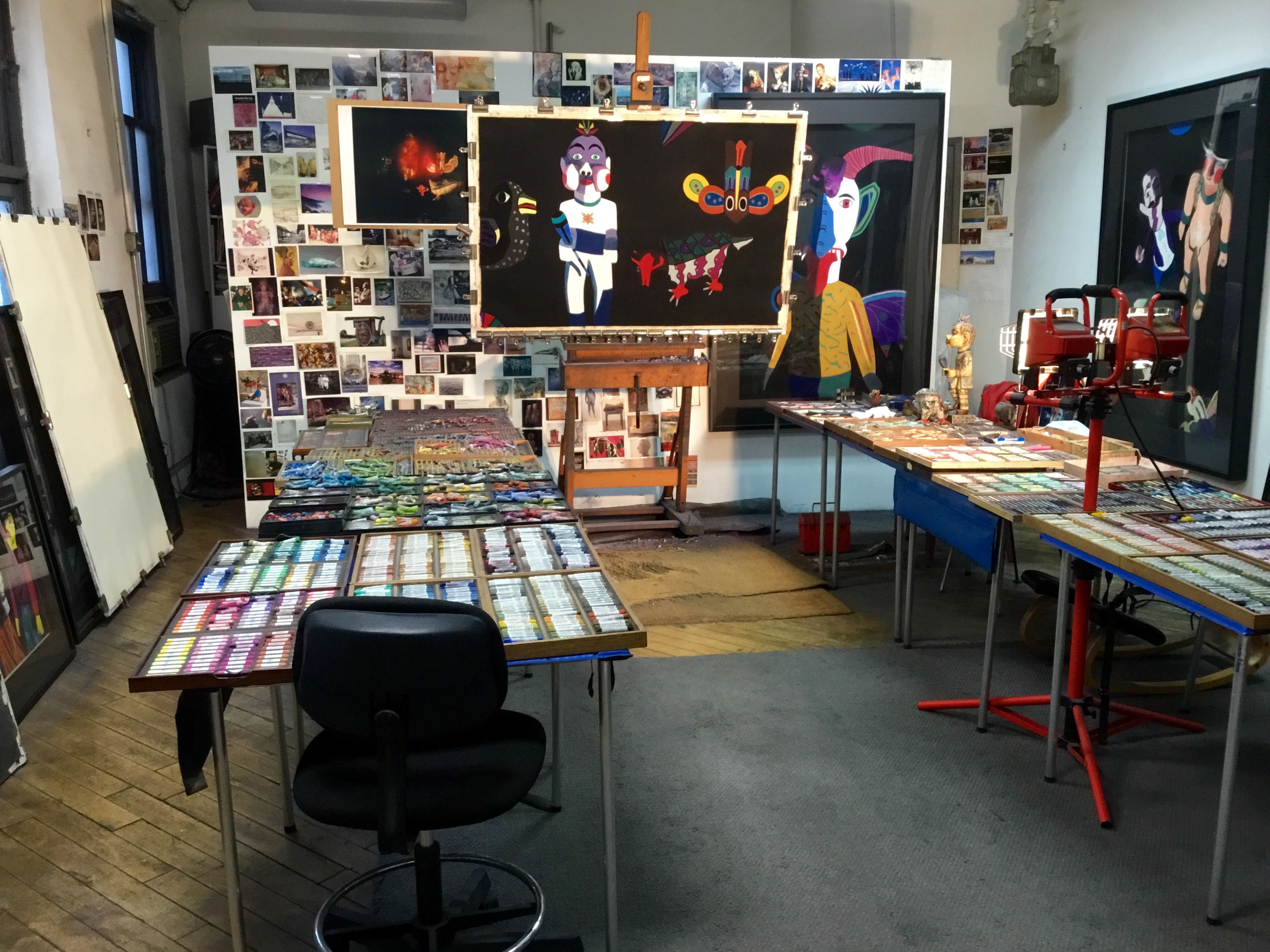
Barbara’s studio with “White Star” in progress
A: For starters soft pastel is the medium that I fell in love with many years ago. I am fond of this article, “What is Pastel?” by Mike Mahon, and quote it here because it neatly sums up what I love about working with pastel.
Pastel is the most permanent of all media when applied to conservation ground and properly framed. Pastel has no liquid binder that may cause it to oxidize with the passage of time as oftentimes happens with other media.
In this instance, Pastel does not refer to pale colors, as the word is commonly used in cosmetic and fashion terminology. The pure, powdered pigment is ground into a paste with a minimum amount of gum binder, rolled into sticks and dried. The infinite variety of colors in the Pastel palette range from soft and subtle to hard and brilliant.
An artwork is created by stroking the stick of dry pigment across an abrasive ground, embedding the color in the “tooth” of the ground. If the ground is completely covered with Pastel, the work is considered a Pastel painting; whereas, leaving much of the ground exposed produces a Pastel sketch. Techniques vary with individual artists. The Pastel medium is favored by many artists because it allows a spontaneous approach. There is no drying time, therefore, no change in color occurs after drying as it does in other media.
Did you know that a particle of Pastel pigment seen under a microscope looks like a diamond with many facets? It does! Therefore, Pastel paintings reflect light like a prism. No other medium has the same power of color or stability.
Historically, Pastel can be traced back to the 16th century. Its invention is attributed to the German painter, Johann Thiele. A Venetian woman, Rosalba Camera, was the first to make consistent use of Pastel. Chardin did portraits with an open stroke, while La Tour preferred the blended finish. Thereafter, a galaxy of famous artists—Watteau, Copley, Delacroix, Millet, Manet, Renoir, Toulouse Lautrec, Vuillard, Bonnard, Glackens, Whistler, Hassam, William Merritt Chase—used Pastel for a finished work rather than for preliminary sketches.
Pastels from the 16th century exist today, as fresh as the day they were painted. Edgar Degas was the most prolific user of Pastel and its champion. His protégé, Mary Cassat, introduced Pastel to her friends in Philadelphia and Washington, and thus to the United States. In the Spring of 1983, Sotheby Parke Bernet sold at auction, two Degas Pastels for more than $3,000,000 each! Both Pastels were painted about 1880.
Note: Do not confuse Pastel with “colored chalk.” Chalk is a porous, limestone substance impregnated with dyes, whereas, Pastel is pure pigment—the same as is used in other permanent painting media. Today, Pastel paintings have the stature of oil and watercolor as a major fine art medium. Many of our most renowned, living artists have distinguished themselves in Pastel and have enriched the art world with this beautiful medium.
So knowing all this, I often wonder, why don’t more artists use pastel? Is it because framing is a big expense?
Works on paper need to be framed and pastel paintings do have some unique problems. Third after the cost of maintaining a studio in New York City and marketing, frames are my single largest business expense. Sometimes I am grateful that pastel is a very slow medium. I typically finish 4 or 5 paintings in a year, which means I only have to pay for 4 or 5 frames.
Comments are welcome!


 barbararachkoscoloreddust.com