Blog Archives
Pearls from artists* # 689

*an ongoing series of quotations – mostly from artists, to artists – that offers wisdom, inspiration, and advice for the sometimes lonely road we are on.
This is what I wish someone had told me years ago:
The art world is not a meritocracy. Like the world at large, it is a system based on hoarded capital and exploited labor. This system owes you nothing, even if you have extraordinary talent, work tremendously hard, never give up, and do all the right things. There are no ‘extra points’ for effort, earnestness, dedication, or sacrifice.
(We ALL think WE are going to be the exception.)
Unless you have fantastic connections or pedigree, after you build and maintain the basics of making strong work and getting the word out, a great deal depends on luck. Many of the artists you admire are likely living difficult lives you might not be willing to live, making sacrifices you might not be willing to make. Many who appear to support themselves with their work are in fact, partially or fully supported by spouses, family money, or jobs they do not discuss. They keep these jobs secret because some art world players refuse to validate your work if you are not ‘seriously committed’ enough to be a full-time artist. (Of course, artists who were not born wealthy need validation from these very players to be ABLE to create full-time.)
Kate Kretz in Art From Your Core: A Holistic Guide to Visual Voice
Comments are welcome!
Pearls from artists* # 623

*an ongoing series of quotations – mostly from artists, to artists – that offers wisdom, inspiration, and advice for the sometimes lonely road we are on.
At the time [the Renaissance], Bologna was unique in championing the professions of women. The home of Europe’s oldest university, which had supported female students since the thirteenth century, the city considered women artists as integral to its development. Praised by scholars, written about by biographers and adored by the locals, they were also supported by patrons of all social classes (from bankers to barbers), creating a varied culture of artistic patronage. (By contrast, in Florence and Naples, commissioning was reserved for select noble families.). Women were also encouraged to sign their work, as well as to paint self-portraits for the purpose of being known and, most importantly, remembered. No wonder scholars have recorded a staggering sixty-eight women artists working in the city between the fifteenth and sixteenth centuries.
These notable exceptions remind us that women have always been perfectly capable of being artists. But while there could have been an abundance of women working at this time, in reality female artists were an absolute rarity, seen as ‘tokens’ rather than pioneers. (After de Rossi’s death [in 1530], no female sculptor is mentioned in the city’s records for 200 years.). And little knowledge remains of those working during the Renaissance period. Most of what we know has been passed down by male scholars and through legal documents, rarely from the women themselves.
Katy Hessel in The Story of Art Without Men
Comments are welcome!
Q: When did you decide and what prompted you to become an artist? (Question from artamour)

A: In the mid-1980s I was a thirty-three-year-old Navy lieutenant, working a soul-crushing job as a computer analyst on the midnight shift in a Pentagon basement. We were open 24/7 and supported the Joint Chiefs of Staff.
Remembering the joyful Saturdays of my youth in New Jersey when I had studied with a local painter, I enrolled in a drawing class at the Art League School in Alexandria, Virginia. I loved it! I took more classes and became a highly motivated, full-time art student who worked nights at the Pentagon. After two years and as my skills improved, I discovered my preferred medium – soft pastel on sandpaper.
I knew I had found my calling, submitted my resignation, and left the active duty Navy. On October 1, 1989 I became a professional artist. However, I remained in the Navy Reserve for another fourteen years, working at the Pentagon one weekend a month. On November 1, 2003, I retired as a Navy Commander.
Comments are welcome!
Q: What is your earliest memory of wanting to be an artist? (Question from “Arts Illustrated”).
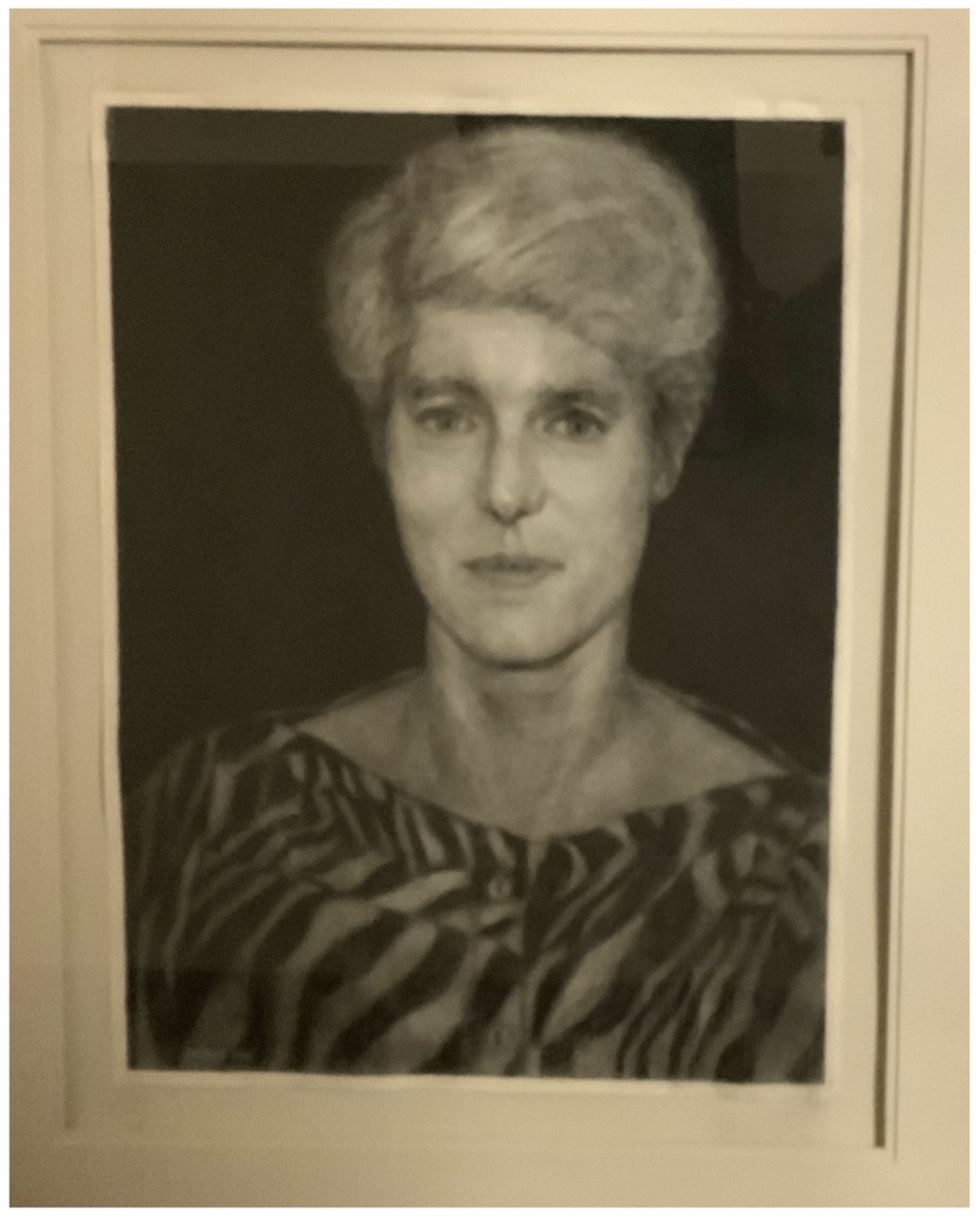
A: I don’t believe I have any such ‘early memories.’ I came to art late and my journey to becoming an artist was circuitous, to say the least.
In the mid-1980s I was a thirty-something Navy lieutenant. I worked a soul-crushing job as a computer analyst on the midnight shift in a Pentagon basement. We were open 24/7 and supported the Joint Chiefs of Staff.
Remembering the joyful Saturdays of my youth in New Jersey, when I had studied with a local painter, I enrolled in a drawing class at the Art League School in Alexandria, Virginia. I loved it! I took more classes and became a highly motivated, full-time art student who worked nights at the Pentagon. After two years and as my skills improved, I discovered my preferred medium – soft pastel on sandpaper.
I knew I had found my calling, submitted my resignation, and left active duty. On October 1, 1989 I became a professional artist. However, I remained in the Navy Reserve for another fourteen years, working at the Pentagon one weekend a month. On November 1, 2003, I retired as a Navy Commander.
Please also see Art Market (barbararachko.art)
Comments are welcome!


 barbararachkoscoloreddust.com