Blog Archives
Pearls from artists* # 314
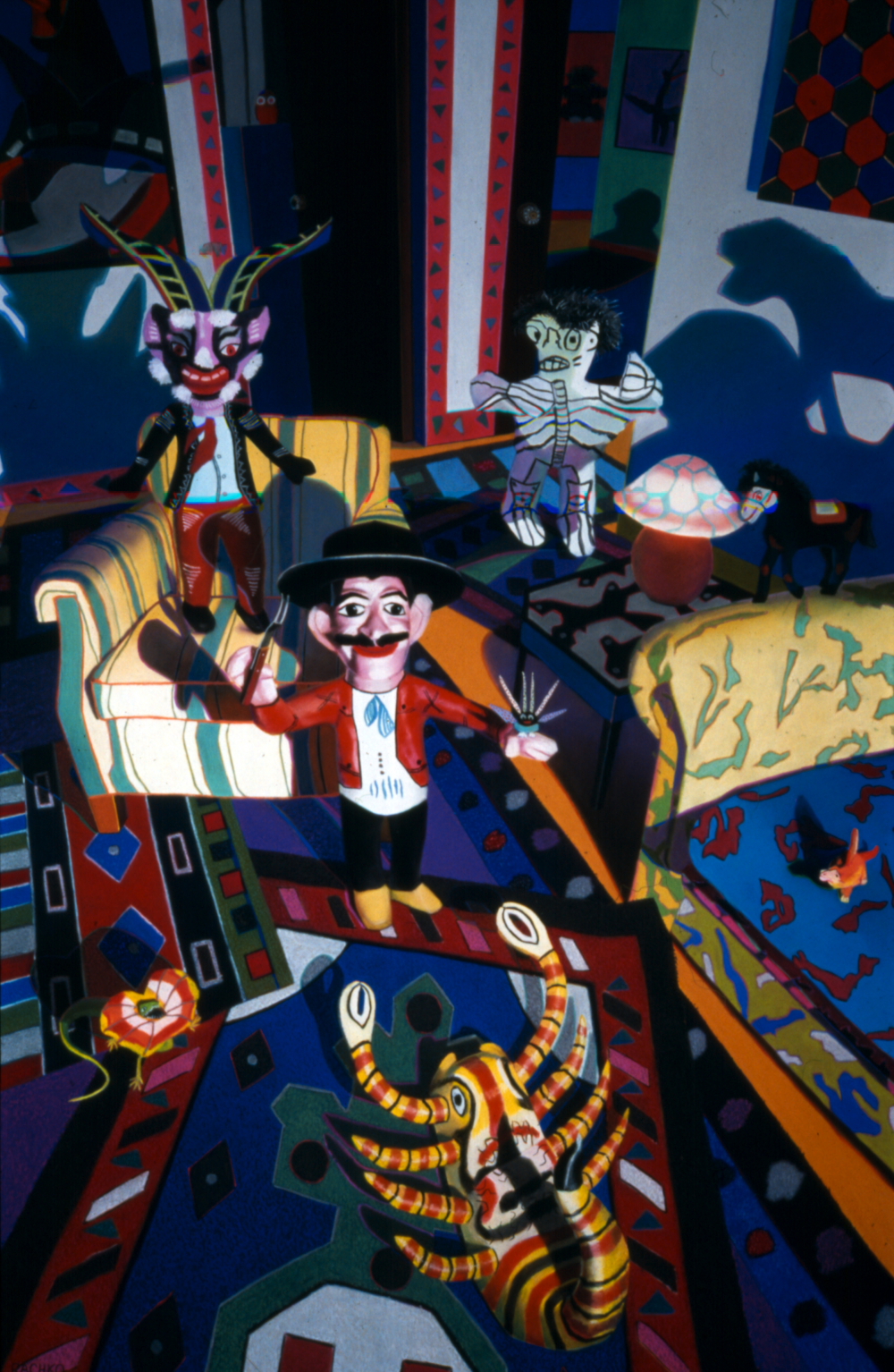
“He Just Stood There Grinning,” soft pastel on sandpaper, 58″ x 38″
*an ongoing series of quotations – mostly from artists, to artists – that offers wisdom, inspiration, and advice for the sometimes lonely road we are on.
For Leonora Carrington and many of her ‘sister’ surrealists, surrealism provided the intellectual, political and artistic milieu that enabled them to come into their own as artists and writers, and to gain recognition for their work in the wider world. Although some of these women had accepted their roles as muses in the lives of male artists, none believed that life as a muse trumped life as an artist. Asked in 1983 how she felt about the male surrealists’ view of women as muses, Leonora offered her testy, if retrospective rejoinder: ‘I thought it was bullshit… I didn’t have time to be anyone’s muse… I was too busy rebelling against my family and learning to be an artist.’ It is as artists and friends that we remember the women of surrealism today.
Whitney Chadwick in The Militant Muse: Love, War, and the Women of Surrealism
Comments are welcome!
Pearls from artists* # 29
“He Just Stood There Grinning,” soft pastel on sandpaper, 58″ x 38″
* an ongoing series of quotations – mostly from artists, to artists – that offers wisdom, inspiration, and advice for the sometimes lonely road we are on.
And all the spaces of our past moments of solitude, the spaces in which we have suffered from our solitude, enjoyed, desired, and compromised solitude, remain indelible within us, and precisely because the human being wants them to remain so. He knows instinctively that this space identified with his solitude is creative; that even when it is forever expunged with the present, when, henceforth, it is alien to all the promises of the future, even when we no longer have a garret, when the attic is lost and gone, there remains the fact that we once loved a garret, once lived in an attic. We return to them in our night dreams. These retreats have the value of a shell. And when we reach the very end, the labyrinths of sleep, when we attain to the regions of deep slumber, we may perhaps experience a type of repose that is pre-human; pre-human, in this case, approaching the immemorial. But in the daydream itself, the recollection of moments of confined, simple, shut-in space are experiences of heartwarming space, of a space that does not seek to become extended, but would like above all to be possessed. In the past, the attic may have seemed too small, it may have seemed cold in winter and hot in summer. Now, however, in memory recaptured through daydreams, it is hard to say through what syncretism the attic is at once small and large, warm and cool, always comforting.
Gaston Bachelard in The Poetics of Space
Comments are welcome!
Q: When you set up your figures to photograph, do you create a story?
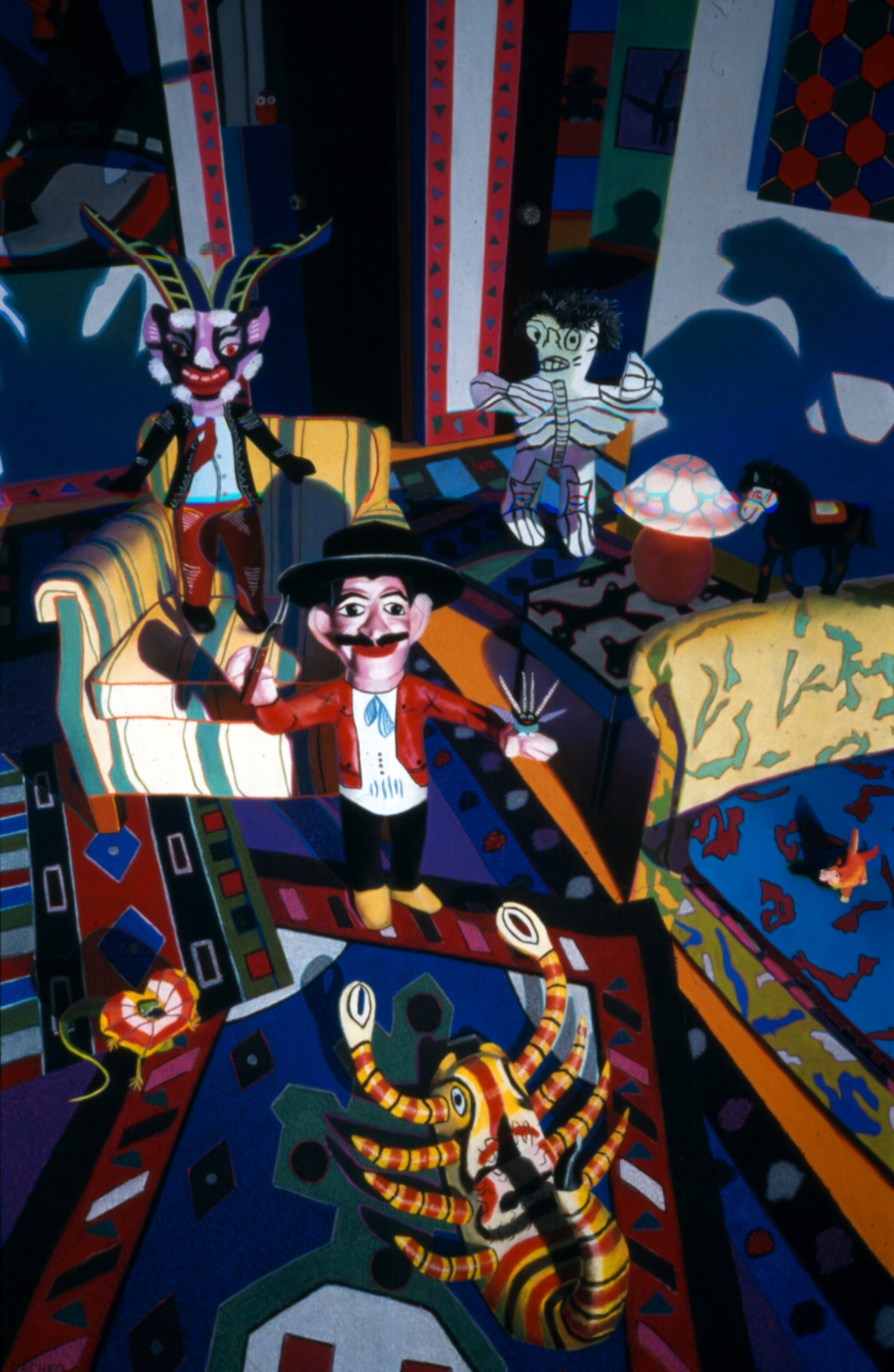
“He Just Stood There Grinning,” soft pastel on sandpaper, ” 58″ x 38″
A: I always did so with my “Domestic Threats” paintings, but not with my current work. As I set up a group of figures to photograph, I would make up a story about what was happening between them: what the Day of the Dead skeleton I bought in Mexico City was saying to the frog/fish/human mask from Guerrero, for example. I was a big kid playing with my favorite toys! The stories were the spark to get me started on a new project, but I usually forgot about them afterwards. They were necessary, yet incidental to my creative process, which is probably why I have never written them down.
Years ago I had the experience of being at one of my solo shows when a group of elementary school children came along with their teacher. The teacher asked them to act out one of the stories in a particular painting. Ever curious about how people relate to my work, I didn’t introduce myself as the creator of the pieces hanging on the walls. I no longer remember the details, but their interpretations soon had me laughing. It is a constant surprise to hear from people encountering my work for the first time what they see in it, especially when those people are young kids with wild imaginations!
Comments are welcome!


 barbararachkoscoloreddust.com