Blog Archives

Pearls from artists* # 595

Film still from “Barbara Rachko: True Grit,” directed by Jennifer Cox, Moto Films LLC

*an ongoing series of quotations – mostly from artists, to artists – that offers wisdom, inspiration, and advice for the sometimes lonely road we are on.

One of the great paradoxes of the writing life is that our words – chosen carefully, so thoughtfully, with deep focus and concentration – those words once on the page go dead on us. Language is ours only when we are forming sentences, moving elements around, grappling with punctuation, speaking words aloud, feeling them on our lips. While we are shaping a scene into something we can hear and touch and see, that scene lives and breathes. We are inside language like painters, we are working in our medium: the tempera, the thin line, the wet oil on canvas, still in process, still alive.

But once we commit – once those words dry like paint, are affixed to the page – it becomes nearly impossible to see them. This? We think to ourselves. Our most loathsome critic emerges with a swirl of her cape. Really? What the hell is this? The sentences appear to have been written in another language – a dark dream language, tucked into some musty, inaccessible corner of our psyche. Attempting to discern its meaning is a bit like looking at our own face in the mirror. It is at once so familiar as to be invisible, and so intimate that we turn away, baffled, ashamed.

Can we ever see ourselves, really? Can we read ourselves?

It is a powerful conundrum because without the ability to see our writing afresh we cannot do the necessary work. How do we know whether a problem lies with the work, or with our inability to enter it? We need clarity, but not coldness. Openness, but not attachment. We want optimism, but that optimism must not go hand in hand with discernment. We’re not looking for a cheerleader, nor a fault-finding judge. We want to read ourselves with equanimity.

Dani Shapiro in Still Writing: The Pleasures and Perils of a Creative Life

Comments are welcome!
Pearls from artists* # 15

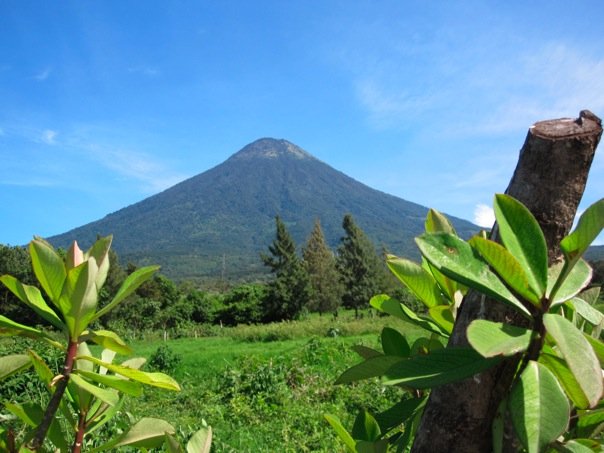
Somewhere in Guatemala

Somewhere in Guatemala

* an ongoing series of quotations – mostly from artists, to artists – that offers wisdom, inspiration, and advice for the sometimes lonely road we are on.

The first steps of a creative act are like groping in the dark: random and chaotic, feverish, and fearful, a lot of busy-ness with no apparent or definable end in sight. There is nothing yet to research. For me, these moments are not pretty. I look like a desperate woman, tortured by the simple message thumping away in my head: “You need an idea.” It’s not enough for me to walk into a studio and start dancing, hoping that something good will come of my aimless cavorting on the floor. Creativity doesn’t generally work that way for me. (The rare times when it has stand out like April blizzards). You can’t just dance or paint or write or sculpt. Those are just verbs. You need a tangible idea to get you going. The idea, however miniscule, is what turns the verb into a noun – paint into painting, sculpt into sculpture, write into writing, dance into a dance.

… I’m often asked, “Where do you get your ideas?” This happens to anyone who is willing to stand in front of an audience and talk about his or her work. The short answer is: everywhere. It’s like asking, “Where do you find the air you breathe?” Ideas are all around you.

I hesitate to wax eloquent about the omnipresence of ideas and how everything we need to make something out of nothing – tell a story, design a building, hum a melody – already resides within us in our experience, memories, taste, judgment, critical demeanor, humanity, purpose, and humor. I hesitate because it is so blindingly obvious. If I’m going to be a cheerleader for the creative urge, let it be for something other than the oft-repeated notion that ideas are everywhere.

What people are really asking, I suppose, is not, “Where do you get your ideas?” but “How do you get them?”

To answer that, you first have to appreciate what an idea is.

Ideas take many forms. There are good ideas and bad ideas. Big ideas and little ideas.

A good idea is one that turns you on rather than shuts you off. It keeps generating more ides and they improve one another. A bad idea closes doors instead of opening them. It’s confining and restrictive. The line between good and bad ideas is very thin. A bad idea in the hands of the right person can easily be tweaked into a good idea.

Twyla Tharp, The Creative Habit: Learn it and Use it for Life: A Practical Guide

Comments are welcome.
