Start/Finish of “The Ancestors,” soft pastel on sandpaper, 58″ x 38″ image, 70″ x 50″ framed
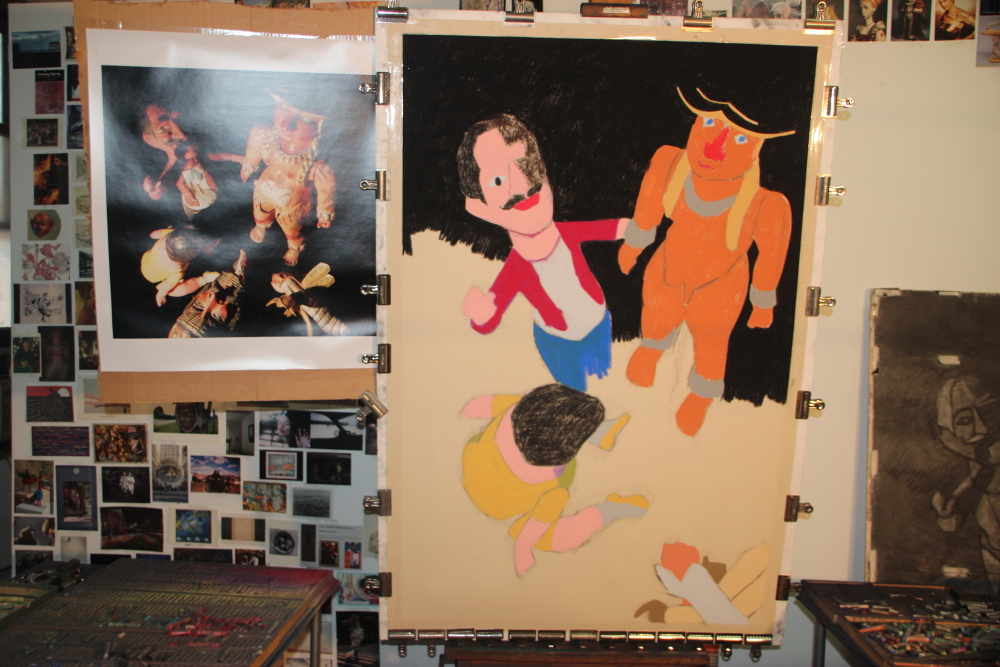
Beginning
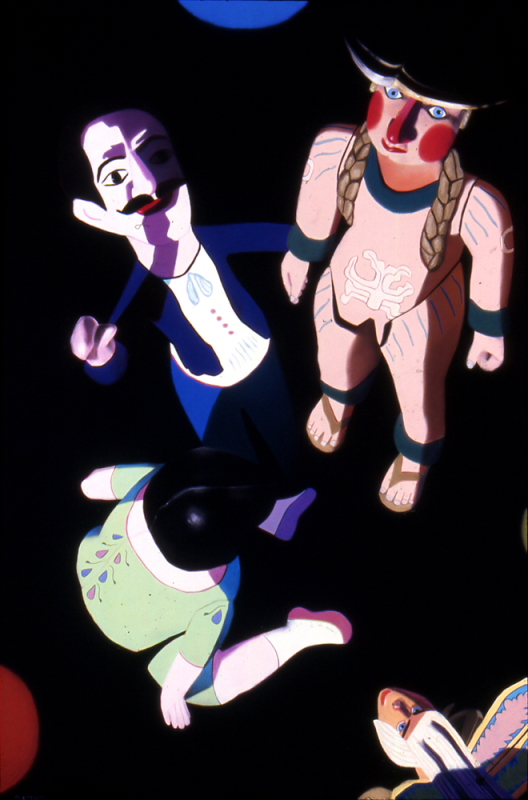
Finished
Comments are welcome!
Pearls from artists* # 251
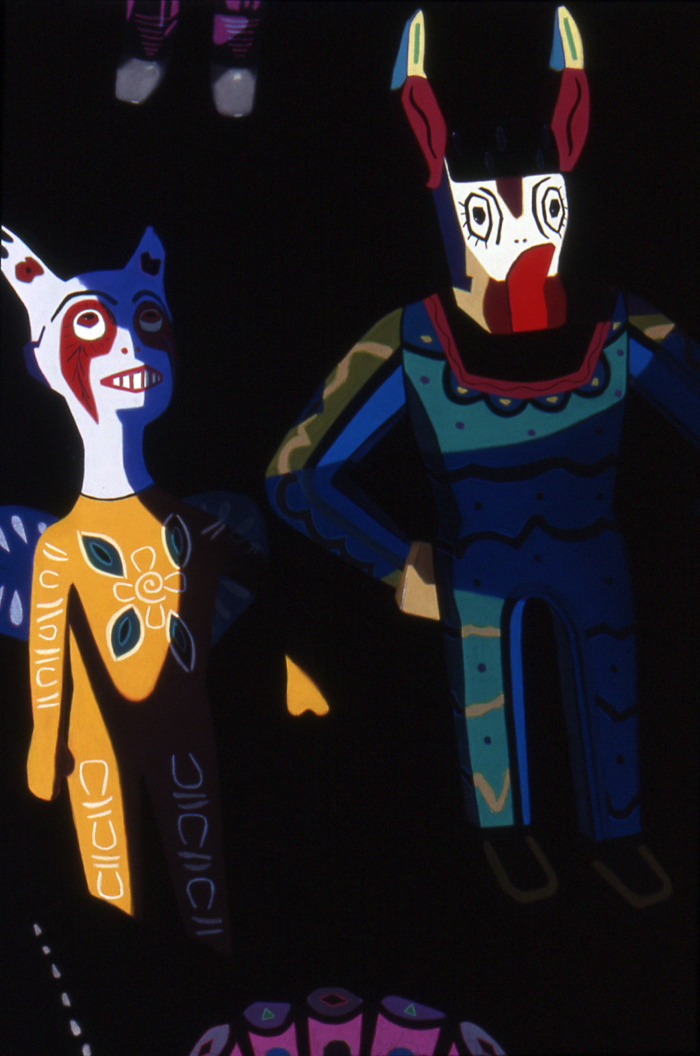
“Quartet,” soft pastel on sandpaper, 58″ x 38″ image, 70″ x 50″ framed
* an ongoing series of quotations – mostly from artists, to artists – that offers wisdom, inspiration, and advice for the sometimes lonely road we are on.
Interviewer: Is there any possible formula to follow in order to be a good novelist”
Faulkner: … Ninety-nine per cent talent… 99 per cent discipline… 99 per cent work. He must never be satisfied with what he does. It is never as good as it can be done. Always shoot higher than you know you can do. Don’t bother just to be better than your contemporaries or predecessors. Try to be better than yourself.
William Faulkner in Writers at Work: The Paris Review Interviews First Series, edited, and with an introduction by Malcolm Crowley
Comments are welcome!
Q: What’s on the easel today?
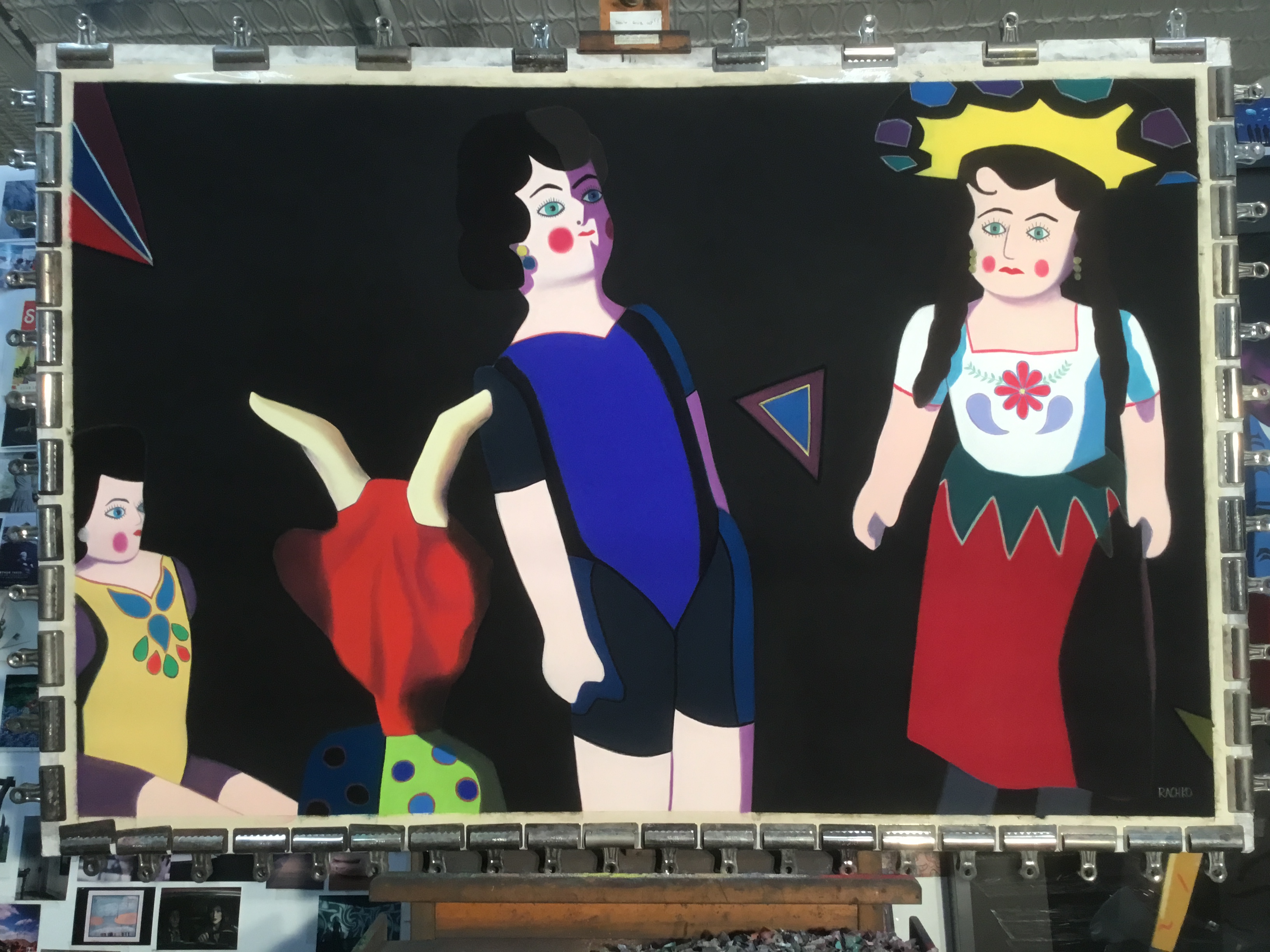
Work in progress
A: I am putting a few finishing touches on “Conundrum,” soft pastel on sandpaper, 38″ x 58″.
Comments are welcome!
Pearls from artists* # 250
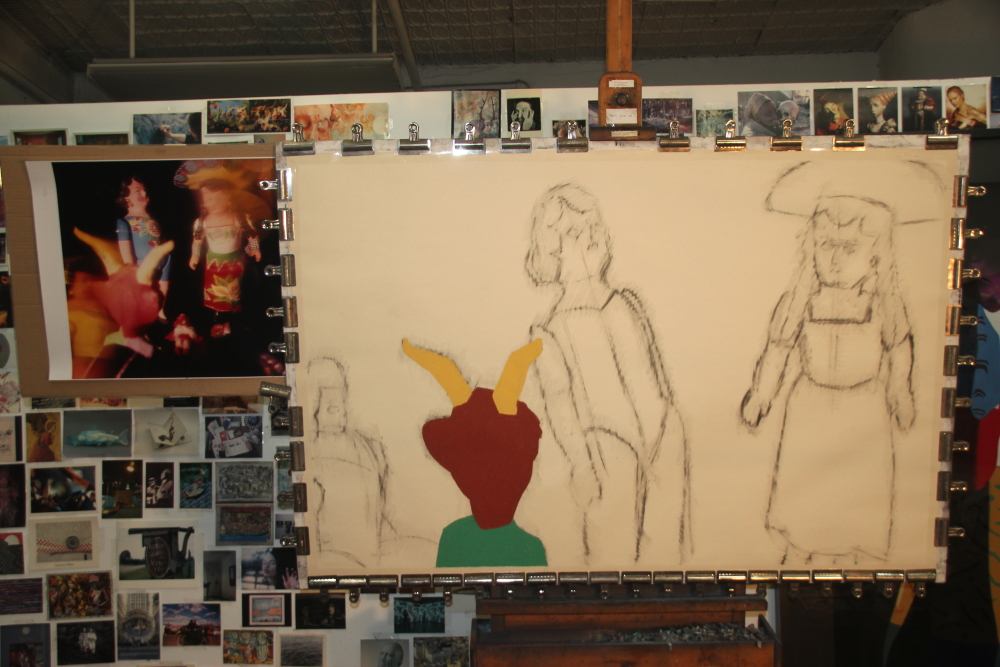
Start of “Conundrum,” soft pastel on sandpaper, 38″ x 58″
* an ongoing series of quotations – mostly from artists, to artists – that offers wisdom, inspiration, and advice for the sometimes lonely road we are on.
In my opinion, if I could write all my work again, I am convinced that I would do it better, which is the healthiest condition for an artist. That’s why he keeps on working, trying again; he believes each time that this time he will do it, bring it off. Of course he won’t, which is why this condition is healthy. Once he did it, once he matched the work to the image, the dream, nothing would remain but to cut his throat, jump off the other side of that pinnacle of perfection suicide. I’m a failed poet. Maybe every novelist wants to write poetry first, finds he can’t, and then tries the short story, which is the most demanding form after poetry. And, failing at that, only then does he take up novel writing.
William Faulkner in Writers at Work: The Paris Review Interviews First Series, edited, and with an introduction by Malcolm Crowley
Comments are welcome!
Q: Would you talk about a few of the technical properties that made pastel your medium of choice?
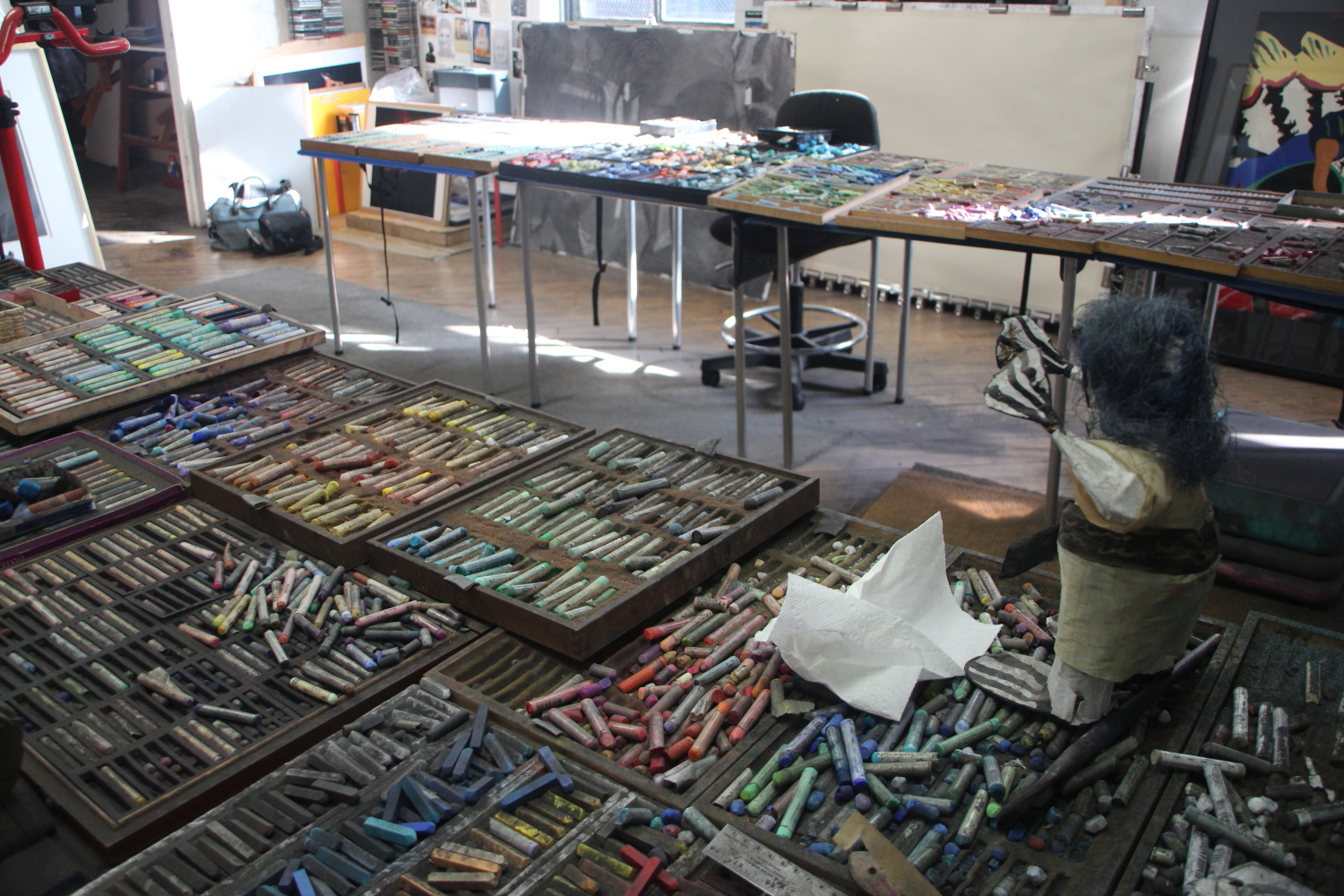
Barbara’a pastels
A: Pastel is a time-tested medium that has been in use for five hundred years. I fell in love with it nearly thirty years ago and it has been my primary medium ever since.
Pastel is known to be the most permanent of all media. It has no liquid binder that might cause oxidizing with the passage of time as often happens with other painting media. Pastel colors are intense because they are the closest artists get to working with pure pigment. Artists throughout history have generally favored pastel because it allows a spontaneous approach with no drying time and no change of color.
Comments are welcome!
Pearls from artists* # 249
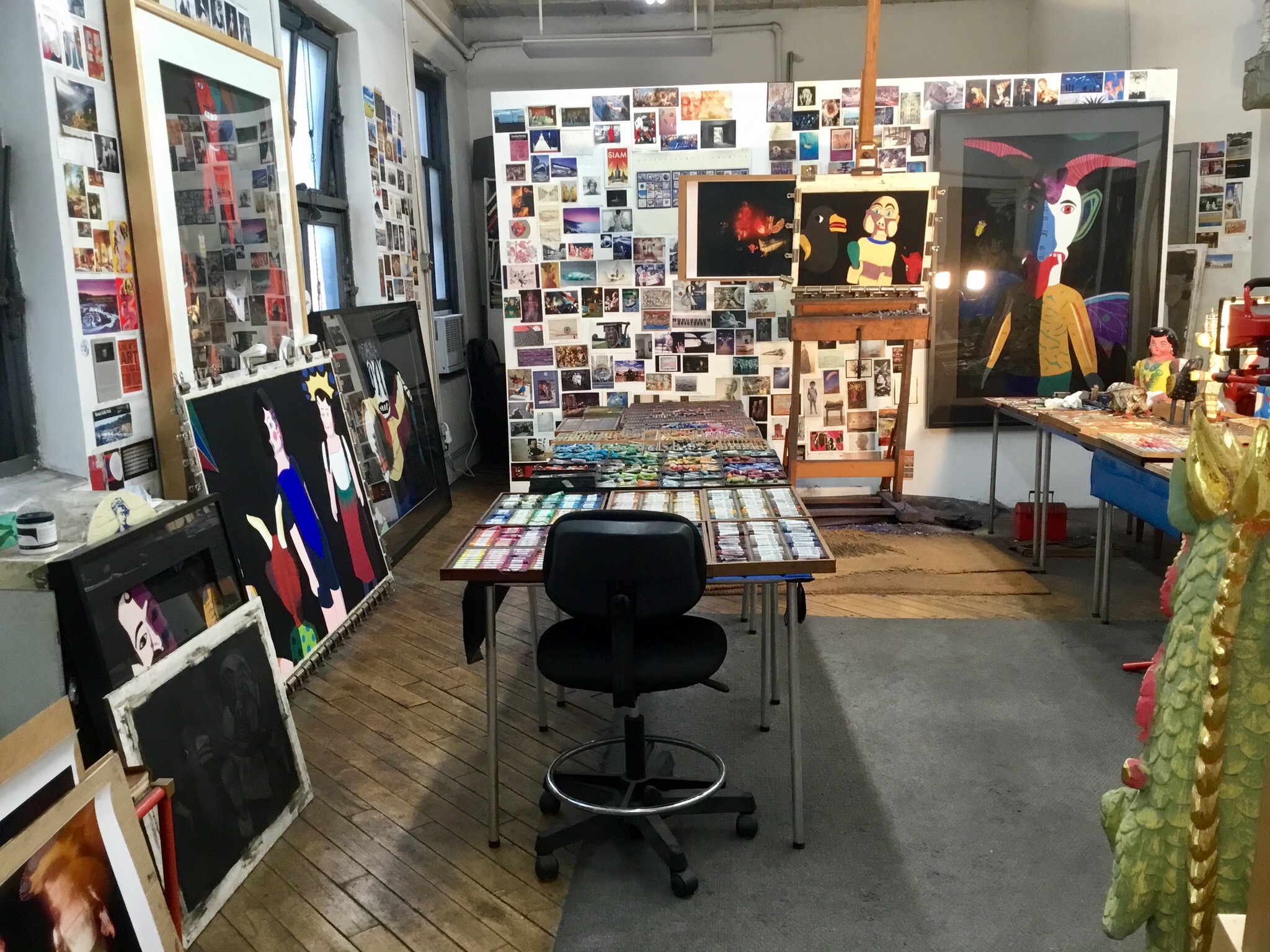
Barbara’s studio
* an ongoing series of quotations – mostly from artists, to artists – that offers wisdom, inspiration, and advice for the sometimes lonely road we are on.
Interviewer: Can a writer learn style?
Capote: No, I don’t think that style is consciously arrived at, any more than one arrives at the color of one’s eyes. After all, your style is you. At the end the personality of a writer has so much to do with the work. The personality has to be humanly there. Personality is a debased word, I know, but it’s what I mean. The writer’s individual humanity, his word or gesture towards the world, has to appear almost like a character that makes contact with the reader. If the personality is vague or confused or merely literary, ca ne va pas. Faulkner, Mc Cullers – they project their personality at once.
Truman Capote in Writers at Work: The Paris Review Interviews First Series, edited, and with an introduction by Malcolm Crowley
Comments are welcome!
Q: What genre do you work in?

“Broken,” soft pastel on sandpaper, 38″ x 58″ image, 50″ x 70″ framed
A: I consider all of my pastel paintings and photographs to be “contemporary conceptual realism.” In my work there is a disquieting quality, a feeling that things are not quite as innocent as they at first seem. The world I depict is a world of the imagination that owes little debt to the natural world. As one New York art critic noted, “What we bring to a Rachko… we get back, bountifully.”
Comments are welcome!
Pearls from artists* # 248
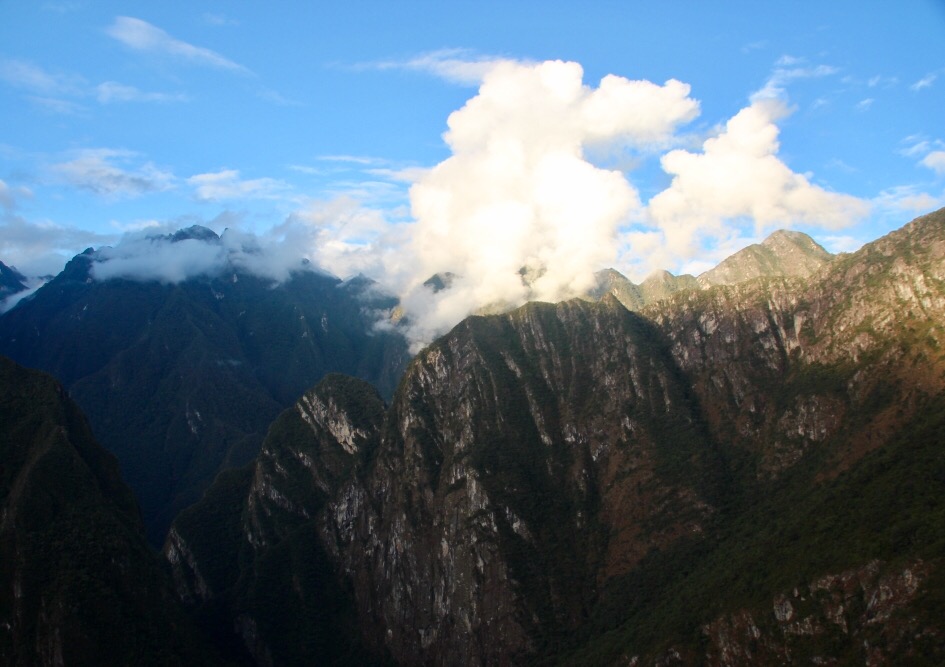
Machu Picchu
* an ongoing series of quotations – mostly from artists, to artists – that offers wisdom, inspiration, and advice for the sometimes lonely road we are on.
In every civilization at every period of history people have devoted time and energy to sacred things. The sacred, like the beautiful, includes every category of object. There are sacred words, sacred gestures, sacred rites, sacred clothes, sacred places, sacred times. Sacred things are not of this world: they are set apart from ordinary reality and cannot be touched or uttered without rites of initiation or the privilege of religious office. To meddle with them without some purifying preparation is to run the risk of sacrilege. It is to desecrate and pollute what is holy, dragging it down to the sphere of everyday events.
Roger Scruton in Beauty: A Very Short Introduction
Comments are welcome!
Start/Finish of “Provocateur,” soft pastel on sandpaper, 26″ x 20″ image, 35″ x 28 1/2″ framed
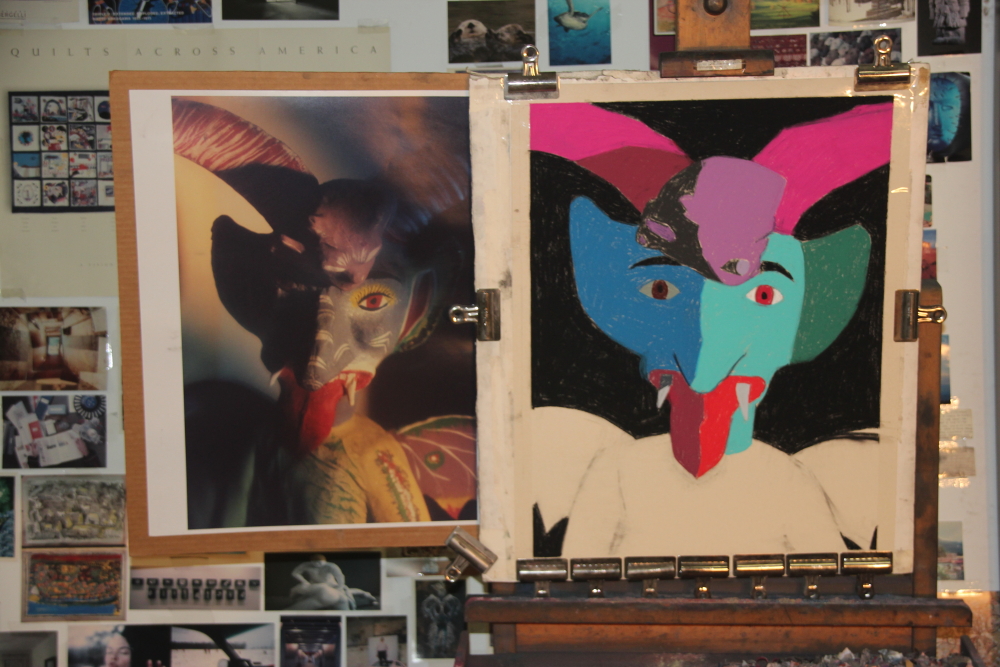
Beginning
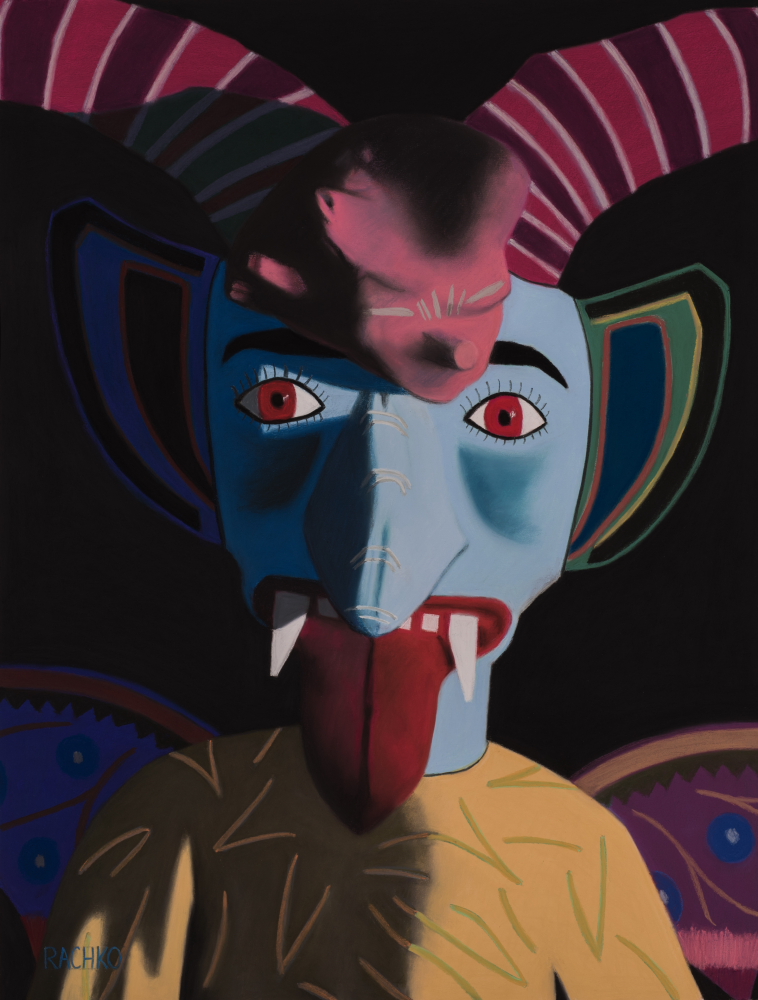
Finished and signed
Comments are welcome!
Pearls from artists* # 247
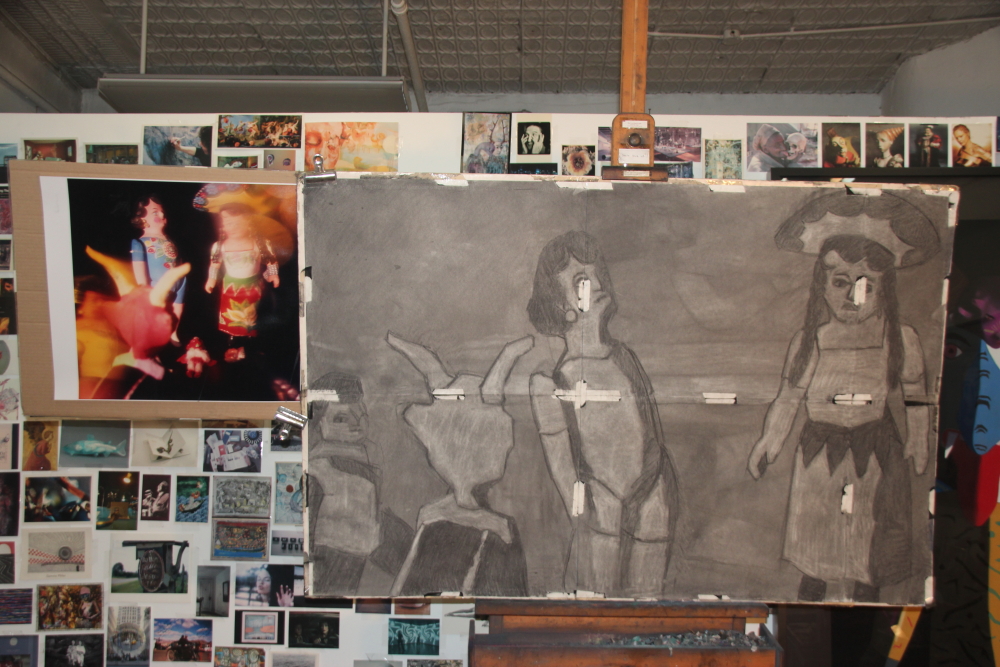
A recent charcoal study
* an ongoing series of quotations – mostly from artists, to artists – that offers wisdom, inspiration, and advice for the sometimes lonely road we are on.
Studies made in the open air are different from pictures that are destined to be shown in public. The latter, in my opinion, result from the studies, but they may, or even must, differ a great deal from them. For in the picture the painter rather gives a personal impression, while in a study his aim is simply to analyze a bit of nature – either to make his idea or conception more correct, or to find a new idea; for example, the studies of Mauve, which I myself like very much, precisely because of their soberness and because they are done so faithfully. Still they miss a certain charm, which the pictures that result from them possess in such a high degree.
I believe one gets more sound ideas when thoughts arise from direct contact with things than when one looks at them with the set purpose of finding certain facts in them. It is the same with the question of a colour scheme. There are colours that harmonize wonderfully, but I try my best to paint a subject as I see it before I set to work to make it as I feel it. Yet feeling is a great thing, and without it one would not be able to do anything. Thus, studies belong more to the studio than among the pubic.
Dear Theo: The Autobiography of Vincent Van Gogh, edited by Irving Stone
Comments are welcome!


 barbararachkoscoloreddust.com