Q: Start/Finish of “Epiphany,” soft pastel on sandpaper, 38″ x 58″ image, 50″ x 70″ framed
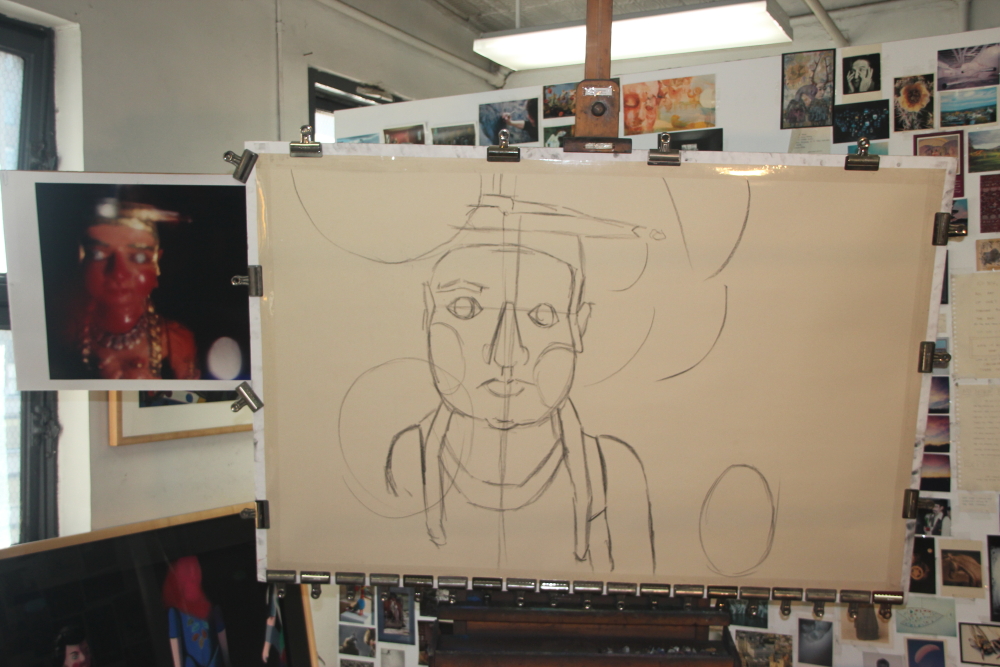
Roughed out in charcoal
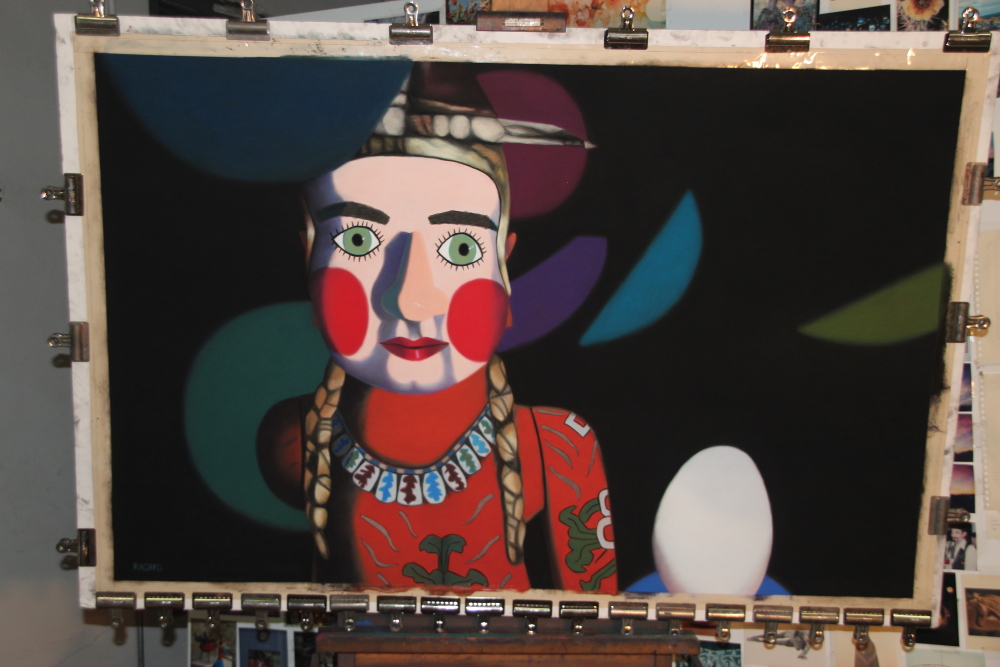
Finished, signed lower left
Pearls from artists* # 217
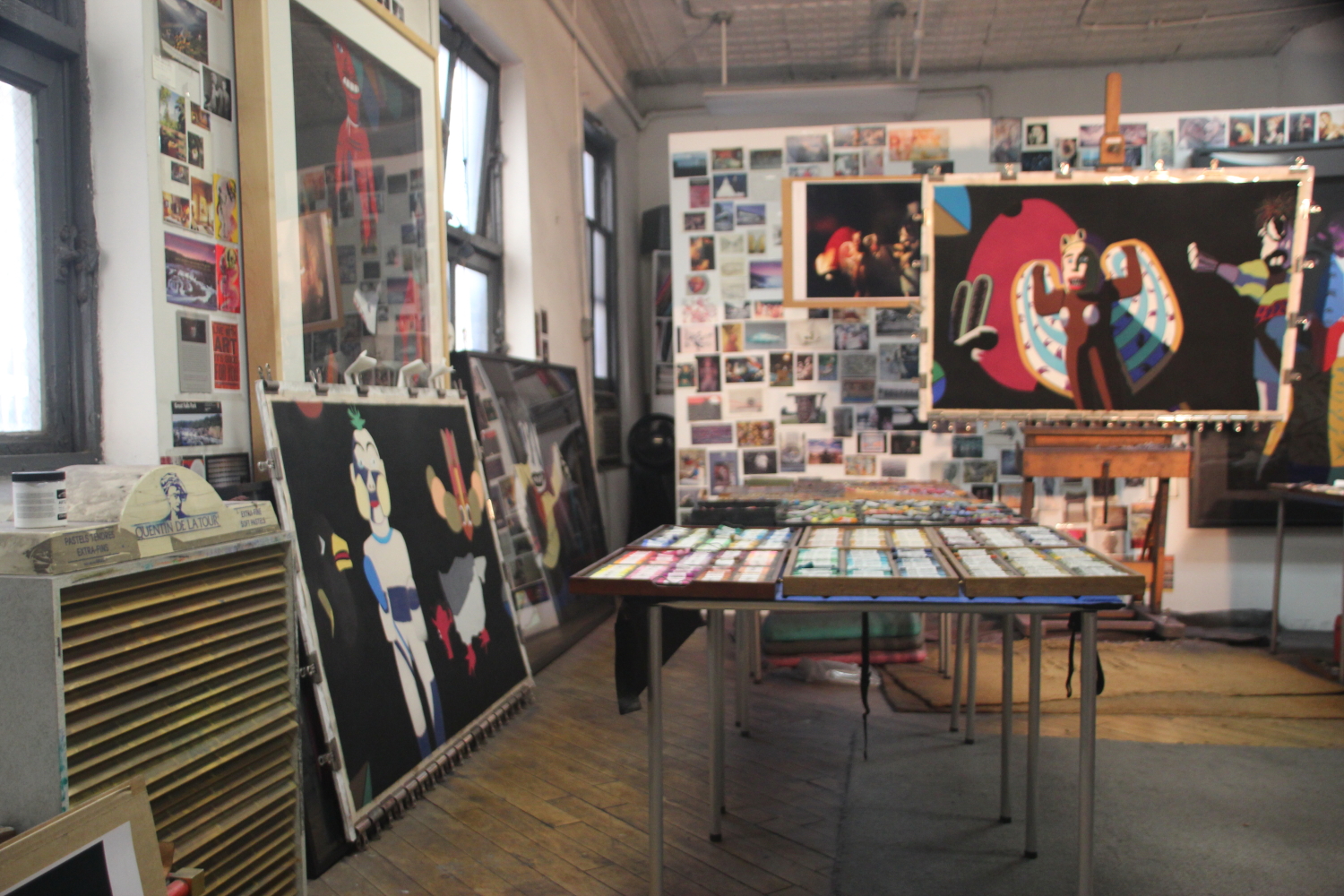
Barbara’s studio
* an ongoing series of quotations – mostly from artists, to artists – that offers wisdom, inspiration, and advice for the sometimes lonely road we are on.
This is true for most artists, not only writers.
What I do know – what I’ve spent the past couple of decades learning about myself – is that if I’m not writing, I’m not well. If I’m not writing, the world around me is slowly leached of its color. I am crabby with my husband, short-tempered with my kid and more inclined to see small things wrong with my house (the crack in the ceiling, the smudge prints along the staircase wall) than look out the window at the blazing maple tree, the family of geese making its way across our driveway. If I’m not writing, my heart hardens, rather than lifts.
Dani Shapiro in Still Writing: The Perils and Pleasures of a Creative Life
Comments are welcome!
Q: What’s on the easel today?
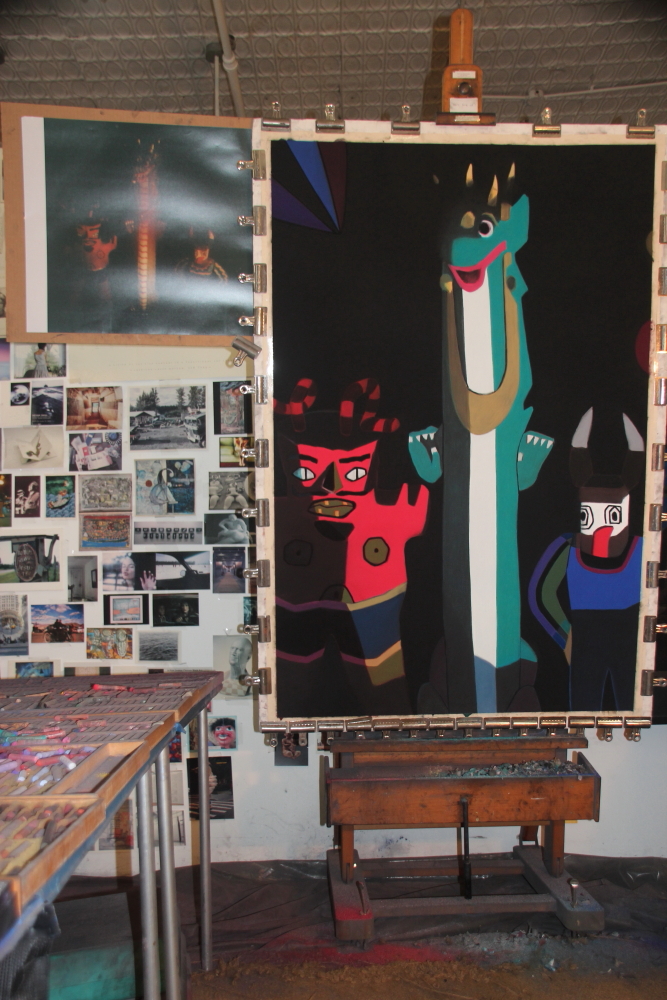
Work in progress
A: I am continuing work on a large (58″ x 38″) pastel painting tentatively titled, “Blocked.”
Comments are welcome!
Pearls from artists* # 216
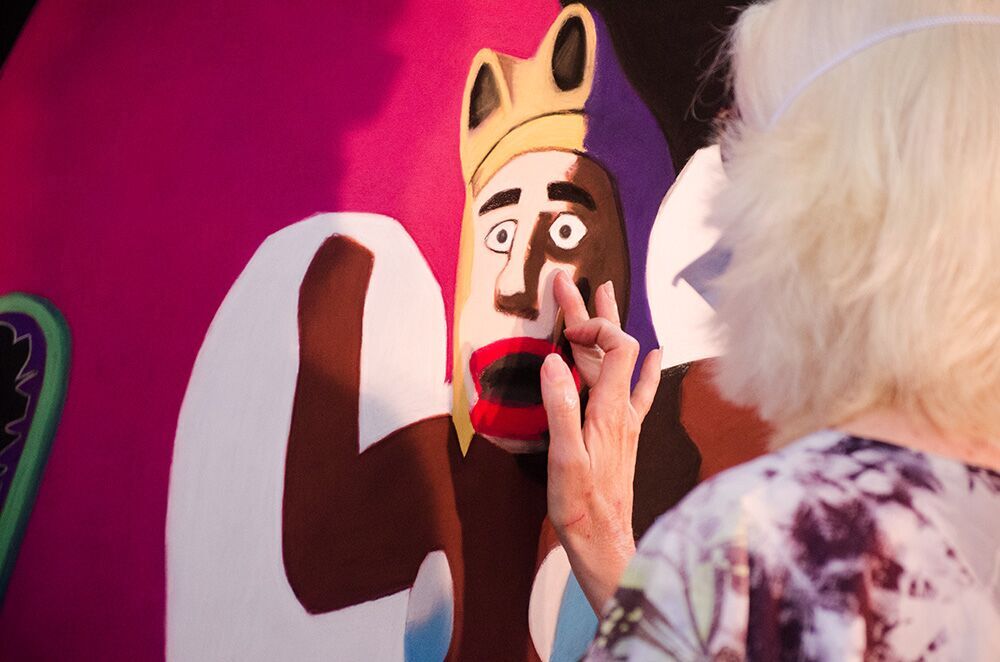
Working on “Charade”
* an ongoing series of quotations – mostly from artists, to artists – that offers wisdom, inspiration, and advice for the sometimes lonely road we are on.
This is true for all artists, not only writers.
The writing life requires courage, patience, persistence, empathy, openness, and the ability to deal with rejection. It requires the willingness to be alone with oneself. To be gentle with oneself. To look at the world without blinders on. To observe and withstand what one sees. To be disciplined, and at the same time, take risks. To be willing to fail – not just once, but again and again, over the course of a lifetime. “Ever tried, ever failed,” Samuel Beckett once wrote. “No matter. Try again. Fail again. Fail better.” It requires what the great editor Ted Solotoroff once called endurability. It is this quality, most of all, that I think of when I look around a classroom at a group of aspiring writers. Some of them will be more gifted than others. Some of them will be driven, ambitious for success or fame, rather than by the determination to do their best possible work. But of the students I have taught, it is not necessarily the most gifted, or the ones most focused on imminent literary fame (I think of these as short sprinters), but the ones who endure, who are still writing, decades later.
Dani Shapiro in Still Writing: The Perils and Pleasures of a Creative Life
Comments are welcome!
Q: Do you have a personal definition of art career success?

Barbara at work, Photo: Marianne Barcellona
A: One definition of art career success that I have enjoyed for many years is the ability to devote all of my time and energy to art-making. I am an anomaly among the many New York artists of my acquaintance because I do not have a day job. Also, I am free of family and other responsibilities so I can devote significant time to exploring what it means to be a visual artist in New York in 2016.
Comments are welcome!
Pearls from artists* # 215
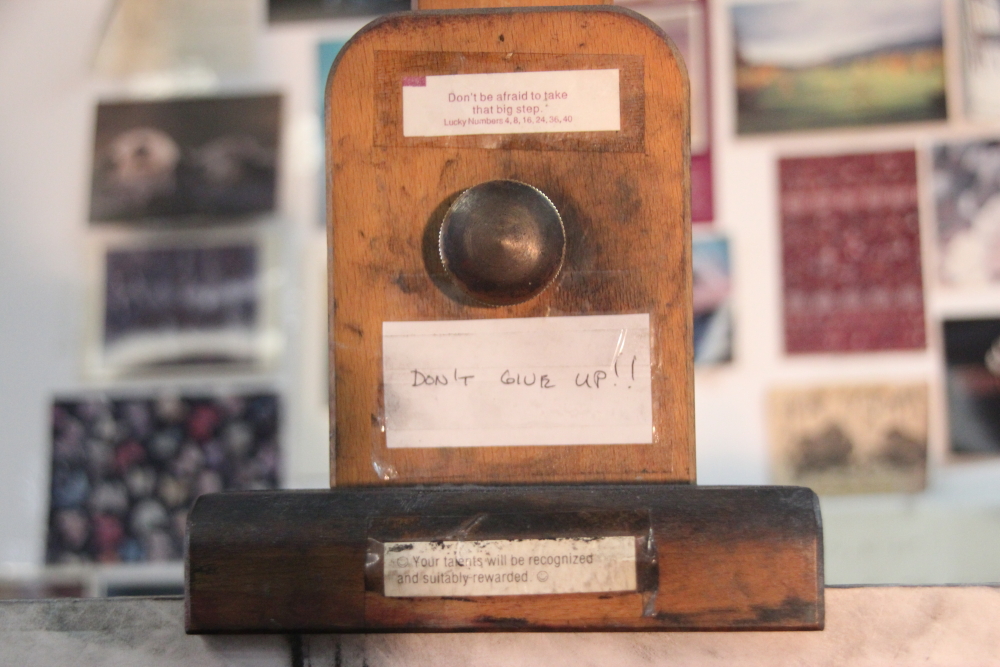
Barbara’s easel
* an ongoing series of quotations – mostly from artists, to artists – that offers wisdom, inspiration, and advice for the sometimes lonely road we are on.
Instead of a clean narrow pathway to a goal, creators take risks, seek out new experiences, and reconcile contradictions. Indeed this dance of contradictions is exactly what may give rise to the intense inner drive to create. As the journalist Carolyn Gregoire and I put it in our recent book Wired to Create: Unraveling the Mysteries of the Creative Mind, creative people have “messy minds.”
We wouldn’t have it any other way. Without these rebellious experts, these passionate meaning-makers, these doers and dreamers, we would be bereft of some of humanity’s greatest creative accomplishments. Creative geniuses reveal what is within human reach, what we may all be capable of achieving with the drive to make meaning and the courage to create.
Scott Barry Kaufman in “A Capacity for Genius,” Lincoln Center’s Mostly Mozart 50th Anniversary, July 22 – August 27, 2016 Playbill
Comments are welcome!
Q: How do you decide what to paint next?
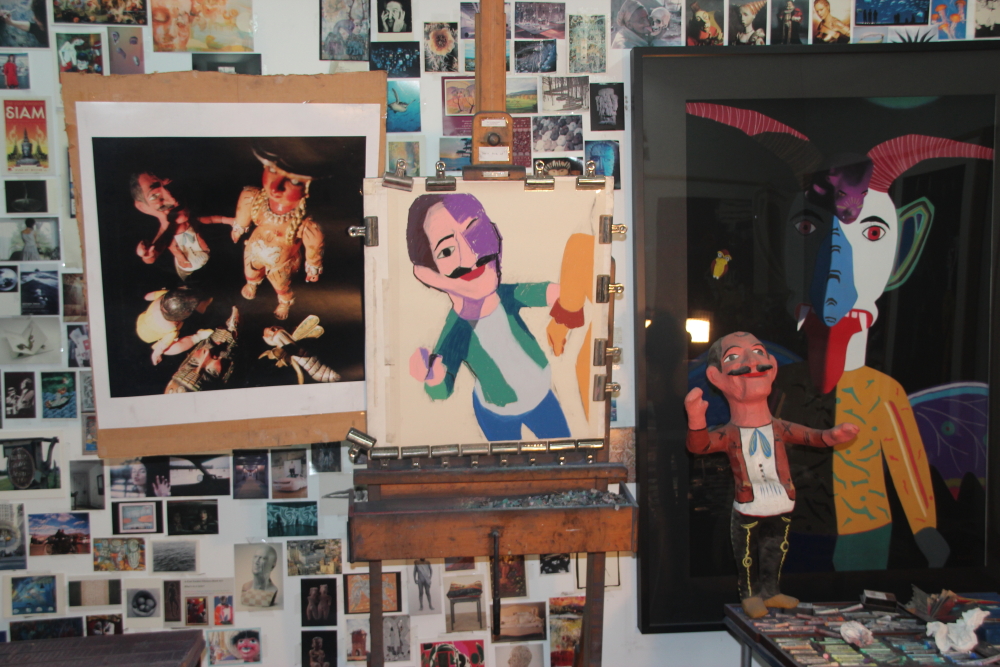
Work in progress
A: It’s interesting how my creative process is simplifying the longer I work at this. For my most recent piece, I looked at my old 20″ x 24″ c-prints until a particular image seemed to call out. It became my next project.
Comments are welcome!
Pearls from artists* # 214

South Beach
* an ongoing series of quotations – mostly from artists, to artists – that offers wisdom, inspiration, and advice for the sometimes lonely road we are on.
…a number of scientists (including myself) have confirmed that the personality trait “openness to experience” is a potent contributor to creative thinking and achievement. Those who are high in this attribute tend to be imaginative, curious, perceptive, creative, artistic, thoughtful, and intellectual. They are driven to explore their inner worlds of ideas, emotions, sensations, and dreams, and to constantly seek out new experiences in their environment that will impart personal growth and allow them to further make meaning out of their lives.
Scott Barry Kaufman in “A Capacity for Genius,” Lincoln Center’s Mostly Mozart 50th Anniversary, July 22 – August 27, 2016 Playbill
Comments are welcome!
Start/Finish of “Incognito,” soft pastel on sandpaper, 38″ x 58″ image, 50″ x 70″ framed
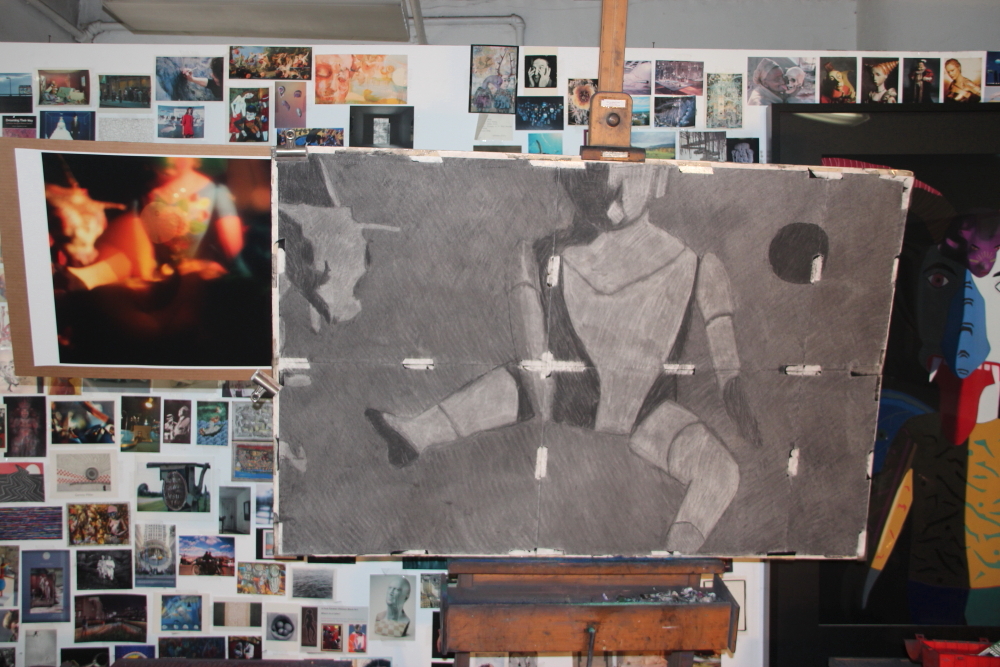
C-print and preliminary charcoal sketch
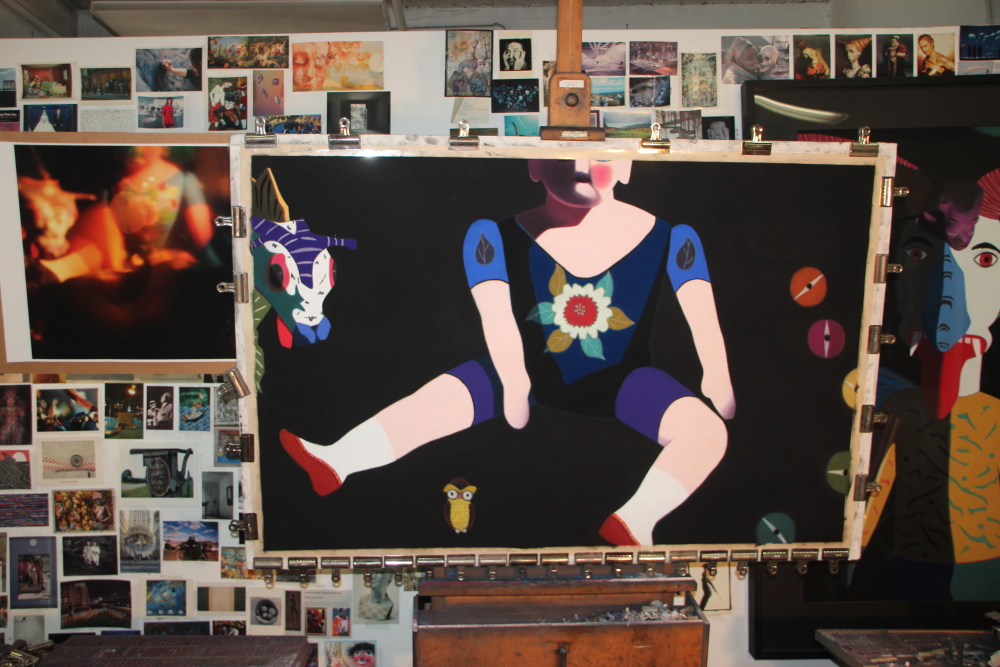
Finished
Comments are welcome!
Pearls from artists* # 213
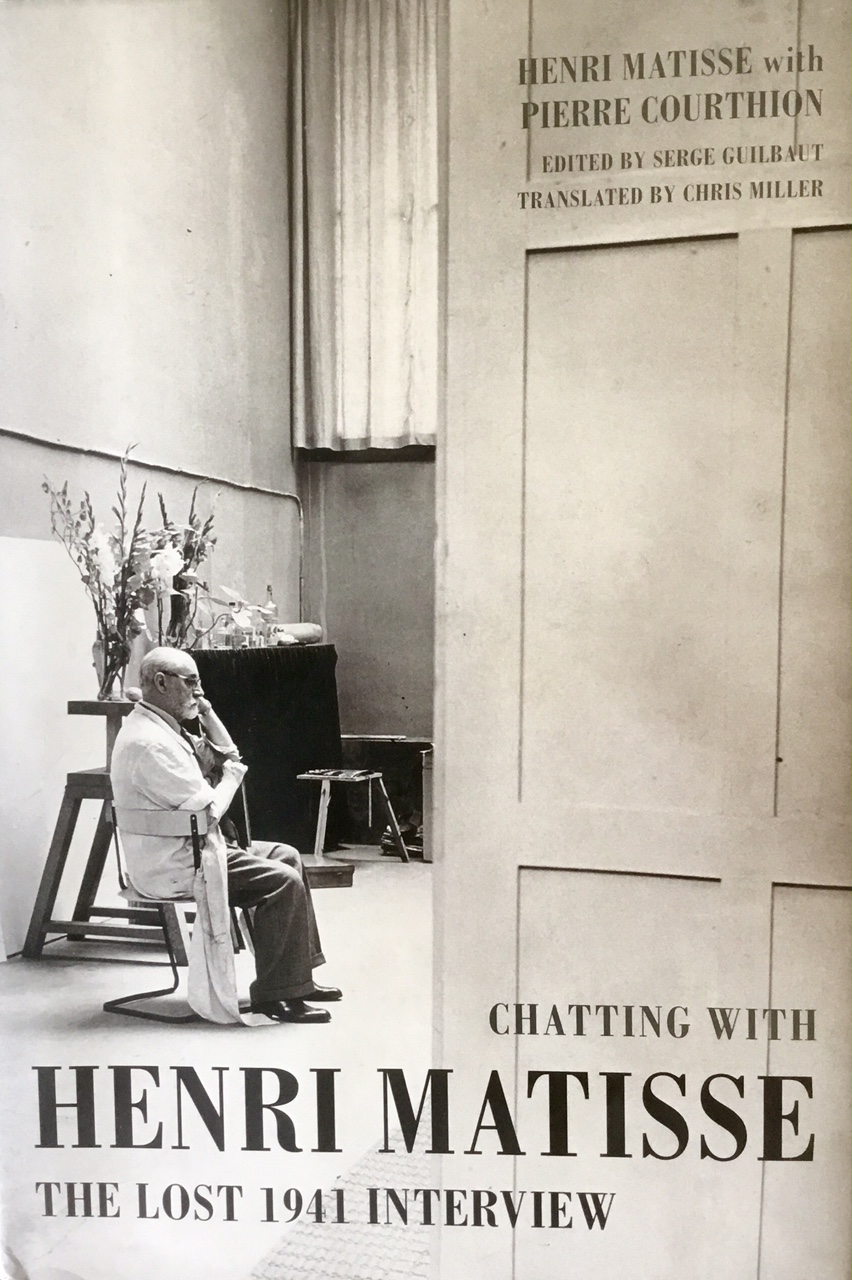
Matisse Book Cover
* an ongoing series of quotations – mostly from artists, to artists – that offers wisdom, inspiration, and advice for the sometimes lonely road we are on.
I am astonished by the accuracy with which Matisse remembers the most trifling facts; he describes a room that he went into forty years ago and gives you the measurements, where every piece of furniture stood, how the light fell. He is a man of astounding precision and has little time for anything that he has not confirmed for himself. In art matters, he is not the sort to go looking for a profile fortuitously created by cracks in the wall. Elie Faure writes that Matisse is perhaps the only one of his contemporaries (in particular Marquet and Bonnard) to know exactly where he comes from and the only one who never allows it to show “because his inveterate, invincible, vigilant willpower is always focused on being himself and nothing but.”
Matisse neglects nothing. He seems to know as much about the art market as about painting.
So many stratagems to sell a painting, from intimidating the purchaser to seeming to avoid him: Vollard used them all and used them successfully. Not least the lies that he told to reassure the client. “It works like this,” says Matisse: “To make a sale, you invent lies that have somehow disappeared into thin air by the time the deal is done.”
We talk of the difficulties faced by dealers hoping to gain access to Renoir in his Cagnes residence. Renoir didn’t like having people talk to him about selling his work,” says Matisse: “It bored him. About the only one who got a foot in the door was Paul Guillaume; he dressed up as a young worker with a floppy necktie: “You see, I’m a local. I’ve always loved your painting. I’ve just inherited a little money; I’d like to buy something.”
Chatting with Henri Matisse: The Lost 1941 Interview, Henri Matisse with Pierre Courthion, edited by Serge Guilbaut, translated by Chris Miller
Comments are welcome!


 barbararachkoscoloreddust.com