Category Archives: Mexico
Q: When you set up your figures to photograph, do you create a story?
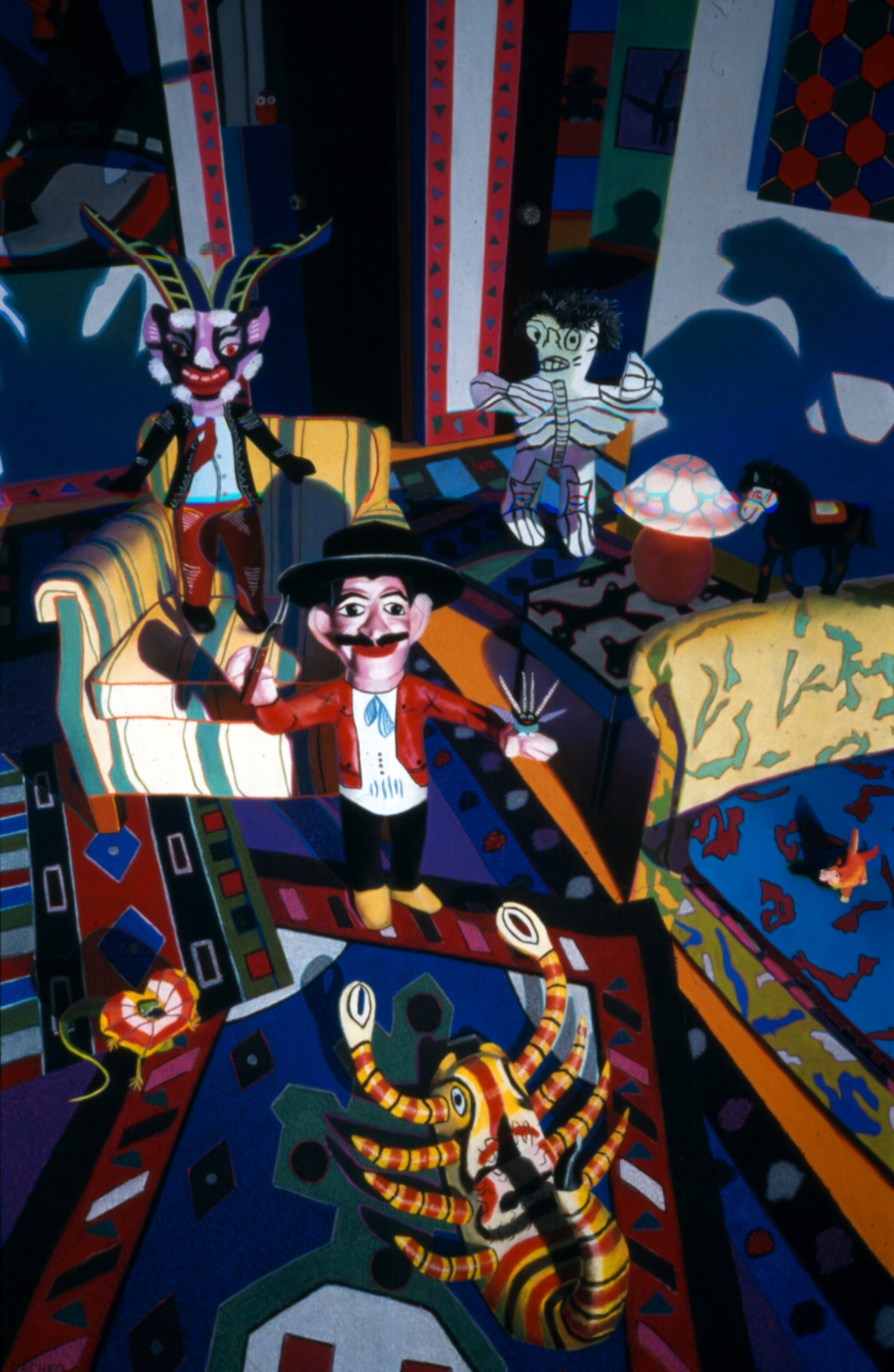
“He Just Stood There Grinning,” soft pastel on sandpaper, ” 58″ x 38″
A: I always did so with my “Domestic Threats” paintings, but not with my current work. As I set up a group of figures to photograph, I would make up a story about what was happening between them: what the Day of the Dead skeleton I bought in Mexico City was saying to the frog/fish/human mask from Guerrero, for example. I was a big kid playing with my favorite toys! The stories were the spark to get me started on a new project, but I usually forgot about them afterwards. They were necessary, yet incidental to my creative process, which is probably why I have never written them down.
Years ago I had the experience of being at one of my solo shows when a group of elementary school children came along with their teacher. The teacher asked them to act out one of the stories in a particular painting. Ever curious about how people relate to my work, I didn’t introduce myself as the creator of the pieces hanging on the walls. I no longer remember the details, but their interpretations soon had me laughing. It is a constant surprise to hear from people encountering my work for the first time what they see in it, especially when those people are young kids with wild imaginations!
Comments are welcome!
Q: What would you be if you were not an artist?
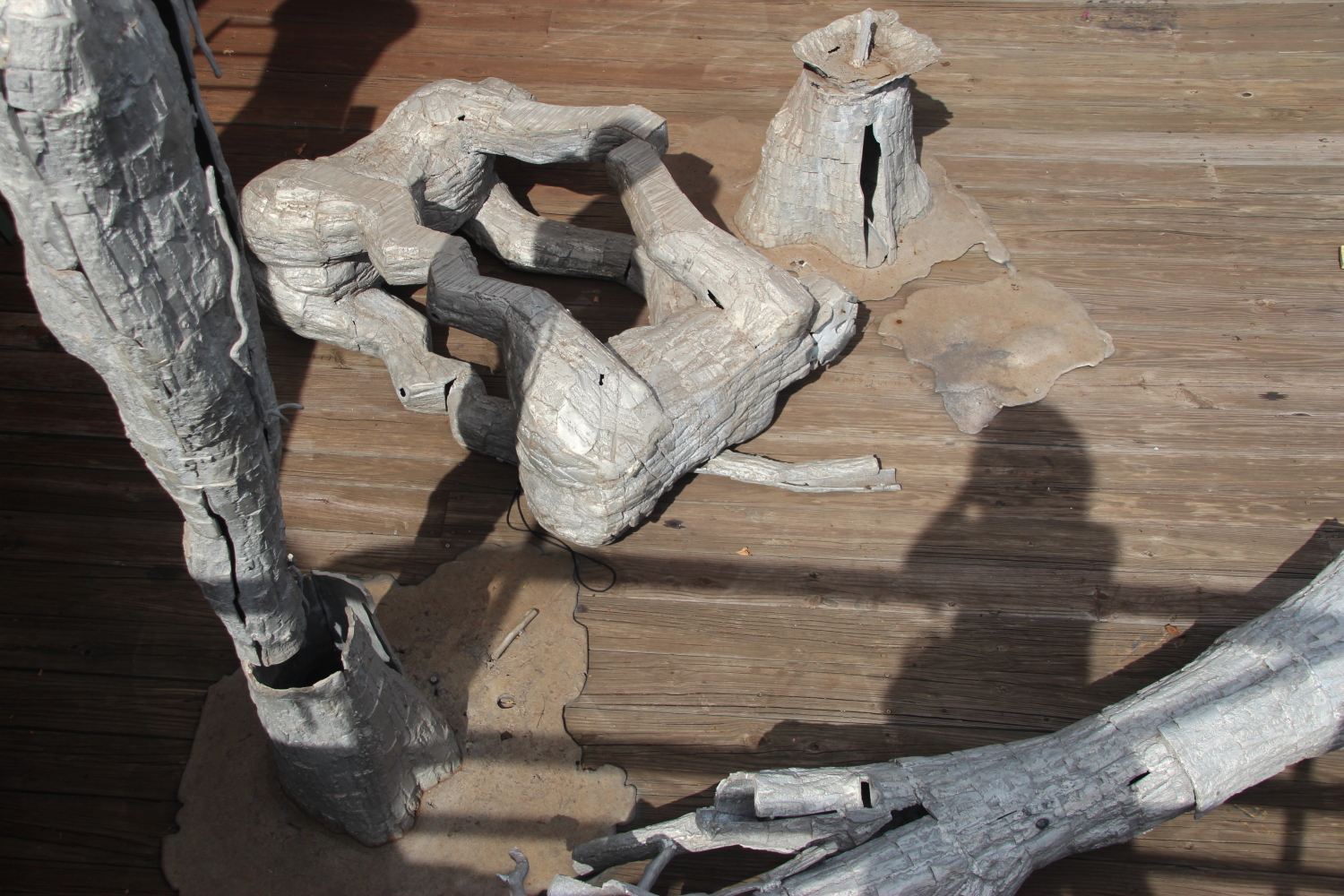
Self-portrait on a Hudson River barge
A: I honestly have no idea, but whatever it might be, there is a good chance that I’d be bored! In my younger days boredom was a strong motivator. I left the active duty Navy out of boredom. I couldn’t bear not being intellectually challenged (most of my jobs consisted of paper-pushing), not using my flying skills (at 27 I was a licensed commercial pilot and Boeing 727 flight engineer), and not developing my artistic talent. In what surely must be a first, by spending a lot of time and money training me for jobs I hated, the Navy turned me into a hard-working artist! And once I left the Navy there was no plan B. There was no time to waste. It was “full speed ahead.”
Art is a calling. You do not need to be told this if you are among those who are called. It’s all about “the work,” that all-consuming focus of an artist’s life. If a particular activity doesn’t make you a better artist, you avoid it. You work hard to nourish and protect your gifts. As artists we invent our own tasks, learn whatever we need in order to progress, and complete projects in our own time. It is life lived at its freest.
My art-making has led me to fascinating places: Mexico, Guatemala, Brazil, Argentina, Uruguay, France, England, Italy, Bali, Java and more; and to in-depth studies of intriguing subjects: drawing, color, composition, art and art history, the art business, film and film history, photography, mythology, literature, music, jazz history, and archaeology, particularly that of ancient Mesoamerica (the Olmec, Zapotec, Mixtec, Aztec, Maya, etc.). And this rich mixture continually grows! For anyone wanting to spend their time on earth learning and meeting new challenges, there is no better life than that of an artist.
I SO agree with this exchange that I read years ago between between Trisha Brown and Mikhail Baryshnikov in the New York Times. I wrote it on a piece of paper and taped it to my studio wall:
Trisha: How do you think we keep going? Are we obsessed?
Mikhail: We do it because there’s nothing better. I’m serious. Because there is nothing more exciting than that. Life is so boring, that’s why we are driven to the mystery of creation.
Comments are welcome.
Q: Can you speak more about how your studio practice has evolved over the years?

At White Sands, NM; photo by Donna Tang
A: I have spoken at length about how my work and studio practice have evolved since the mid-80s. Please see my interview with Daniel Rothbart at http://www.arterynyc.com/2011/12/a-conversation-with-barbara-rachko/ or click the Blogroll link at right.
Q: What are you working on now?
A: I am continuing with the “Black Paintings,” a series started a few years ago. Compared with “Domestic Threats,” these paintings are stripped of everything – walls, furniture, rugs – except the actors, who appear on a stark black background. As I’ve continued working over the years, I’ve learned to communicate better. I’ve stripped away all the extraneous stuff and gradually have been able to do more with less. There is wisdom in simplifying the work to reveal the essential vision. It is an artist’s life work.
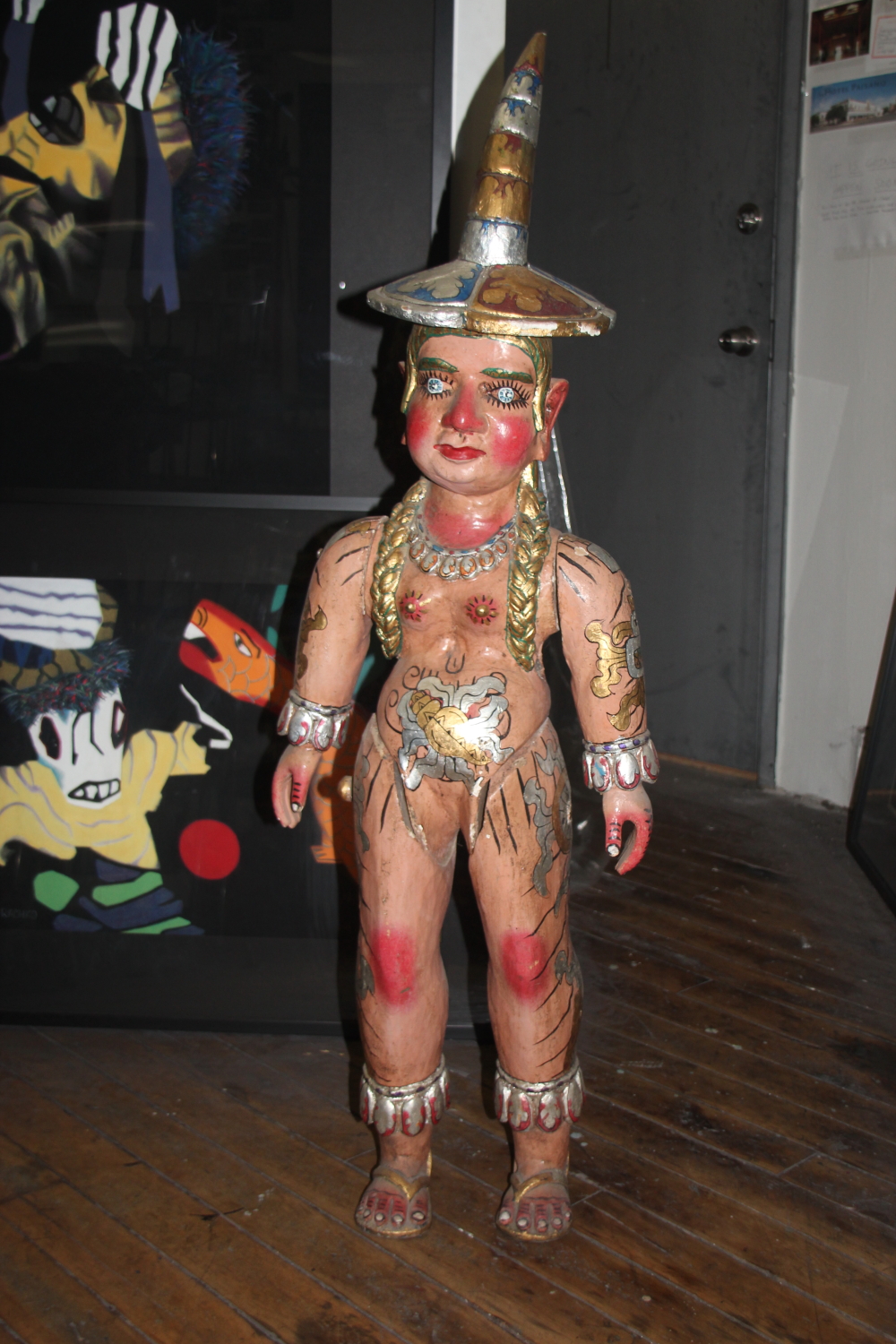
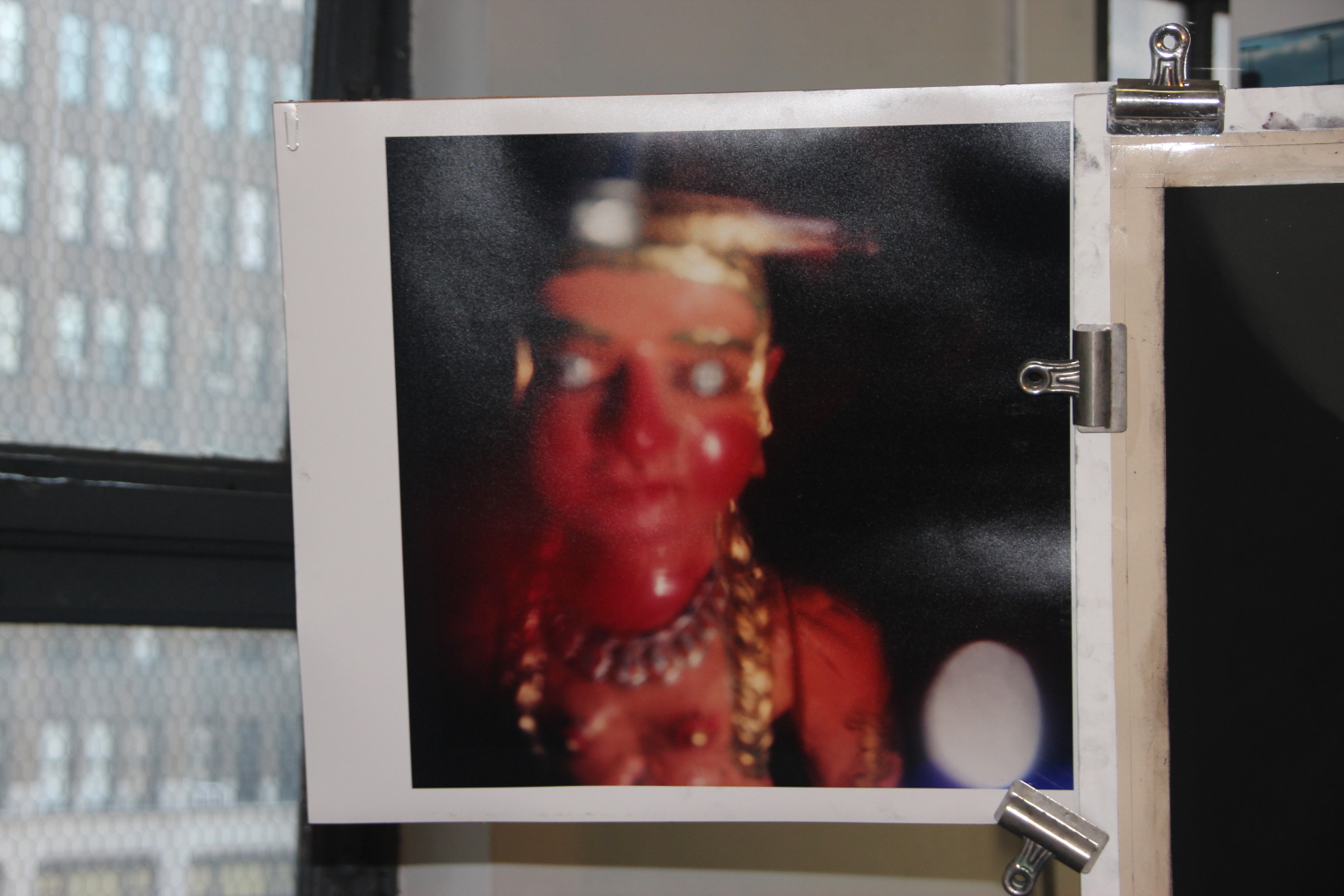
The first photograph below is of a carved wooden figure found in Mexico City at Eugenio’s, my favorite mask store in Mexico. She is part of a male-female pair. The second image is my 20″ x 24″ photograph of her, the starting point and reference for the painting. The next five photographs, I think, are self-explanatory. Questions are welcome, as always.
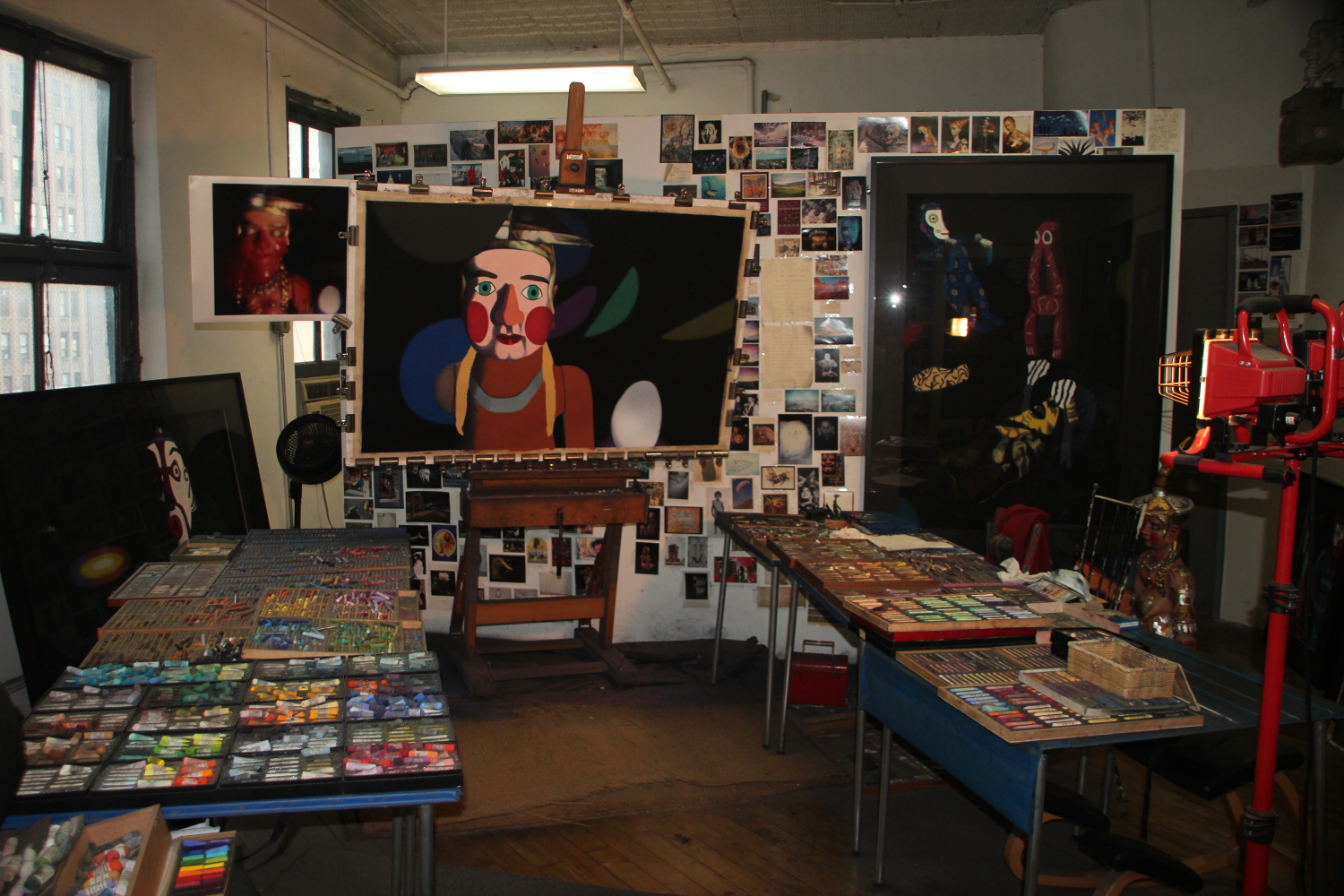
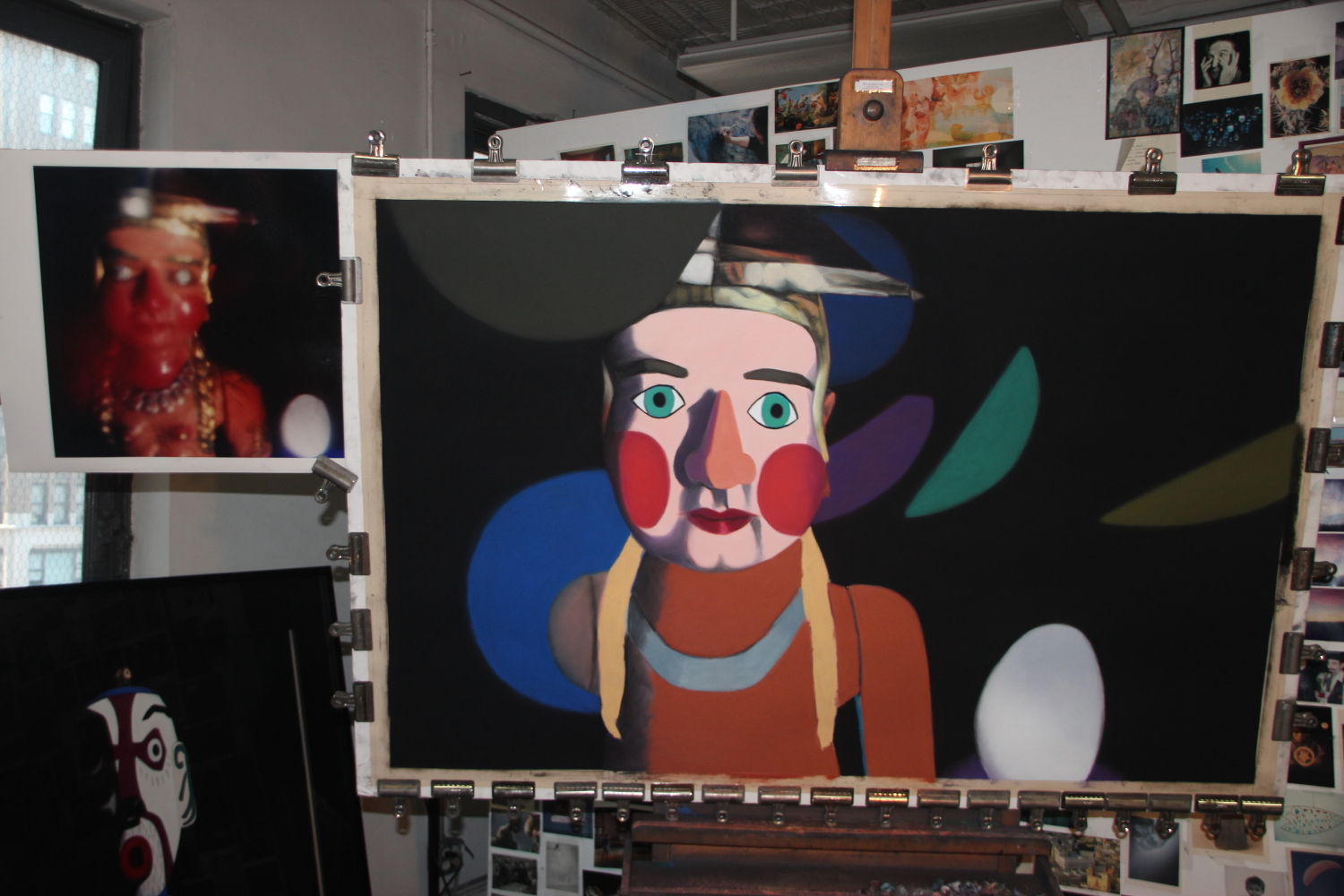
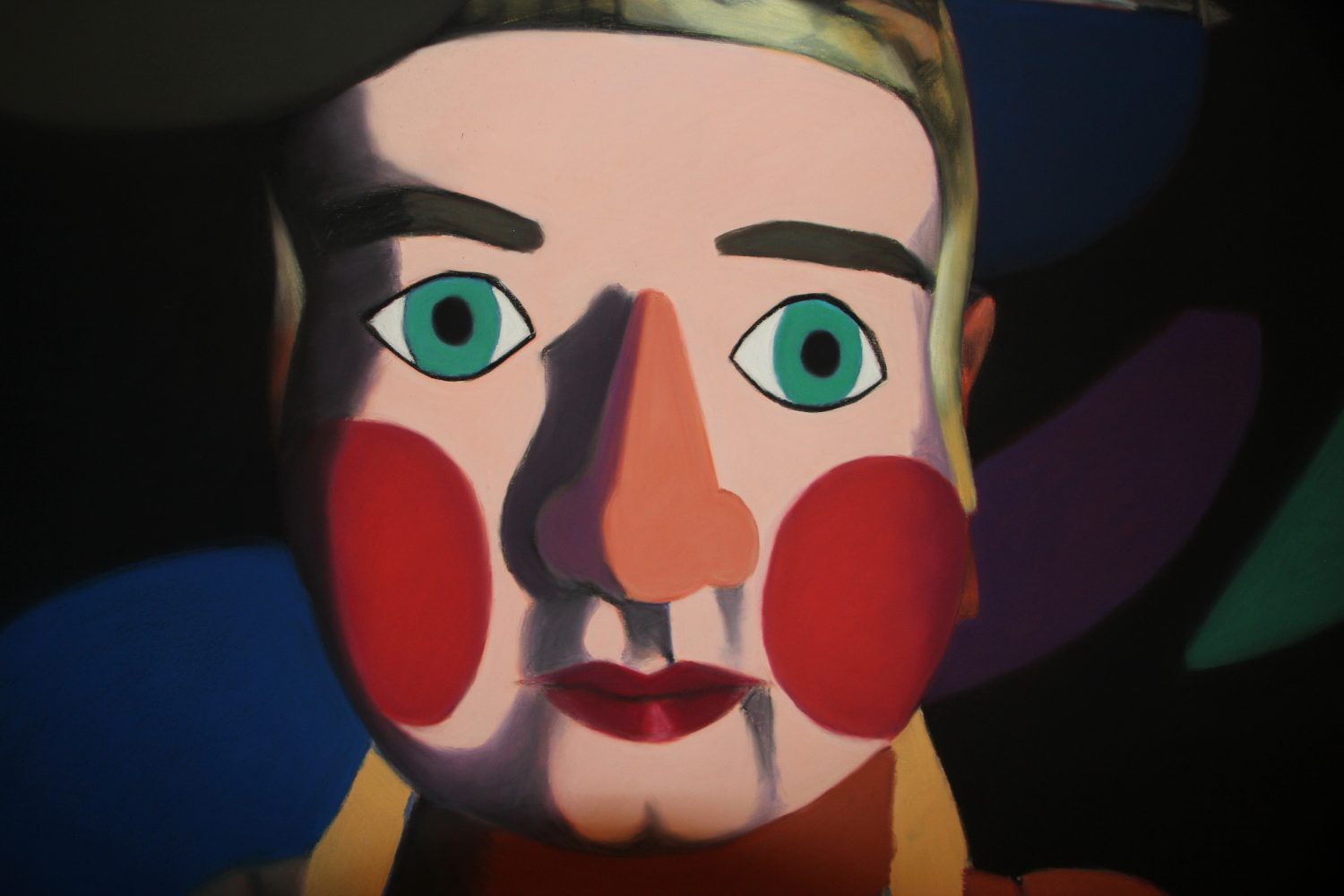
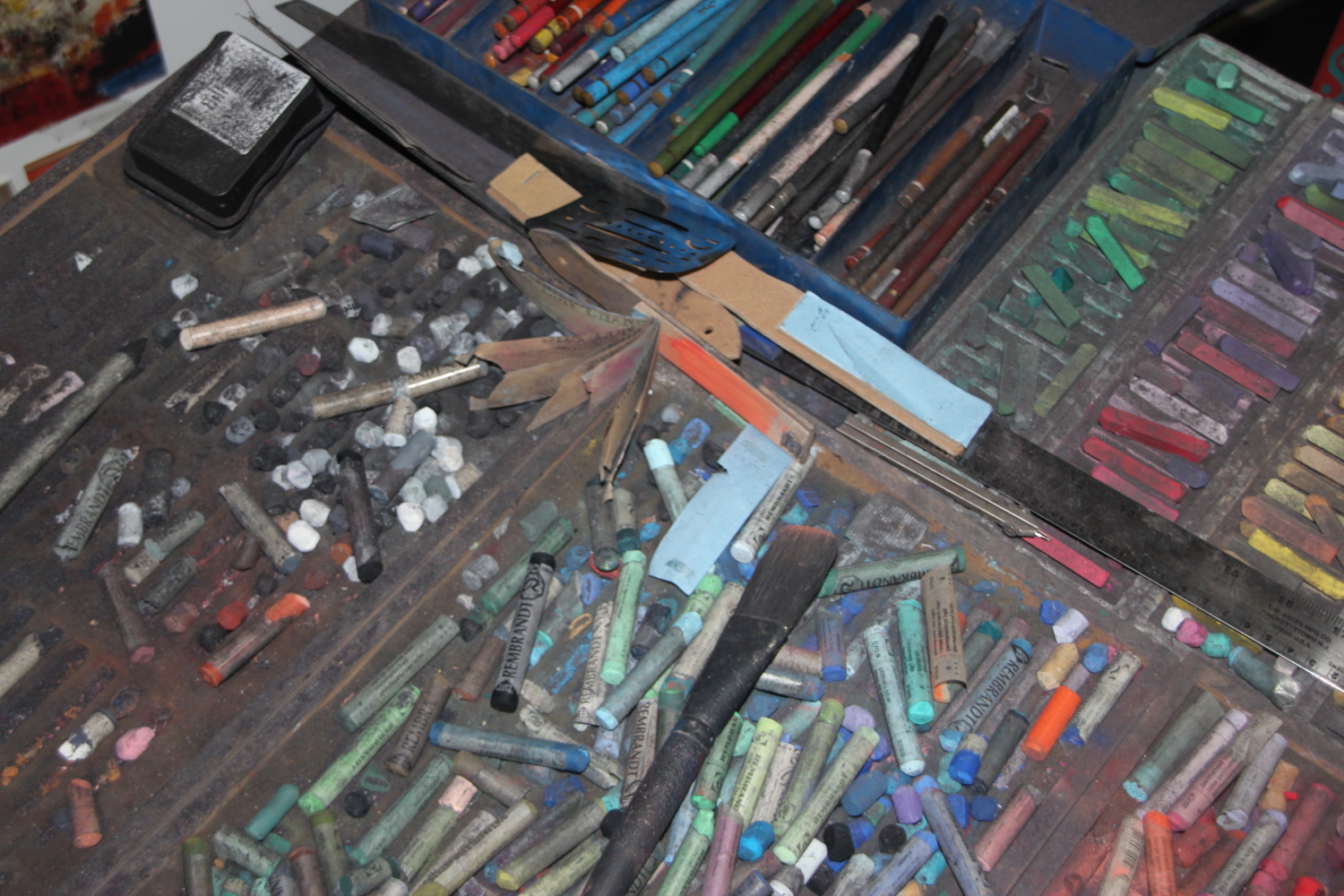
Q: How large is your collection of Mexican folk art objects?
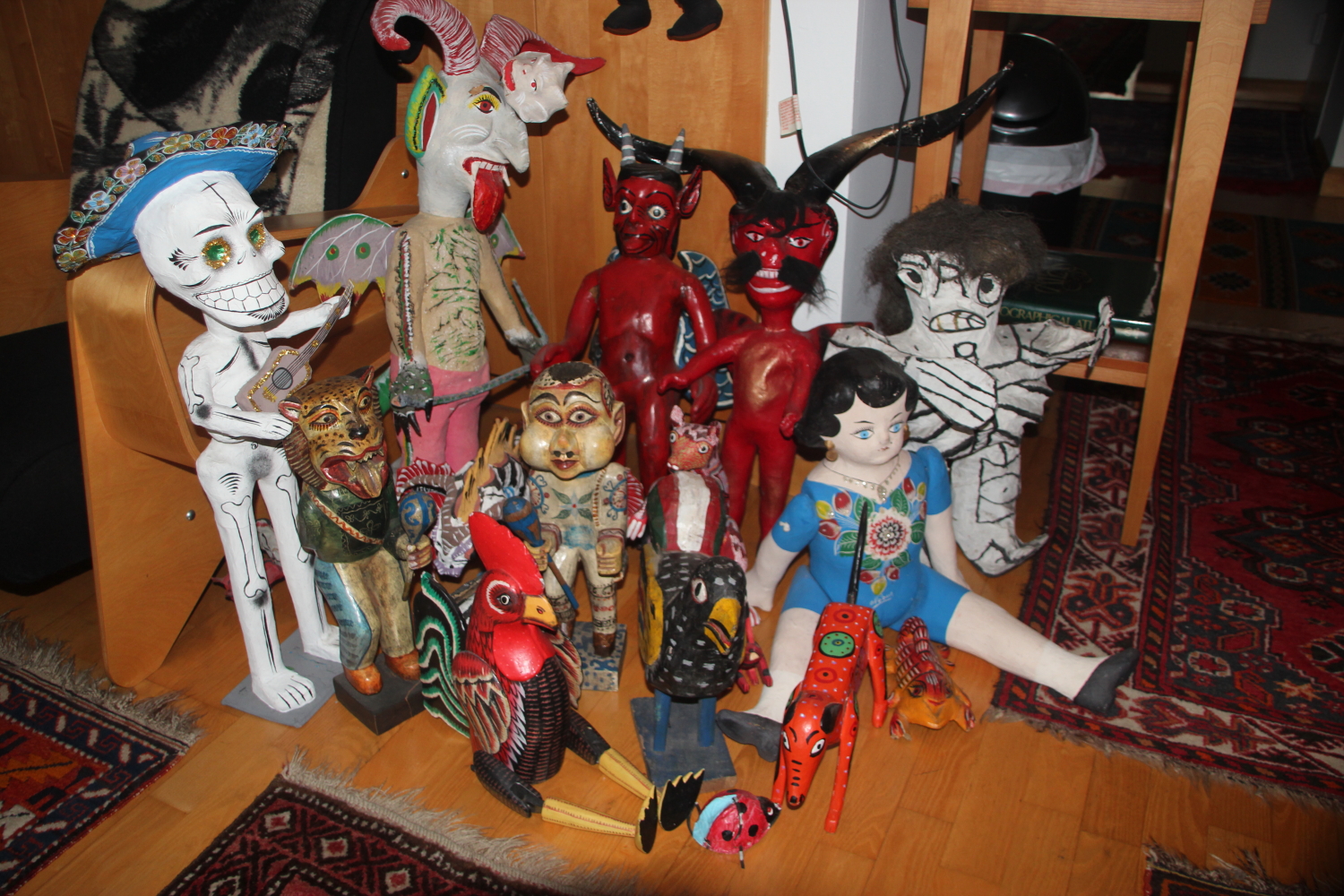
Part of the collection
A: I haven’t counted them, but my guess is 200 pieces of various sizes. This includes the Guatemalan figures. I went to Guatemala in 2009 and 2010. Since I divide my time between a house in Alexandria, VA, an apartment in Manhattan, and a studio in Chelsea, part of my folk art collection is in each of these places.
Q: Mexico has been a big influence on your work. What first drew you to Mexican folk art – masks, carved wooden animals, papier mâché figures, and toys?

A corner of Barbara’s studio
A: In 1991 my future sister-in-law sent, as a Christmas present, two brightly painted wooden figures from Oaxaca. One was a large, blue and white polka dot flying horse, the other a bear, painted with red, white, and black dots and lines.
At the time I was living in Alexandria, Virginia, studying at the Art league School there, and working as a full-time artist. I had resigned from the Navy after seven years on active duty, although I still worked one weekend a month at the Pentagon as a reservist. I was looking for something new to paint with soft pastel, having found portraits deeply unsatisfying.
I had never seen anything like these Oaxacan figures and was intrigued. I started asking friends about Oaxaca and soon learned that the city has a unique style of painting, the self-titled Oaxacan school, and that the painter, Rufino Tamayo, and husband and wife photographers, Manuel and Lola Alvarez Bravo, were from Oaxaca. (Manuel Alvarez Bravo founded an important photography museum there).
I had been a fan of Frida Kahlo, Diego Rivera, Leonora Carrington, Remedios Varo and other artists associated with Mexico, and had a long-standing interest in pre-Columbian civilizations. I knew some Spanish, having studied it in high school. I began reading everything I could find about Oaxaca and Mexico and soon became fascinated with the Day of the Dead.
In 1992 my future husband, Bryan, and I made our first trip to Mexico, spending a week in Oaxaca to see Day of the Dead observances and to study the Mixtec and Zapotec ruins (Monte Alban, Yagul, Mitla, etc.), and another week in Mexico City to visit Diego Rivera’s murals at the Ministry of Education, Frida Kahlo’s Casa Azul, and nearby ancient archeological sites (the Templo Mayor, Teotihuacan, etc.).
I began collecting Mexican folk art on that first trip. I still have fond memories of buying my first mask, a big wooden dragon with a Conquistador’s face on its back. Bryan and I found it high on a wall in a dusty Oaxacan shop. The dragon was three and a half feet long and three feet wide. Because it was fragile, we hand-carried it onto the plane and were able to store it in the first class cabin (this was pre-9/11). I chuckle to remember that we covered its finely carved toes with rolled up socks to prevent them from breaking!
I have been back to Mexico many times, mainly visiting the central and southern states. I travel there to study pre-Columbian history, archaeology, mythology, culture, and the arts. It is an endlessly fascinating country that has long been an inspiration for artists.
Q: Are you close to finishing any pastel paintings?
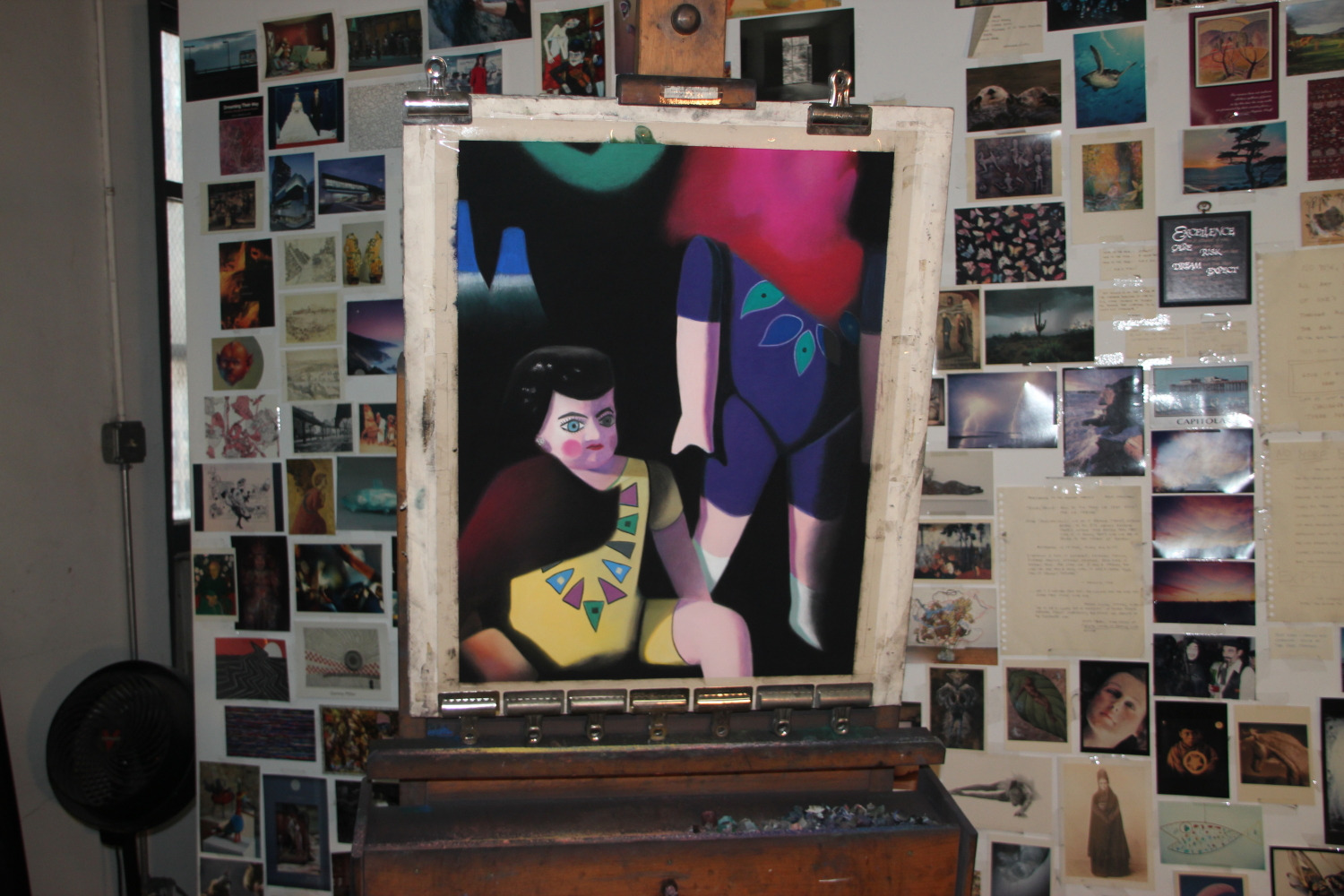
“Absence” not quite finished
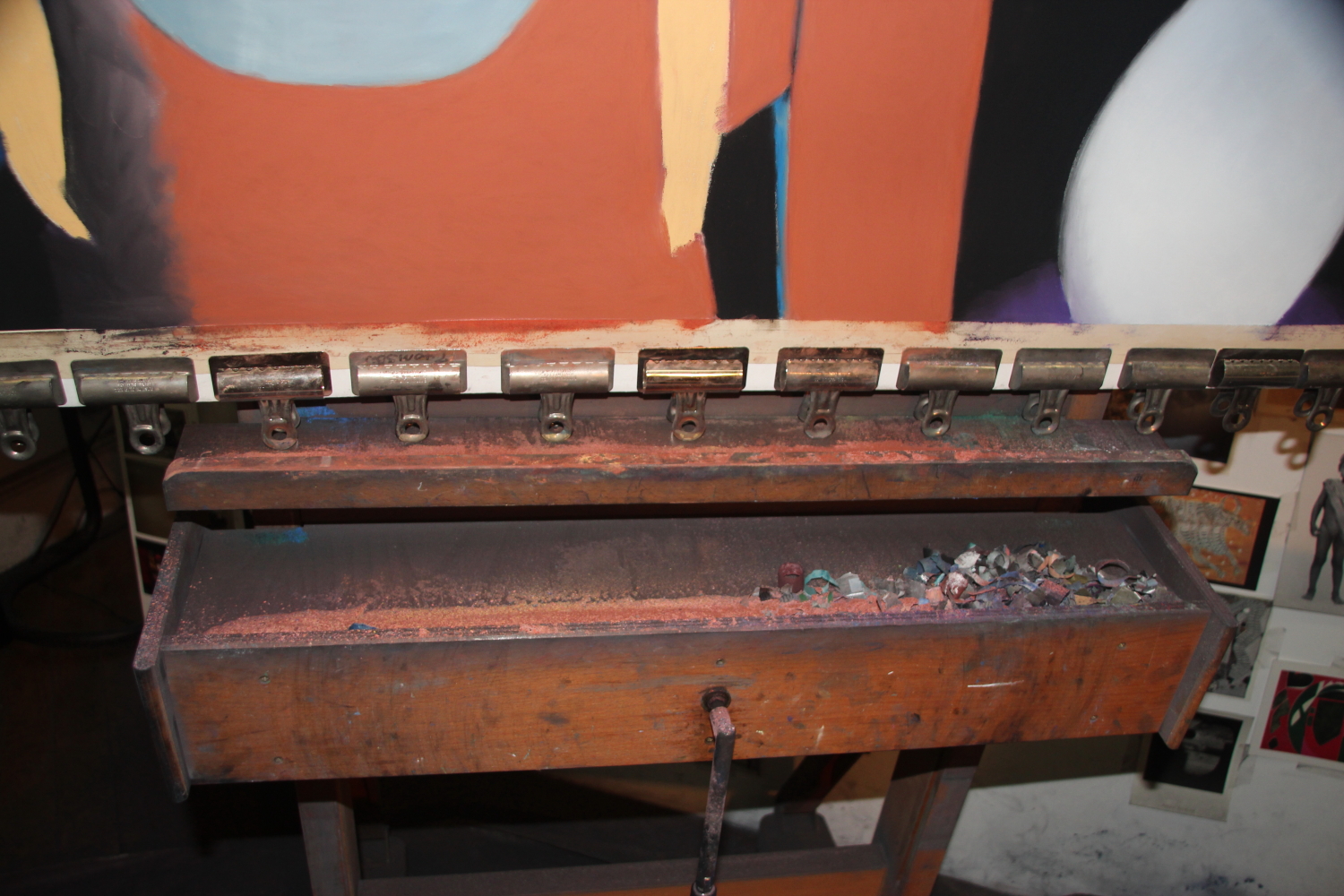
A: I’m putting finishing touches on a small one, “Absence,” which is 26″ x 20″ unframed. It depicts paper mache figures that I bought some years ago in Oaxaca and Mexico City. I added those two blue and white “volcano” shapes on the left after my recent trip to Bali. Check out the dust (and torn pastel wrappers) on the easel. That’s what inspired the name of my blog.


 barbararachkoscoloreddust.com