Category Archives: Archives
Blog Archives
Q: Would you describe how you are taking soft pastel in new directions as a fine art medium?

Barbara at work, Photo: Marianne Barcellona
A: I have been devoted to soft pastel for more than thirty years. In this blog and in countless interviews online and elsewhere, I continue to expound on its merits. For me no other fine art medium comes close.
I have developed my own original methods for working with soft pastel, pushing this venerable 500-year-old medium to its limits and using it in ways that no one has done before. I have created a unique science of color in which I layer and blend pigments. When viewers (including fellow artists) see my work in person for the first time, they often ask, “What medium is this?”
My self-invented techniques for using soft pastel achieve rich velvety textures and exceptionally vibrant color. Blending with my fingers, I painstakingly apply dozens of layers of pastel onto acid-free sandpaper. In addition to the thousands of pastels that I have to choose from, I blend new colors directly on the paper. Each pastel painting takes about three months and hundreds of hours to complete.
My subject matter is singular. I am drawn to Mexican, Guatemalan, and Bolivian cultural objects—masks, carved wooden animals, papier mâché figures, and toys. On trips to these places and elsewhere I frequent local mask shops, markets, and bazaars searching for the figures that will populate my pastel paintings. How, why, when, and where these objects come into my life is an important part of the creative process. Each pastel painting is a highly personal blend of reality, fantasy, and autobiography.
Comments are welcome!
Pearls from artists* # 277

Lake Titicaca above Cocacabana, Bolivia
* an ongoing series of quotations – mostly from artists, to artists – that offers wisdom, inspiration, and advice for the sometimes lonely road we are on.
Einstein wrote, “The most beautiful experience we can have is the mysterious. It is the fundamental emotion which stands at the cradle of true art and true science.” What did Einstein mean by “the mysterious?” I don’t think he meant that science is full of unpredictable or unknowable supernatural forces. I believe that he meant a sense of awe, a sense that there are things larger than us, that we do not have all the answers at this moment. A sense that we can stand right at the edge between known and unknown and gaze into that cavern and be exhilarated rather than frightened. Just as Einstein suggested, I have experienced that beautiful mystery both as a physicist and as a novelist. As a physicist, in the infinite mystery of physical nature. As a novelist, in the infinite mystery of human nature and the power of words to portray some of that mystery.
Alan Lightman in A Sense of the Mysterious: Science and the Human Spirit
Comments are welcome!
Start/Finish of “Stalemate,” soft pastel on sandpaper, 38″ x 58″
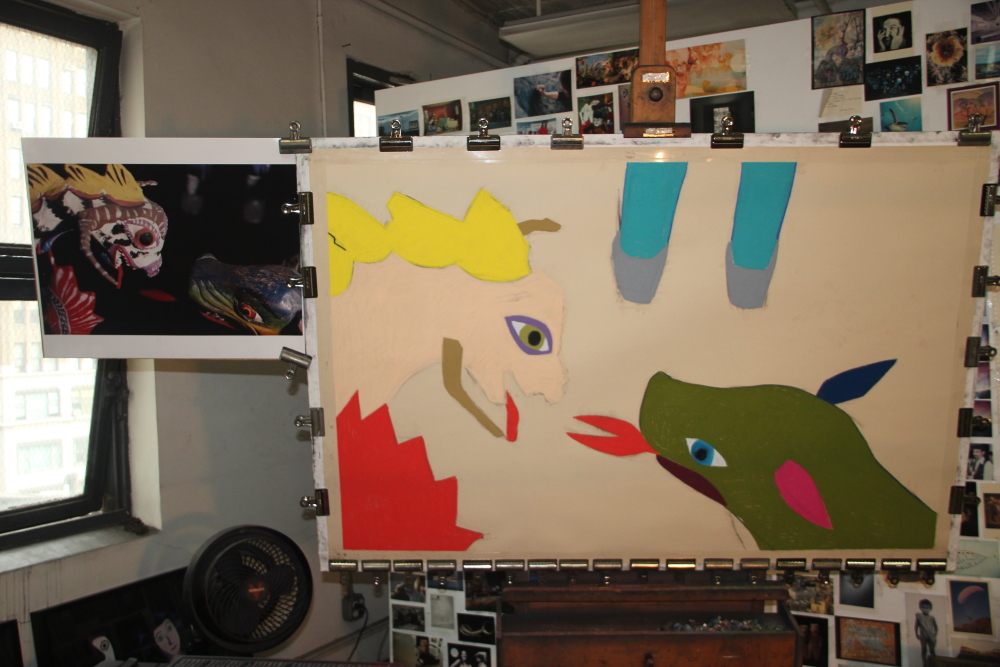
Start
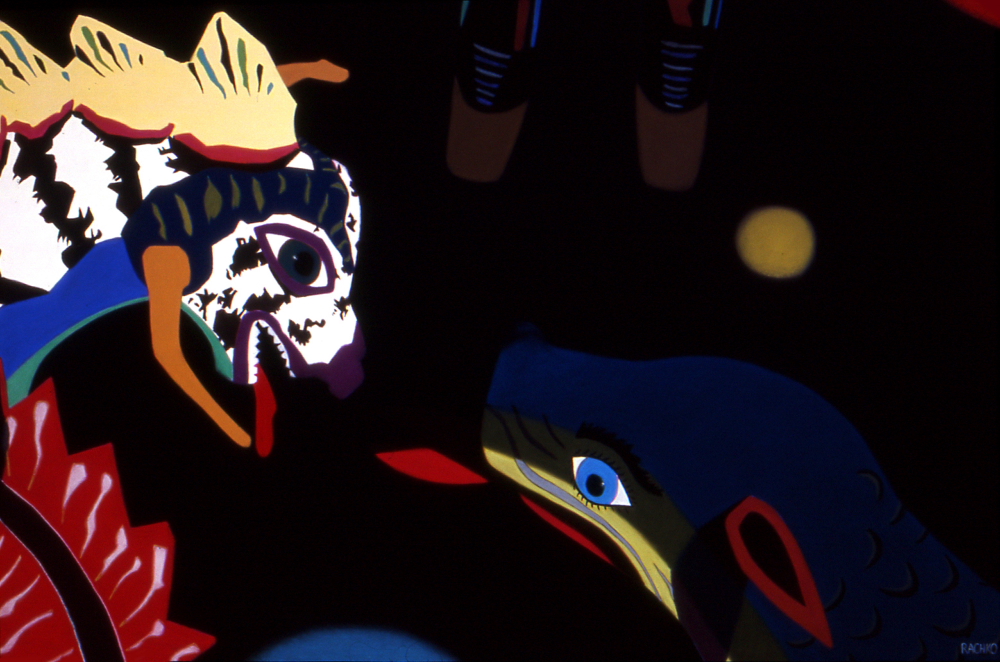
Finished and signed, lower right
Comments are welcome!
Pearls from artists* # 276
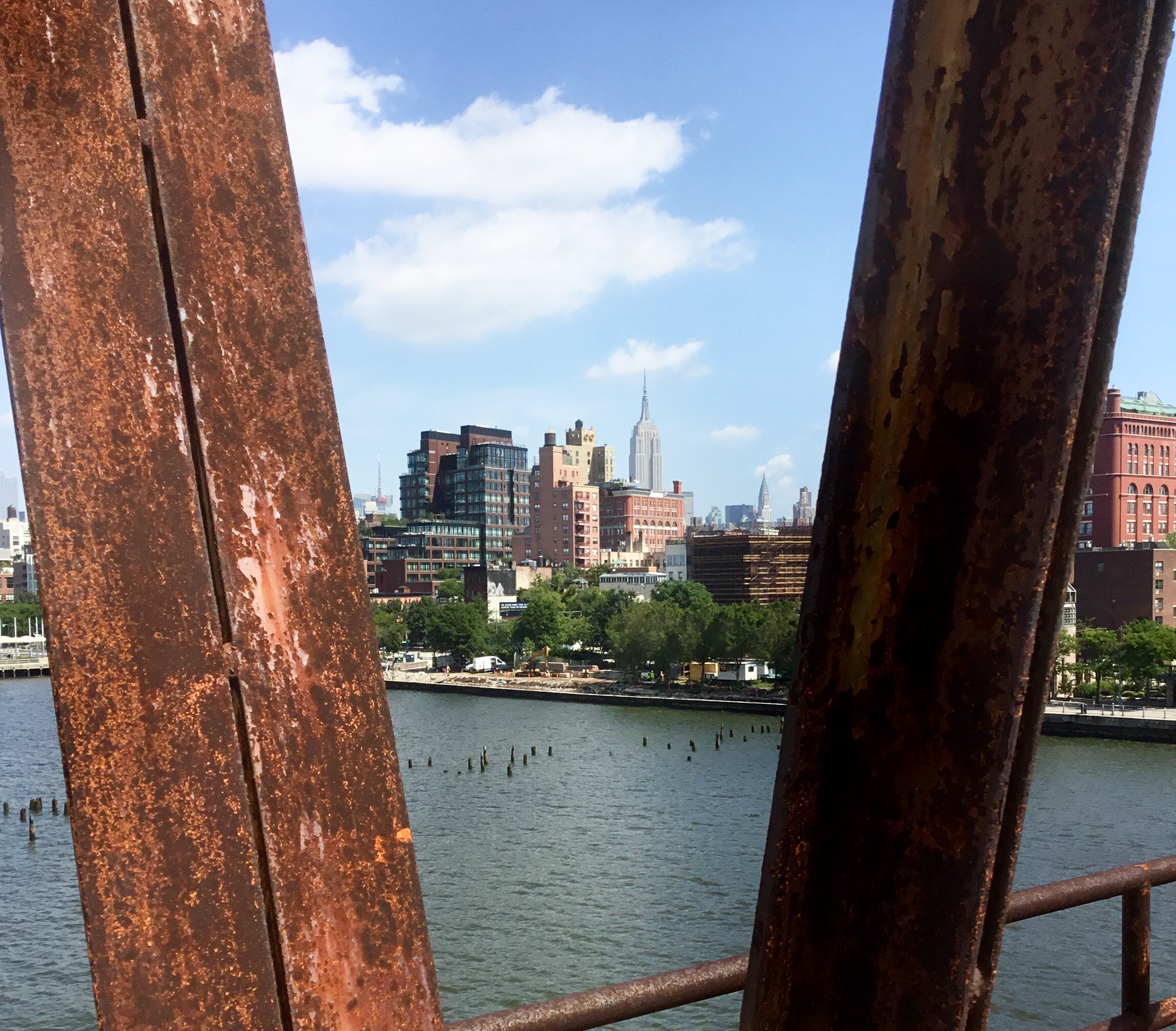
The West Village
* an ongoing series of quotations – mostly from artists, to artists – that offers wisdom, inspiration, and advice for the sometimes lonely road we are on.
A long time later, after I became a novelist, I realized that the ambiguities of the human mind are what give fiction and perhaps all art its power. A good novel gets under our skin, provokes us and haunts us long after the first reading, because we never fully understand the characters. We sweep through the narrative over and over again, searching for meaning. Good characters must retain a certain mystery and unfathomable depth, even for the author. Once we see to the bottom of their hearts, the novel is dead for us.
Eventually, I learned to appreciate both certainty and uncertainty. Both are necessary in the world. Both are part of being human.
Alan Lightman in A Sense of the Mysterious: Science and the Human Spirit
Comments are welcome!
Q: Please speak a little about the history of pastel.
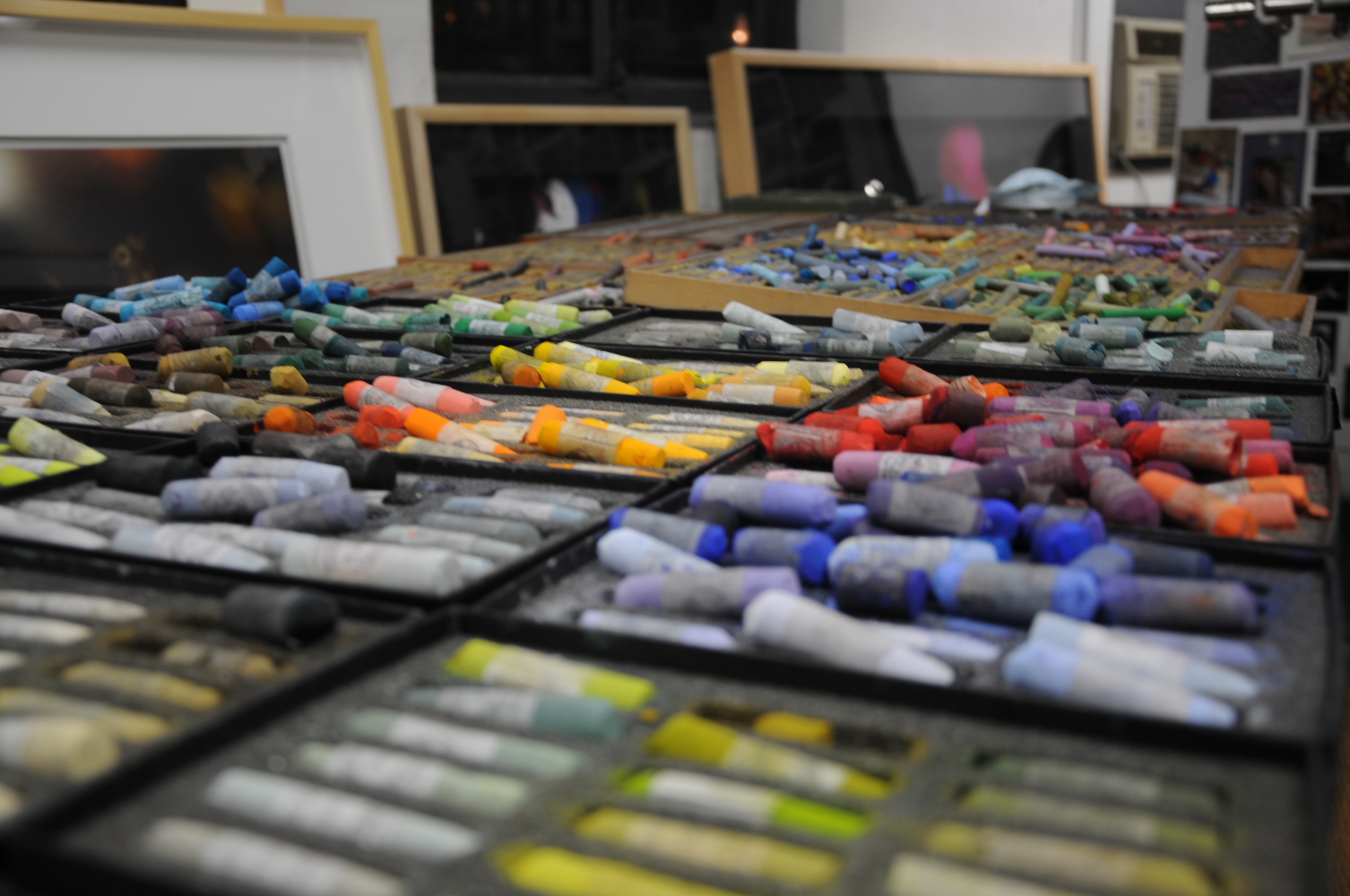
Some of Barbara’s soft pastels
A: Pastel has been in use for five hundred years. Its invention is attributed to the German painter, Johann Thiele, in the 16th century, followed by Venetian artist, Rosalba Carriera, who was the first to use it consistently. Edgar Degas, the most prolific user of pastel and its great champion, was followed by many artists who used varying techniques.
Degas’ subject matter included ballet dancers, laundresses, milliners, and denizens of the Parisian demimonde. The pure hues of pastel, plus its direct application, made it his preferred medium. Rosalba Carriera, a much-admired portrait artist, revolutionized the world of pastel by developing a wider range of colors, expanding pastel’s availability and usefulness. Mary Cassatt’s pastel portraits of children and family life provided her with a steady income while living in Paris. American painter William Merritt Chase used pastel to explore plein air painting. Pastel’s portability and rich colors made it ideal for outdoor landscapes and for capturing light.
Comments are welcome!
Pearls from artists* # 275

“The Sovereign,” soft pastel on sandpaper, 58″ x 38″ image, 70″ x 50″ framed
* an ongoing series of quotations – mostly from artists, to artists – that offers wisdom, inspiration, and advice for the sometimes lonely road we are on.
Works of art… have a dominant function. They are objects of aesthetic interest. They may fulfill this function in a rewarding way, offering food for thought and spiritual uplift, winning for themselves a loyal public that returns to them to be consoled or inspired. They may fulfill their function in ways that are judged to be offensive or demeaning. Or they may fail altogether to prompt the aesthetic interest that they petition for. The works of art that we remember fall into the first two categories: the uplifting and the demeaning. The total failures disappear from memory. And it really matters which kind of art you adhere to, which you carry around in your heart. Good taste is… important in aesthetics… and indeed taste is what it is all about. If university courses do not start from that premise, students will finish their studies of art and culture just as ignorant as when they began. When it comes to art, aesthetic judgment concerns what you ought and ought not to like…
Roger Scruton in Beauty: A Very Short Introduction
Comments are welcome!
Q: What’s on the easel today?
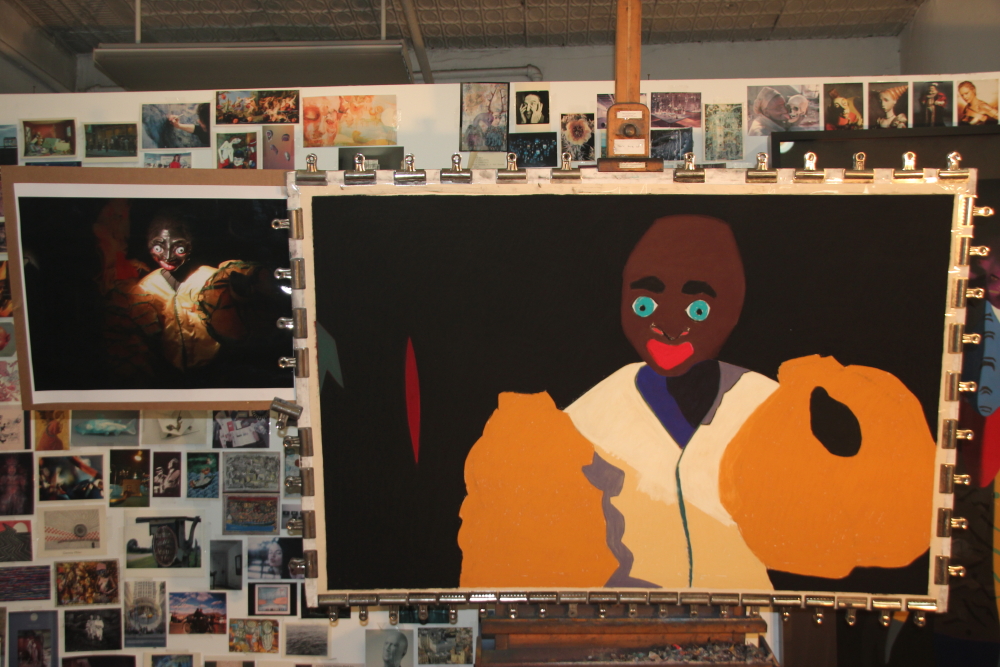
Work in progress
A: This is the first day – with only one layer of soft pastel in most places – of a 38″ x 58″ pastel painting. It’s based on a photo I composed at the National Museum of Ethnography and Folklore in La Paz, Bolivia. This is the fourth work in my “Bolivianos” series.
Comments are welcome!
Pearls from artists* # 274

Barbara’s studio
* an ongoing series of quotations – mostly from artists, to artists – that offers wisdom, inspiration, and advice for the sometimes lonely road we are on.
“Beauty is never enough,” he said. “Meaning is more important. If something catches people’s eyes enough to make them move around it, they will build a story around it. And that will not just be about beauty.”
Eric Charles-Donatien in Feathered Glory: In a studio in Paris, an old craft is given new life by Burkhard Bilger in The New Yorker, Sept. 25, 2017
Comments are welcome!
Q: Do you lose yourself in your work?

Barbara at work
A: Of course! When I am having a productive day in the studio, I am completely present and focused, fully immersed in solving technical problems and trying to improve the painting on my easel. I barely notice the time and have to remind myself to take a break or stop for lunch. Nothing else exists except the painting and my relationship with it. The rest of life completely falls away from my consciousness.
I believe most artists regularly experience this feeling of ‘flow.’ It is a state of being that is inherent and necessary to creative work of all kinds.
Comments are welcome!
Pearls from artists* # 273

The Lightning Field
* an ongoing series of quotations – mostly from artists, to artists – that offers wisdom, inspiration, and advice for the sometimes lonely road we are on.
The night sky was clear, too many stars.
Satellites described distinctive arcs, moving too fast for
nature across our broad field of vision.
The desert floor was drenched with rainwater, and our boots
suctioned the mud.
The moon’s shy face revealed only a sliver, but the starlight
was strong enough for the poles to pick up its silver.
We watched time, light, and distance compress over The
Lightning Field.
The dome of the sky was palpable,
papered in stars.
How long ago did the light that reflected in the poles leave
its source?
Laura Raicovich in At The Lightning Field
Comments are welcome!


 barbararachkoscoloreddust.com