Blog Archives
Q: How large is your collection of Mexican folk art objects?

Part of my collection
A: I began collecting these figures in the early 1990s. I haven’t counted them, but my guess is that I have amassed around 200 pieces of various sizes. This includes some Guatemalan figures. I went to Guatemala in 2009 and 2010. Since I divide my time between a house in Alexandria, VA, an apartment in Manhattan, and a studio in Chelsea, a portion of my folk art collection resides in each of these places.
Since 2017 I have been creating pastel paintings in the “Bolivianos” series, which exclusively use my photographs of Bolivian Carnival masks as source material. Occasionally, I will add one of my smaller Mexican or Guatemalan figures to improve and enrich a painting’s composition. Otherwise, my Mexican collection sits gathering dust. My thinking and my ideas, not to mention my travels, have evolved and just naturally moved on with time.
Comments are welcome!
Pearls from artists* # 363
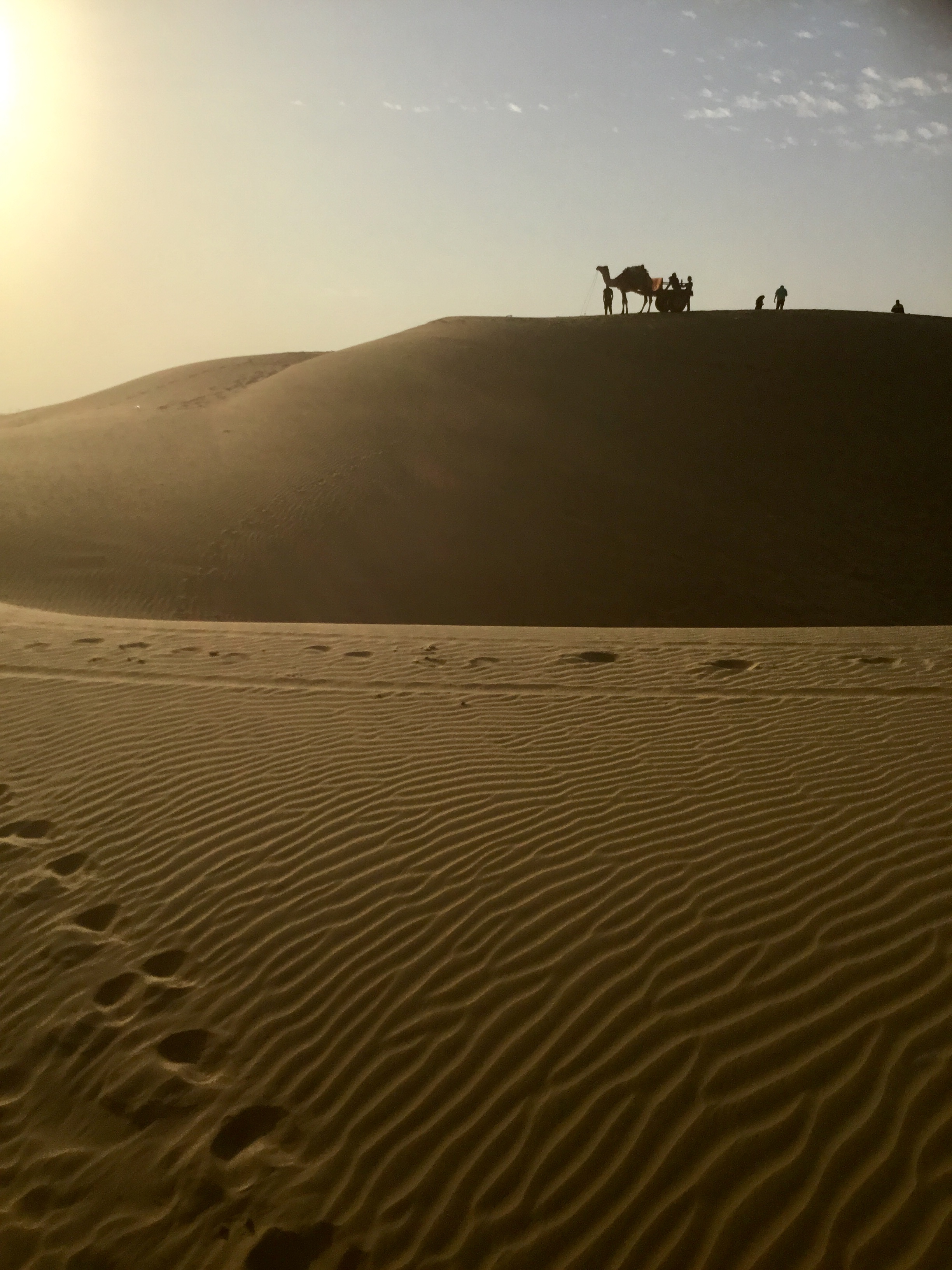
Thar Desert, Rajasthan, India
* an ongoing series of quotations – mostly from artists, to artists – that offers wisdom, inspiration, and advice for the sometimes lonely road we are on.
Beauty seems to need quiet and take patience, both to create it and to experience it.
If our minds are filled with a long and urgent “to do” list, we are not likely to slow down enough to appreciate anything but the next line we can draw through our never-ending list. Yet every now and again something stops us. It arrests our constant external activity and search. We can be stopped by the way the light filters through the trees in our backyard or hits a bowl of fruit on our kitchen table. And we are silenced, even if momentarily. We can be stopped by cave paintings as easily as by a thirteenth-century tapestry or a fifteenth-century Italian painting. We may be impressed by the craft of the artist, but almost always what moves us most deeply is the beauty that is expressed by the craft.
In the face of beauty, we are silenced because beauty expresses silence. In lavishing attention on the object of the artwork, the consciousness of the artist can touch something divine, some transcendental quality, and that transcendent element now resides in the artwork. How do we know it? We feel it. We experience it. Our heart responds to that sublime quality the artist infused into the work.
Ian Roberts in Creative Authenticity: 16 Principles to Clarify and Deepen Your Artistic Vision
Comments are welcome!


 barbararachkoscoloreddust.com