Blog Archives
Pearls from artists* # 574

Barbara’s Studio
*an ongoing series of quotations – mostly from artists, to artists – that offers wisdom, inspiration, and advice for the sometimes lonely road we are on.
A creative life is risky business. To follow your own course, not patterned on parents, peers, or institutions, involves a delicate balance of tradition and personal freedom, a delicate balance of sticking to your guns and remaining open to change. While on some dimensions living a normal life, you are nevertheless a pioneer, breaking away from the molds and models that inhibit the heart’s desire, creating life as it goes. Being, acting, creating in the moment without props and supports, without security, can be supreme play, and it can also be frightening, the very opposite of play. Stepping into the unknown can lead to delight, poetry, invention, humor, lifetime friendships, self-realization, and occasionally a great creative breakthrough. Stepping into the unknown can also lead to failure, disappointment, rejection, sickness, or death.
Stephen Nachmanovitch in Free Play: Improvisation in Life and Art
Comments are welcome!
Pearls from artists* # 349
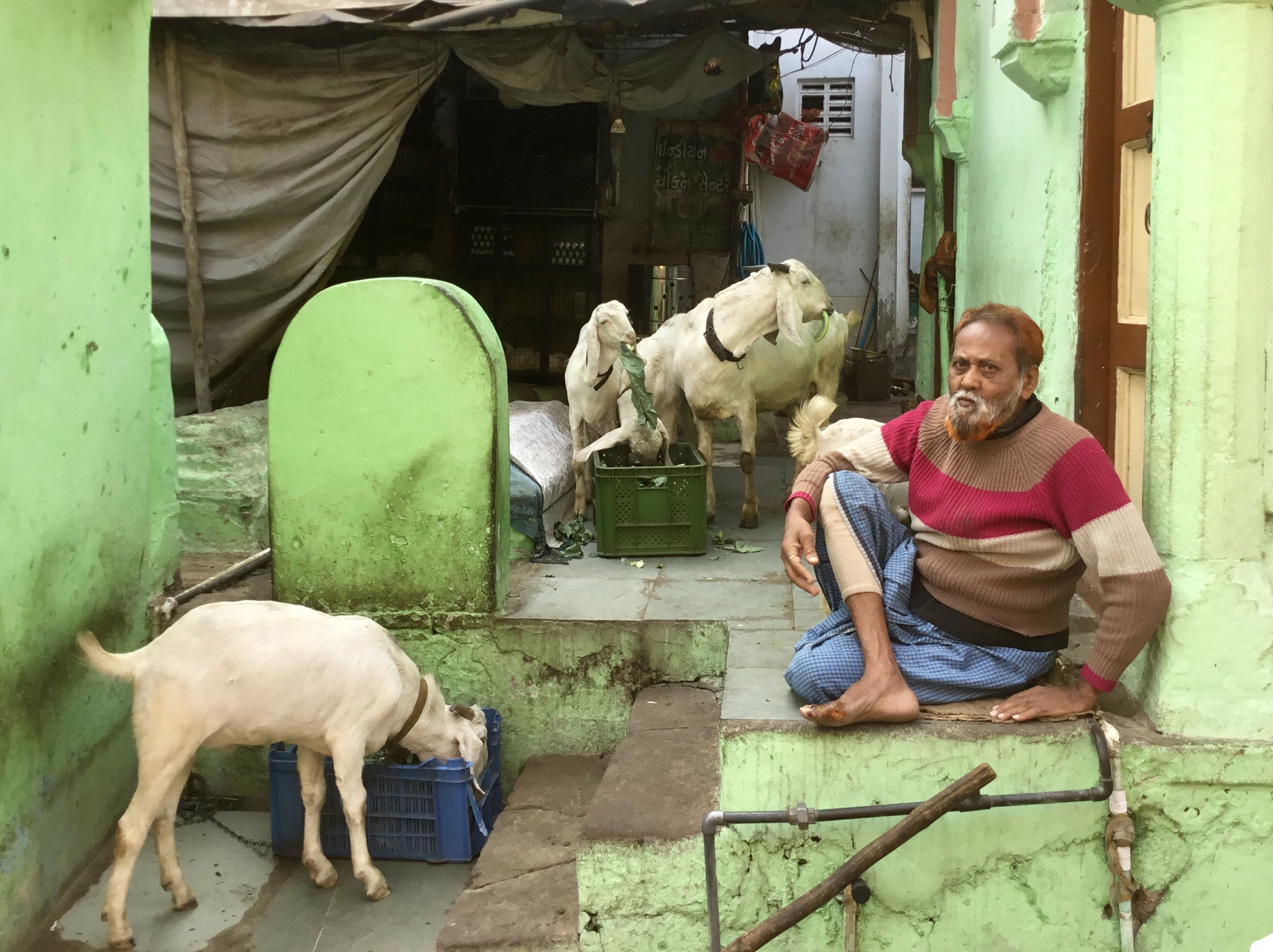
Ahmedabad, India
*an ongoing series of quotations – mostly from artists, to artists – that offers wisdom, inspiration, and advice for the sometimes lonely road we are on.
India presents to the visitor an overwhelmingly visual impression. It is beautiful, colorful, sensuous. It is captivating and intriguing, repugnant and puzzling. It combines the intimacy and familiarity of English four o’clock tea with the dazzling foreignness of carpisoned elephants or vast crowds bathing in the Ganga during an eclipse. India’s display of multi-armed images, it’s processions and pilgrimages, it’s beggars and kings, it’s street life and markets, it’s diversity of peoples – all appear to the eye in a kaleidoscope of images. Much that is removed from public view in the modern West and taken into the privacy of rest homes, asylums, and institutions is open and visible in the life of an Indian city or village. The elderly, the infirm, the dead awaiting cremation – these sights, while they may have been expunged from the childhood palace of the Buddha, are not isolated from the public eye in India. Rather, they are present daily in the visible world in which Hindus, and those who visit India, move in the course of ordinary activities. In India, one sees everything. One sees people at work and at prayer; one sees plump, well-endowed merchants, simple renouncers, fraudulent “holy” men, frail widows, and emaciated lepers; one sees the festival procession, the marriage procession, and the funeral procession. Whatever Hindus affirm of the meaning of life, death, and suffering, they affirm with their eyes wide open.
Diana L. Eck in Darsan: Seeing the Diving Image in India
Comments are welcome!


 barbararachkoscoloreddust.com