Pearls from artists* # 5
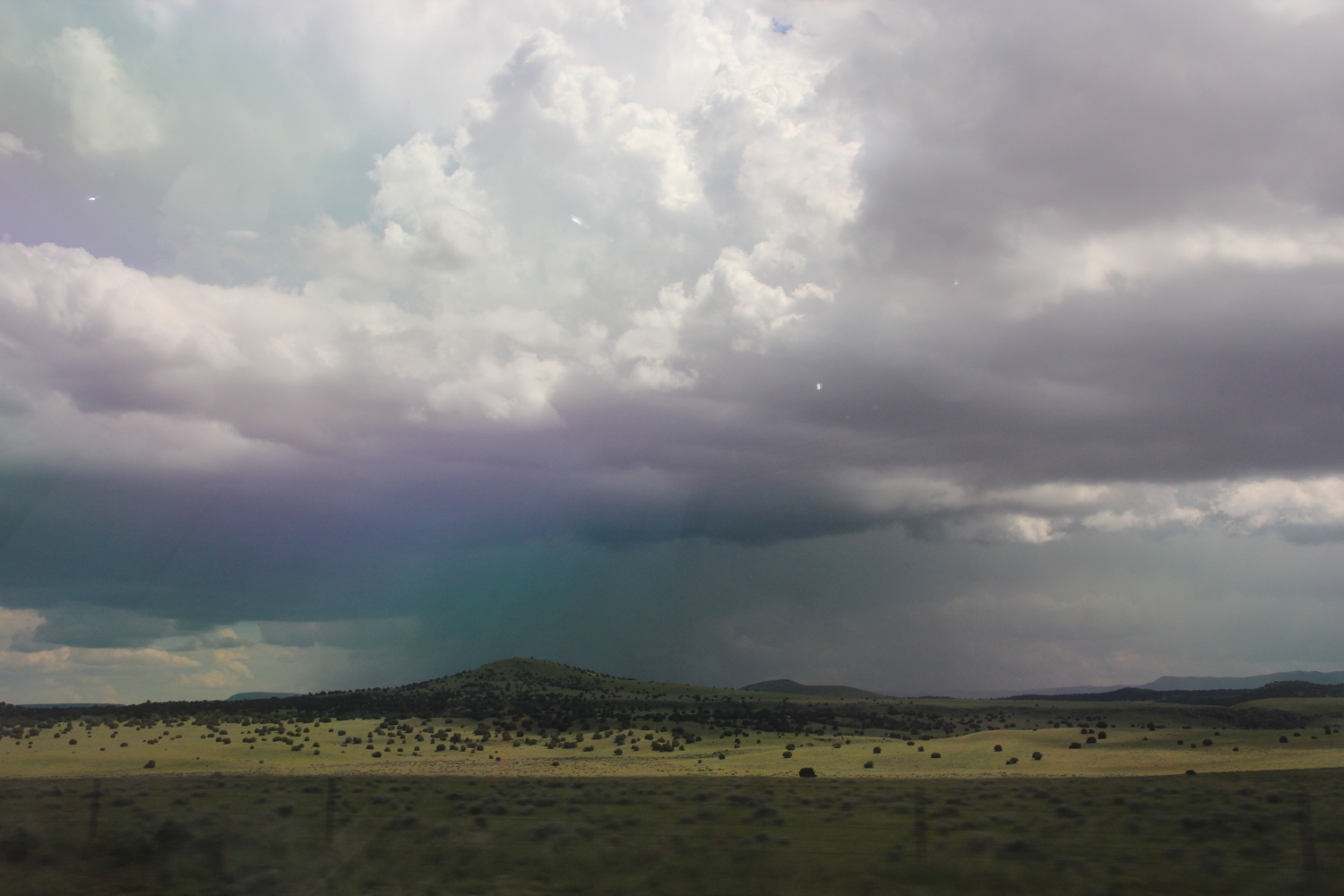
Arizona storm
* an ongoing series of quotations – mostly from artists, to artists – that offers wisdom, inspiration, and advice for the sometimes lonely road we are on.
Flying over the desert yesterday, I found myself lifted out of my preoccupations by noticing suddenly that everything was curved. Seen whole from the air, circumscribed by its global horizon, the earth confronted me bluntly as a context all its own, echoing that grand sweep. I had the startling impression that I was looking at something intelligent. Every delicate pulsation of color was met, matched, challenged, repulsed, embraced by another, none out of proportion, each at its own unique and proper part of the whole. The straight lines with which human beings have marked the land are impositions of a different intelligence, abstract in this area of the natural. Looking down at these facts, I began to see my life as somewhere between these two orders of the natural and the abstract, belonging entirely neither to one nor to the other.
In my work as an artist I m accustomed to sustaining such tensions: A familiar position between my senses, which are natural, and my intuition of an order they both mask and illuminate. When I draw a straight line or conceive of an arrangement of tangible elements all my own, I inevitably impose my own order on matter. I actualize this order, rendering it accessible to my senses. It is not so accessible until actualized.
An eye for this order is crucial for an artist. I notice that as I live from day to day, observing and feeling what goes on both inside and outside myself, certain aspects of what is happening adhere to me, as if magnetized by a center of psychic gravity. I have learned to trust this center, to rely on its acuity and to go along with its choices although the center itself remains mysterious to me. I sometimes feel as if I recognize my own experience. It is a feeling akin to that of unexpectedly meeting a friend in a strange place, of being at once startled and satisfied – startled to find outside myself what feels native to me, satisfied to be so met. It is exhilarating.
I have found that this process of selection, over which I have virtually no control, isolates those aspects of my experience that are most essential to me in my work because they echo my own attunement to what life presents me. It is as if there are external equivalents for truths which I already in some mysterious way know. In order to catch these equivalents, I have to stay “turned on” all the time, to keep my receptivity to what is around me totally open. Preconception is fatal to this process. Vulnerability is implicit in it; pain, inevitable.
Anne Truitt, Daybook: The Journal of an Artist
Comments are welcome.
Q: Do you have any rituals or a spiritual practice that you do before beginning your work in the studio?
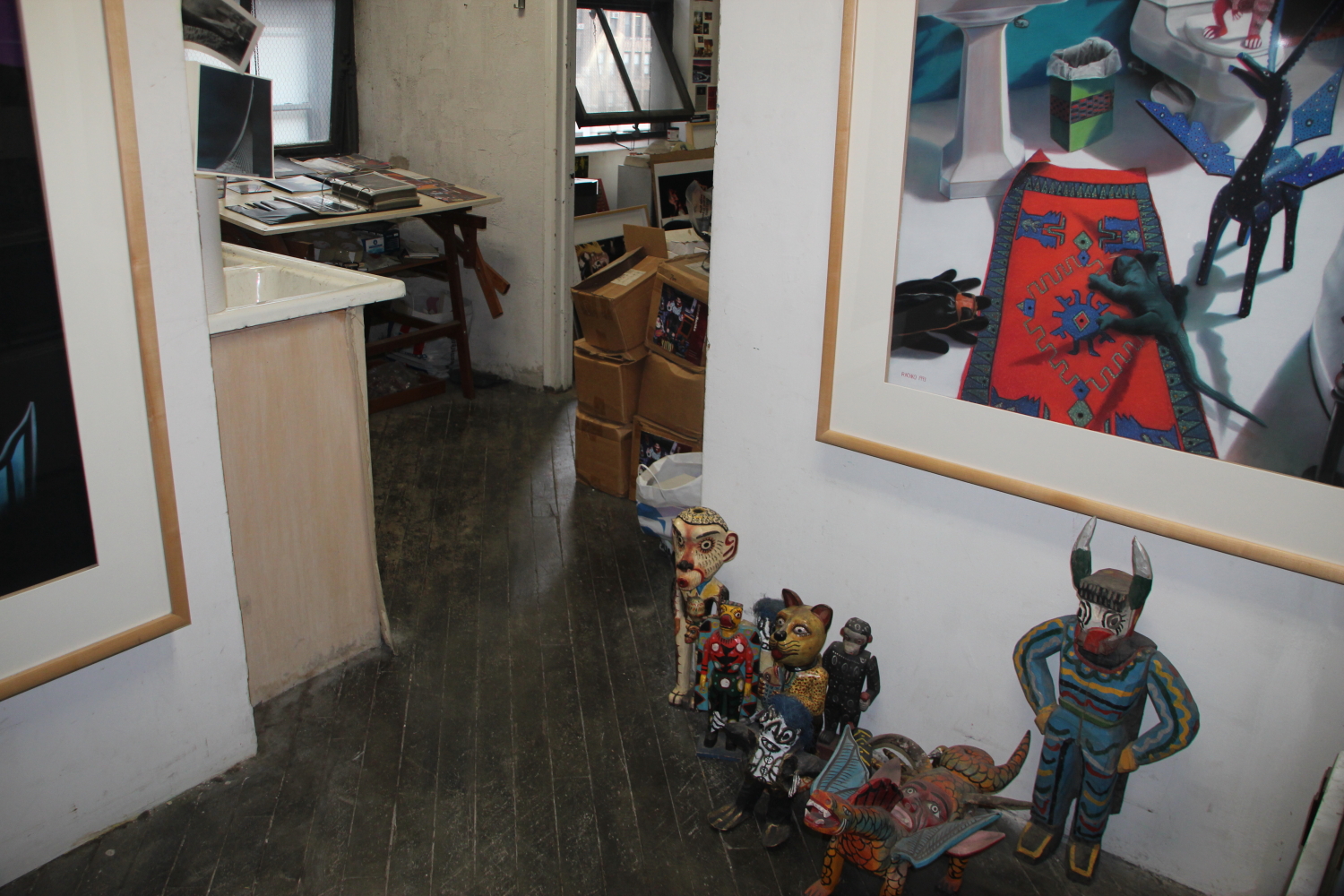
Studio entrance
A: When I arrive at the studio in the morning it’s rare for me to immediately start working. Usually I read something art-related – magazines like Art in America, ARTnews, Tribal Arts, or exhibition catalogues from shows I’ve seen, books on art, on creativity, etc. At the moment I’m re-reading The Gift, by Lewis Hyde. As usual I am struggling to understand aspects of the art business and figure out what I need to do next to get my work seen by a wider audience. The Gift reminds why I decided to make art in the first place. It helps reconnect with forgotten parts of myself and is a much-needed reminder of what I love about being an artist, especially in light of the business stuff that is becoming so complex and demanding of attention now. Balancing the creative and business aspects of being an artist is a continual struggle. Both are so important. An artist needs an appreciative audience – very few artists devote their lives to art-making so that the work will remain in a closet – but I also believe this (from a note hand-written years ago and tacked to the studio wall): “Just make the work. None of the rest matters.”
Comments are welcome.
Pearls from artists* # 4

At work on “False Friends”; photo by Diana Feit
Given a small kernel of reality and any measure of optimism, nebulous expectations whisper to you that the work will soar, that it will become easy, that it will make itself. And verily, now and then the sky opens and the work does make itself. Unreal expectations are easy to come by, both from emotional needs and from the hope or memory of periods of wonder. Unfortunately, expectations based on illusion lead almost always to disillusionment.
Conversely, expectations based on the work itself are the most useful tool the artist possesses. What you need to know about the next piece is contained in the last piece. The place to learn about your materials is in the last use of your materials. The place to learn about your execution is in your execution. The best information about what you love is in your last contact with what you love. Put simply, your work is your guide: a complete, comprehensive, limitless reference book on your work. There is no other such book, and it is yours alone. It functions this way for no one else. Your fingerprints are all over your work, and you alone know how you got there. Your work tells you about your working methods, your discipline, your strengths and weaknesses, your habitual gestures, your willingness to embrace.
The lessons you are meant to learn are in your work. To see them, you need only look at the work clearly – without judgment, without need or fear, without wishes or hopes. Without emotional expectations. Ask your work what it needs, not what you need. Then set aside your fears and listen, the way a good parent listens to a child.
David Bayles and Ted Orland, Art & Fear
Comments are welcome.
Q: Why the chromogenic process above all others?
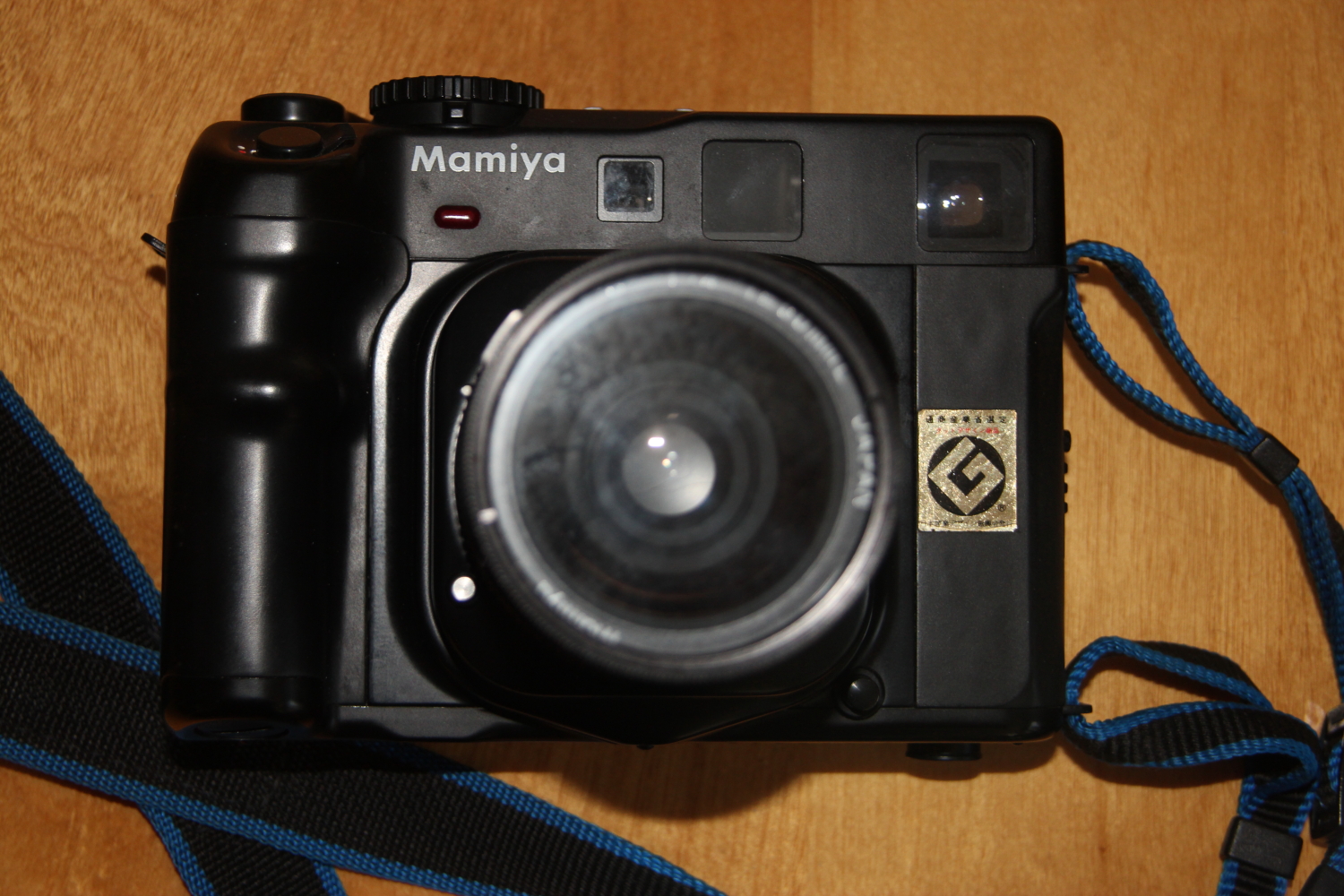
Mamiya 6 camera
A: First, the cameras that I inherited from Bryan in 2001 were all pre-digital film cameras. Second, I can make chromogenic prints myself, which cuts down on their production cost. Third, I love working with my hands and enjoy the process of making prints in a darkroom. Fourth, I make photographs on days that I don’t go to the studio. It’s a way to take a day off and still make art, a very productive use of my time. At the end of a darkroom session I have a new edition of 5 chromogenic prints, ready to spot and frame.
Comments are welcome.
Pearls from artists* # 3
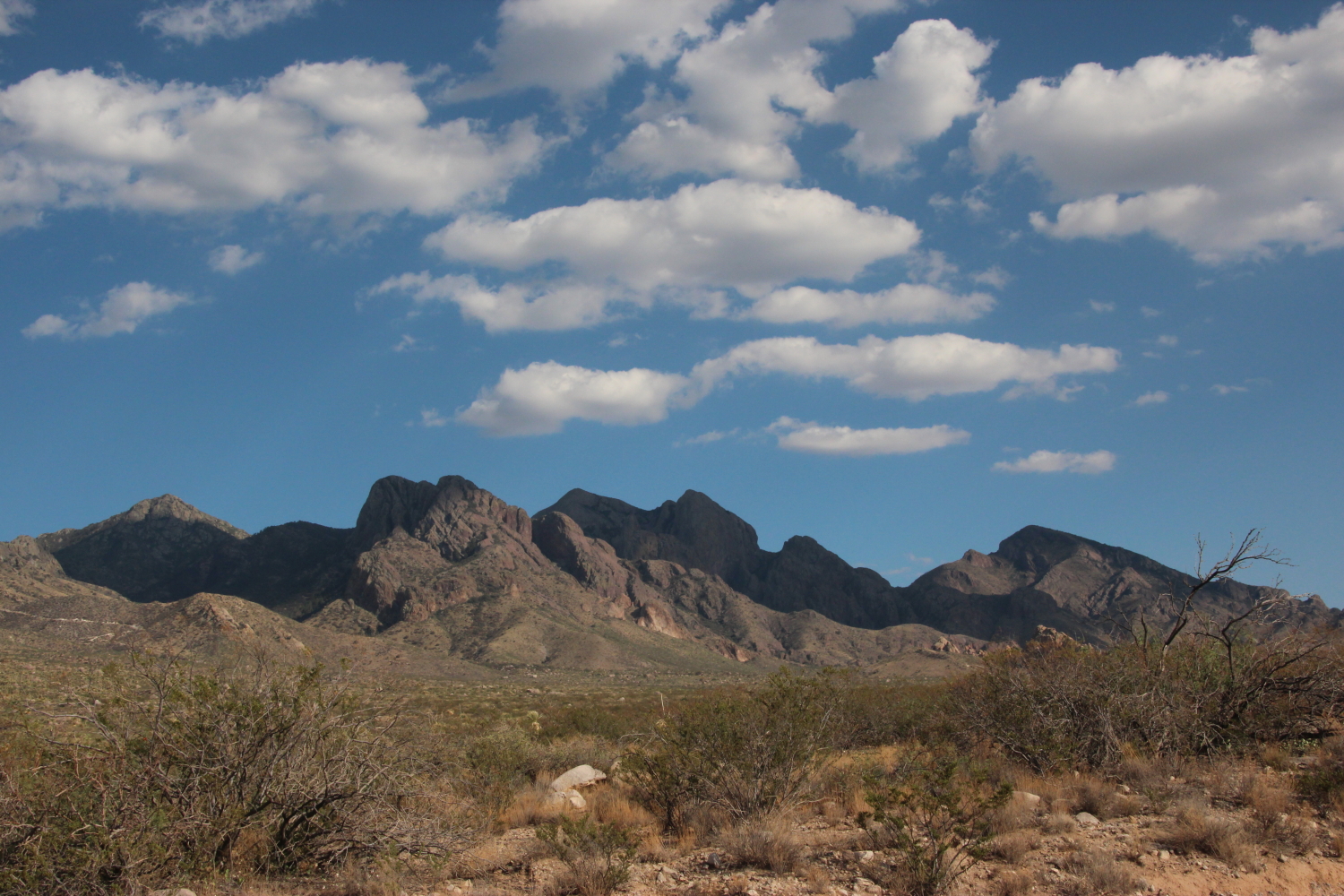
Las Cruces, NM
* an ongoing series of quotations – mostly from artists, to artists – that offers wisdom, inspiration, and advice for the sometimes lonely road we are on.
You are responding all the time to your own path of discovery. Yet at the same time we usually find we are questioning it and even discounting it. Making art demands attention so we don’t pull ourselves off track. Following our paths is in effect a kind of going off the path, through open country. There is a certain early stage when we are left to camp out in the wilderness, alone, with few supporting voices.
Ian Roberts, Creative Authenticity: 16 Principles to Deepen Your Artistic Vision
Comments are welcome.
Q: What do you like to do in the darkroom that brings a print up to perfection?
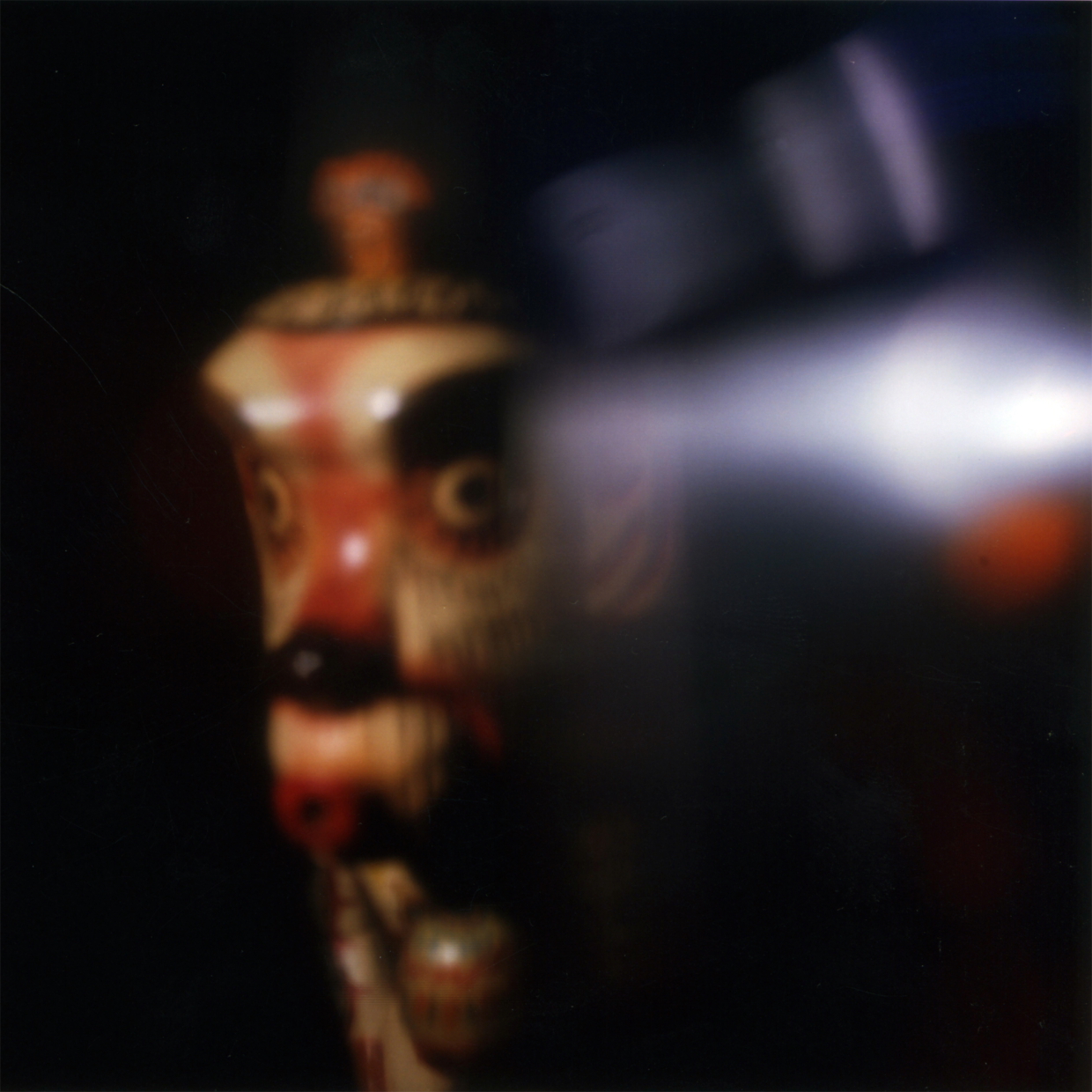
Untitled chromogenic print, edition of 5
A: That’s a trade secret! I will say that if I am going to sign my name to a piece of art, it must be the best that I am able to make at that point in time. In the darkroom I work deliberately and patiently. I slow down. I make tests, then refine and adjust the yellow and magenta filters on the enlarger to emphasize certain parts of the negative – bring an area forward, make another recede, brighten up something, etc. Usually as a last step, I dodge and burn some areas, always trying to produce the best, most eye-catching images I can.
Pearls from artists* # 2
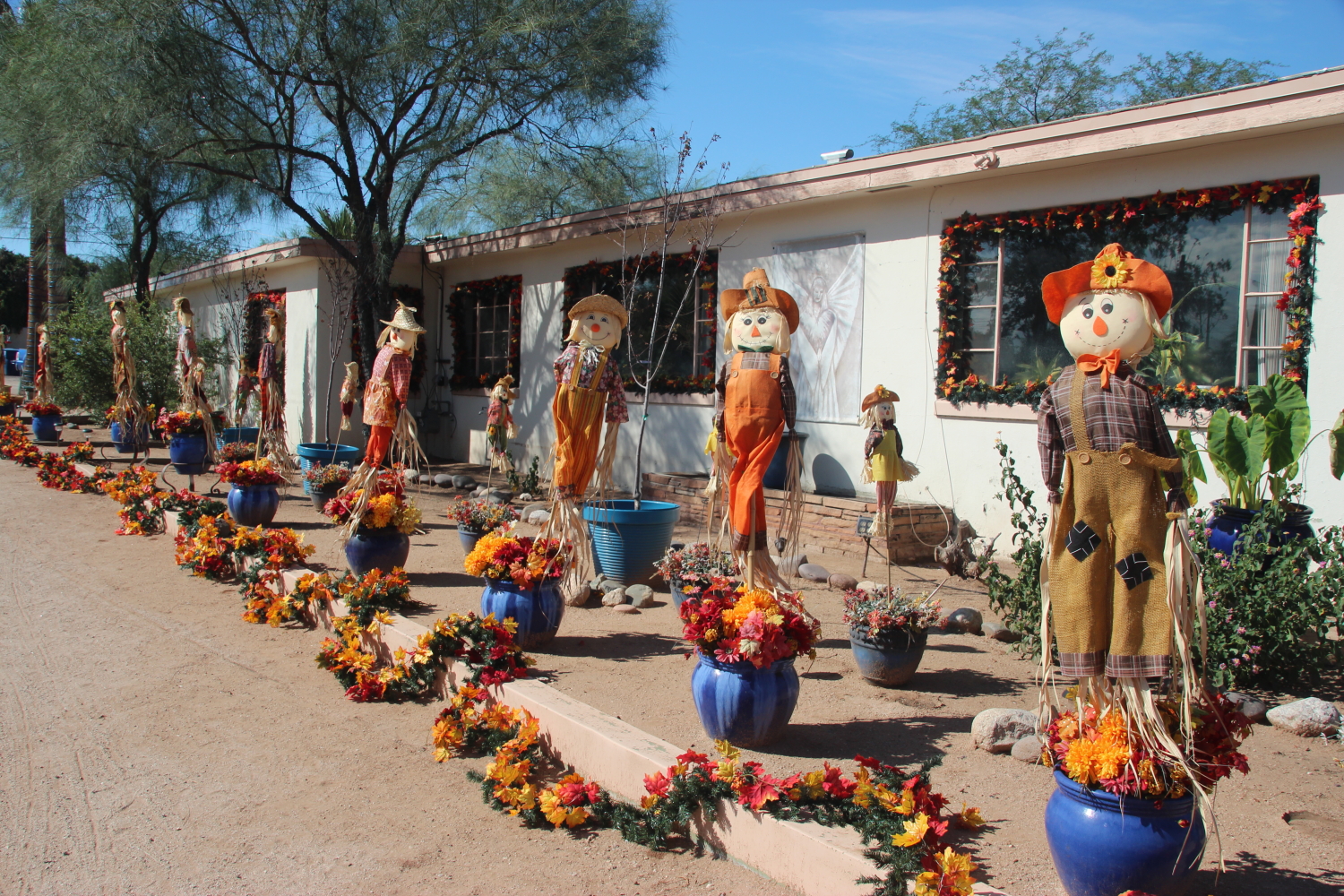
Tucson, AZ
* an ongoing series of quotations – mostly from artists, to artists – that offers wisdom, inspiration, and advice for the sometimes lonely road we are on.
Ms. Dillard is speaking about writing here, but her comments apply to all the arts.
Push it. Examine all things intensely and relentlessly. Probe and search each object in a piece of art. Do not leave it, do not course over it, as if it were understood, but instead follow it down until you see it in the mystery of its own specificity and strength. Giacometti’s drawings and paintings show his bewilderment and persistence. If he had not acknowledged his bewilderment, he would not have persisted. A twentieth-century master of drawing, Rico Lebrun, taught that “the draftsman must aggress; only by persistent assault will the live image capitulate and give up its secret to an unrelenting line.” Who but an artist fierce to know – not fierce to seem to know – would suppose that a live image possessed a secret? The artist is willing to give all his or her strength and life to probing with blunt instruments those same secrets no one can describe in any way but with those instruments’ faint tracks.
Admire the world for never ending on you – as you would admire an opponent without taking your eyes from him, or walking away.
One of the few things I know about writing is this: spend it all, shoot it, play it, lose it, all, right away, every time. Do not hoard what seems good for a later place in the book, or for another book; give it, give it all, give it now. The impulse to save something good for a better place later is the signal to spend it now. Something else will arise for later, something better. These things fall from behind, from beneath, like well water. Similarly, the impulse to keep to yourself what you have learned is not only shameful, it is destructive. Anything you do not give freely and abundantly becomes lost to you. You open your safe and find ashes.
After Michelangelo died, someone found in his studio a piece of paper on which he had written a note to an apprentice, in the handwriting of his old age: “Draw, Antonio, draw, Antonio, and do not waste time.”
Annie Dillard, The Writing Life
Comments are welcome.
Q: When did you begin seriously studying photography?
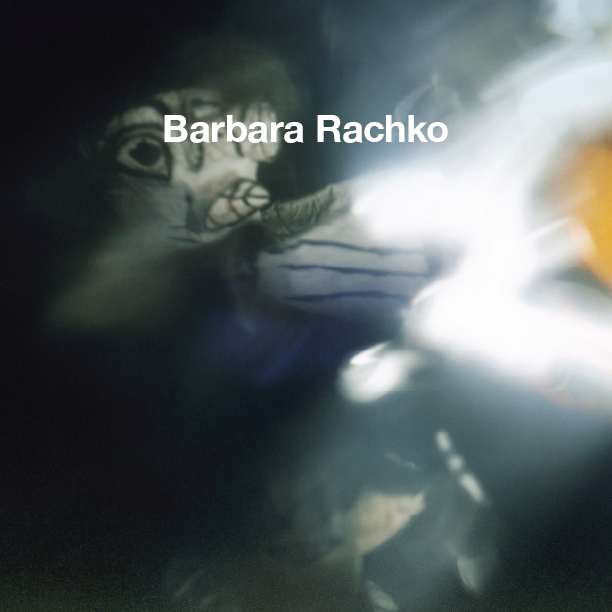
Exhibition catalogue, 2009 solo exhibition at HP Garcia Gallery, NYC; click
“Exhibition catalogue” under Blogroll to view inside pages
A: After I lost my husband, Bryan, on 9/11 – as I’ve discussed elsewhere, Bryan photographed most of the setups for my “Domestic Threats” series – I needed to find a way to continue making art. In June 2002 I began studying photography at the International Center of Photography (ICP) in New York. I took a one week 4 x 5 view camera workshop because Bryan had photographed the setups with a Toyo-Omega view camera. I was surprised to discover that I had absorbed quite a bit of technical information just by watching him. Once I completed the workshop, I decided to start over and to learn as much as I could about photography. So I enrolled in Photography I. Over the next several years I completed about a dozen courses at ICP, eventually learning to make my own large-scale chromogenic prints. Around 2007 I began working seriously as a photographer, creating my photographic series, “Gods and Monsters,” with Bryan’s Mamiya 6 camera. In October 2009 HP Garcia Gallery in New York gave me my first solo photography exhibition (see “Exhibition catalogue” under Blogroll).
I’m busy getting ready for my next solo show there in October. This exhibition will be fairly comprehensive and will include recent photographs (diptychs and single images), new work from the “Black Paintings” series, and a selection of Mexican and Guatemalan figures. There will be an exhibition catalogue and later in the fall, the gallery will publish the first book about my work. I am particularly thrilled about the book, a new, but long overdue, career milestone!
Q: What are you working on now?
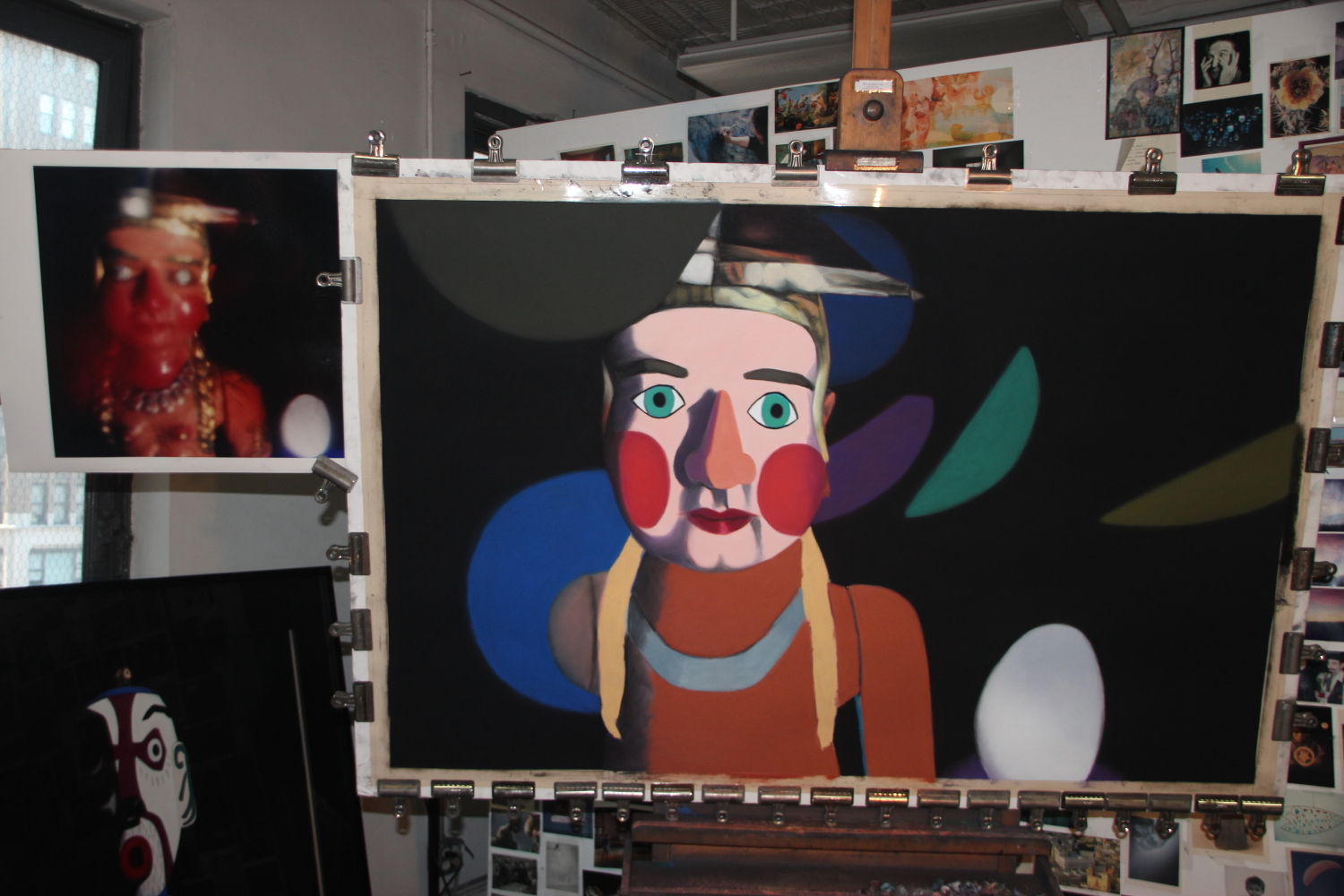
A: I am continuing with the “Black Paintings,” a series started a few years ago. Compared with “Domestic Threats,” these paintings are stripped of everything – walls, furniture, rugs – except the actors, who appear on a stark black background. As I’ve continued working over the years, I’ve learned to communicate better. I’ve stripped away all the extraneous stuff and gradually have been able to do more with less. There is wisdom in simplifying the work to reveal the essential vision. It is an artist’s life work.
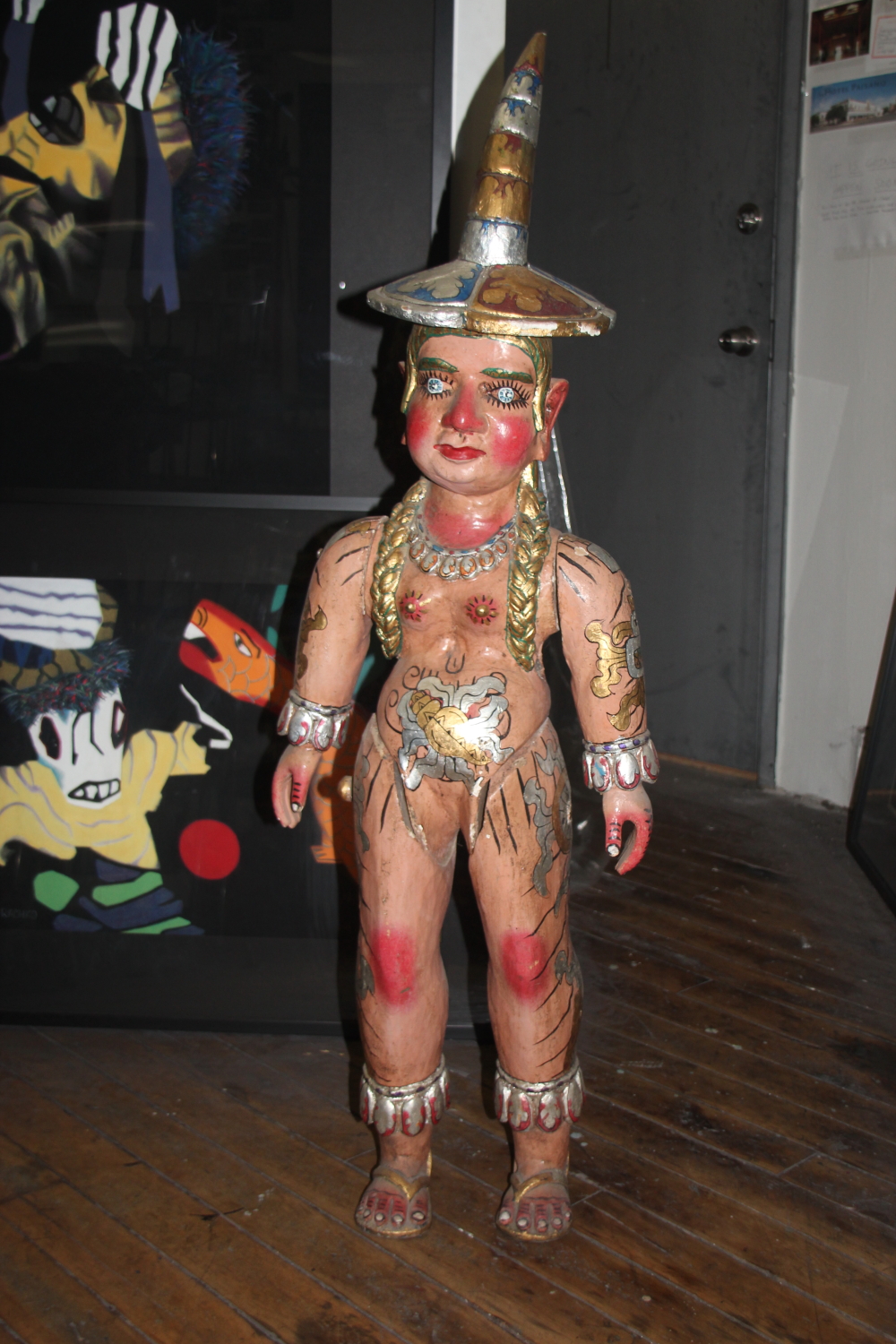
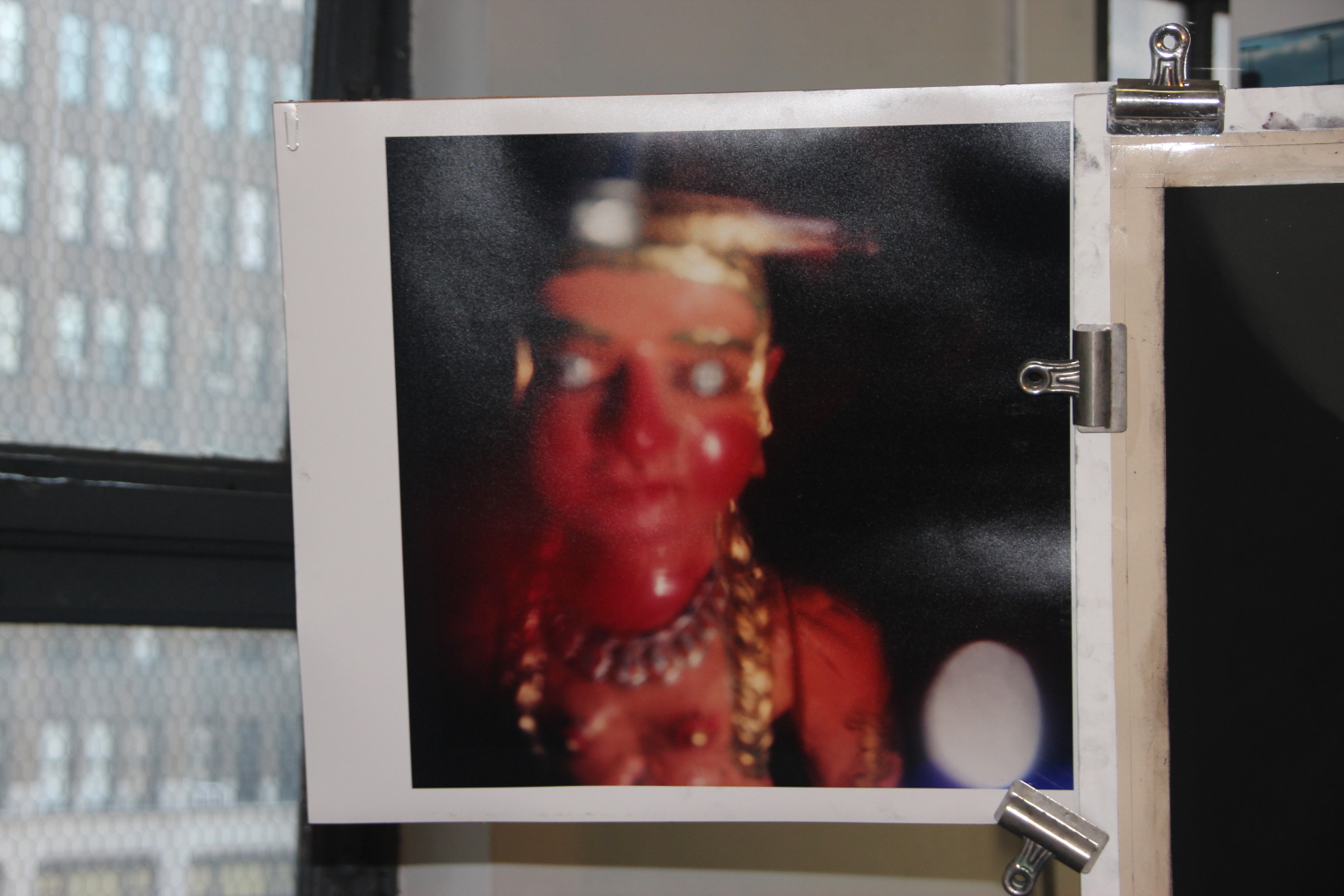
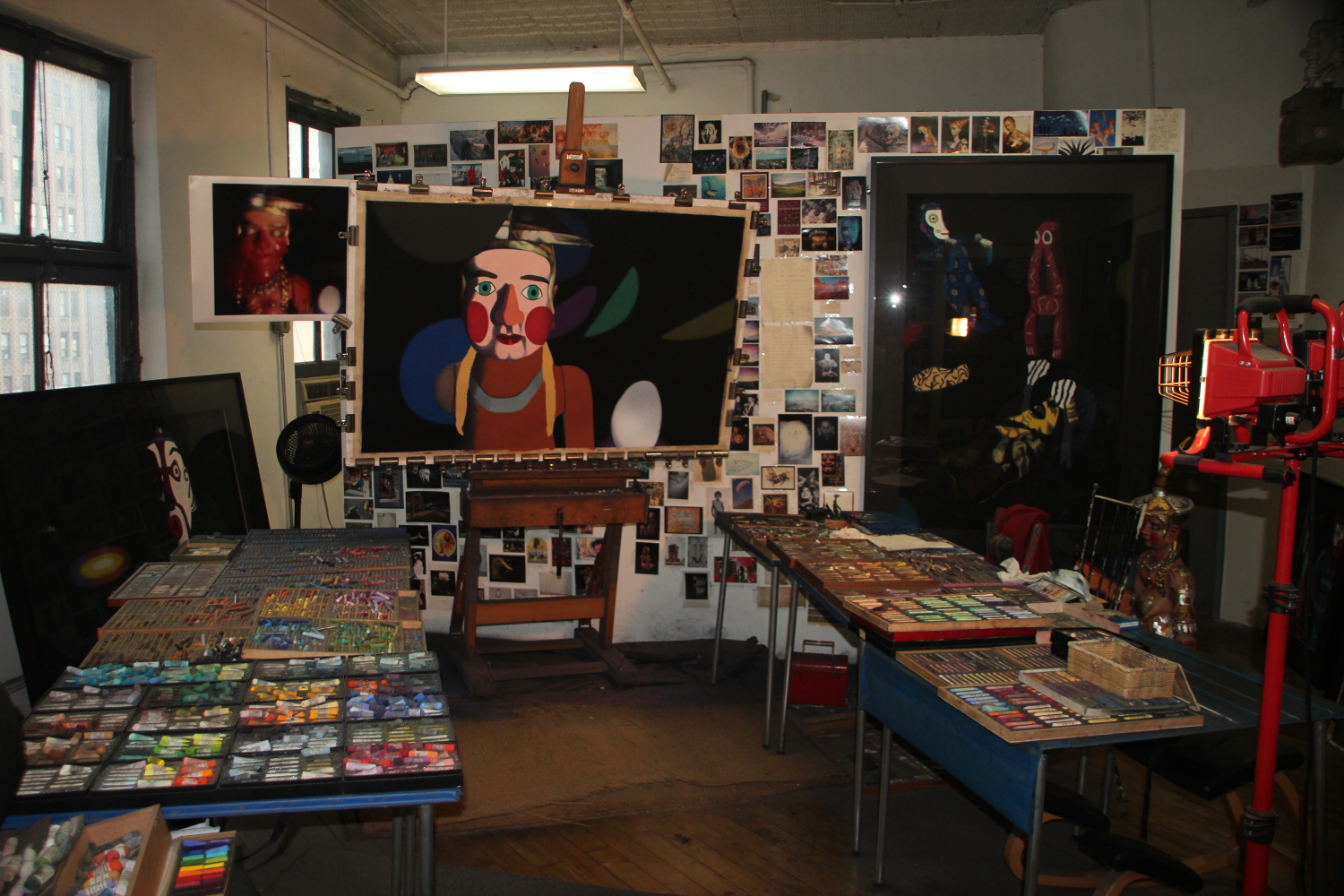
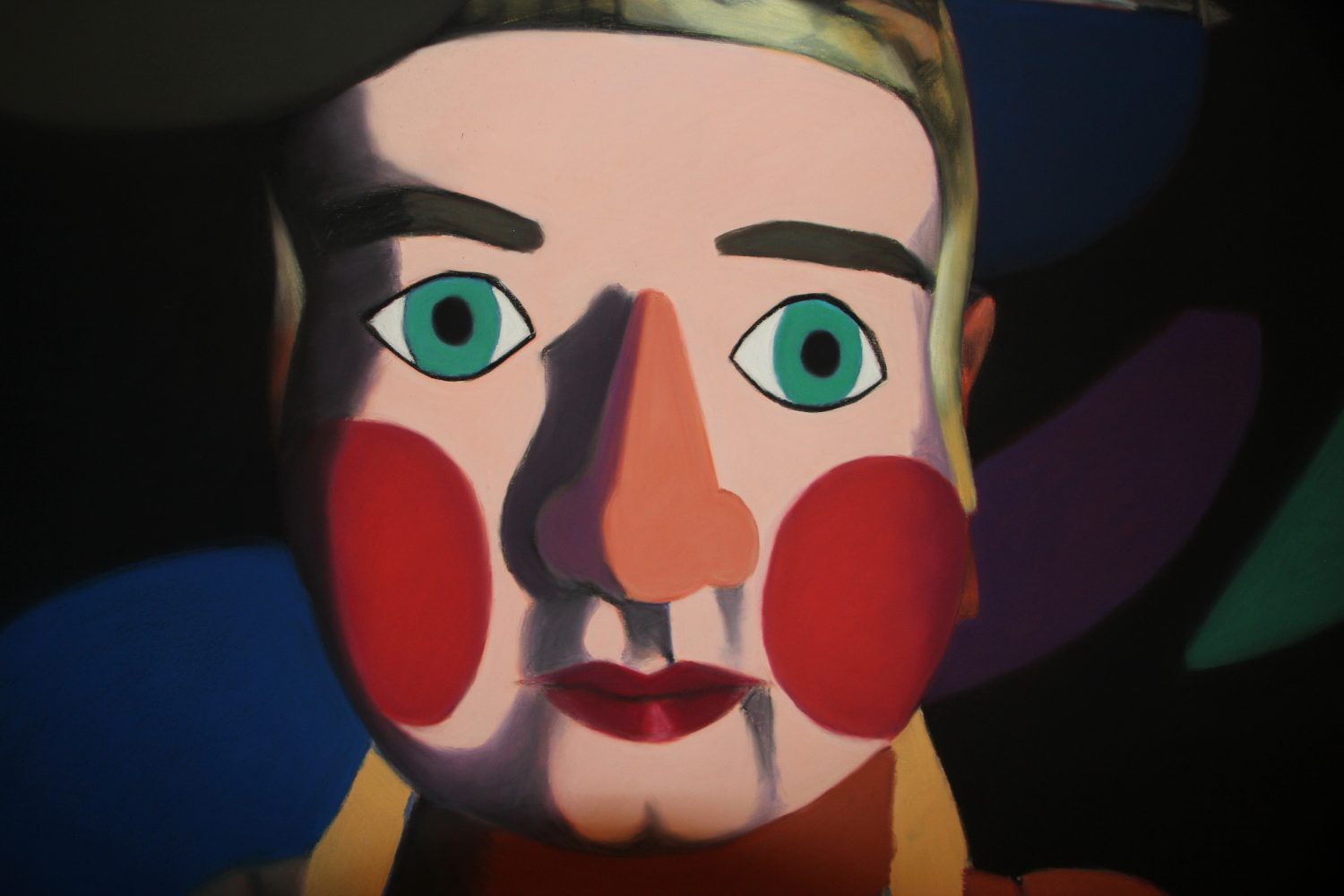
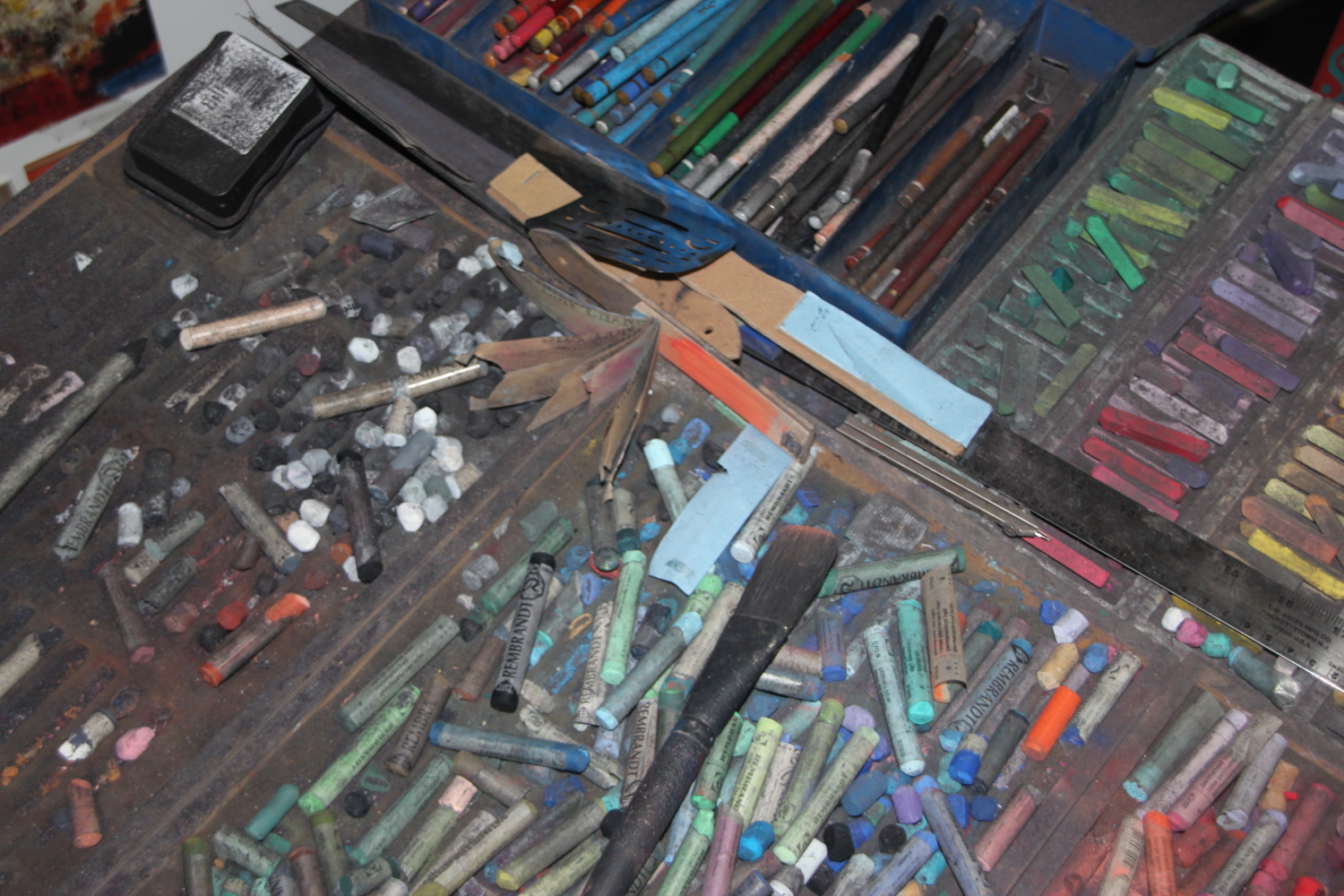
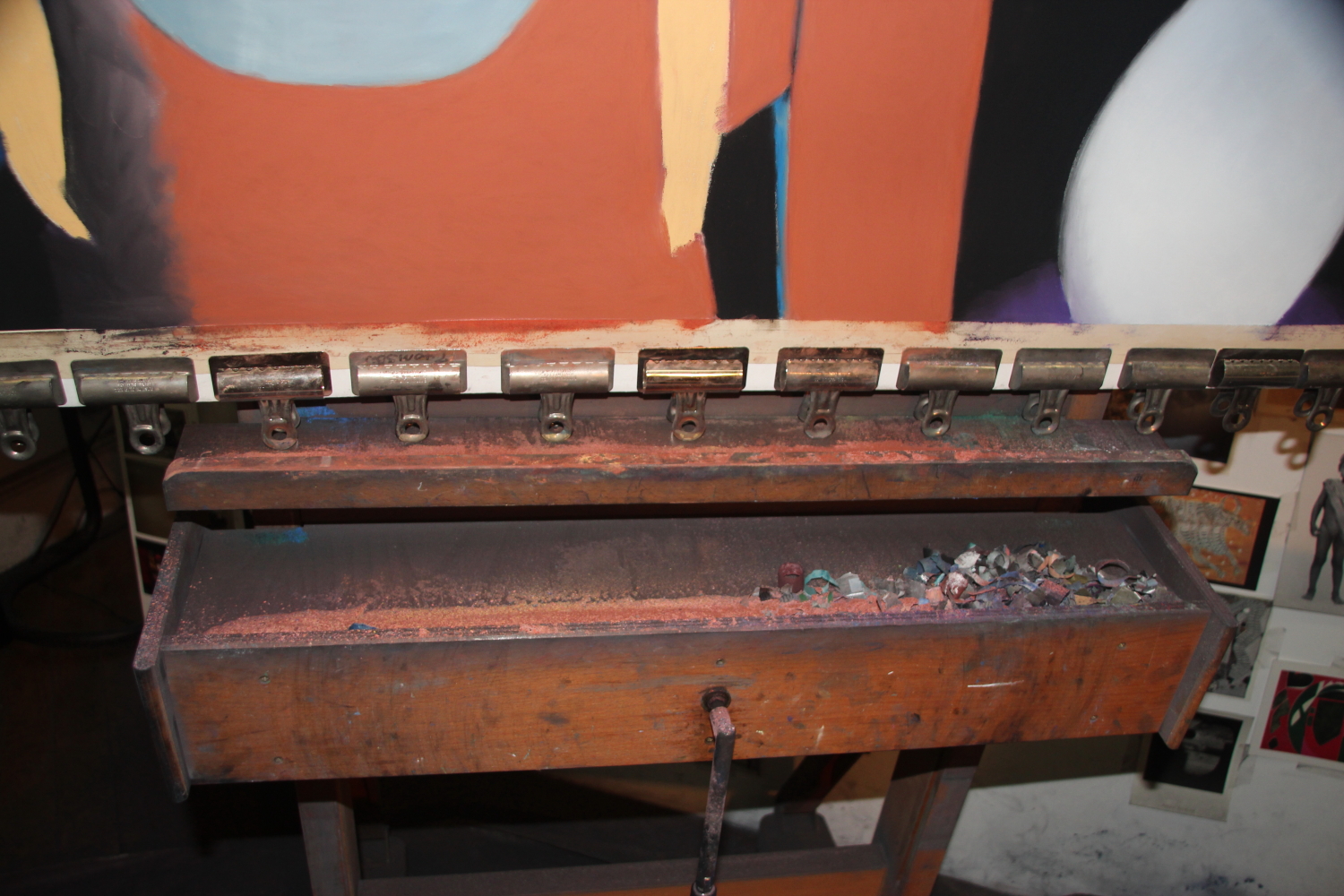
The first photograph below is of a carved wooden figure found in Mexico City at Eugenio’s, my favorite mask store in Mexico. She is part of a male-female pair. The second image is my 20″ x 24″ photograph of her, the starting point and reference for the painting. The next five photographs, I think, are self-explanatory. Questions are welcome, as always.
Q: If your “actors” could talk, what might they say about you as a director?

“He Was So in Need of Botany,” soft pastel on sandpaper
A: I hope they would say that I am very focused, devoted to doing the best work possible, that I know exactly what I am after, and that I use all the skills and knowledge I have acquired over many years as a painter and a photographer to make art that is worthwhile and meaningful.


 barbararachkoscoloreddust.com