Category Archives: Creative Process
Start/Finish of “Provocateur,” soft pastel on sandpaper, 26″ x 20″ image, 35″ x 28 1/2″ framed
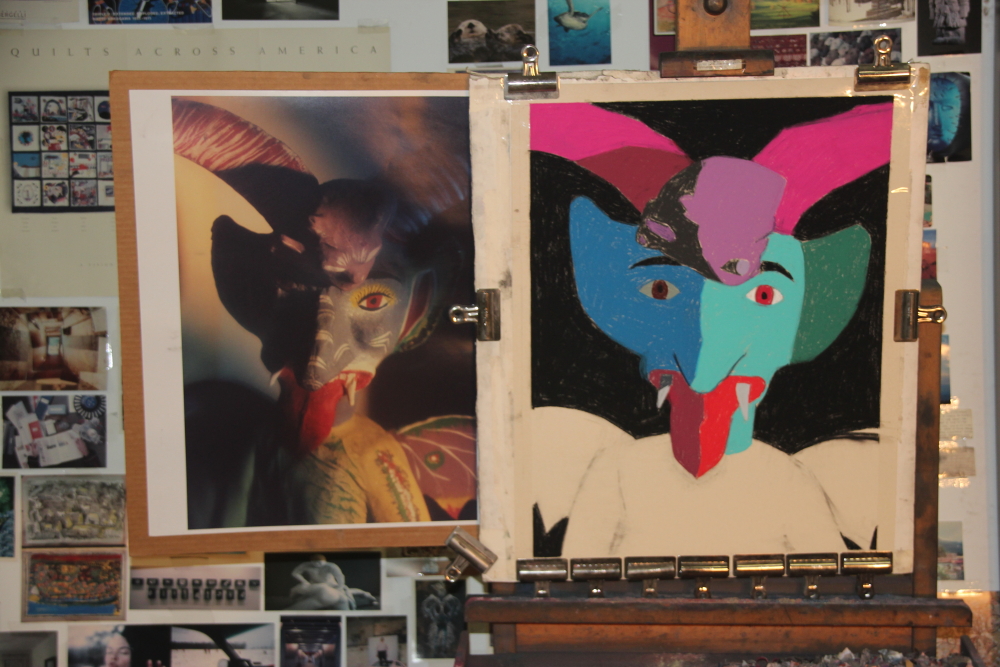
Beginning
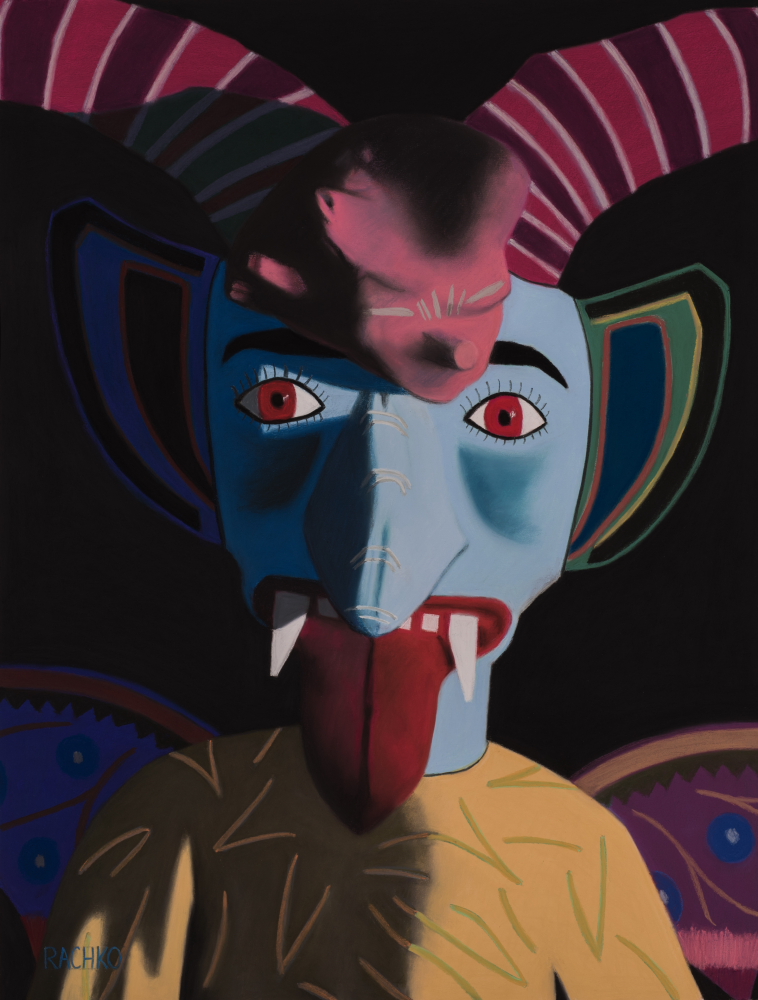
Finished and signed
Comments are welcome!
Pearls from artists* # 247
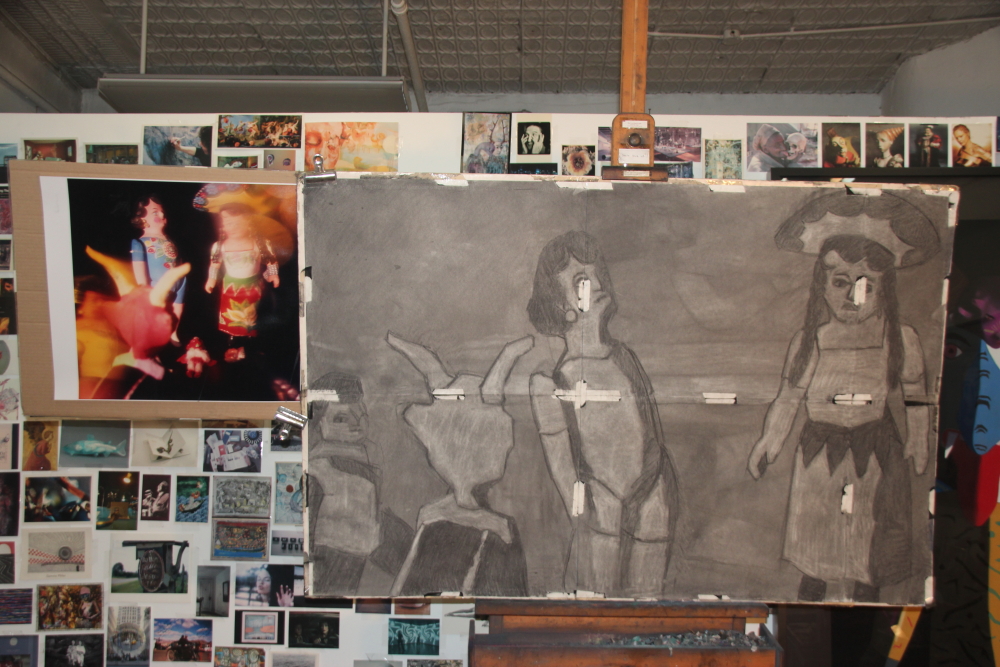
A recent charcoal study
* an ongoing series of quotations – mostly from artists, to artists – that offers wisdom, inspiration, and advice for the sometimes lonely road we are on.
Studies made in the open air are different from pictures that are destined to be shown in public. The latter, in my opinion, result from the studies, but they may, or even must, differ a great deal from them. For in the picture the painter rather gives a personal impression, while in a study his aim is simply to analyze a bit of nature – either to make his idea or conception more correct, or to find a new idea; for example, the studies of Mauve, which I myself like very much, precisely because of their soberness and because they are done so faithfully. Still they miss a certain charm, which the pictures that result from them possess in such a high degree.
I believe one gets more sound ideas when thoughts arise from direct contact with things than when one looks at them with the set purpose of finding certain facts in them. It is the same with the question of a colour scheme. There are colours that harmonize wonderfully, but I try my best to paint a subject as I see it before I set to work to make it as I feel it. Yet feeling is a great thing, and without it one would not be able to do anything. Thus, studies belong more to the studio than among the pubic.
Dear Theo: The Autobiography of Vincent Van Gogh, edited by Irving Stone
Comments are welcome!
Q: You use an impressive assortment of soft pastels to create your pastel paintings. Which are your favorite?
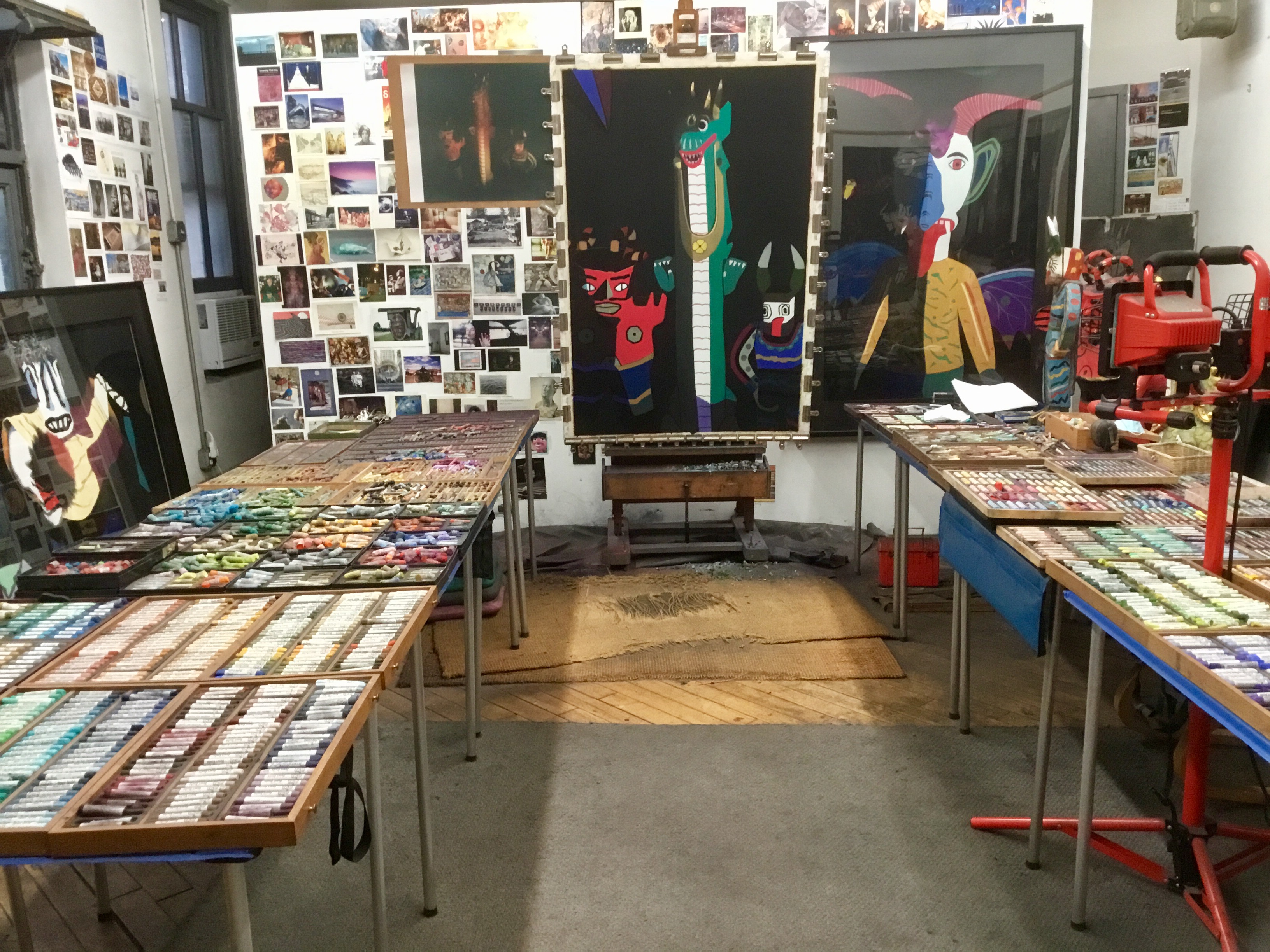
Barbara’s studio
A: My favorite brand of soft pastels is Henri Roché. They offer subtle variations in color and hue since they make more colors than any other company.
As a birthday present a few years ago, I treated myself to a full 750-color set. I mainly use them for finishing touches, rather than letting them get buried under pastel. At nearly $20 a stick, I also don’t want see them reduced to colored dust on the floor beneath my easel. One of my peers calls them, “the Maserati of pastels!”
Isobel Roché told me that her goal is to reach 1000 colors in time for the company’s 300th anniversary in 2020! I hope she makes it.
These pastels have been around so long that Degas and other artists of the era used them. It’s humbling to know that I am working with the same materials and following a long and prestigious art tradition of using soft pastel.
Comments are welcome!
Q: What art book are you reading for inspiration now?

Barbara’s copy of “Dear Theo”
A: I am re-reading “Dear Theo,” van Gogh’s autobiography as expressed in letters to his beloved brother, a book I read more than twenty-five years ago when I first started out as an artist. My copy is beat up and yellowing, but still holding together.
It’s a source of pure solace. Keeping and growing a studio practice in New York is fraught with complexity, challenges, increasing demands on one’s time, etc. So I sometimes need reminding about the joyful aspects of being an artist, about why I decided to devote my time to this work in the first place, about what I love about this often difficult and frustrating life I chose. And Van Gogh’s sensitive, soulful words always deliver!
Comments are welcome!
Q: What’s on the easel today?
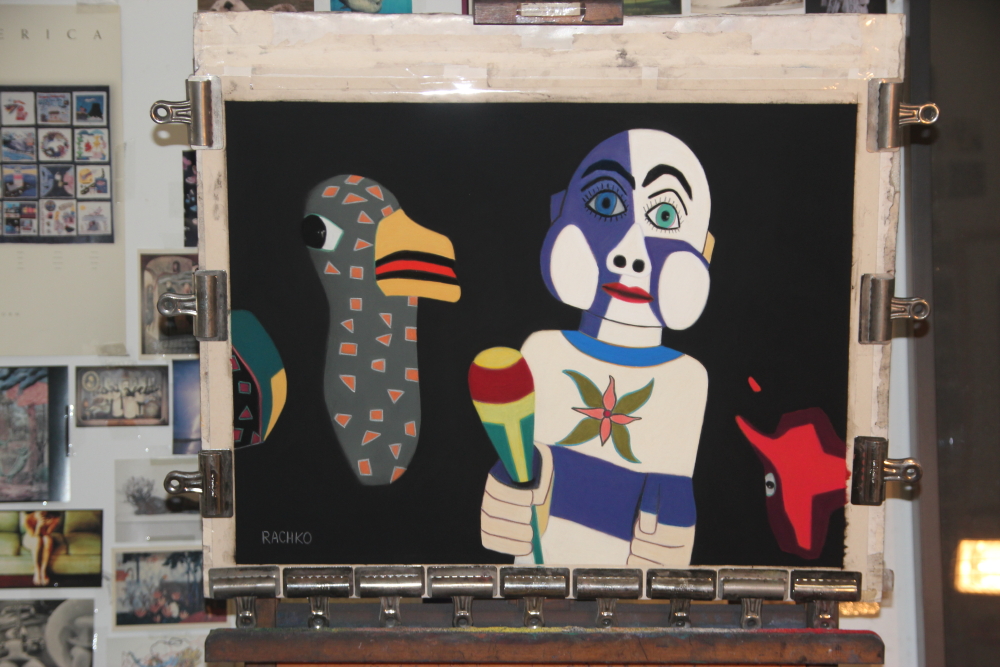
Work in progress
A: I’m putting finishing touches on a small, 20″ x 26,” pastel painting called, “Survivors.”
Comments are welcome!
Q: The imagery used throughout your work evoked glimmers of childhood memories, specifically “Punch and Judy” puppet shows. Would you talk about your use of this kind of slightly sinister iconography?

Barbara and Tomas in Panajachel
A: I don’t really see my iconography as sinister, although I know some people do.
I search the markets and bazaars of Mexico, Guatemala, and elsewhere for folk art objects – masks, carved wooden animals, papier mache figures, children’s toys – to bring back to New York to photograph and paint.
Color is very important – the brighter and the more eye-catching the patterns are on these objects the better – plus they must be unique and have lots of personality. I try not to buy anything mass-produced or obviously made for the tourist trade. The objects must have been used or otherwise look like they’ve had a life (i.e., been part of religious festivities) to draw my attention. How and where each one comes into my possession is an important part of the creative process. Making this work is a long, complex undertaking with many facets. Finished paintings are always an idiosyncratic blend of reality, fantasy, and autobiography.
Finding, buying, and getting the objects back to the U.S. is sometimes circuitous, but that, too, is part of the process, an adventure, and often a good story. Here’s an example.
In 2009 I was in a small town on the shores of Lake Atitlan in Guatemala, called Panajachel. After returning from a boat ride across the lake, my friends and I were walking back to our hotel when we discovered a wonderful mask store. How fortuitous! I spent some time looking around, made my selections, and was ready to buy five exquisitely-made standing wooden figures, when I learned that Tomas, the store owner, did not accept credit cards. I was heart-broken and thought, “Oh, no, I’ll have to leave these Panajachelitos behind.”
However, thanks to my good friend, Donna, whose Spanish was much more fluent than mine, the three of us brain-stormed until finally, Tomas had an idea. I could pay for the figures at a nearby hotel and in a few days when the hotel was paid by the credit card company, the hotel would pay Tomas. Fabulous! Tomas, Donna, and I walked to the hotel, where the transaction was made and the first hurdle was overcome.
Working out the packing and shipping arrangements took another hour or two. This was a small village off the beaten track so boxes and packing materials were scarce. As we figured out the details, Tomas and I realized we liked and trusted each other, became friends, and exchanged telephone numbers. The store did not even have a telephone so he gave me the phone number of the post office next door, saying that when I called, he could easily run next door!
Most wonderfully, the package was waiting for me in New York when I returned home from Guatemala. All of the objects were unbroken and in excellent condition.
As I travel I am drawn to each of these figures because it possesses a powerful presence that resonates with me. It’s a mystery really. I am not sure exactly how or why, but I know each object has lessons to teach as it assumes various roles in yet-to-be-created paintings.
Coming upon a new find I wonder, who made this thing? How? Why? Where? When? I feel connected to each object’s creator and curiosity leads me to become a detective and an archaeologist to find out more about it and to figure out how to most effectively use it in my work.
The best way I can describe it: after three decades of seeking out, collecting, and using these folk art figures as personal symbols in my work, the process has become an enriching personal journey towards greater knowledge and wisdom. They are a vehicle for learning more about the world and and about myself. And what artist doesn’t love to learn?
Comments are welcome!
Start/Finish of “Motley,” 38″ x 58″ image, 50″ x 70″ framed

Beginning

Completed
Comments are welcome!
Q: What’s on the easel today?
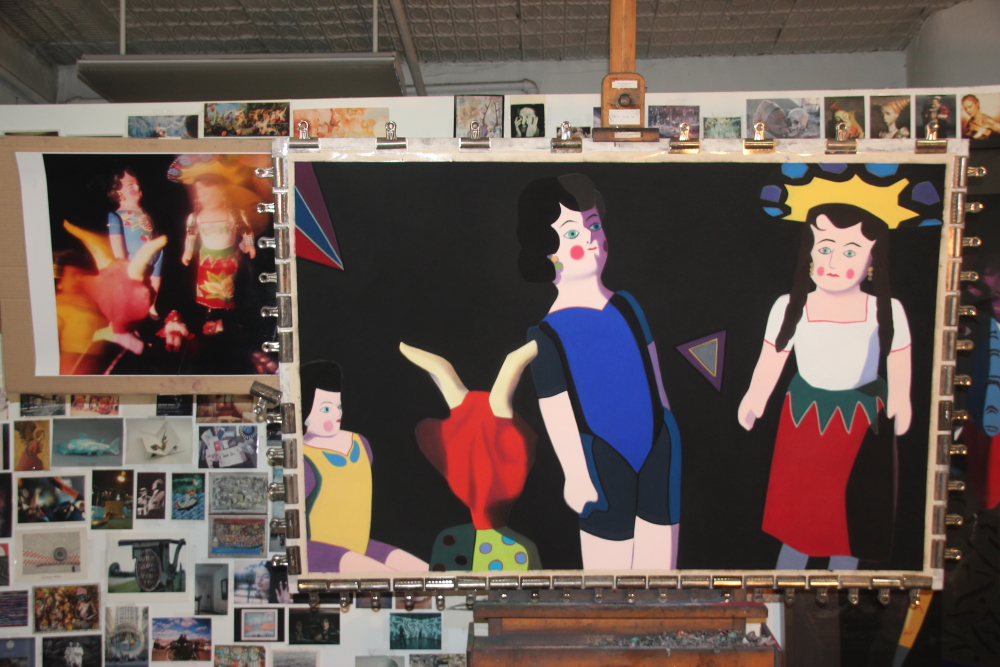
Work in progress
A: I continue working on a large, 38″ x 58″, pastel painting called, “Conundrum” and am happy with how it’s progressing. A few days ago I added the small triangle to the right of the central figure. I felt some compositional element was needed there and believe this is an improvement.
Comments are welcome!
Q: Pastel painting is the cornerstone of your practice. What attracted you to this medium?
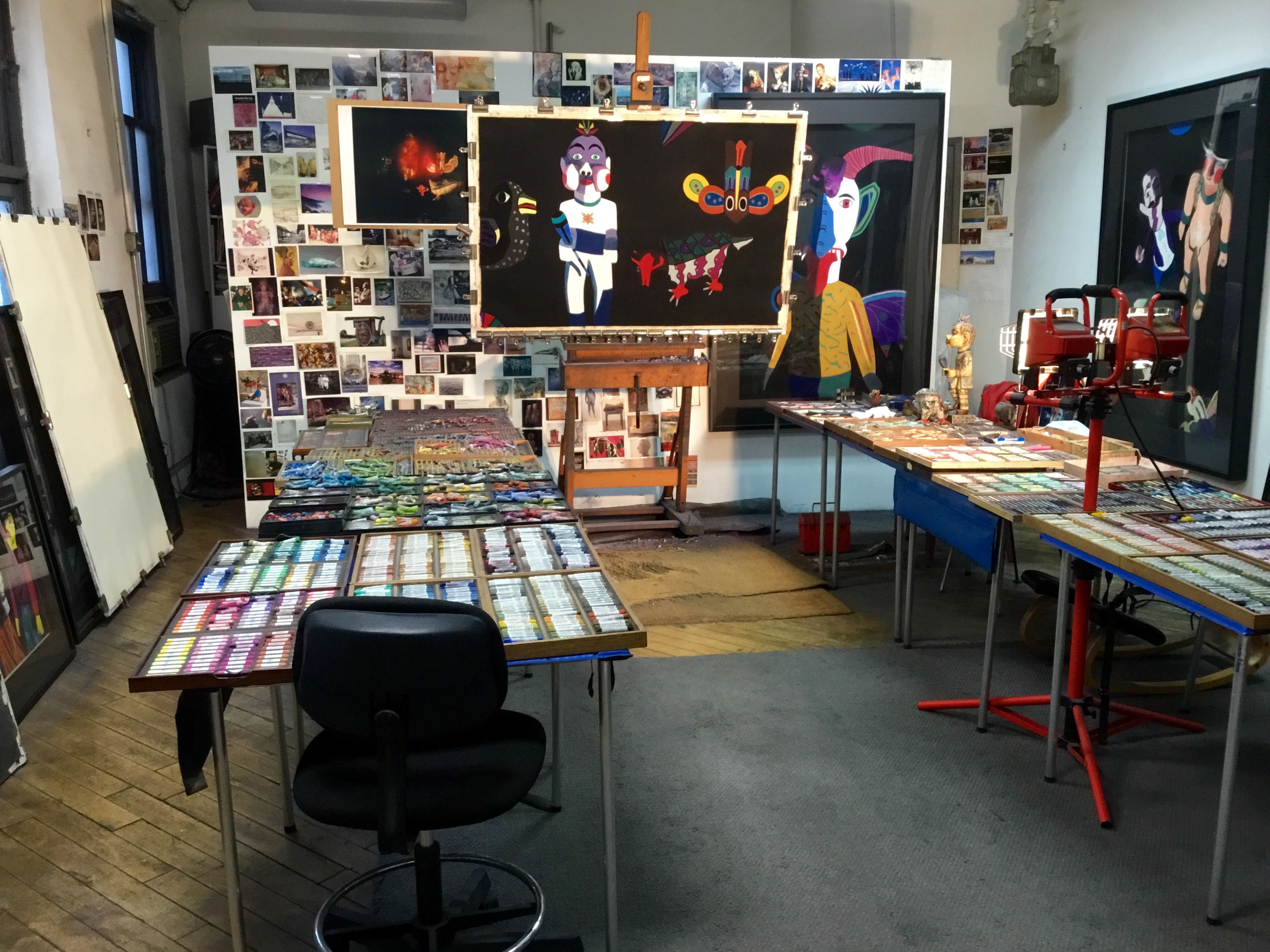
Barbara’s studio with “White Star” in progress
A: For starters soft pastel is the medium that I fell in love with many years ago. I am fond of this article, “What is Pastel?” by Mike Mahon, and quote it here because it neatly sums up what I love about working with pastel.
Pastel is the most permanent of all media when applied to conservation ground and properly framed. Pastel has no liquid binder that may cause it to oxidize with the passage of time as oftentimes happens with other media.
In this instance, Pastel does not refer to pale colors, as the word is commonly used in cosmetic and fashion terminology. The pure, powdered pigment is ground into a paste with a minimum amount of gum binder, rolled into sticks and dried. The infinite variety of colors in the Pastel palette range from soft and subtle to hard and brilliant.
An artwork is created by stroking the stick of dry pigment across an abrasive ground, embedding the color in the “tooth” of the ground. If the ground is completely covered with Pastel, the work is considered a Pastel painting; whereas, leaving much of the ground exposed produces a Pastel sketch. Techniques vary with individual artists. The Pastel medium is favored by many artists because it allows a spontaneous approach. There is no drying time, therefore, no change in color occurs after drying as it does in other media.
Did you know that a particle of Pastel pigment seen under a microscope looks like a diamond with many facets? It does! Therefore, Pastel paintings reflect light like a prism. No other medium has the same power of color or stability.
Historically, Pastel can be traced back to the 16th century. Its invention is attributed to the German painter, Johann Thiele. A Venetian woman, Rosalba Camera, was the first to make consistent use of Pastel. Chardin did portraits with an open stroke, while La Tour preferred the blended finish. Thereafter, a galaxy of famous artists—Watteau, Copley, Delacroix, Millet, Manet, Renoir, Toulouse Lautrec, Vuillard, Bonnard, Glackens, Whistler, Hassam, William Merritt Chase—used Pastel for a finished work rather than for preliminary sketches.
Pastels from the 16th century exist today, as fresh as the day they were painted. Edgar Degas was the most prolific user of Pastel and its champion. His protégé, Mary Cassat, introduced Pastel to her friends in Philadelphia and Washington, and thus to the United States. In the Spring of 1983, Sotheby Parke Bernet sold at auction, two Degas Pastels for more than $3,000,000 each! Both Pastels were painted about 1880.
Note: Do not confuse Pastel with “colored chalk.” Chalk is a porous, limestone substance impregnated with dyes, whereas, Pastel is pure pigment—the same as is used in other permanent painting media. Today, Pastel paintings have the stature of oil and watercolor as a major fine art medium. Many of our most renowned, living artists have distinguished themselves in Pastel and have enriched the art world with this beautiful medium.
So knowing all this, I often wonder, why don’t more artists use pastel? Is it because framing is a big expense?
Works on paper need to be framed and pastel paintings do have some unique problems. Third after the cost of maintaining a studio in New York City and marketing, frames are my single largest business expense. Sometimes I am grateful that pastel is a very slow medium. I typically finish 4 or 5 paintings in a year, which means I only have to pay for 4 or 5 frames.
Comments are welcome!
Start/Finish of “The Storyteller,” 20″ x 26″ image, 28 1/2″ x 35″ framed

Charcoal underdrawing
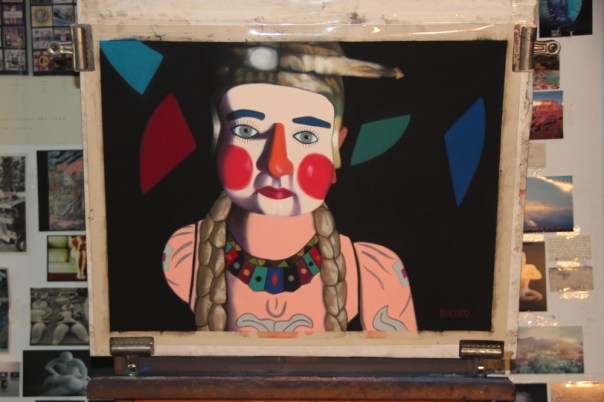
Completed and signed
Comments are welcome!


 barbararachkoscoloreddust.com