Category Archives: 2017
Q: What non-art book are you reading now?
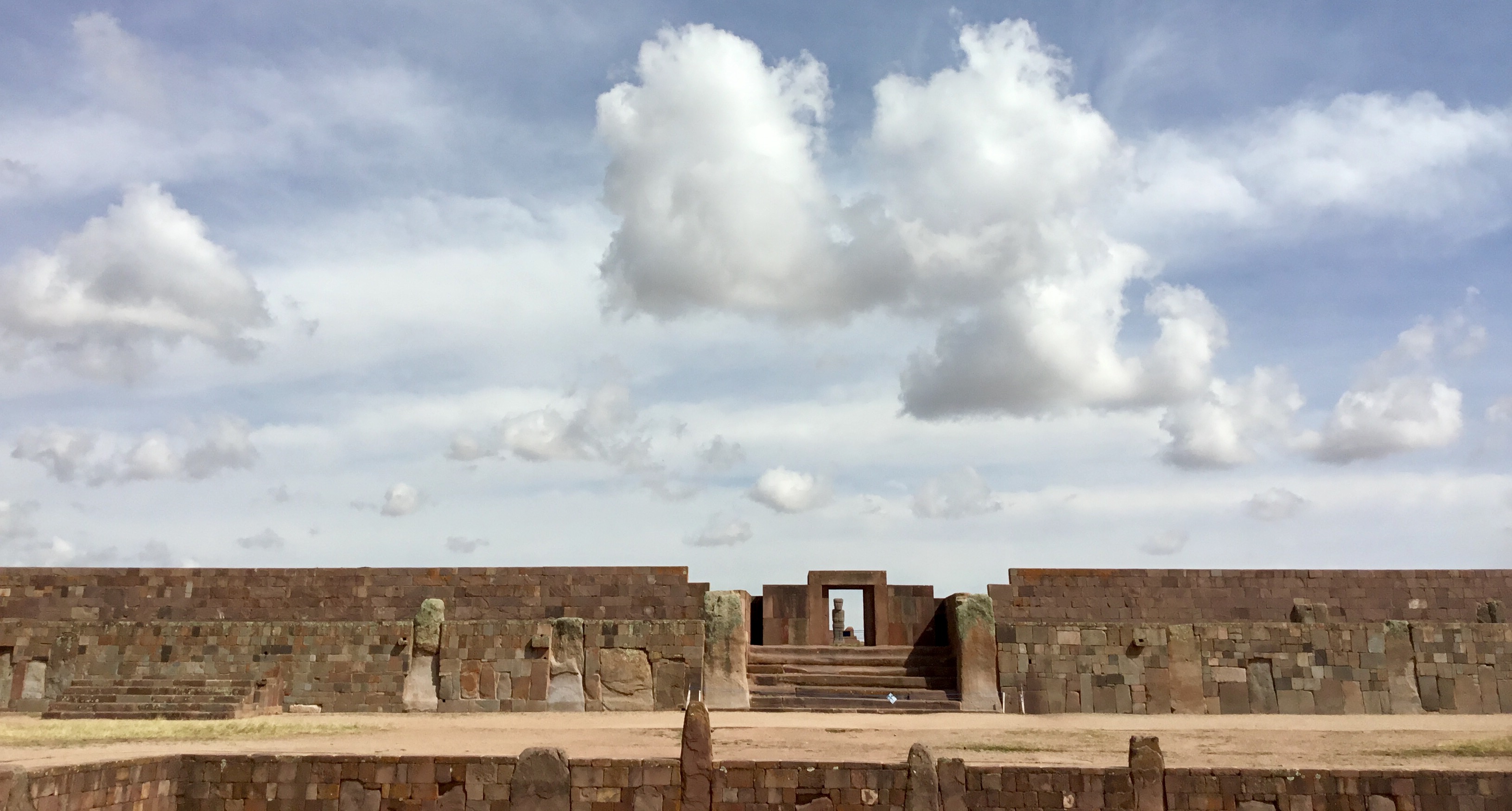
Tiwanaku
A: I am reading Kim Mac Quarrie’s, “The Last Days of the Incas.” It’s fascinating to discover the intricacies of the epic conquest of the short-lived Inca empire. The book is actually thrilling to read. Mac Quarrie makes this story come alive.
Last summer I traveled to Peru to investigate the history of the Incas and the civilizations that preceded them. In May of this year I continued my studies with a trip to Bolivia. Both trips are proving to be highly inspirational for my art practice.
Comments are welcome!
Pearls from artists* # 260
Suffolk County
* an ongoing series of quotations – mostly from artists, to artists – that offers wisdom, inspiration, and advice for the sometimes lonely road we are on.
The best analogy I’ve been able to find for that intense feeling of the creative moment is sailing a round-bottomed boat in strong wind. Normally, the hull stays down in the water, with the frictional drag greatly limiting the speed of the boat. But in high wind, every once in a while the hull lifts out of the water, and the drag goes down to zero. It feels like a great hand has suddenly grabbed hold and flung you across the surface like a skimming stone. It’s called planing.
Alan Lightman in A Sense of the Mysterious: Science and the Human Spirit
Comments are welcome!
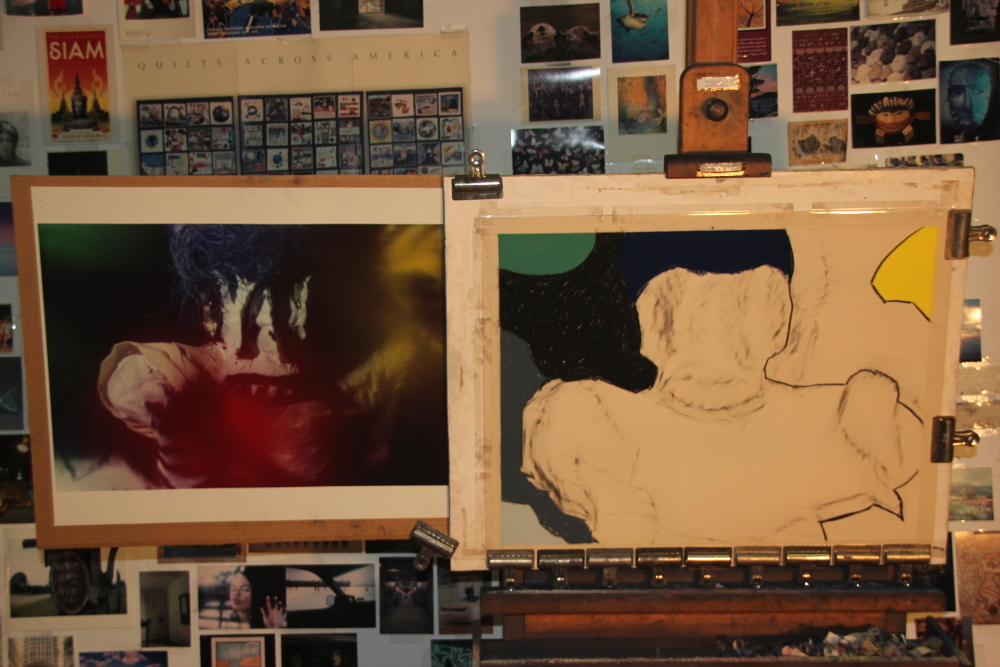
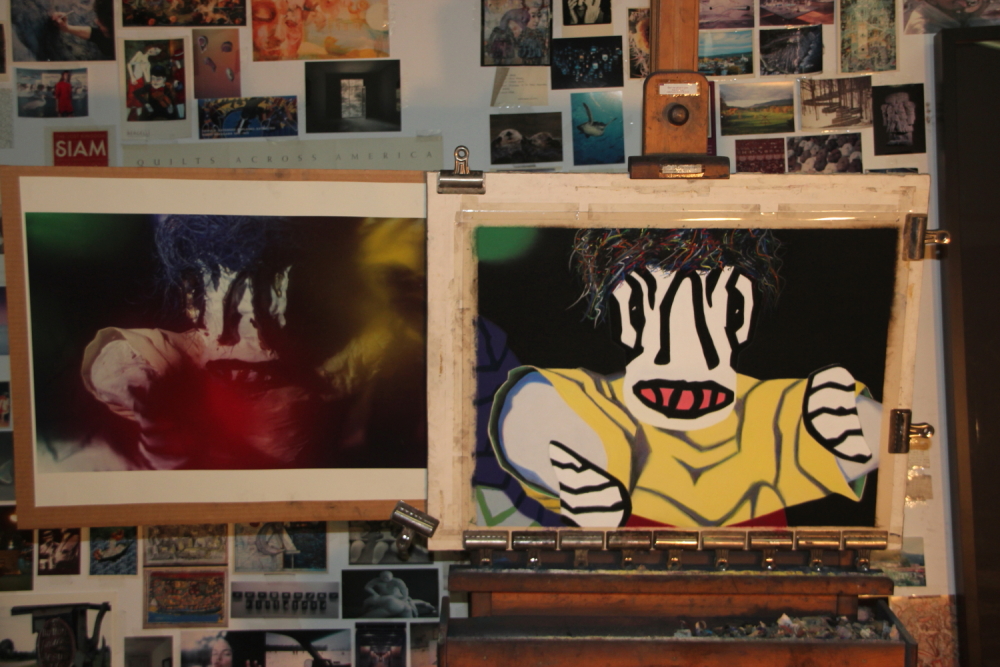
Start/Finish of “Conundrum,” soft pastel on sandpaper, 38″ x 58″ image, 50″ x 70″ framed
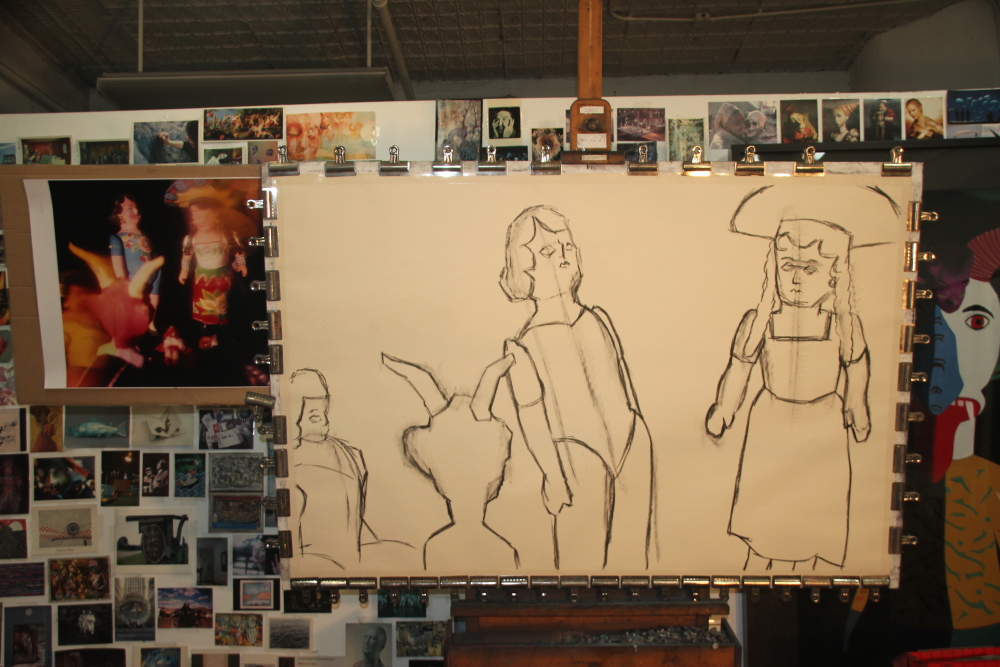
Rough charcoal drawing on sandpaper
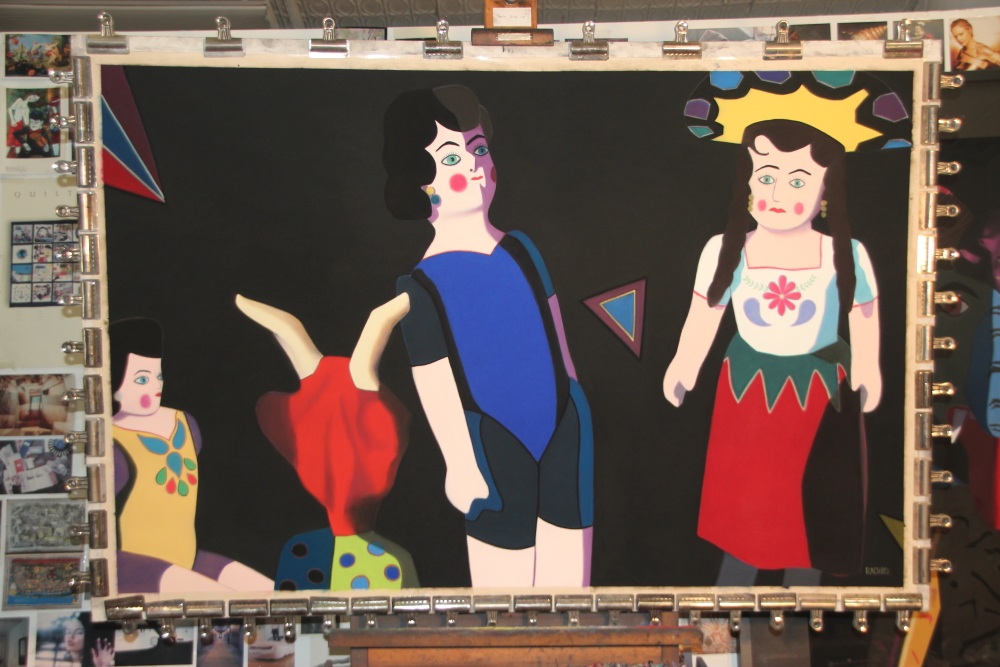
Finished
Comments are welcome!
Pearls from artists* # 259
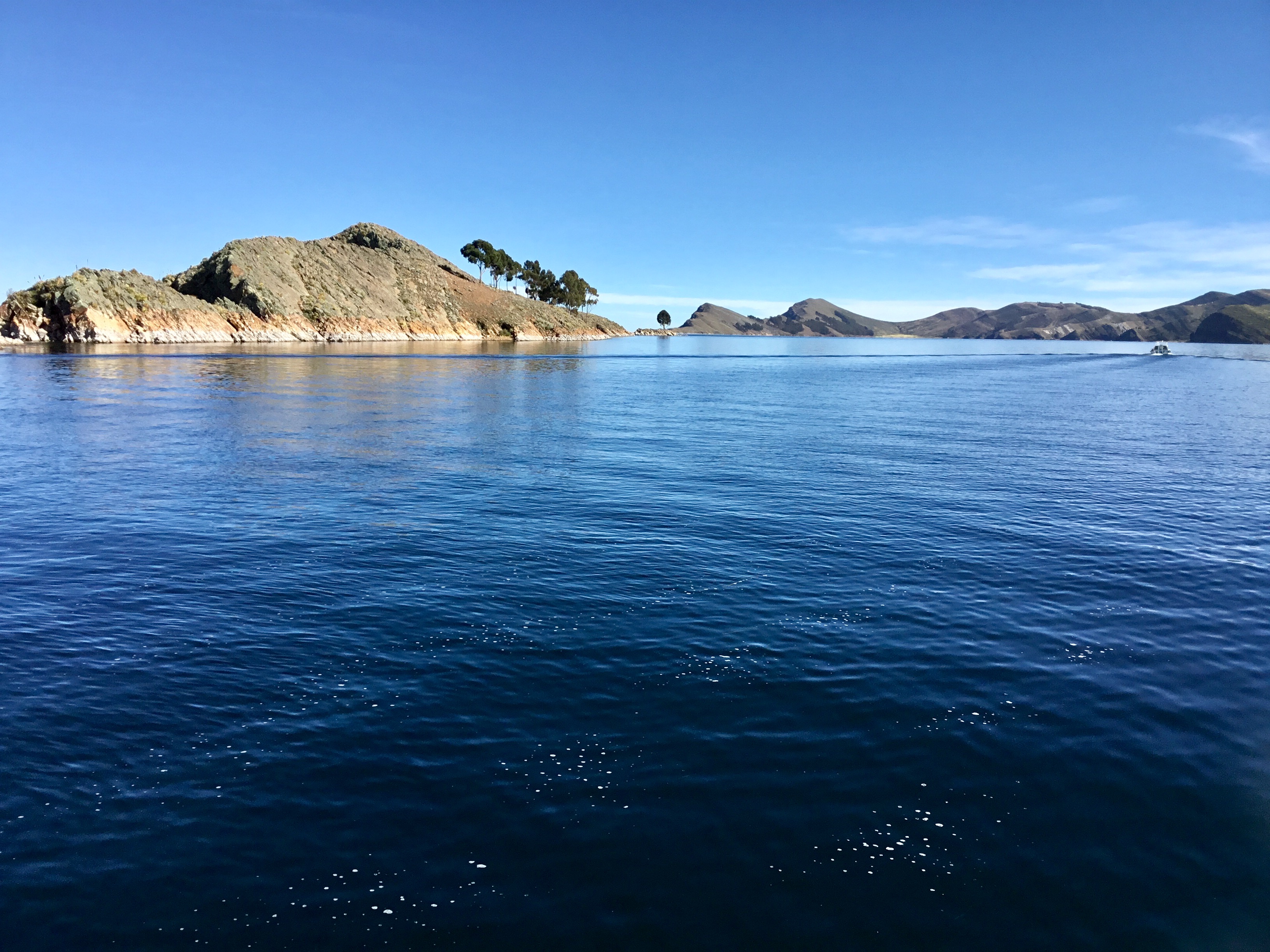
In Bolivia on Lake Titicaca
* an ongoing series of quotations – mostly from artists, to artists – that offers wisdom, inspiration, and advice for the sometimes lonely road we are on.
In college, I made two important decisions about my career.
First, I would put my writing on the back burner until I became well established in science. I know of a few scientists who later became writers, like C.P. Snow, Rachel Carson, but no writers who later became scientists. For some reason, science – at least the creative, research side of science – is a young person’s game. In my own field, physics, I found that the average age at which Nobel Prize winners did their prize-winning work was only thirty-six. Perhaps it has something to do with the focus on and isolation of the subject. A handiness for visualizing in six dimensions or for abstracting the motion of a pendulum favors an agility of mind but apparently requires little knowledge of the human world. By contrast, the arts and humanities require experience with life and the awkward contradictions of people, experience that accumulates and deepens with age.
Alan Lightman in A Sense of the Mysterious: Science and the Human Spirit
Comments are welcome!
Q: What’s on the easel today?
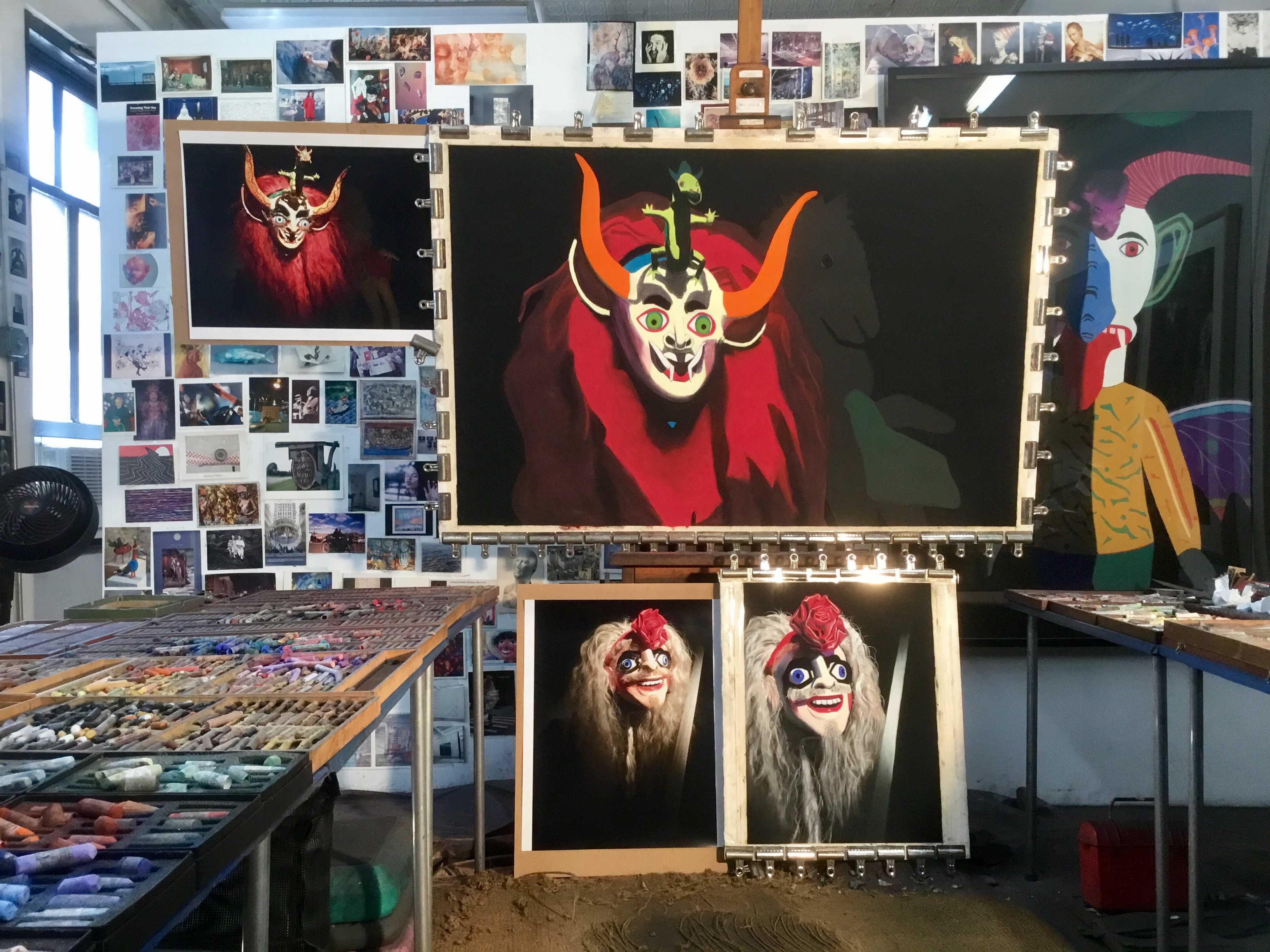
Work in progress
A: I have two works in progress. Both are based on photographs I shot at a stunning mask exhibition in La Paz, Bolivia in May. At present I am tying to ‘ramp up’ my imagery and believe these two pastel paintings to be particularly striking. However, both still have a long way to go so I hope I’m not speaking too soon.
Comments are welcome!
Pearls from artists* # 258
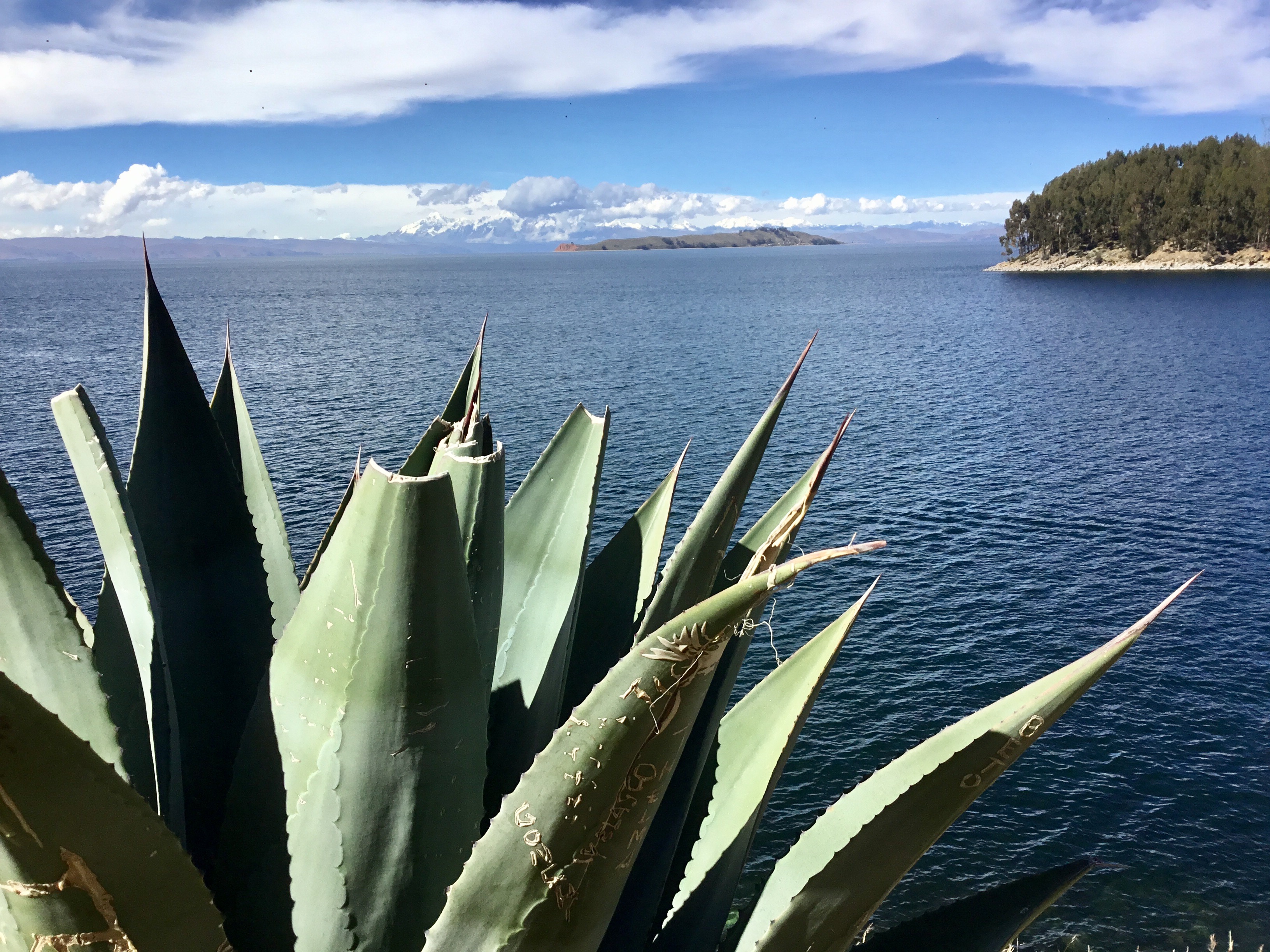
Isla del Sol in Bolivia
* an ongoing series of quotations – mostly from artists, to artists – that offers wisdom, inspiration, and advice for the sometimes lonely road we are on.
Does this imply that ‘beauty is in the eye of the beholder,’ that there is no objective property that we recognize and about whose nature and value we can agree? My answer is simply this: everything I have said about the experience of beauty implies that it is rationally founded. It challenges us to find meaning in its object, to make critical comparisons, and to examine our own lives and emotions in the light of what we find. Art, nature, and the human form all invite us to place this experience in the center of our lives. If we do so, then it offers a place of refreshment of which we will never tire. But to imagine that we can do this, and still be free to see beauty as nothing more than a subjective preference or a source of transient pleasure, is to misunderstand the depth to which reason and value penetrate our lives. It is to fail to see that, for a free being, there is right feeling, right experience and right enjoyment just as much as right action. The judgment of beauty orders the emotions and desires of those who make it. It may express their pleasure and their taste: but it is pleasure in what they value and taste for their true ideals.
Roger Scruton in Beauty: A Very Short Introduction
Comments are welcome!
Q: Would you comment on the origin of the title for your photographic series, “Gods and Monsters”?

Untitled c-print, 24″ x 24″ edition of 5
A: My title is borrowed directly from a 2001 catalogue essay by the late art critic, Gerritt Henry. The essay was about my first pastel painting series (“Domestic Threats”) and it’s called, “Barbara Rachko: Gods and Monsters.”
Among other shared interests, Gerritt and I both loved old Frankenstein movies from the 1940s. Around 1998 interest in James Whale, who had directed the original films, was riding high thanks to an Oscar-winning biopic about his last days in Hollywood. The film was called, “Gods and Monsters.” The title was taken from a line in “Bride of Frankenstein,” in which Dr. Pretorius toasts Dr. Frankenstein saying, “To a new world of gods and monsters.”
My photographic series came after “Domestic Threats” and some years after Gerritt’s essay was published. When I was searching for a title for the photos, “Gods and Monsters” seemed a perfect fit!
Comments are welcome!
Pearls from artists* # 257

“Blind Faith,” 38″ x 58,” soft pastel on sandpaper
* an ongoing series of quotations – mostly from artists, to artists – that offers wisdom, inspiration, and advice for the sometimes lonely road we are on.
I don’t mean to say it’s easy or assured; there are the stubborn stumps of shame, grief that remains unsolvable after all the years, a bag of stones that goes with one wherever one goes and however the hour must call for dancing and for light feet. But there is, also, the summoning world, the admirable energies of the world, better than anger, better than bitterness and, because more interesting, more alleviating. And there is the thing that one does, the needle one plies, the work, and within that work a chance to take thoughts that are hot and formless and to place them slowly and with meticulous effort into some shapely heat-retaining form, even as the gods, or nature, or the soundless wheels of time have made forms all across the soft, curved universe – that is to say, having chosen to claim my life, I have made for myself, out of work and love, a handsome life.
Mary Oliver in Upstream: Selected Essays
Comments are welcome!
Pearls from artists* # 256
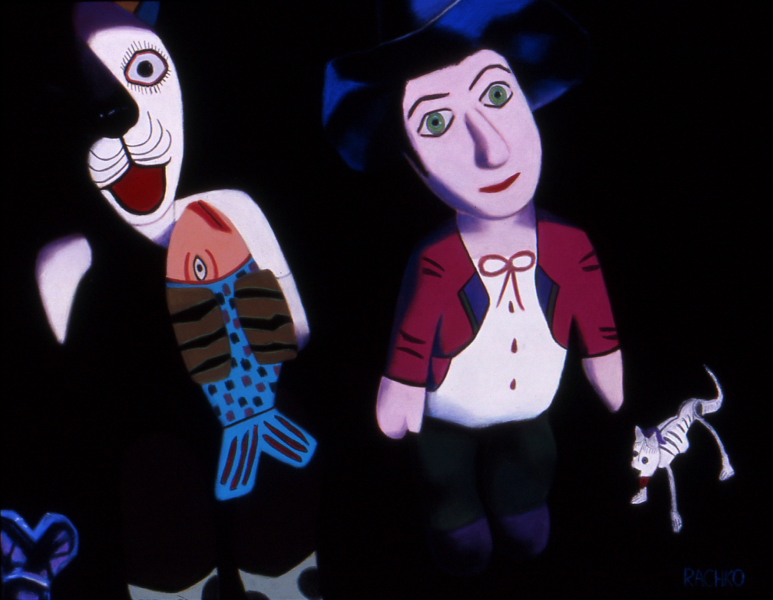
“Offering,” soft pastel on sandpaper, 20″ x 26″
* an ongoing series of quotations – mostly from artists, to artists – that offers wisdom, inspiration, and advice for the sometimes lonely road we are on.
I saw what skill was needed, and persistence – how one must bend one’s spine, like a hoop, over the page – the long labor. I saw the difference between doing nothing, or doing a little, and the redemptive act of true effort. Reading, then writing, then desiring to write well, shaped in me the most joyful of circumstances – a passion for work.
Mary Oliver in Upstream: Selected Essays
Comments are welcome!


 barbararachkoscoloreddust.com