Category Archives: An Artist’s Life
Q: What has been your scariest experience as an artist?

“Between,” soft pastel on sandpaper, 20″ x 26″
A: It was the approximately six months in 2007 when I finished the “Domestic Threats” series and was blocked, certain that a strong body of work was behind me, yet not knowing what in the world to do next! For a professional artist who had been working non-stop for 21 years, this was a profoundly painful, confusing, and disorienting time. I remember continuing to force myself to go to the studio and for lack of anything much to do there, spending long hours reading and thinking about art.
Eventually after all of this reflection, I had an epiphany. “Between,” with drastically simplified imagery, was the first in a new series called, “Black Paintings.” I like to think this series includes work that is considerably richer and more profound than the previous “Domestic Threats.”
Comments are welcome!
Pearls from artists* # 281
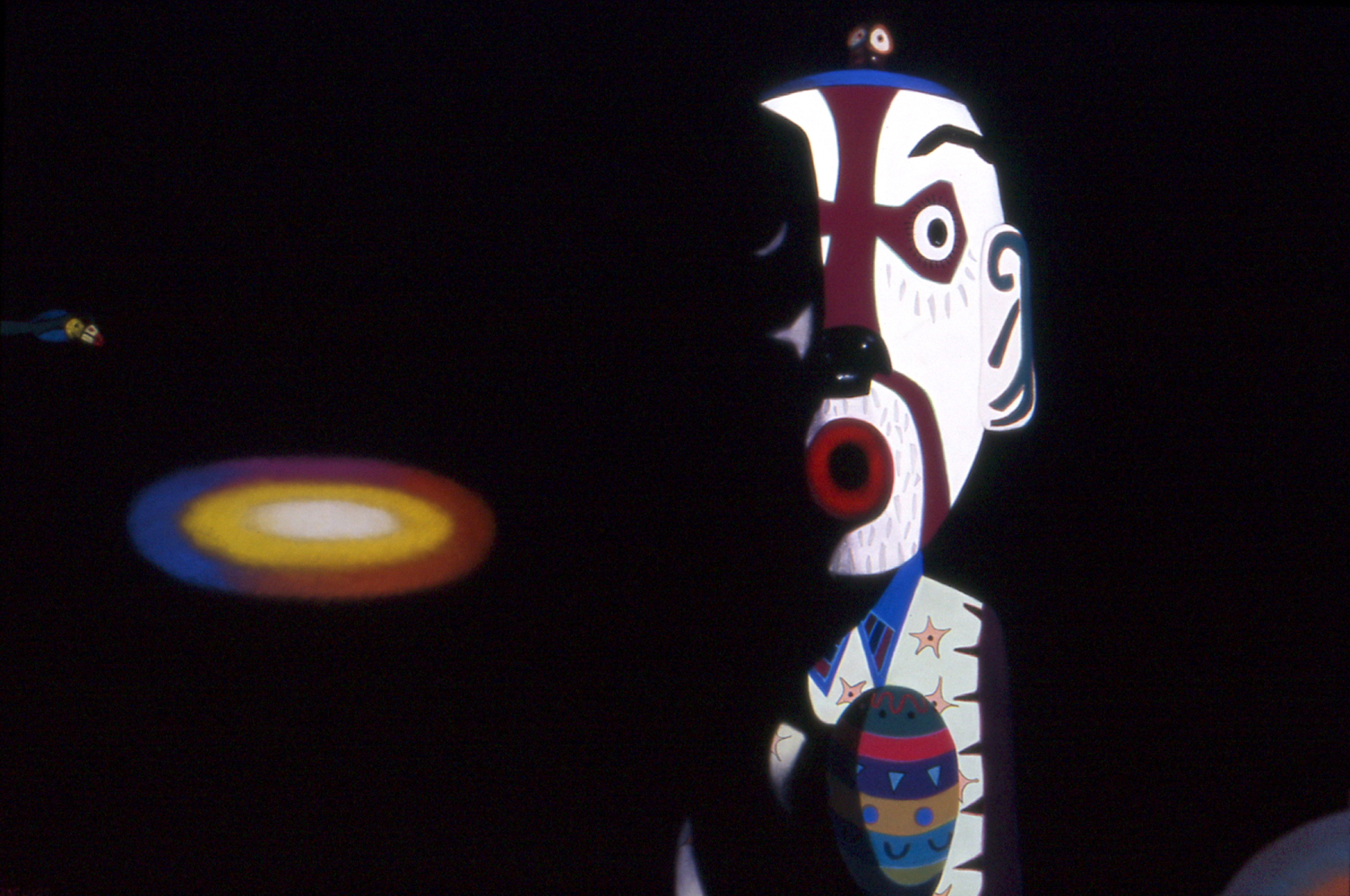
“Poker Face,” soft pastel on sandpaper, 38″ x 58″
*an ongoing series of quotations – mostly from artists, to artists – that offers wisdom, inspiration, and advice for the sometimes lonely road we are on.
Interviewer: Do you think criticism helps any?
Capote: Before publication, and if provided by persons whose judgment you trust, yes, of course criticism helps. But after something is published, all I want to hear is praise. Anything less is a bore, and I’ll give you fifty dollars if you produced a writer who can honestly say he was ever helped by the prissy carpings and condescensions of reviewers. I don’t mean to say that none of the professional critics are worth paying attention to – but few of the good ones review on a regular basis. Most of all, I believe in hardening yourself against opinion. I’ve had, and continue to receive, my full share of abuse, some of it extremely personal, but it doesn’t faze me any more. I can read the most outrageous libel about myself and never skip a pulsebeat. And in this connection there is one piece of advice I strongly urge: never demean yourself by talking back to a critic, never. Write those letters to the editor in your head, but don’t put them on paper.
Truman Capote in Writers at Work: The Paris Review Interviews First Series, edited, and with an introduction by Malcolm Crowley
Comments are welcome!
Q: Would you share your current elevator pitch?

Barbara’s studio
A: Here it is:
I live in New York and have been a working artist for more than thirty years. I create original pastel paintings that use my large collection of Mexican and Guatemalan folk art – masks, carved wooden animals, papier mache figures, and toys – as subject matter.
Blending with my fingers, I spend months painstakingly applying dozens of layers of soft pastel onto acid-free sandpaper. My self-invented technique achieves extraordinarily rich, vibrant color and results in paintings that uniquely combine reality, fantasy, and autobiography.
My background is extremely unusual for an artist. I am a pilot, a retired Navy Commander, and a 9/11 widow. Besides making art, I am a published author and blogger best known for my eBook, “From Pilot to Painter,” on Amazon and iTunes, and my popular blog, “Barbara Rachko’s Colored Dust.”
Please see images and more at http://barbararachko.art/en/
Comments are welcome!
Pearls from artists* # 280

“Palaver,” soft pastel on sandpaper, 26″ x 20″
* an ongoing series of quotations – mostly from artists, to artists – that offers wisdom, inspiration, and advice for the sometimes lonely road we are on.
What is the task? To compose a work that communicates on several levels, as in a parable, devoid of the stain of cleverness.
What is the dream? To write something fine, that would be better than I am, and that would justify my trials and indiscretions. To offer proof, through a scramble of words, that God exists.
Who do I write? My finger, as a stylus, traces the question in the blank air. A familiar riddle posed since youth, withdrawing from play, comrades and the valley of love, girded with words, a beat outside.
Why do we write? A chorus erupts.
Because we cannot simply live.
Patti Smith in Devotion
Comments are welcome!
Pearls from artists* # 279
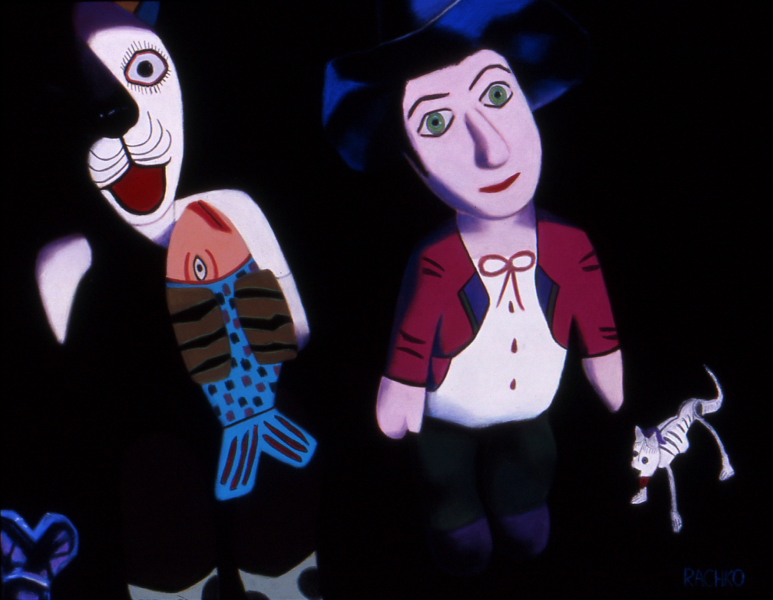
“Offering,” soft pastel on sandpaper, 20″ x 26″
* an ongoing series of quotations – mostly from artists, to artists – that offers wisdom, inspiration, and advice for the sometimes lonely road we are on.
Why is one compelled to write? To set oneself apart, cocooned, rapt in solitude, despite the wants of others. Virginia Woolf had her room. Proust his shuttered windows. Marguerite Duras her muted house. Dylan Thomas his modest shed. All seeking an emptiness to imbue with words. The words that will penetrate virgin territority, crack unclaimed combinations, articulate the infinite. The words that formed Lolita, The Lover, Our Lady of the Flowers.
There are stacks of notebooks that speak of years of aborted efforts, deflated euphoria, a relentless pacing of the boards. We must write, engaging in a myriad of struggles, as if breaking in a willful foal. We must write, but not without consistent effort and a measure of sacrifice: to channel the future, to revisit childhood, and to rein in the follies and horrors of the imagination for a pulsating race of readers.
Patti Smith in Devotion
Comments are welcome!
Pearls from artists* #278

National Museum of Ethnography and Folklore, La Paz, Bolivia
* an ongoing series of quotations – mostly from artists, to artists – that offers wisdom, inspiration, and advice for the sometimes lonely road we are on.
Inspiration is an unforeseen quantity, the muse that assails at the hidden hour. The arrows fly and one is unaware of being struck, and that a host of unrelated catalysts have joined clandestinely to form a system of its own, rendering one with the vibrations of an incurable disease – a burning imagination – at once unholy and divine.
Patti Smith in Devotion
Comments are welcome!
Pearls from artists* # 276
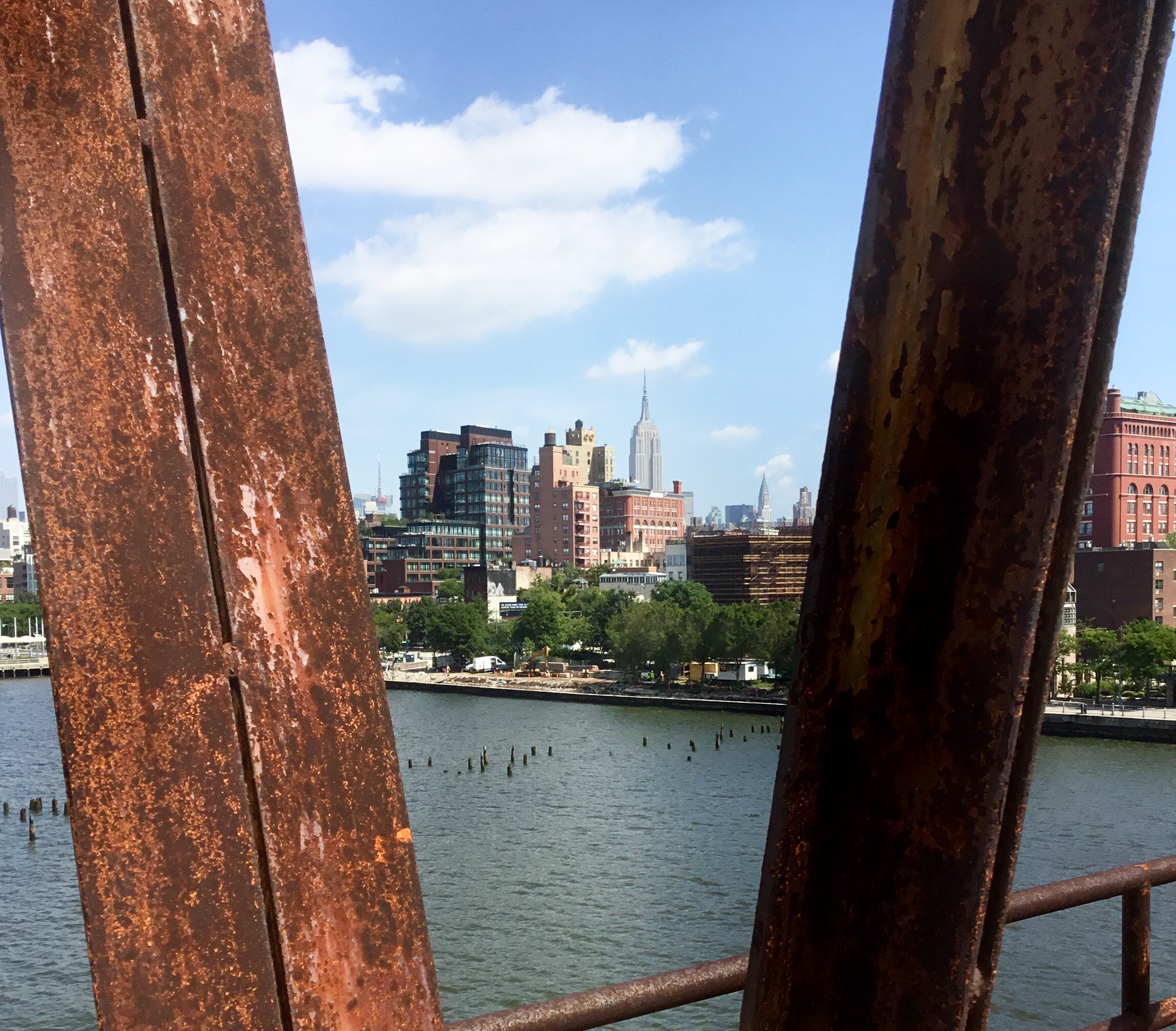
The West Village
* an ongoing series of quotations – mostly from artists, to artists – that offers wisdom, inspiration, and advice for the sometimes lonely road we are on.
A long time later, after I became a novelist, I realized that the ambiguities of the human mind are what give fiction and perhaps all art its power. A good novel gets under our skin, provokes us and haunts us long after the first reading, because we never fully understand the characters. We sweep through the narrative over and over again, searching for meaning. Good characters must retain a certain mystery and unfathomable depth, even for the author. Once we see to the bottom of their hearts, the novel is dead for us.
Eventually, I learned to appreciate both certainty and uncertainty. Both are necessary in the world. Both are part of being human.
Alan Lightman in A Sense of the Mysterious: Science and the Human Spirit
Comments are welcome!
Pearls from artists* # 274

Barbara’s studio
* an ongoing series of quotations – mostly from artists, to artists – that offers wisdom, inspiration, and advice for the sometimes lonely road we are on.
“Beauty is never enough,” he said. “Meaning is more important. If something catches people’s eyes enough to make them move around it, they will build a story around it. And that will not just be about beauty.”
Eric Charles-Donatien in Feathered Glory: In a studio in Paris, an old craft is given new life by Burkhard Bilger in The New Yorker, Sept. 25, 2017
Comments are welcome!
Q: Do you lose yourself in your work?

Barbara at work
A: Of course! When I am having a productive day in the studio, I am completely present and focused, fully immersed in solving technical problems and trying to improve the painting on my easel. I barely notice the time and have to remind myself to take a break or stop for lunch. Nothing else exists except the painting and my relationship with it. The rest of life completely falls away from my consciousness.
I believe most artists regularly experience this feeling of ‘flow.’ It is a state of being that is inherent and necessary to creative work of all kinds.
Comments are welcome!
Pearls from artists* # 273

The Lightning Field
* an ongoing series of quotations – mostly from artists, to artists – that offers wisdom, inspiration, and advice for the sometimes lonely road we are on.
The night sky was clear, too many stars.
Satellites described distinctive arcs, moving too fast for
nature across our broad field of vision.
The desert floor was drenched with rainwater, and our boots
suctioned the mud.
The moon’s shy face revealed only a sliver, but the starlight
was strong enough for the poles to pick up its silver.
We watched time, light, and distance compress over The
Lightning Field.
The dome of the sky was palpable,
papered in stars.
How long ago did the light that reflected in the poles leave
its source?
Laura Raicovich in At The Lightning Field
Comments are welcome!


 barbararachkoscoloreddust.com