Blog Archives
Q: Why the chromogenic process above all others?
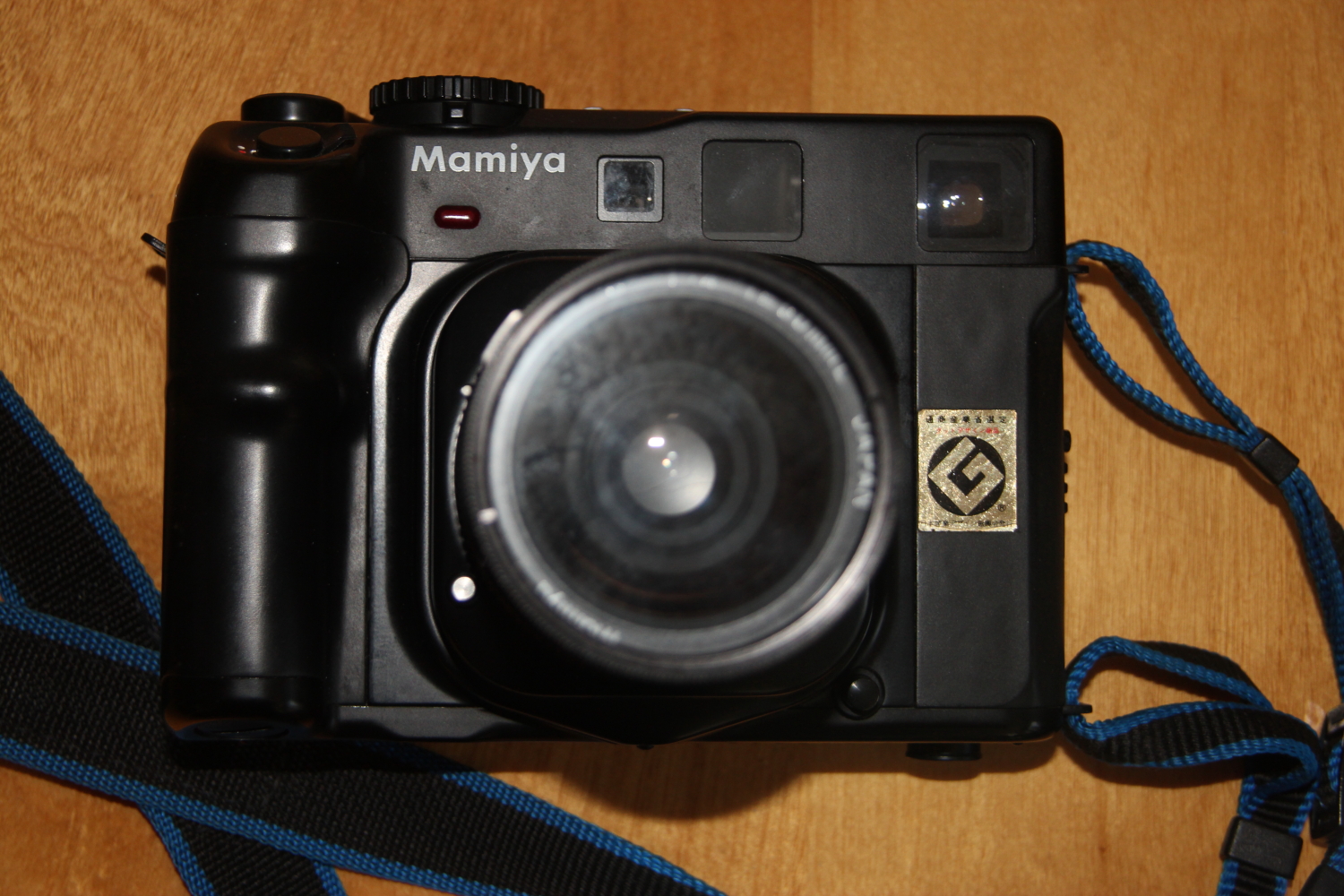
Mamiya 6 camera
A: First, the cameras that I inherited from Bryan in 2001 were all pre-digital film cameras. Second, I can make chromogenic prints myself, which cuts down on their production cost. Third, I love working with my hands and enjoy the process of making prints in a darkroom. Fourth, I make photographs on days that I don’t go to the studio. It’s a way to take a day off and still make art, a very productive use of my time. At the end of a darkroom session I have a new edition of 5 chromogenic prints, ready to spot and frame.
Comments are welcome.
Pearls from artists* # 2
Tucson, AZ
* an ongoing series of quotations – mostly from artists, to artists – that offers wisdom, inspiration, and advice for the sometimes lonely road we are on.
Ms. Dillard is speaking about writing here, but her comments apply to all the arts.
Push it. Examine all things intensely and relentlessly. Probe and search each object in a piece of art. Do not leave it, do not course over it, as if it were understood, but instead follow it down until you see it in the mystery of its own specificity and strength. Giacometti’s drawings and paintings show his bewilderment and persistence. If he had not acknowledged his bewilderment, he would not have persisted. A twentieth-century master of drawing, Rico Lebrun, taught that “the draftsman must aggress; only by persistent assault will the live image capitulate and give up its secret to an unrelenting line.” Who but an artist fierce to know – not fierce to seem to know – would suppose that a live image possessed a secret? The artist is willing to give all his or her strength and life to probing with blunt instruments those same secrets no one can describe in any way but with those instruments’ faint tracks.
Admire the world for never ending on you – as you would admire an opponent without taking your eyes from him, or walking away.
One of the few things I know about writing is this: spend it all, shoot it, play it, lose it, all, right away, every time. Do not hoard what seems good for a later place in the book, or for another book; give it, give it all, give it now. The impulse to save something good for a better place later is the signal to spend it now. Something else will arise for later, something better. These things fall from behind, from beneath, like well water. Similarly, the impulse to keep to yourself what you have learned is not only shameful, it is destructive. Anything you do not give freely and abundantly becomes lost to you. You open your safe and find ashes.
After Michelangelo died, someone found in his studio a piece of paper on which he had written a note to an apprentice, in the handwriting of his old age: “Draw, Antonio, draw, Antonio, and do not waste time.”
Annie Dillard, The Writing Life
Comments are welcome.
Q: Your paintings are full-blown productions. You take great care to not only cast them, but to choose the right sets and lighting for them. Would you consider making films?
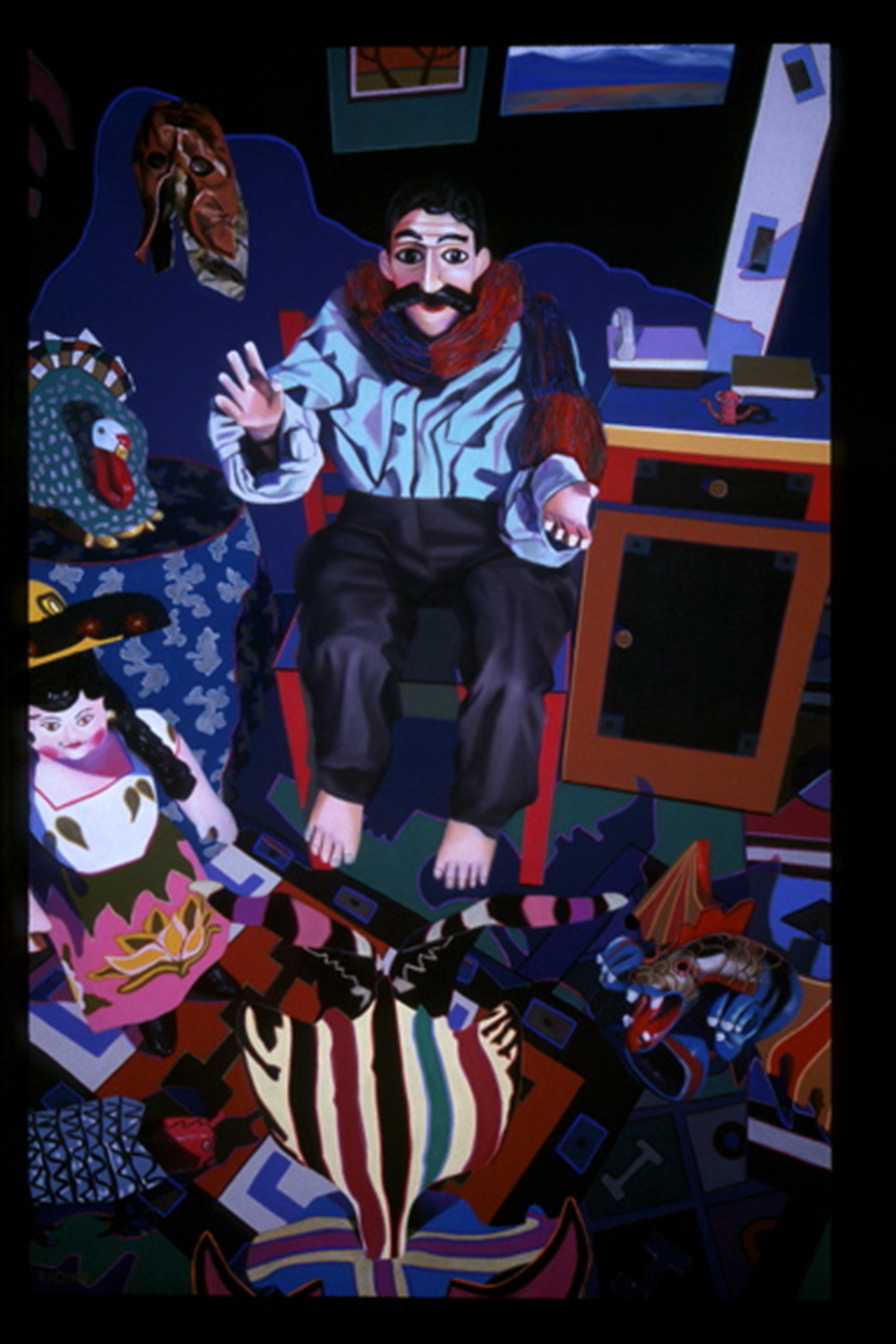
“Truth Betrayed by Innocence,” soft pastel on sandpaper
A: In the late 1990s I seriously considered it – I studied film at the New School and at New York University – but ultimately I decided to stay with painting. A well-made film will be seen by more people than a painting ever will, but the finances of making it are daunting. Historically visual artists have achieved mixed results when they have turned to filmmaking. Cindy Sherman was not very good at it, but Shirin Neshat’s feature film was very good. Julian Schnabel is arguably a much better filmmaker than he ever was a painter. Most importantly for me, filmmaking is a very complex collaboration. I love the time I spend alone in my studio and prefer having control over and being fully responsible for the results. It would be difficult to give this up.
Q: How large is your collection of Mexican folk art objects?
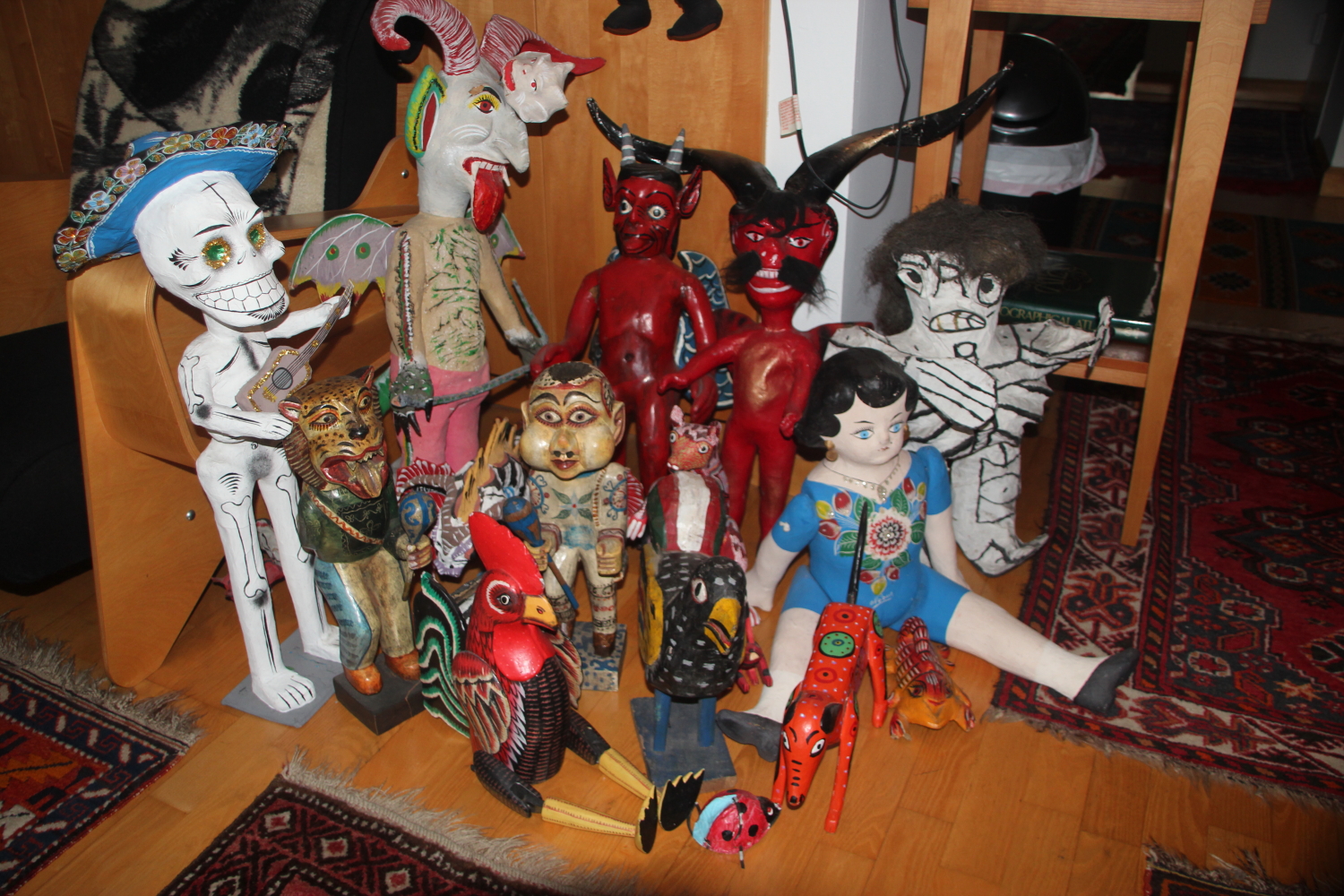
Part of the collection
A: I haven’t counted them, but my guess is 200 pieces of various sizes. This includes the Guatemalan figures. I went to Guatemala in 2009 and 2010. Since I divide my time between a house in Alexandria, VA, an apartment in Manhattan, and a studio in Chelsea, part of my folk art collection is in each of these places.
Q: What do your collectors say about your work?
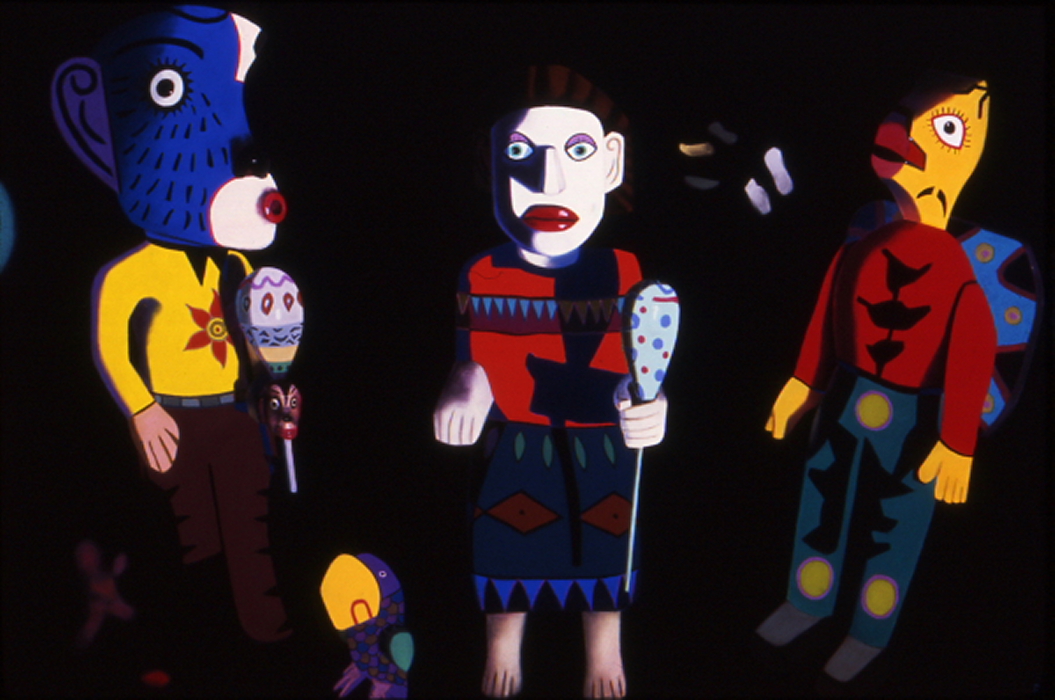
“False Friends,” one of Cheryll and John’s pastel paintings
A: Here’s a quote from Cheryll Chew and John Frye, who own four of my pastel paintings.
We walked into her studio in 1994 and saw “In Reality the Frogs Were Men.” That instant on that day, my consuming passion with Barbara Rachko’s work began. We had absolutely no resources to buy “In Reality . . .” I did, however, know without a doubt that one day we would have her work, no matter what it took to get it.
We, years later, have “Scene Eleven: Bedroom,” “Scene Nine: Living Room,” “Scene Five: Kitchen,” and “False Friends.”
We have unorthodox appreciations and every single day, those pieces of art quicken the pulse and bring us pure pleasure.
Her pieces make us want to dance wildly around the room and wave our arms in the air. We are deeply grateful that her work is in our home. Her art balances the everyday domestic with the unthinkably rare, lovely, and maniacal. That is an edgy state of being that we thrive in.
Not long ago, we read an article about Nan Goldin. In the article was a phrase that says precisely what Barbara Rachko’s work does for us . . .
all of the pleasure circuits are deeply fulfilled by looking. . .
Nan Goldin The Look of Love: Matchmaking at the Louvre
NY Times,10.27.2011
Q: What makes you just want to run back to the studio and start something new?
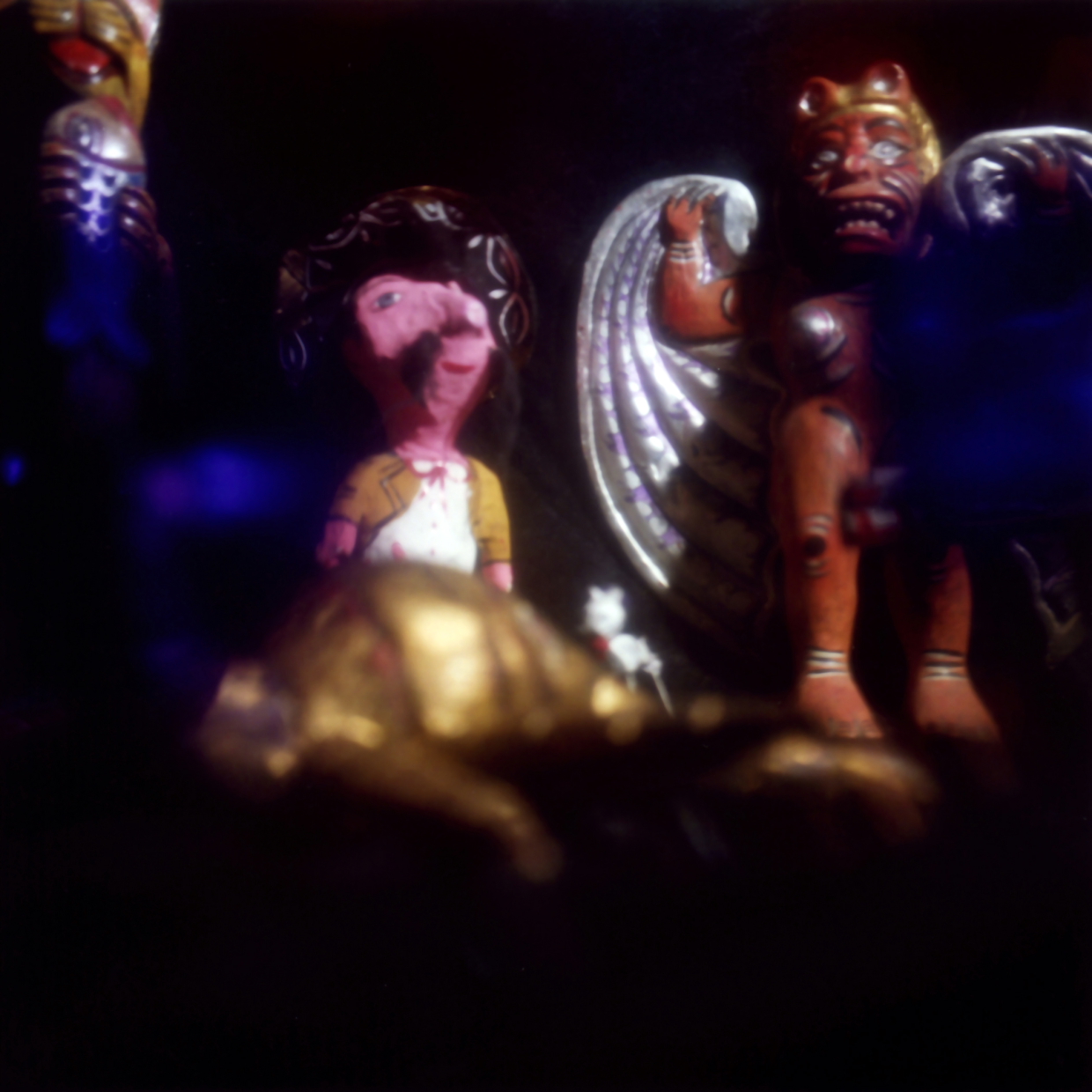
Untitled chromogenic print, 24″ x24″, edition of 5
A: I work in series, which means that one pastel painting generally leads into the next. Considerable thought goes into it before I ever begin, so it would be rare for me to just start something new out of nowhere. Sometimes after a day in the studio I run home to my apartment to set up a new photograph. I arrange a group of my Mexican and Guatemalan figures on a black cloth, light the scene, and when everything is just right, photograph it. I love the fact that I can come home, shoot a roll of film, and then have 24 new images – more bad than good, but still – the next day! It’s such a departure from the slowness of my work in the studio, considering that in a good year I make 6 pastel paintings.



