Category Archives: Pearls from Artists
Pearls from artists* # 276
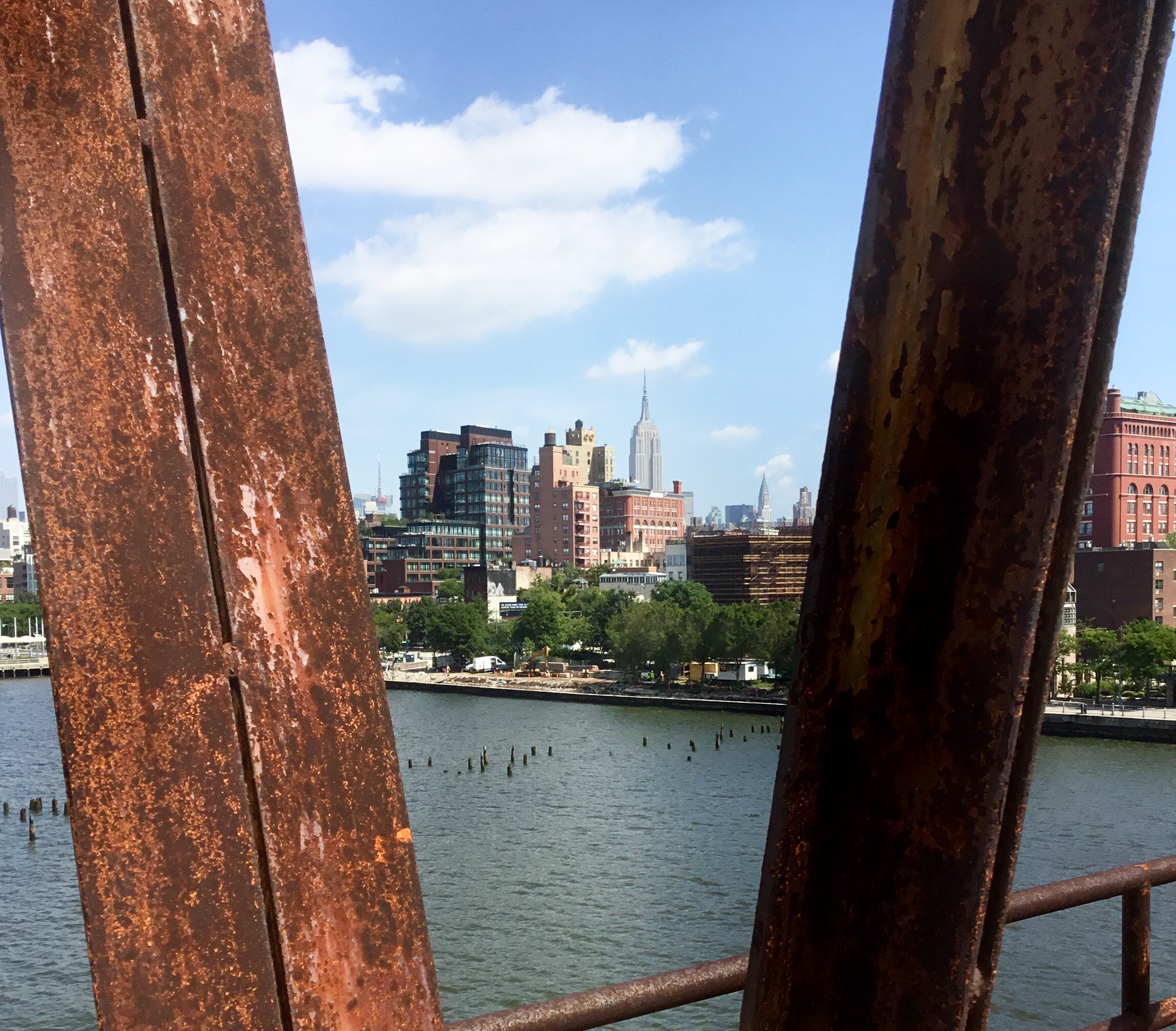
The West Village
* an ongoing series of quotations – mostly from artists, to artists – that offers wisdom, inspiration, and advice for the sometimes lonely road we are on.
A long time later, after I became a novelist, I realized that the ambiguities of the human mind are what give fiction and perhaps all art its power. A good novel gets under our skin, provokes us and haunts us long after the first reading, because we never fully understand the characters. We sweep through the narrative over and over again, searching for meaning. Good characters must retain a certain mystery and unfathomable depth, even for the author. Once we see to the bottom of their hearts, the novel is dead for us.
Eventually, I learned to appreciate both certainty and uncertainty. Both are necessary in the world. Both are part of being human.
Alan Lightman in A Sense of the Mysterious: Science and the Human Spirit
Comments are welcome!
Pearls from artists* # 275

“The Sovereign,” soft pastel on sandpaper, 58″ x 38″ image, 70″ x 50″ framed
* an ongoing series of quotations – mostly from artists, to artists – that offers wisdom, inspiration, and advice for the sometimes lonely road we are on.
Works of art… have a dominant function. They are objects of aesthetic interest. They may fulfill this function in a rewarding way, offering food for thought and spiritual uplift, winning for themselves a loyal public that returns to them to be consoled or inspired. They may fulfill their function in ways that are judged to be offensive or demeaning. Or they may fail altogether to prompt the aesthetic interest that they petition for. The works of art that we remember fall into the first two categories: the uplifting and the demeaning. The total failures disappear from memory. And it really matters which kind of art you adhere to, which you carry around in your heart. Good taste is… important in aesthetics… and indeed taste is what it is all about. If university courses do not start from that premise, students will finish their studies of art and culture just as ignorant as when they began. When it comes to art, aesthetic judgment concerns what you ought and ought not to like…
Roger Scruton in Beauty: A Very Short Introduction
Comments are welcome!
Pearls from artists* # 274

Barbara’s studio
* an ongoing series of quotations – mostly from artists, to artists – that offers wisdom, inspiration, and advice for the sometimes lonely road we are on.
“Beauty is never enough,” he said. “Meaning is more important. If something catches people’s eyes enough to make them move around it, they will build a story around it. And that will not just be about beauty.”
Eric Charles-Donatien in Feathered Glory: In a studio in Paris, an old craft is given new life by Burkhard Bilger in The New Yorker, Sept. 25, 2017
Comments are welcome!
Pearls from artists* # 273

The Lightning Field
* an ongoing series of quotations – mostly from artists, to artists – that offers wisdom, inspiration, and advice for the sometimes lonely road we are on.
The night sky was clear, too many stars.
Satellites described distinctive arcs, moving too fast for
nature across our broad field of vision.
The desert floor was drenched with rainwater, and our boots
suctioned the mud.
The moon’s shy face revealed only a sliver, but the starlight
was strong enough for the poles to pick up its silver.
We watched time, light, and distance compress over The
Lightning Field.
The dome of the sky was palpable,
papered in stars.
How long ago did the light that reflected in the poles leave
its source?
Laura Raicovich in At The Lightning Field
Comments are welcome!
Pearls from artists* # 272
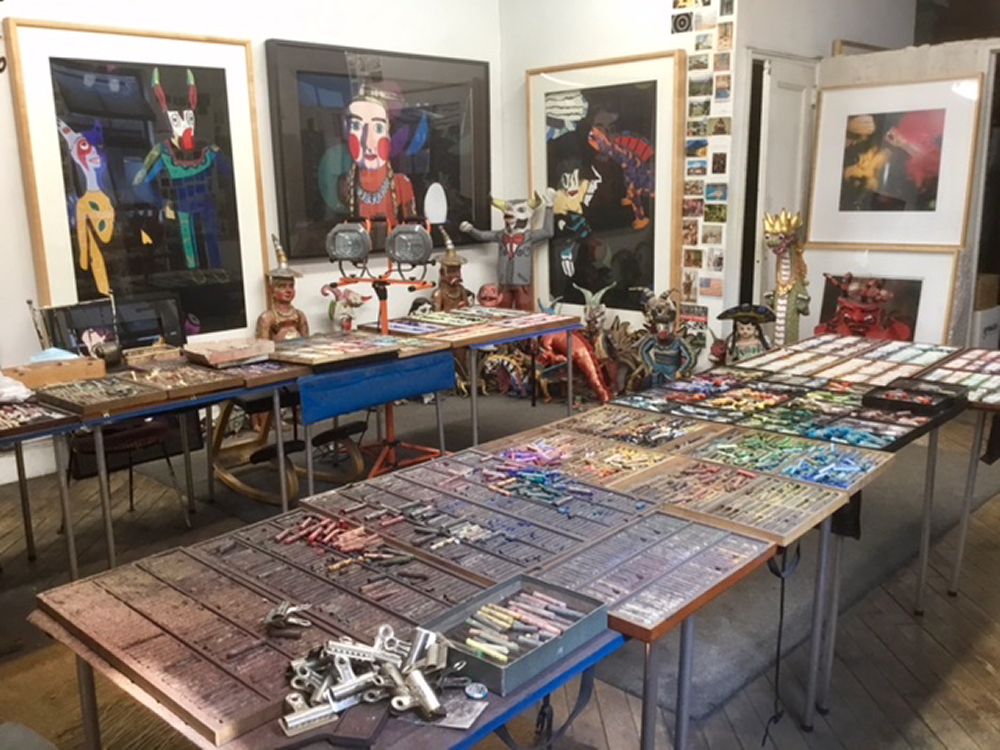
Barbara’s studio
* an ongoing series of quotations – mostly from artists, to artists – that offers wisdom, inspiration, and advice for the sometimes lonely road we are on.
One important distinction that can be made between physicists and novelists, and between the scientific and artistic communities in general, is what I shall call “naming.” Roughly speaking, the scientist tries to name things and the artist tries to avoid naming things.
To name a thing, one needs to have gathered it, distilled and purified it, attempted to identify it with clarity and precision. One puts a box around the thing and says what’s in the box is the thing and what’s not is not…
… The objects and concepts of the novelist cannot be named. The novelist might use the words love and fear, but these names do not summarize or convey much to the reader. For one thing, there are a thousand different kinds of love…
… Every electron is identical, but every love is different.
The novelist doesn’t want to eliminate these differences, doesn’t want to clarify and distill the meaning of love so that there is only a single meaning… because no such distillation exists. And any attempt at such a distillation would undermine the authenticity of readers’ reactions, destroying the delicate, participatory creative experience of a good reader reading a good book. In sense, a novel is not complete until it is read. And each reader completes the novel in a different way.
Alan Lightman in A Sense of the Mysterious: Science and the Human Spirit
Comments are welcome!
Pearls from artists* # 271
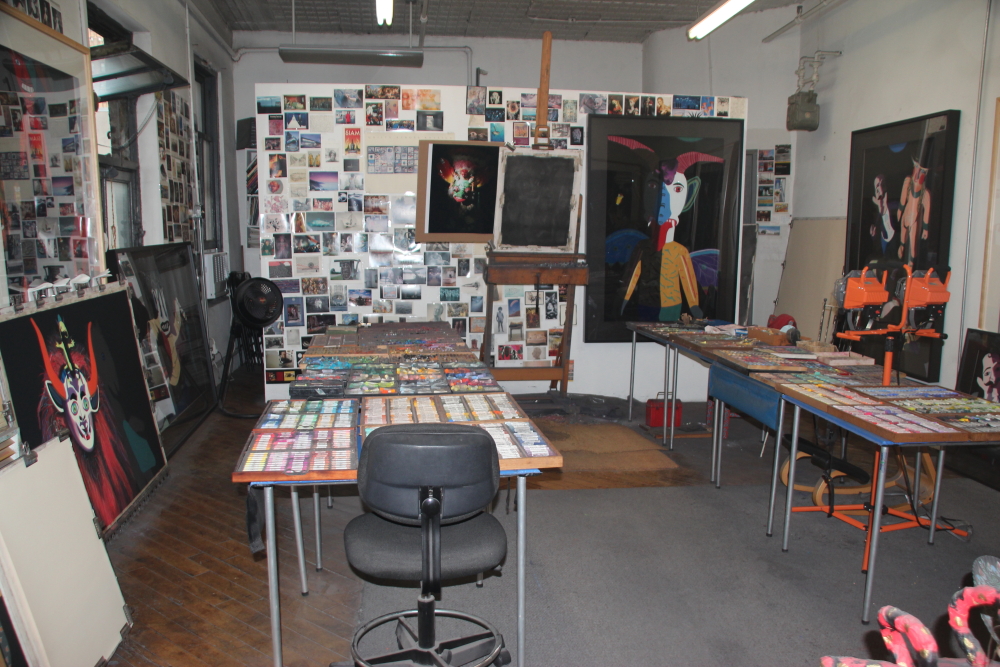
Barbara’s studio
* an ongoing series of quotations – mostly from artists, to artists – that offers wisdom, inspiration, and advice for the sometimes lonely road we are on.
The following quote is so true for artists also!
Without a powerful emotional commitment, scientists could not summon up the enormous energy needed for pursuing an idea for years, working day and night in the lab or at their desks doing calculations, often sacrificing the rest of their lives. It is little wonder that such a personal commitment sometimes causes the scientist to defend his or her beliefs regardless of facts.
Alan Lightman in A Sense of the Mysterious: Science and the Human Spirit
Comments are welcome!
Pearls from artists* # 270
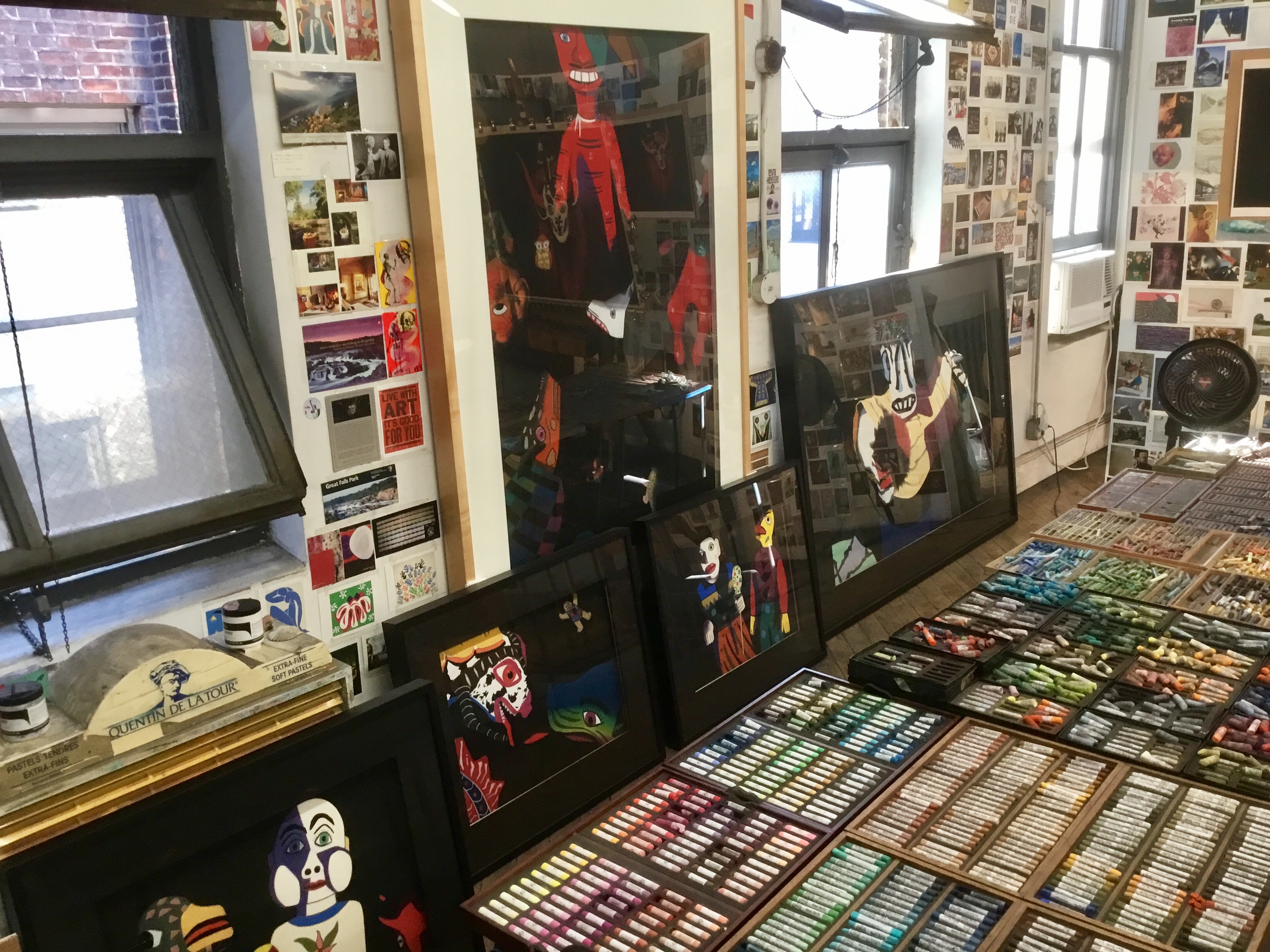
Barbara’s studio
* an ongoing series of quotations – mostly from artists, to artists – that offers wisdom, inspiration, and advice for the sometimes lonely road we are on.
As Charlie Parker quipped, “If you don’t live it, it won’t come out of your horn.” And it won’t register in your bearing: this is the earned credit for trying to walk the daily tightrope and tell your story when you get to the other side.
Joel Dinerstein in The Origins of Cool in Postwar America
Comments are welcome
Pearls from artists* # 269
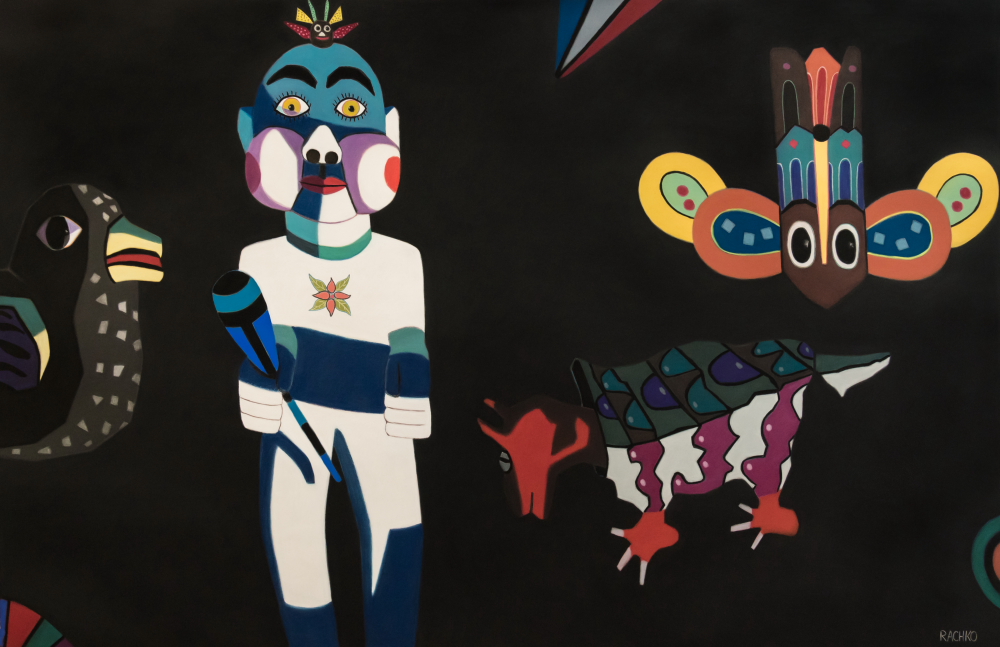
“White Star,” soft pastel on sandpaper, 38″ x 58″
* an ongoing series of quotations – mostly from artists, to artists – that offers wisdom, inspiration, and advice for the sometimes lonely road we are on.
In an artistic sense, cool came to refer to someone with a signature artistic style so integral as to exude an authentic mode-of-being in the world: Miles, Bogart, Brando, Eastwood, Greco, Elvis, Lady Day, Sinatra. Such a person created something from nothing and gave the world some new artistic or psychological “equipment for living,” to use a phrase of Kenneth Burke’s. A signature style is yours and can only be carried by you: it cannot be abstracted except through dilution and commodification since it reflects an individual’s complex personal experience.
Joel Dinerstein in The Origins of Cool in Postwar America
Comments are welcome
Pearls from artists* # 268

The Lightning Field, Quemado, NM
* an ongoing series of quotations – mostly from artists, to artists – that offers wisdom, inspiration, and advice for the sometimes lonely road we are on.
Visit 1: October 18 and 19, 2003, continued
The long drive through the New Mexico landscape from Albuquerque to Quemado to The Lightning Field is a gradual slide towards emptiness, a prelude. Or a subtle preparation for the eyes and mind. The practicalities of the cabin provide simple accommodations that address basic needs to maximize focus and minimize distraction.
At The Lightning Field, my experience of space began with the rational structure of the grid, which was eventually exposed by less rational behavior.
The artwork locates the physical environment in space, and my perception of the work began with the regularity of the grid. The repeated unit of the pole was not significant, only its holistic engagement between human scale and the landscape of the sky. Then the effects of light, the anticipation of cycles of change through the course of the day and night, the possibility of the unpredictable.
Laura Raicovich in At The Lightning Field
Comments are welcome!
Pearls from artists* # 267

The Lightning Field, Quemado, NM
* an ongoing series of quotations – mostly from artists, to artists – that offers wisdom, inspiration, and advice for the sometimes lonely road we are on.
In 1968, art critic David Bourdon wrote (before The Lightning Field was built): “De Maria is after a deeper commitment on the part of the spectator, who is asked to become an agent or catalyst in the fulfillment of the work… the burden of response is placed not on the sculpture but on the spectator.
Laura Raicovich in At The Lightning Field
Comments are welcome!



