Category Archives: An Artist’s Life
Pearls from artists* # 25
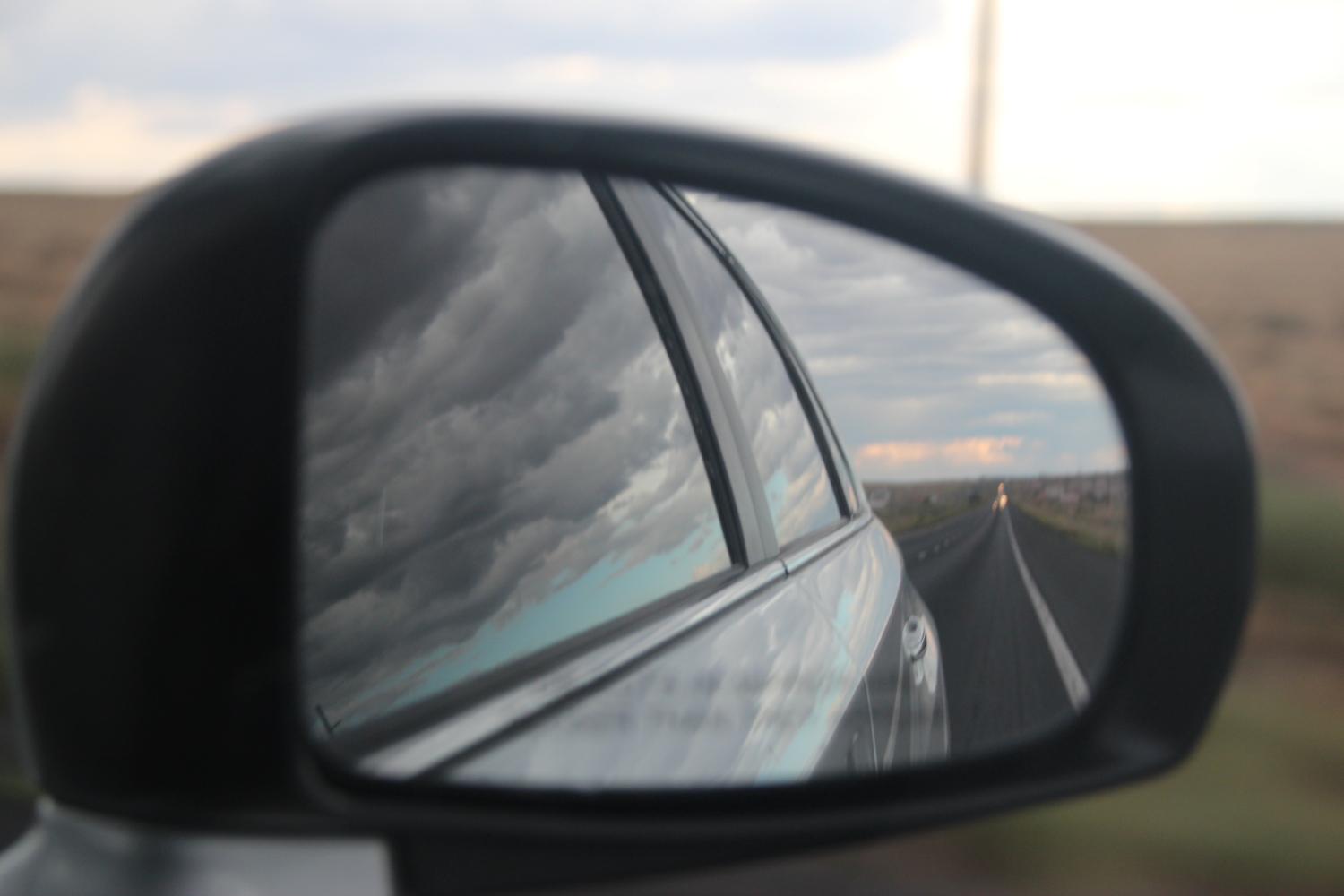
Arizona highway (Donna at the wheel)
* an ongoing series of quotations – mostly from artists, to artists – that offers wisdom, inspiration, and advice for the sometimes lonely road we are on.
February 21, 1924. A hell of a day yesterday. Bitter disappointment awaits the worker in photography.
After risking my neck to get the 8 x 10 camera on la azotea – flat roof – over Tina’s room, the highest vantage point of Lucerna 12, and after straining my back and stripping my nerves to capture a sweep of scurrying cloud forms, development revealed fog – ruinous fog – unmistakably from extraneous light – and a beautiful negative it was, or might have been!
The demon fog can play such uncanny tricks – always I am confounded, disconcerted, mystified until the trouble has been located. All morning I squinted and poked and probed, finally patching with felt the supposed leak due to a warped back, but I lost my negative, as fine a one as any of clouds I have done.
In a blue funk, I was ready to quit, and when Galvan called, accepted his suggestion that we ride into the country and then walk for a while.
North, and out of el distrito federal, he took us to a barranca – gorge – close by – in fact, hardly twenty minutes drive away, yet, from the desolation of this cactus covered gulch we seemed a hundred miles away from any city street. Cactus and rock and the tortuous curves of el arroyo seco – the dry gulch – a bleakness to the spot intensified by a lowering sky, black wrathful clouds, angrily unable to spill their burden of rain. We climbed, we shot, we lay on the dead grass and watched the sunset edge the clouds with rose, and all around stiff cacti in spreading silhouette. Tea with Galvan, his three old aunts and Don pepe – cajeta de Celaya, te, pasas – jelly from Celaya, tea, raisins, and sweet bread.
I feel better, to hell with photography, art, women and all.
Yet – I wished for my camera today. Those serrated stalks of the maguey, their bold uncompromising leaves cutting the horizon, they would make a fine jagged base to a typical Mexican sky.
Nancy Newhall, editor, The Daybooks of Edward Weston: Two Volumes in One: I. Mexico II. California
Comments are welcome!
Q: Can you talk about the studios you have worked in over the years?

Studio entrance
A: From the beginning in the mid-1980’s I had a studio. My first one was in the spare bedroom of the Alexandria, Virginia, house that I shared with Bryan and that I still own. For about three years in the 1990s I had a studio on the third floor of the Torpedo Factory Art Center, a building in Alexandria that is open to the public; people come in and watch the artists work. In 1997 an opportunity to move to New York arose and I didn’t look back. By then I was showing in a good 57th Street gallery, Brewster Arts Ltd. (the gallery focused exclusively on Latin American artists; I was thrilled with the company I was in; the only fellow non-Latina represented by owner, Mia Kim, was Leonora Carrington), and I had managed to find a New York agent, Leah Poller, with whom to collaborate. I looked at one other space before finding my West 29th Street studio, where I still work. It was and continues to be my oasis in a chaotic city, a place to make art, to read, and to think. I feel more calm the moment I walk in.
Comments are welcome!
Pearls from artists* # 24
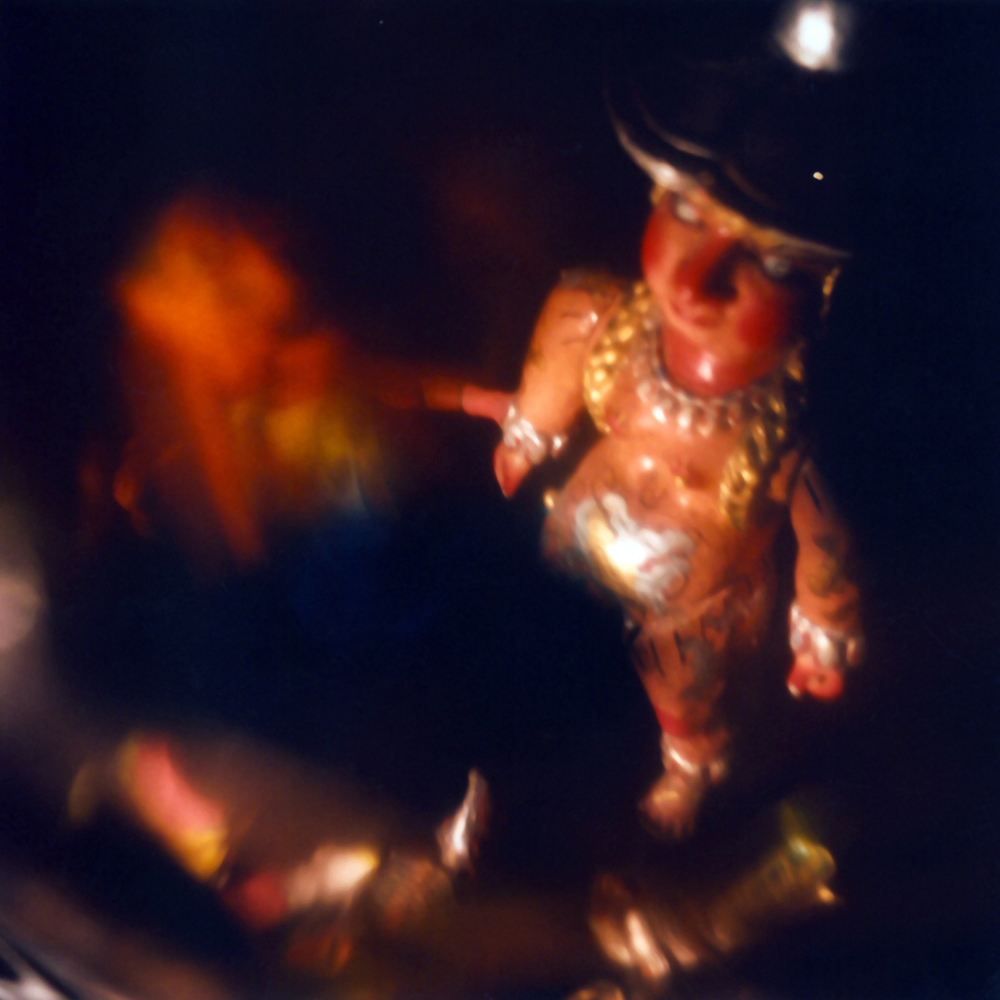
Untitled, chromogenic print, 24″ x 24,” edition of 5
* an ongoing series of quotations – mostly from artists, to artists – that offers wisdom, inspiration, and advice for the sometimes lonely road we are on.
A person is not an artist until he works at his art, no matter how eloquently he speaks during the cocktail hour or how fine are the images that come to his mind. As David Salle, the visual artist, put it, “It’s easy to be an artist in your head.” We, as artists, know this. We realize that often we are not able to translate our vision into splendid art. Even the finest artists write books that are not great, paint pictures that are not great, compose pieces that are not great, involve themselves in projects that are not great. But artists can only try – and must try.
When you love what you are doing, know what you are doing, and do it, a confidence is bred in you that is the best stretcher of limits. Then you can say, as the visual artist June Wayne said, “Now when I start something, I expect to carry it off.”
Eric Maisel, A Life in the Arts
Comments are welcome!
Q; When did you start pursuing art as a serious profession?
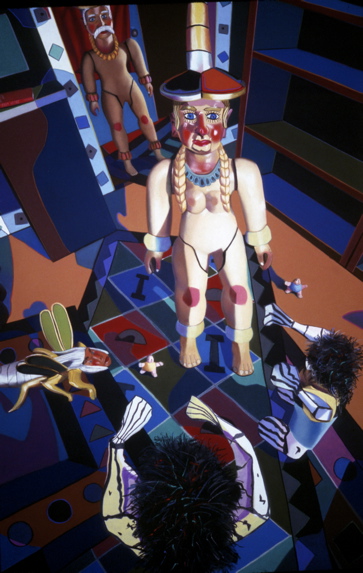
“Answering the Call,” 58″ x 38,” soft pastel on sandpaper
A: In the mid-1980s I was in my early 30s, a lieutenant on active duty in the Navy, working a soul-crushing job as a computer analyst on the midnight shift in a Pentagon basement. It was literally and figuratively the lowest point of my life. Remembering the joyful Saturdays of my youth when I had studied with a local New Jersey painter, I enrolled in a drawing class at the Art League School in Alexandria, Virginia. Initially I wasn’t very good, but it was wonderful to be around other women and a world away from the “warrior mentality” of the Pentagon. I was having fun! Soon I enrolled in more classes and became a very motivated full-time art student who worked nights at the Pentagon. As I studied and improved my skills, I discovered my preferred medium – soft pastel on sandpaper. Although I knew I had found my calling, for more than a year I agonized over whether or not to leave the Navy. Once I did decide, there was another delay. The Navy was experiencing a manpower shortage so Congress had enacted a stop-loss order, which prevented officers from resigning. I could only do what was allowed under the order. I submitted my resignation effective exactly one year later: on September 30, 1989. With Bryan’s (my late husband) support, I left the Navy that day. So I think of myself as having been a professional artist beginning on October 1, 1989. I should mention that I remained in the Navy Reserve for the next 14 years, working mainly at the Pentagon two days every month and two weeks each year (commuting between New York and Washington, DC after I moved in 1997). Finally on November 1, 2003, I officially retired as a Navy Commander.
Comments are welcome!
Pearls from artists* # 23
LACMA
* an ongoing series of quotations – mostly from artists, to artists – that offers wisdom, inspiration, and advice for the sometimes lonely road we are on.
My composition arises out of asking questions. I am reminded of a story early on about a class with Schoenberg. He had us go to the blackboard to solve a particular problem in counterpoint (though it was a class in harmony). He said, “When you have a solution, turn around and let me see it.” I did that. He then said, “Now another solution, please.” I gave another and another until finally, having made seven or eight, I reflected a moment and then said with some certainty, “There aren’t any more solutions.” He said, “OK. What is the principle underlying all the solutions?” I couldn’t answer his question; but I had always worshiped the man, and at that point I did even more. He ascended, so to speak. I spent the rest of my life, until recently, hearing him ask that question over and over. And then it occurred to me through the direction that my work has taken, which is renunciation of choices and the substitution of asking questions, that the principle underlying all of the solutions that I had given him was the question that he had asked, because they certainly didn’t come from any other point. He would have accepted that answer, I think. The answers have the questions in common. Therefore the question underlies the answers.
John Cage quoted in Kay Larson, Where the Heart Beats: John Cage, Zen Buddhism, and the Inner Life of Artists
Comments are welcome!
Q: Would you talk about some of your early experiences with art?
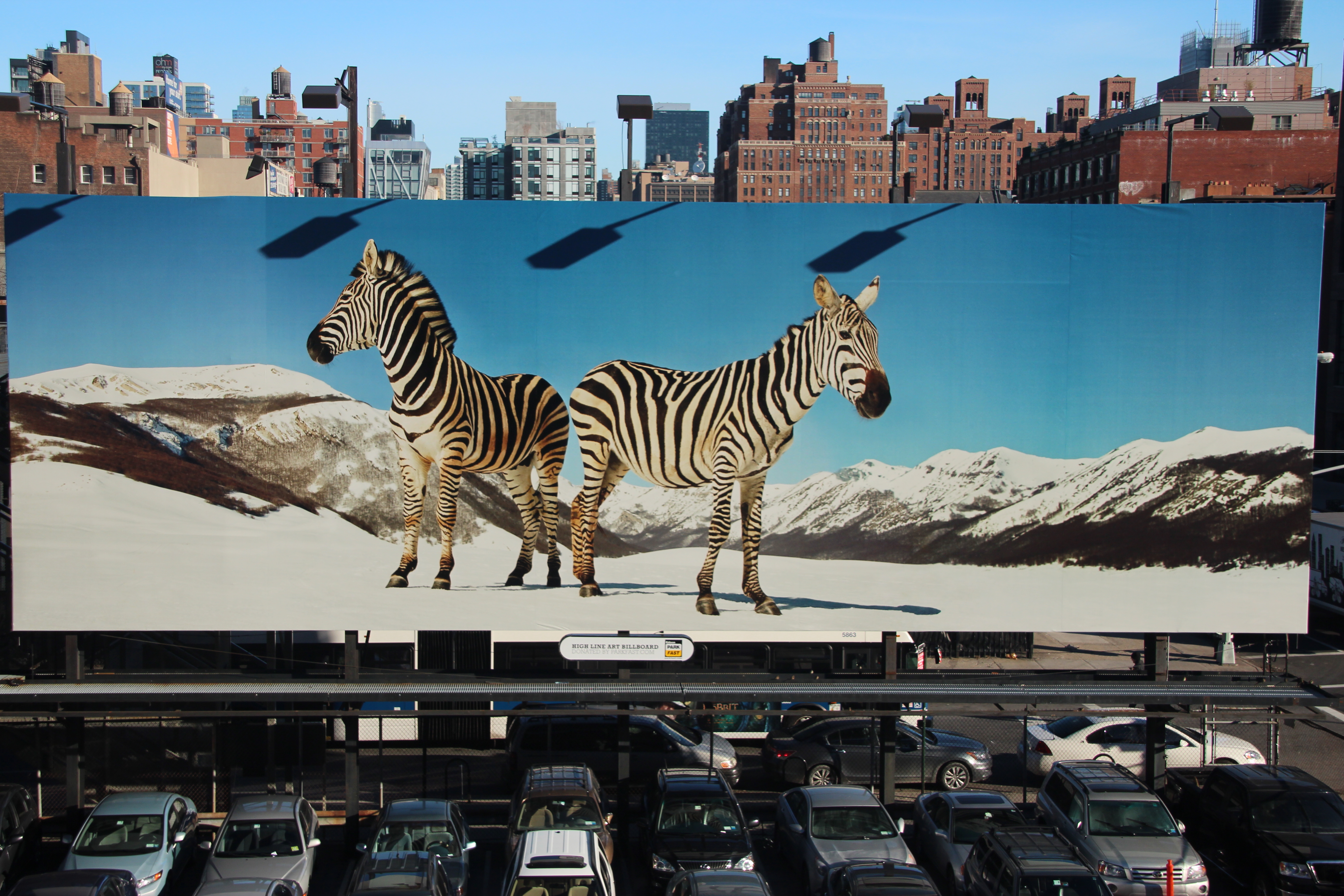
Zebras in Chelsea
A: I grew up in a blue collar family in suburban New Jersey. My father was a television repairman for RCA. For awhile my mother worked as a sewing machine operator in a factory that made women’s undergarments, but mostly she stayed home to raise my sister and me (at the time I had only one sister, Denise; Michele was born much later). My parents were both first-generation Americans and in those days no one in my extended family had gone to college. I was a smart kid and showed some artistic talent in kindergarten or earlier. I have always been able to draw anything, as long as I can see it (i.e., I require a visual reference as opposed to drawing from memory). I remember copying the Sunday comics, which in those days appeared in all the newspapers. At the age of 6 my mother enrolled Denise and me in Saturday morning painting classes at the studio of an artist named Frances Hulmes in Rutherford, NJ. I continued the classes for about 8 years and became a fairly adept oil painter. Living just 12 miles from New York City in Clifton, New jersey, my mother often took us to museums, particularly the Museum of Modern Art, the Metropolitan Museum of Art, and the Museum of Natural History. I remember falling in love with Rousseau’s “The Sleeping Gypsy” and being astonished by the violence and scale of Picasso’s “Guernica,” when it was on long-term loan to MoMA. I have fond memories of studying the dioramas at the Museum of Natural History. They are still my favorite part of the museum. I suppose it goes without saying that there were not any artists in my family so I had no role models. At the age of 15 my father decided that art was not a serious pursuit – he said it was a hobby, not a profession – so he abruptly stopped paying for my Saturday morning lessons. With no financial or moral support to pursue art, I turned my attention to other interests (ex. I learned to fly airplanes, becoming a commercial pilot and Boeing 727 flight engineer) and let my artistic abilities lie dormant.
Comments are welcome!
Pearls from artists* # 22

Alexandria living room
* an ongoing series of quotations – mostly from artists, to artists – that offers wisdom, inspiration, and advice for the sometimes lonely road we are on.
So inclination you see is not lacking, and yet in all probability I shall have to try right here to clamber in the dark and all alone over the crest of the year, so to speak, for disciplinary reasons. I shall not deserve it otherwise, that is: I have long wanted to be here all alone, strictly alone, to go into my cocoon, to pull myself together, in short, to live by my heart and nothing else. Now since day before yesterday I have really been here all alone inside the old walls – outside, the sea, outside, the Karst, outside, the rain, perhaps tomorrow the storm – now must appear what is within by way of counterweight to such great and fundamental things. So, if something quite unexpected does not come, it may be the right thing to say, to hold out, to hold still with a kind of curiosity toward oneself, don’t you think? That is how things stand, and if I stir now everything will shift again; and then hearts are labeled, like certain medicines: shake before taking; I have been continually shaken in these last years, but never taken, that is why it is better that I should quietly arrive at clarity and precipitation…
Jane Bannard Greene and M.D. Herter Norton, translators, Letters of Rainer Maria Rilke 1910 – 1926
Comments are welcome!
Pearls from artists* # 21
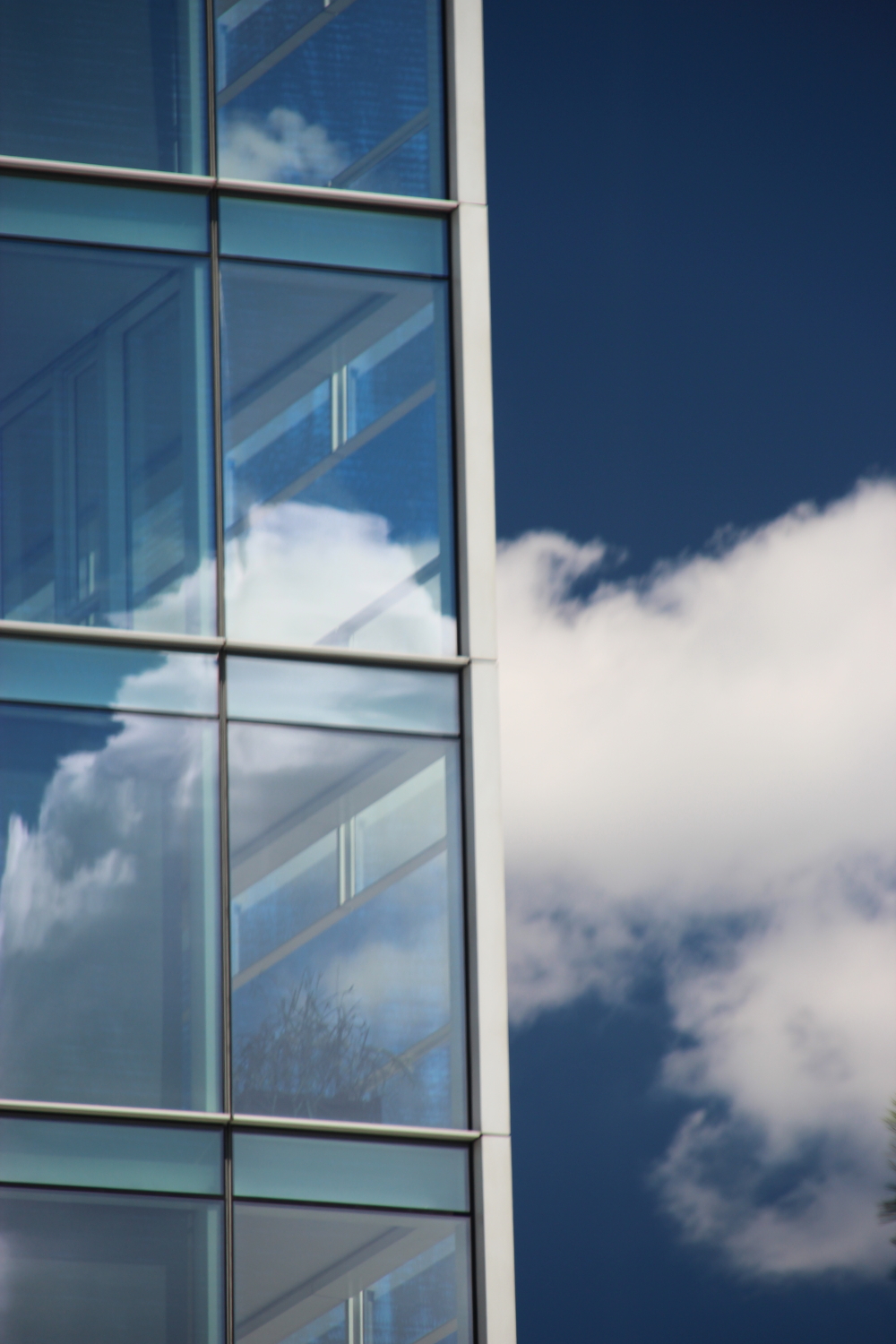
Apartment building, New York City
* an ongoing series of quotations – mostly from artists, to artists – that offers wisdom, inspiration, and advice for the sometimes lonely road we are on.
It is the beginning of a work that the writer throws away.
A painting covers its tracks. Painters work from the ground up. The latest version of a painting overlays earlier versions, and obliterates them. Writers, on the other hand, work from left to right. The discardable chapters are on the left. The latest version of a literary work begins somewhere in the work’s middle, and hardens toward the end. The earlier version remains lumpishly on the left; the work’s beginning greets the reader with the wrong hand. In those early pages and chapters anyone may find bold leaps to nowhere, read the brave beginnings of dropped themes, hear a tone since abandoned, discover blind alleys, track red herrings, and laboriously learn a setting now false.
Several delusions weaken the writer’s resolve to throw away work. If he has read his pages too often, those pages will have a necessary quality, the ring of the inevitable, like poetry known by heart; they will perfectly answer their own familiar rhythms. He will retain them. He may retain those pages if they possess some virtues, such as power in themselves, though they lack the cardinal virtue, which is pertinence to, and unity with, the book’s thrust. Sometimes the writer leaves his early chapters in place from gratitude; he cannot contemplate them or read them without feeling again the blessed relief that exalted him when the words first appeared – relief that he was writing anything at all. That beginning served to get him where he was going, after all; surely the reader needs it, too, as groundwork. But no.
Every year the aspiring photographer brought a stack of his best prints to an old, honored photographer, seeking his judgment. Every year the old man studied the prints and painstakingly ordered them into two piles, bad and good. Every year the old man moved a certain landscape print into the bad stack. At length he turned to the young man: “You submit this same landscape every year, and every year I put it in the bad stack. Why do you like it so much?” The young photographer said, “Because I had to climb a mountain to get it.”
Annie Dillard, The Writing Life
Comments are welcome!
Pearls from artists * # 20
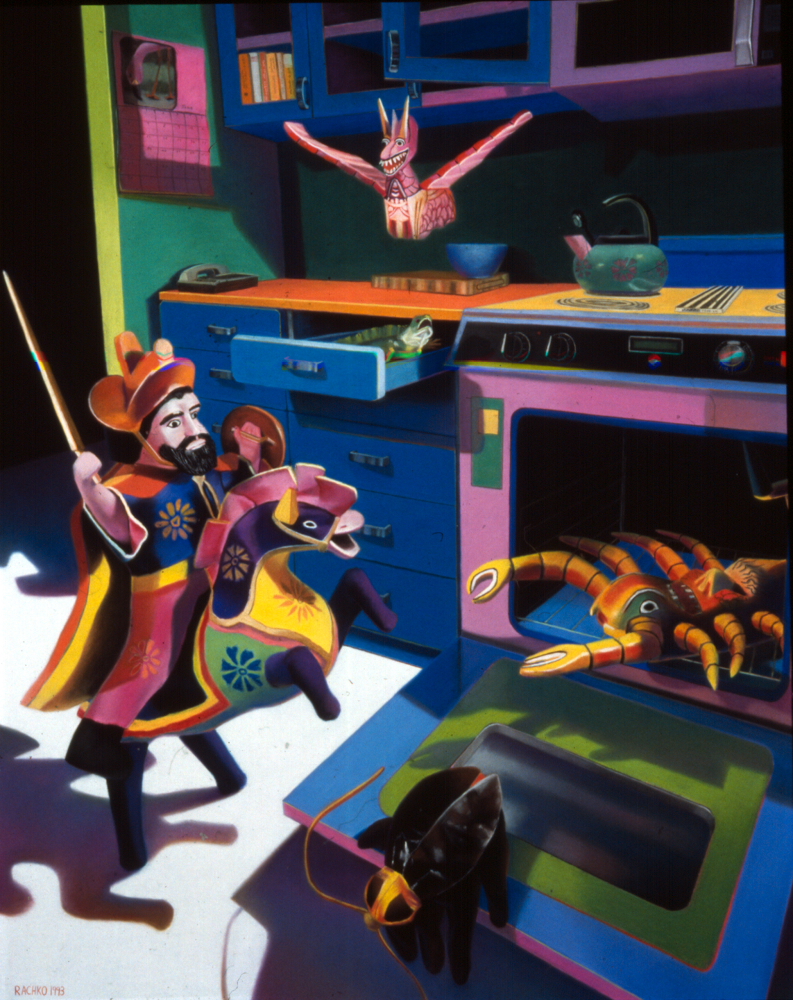
“The Magical Other,” soft pastel on sandpaper, 1993, 48″ x 38″
* an ongoing series of quotations – mostly from artists, to artists – that offers wisdom, inspiration, and advice for the sometimes lonely road we are on.
If, indeed, for any given time only a certain sort of work resonates with life, then that is the work you need to be doing in that moment. If you try to do some other work, you will miss your moment. Indeed, our own work is so inextricably tied to time and place that we cannot recapture even our own aesthetic ground of past times. Try, if you can, to reoccupy your own aesthetic space of a few years back, or even a few months. There is no way. You can only plunge ahead, even when that carries with it the bittersweet realization that you have already done your best work.
This heightened self-consciousness was rarely an issue in earlier times when it seemed self-evident that the artist (and everyone else, for that matter) had roots deeply intertwining their culture. Meanings and distinctions embodied within artworks were part of the fabric of everyday life, and the distance from art issues to all other issues was small. The whole population counted as audience when artists’ work encompassed everything from icons for the Church to utensils for the home. In the Greek amphitheater twenty-two hundred years ago, the plays of Euripides were performed as contemporary theater before an audience of fourteen thousand. Not so today.
Today art issues have for the most part become solely the concern of artists, divorced from – and ignored by – the larger community. Today artists often back away from engaging the times and places of their life, choosing instead the largely intellectual challenge of engaging the times and places of Art. But it’s an artificial construct that begins and ends at the gallery door. Apart from the readership of Artforum, remarkably few people lose sleep trying to incorporate gender-neutral biomorphic deconstructivism into their personal lives. As Adam Gopnik remarked in The New Yorker, “Post-modernist art is, above all, post-audience art.”
David Bayles & Ted Orland, Art & Fear: Observations on the Perils (and Rewards)of Artmaking
Comments are welcome!
Q: When you set up your figures to photograph, do you create a story?
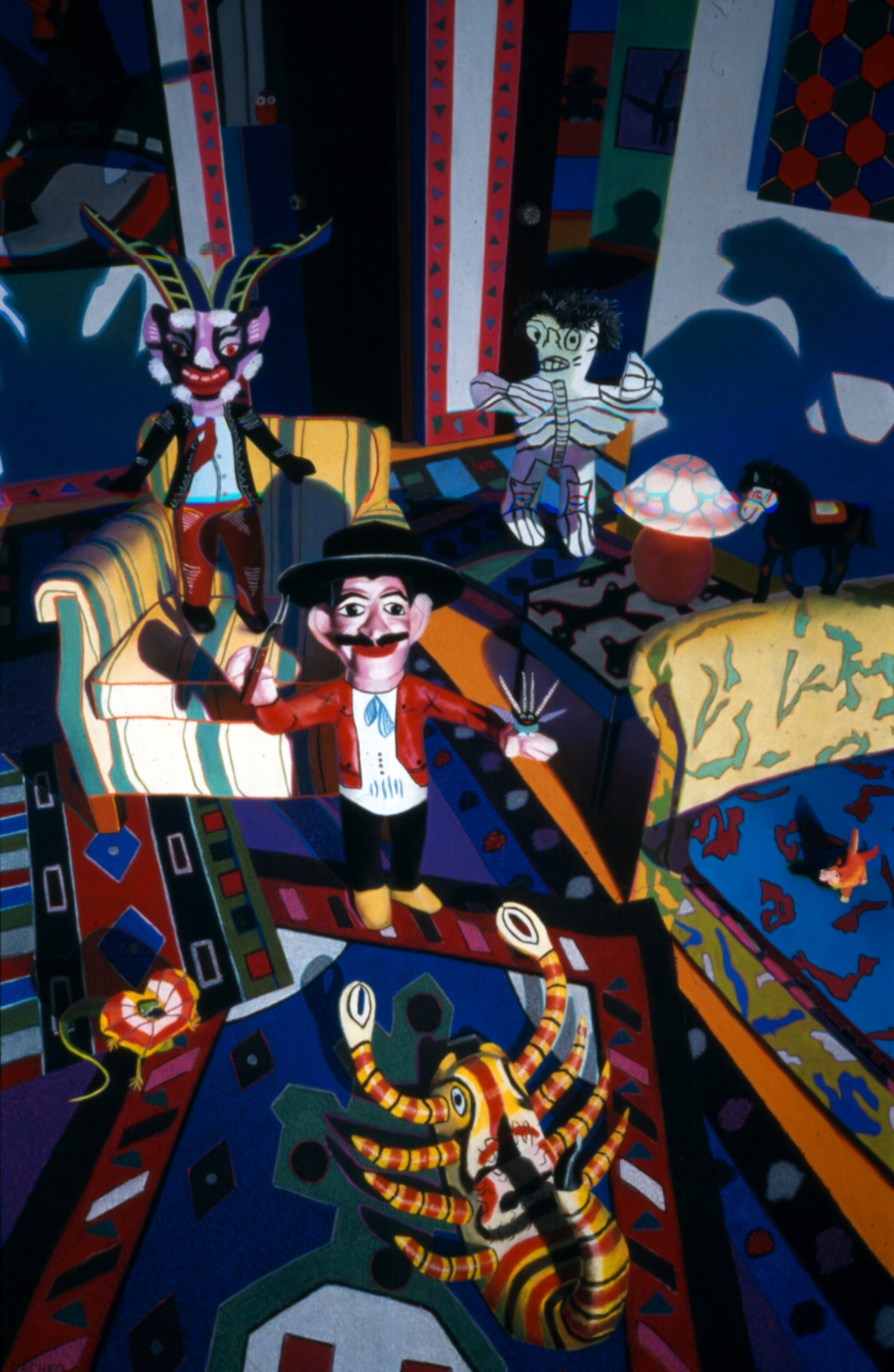
“He Just Stood There Grinning,” soft pastel on sandpaper, ” 58″ x 38″
A: I always did so with my “Domestic Threats” paintings, but not with my current work. As I set up a group of figures to photograph, I would make up a story about what was happening between them: what the Day of the Dead skeleton I bought in Mexico City was saying to the frog/fish/human mask from Guerrero, for example. I was a big kid playing with my favorite toys! The stories were the spark to get me started on a new project, but I usually forgot about them afterwards. They were necessary, yet incidental to my creative process, which is probably why I have never written them down.
Years ago I had the experience of being at one of my solo shows when a group of elementary school children came along with their teacher. The teacher asked them to act out one of the stories in a particular painting. Ever curious about how people relate to my work, I didn’t introduce myself as the creator of the pieces hanging on the walls. I no longer remember the details, but their interpretations soon had me laughing. It is a constant surprise to hear from people encountering my work for the first time what they see in it, especially when those people are young kids with wild imaginations!
Comments are welcome!



